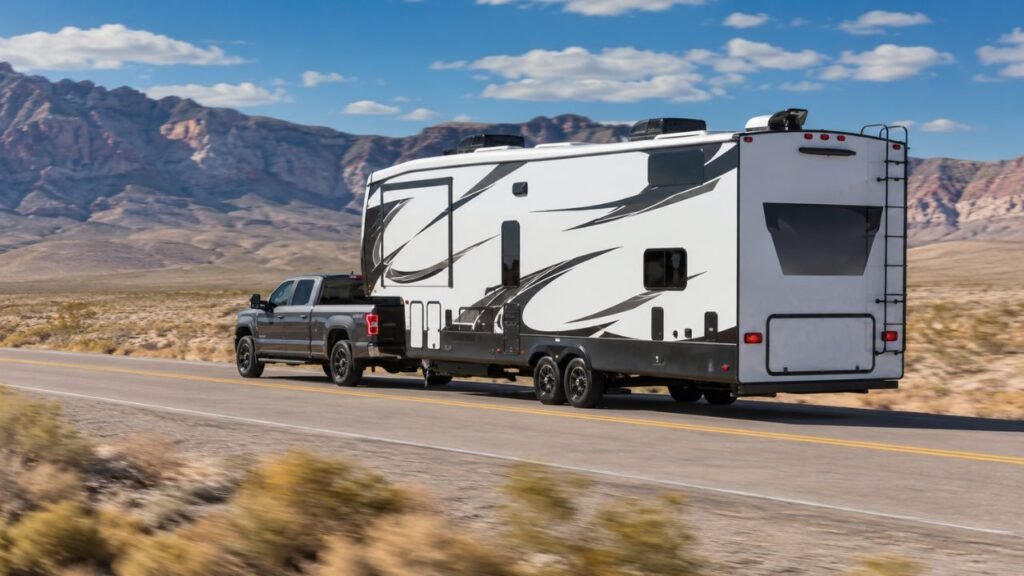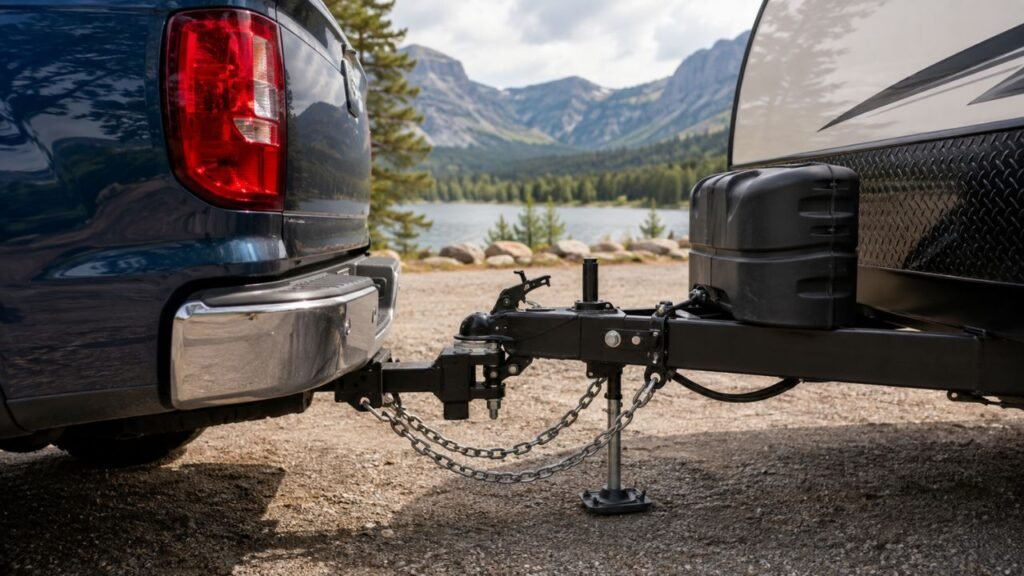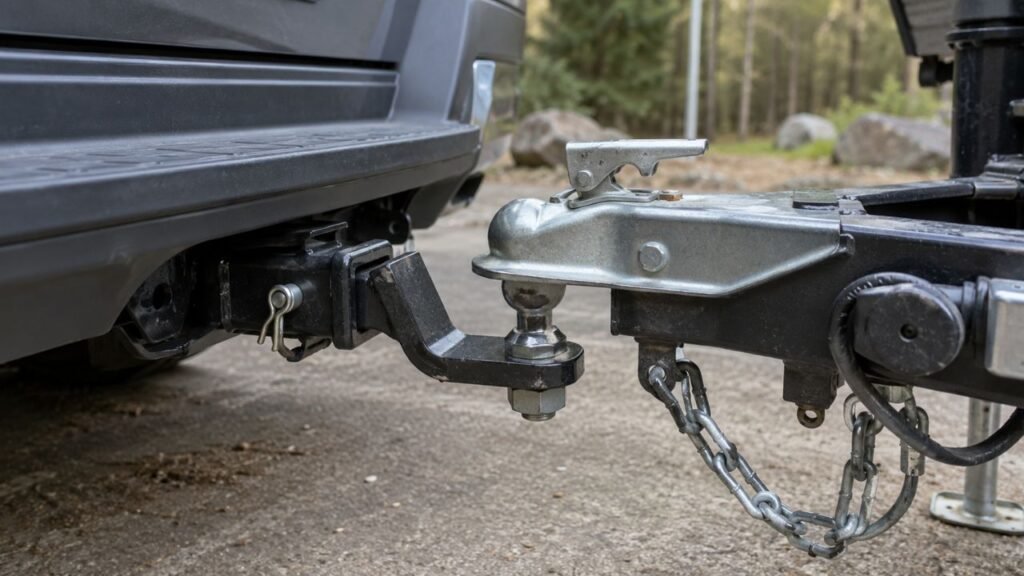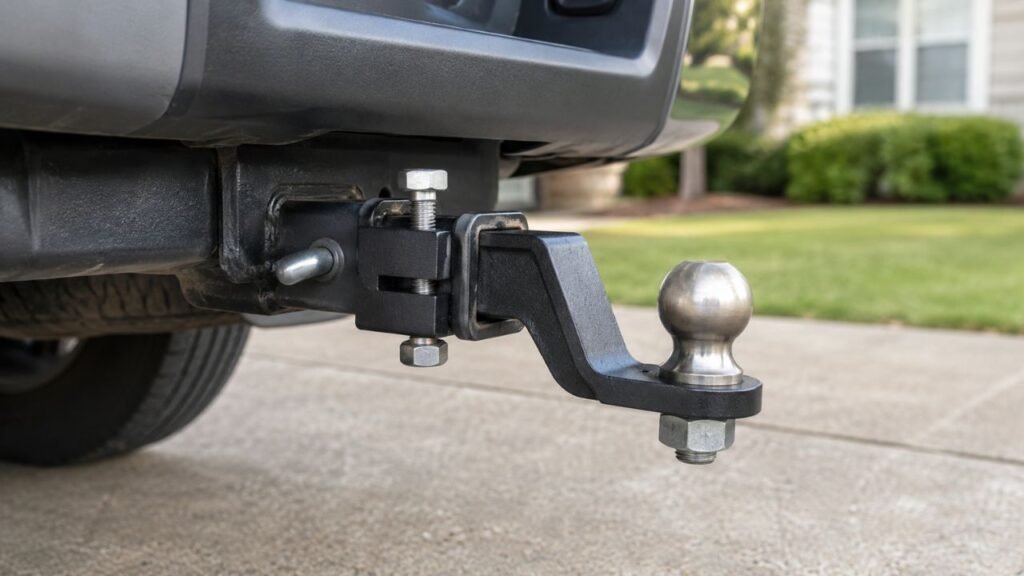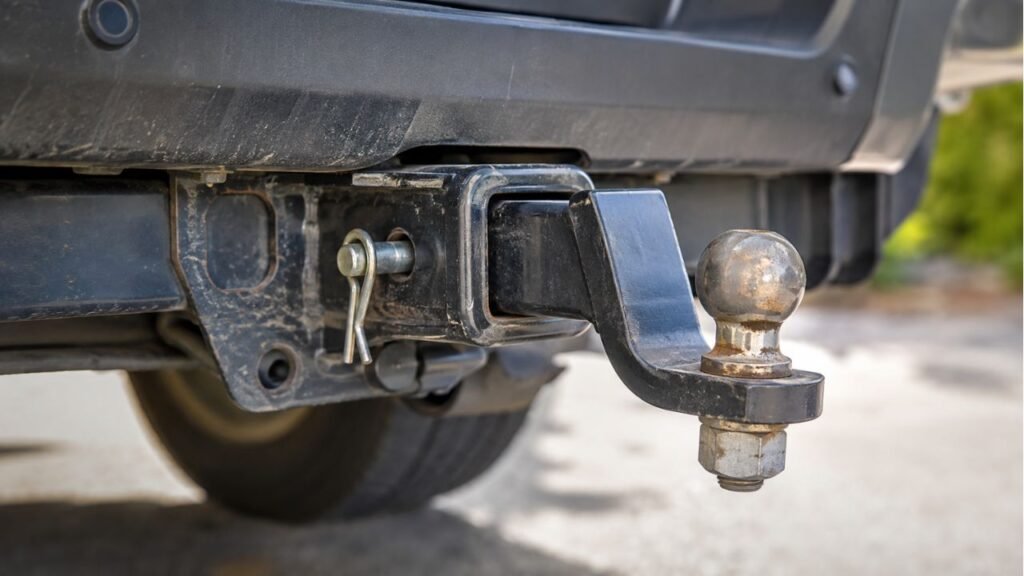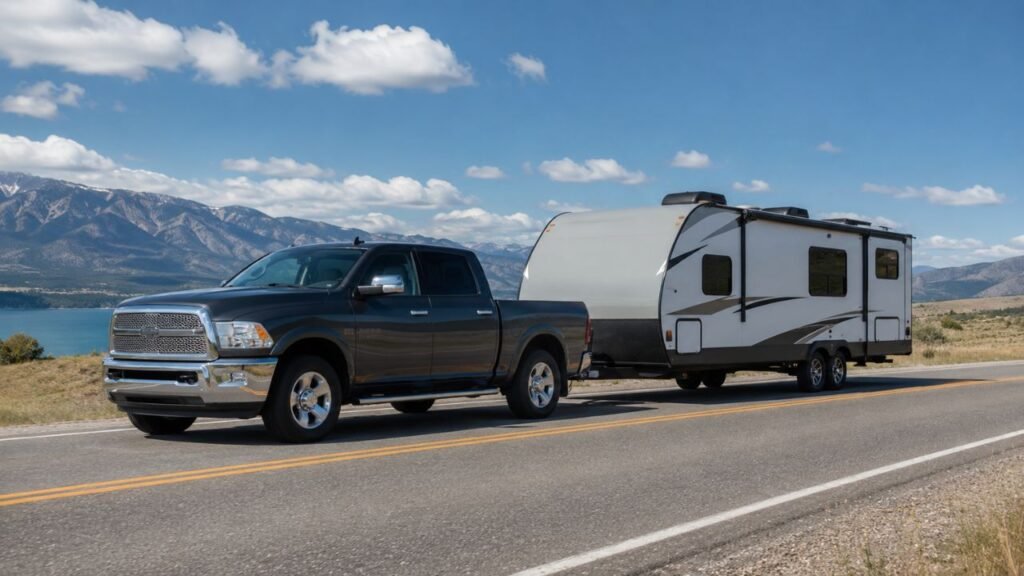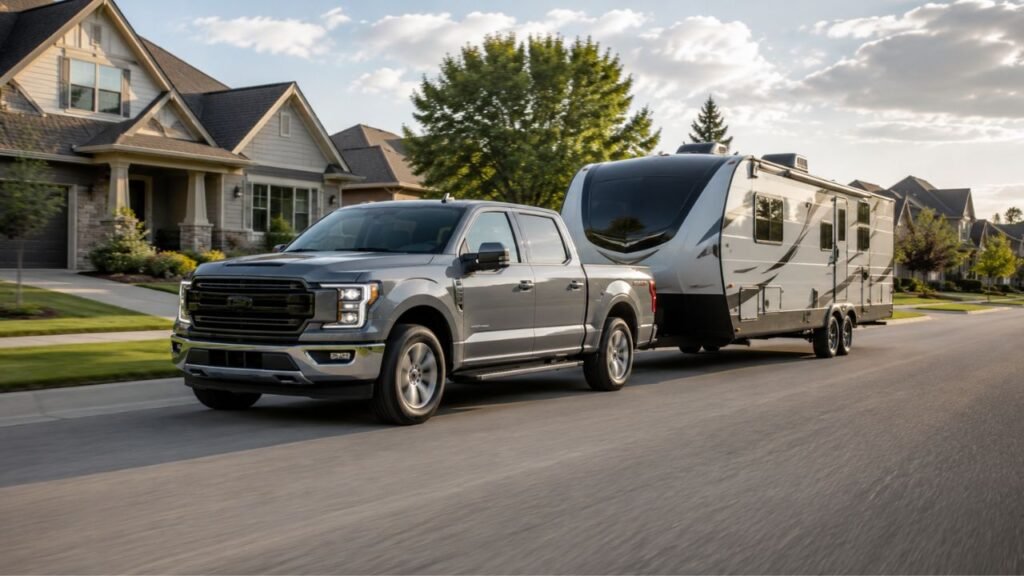
Your trailer may sway at highway speed because of low tongue weight, rear-heavy cargo, excessive speed, crosswinds, tire problems, or an incorrectly adjusted hitch. These problems let small sideways movements grow stronger as your speed increases.
I’ll help you identify the cause, regain control safely, and correct your setup. We’ll also cover loading, tires, hitch equipment, and pre-trip checks.
Key Takeaways
- Low tongue weight is one of the leading sway causes.
- Rear-heavy cargo lets the trailer behave like a pendulum.
- Higher speed makes every small stability problem more noticeable.
- Crosswinds and passing trucks often expose an unstable towing setup.
- Ease off the accelerator when sway begins.
- Keep your steering smooth and avoid sudden braking.
- Apply manual trailer braking only with a suitable brake controller.
- Measure loaded tongue weight instead of relying on visual guesses.
- Sway-control equipment cannot correct poor loading or damaged components.
- Stop towing when sway continues after basic corrections.
What Is Trailer Sway?
Trailer sway is repeated side-to-side movement behind your tow vehicle. You may also hear drivers describe it as trailer fishtailing.
A small movement may begin after hitting a bump or wind gust. Instead of settling, the trailer swings farther during each movement.
That motion can eventually pull or push your tow vehicle sideways. Highway speed makes the situation especially dangerous because more energy feeds the movement.
A brief movement during a strong gust does not always mean severe sway. However, continuing or increasing movement should never be considered normal.
Your trailer should return to a straight position quickly. If it keeps oscillating, something in the setup needs attention.
Why Does My Trailer Sway Only at Highway Speed?
A trailer can feel stable around town yet become unstable on highways. Higher speed increases wind pressure, tire movement, and lateral forces throughout the towing combination.
Insufficient Tongue Weight
Tongue weight is the downward force placed on your hitch ball. Too little force allows the trailer to pivot easily around the hitch.
Many conventional travel trailers need roughly 10% to 15% tongue weight. However, you should always follow your trailer manufacturer’s stated range.
Suppose your loaded trailer weighs 6,000 pounds. A 10% tongue weight would equal 600 pounds.
Moving cargo behind the axles can reduce that force quickly. The trailer may then feel light, nervous, or loose behind you.
Low tongue weight is especially dangerous because speed amplifies the instability. What feels acceptable at 35 mph may feel frightening at 60 mph.
Too Much Weight Behind the Trailer Axles
Rear-heavy loading creates a pendulum effect. The heavy rear section starts pulling the trailer from side to side.
Common rear-loading problems include generators, toolboxes, coolers, bicycles, and spare fuel. Rear cargo racks can also change the trailer’s balance considerably.
Moving one heavy item may have a larger effect than expected. Weight placed far behind the axles has greater leverage over the trailer.
Try moving heavy items forward, low, and near the centerline. Then measure your tongue weight again before highway travel.
Cargo Loaded Too High or Off-Center
High-mounted cargo raises the trailer’s center of gravity. That makes the body lean more during turns, gusts, and lane changes.
Uneven side-to-side weight can also affect tracking. One side may carry more tire and suspension load than the other.
Store heavy items near floor level whenever possible. Keep them centered and prevent them from moving during travel.
A secured load matters just as much as proper placement. Cargo that shifts after several miles can suddenly change your trailer’s balance.
Excessive Towing Speed
Speed does not always create the original problem. However, it magnifies almost every existing weakness in the setup.
Air pressure increases as you travel faster. Tires flex more, steering corrections become sharper, and recovery time decreases.
The posted speed limit may still be too fast for towing. Wind, road conditions, tire ratings, and trailer design must also guide your speed.
Reducing speed often makes the trailer feel more controlled. Still, speed reduction alone does not repair an unstable setup.
Crosswinds and Passing Semi-Trucks
Tall trailers present a large surface area to crosswinds. A sudden gust can push the trailer away from its normal path.
Passing trucks create changing air pressure around your trailer. You may feel a push as the truck approaches and a pull afterward.
A properly loaded trailer should recover without continuing to oscillate. Strong repeated sway suggests that wind is exposing another problem.
Slow down when gusts become strong or unpredictable. Stop somewhere safe when stable lane control becomes difficult.
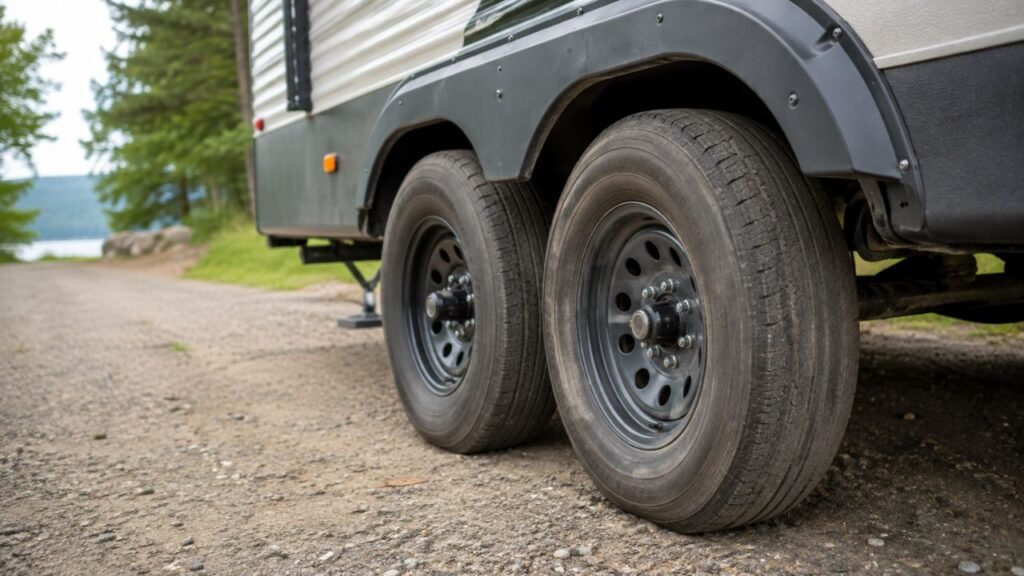
Incorrect Trailer Tire Pressure
Underinflated tires flex more than properly inflated tires. That extra sidewall movement may reduce stability and create heat.
Check your trailer tires while they are cold. Use the pressure required for the tire, wheel, and trailer loading arrangement.
Do not choose pressure only by looking at the tire shape. Trailer tires may appear normal even when pressure is low.
Your tow vehicle’s tires also affect stability. Soft rear tires can make the entire combination feel loose.
Worn, Damaged, or Mismatched Tires
Tires can contribute to sway even when pressure appears correct. Internal damage, uneven wear, or weak sidewalls may affect tracking.
Inspect every tire for bulges, cracks, cuts, and unusual tread wear. Check the inside sidewalls, not only the visible outer surfaces.
Make sure the tires have suitable load ratings. Overloaded tires cannot support the trailer safely at highway speed.
Avoid mixing different tire sizes or constructions without professional guidance. Mismatched tires may respond differently during bumps and steering corrections.
Incorrect Hitch Height
A trailer should normally sit close to level when loaded and connected. A noticeably nose-high trailer may reduce load on its front axle.
That change can make the trailer less stable. It may also affect braking, tire loading, and suspension movement.
A severely nose-low trailer may create different handling and clearance problems. It can also overload certain axles or hitch components.
Check trailer attitude on firm, level ground. Make adjustments using the correct ball mount or hitch-head position.
Improper Weight-Distribution Hitch Adjustment
A weight-distribution hitch must match the trailer’s loaded tongue weight. Spring bars that are too light may not distribute enough force.
Bars that are too stiff can also create poor handling. Incorrect hitch-head angle or bracket position may reduce performance.
Measure your tow vehicle before and after hitching. Follow the hitch manufacturer’s adjustment process carefully.
Do not judge adjustment only by rear suspension appearance. Axle weights provide a much clearer picture.
Worn Hitch or Coupler Components
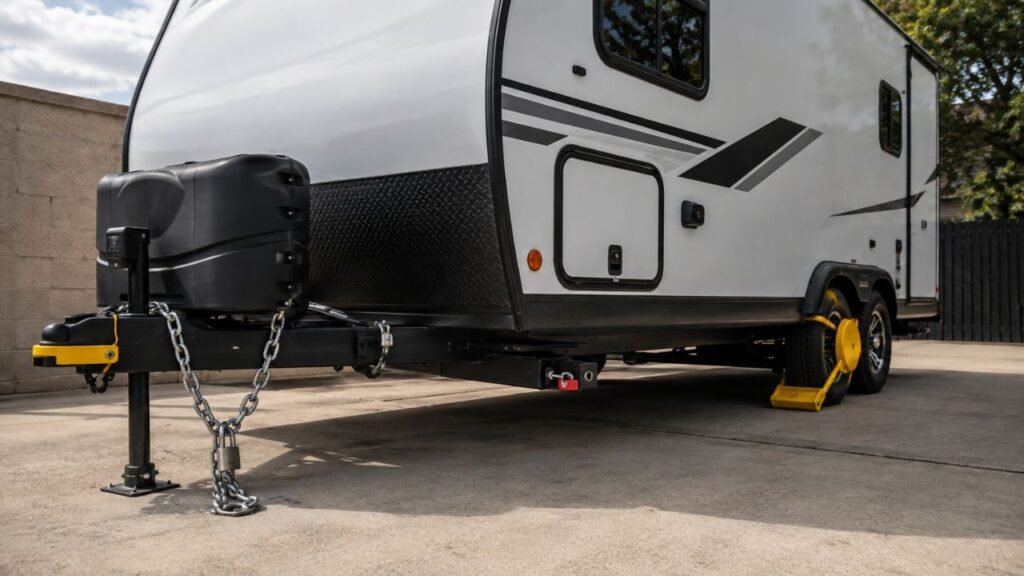
Excessive movement between the hitch ball and coupler may affect stability. A worn coupler latch can also create clunking and inconsistent control.
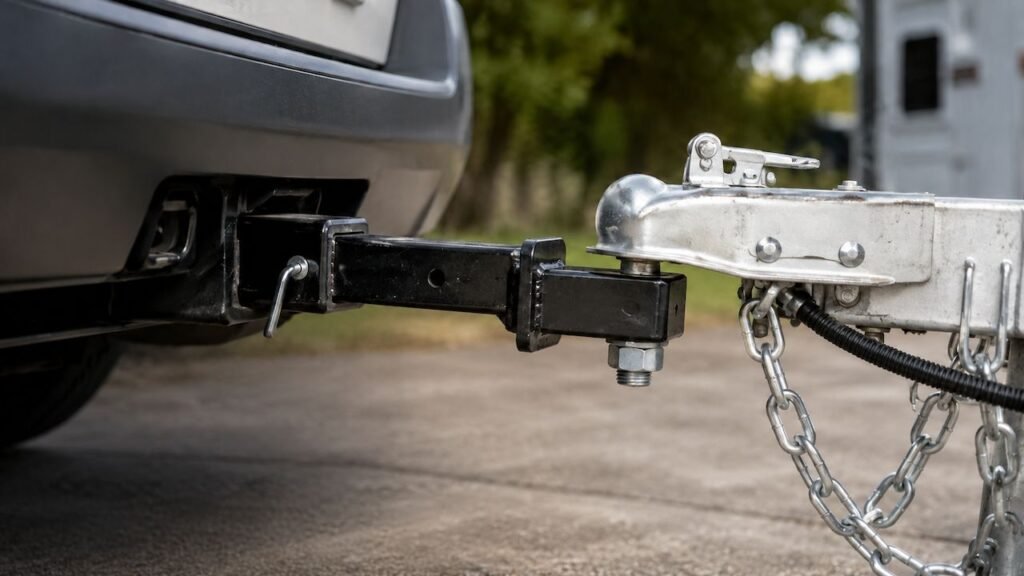
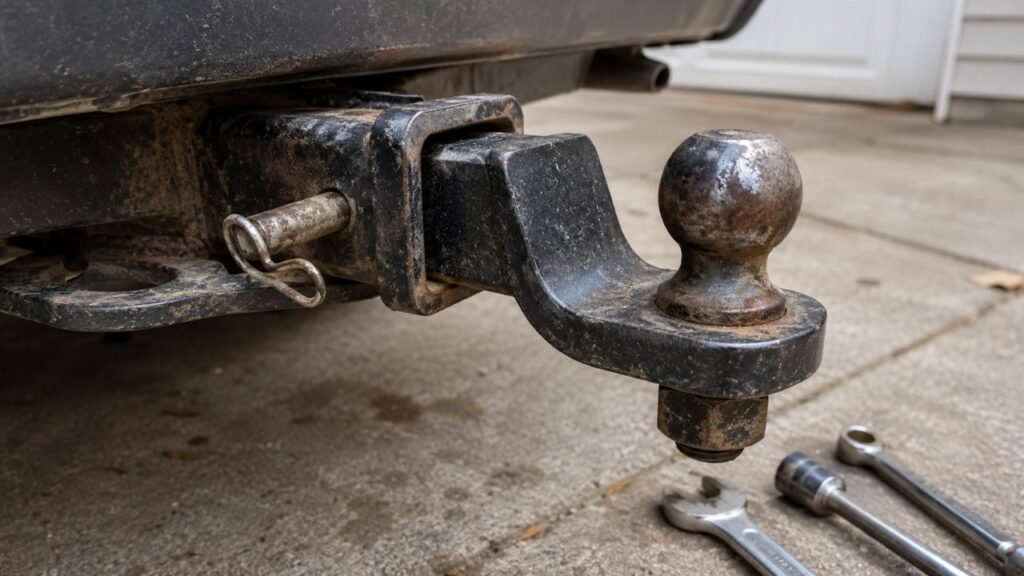
Inspect the hitch ball, coupler socket, receiver, ball mount, and fasteners. Look for cracks, deformation, loose hardware, and severe wear.
Confirm that your hitch ball matches the coupler size. A mismatched ball can create a serious safety hazard.
Replace damaged parts instead of trying to tighten around the problem. Towing hardware must remain within its rated condition.
Suspension, Bearing, or Alignment Problems
Worn suspension parts can allow the trailer body or axle to move unpredictably. Damaged leaf springs, shackles, bushings, or equalizers deserve immediate attention.
Loose or failing wheel bearings may also affect wheel tracking. Excessive heat near one hub can signal a serious problem.
Bent axles or alignment issues often create uneven tire wear. They may also make the trailer pull or wander.
Have the running gear inspected when sway remains after loading corrections. Mechanical defects should not be hidden using stronger sway control.
Tow Vehicle Limitations
A trailer can fall within the advertised tow rating yet remain poorly matched. Payload, wheelbase, axle ratings, and receiver capacity also matter.
Passengers and bed cargo use your available payload. The hitch and tongue weight consume part of that capacity too.
A heavily loaded rear axle may reduce steering authority. Soft suspension can also make lane changes feel delayed or unstable.
Compare actual scale weights with every applicable rating. Do not rely only on the maximum tow-rating number.
Trailer Sway Causes, Warning Signs, and Solutions
The pattern you feel can help identify the likely cause. Use this table as a starting point, not a replacement for inspection.
| What You Notice | Possible Cause | What to Check | Recommended Action |
| Sway begins above one speed | Low tongue weight or excessive speed | Loaded weight and cargo position | Redistribute cargo and reduce speed |
| Sway worsens near trucks | Wind sensitivity or poor balance | Tongue weight, tires, and hitch setup | Correct the underlying setup |
| Trailer feels light behind you | Rear-heavy cargo | Items behind the axles | Move heavy items forward |
| Trailer leans during movement | High or off-center cargo | Cargo height and side balance | Lower and center the load |
| Sway began after adding equipment | Changed weight distribution | Bikes, batteries, racks, or generators | Reweigh the loaded trailer |
| Movement increases after bumps | Tire or suspension problem | Tires, springs, bearings, and bushings | Inspect before continuing |
| Tow vehicle rear sits very low | High tongue weight or overloaded payload | Rear axle and receiver loads | Reduce or redistribute weight |
| Trailer sits nose-high | Incorrect hitch height | Loaded trailer attitude | Adjust the ball mount or hitch |
| Trailer pulls toward one side | Uneven loading or alignment issue | Side weights, brakes, and axles | Correct loading and inspect alignment |
| Sway started suddenly | Shifted cargo or tire failure | Cargo, pressure, hubs, and hardware | Stop and inspect immediately |
What Should I Do When Trailer Sway Starts?
Your first goal is reducing the energy feeding the sway. Stay calm and make every input smooth and deliberate.
- Hold the steering wheel firmly. Keep the tow vehicle pointed straight.
- Avoid aggressive counter-steering. Sharp corrections can increase the swinging movement.
- Ease off the accelerator gradually. Let your speed fall without abrupt inputs.
- Do not accelerate to pull the trailer straight. Added speed may increase instability.
- Avoid slamming the tow vehicle’s brakes. Sudden braking can upset the combination.
- Use the manual trailer-brake control when properly equipped. Gentle trailer braking can help pull the trailer back into line.
- Allow the trailer to settle completely. Keep reducing speed until movement stops.
- Move toward a safe stopping area. Use smooth steering and plenty of space.
- Inspect the entire towing setup. Check cargo, tires, hitch parts, and trailer attitude.
- Do not resume highway towing without finding the cause. Continuing unchanged invites another sway event.
Manual trailer braking requires a working brake controller and trailer brakes. Do not experiment with unfamiliar controls during a dangerous situation.
Severe sway may require decisions based on traffic and road conditions. Your safest option is always preventing sway before it starts.
What Should You Avoid During Trailer Sway?
Several common reactions can make sway stronger. Avoid these actions when the trailer begins moving sideways.
- Do not jerk the steering wheel.
- Do not accelerate aggressively.
- Do not slam the tow vehicle’s brakes.
- Do not make an immediate lane change.
- Do not continue driving at the same speed.
- Do not assume the problem has corrected itself.
- Do not rely entirely on electronic stability systems.
- Do not continue with visibly damaged tires.
- Do not resume travel without inspecting shifted cargo.
- Do not use sway control to hide poor loading.
How to Diagnose Highway-Speed Trailer Sway
Start with loading and weight before replacing equipment. Then inspect tires, hitch adjustments, brakes, suspension, and the tow vehicle.
Weigh the Fully Loaded Trailer
Weigh the trailer in the same condition used for travel. Include food, water, propane, batteries, tools, luggage, and installed accessories.
An empty trailer weight will not describe your road setup. Every added item changes axle and tongue loads.
A public vehicle scale can provide total and axle weights. Individual wheel positions provide even better information when available.
Compare every result with trailer, tire, axle, hitch, and tow-vehicle ratings. No sway correction should create a different overload.
Measure the Loaded Tongue Weight
Do not estimate tongue weight by looking at suspension sag. Use a suitable tongue-weight scale or another approved weighing method.
Calculate the percentage using this formula:
Tongue-weight percentage = Tongue weight ÷ Loaded trailer weight × 100
For example, a 700-pound tongue weight on a 6,000-pound trailer equals 11.7%.
That may fall within a common conventional-trailer range. Still, your manufacturer’s requirements should guide the final target.
Measure again after changing cargo, water levels, batteries, or rear accessories. Small changes can produce meaningful differences.
Inspect Cargo Placement
Open every storage compartment and inspect the actual load. Look for dense items placed far behind the axles.
Check coolers, generators, tools, bottled water, spare parts, and outdoor equipment. These items add weight faster than soft camping gear.
Confirm that cargo cannot slide during braking or cornering. Use suitable restraints for every heavy object.
Remember that rear-mounted bikes and cargo carriers create leverage. Their effect can exceed the item’s listed weight.
Check Whether the Trailer Sits Level
Park on firm, level pavement with the trailer fully loaded. Connect the complete towing setup as used on the road.
Look at the trailer frame rather than decorative body lines. Measure from the frame to the ground when needed.
A small difference may not cause severe instability alone. A noticeable nose-high condition still deserves correction.
Adjust the ball-mount height or hitch-head position properly. Do not use unapproved modifications to gain height.
Inspect Trailer and Tow-Vehicle Tires
Check every tire before driving, including the spare. Measure pressure while the tires remain cold.
Confirm the size, load range, and pressure requirements. Ensure the wheels can also handle the required pressure and load.
Look for uneven wear across the tread. Feathering, cupping, or one-sided wear may reveal deeper problems.
Inspect tow-vehicle rear tires carefully. They support additional load when the trailer is connected.
Verify Hitch and Sway-Control Adjustment
Inspect the receiver, shank, hitch head, ball, brackets, and spring bars. Confirm that nothing has shifted or loosened.
Check fastener torque using the manufacturer’s instructions. Do not guess torque by how tight a bolt feels.
Make sure the spring bars match your loaded tongue weight. Include cargo carried behind the tow vehicle’s rear axle when calculating hitch load.
Recheck the adjustment whenever your normal load changes. A setup adjusted empty may perform poorly when fully loaded.
Inspect the Trailer Running Gear
Look beneath the trailer for broken, bent, or loose parts. Check leaf springs, shackles, equalizers, hangers, and U-bolts.
Inspect brake wiring and visible brake components. Uneven braking can contribute to pulling and unstable handling.
Check hubs for unusual heat after stopping safely. One hot hub may indicate bearing or brake trouble.
Have axle alignment checked when tire wear appears unusual. A trailer should follow directly behind the tow vehicle.
Review Tow-Vehicle Payload and Axle Loads
Find your tow vehicle’s payload and axle ratings. Then compare them with actual scale weights.
Tongue weight does not disappear when using weight distribution. It still contributes to the towing combination’s load.
Passengers, luggage, tools, and bed cargo reduce available payload. Accessories such as canopies and bumpers count too.
The receiver also has separate limits. Some receivers have different ratings with weight distribution installed.
How to Load a Trailer to Reduce Sway
Good loading keeps the trailer stable without exceeding another rating. Your goal is balanced, measured, and secured weight.
- Place heavy cargo low inside the trailer.
- Keep dense items near the axle area.
- Maintain enough forward weight for proper tongue weight.
- Avoid concentrating equipment near the rear wall.
- Balance cargo from left to right.
- Secure every heavy item against movement.
- Account for water and waste-tank locations.
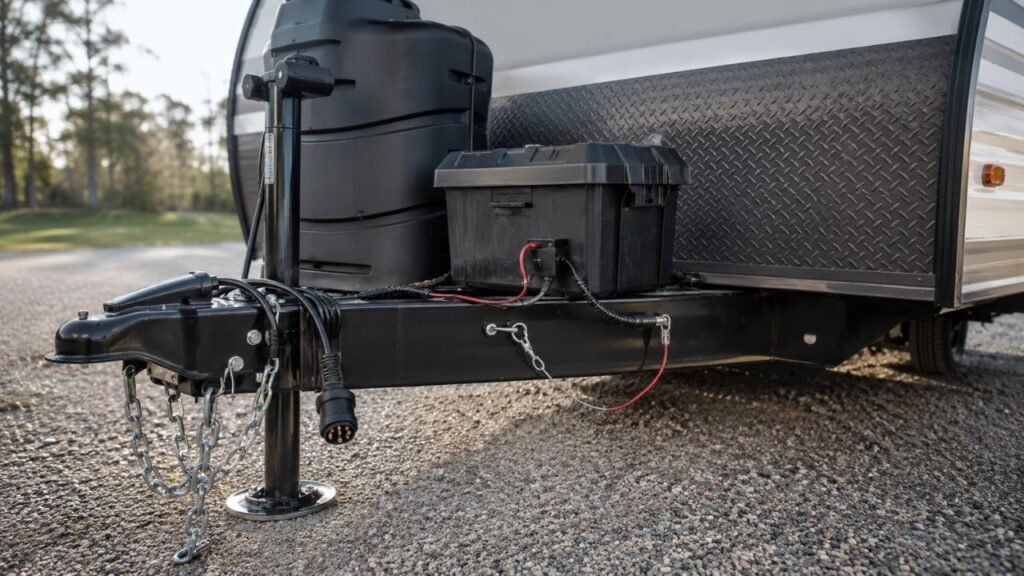
- Include batteries and propane in weight calculations.
- Recheck balance after adding rear-mounted accessories.
- Weigh the trailer after major loading changes.
- Keep all axle and tire loads within ratings.
- Never move cargo forward blindly without checking payload.
You may need several small adjustments. Move one item, measure again, and compare the result.
Does the 60/40 Loading Rule Prevent Trailer Sway?
The 60/40 rule suggests placing roughly 60% of cargo forward. The remaining 40% stays behind the trailer’s midpoint or axle region.
This rule can provide a helpful starting point. However, it cannot guarantee safe tongue weight.
Every trailer has different axle placement and permanent equipment. Water tanks, batteries, kitchens, slides, and storage areas affect balance.
Ten pounds moved far behind the axle may matter considerably. The same weight placed near the axle may create little change.
Use the 60/40 rule for initial loading only. Confirm the final setup using measured tongue and axle weights.
Can Too Much Tongue Weight Also Cause Problems?
Yes, excessive tongue weight creates its own handling and safety concerns. More tongue weight is not always better.
Too much load may overload the receiver or rear axle. It can also exceed your tow vehicle’s available payload.
You may notice rear suspension sag and lighter steering. Headlights may point upward, while braking and cornering feel less controlled.
A weight-distribution hitch can help restore axle balance. However, it cannot increase axle, tire, receiver, or payload ratings.
Keep tongue weight inside the correct range for your trailer. Then confirm every connected component remains within its limits.
Will a Weight-Distribution Hitch Stop Trailer Sway?
A weight-distribution hitch can improve control when correctly selected and adjusted. However, it cannot make an unsafe loading arrangement acceptable.
What a Weight-Distribution Hitch Does
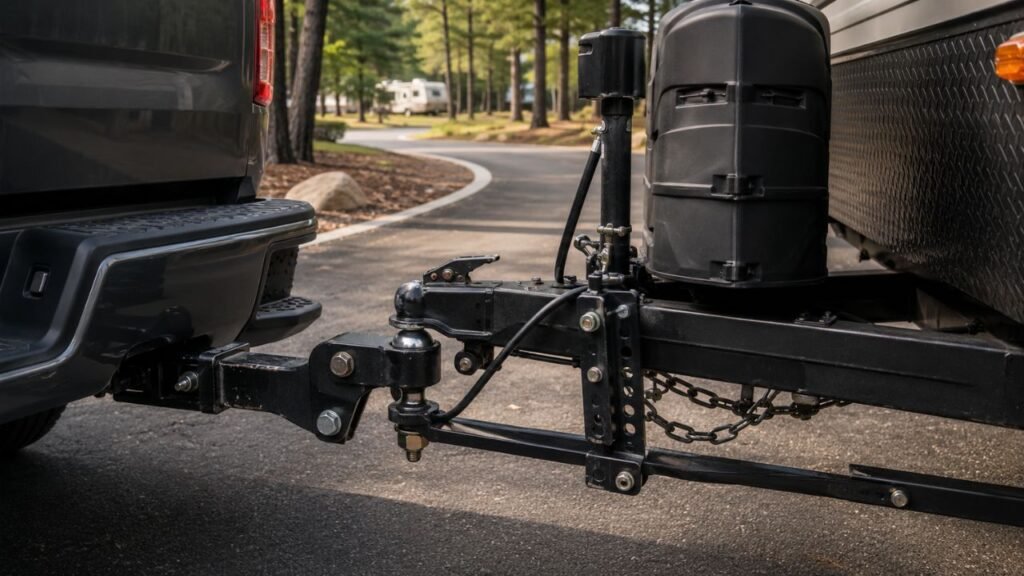
A weight-distribution hitch uses spring bars to transfer part of the load. It helps restore weight toward the tow vehicle’s front axle.
This can improve steering, braking, and overall balance. It may also reduce excessive rear suspension compression.
However, weight distribution does not create proper tongue weight. A rear-heavy trailer can remain unstable with spring bars attached.
What Friction Sway Control Does
A friction sway bar resists movement between the trailer and tow vehicle. It adds resistance when the trailer begins moving sideways.
These devices can improve stability on compatible trailers. They must still be adjusted and maintained correctly.
Some designs have specific instructions for reversing, rain, or slippery roads. Follow the manufacturer’s procedures for your exact model.
What Integrated Sway-Control Hitches Do
Some weight-distribution hitches include built-in sway resistance. Their design creates friction or tension during lateral movement.
These systems can provide stronger control than a basic friction bar. They may also require precise bracket placement and adjustment.
No mechanical hitch can guarantee zero sway in every situation. Loading, tires, speed, and maintenance still remain essential.
What Electronic Trailer Sway Control Does
Electronic systems use sensors to detect unusual trailer movement. They may apply individual trailer brakes to reduce oscillation.
Some tow vehicles also use stability-control programming during trailer sway. These systems can provide valuable assistance.
Electronic control should serve as an additional safety layer. It should not replace correct tongue weight or mechanical repairs.
Weight Distribution Versus Sway Control
These systems perform different jobs, although some products combine both functions. The following table explains their main differences.
| Feature | Weight-Distribution Hitch | Mechanical Sway Control | Electronic Sway Control |
| Main purpose | Redistributes hitch load | Resists sideways movement | Detects and reacts to sway |
| Corrects poor cargo placement | No | No | No |
| Helps restore front axle load | Yes | No | No |
| Reduces rear suspension sag | Often | No | No |
| Acts during lateral movement | Not primarily | Yes | Yes |
| Requires correct adjustment | Yes | Yes | Yes |
| Requires trailer brakes | No | Usually no | Usually yes |
| Replaces correct tongue weight | No | No | No |
| Repairs worn components | No | No | No |
| Suitable for every trailer | No | No | No |
Choose equipment based on your trailer, hitch, and tow vehicle. Confirm compatibility before installation or adjustment.
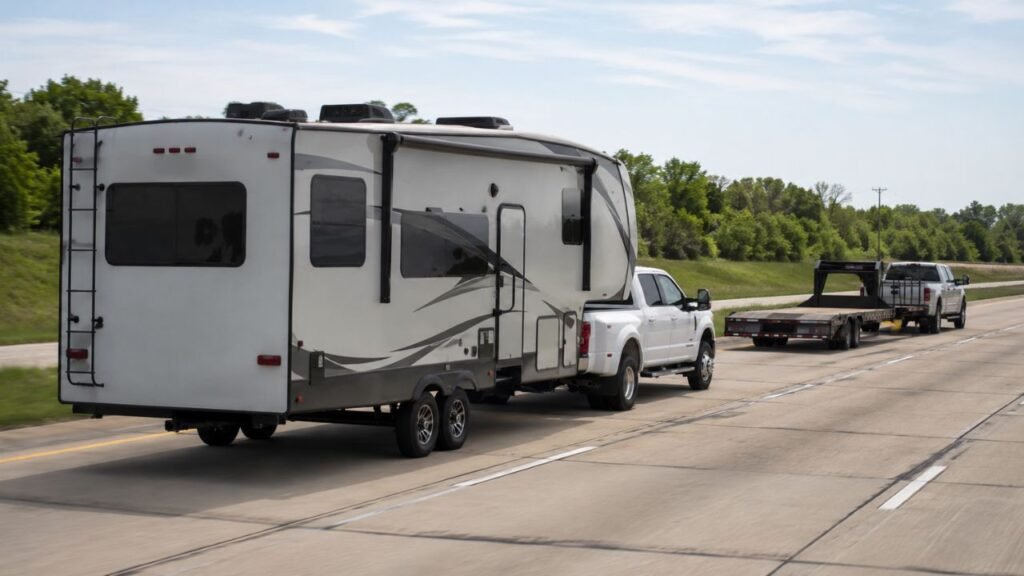
Why Does My Trailer Sway When a Semi-Truck Passes?
A semi-truck moves a large volume of air. That air pressure changes as the truck approaches, passes, and pulls ahead.
You may first feel your trailer pushed away. Then it may feel pulled toward the passing truck.
Keep both hands steady and avoid steering toward each movement. Allow the trailer to return naturally while maintaining your lane.
Increase space around large vehicles whenever possible. Avoid driving beside a semi longer than necessary.
A single mild movement can happen with a stable trailer. Repeated fishtailing suggests low tongue weight, excessive speed, or another problem.
Slow down and inspect the setup when passing trucks consistently cause severe movement.
Why Does My Trailer Sway in Crosswinds?
Crosswinds push against the trailer’s large side area. Taller and longer trailers can experience stronger wind forces.
Steady wind may require constant minor steering input. Gusty wind is more difficult because pressure changes suddenly.
Reduce speed before the wind becomes difficult to manage. Greater speed gives each gust more influence over the trailer.
Keep extra distance from surrounding vehicles. Avoid abrupt lane changes and exposed bridges during severe wind.
Stop in a safe location when lane control becomes difficult. No schedule is worth continuing with an unstable towing combination.
Can Trailer Tires Cause Sway at Highway Speed?
Trailer tires support the load while controlling sidewall movement and tracking. Pressure, condition, size, and load rating all affect stability.
Underinflated Tires
Low pressure allows excessive sidewall flex. That movement can make the trailer feel delayed or soft.
Flex also generates heat, especially during sustained highway travel. Heat can weaken the tire and increase failure risk.
Check cold pressure before every towing day. Correct any leak before continuing.
Overloaded Tires
Every tire has a maximum load capacity. Exceeding that capacity creates heat and structural stress.
Adding extra pressure cannot fix an overloaded tire. The trailer’s actual wheel loads must remain within each tire’s rating.
Side-to-side weighing can reveal hidden overloads. One side may exceed capacity while total axle weight appears acceptable.
Old or Internally Damaged Tires
Trailer tires can age before their tread wears out. Sunlight, storage, heat, and underinflation all contribute to deterioration.
Internal damage may not be visible from outside. A tire can appear acceptable while developing belt or structural problems.
Replace questionable tires before a long highway trip. Have unusual vibration or tread shape inspected promptly.
Mixed Tire Sizes or Load Ratings
Different tires can flex and respond differently under the same load. That mismatch may affect tracking and braking.
Use compatible tire sizes, constructions, and load capacities. Confirm replacement choices with qualified tire guidance.
Do not replace one tire based only on diameter. Load rating and wheel compatibility also matter.
Uneven Wear or Alignment Problems
Uneven tire wear often signals more than a tire problem. Bent axles, loose bearings, worn suspension, or poor alignment may contribute.
Inspect wear patterns across all trailer tires. Compare the inner and outer edges carefully.
Correct the mechanical cause before installing another tire. Otherwise, the new tire may wear the same way.
Why Did My Trailer Suddenly Start Swaying?
Sudden sway usually means something changed during the trip. Pull over safely and inspect the setup immediately.
Possible causes include:
- Cargo shifted toward the trailer’s rear.
- A tire began losing pressure.
- A tire suffered internal damage.
- Wind speed or direction changed suddenly.
- A sway-control component loosened.
- A spring or suspension part failed.
- A wheel bearing developed excessive play.
- Water moved between tanks.
- A rear cargo carrier shifted.
- A hitch fastener became loose.
- The road surface developed deep grooves.
- One trailer brake started dragging.
Do not assume sudden sway will disappear permanently. A new handling change deserves a complete inspection before continuing.
How to Prevent Trailer Sway Before Every Trip
A short pre-trip inspection catches many sway problems early. Follow the same routine before every towing day.
- Confirm the coupler is completely latched.
- Install the coupler safety pin or lock.
- Check the hitch pin and retaining clip.
- Inspect safety chains and attachment points.
- Connect the breakaway cable correctly.
- Check the electrical connector.
- Test trailer lights and signals.
- Test the trailer-brake controller.
- Inspect spring bars and sway-control parts.
- Confirm hitch brackets remain secure.
- Check cold tire pressure.
- Inspect tire condition and sidewalls.
- Verify wheel-lug torque as recommended.
- Secure cargo inside every compartment.
- Inspect bicycles and rear-mounted equipment.
- Confirm the trailer sits close to level.
- Check mirrors and rear visibility.
- Review weather and wind conditions.
- Recheck everything after your first stop.
- Measure weights after significant loading changes.
A consistent routine takes less time than correcting sway roadside. It also helps you notice changes before they become dangerous.
When Should You Stop Towing and Get Professional Help?
Some problems should not be handled through roadside adjustments. Stop towing when safe control cannot be restored.
Seek qualified help when:
- Sway returns after reducing speed.
- Correcting cargo does not improve stability.
- The trailer sways on smooth roads.
- The trailer sways during calm weather.
- A tire shows bulging or cracking.
- One wheel or hub becomes unusually hot.
- The coupler has visible damage.
- The hitch ball shows severe wear.
- Suspension components appear bent or broken.
- The trailer does not track behind the vehicle.
- Tire wear suggests an axle problem.
- Hitch adjustments remain outside specifications.
- Actual weights exceed any rated limit.
- Brakes apply unevenly.
- The towing combination still feels unsafe.
Trust what you feel through the steering wheel. Continuing with an unexplained stability problem can make the next event worse.
Final Words
Trailer sway at highway speed usually has an identifiable cause. Low tongue weight, rear-heavy cargo, speed, wind, tires, and hitch adjustment deserve attention first.
Begin by weighing the trailer in its normal travel condition. Confirm tongue weight, axle loads, tire capacity, and tow-vehicle payload.
Then inspect cargo placement and secure everything properly. Check hitch height, spring-bar adjustment, tires, brakes, bearings, and suspension.
Sway-control equipment can add useful protection. However, it should support a stable setup rather than conceal a poor one.
When sway begins, stay calm and reduce speed smoothly. Hold your lane, avoid sharp steering, and stop somewhere safe.
Do not continue until you understand what changed. A correctly loaded and maintained trailer should track calmly behind you.
Related FAQs
These quick answers cover common questions drivers ask after experiencing highway-speed sway.
Is a Small Amount of Trailer Movement Normal?
A brief movement from wind or uneven pavement can happen. However, repeated or increasing side-to-side movement is not normal and requires inspection.
At What Speed Does Trailer Sway Usually Begin?
There is no universal sway speed. Loading, trailer design, tires, wind, road conditions, and tow-vehicle characteristics determine when instability appears.
Why Does My Trailer Sway at 60 MPH?
Sway near 60 mph often reveals low tongue weight, rear-heavy loading, weak tires, excessive speed, or incorrect hitch adjustment. Slow down and inspect the complete setup.
Can Trailer Sway Happen With Proper Tongue Weight?
Yes, proper tongue weight reduces risk but cannot prevent every cause. Tire problems, wind, worn suspension, poor alignment, and incorrect hitch setup can still create sway.
Does More Tongue Weight Always Reduce Sway?
No, excessive tongue weight can overload the receiver, rear axle, tires, or payload. Keep the load within the trailer manufacturer’s recommended range.
Should I Accelerate to Stop Trailer Sway?
No, acceleration increases speed and adds energy to the movement. Ease off the accelerator gradually and allow the towing combination to slow.
Should I Brake When My Trailer Starts Swaying?
Avoid slamming the tow vehicle’s brakes. Gentle manual trailer-brake application may help when you have a working controller and understand its operation.
Can a Weight-Distribution Hitch Cause Sway?
An incorrectly selected or adjusted weight-distribution hitch can contribute to poor handling. Check spring-bar ratings, hitch-head angle, bracket position, and loaded axle weights.
Will Heavier Tires Stop Trailer Sway?
Properly rated tires improve load support but cannot repair poor loading. Low tongue weight, rear-heavy cargo, excessive speed, and mechanical defects must still be corrected.
Why Does My Empty Trailer Sway More?
Some empty trailers have very low tongue weight and stiff suspension response. They may react more strongly to bumps, wind, and steering inputs.
Can Water Tanks Affect Trailer Sway?
Yes, tank position and changing water levels can alter tongue weight. Partially filled tanks may also allow liquid movement that affects handling.
Does a Sway Bar Completely Prevent Trailer Sway?
No sway bar can guarantee complete prevention in every condition. It adds resistance, but proper loading, maintenance, tire pressure, and safe speed remain essential.
Can a Nose-High Trailer Cause Sway?
Yes, a nose-high position may change axle loading and reduce stability. Check the loaded trailer on level ground and correct the hitch height.
Can Bad Wheel Bearings Cause Trailer Sway?
Worn or loose wheel bearings can affect tracking and wheel movement. Unusual hub heat, noise, or looseness requires immediate inspection.
Should I Tow Through Strong Crosswinds?
Reduce speed and assess whether stable lane control remains possible. Stop somewhere safe when wind gusts repeatedly move the trailer or tow vehicle.

Scott Miller shares real-world RV road trip insights built from years of traveling open highways and backroads. He covers route planning, campground choices, and travel gear with a practical mindset. His content is written for RVers who value reliability over trends.