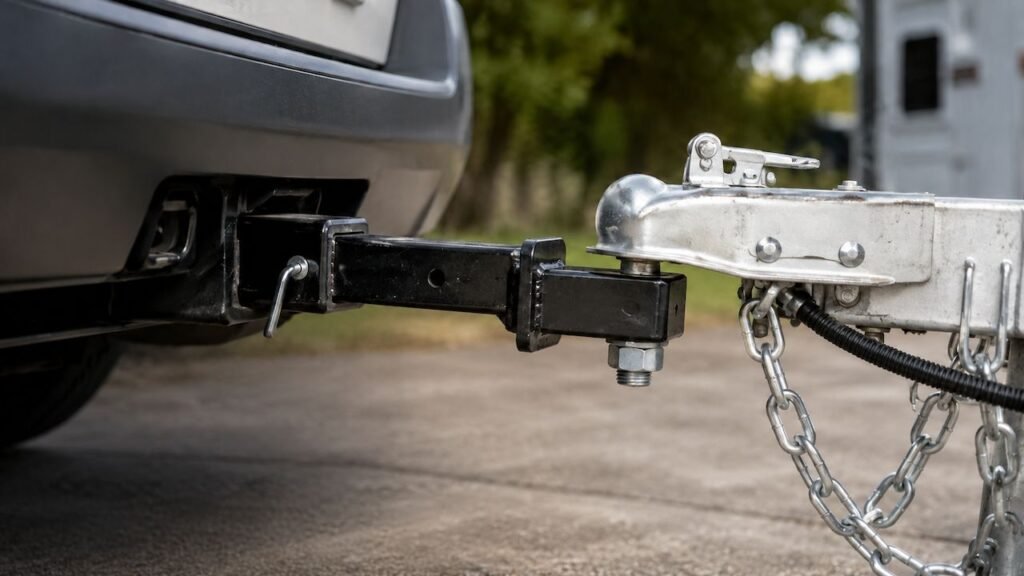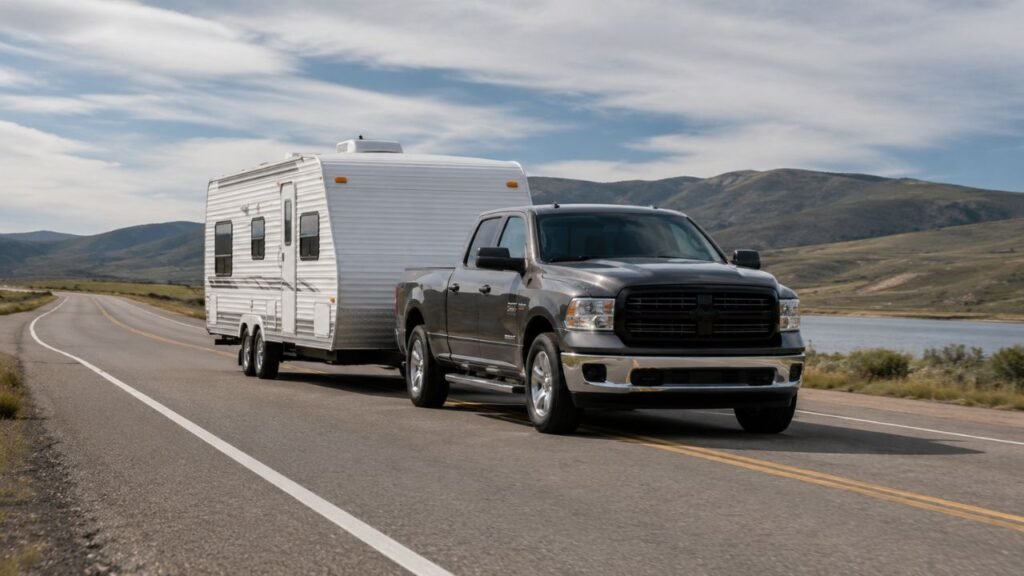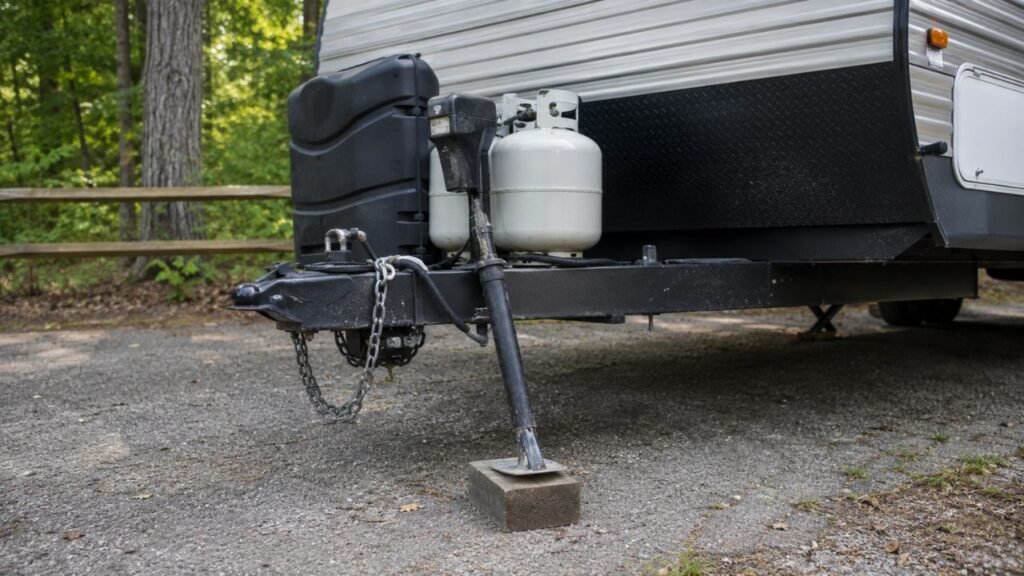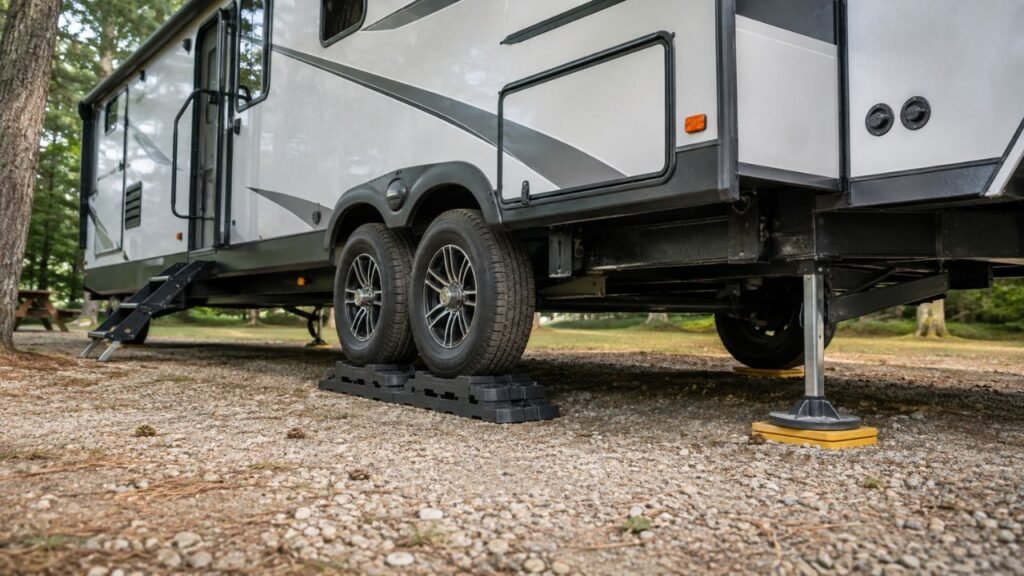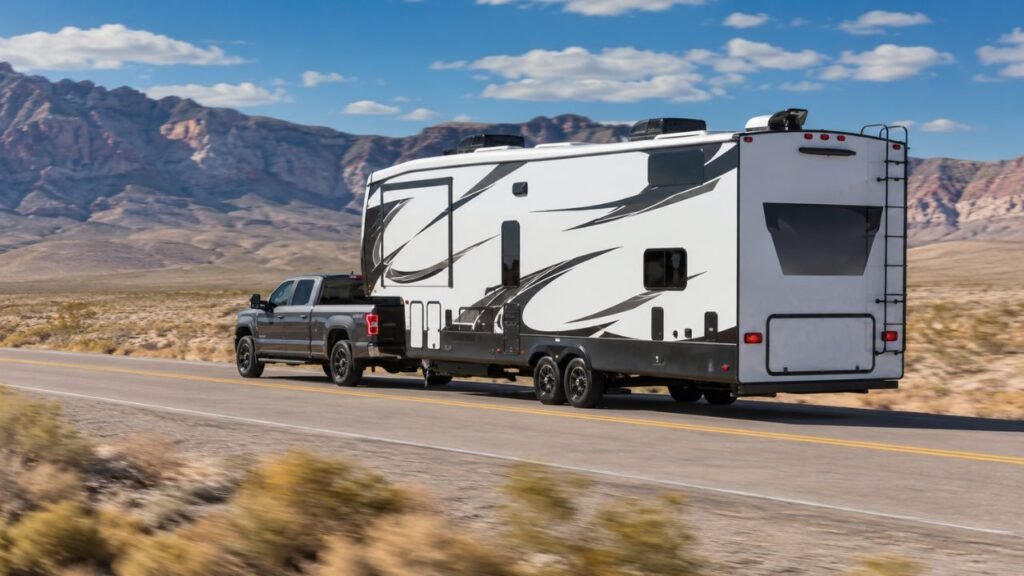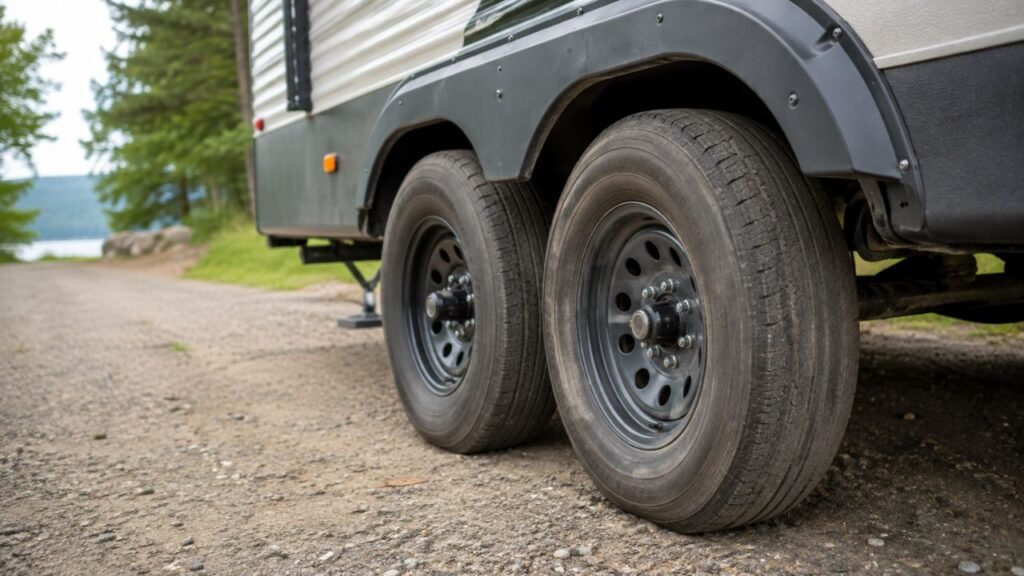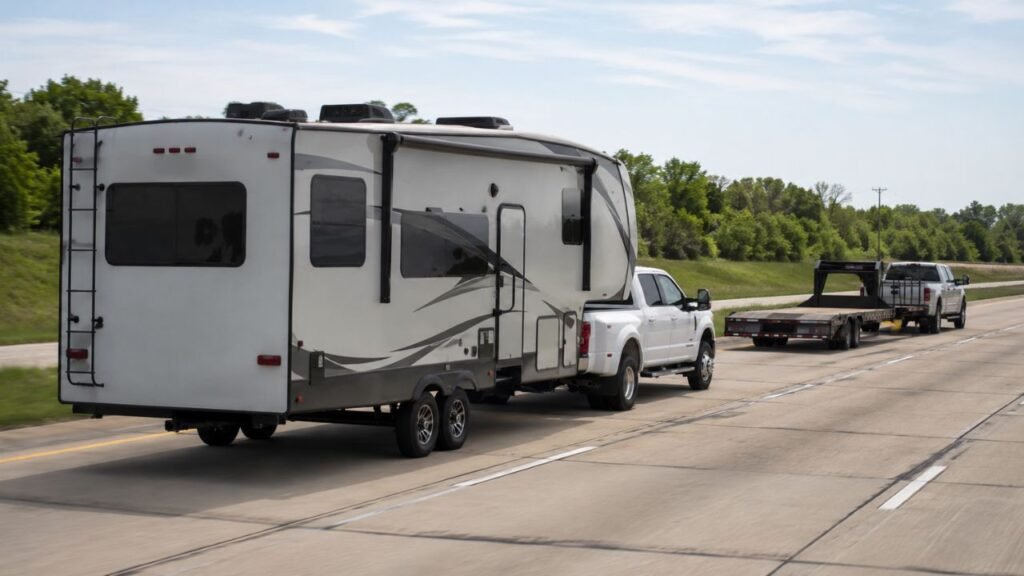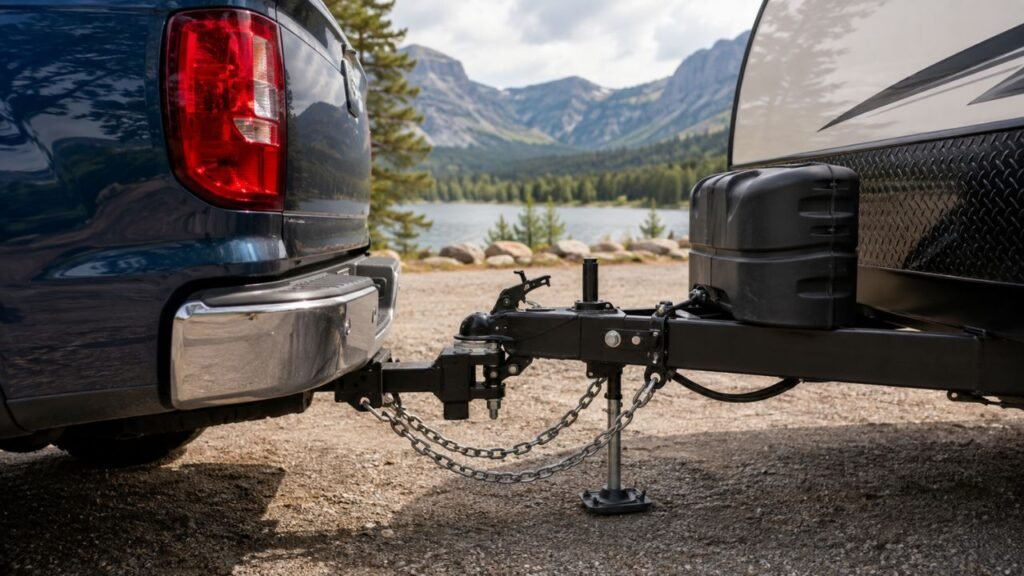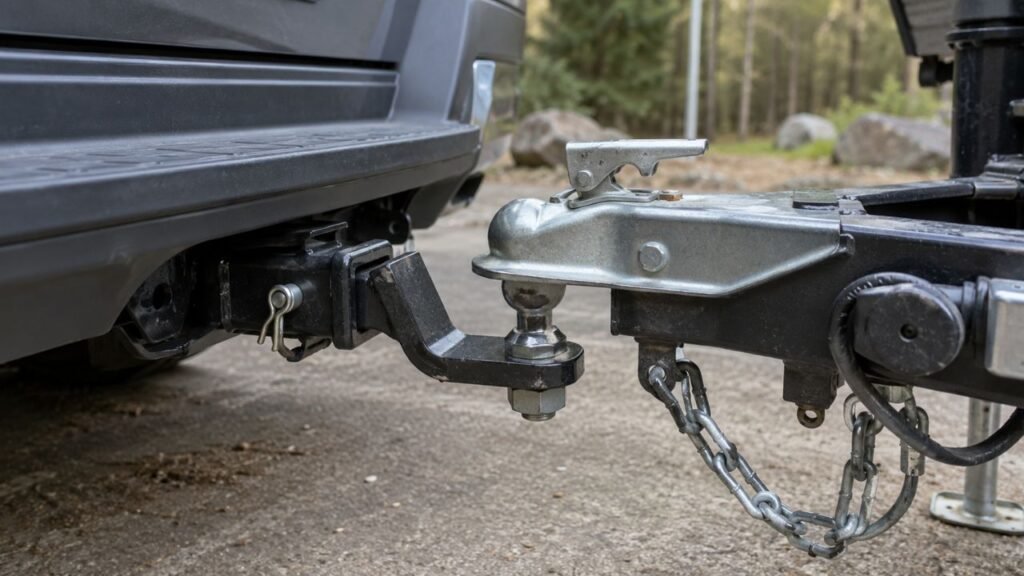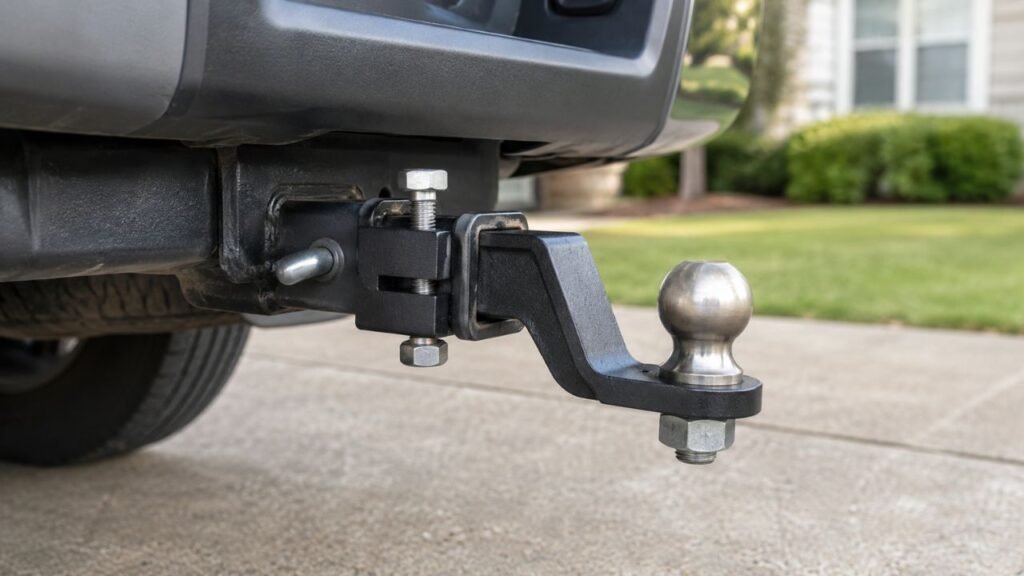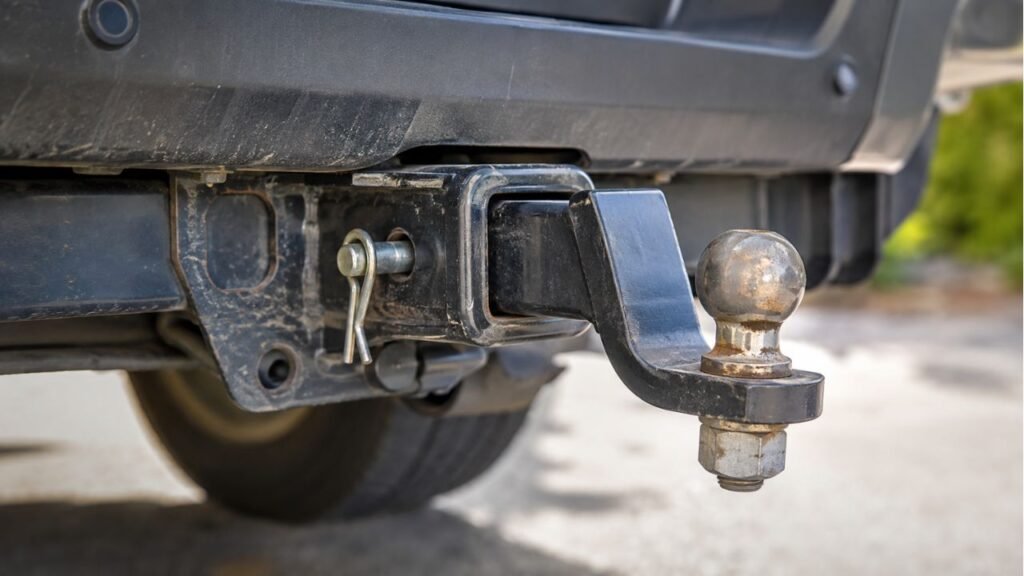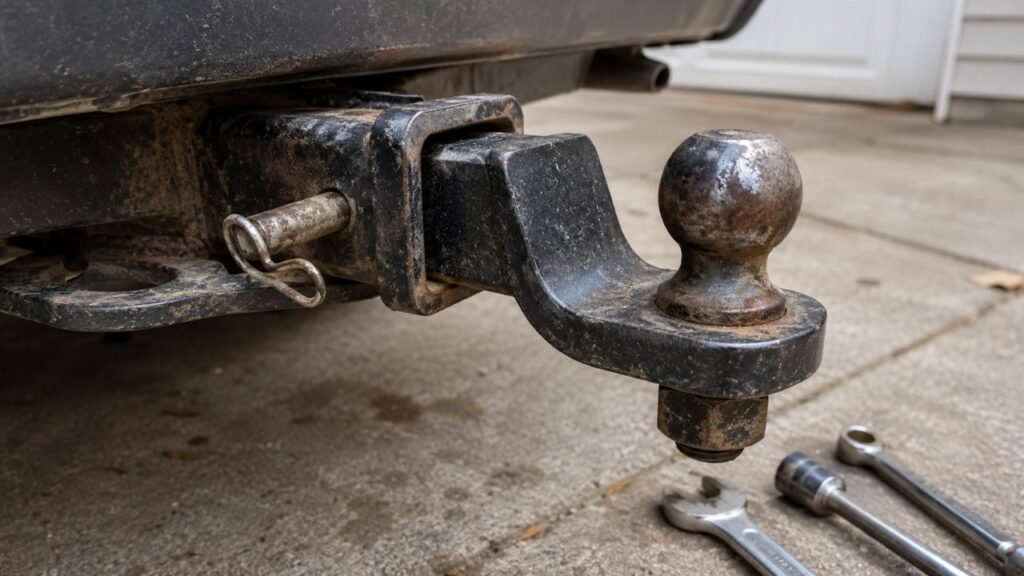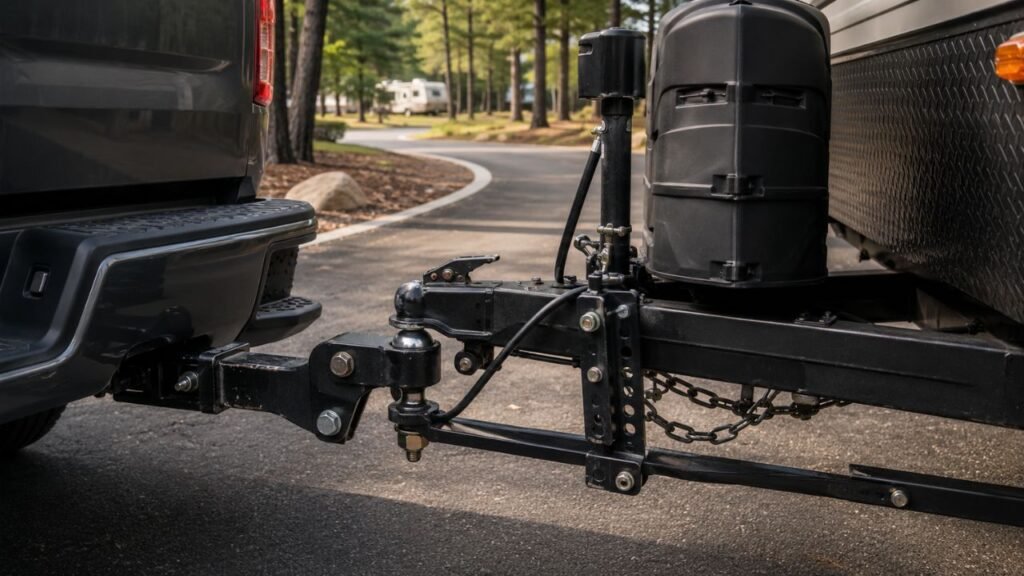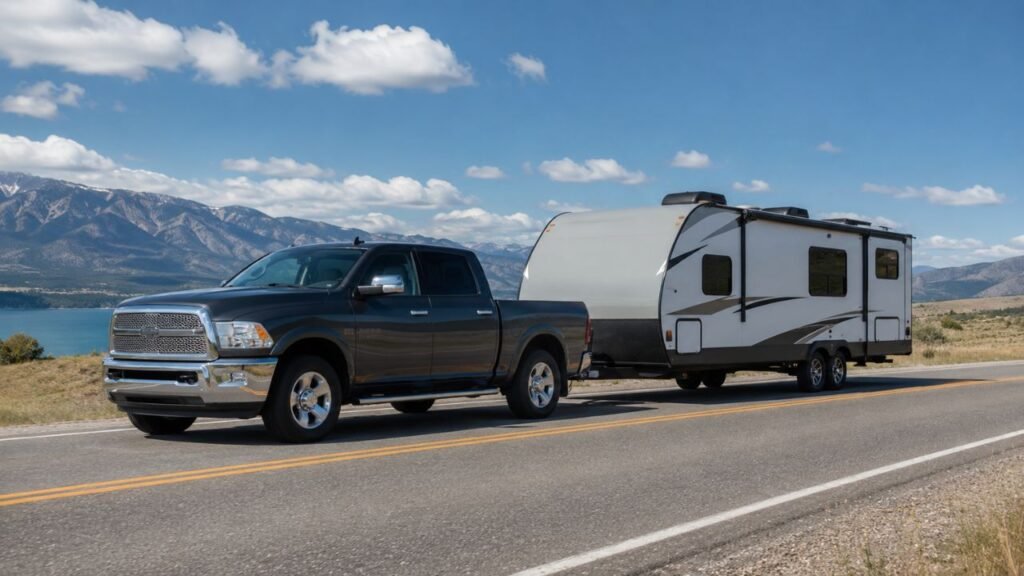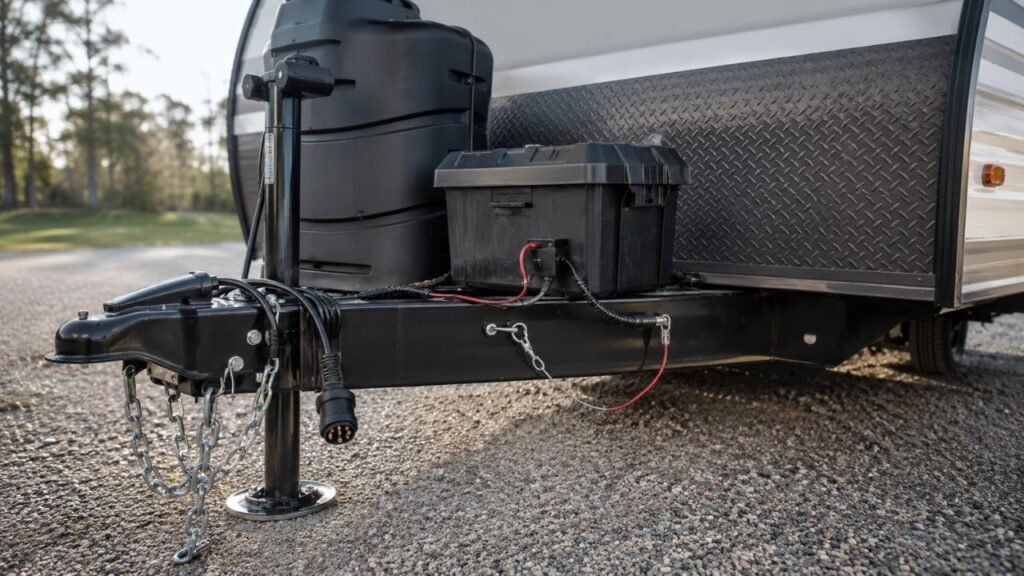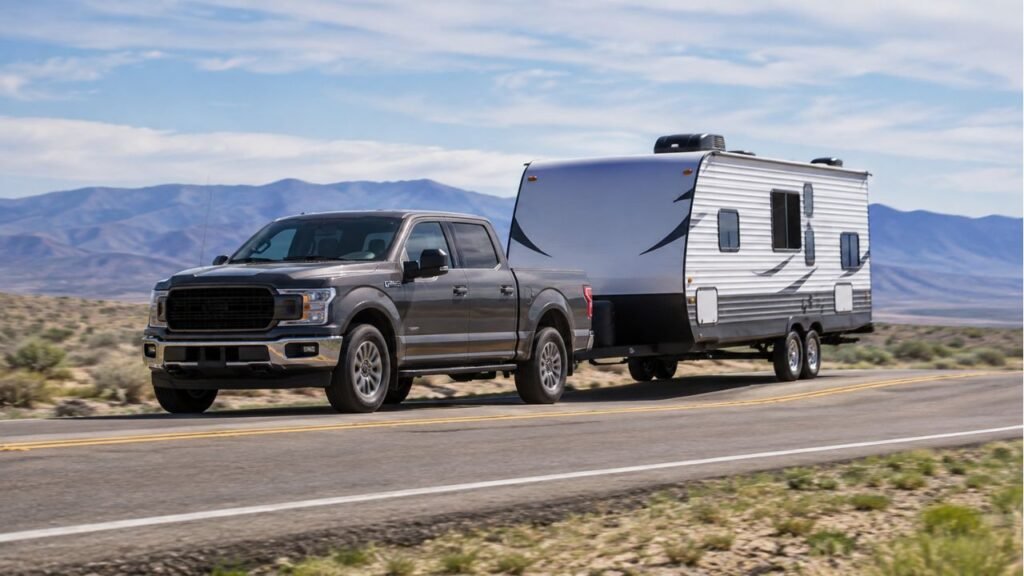
A trailer usually bounces while towing because its tongue weight, cargo balance, tire pressure, hitch height, or suspension setup is incorrect. Empty trailers also bounce more because their stiff springs cannot compress enough to absorb road impacts.
In this guide, I will help you identify the movement, find its cause, and correct the problem safely. You will also learn when normal road movement becomes a warning sign.
Key Takeaways
- Empty trailers often bounce because their suspensions are designed for heavier loads.
- Low tongue weight can cause bouncing, instability, and dangerous trailer sway.
- Excessive tongue weight may create tow vehicle sag and porpoising.
- Incorrect tire pressure can make road impacts feel much more severe.
- A nose-high or nose-low trailer may load its axles unevenly.
- Worn springs, shocks, tires, bearings, or axles can cause persistent bouncing.
- A weight distribution hitch helps some setups but cannot repair mechanical problems.
- Violent bouncing, wheel hop, or sideways movement requires immediate attention.
What Causes a Trailer to Bounce While Towing?
Trailer bounce does not always come from one obvious problem. I recommend looking at when the movement starts, how the trailer is loaded, and whether the tow vehicle also moves vertically.
Tongue Weight Is Too Light
Tongue weight is the downward force the trailer places on the hitch ball. When this force becomes too light, the trailer’s front end can lift easily.
The trailer may then bounce after every dip or road seam. It may also feel nervous when wind or passing trucks disturb it.
Low tongue weight often happens when cargo sits too far behind the axles. Rear cargo racks, spare tires, toolboxes, and motorcycles can also reduce tongue weight.
Many conventional bumper-pull trailers commonly need approximately 10% to 15% tongue weight. However, you should always follow your trailer manufacturer’s exact recommendation.
Do not estimate tongue weight by looking at vehicle sag. Use a tongue weight scale or a suitable vehicle scale instead.
Tongue Weight Is Too Heavy
Too much tongue weight can also create uncomfortable vertical movement. The tow vehicle’s rear suspension may compress while its front axle becomes lighter.
This condition can cause the vehicle and trailer to rise and fall together. That repeated pitching motion is often called porpoising.
Excessive tongue weight may come from heavy cargo placed too far forward. Full water tanks, batteries, generators, and front storage compartments can significantly change the balance.
Never correct low tongue weight by moving everything toward the front. You still need to remain within every vehicle, hitch, axle, and tire rating.
The Trailer Is Empty or Lightly Loaded
An empty utility trailer often bounces more than a loaded trailer. Its leaf springs may be rated for several thousand pounds.
Without enough weight, those springs barely flex over road bumps. Instead of absorbing the impact, the suspension transfers movement into the trailer frame.
This does not always mean something is broken. A certain amount of empty-trailer movement can be normal.
However, violent hopping or repeated tire contact loss is not normal. Those symptoms may indicate incorrect tire pressure, oversized springs, damaged components, or wheel problems.
Cargo Is Positioned Incorrectly
Cargo placement changes how each axle and spring responds. Even a trailer within its weight rating can bounce when loaded poorly.
Heavy cargo placed behind the axles can reduce tongue weight. Heavy cargo concentrated at the front can overload the hitch.
Cargo stacked high also raises the trailer’s center of gravity. This may make vertical movement feel stronger during turns or sudden lane changes.
Your load should remain low, balanced, and securely restrained. It must not slide forward, backward, or sideways while traveling.
The Trailer Tires Are Overinflated
Overinflated tires have less flexibility in their sidewalls. They may transfer more road shock directly into the suspension and frame.
This can make an empty or lightly loaded trailer feel extremely harsh. Concrete expansion joints may become especially noticeable.
However, you should not lower pressure based only on ride comfort. Trailer tires must carry their load without excessive heat or sidewall flex.
Check the trailer manufacturer’s placard, owner’s manual, tire specifications, and approved load-pressure guidance. Never reduce pressure below a safe requirement for the actual axle load.
The Trailer Tires Are Underinflated
Underinflated tires may feel softer initially, but they create serious risks. The sidewalls flex repeatedly and generate excessive heat.
This can cause poor tracking, irregular movement, uneven wear, or tire failure. A soft tire may also create a rhythmic bounce at certain speeds.
Always measure tire pressure when the tires are cold. Check every tire, including tires on the same axle.
A pressure difference between left and right sides can make one side behave differently.
The Hitch Height Is Incorrect
Your trailer should normally tow level when fully loaded. A nose-high or nose-low position changes how weight rests across the axles.
On a tandem-axle trailer, an incorrect angle can overload one axle. It may also prevent the suspension equalizer from working effectively.
A nose-high trailer may carry too much weight on its rear axle. A nose-low trailer may place excessive weight on its front axle.
Measure the trailer frame on level ground after loading everything. Adjust the ball mount rise or drop when necessary.
The Tow Vehicle’s Suspension Is Contributing
Sometimes the trailer is not the only source of movement. The tow vehicle’s rear suspension may be overloaded, worn, or poorly matched.
Weak shocks allow the vehicle to continue moving after a bump. The trailer can then push and pull against that movement.
A stiff unloaded pickup suspension can also make impacts feel harsher. This is especially noticeable when towing a light trailer.
Check for excessive rear sag, fluid leaking from shocks, uneven ride height, and repeated bouncing after pushing down on the vehicle.
The Trailer Suspension Is Worn or Damaged
Trailer suspension components work together to control axle movement. Wear in one component can affect the entire setup.
Common trouble areas include:
- Cracked, bent, or flattened leaf springs
- Worn spring-eye bushings
- Loose or stretched shackle plates
- Damaged suspension equalizers
- Loose or broken U-bolts
- Bent spring hangers
- Failed shock absorbers
- Incorrect replacement springs
- Broken welds around suspension mounts
A damaged spring may make one side sit lower. Loose shackles can create clunking and unpredictable axle movement.
Any cracked, bent, or loose structural component needs professional attention.
A Tire, Wheel, Hub, or Axle Is Damaged
A rhythmic bounce that increases with speed may indicate a rotating component problem.
Possible causes include:
- A tire with internal belt separation
- A tire that is no longer round
- A bent wheel
- Incorrectly balanced wheels
- Loose wheel bearings
- A damaged hub
- A bent trailer axle
- Uneven tire sizes
- Severe tire cupping
Inspect every tire carefully. A tire can look acceptable from one side while hiding damage on the inner sidewall.
If one wheel repeatedly hops, stop towing until the cause is identified.
The Trailer Is Overloaded
An overloaded trailer may compress its springs too far. The suspension can bottom out over bumps and rebound sharply afterward.
Overloading also increases heat inside tires, bearings, and brakes. The trailer may feel unstable even when cargo appears evenly positioned.
You need actual scale weights to confirm the situation. Visual estimates are not reliable.
Check the trailer’s gross vehicle weight rating, axle ratings, tire capacities, and hitch limits. Every rating must remain within its allowed range.
Road Surfaces Are Creating a Repeated Rhythm
Some trailers bounce more on specific roads. Concrete highways, bridge joints, and evenly spaced repairs can create repeated impacts.
At one speed, those impacts may match the trailer’s natural suspension movement. This can make each bounce build upon the previous one.
Reducing speed can interrupt the rhythm and improve control. However, speed changes should not replace a proper inspection.
A correctly loaded and maintained trailer should recover quickly after most road bumps.
Trailer Bounce vs. Sway, Porpoising, Chucking, and Vibration
People often describe every uncomfortable towing movement as bouncing. Identifying the correct motion helps you avoid repairing the wrong component.
| Towing Movement | What It Feels Like | Common Causes | First Check |
| Trailer bounce | Trailer moves vertically over bumps | Light load, stiff springs, tire pressure, worn suspension | Load, tires, and springs |
| Porpoising | Vehicle and trailer repeatedly rise and dip | Hitch setup, excessive tongue weight, weak shocks | Loaded weights and vehicle sag |
| Trailer sway | Trailer moves from side to side | Low tongue weight, poor loading, speed, wind | Tongue weight and cargo position |
| Chucking | Sharp forward-and-back movement at the hitch | Hitch play, road joints, poor loading | Coupler, receiver, and hitch fit |
| Vibration | Fast shaking that increases with speed | Tire, wheel, hub, or bearing issue | Tires, wheels, and bearings |
| Wheel hop | One wheel repeatedly jumps or loses contact | Tire defect, brake issue, axle damage | Wheel, brake, and axle inspection |
Trailer bounce is mostly vertical movement within the trailer. Porpoising affects the entire vehicle-trailer combination.
Sway is different and generally more dangerous. It moves the trailer sideways and can quickly reduce control.
How to Diagnose Trailer Bounce
Start your diagnosis with the trailer loaded exactly as you normally tow it. Change one thing at a time so you can identify what actually improves the problem.
Step 1: Identify When the Bounce Happens
Pay attention to the exact conditions causing the movement.
- Only when the trailer is empty
- Immediately after hitting a bump
- Continuously on smooth roads
- At one particular speed
- While braking
- During acceleration
- Only when fully loaded
- After installing new tires
- After changing the hitch
- After adding rear-mounted cargo
This information quickly narrows the possible causes.
An empty-only bounce often points toward stiff suspension or tire pressure. Speed-related bouncing may suggest tire, wheel, hub, or axle problems.
Step 2: Confirm the Trailer’s Loaded Weight
Take the loaded trailer to a suitable public vehicle scale. Include water, fuel, tools, batteries, cargo, and travel supplies.
Check these ratings:
- Gross trailer weight
- Gross vehicle weight rating
- Gross axle weight ratings
- Tire load capacity
- Wheel load capacity
- Coupler rating
- Hitch receiver rating
- Ball mount rating
- Tow vehicle payload rating
Do not assume the trailer is safe because the tow vehicle can pull it. Pulling capacity is only one part of safe towing.
Step 3: Measure Loaded Tongue Weight
Measure tongue weight after the trailer is fully prepared for travel. Small cargo changes can make a noticeable difference.
Use a dedicated tongue weight scale or an accepted scale method. Place the trailer at its normal towing height during measurement.
Compare the result with the manufacturer’s recommended range. Many bumper-pull trailers commonly fall near 10% to 15% of loaded trailer weight.
For example, a 5,000-pound loaded trailer may commonly need around 500 to 750 pounds of tongue weight. Your exact trailer may require a different target.
Step 4: Check Cargo Placement
Open every storage compartment and inspect your load placement.
- Keep heavy items low.
- Place major weight near the axle area.
- Maintain sufficient weight forward of the axles.
- Avoid concentrating cargo at the trailer’s rear.
- Balance cargo from left to right.
- Secure every object against movement.
- Consider the weight of full and empty tanks.
- Include rear racks and spare tires in calculations.
Do not rely on the common “60/40 rule” without measuring tongue weight. Trailer designs, axle positions, and cargo layouts differ greatly.
Step 5: Check Whether the Trailer Tows Level
Park the loaded trailer and tow vehicle on flat ground. Connect the hitch exactly as used during travel.
Measure from the trailer frame to the ground near the front and rear. The measurements should be close unless the manufacturer specifies otherwise.
If the trailer sits nose-high or nose-low, select a properly rated ball mount with the correct rise or drop.
Recheck the coupler height after adjusting the hitch. Also confirm adequate ground clearance.
Step 6: Inspect Tires and Pressure
Check all tires while they are cold.
Look for:
- Incorrect pressure
- Different pressures on one axle
- Bulges or raised areas
- Cracked sidewalls
- Uneven tread wear
- Flat spots
- Separated tread
- Mismatched tire sizes
- Incorrect load ranges
- Tires contacting the trailer body
Replace damaged tires before towing again. Never depend on an old tire simply because its tread looks deep.
Step 7: Inspect Suspension and Running Gear
Safely inspect the trailer’s underside or use a qualified technician.
Check:
- Leaf springs
- Spring hangers
- Shackles
- Bushings
- Equalizers
- U-bolts
- Shock absorbers
- Axles
- Wheel bearings
- Brake assemblies
- Frame welds
- Suspension mounting points
Look for shiny metal around bolts. That may indicate movement where parts should remain tight.
Rust streaks, cracked paint, and elongated bolt holes can also reveal looseness.
Step 8: Perform a Controlled Test Drive
Test the trailer on a familiar road at a safe speed. Avoid heavy traffic and poor weather.
Change only one setup variable before each test. For example, correct cargo placement before adjusting hitch equipment.
Stop the test immediately if the trailer sways, hops violently, pulls sideways, or produces grinding noises.
Trailer Bounce Quick-Diagnosis Chart
Use this chart to connect the symptom with the most likely starting point. It does not replace a physical inspection.
| What You Notice | Most Likely Cause | Check First | Possible Correction |
| Empty trailer bounces on rough roads | Stiff, underloaded suspension | Spring rating and tire pressure | Verify specifications and inspect suspension |
| Trailer bounces and sways | Tongue weight too low | Loaded tongue weight | Move secured cargo forward |
| Entire rig rises and falls | Porpoising | Tongue weight, hitch, and vehicle shocks | Correct loading and hitch setup |
| Bounce began after new tires | Pressure or tire mismatch | Tire size, rating, and cold pressure | Correct pressure or tire selection |
| Bounce happens at one speed | Tire, wheel, hub, or road rhythm | Tires and rotating components | Balance, repair, or replace |
| One side bounces more | Uneven load or damaged suspension | Side-to-side load and springs | Rebalance or repair |
| Movement continues after every bump | Weak shocks or worn suspension | Vehicle and trailer shocks | Replace worn parts |
| Loaded trailer still bounces heavily | Overload or suspension damage | Scale weights and undercarriage | Reduce load and inspect |
| Bounce appears while braking | Brake or axle problem | Brake controller, drums, and hubs | Service the braking system |
| Trailer suddenly starts bouncing | Tire or mechanical failure | Tires, wheels, bearings, and springs | Stop and inspect immediately |
How to Stop a Trailer From Bouncing
The correct fix depends on the actual cause. Do not install expensive equipment before checking loading, weights, tires, hitch height, and worn parts.
Correct the Tongue Weight
If tongue weight is too low, move secured cargo slightly forward. Make small changes and measure again.
If tongue weight is excessive, move suitable cargo closer to the axle area. Avoid shifting too much weight behind the axles.
Recheck all limits after every adjustment. The receiver and tow vehicle payload can become overloaded before the trailer reaches its maximum weight.
Redistribute and Secure the Cargo
Organize cargo so the trailer remains balanced throughout the trip.
Pay special attention to:
- Batteries
- Propane cylinders
- Water tanks
- Fuel tanks
- Toolboxes
- Generators
- Motorcycles
- ATVs
- Spare tires
- Rear cargo racks
Liquids can also change weight distribution as tanks fill or empty. Consider how your return-trip setup differs from departure.
Use suitable straps, wheel chocks, anchor points, and cargo restraints. Never depend on compartment doors to hold heavy objects.
Adjust the Hitch Height
A properly rated ball mount should keep the loaded trailer nearly level. Measure before buying a different rise or drop.
The trailer coupler and hitch ball must also match exactly. Confirm ball size, shank size, and weight rating.
After adjusting hitch height, inspect safety-chain clearance and jack clearance. Also verify that the trailer remains level under real travel weight.
Set Tire Pressure Correctly
Use the trailer placard and tire manufacturer’s approved guidance. Confirm pressure when the tires are cold.
Do not automatically inflate every trailer tire to the sidewall maximum. The correct approach depends on the trailer manufacturer’s instructions and actual loading.
Do not lower pressure simply to soften the ride. Excessively low pressure can cause dangerous heat buildup.
When uncertainty remains, ask the trailer or tire manufacturer for approved pressure guidance.
Repair Worn Suspension Components
Replace damaged or excessively worn components before further highway towing.
Bushings and shackles are relatively small parts, but they control axle movement. Excessive play can create clunking, bouncing, and uneven tire wear.
Loose U-bolts require immediate attention. The axle must remain securely clamped to the spring.
Spring, hanger, frame, and axle repairs should be completed by qualified professionals.
Add Trailer Shock Absorbers When Appropriate
Many trailers use leaf springs without shock absorbers. Adding properly designed shocks may help control repeated spring movement.
Shocks slow the suspension’s compression and rebound. They may improve ride quality on rough roads.
However, shocks cannot correct:
- Incorrect tongue weight
- Poor cargo placement
- Overloading
- Bent axles
- Damaged tires
- Broken springs
- Incorrect hitch height
Confirm that a shock kit is designed for your axle, frame, and suspension travel.
Use a Weight Distribution Hitch When Required
A weight distribution hitch can transfer some hitch load toward the tow vehicle’s front axle and the trailer axles.
This may reduce rear sag and porpoising. It can also improve steering feel when properly selected and adjusted.
However, it does not create proper tongue weight. It also cannot repair worn suspension or damaged tires.
Choose the system using actual loaded tongue weight. Include cargo placed behind the tow vehicle’s rear axle when calculating hitch load.
Follow the tow vehicle, receiver, hitch, and trailer manufacturer’s requirements.
Upgrade the Suspension Only After Diagnosing the Cause
Suspension upgrades may improve control when the original setup is inadequate or worn.
Possible upgrades include:
- Correctly rated replacement leaf springs
- Heavy-duty equalizers
- Wet bolts and improved bushings
- Trailer shock absorbers
- Rubber-cushioned suspension systems
- Properly designed independent suspension systems
Avoid installing heavier springs simply because the trailer bounces. Stiffer springs may make a lightly loaded trailer ride worse.
Airbags on the tow vehicle can restore ride height in some situations. They do not increase payload or axle ratings.
Why Does My Empty Trailer Bounce So Much?
An empty trailer bounces because its suspension is carrying far less weight than designed. The springs remain stiff and cannot absorb small road impacts effectively.
Before accepting the movement as normal, check several basic items:
- Confirm the tires have the correct cold pressure.
- Verify that the installed springs match the trailer.
- Make sure the trailer tows level.
- Inspect every tire for deformation.
- Check wheels, hubs, and bearings.
- Inspect shackles, equalizers, and U-bolts.
- Reduce speed on broken roads.
- Avoid sudden steering or braking.
Never add loose ballast just to reduce bouncing. Unsecured weight can shift, damage the trailer, or become a dangerous projectile.
Some movement may remain when towing an empty utility trailer. However, the tires should maintain reliable road contact.
Why Does My Trailer Bounce Even When Loaded?
A loaded trailer should compress its suspension more effectively than an empty trailer. Continued bouncing often points toward loading, tire, hitch, or mechanical problems.
The Load Is Heavy but Poorly Positioned
A heavy trailer can still have insufficient tongue weight. Total weight does not reveal where that weight sits.
Measure tongue weight and axle loads separately. Then reposition cargo while respecting every component rating.
The Trailer Is Overloaded
Overloaded springs may flatten or bottom out. Once compressed, they cannot absorb another bump properly.
The resulting rebound may feel like a strong upward kick. Tires and wheel bearings may also run hotter.
Remove unnecessary cargo and obtain accurate scale weights.
The Suspension Cannot Control Rebound
Worn shocks, loose bushings, damaged equalizers, or incorrect springs may allow repeated movement.
The trailer may continue bouncing several times after crossing one bump. Listen for clunks and inspect for looseness.
A Tire, Wheel, Hub, or Axle Is Faulty
A rotating defect can remain noticeable regardless of cargo weight. The movement often increases with road speed.
Inspect the tires, wheels, bearings, hubs, and axles before adjusting the hitch repeatedly.
Can a Weight Distribution Hitch Stop Trailer Bounce?
A weight distribution hitch may reduce porpoising caused by rear vehicle sag or poor axle loading. It helps the vehicle and trailer work together more evenly.
However, it may not stop an empty trailer’s suspension bounce. It also cannot fix tire defects, broken springs, bent axles, or incorrect cargo placement.
A poorly adjusted weight distribution hitch can create additional problems. Excessive tension may produce harsh handling or incorrect axle loading.
Always select and adjust the hitch using measured loaded tongue weight.
Is Trailer Bounce Dangerous?
Mild vertical movement over rough pavement may be normal. Repeated, severe, or unpredictable bouncing can become dangerous.
Possible consequences include:
- Reduced tire contact with the road
- Inconsistent trailer braking
- Increased stopping distance
- Poor steering response
- Cargo movement or damage
- Tire cupping and irregular wear
- Loosened bolts and fasteners
- Spring and shackle damage
- Excessive coupler stress
- Hitch receiver fatigue
- Reduced control during emergency maneuvers
Bounce becomes more concerning when combined with sway. Slow down gradually and avoid sudden steering inputs.
Do not continue highway towing until severe movement has been diagnosed.
When Should I Stop Towing Immediately?
Some symptoms suggest an active mechanical or tire failure. Continuing to tow may worsen the damage quickly.
Stop in a safe location when:
- A wheel repeatedly leaves the road.
- The trailer begins bouncing and swaying together.
- One side suddenly sits lower.
- A tire develops a bulge or exposed cord.
- Tread begins separating from a tire.
- A spring, hanger, or shackle appears broken.
- The coupler or hitch moves abnormally.
- Braking causes violent hopping.
- The trailer pulls strongly toward one side.
- Grinding, scraping, or heavy clunking begins.
- A wheel or hub feels unusually hot.
- The trailer remains unstable after reducing speed.
Arrange a professional inspection before continuing. A roadside delay is safer than losing control.
How to Prevent Trailer Bounce Before Every Trip
A brief inspection can prevent many towing problems. Use the same routine before every departure.
- Load the trailer consistently.
- Measure tongue weight after major cargo changes.
- Stay within all vehicle and trailer ratings.
- Keep heavy cargo low.
- Secure every item.
- Check cold tire pressure.
- Inspect tires for damage.
- Confirm wheel-lug torque as specified.
- Check the coupler lock.
- Verify hitch-pin installation.
- Confirm safety-chain attachment.
- Test trailer brakes.
- Check breakaway cable operation.
- Confirm the loaded trailer rides level.
- Inspect springs and shackles.
- Look for loose U-bolts.
- Check lights and wiring.
- Reinspect after the first few miles.
Adding batteries, toolboxes, racks, or larger tanks may change trailer balance. Reweigh the setup after making significant modifications.
Common Trailer Bounce Fixes That Can Make Things Worse
Some popular fixes hide symptoms without correcting the actual problem. I recommend avoiding these shortcuts until the trailer has been weighed and inspected.
Lowering Tire Pressure Without Checking Requirements
Lower pressure may soften the ride, but it also increases sidewall flex. Excessive flex creates heat and possible tire failure.
Only use pressures approved for your tire, load, and trailer setup.
Adding Random Weight to an Empty Trailer
Ballast may reduce bouncing, but its location changes tongue weight and axle loading.
Loose blocks, scrap metal, or containers can move during braking. Never carry unnecessary unsecured weight.
Overtightening a Weight Distribution Hitch
More spring-bar tension is not always better. Excessive adjustment can reduce rear axle loading or create harsh handling.
Follow the hitch manufacturer’s measurement and setup procedure.
Installing Heavier Leaf Springs
Heavier springs increase load capacity only when the entire trailer supports that rating. They do not increase axle, tire, wheel, or frame ratings.
Stiffer springs may also make an empty trailer bounce more severely.
Replacing Parts Without Measuring the Trailer
It is easy to blame shocks, tires, or the hitch. However, incorrect tongue weight may remain the actual cause.
Measure first, inspect second, and replace parts only when evidence supports it.
Final Verdict
Trailer bounce usually starts with loading, tongue weight, tire pressure, hitch height, or suspension response. Begin with measurements rather than buying new equipment.
First, weigh the fully loaded trailer and measure its tongue weight. Then correct cargo placement and confirm the trailer rides level.
Next, inspect tires, wheels, bearings, springs, shackles, U-bolts, brakes, and axles. Address every damaged or loose component before testing again.
A weight distribution hitch or suspension upgrade may improve some setups. However, equipment should never hide overloading or mechanical damage.
Once you identify the exact type of movement, the solution becomes much clearer. A properly loaded and maintained trailer should settle quickly after normal road bumps.
Related FAQs
Why Does My Trailer Bounce When Empty?
An empty trailer often bounces because its leaf springs are designed for much heavier loads. Check tire pressure, spring ratings, hitch height, and suspension condition before assuming the movement is normal.
Why Does My Trailer Bounce at a Certain Speed?
Speed-specific bouncing may come from tire imbalance, tire deformation, bent wheels, loose bearings, axle damage, or evenly spaced road joints. Inspect rotating components before continuing at highway speeds.
Why Does My Trailer Bounce After Hitting a Bump?
The suspension may be too stiff, underloaded, worn, or unable to control rebound. Weak shocks, loose shackles, incorrect springs, and excessive tire pressure can make movement continue after one bump.
Why Does My Trailer Bounce More on Concrete Highways?
Concrete roads often have evenly spaced expansion joints. Those joints can create a repeated rhythm that matches the trailer’s suspension movement and makes each bounce feel stronger.
Can Too Much Tongue Weight Cause Bouncing?
Yes, excessive tongue weight can compress the tow vehicle’s rear suspension and create porpoising. Measure the loaded tongue weight and confirm that every hitch and vehicle rating remains within limits.
Can Too Little Tongue Weight Cause Bouncing?
Yes, low tongue weight allows the trailer’s front end to lift more easily. It can also increase sway, so reposition cargo and measure the result before towing again.
Is Trailer Bounce Different From Trailer Sway?
Yes, bounce is mainly vertical movement, while sway is sideways movement. Sway can increase quickly and become dangerous, especially when tongue weight is too low.
Will a Weight Distribution Hitch Reduce Bouncing?
It may reduce porpoising and vehicle sag when properly selected. It will not correct damaged suspension, defective tires, poor cargo placement, or an underloaded trailer suspension.
Can Overinflated Trailer Tires Cause Bouncing?
Yes, excessive pressure can reduce tire flexibility and transfer more road shock into the trailer. Use pressure guidance approved for the trailer, tire, and actual load.
Can Worn Shocks Make a Trailer Bounce?
Yes, worn shocks may allow the suspension to keep moving after a bump. The tow vehicle’s shocks can also contribute to repeated up-and-down movement.
Why Does Only One Side of My Trailer Bounce?
Uneven cargo, different tire pressures, a damaged spring, worn bushings, a bent axle, or a defective tire can affect one side. Inspect both sides carefully and compare their ride height.
Can a Bent Axle Cause Trailer Bounce?
Yes, a bent axle can create uneven tire contact, irregular wear, vibration, and rhythmic bouncing. An axle specialist should measure alignment and inspect the suspension mounting points.
How Much Tongue Weight Does My Trailer Need?
Many conventional bumper-pull trailers commonly need approximately 10% to 15% of loaded trailer weight. Follow your trailer manufacturer’s exact specification and confirm it using a scale.
Should I Lower Tire Pressure When Towing an Empty Trailer?
Do not lower pressure without approved guidance. Insufficient pressure can create heat, sidewall damage, and tire failure, even when the trailer feels smoother.
Can Trailer Bounce Damage the Hitch or Suspension?
Yes, repeated bouncing can stress the coupler, receiver, ball mount, springs, shackles, hangers, cargo, and frame connections. Severe movement should be corrected before it causes additional damage.

Scott Miller shares real-world RV road trip insights built from years of traveling open highways and backroads. He covers route planning, campground choices, and travel gear with a practical mindset. His content is written for RVers who value reliability over trends.