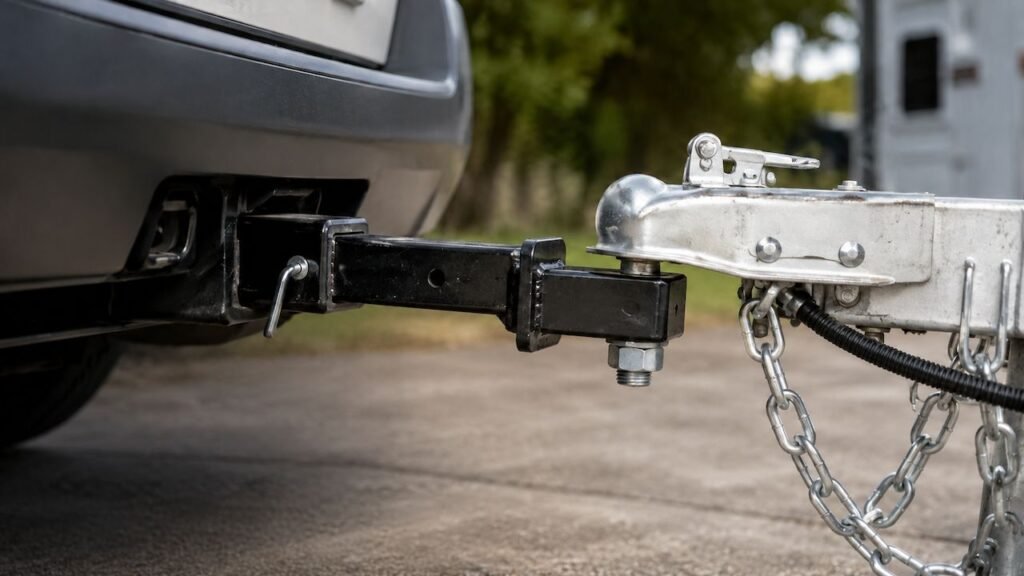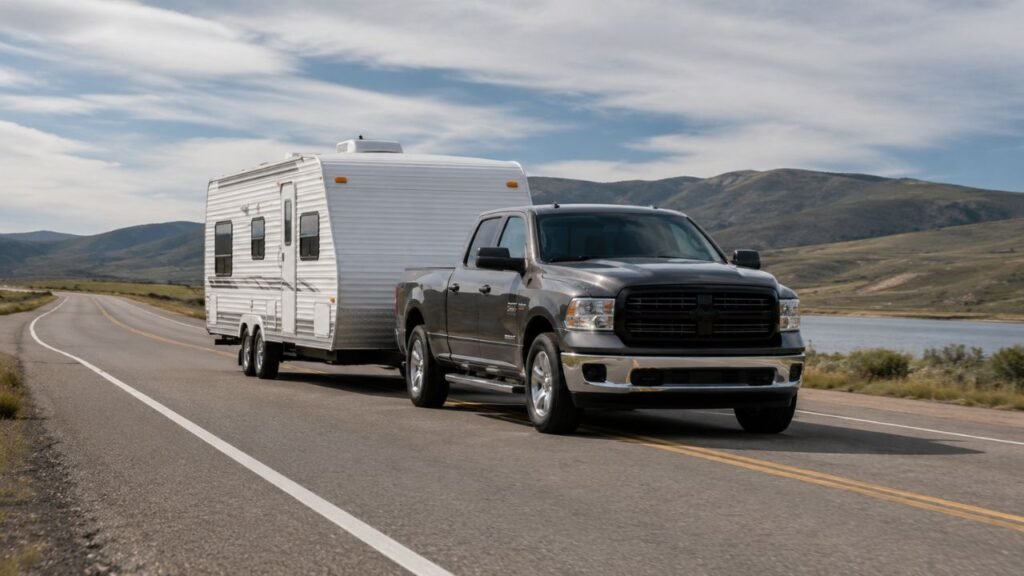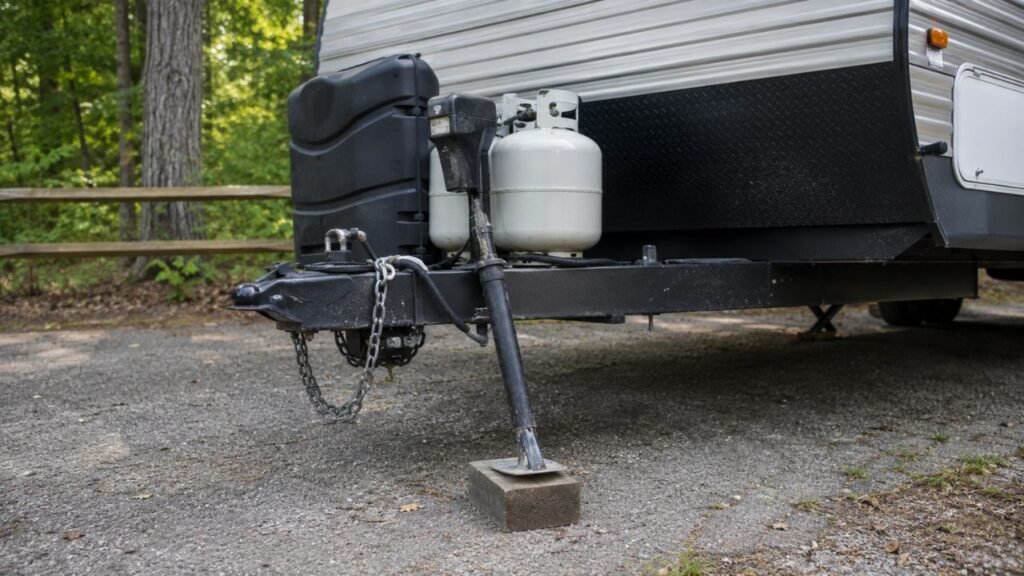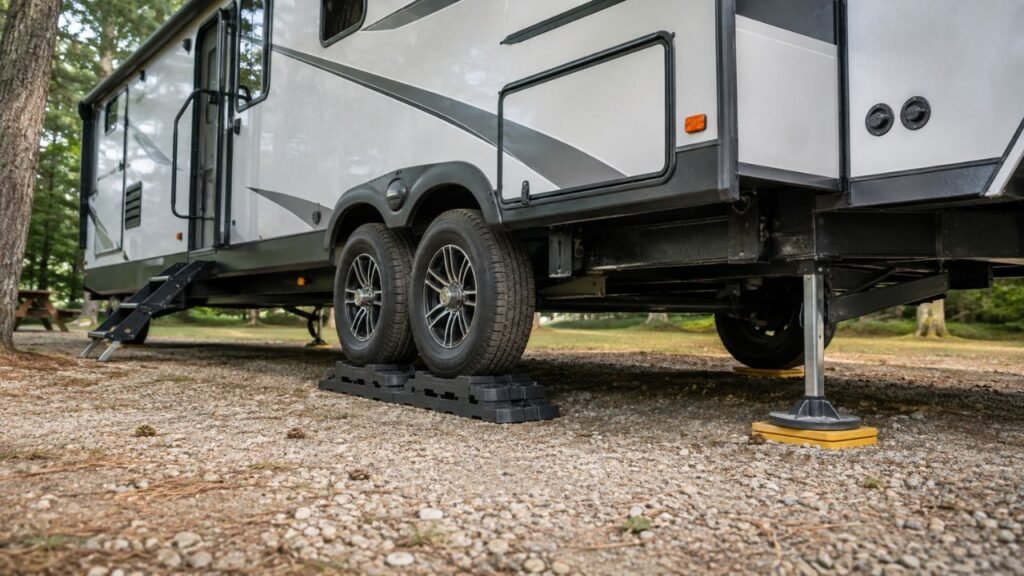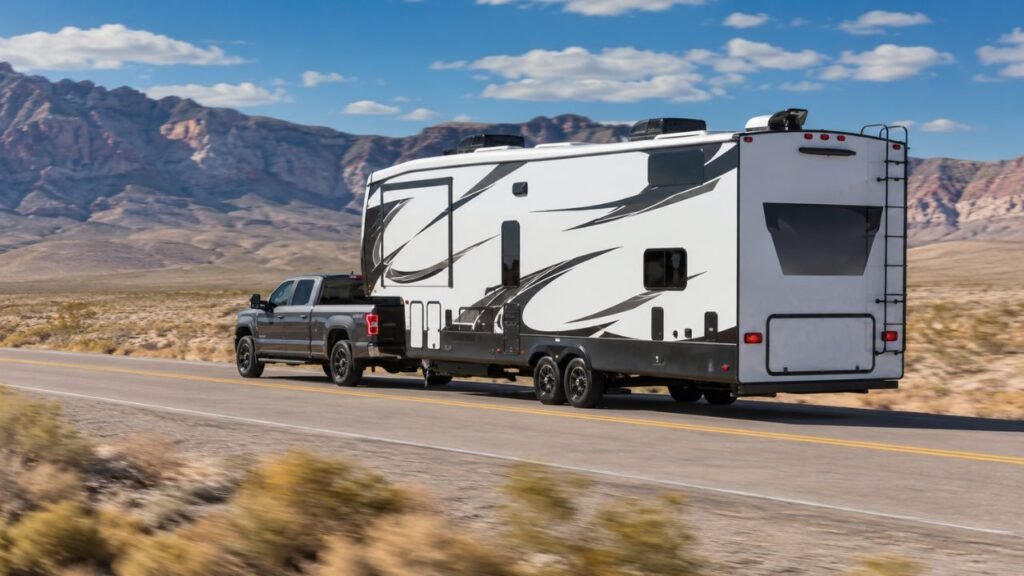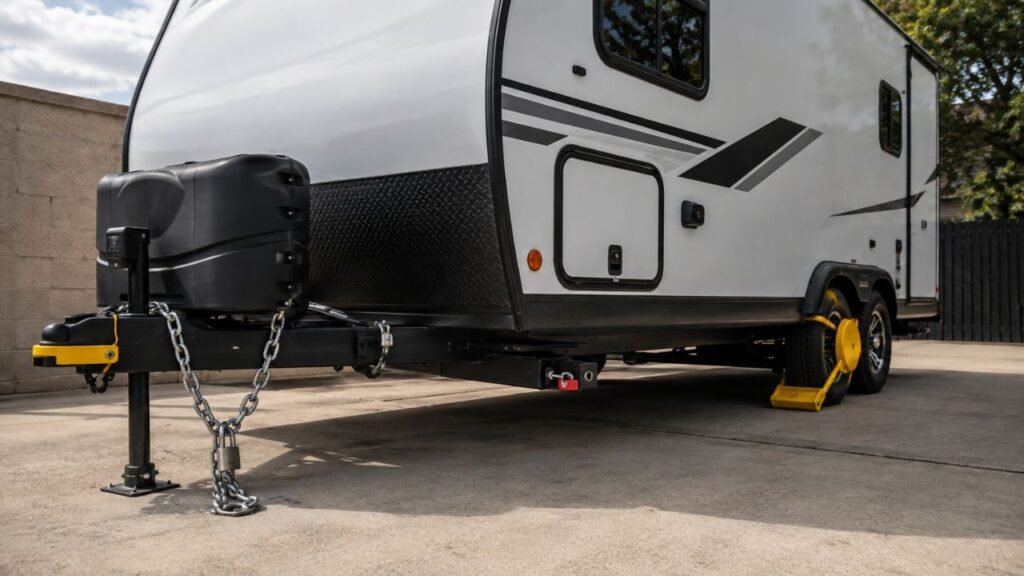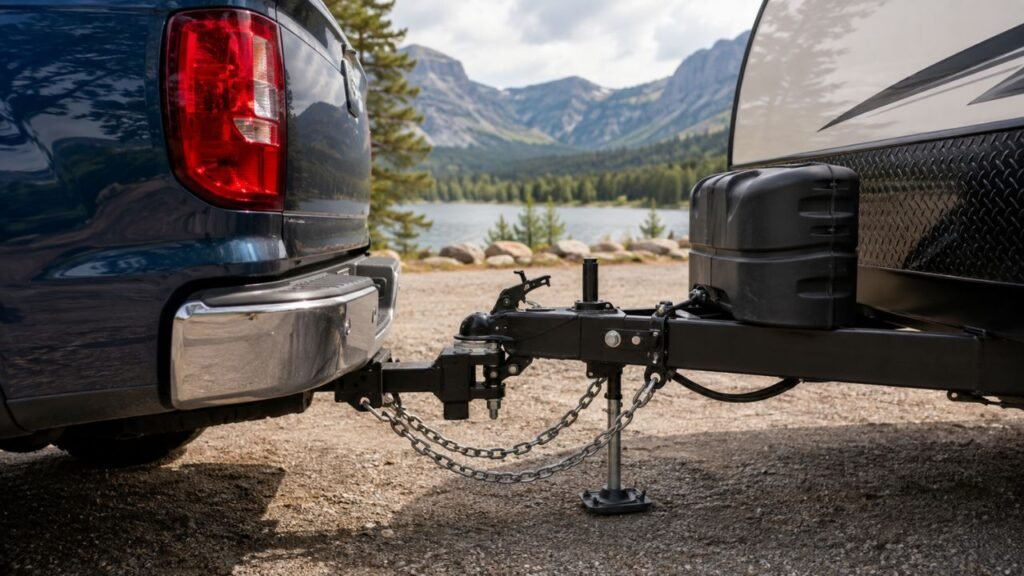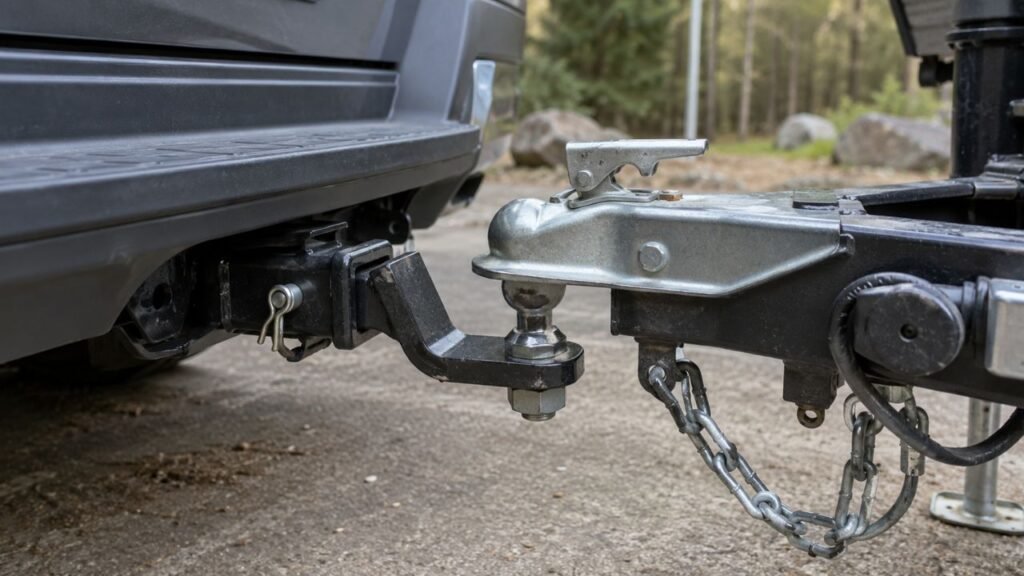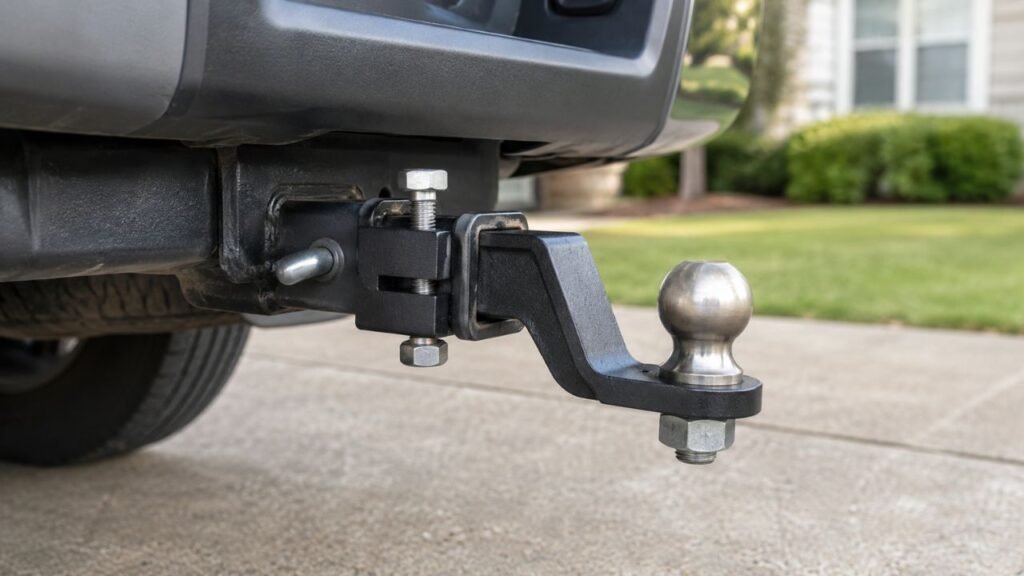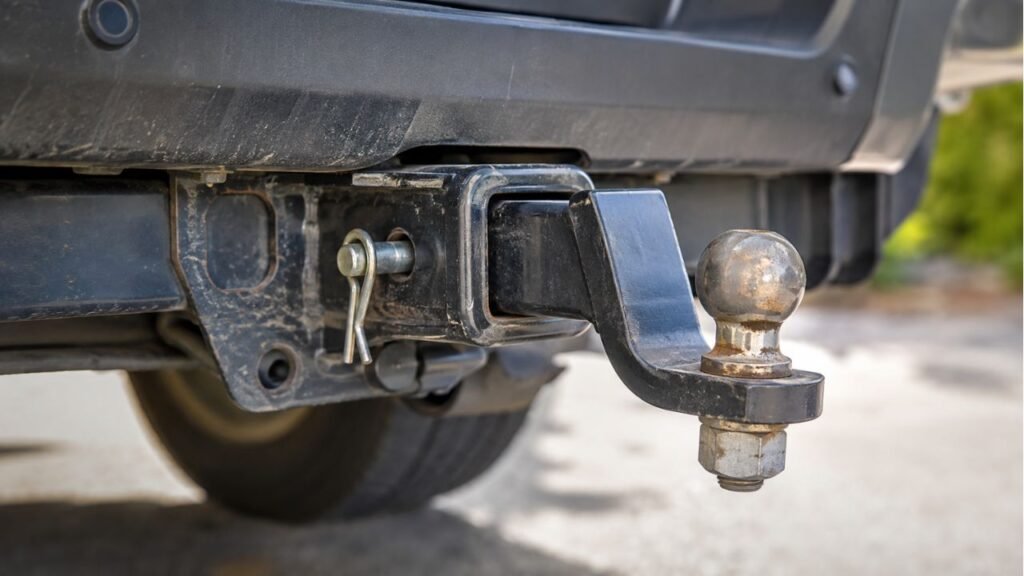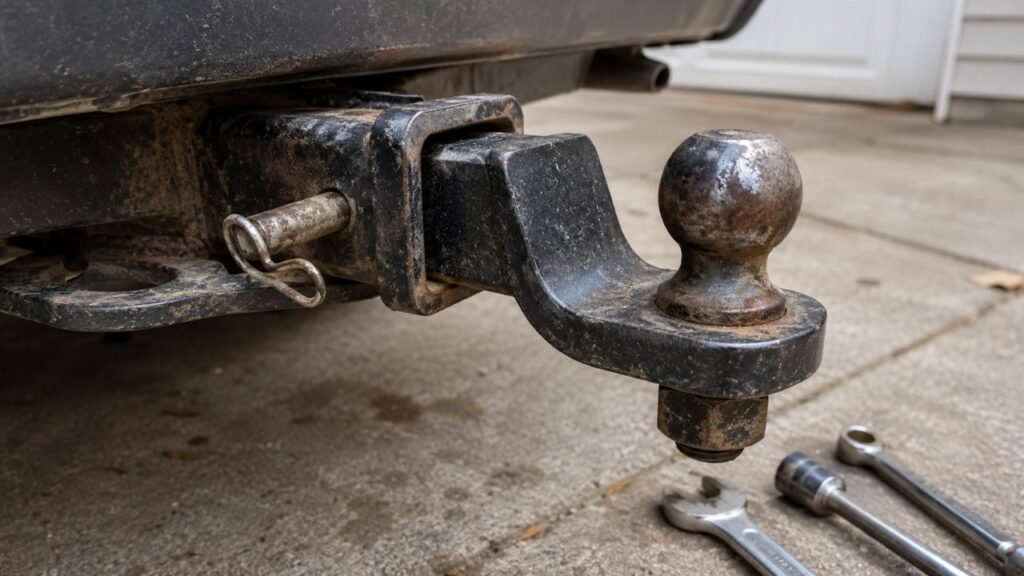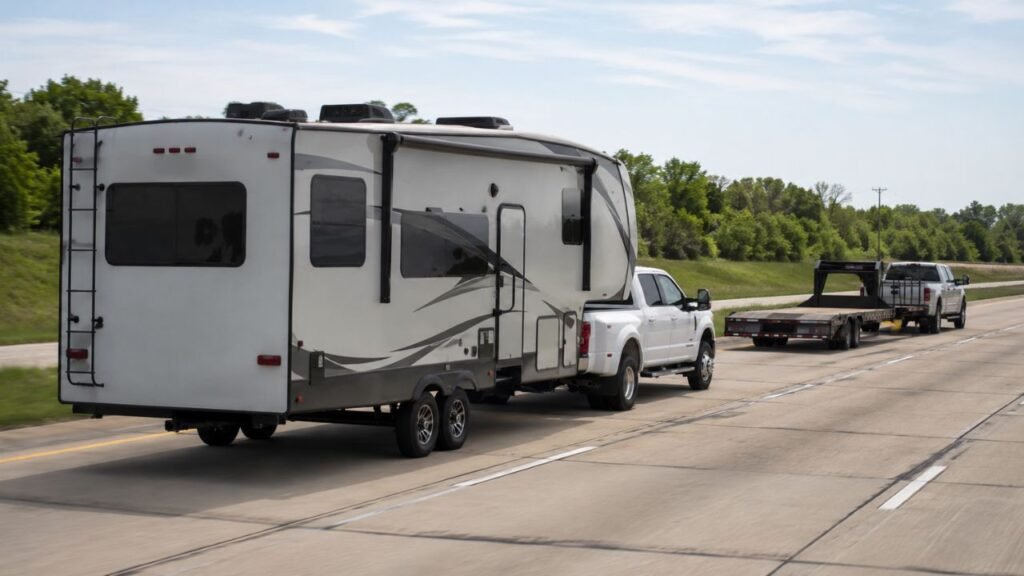
Fifth wheel and gooseneck trailers jerk because towing forces repeatedly move between the truck and trailer. Excessive hitch clearance, uneven roads, incorrect loading, brake imbalance, and worn suspension parts can intensify this push-and-pull movement.
In this guide, I will help you identify the movement. You will also learn what to inspect, adjust, repair, or upgrade.
Key Takeaways
- Fore-and-aft trailer jerking is commonly called chucking.
- Vertical pitching is usually described as bucking or bouncing.
- Minor movement over rough roads can be normal.
- Hard clunks or violent lurches indicate a possible problem.
- Excessive hitch clearance often causes jerking during speed changes.
- Incorrect brake-controller settings can create sudden pulling or pushing.
- Poor cargo balance can increase both chucking and vertical bucking.
- Cushioned components help only after mechanical problems are corrected.
- Sudden or worsening jerking deserves a complete towing-system inspection.
What Does Trailer Jerking Feel Like?
Trailer jerking does not always feel exactly the same. The direction and timing of the movement often reveal its cause.
Fore-and-Aft Chucking
Chucking feels like the trailer repeatedly pushes and pulls the truck. You may feel the truck surge forward and backward rhythmically.
This movement commonly appears over highway expansion joints. It may also occur when accelerating, slowing down, or changing gears.
Some drivers describe it as repeated tapping through the truck seat. Severe chucking can feel like another vehicle bumping the trailer repeatedly.
Vertical Bucking
Bucking creates an up-and-down pitching movement between both vehicles. The truck’s rear suspension may compress and rebound repeatedly.
This often happens on wavy roads, bridge approaches, or deep pavement dips. Incorrect ride height and weak shock absorbers can worsen the movement.
Vertical bucking may also cause items inside the trailer to shift. In severe cases, the truck can feel temporarily light over bumps.
Jerking During Acceleration
A single clunk when moving forward usually suggests connection clearance. The truck moves first, then the trailer catches the connection.
Possible causes include worn hitch jaws or a loose gooseneck coupler. Loose mounting hardware can produce a similar sensation.
Sudden throttle input can also create noticeable movement. However, repeated banging should never be blamed only on driving technique.
Jerking During Braking
Jerking during braking often points toward brake-controller adjustment. Trailer brakes may engage too strongly, too late, or inconsistently.
Excessive hitch play can also create a braking clunk. The trailer moves forward until the connection clearance disappears.
A trailer that pushes the truck may have weak braking. A trailer that suddenly yanks backward may have excessive braking gain.
Side-to-Side Movement
Side-to-side movement is usually trailer sway, not chucking. Sway causes the trailer’s rear section to move laterally.
Chucking primarily moves forward and backward through the hitch connection. However, poor loading can cause both problems simultaneously.
Treat strong lateral movement as a separate towing concern. Sway requires immediate speed reduction and careful inspection.
Is Some Fifth Wheel or Gooseneck Jerking Normal?
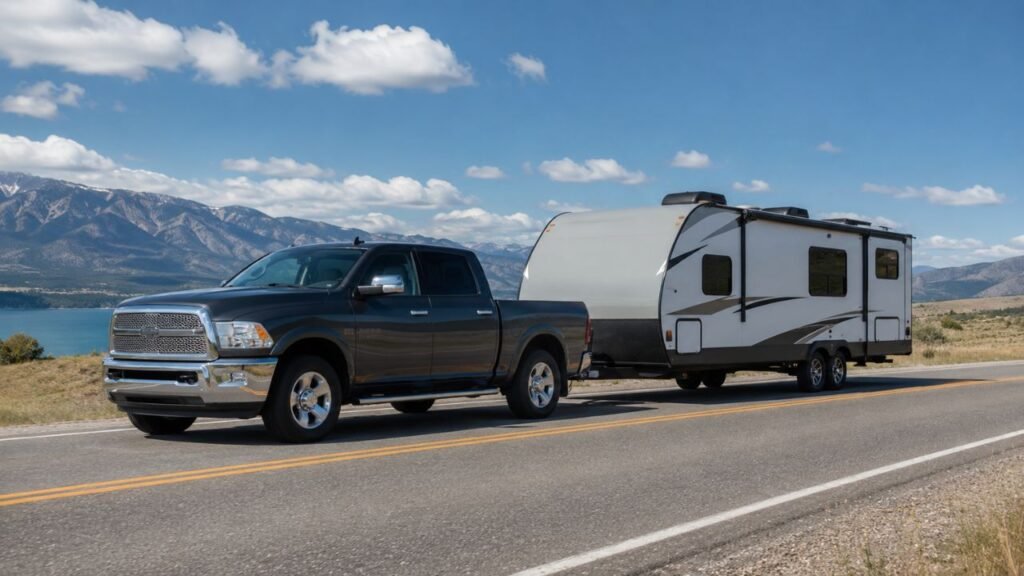
A small amount of movement can be normal on uneven roads. Your truck and trailer are separate masses connected through one hitch.
Both vehicles respond differently when their axles cross the same bump. The trailer may still be climbing while the truck descends.
This difference transfers force through the hitch connection. You may feel a brief push, tug, or pitching movement.
However, normal movement should remain controlled and predictable. It should not produce violent banging or affect steering control.
Repeated hard impacts are not something you should ignore. They can accelerate wear within the hitch and mounting system.
Jerking that suddenly appears also deserves attention. A component may have loosened, worn out, shifted, or failed.
Why Do Fifth Wheel and Gooseneck Trailers Jerk?
Several issues can create almost identical towing symptoms. More than one problem may also be contributing simultaneously.
Excessive Play in the Hitch Connection
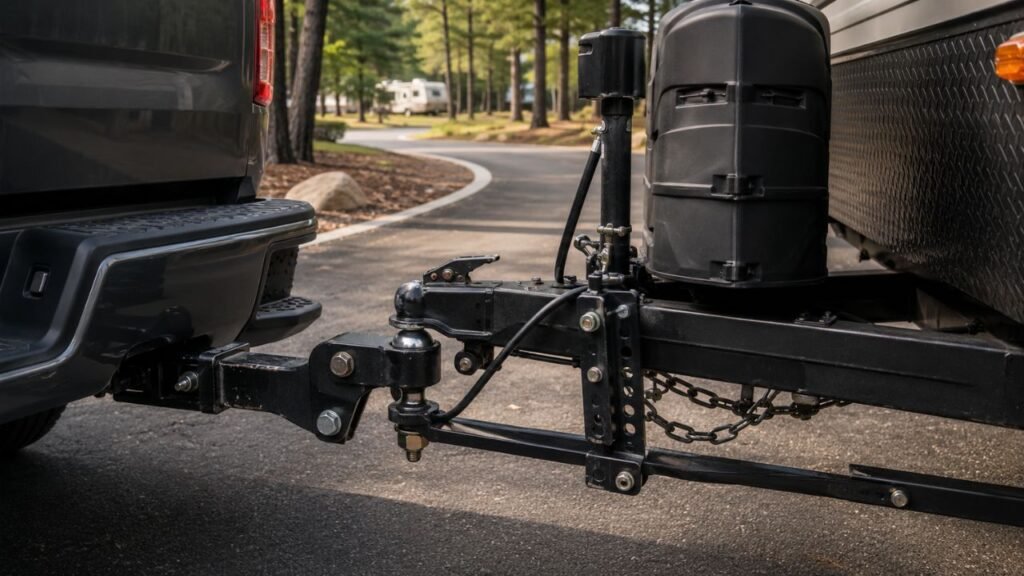
Every hitch needs enough movement for turning and articulation. However, excessive clearance allows parts to strike during load changes.
A fifth wheel hitch may develop clearance around its locking jaws. The kingpin then moves slightly before contacting the jaws firmly.
Gooseneck couplers can develop movement around the hitch ball. Worn latches, internal components, or adjustment mechanisms increase this clearance.
The movement becomes noticeable during acceleration and braking. The truck changes speed before the trailer fully follows.
Small gaps can create surprisingly strong impacts under heavy loads. The trailer’s momentum magnifies movement within the hitch connection.
Inspect these areas carefully:
- Fifth wheel locking jaws
- Kingpin condition
- Hitch-head pivot points
- Gooseneck ball condition
- Coupler latch and adjustment
- Replaceable bushings
- Pivot pins and retaining hardware
Follow the hitch manufacturer’s adjustment procedures. Do not create an excessively tight connection that prevents proper articulation.
Loose Hitch Rails, Brackets, or Mounting Hardware
Sometimes the hitch itself is working correctly. The movement instead occurs between the hitch and truck frame.
Above-bed fifth wheel rails use brackets and mounting hardware. Under-bed systems also depend on secure frame-mounted attachment points.
A loose fastener allows the entire hitch assembly to shift. This often creates a deep clunk beneath the truck bed.
Gooseneck mounting systems can develop similar movement. Loose brackets may shift when the trailer pushes or pulls.
Check for shiny metal around mounting holes. Fresh metal marks often indicate parts have been moving.
Never tighten critical hardware using guesswork. Use the manufacturer’s specified torque and tightening sequence.
Damaged, stretched, or corroded hardware should be replaced. Reusing weakened fasteners may allow movement to return.
Rough Roads and Highway Expansion Joints
Concrete highways often have evenly spaced expansion joints. These joints can create a repeating towing rhythm.
The truck crosses each joint before the trailer reaches it. That timing difference sends alternating forces through the hitch.
Trailer length and axle spacing affect the rhythm. Certain speeds can make every impact occur during suspension rebound.
This creates a repeating push-and-pull movement. It may continue until your speed or road surface changes.
The problem does not always indicate hitch damage. However, worn suspension parts can make the response much harsher.
Try reducing your speed slightly and smoothly. A small speed change can interrupt the repeating oscillation.
Avoid sudden steering or hard braking during strong chucking. Maintain control while gradually leaving the problematic rhythm.
Improper Trailer Loading
Cargo placement strongly affects how your trailer reacts. Poor loading can exaggerate both chucking and bucking.
Heavy cargo placed far behind the axles reduces hitch loading. This can make the trailer feel unsettled and reactive.
Too much weight toward the front creates another problem. It can overload the hitch, truck axle, and rear suspension.
Side-to-side imbalance can also change suspension response. One side may rebound differently after each road impact.
Secure every heavy item before towing. Moving cargo can change balance while you are already driving.
Place heavy cargo low and near approved loading areas. Avoid concentrating weight at the trailer’s extreme ends.
Never use cargo movement to exceed vehicle ratings. Correct balance cannot make an overloaded combination safe.
Incorrect Pin or Gooseneck Weight
The downward load on the hitch helps stabilize the trailer. Too little hitch weight can increase uncontrolled movement.
Many heavy trailers carry a significant portion of loaded weight forward. However, the correct amount varies by trailer design.
A fifth wheel may require different pin weight than another model. A gooseneck equipment trailer may also have unique loading requirements.
Always follow the trailer manufacturer’s loaded-weight recommendations. Confirm the truck and hitch can support that load.
Too much hitch weight can overload the truck’s rear axle. It may also compress suspension travel and worsen repeated impacts.
Too little hitch weight can reduce stability. The trailer may feel loose, nervous, or overly reactive.
The only dependable method involves weighing the loaded combination. Estimated cargo weight can differ significantly from actual weight.
Confirm these ratings before towing:
- Gross vehicle weight rating
- Gross axle weight ratings
- Trailer gross vehicle weight rating
- Hitch maximum capacity
- Pin or gooseneck weight capacity
- Tire and wheel load ratings
- Truck payload capacity
Trailer Brake Controller Problems
Trailer brakes should support the truck smoothly and proportionally. Incorrect adjustment can create sharp jerking during deceleration.
Gain set too high makes the trailer brakes grab early. The trailer then pulls backward against the truck.
Gain set too low allows the trailer to push forward. This movement can feel like surging or shoving.
Some controllers include boost or sensitivity settings. Excessive boost can create harsh braking at lower speeds.
A delayed electrical signal can cause another type of jerk. The truck begins braking before the trailer brakes engage.
Intermittent connections may create inconsistent braking. The trailer may brake normally, then suddenly grab during another stop.
Inspect the following areas:
- Brake-controller gain
- Boost or sensitivity setting
- Trailer connector
- Brake wiring
- Ground connections
- Breakaway system
- Brake magnets or actuators
- Individual wheel brake adjustment
Test controller changes only in a safe area. Use a dry, level road with minimal traffic.
Make small adjustments and repeat the same stop. The trailer should assist without pulling or pushing noticeably.
Worn Truck or Trailer Suspension Components
Suspension components control how each vehicle absorbs road impacts. Worn parts allow uncontrolled movement and repeated rebound.
Weak truck shocks may let the rear suspension bounce repeatedly. This creates more vertical movement at the hitch.
Trailer shocks can also lose damping ability. Some trailers do not include shocks from the factory.
Leaf spring bushings often wear over time. Worn bushings allow additional axle and suspension movement.
Equalizers, shackles, and spring hangers also deserve inspection. Elongated holes or damaged hardware can create instability.
Check for these warning signs:
- Leaking shock absorbers
- Broken or sagging springs
- Worn suspension bushings
- Elongated shackle holes
- Damaged equalizers
- Loose spring hardware
- Uneven ride height
- Axles contacting bump stops
Air helper springs can support certain loads. However, they cannot increase the truck’s legal payload rating.
They also cannot repair worn shocks or overloaded axles. Use them only within the vehicle manufacturer’s limits.
Incorrect Trailer Ride Height
A trailer should generally tow near its intended level position. Significant nose-high or nose-low angles change axle loading.
A nose-high trailer may overload the rear trailer axle. The front axle may carry less weight than designed.
A nose-low trailer can overload the front axle. Both conditions may worsen pitching and irregular tire wear.
Ride height also affects suspension movement. Uneven loading makes one axle react differently from another.
Measure the trailer on level ground while fully loaded. Compare the front and rear frame height using consistent points.
Possible corrections include:
- Adjusting fifth wheel hitch height
- Adjusting approved pin-box positions
- Adjusting a gooseneck coupler tube
- Correcting truck suspension sag
- Using manufacturer-approved suspension modifications
- Correcting overloaded cargo placement
Maintain adequate bed-rail clearance after adjustments. Never sacrifice turning clearance simply to level the trailer.
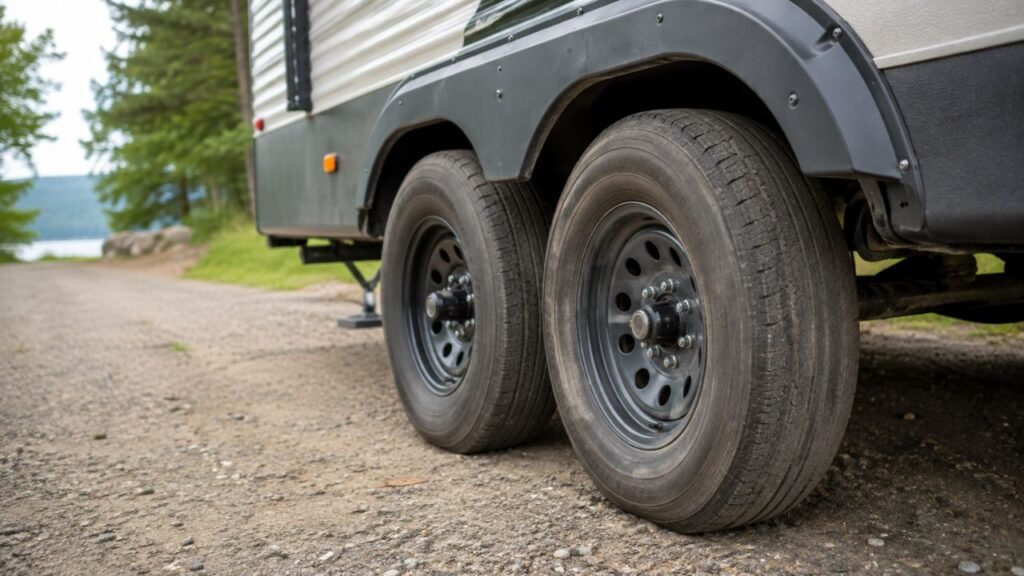
Tire Pressure or Tire Problems
Truck and trailer tires influence ride quality and stability. Incorrect inflation can create harshness, heat, or poor control.
Overinflated tires may transmit more road shock. Underinflated tires can flex excessively and overheat.
Do not automatically use one pressure for every load. Follow tire, wheel, trailer, and vehicle requirements.
Inspect tires for uneven wear and sidewall damage. A damaged internal belt may create vibration or repeated movement.
Mismatched tires can also react differently. Significant differences in construction or load capacity may affect stability.
Check pressure when tires are cold. Heat increases pressure after driving and can mislead your inspection.
Rigid Pin Boxes, Couplers, and Adapters
A rigid towing connection transfers road shock directly. It provides little cushioning between the trailer and truck.
Traditional pin boxes usually rely on hitch movement alone. They do not absorb much fore-and-aft energy.
Rigid gooseneck couplers can transmit similar impacts. Rough roads may feel especially harsh with heavy trailers.
Some fifth wheel owners use gooseneck conversion adapters. These adapters can change leverage applied to the trailer frame.
Additional leverage may intensify certain movements. It can also create structural concerns on incompatible trailers.
Never assume every adapter fits every pin box. Confirm approval from the trailer and component manufacturers.
Written compatibility matters more than general advertising claims. Frame warranties may also contain specific restrictions.
Driving Too Fast for Road Conditions
Speed increases the energy created by road impacts. Faster travel can turn mild movement into severe bucking.
High speed also gives suspension components less recovery time. Repeated bumps can build into an oscillating motion.
Slow down before rough bridge approaches and damaged pavement. Avoid waiting until strong bucking has already started.
Smooth throttle and braking inputs also help. Sudden changes force the hitch connection to transfer momentum quickly.
Leave additional following distance while towing. More space allows gradual acceleration and controlled braking.
Fifth Wheel Jerking vs Gooseneck Jerking
Both trailer types can produce similar symptoms. However, their connection designs create different inspection points.
| Feature | Fifth Wheel Trailer | Gooseneck Trailer |
| Primary connection | Kingpin and hitch jaws | Hitch ball and coupler |
| Common wear areas | Jaws, kingpin, pivot head, rails | Ball, latch, coupler tube, mounting system |
| Common sensation | Chucking, clunking, and pitching | Clunking, surging, and vertical shock |
| Main mounting points | Bed rails or under-bed frame mounts | Under-bed ball structure and frame mounts |
| Cushioning options | Cushioned pin box or air-ride hitch | Cushioned coupler or shock-absorbing system |
| Lubrication areas | Hitch plate and approved pivots | Ball and approved coupler surfaces |
| Adapter concern | Pin-box and frame compatibility | Added leverage and changed geometry |
| Important clearance | Bed rails, cab, and tailgate | Bed, coupler tube, and turning clearance |
The table helps narrow your inspection. However, either system may develop several problems simultaneously.
How to Diagnose Where the Jerking Comes From
A systematic inspection prevents unnecessary parts replacement. Start with the symptom, then work toward the connection.
1. Identify Exactly When the Jerking Happens
Notice whether it appears during acceleration, braking, or steady cruising. Also note whether rough pavement triggers the movement.
Jerking during speed changes often suggests hitch clearance. Jerking over repeating joints may suggest road-induced oscillation.
Movement only during braking points toward brake adjustment. Constant movement may involve suspension, loading, or ride height.
2. Listen to the Type of Noise
A sharp metallic clunk often suggests loose clearance. A dull thump may come from mounting movement.
Repeated squeaking may indicate binding or dry pivot points. Grinding sounds require immediate inspection before continued towing.
3. Inspect the Hitch Connection
Park on firm, level ground before inspecting components. Apply the parking brake and secure the trailer.
Check whether the hitch is fully locked. Confirm indicator handles and safety pins are correctly positioned.
Inspect the kingpin, jaws, ball, and coupler. Look for wear, cracks, deformation, or polished movement marks.
Never place your hands between connected components. Unexpected movement can cause severe crushing injuries.
4. Check Mounting Hardware
Inspect hitch rails, frame brackets, and under-bed mounts. Look for loose bolts, movement marks, and damaged holes.
Check visible welds for cracks or separation. Do not tow with suspected structural damage.
Use approved torque specifications when checking fasteners. Replace damaged or questionable hardware before towing again.
5. Inspect Truck and Trailer Suspension
Look for leaking shocks, broken springs, and worn bushings. Check equalizers, shackles, and spring hangers.
Compare ride height from side to side. Uneven height can reveal a damaged or overloaded component.
6. Check Tires and Wheels
Measure tire pressures while cold. Compare them with the required loaded-pressure guidance.
Inspect tread wear and sidewalls carefully. Check wheel fasteners using proper procedures and torque specifications.
7. Review Cargo Placement
Think about any recent loading changes. A generator, motorcycle, water tank, or tool chest can shift balance significantly.
Secure heavy items and remove unnecessary rear cargo. Never guess whether the corrected load remains within ratings.
8. Measure the Loaded Towing Combination
Use a suitable public or commercial vehicle scale. Obtain truck, trailer, and axle weights when possible.
Compare measured values with every listed rating. Pay close attention to the truck’s rear axle and payload.
9. Test the Brake Controller
Test trailer braking in a safe location. Adjust the gain gradually and observe each change.
The trailer should slow smoothly with the truck. It should not pull backward or push forward aggressively.
10. Change One Thing at a Time
Changing several components together hides the original cause. Make one correction, then test the same road conditions.
This method helps confirm which repair actually worked. It also prevents expensive and unnecessary upgrades.
Quick Symptom-to-Cause Guide
The timing of the movement provides useful clues. Use this table before replacing any towing components.
| When the Jerking Happens | Likely Causes | First Things to Check |
| When pulling away | Hitch play, loose coupler, or sudden throttle | Jaws, kingpin, ball, latch, and mounts |
| During braking | Excessive gain, delayed brakes, or connection clearance | Brake controller, wiring, and hitch movement |
| Over expansion joints | Road rhythm, rigid connection, or weak damping | Speed, shocks, suspension, and hitch design |
| After loading cargo | Incorrect balance or excessive axle loading | Cargo location and loaded scale weights |
| On nearly every road | Worn hitch, damaged suspension, or poor ride height | Complete hitch and suspension inspection |
| Only at higher speeds | Tire issues, road rhythm, or suspension rebound | Tire condition, speed, and shock absorbers |
| With one loud clunk | Excessive clearance or loose mounting hardware | Rails, brackets, jaws, coupler, and ball |
| After installing an adapter | Changed leverage, geometry, or incompatibility | Approval, installation, and frame condition |
| When shifting gears | Driveline movement or hitch clearance | Hitch connection and truck driveline inspection |
| During downhill braking | Excessive gain, brake heat, or delayed engagement | Controller settings and trailer brake condition |
How to Reduce Fifth Wheel and Gooseneck Trailer Jerking
The correct solution depends entirely on the cause. Comfort upgrades cannot compensate for damaged or incorrectly adjusted components.
Remove Excessive Hitch Play
Begin by measuring and inspecting the connection. Follow the hitch manufacturer’s allowable-clearance guidance.
Some fifth wheel jaws include adjustment procedures. Other designs require worn components to be replaced.
Gooseneck couplers may also include internal adjustment. Never over-adjust a coupler until it binds around the ball.
Replace worn pins, bushings, latches, and pivot components. Do not weld or modify critical hitch parts without approval.
Tighten and Inspect Mounting Hardware
Verify that every mounting point remains secure. Use the required torque specification and tightening pattern.
Hardware that repeatedly loosens may indicate another problem. Misalignment, damaged holes, or incorrect installation may be responsible.
Do not simply install stronger bolts without approval. Different hardware can change clamping force and structural performance.
Adjust the Trailer Brake Controller
Start with the controller manufacturer’s basic setup. Then fine-tune it for the loaded trailer.
Increase gain gradually when the trailer pushes the truck. Reduce gain when the brakes grab or pull backward.
Adjust boost separately when that feature is available. Excessive boost may feel harsh during light braking.
Recheck settings after major cargo changes. Heavier loads usually require different braking response.
Rebalance the Trailer
Remove unnecessary cargo from extreme front or rear areas. Place heavy items in approved, stable locations.
Secure everything using suitable restraints. Cargo moving several inches can alter towing behavior unexpectedly.
Do not use water tanks as casual ballast. Partially filled tanks may allow water to surge while traveling.
Correct the Trailer’s Ride Height
Adjust the hitch or coupler using approved positions. Keep the trailer near its intended towing angle.
After any height change, recheck bed clearance. Also verify cab clearance during tighter turns.
Check trailer axle loading after adjusting height. A level appearance does not guarantee equal axle weight.
Slow Down on Repeating Road Joints
A small speed reduction often interrupts rhythmic chucking. Reduce speed gradually until the motion settles.
Do not accelerate aggressively to escape the rhythm. Additional speed usually increases impact energy.
Choose smoother lanes where permitted and safe. Heavy truck traffic often damages certain lanes more severely.
Inspect and Repair the Suspension
Replace worn shocks, bushings, equalizers, shackles, or springs. Use parts designed for the trailer’s weight rating.
Consider adding approved trailer shocks when appropriate. Shocks control rebound but do not increase carrying capacity.
Truck shocks also require inspection. Weak rear shocks can allow repeated pitching after each impact.
Use a Cushioned Pin Box or Coupler
Cushioned components absorb some road-generated movement. They can reduce shock before it reaches the truck.
Different designs target different directions of movement. Some mainly cushion vertical impacts, while others reduce chucking.
Check weight capacity and mounting compatibility carefully. A higher capacity rating does not guarantee proper fitment.
A cushioned component should never hide loose hardware. Complete all mechanical repairs before installing an upgrade.
Consider an Air-Ride Hitch or Air-Ride Pin Box
Air-ride systems can reduce transferred road shock significantly. They use an airbag, shock absorber, or both.
These systems may improve comfort during long-distance towing. They can also reduce repeated impacts on trailer contents.
However, air systems require correct pressure and regular inspection. Leaks or incorrect settings reduce their effectiveness.
Confirm the component’s weight range before purchasing. An oversized system may not respond properly under lighter loads.
Reconsider Unapproved Gooseneck Adapters
A rigid adapter can increase leverage on the pin box. That leverage may transfer more force into the trailer frame.
Some trailers are approved for specific conversions. Others prohibit them completely.
Check written approval before installation. Do not rely solely on physical fitment.
Inspect the pin-box mounting area regularly after conversion. Stop towing if cracks or deformation appear.
Can Trailer Jerking Be Completely Eliminated?
Most towing combinations can be improved substantially. However, eliminating every small movement may not be realistic.
Road imperfections will always create some force transfer. A heavy trailer cannot move independently without affecting the truck.
Your goal should be controlled and predictable movement. There should be no repeated banging or steering disruption.
A properly set towing combination may still react to severe pavement. However, it should settle quickly afterward.
If the trailer continues oscillating, another issue likely remains. Reinspect loading, suspension, hitch clearance, and road speed.
When Is Trailer Jerking Dangerous?
Some towing symptoms require immediate action. Stop safely when the movement becomes severe or suddenly changes.
Danger signs include:
- A hitch that does not lock consistently
- Visible movement in rails or mounting brackets
- Cracks around the pin box or coupler
- A bent, cracked, or damaged kingpin
- A loose or damaged gooseneck ball
- Severe movement during normal braking
- Sudden steering instability
- Trailer sway combined with strong chucking
- Uneven or intermittent trailer braking
- Overheated trailer brakes
- Unusual tire heat or visible tire damage
- New noises after striking a pothole
- Broken suspension components
- Elongated mounting holes
- Missing retaining pins or safety hardware
- Contact between the trailer and truck bed
Do not continue towing simply because the hitch remains attached. A partially failed component can separate without additional warning.
Arrange professional inspection when structural damage is suspected. Frame and hitch repairs require qualified evaluation.
Maintenance That Helps Prevent Trailer Chucking
Preventive checks catch small problems before they create severe movement. Include these items in your regular towing routine.
- Inspect the hitch before every trip.
- Confirm the locking mechanism is fully engaged.
- Perform a proper pull test when applicable.
- Install every required safety pin.
- Lubricate only manufacturer-approved contact points.
- Check hitch rails and mounting brackets.
- Inspect the kingpin or hitch ball.
- Check jaws, latches, pivots, and bushings.
- Inspect the pin-box mounting area.
- Check suspension springs and shackles.
- Inspect equalizers and spring hangers.
- Check shock absorbers for leakage.
- Maintain correct cold tire pressure.
- Inspect tires for unusual wear.
- Test trailer brakes before entering traffic.
- Check the electrical connector and breakaway cable.
- Recheck cargo restraints during long trips.
- Weigh the trailer after major loading changes.
- Inspect critical components after severe road impacts.
Keep written maintenance records when possible. Records help you track wear and recurring adjustments.
Common Mistakes That Make Trailer Jerking Worse
Many towing problems become worse through incorrect troubleshooting. Avoid these common mistakes while diagnosing the movement.
- Assuming every jerk comes from the hitch
- Increasing brake gain without controlled testing
- Using grease to hide mechanical clearance
- Ignoring movement in mounting brackets
- Towing with the trailer significantly nose-high
- Placing heavy cargo behind the trailer axles
- Using tire sidewall pressure without checking requirements
- Mixing unsuitable tires on the same axle
- Installing an adapter without confirming compatibility
- Using airbags to compensate for overloading
- Replacing the hitch before weighing the trailer
- Ignoring worn trailer suspension bushings
- Tightening critical bolts without torque specifications
- Driving faster to escape rhythmic chucking
- Continuing after sudden changes in towing behavior
Should You Upgrade the Hitch or Pin Box?
An upgrade may improve ride quality considerably. However, it should follow proper diagnosis and basic repairs.
When an Upgrade May Help
An upgraded hitch or pin box may help when:
- Road-induced chucking remains after proper setup
- The existing connection transfers harsh impacts
- Hitch clearance remains within normal specifications
- Suspension components are already working correctly
- The trailer is properly balanced and weighed
- Brakes are adjusted correctly
- Long-distance comfort is a priority
- Trailer contents experience excessive road shock
A cushioned system can isolate movement effectively. Choose a design that addresses your specific movement direction.
When an Upgrade Will Not Fix the Problem
An upgraded component cannot repair:
- Loose rails or brackets
- Worn locking jaws
- A damaged kingpin
- A loose gooseneck ball
- Incorrect brake settings
- Broken suspension parts
- Poor cargo placement
- An overloaded truck
- Incorrect ride height
- Frame cracks
- Damaged tires
- Unapproved towing geometry
Fix these problems before considering comfort improvements. Otherwise, the underlying danger may remain hidden.
What to Check Before Buying an Upgrade
Confirm every important specification before ordering:
- Trailer gross weight rating
- Actual loaded trailer weight
- Loaded pin or gooseneck weight
- Hitch capacity
- Pin-box or coupler model
- Mounting bolt pattern
- Truck-bed clearance
- Cab turning clearance
- Tailgate clearance
- Trailer-frame approval
- Adapter compatibility
- Warranty restrictions
- Required air pressure
- Lubrication requirements
- Replacement-part availability
Choose equipment for the actual loaded combination. Do not select components using dry trailer weight alone.
Final Words
Fifth wheel and gooseneck trailers usually jerk because towing forces are not being controlled smoothly. Hitch clearance, brake imbalance, poor loading, rough roads, and suspension wear are common causes.
Start by identifying exactly when the movement occurs. That timing usually provides the strongest diagnostic clue.
Inspect the mechanical connection before purchasing expensive upgrades. Loose hardware, worn jaws, or incorrect braking require direct repairs.
When every basic component works correctly, cushioning upgrades can improve comfort. They may also reduce repeated stress on the truck and trailer.
Never ignore sudden, severe, or worsening jerking. Stop towing when the hitch, frame, suspension, brakes, or tires appear damaged.
Related FAQs
Why Does My Fifth Wheel Jerk When I Accelerate?
A fifth wheel may jerk during acceleration because the truck moves through hitch clearance before pulling the trailer. Worn jaws, a loose kingpin connection, mounting movement, or sudden throttle input can intensify the clunk.
Why Does My Trailer Jerk When I Apply the Brakes?
Jerking during braking commonly comes from excessive brake gain, delayed trailer braking, or hitch clearance. Adjust the controller gradually and inspect the hitch if the movement includes a strong clunk.
Can a Loose Fifth Wheel Hitch Cause Chucking?
Yes, excessive movement within the hitch or mounting system can cause chucking. Inspect the jaws, pivot points, rails, brackets, kingpin, and mounting hardware for wear or looseness.
Does Too Little Pin Weight Cause Trailer Jerking?
Too little pin weight can make the trailer feel unsettled and increase fore-and-aft movement. Weigh the loaded combination and follow the trailer manufacturer’s loading requirements.
Can Too Much Pin Weight Cause Bucking?
Excessive pin weight can overload the truck’s rear axle and compress suspension travel. This may increase harsh pitching, reduce steering response, and damage tires or suspension components.
Will a Cushioned Pin Box Stop Fifth Wheel Chucking?
A cushioned pin box can reduce road-induced chucking, but it may not eliminate every movement. It cannot correct loose hardware, poor loading, brake problems, or damaged suspension parts.
Do Airbags Reduce Fifth Wheel Chucking?
Air helper springs can restore ride height and support approved loads. However, they do not always reduce fore-and-aft chucking and cannot increase the truck’s rated payload.
Can Worn Trailer Shocks Cause Jerking?
Yes, worn shocks allow the trailer suspension to rebound repeatedly. This can increase vertical bucking and amplify movement transferred through the hitch connection.
Why Does My Gooseneck Trailer Clunk Over Bumps?
A gooseneck trailer may clunk because of clearance around the hitch ball, a worn coupler latch, loose mounting hardware, or excessive suspension movement. Inspect these components before towing again.
Is a Gooseneck Adapter Causing My Fifth Wheel to Jerk?
A rigid adapter may increase shock transfer and change leverage on the trailer frame. Confirm compatibility, installation requirements, and written manufacturer approval before continuing use.
Can Incorrect Tire Pressure Cause Trailer Bucking?
Incorrect tire pressure can affect ride quality, heat buildup, and suspension response. Use the correct cold pressure for the tires, wheels, trailer load, and vehicle requirements.
Why Does My Trailer Chuck Only on Concrete Highways?
Evenly spaced concrete joints can create a repeating suspension rhythm. Slightly reducing speed often breaks the cycle and reduces the repeated push-and-pull motion.
Is Fifth Wheel Chucking Dangerous?
Mild controlled movement may not be dangerous, but violent or worsening chucking can indicate mechanical problems. Stop towing if you notice loose hardware, structural cracks, braking issues, or steering instability.
How Much Fifth Wheel Chucking Is Normal?
Brief movement over rough pavement can be normal. Repeated banging, severe lurching, steering disruption, or movement on smooth roads suggests the towing setup needs inspection.
Should I Tow a Trailer That Suddenly Starts Jerking?
Do not continue towing until you identify the cause. Sudden jerking may indicate loose hitch hardware, brake failure, suspension damage, tire problems, or cargo movement.

Scott Miller shares real-world RV road trip insights built from years of traveling open highways and backroads. He covers route planning, campground choices, and travel gear with a practical mindset. His content is written for RVers who value reliability over trends.