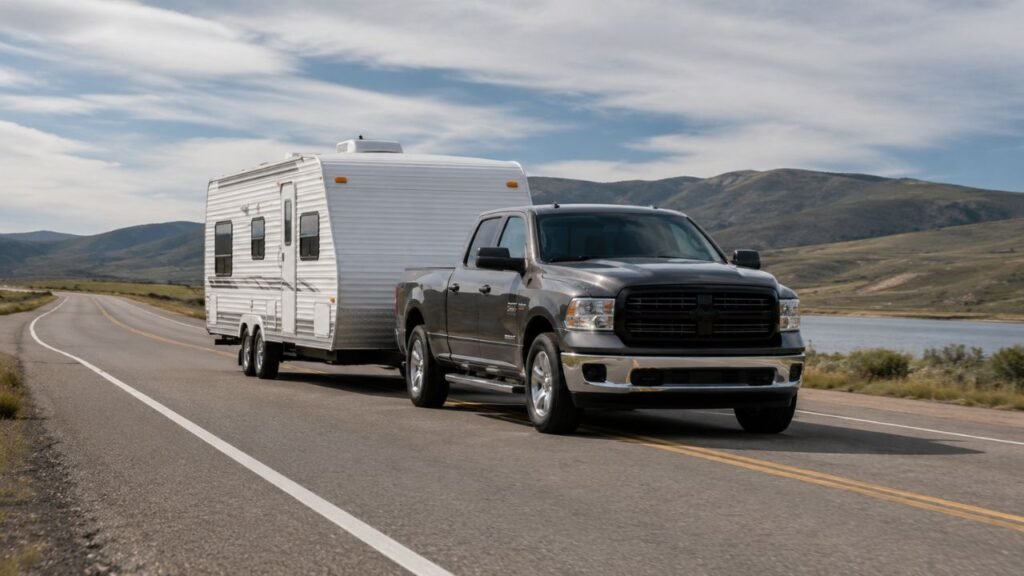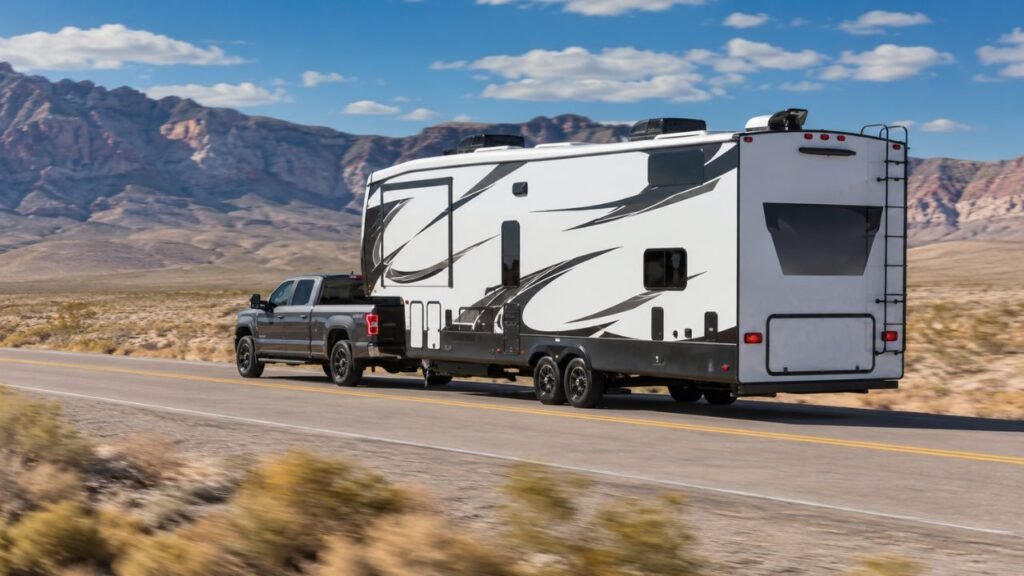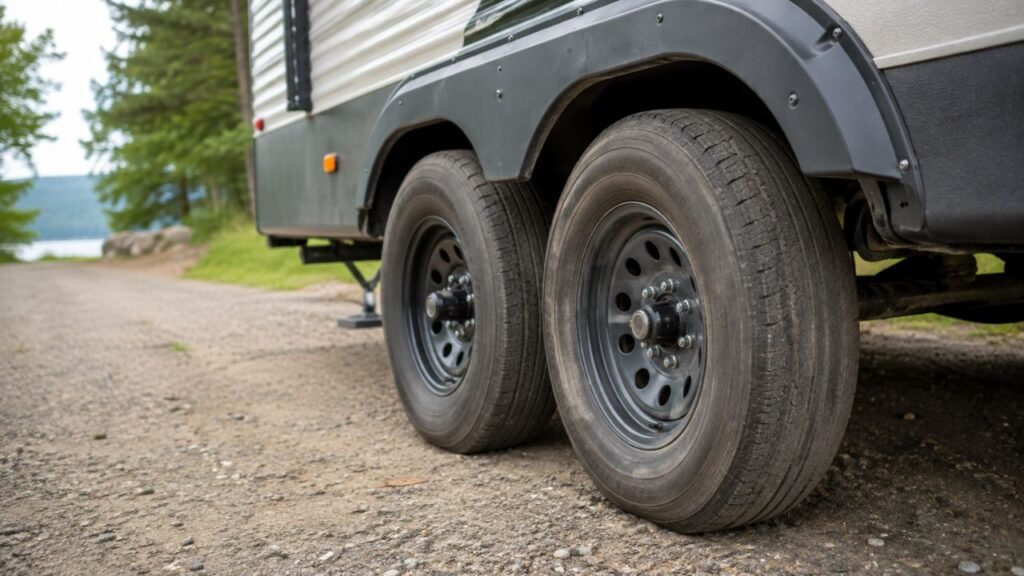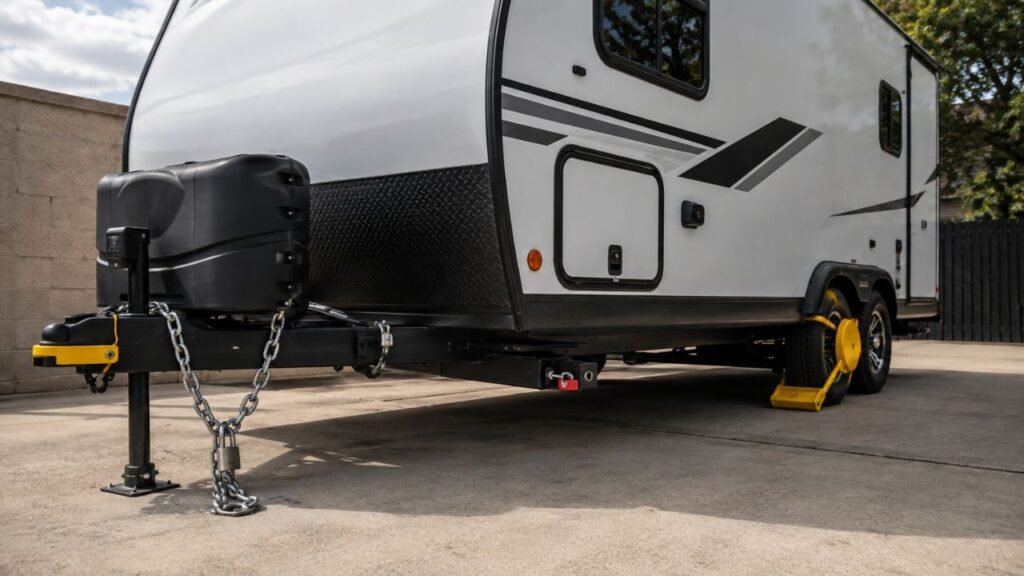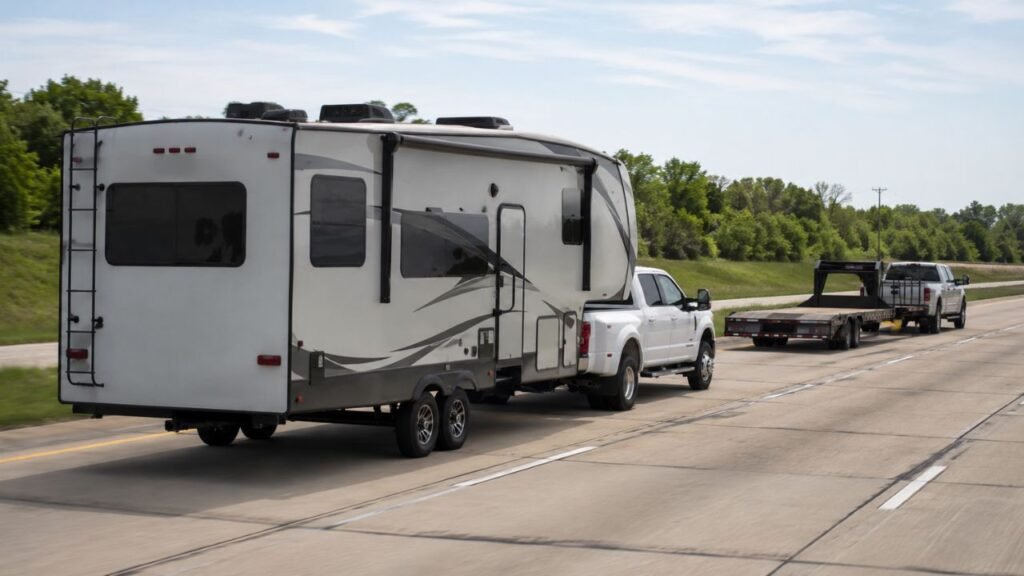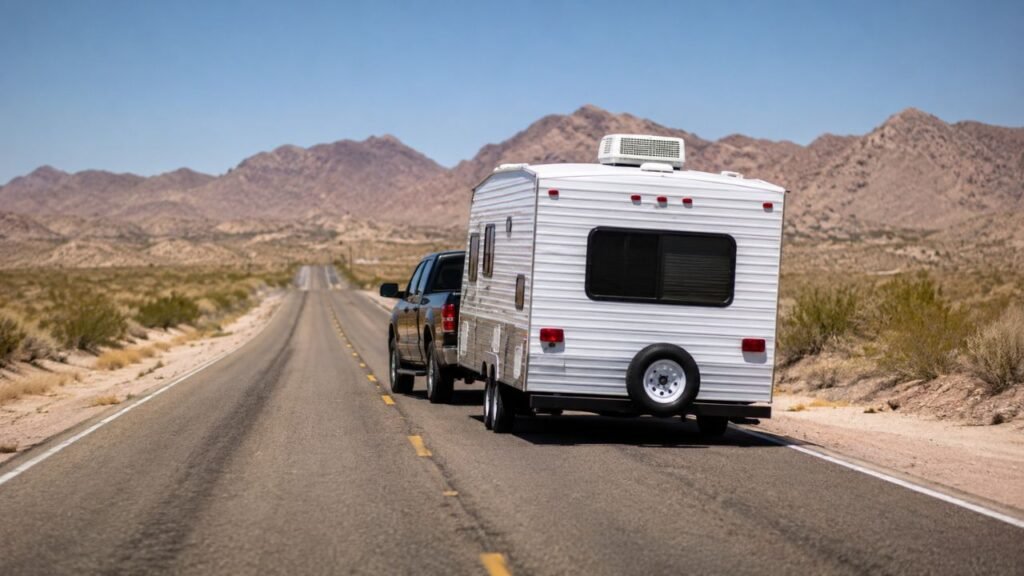
Your trailer may pull sideways because of uneven loading, incorrect tire pressure, dragging brakes, worn suspension parts, or axle misalignment. Crosswinds and road slope can also push a trailer temporarily. However, a constant pull usually points toward a loading, tire, braking, or mechanical problem.
In this guide, I’ll help you identify the movement first. Then, we’ll check each likely cause in a practical order. You’ll also learn when to stop towing and seek professional help.
Key Takeaways
- A steady sideways pull is different from repeated trailer sway.
- Uneven cargo can make the trailer lean and track poorly.
- Unequal tire pressure may change how each side rolls.
- Pulling during braking often indicates unequal trailer brake force.
- A bent axle may cause dog tracking and unusual tire wear.
- Crosswinds usually cause temporary movement, not constant pulling.
- Sway-control equipment cannot repair a mechanical alignment problem.
- Stop towing when you notice smoke, heat, grinding, or severe pulling.
First, Identify What “Pulling Sideways” Means
Trailer owners often use several terms for similar handling problems. However, drifting, dog tracking, brake pulling, and sway have different causes. Identifying the exact movement will save you time and prevent unnecessary repairs.
| What You Notice | Most Likely Areas to Check | How Urgent Is It? |
| Trailer constantly pulls left or right | Cargo, tires, brakes, axle alignment | High |
| Trailer travels slightly offset from the truck | Axle, suspension, frame, or hitch alignment | High |
| Trailer pulls only when braking | Trailer brakes, controller, wiring, or load balance | High |
| Trailer moves sideways during strong wind | Speed, weather, trailer height, sway control | Moderate to high |
| Trailer swings repeatedly left and right | Tongue weight, speed, tires, sway control | Immediate |
| Tow vehicle pulls without the trailer | Truck tires, brakes, steering, or alignment | High |
| Pulling began after hitting a pothole | Wheel, tire, spring, hanger, or axle damage | High |
A steady drift usually pulls toward one side continuously. Trailer sway moves the trailer repeatedly from left to right. Dog tracking means the trailer travels at an angle behind your vehicle.
These symptoms may feel similar from the driver’s seat. Watching the trailer through both mirrors can help identify the difference.
Is It Safe to Tow a Trailer That Pulls Sideways?
A mild push from wind may disappear when conditions improve. A strong or constant pull deserves immediate attention. You should never continue towing simply because the trailer remains inside its lane.
Stop Towing Immediately When You Notice These Signs
Find a safe stopping place when you notice any serious warning signs:
- The trailer approaches or crosses the lane markings.
- One tire looks low, swollen, cracked, or damaged.
- Smoke appears near a trailer wheel.
- One wheel smells unusually hot or burnt.
- You hear grinding, scraping, or repeated metal impacts.
- A trailer wheel locks during normal braking.
- The trailer visibly travels at an angle.
- A spring, shackle, or hanger looks displaced.
- Side-to-side movement grows stronger with speed.
- Steering corrections no longer keep the combination straight.
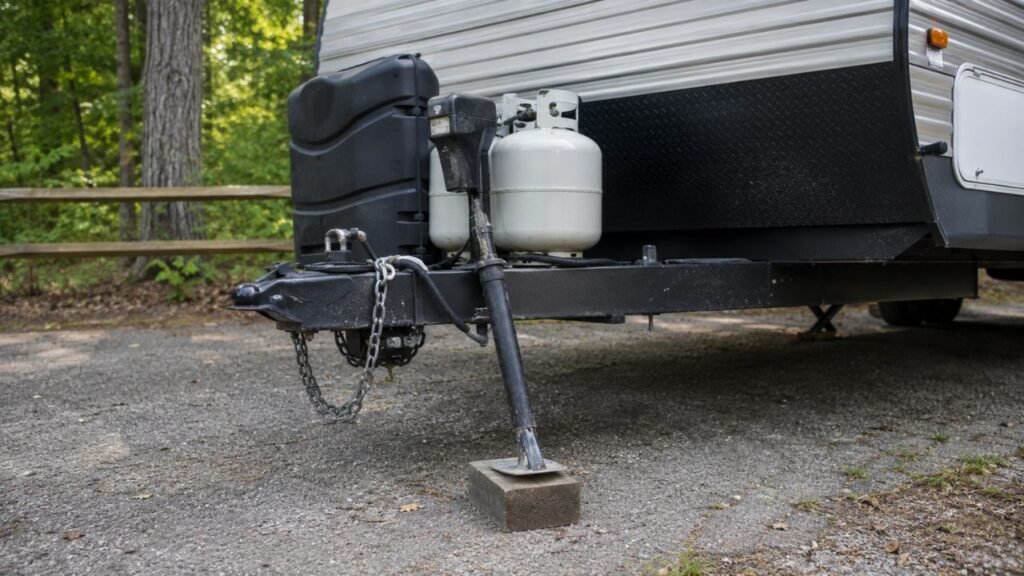
Ease off the accelerator and avoid abrupt steering movements. Move toward a safe stopping location once the trailer settles. Do not crawl underneath a trailer supported only by its tongue jack.
What to Do If Trailer Sway Starts
True sway requires a calm and controlled response. Sudden braking or sharp steering can make the movement worse.
- Hold the steering wheel firmly and keep it straight.
- Ease off the accelerator without making sudden movements.
- Avoid steering against each swing of the trailer.
- Use the manual trailer-brake control when appropriate.
- Do not accelerate to pull the trailer straight.
- Stop safely and inspect the towing setup.
Manual trailer braking may help pull the trailer back into line. However, your brake controller and trailer must support this action. Follow the instructions provided with your specific braking system.
Why Does My Trailer Pull Sideways?
A trailer can pull sideways when unequal forces act on each side. The cause might be as simple as shifted cargo. It could also involve brakes, bearings, suspension, or structural alignment.
The Cargo Is Uneven From Left to Right
A side-heavy trailer may lean and resist rolling evenly. Heavy cargo placed near one wall adds more load to those tires. That side may flex differently and respond poorly during turns or braking.
Common sources of uneven weight include:
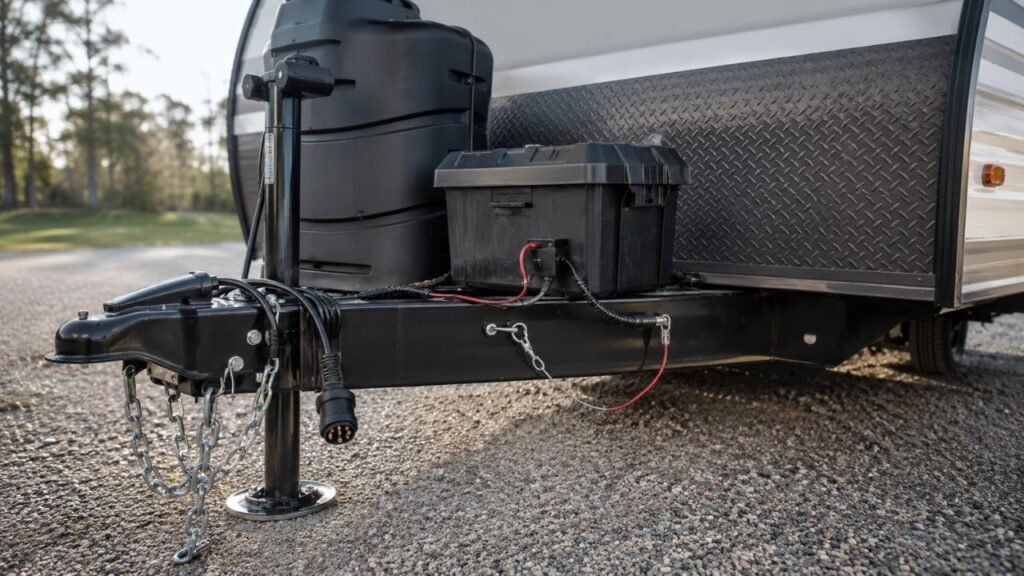
- Batteries mounted along one side
- Full storage compartments
- Toolboxes and generators
- Kitchen appliances
- Water and waste tanks
- Motorcycles or outdoor equipment
- Cargo that moved during travel
Partially filled tanks can also affect handling. The liquid moves while you accelerate, brake, or change lanes. This shifting weight may make the trailer feel less predictable.
Place heavy items low and near the trailer’s centerline. Secure everything so it cannot move during travel. A visually level trailer may still carry unequal weight on each wheel.
There Is Too Little Tongue Weight
Tongue weight helps keep a conventional trailer stable behind the tow vehicle. Too little pressure on the hitch allows the trailer’s rear section to control its movement.
This commonly happens when too much cargo sits behind the axles. The rear-heavy trailer begins acting like a pendulum. Small movements can become stronger as speed increases.
Many conventional trailers operate best with approximately 10% to 15% tongue weight. However, the correct amount depends on the trailer design. Always follow your trailer and hitch manufacturer’s recommendations.
Do not rely only on the popular 60/40 loading rule. Placing around 60% of cargo forward may be useful. However, measuring the loaded tongue weight gives a more reliable answer.
There Is Too Much Tongue Weight
Moving every heavy item forward is not a safe solution. Excessive tongue weight can overload the tow vehicle’s rear axle. It may also reduce useful weight on the front tires.
That change can affect steering, braking, and headlight aim. The truck may feel light at the front and difficult to control.
Your loaded setup must remain within all applicable ratings:
- Tow-vehicle payload capacity
- Front and rear axle ratings
- Trailer gross vehicle weight rating
- Tire and wheel load ratings
- Receiver hitch rating
- Ball mount and coupler ratings
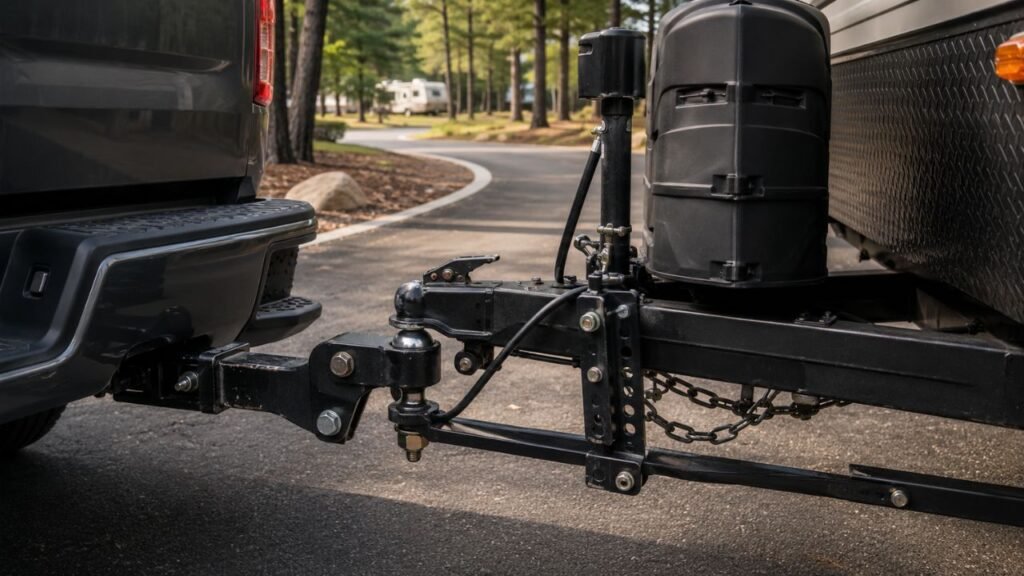
- Weight-distribution hitch rating
A public vehicle scale can help verify actual loaded weights. Include passengers, fuel, propane, water, batteries, and installed accessories.
Trailer Tire Pressures Are Unequal
Unequal tire pressure changes how each tire flexes and rolls. One side may create more rolling resistance than the other. That difference can contribute to a steady pull.
Check every tire while it is cold. Cold means the trailer has not recently traveled far. Compare each reading with the trailer placard and manufacturer guidance.
Do not use one universal pressure for every trailer. Proper pressure depends on the tire, trailer, wheel, and carried load.
Remember to check the spare tire as well. It will not help during an emergency when it is severely underinflated.
The Tires Are Mismatched, Damaged, or Overloaded
Trailer tires should match in size, construction, and load capacity. Different tires may flex differently under the same load. Unequal tread depth can also affect tracking and braking.
Inspect each tire for:
- Sidewall cracks
- Bulges or bubbles
- Exposed cords
- Cuts and punctures
- Uneven tread wear
- Flat spots
- Incorrect size
- Low load rating
- Age-related deterioration
A tire may look properly inflated while carrying too much weight. Individual wheel loads can vary even when total trailer weight seems acceptable.
Replacing damaged tires without correcting the original problem may waste money. Uneven wear often indicates pressure, loading, suspension, or alignment trouble.
One Trailer Brake Is Dragging
A dragging brake creates extra resistance on one side. That wheel tries to slow the trailer continuously. The trailer may then pull toward the affected side.
Warning signs include:
- A hot wheel or hub
- A burnt smell
- Smoke near the wheel
- Poor fuel economy
- Rapid brake wear
- Discolored brake components
- The trailer resisting movement
Do not touch a suspected hot hub directly. It may be hot enough to cause injury. Compare wheel temperatures carefully without placing your hand on them.
A dragging brake requires prompt diagnosis. Continued towing may damage the tire, bearing, brake assembly, or hub.
One Trailer Brake Is Not Applying Properly
A weak or inactive brake can also cause directional pulling. During braking, the stronger side slows more aggressively. The trailer then pulls toward the side producing greater braking force.
Possible causes include:
- Poor brake adjustment
- Damaged brake wiring
- Loose electrical connections
- Weak grounding
- Worn brake components
- Contaminated brake surfaces
- A failed brake magnet
- Hydraulic brake problems
Pulling that happens mainly while braking strongly points toward this area. Have the complete braking system checked rather than replacing one part blindly.
A Wheel Bearing Is Loose or Failing
Wheel bearings support the wheel while allowing smooth rotation. A damaged bearing may increase resistance or allow unwanted wheel movement.
Common warning signs include:
- Humming or growling sounds
- Grinding near one wheel
- Grease leaking around the hub
- Excessive wheel movement
- A hot hub
- Irregular tire wear
A loose wheel can affect both tracking and braking. Severe bearing failure may eventually allow the wheel to separate.
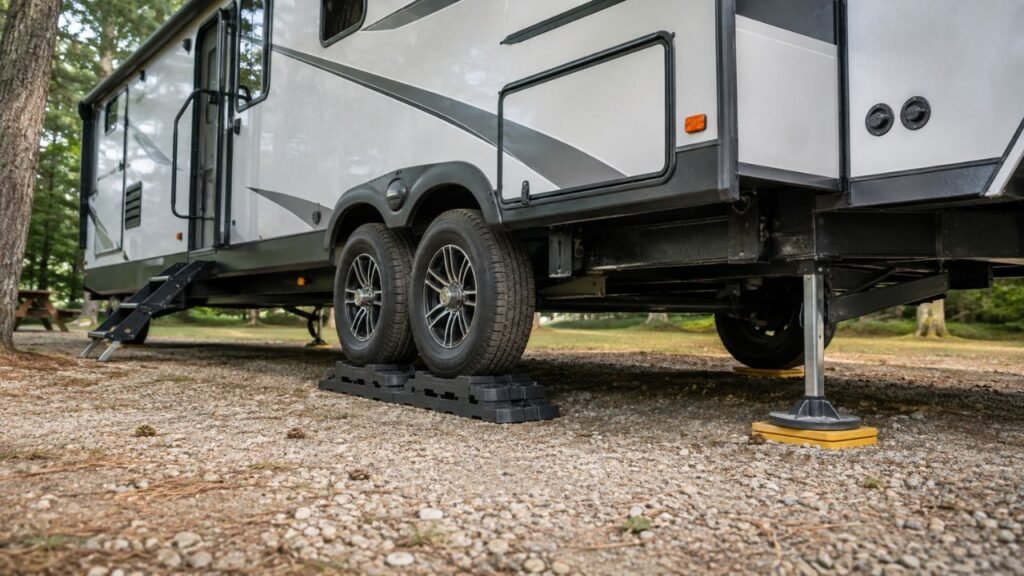
Bearing inspection requires safely lifting and supporting the trailer. Use proper stands on suitable lifting points. Professional service is safer when you lack the correct equipment.
The Trailer Axle Is Bent or Misaligned
A trailer axle determines the direction each wheel travels. When its position, toe, or camber changes, the wheels may no longer point correctly.
A bent or shifted axle can make the trailer travel sideways. You may notice the trailer sitting slightly offset in your mirrors. This condition is often called dog tracking.
Possible clues include:
- One-sided tire wear
- Inner-edge tire wear
- Outer-edge tire wear
- One tire wearing faster
- The trailer traveling at an angle
- Constant steering corrections
- Pulling after hitting a curb
- Pulling after striking a pothole
Trailer axles often have a slight designed camber. Therefore, a curved axle tube does not automatically mean damage. Proper measurements are needed before replacing it.
Suspension Parts Are Loose, Bent, or Worn
The suspension keeps the axles positioned beneath the trailer. Worn or damaged parts may let an axle move out of alignment.
Important components include:
- Leaf springs
- Spring hangers
- Shackles
- Equalizers
- Suspension bushings
- U-bolts
- Axle seats
- Mounting brackets
Worn bushings can allow excessive movement. Loose U-bolts may let the axle shift on the spring. A bent hanger can place one side ahead of the other.
Check for cracked metal, shiny movement marks, missing hardware, and uneven spacing. Structural suspension repairs should be completed before further towing.
The Trailer Is Not Level While Towing
A trailer that sits noticeably nose-high or nose-low may distribute weight poorly. Tandem-axle trailers can place more load on one axle when tilted.
An uneven attitude may not directly cause every sideways pull. However, it can worsen braking, tire loading, and overall tracking.
Park the loaded trailer and tow vehicle on level ground. Measure the trailer frame near the front and rear. Adjust the ball mount height when the setup remains outside manufacturer guidance.
Do not judge trailer level only by the roofline. Decorative body panels may not run parallel with the frame.
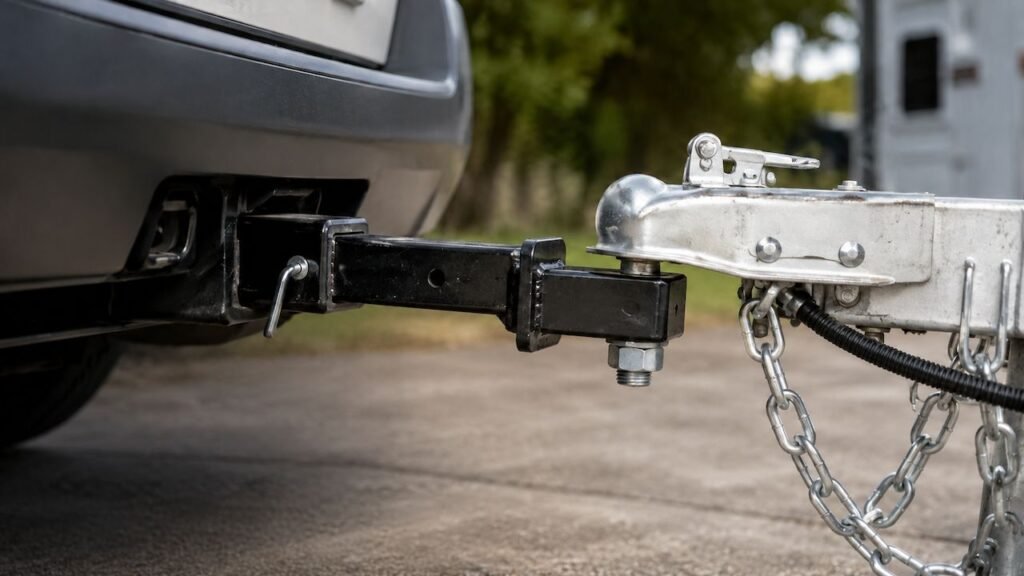
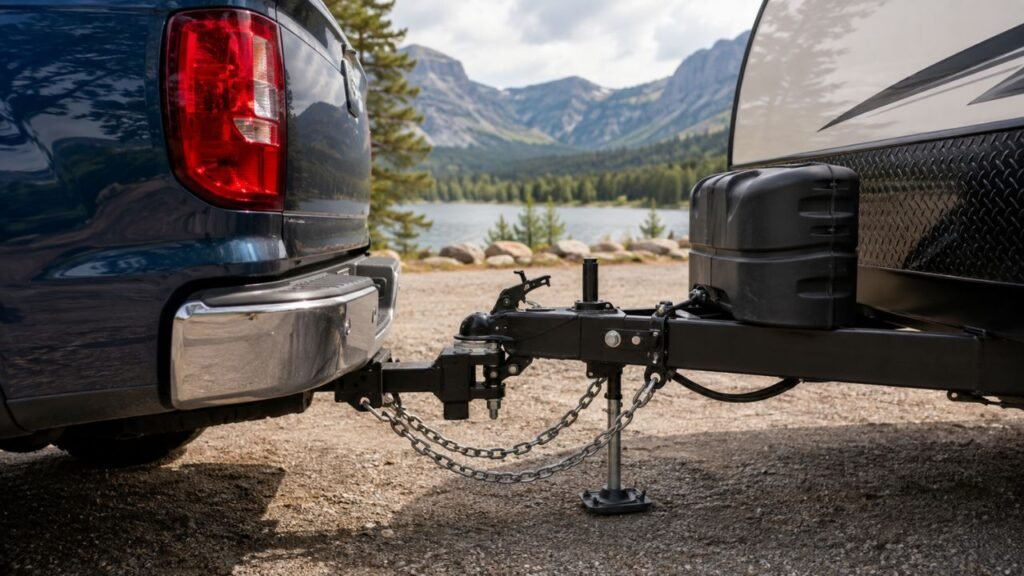
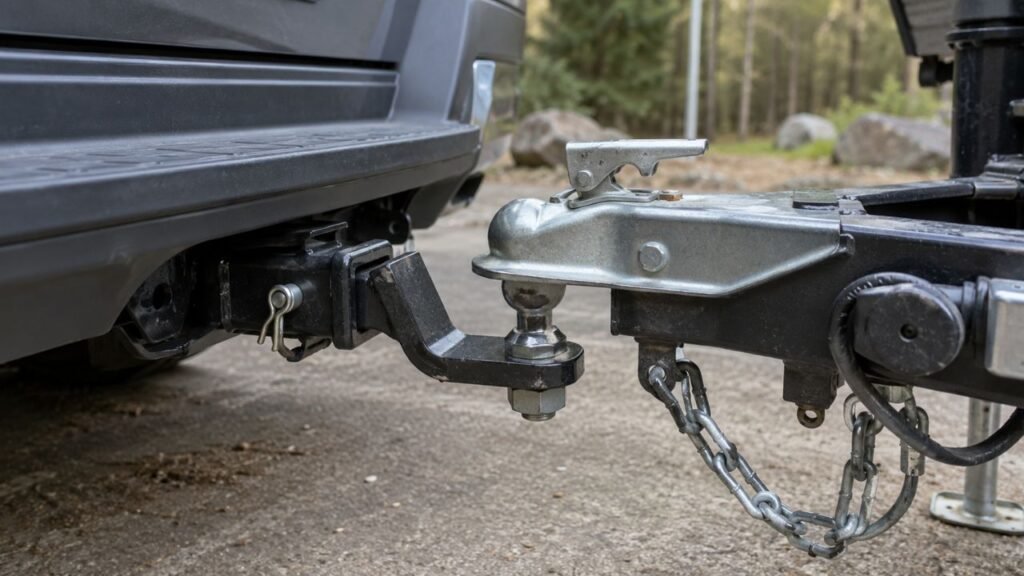
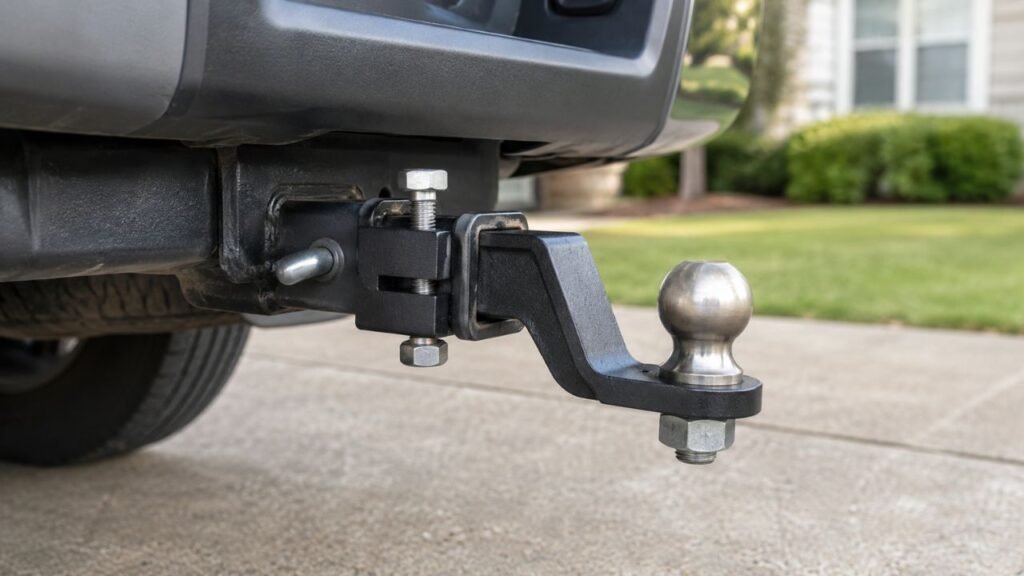
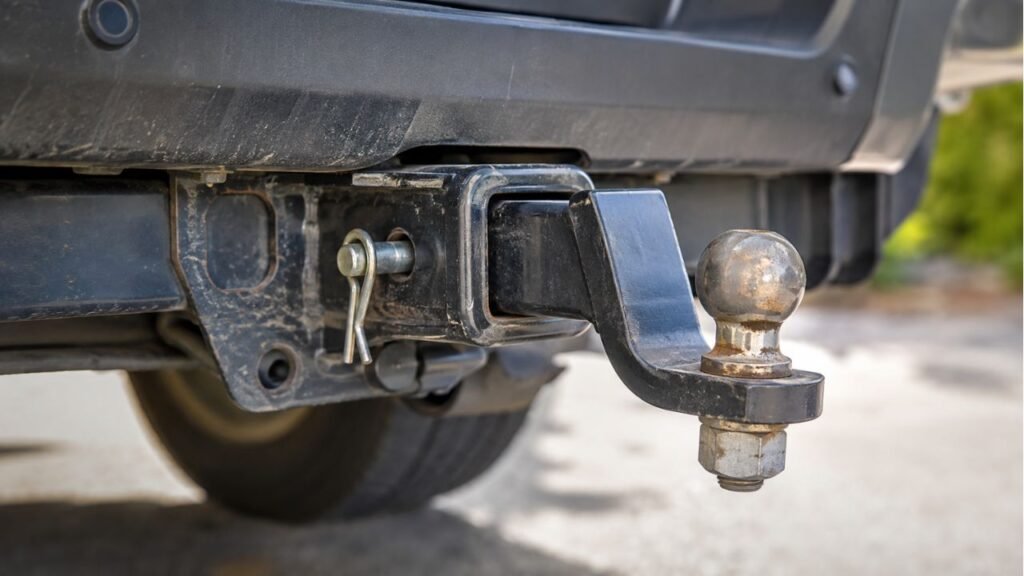
The Hitch or Coupler Is Misaligned
The trailer should connect near the centerline of the tow vehicle. Bent, damaged, or incorrectly installed hitch parts may affect tracking.
Inspect the following areas:
- Receiver hitch mounting
- Ball mount condition
- Hitch ball size
- Coupler condition
- Coupler engagement
- Mounting bolts
- Trailer tongue
- Weight-distribution brackets
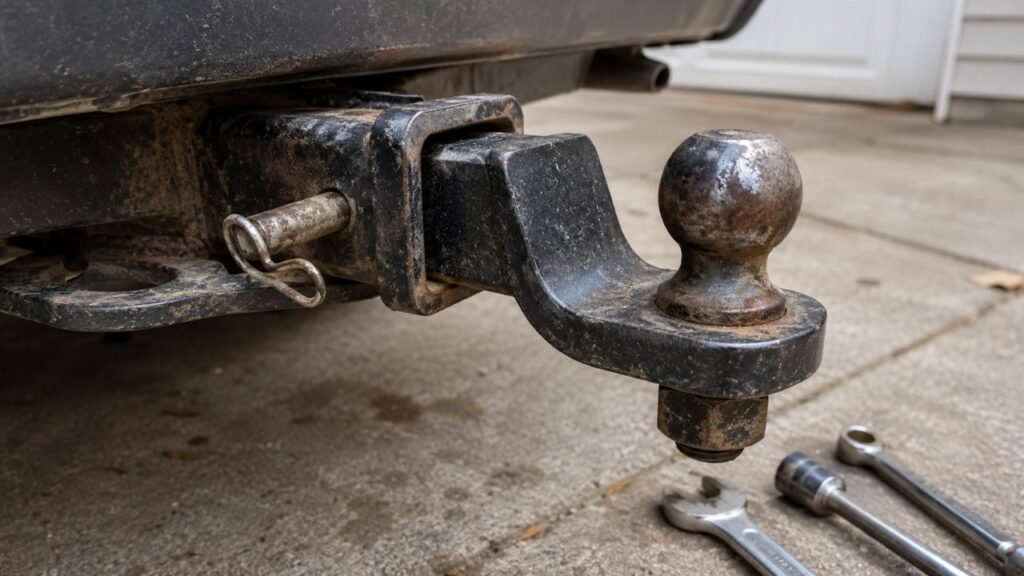
Minor movement inside a receiver can create clunking noises. It does not normally cause a strong continuous pull. Large movement, cracks, or bent components require immediate inspection.
Make sure the hitch ball matches the coupler size. A mismatched ball creates a serious separation risk.
The Trailer Frame or Tongue Is Damaged
The frame holds the hitch, suspension, and axles in alignment. Damage can place these components on different centerlines.
Frame or tongue damage may result from:
- Previous collisions
- Severe overloading
- Rust and corrosion
- Poor welding repairs
- Striking curbs
- Jackknifing
- Improper lifting
- Suspension failure
A trailer may look normal while still measuring incorrectly. A frame specialist can compare fixed reference points and identify structural movement.
Avoid trying to straighten a structural frame with improvised equipment. Incorrect repairs may weaken the frame or hide serious cracks.
Crosswinds or Passing Trucks Are Pushing the Trailer
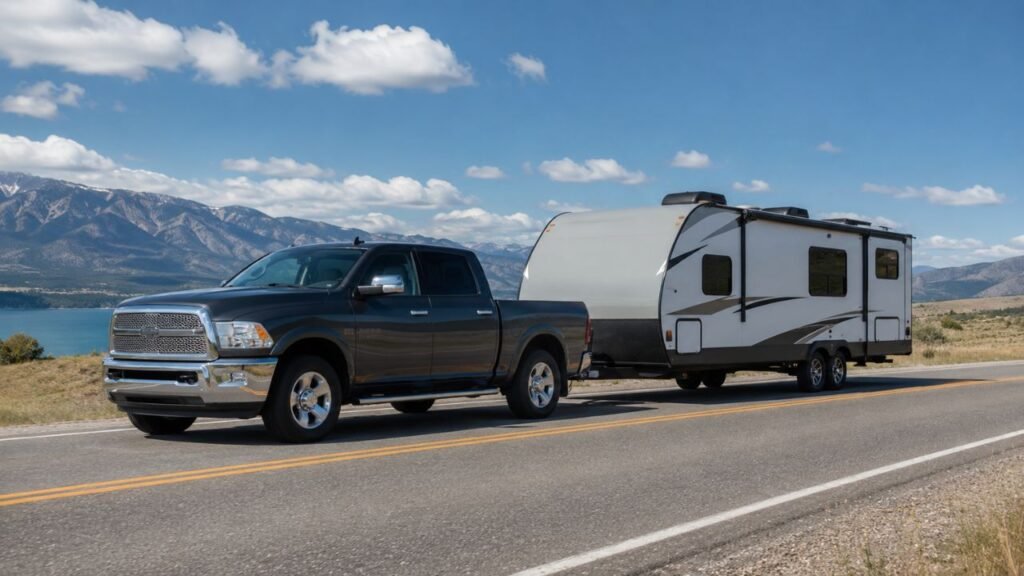
Tall travel trailers present a large surface to the wind. Strong crosswinds can push the trailer toward the shoulder or centerline.
Large trucks create changing air pressure as they approach and pass. You may first feel the trailer pushed away. It may then move toward the passing truck.
Wind-related movement is usually temporary. It changes with road direction, speed, terrain, and nearby vehicles. A trailer that always pulls toward one side likely has another problem.
Reduce speed when the trailer begins moving unexpectedly. Pull over safely when the wind becomes difficult to manage.
Road Crown Is Creating a Mild Drift
Most roads slope slightly toward the shoulder for drainage. This slope is called road crown. It can cause a mild rightward tendency on some roads.
Road crown should create only a small and predictable drift. The pulling should change or disappear on a flatter road.
Do not blame road crown for strong pulling, severe steering corrections, or tire wear. Those symptoms deserve a complete inspection.
The Tow Vehicle Has Its Own Problem
Sometimes the trailer is not the original cause. The tow vehicle may already have a tire, brake, suspension, or alignment problem.
Possible tow-vehicle causes include:
- Unequal tire pressure
- Uneven tire wear
- Brake drag
- Poor wheel alignment
- Worn steering components
- Weak suspension parts
- Uneven bed loading
- Excessive rear-axle load
Drive the tow vehicle without the trailer when safe. If it still pulls, inspect the vehicle before changing the trailer setup.
Why Does My Trailer Pull Sideways When Braking?
Pulling during braking narrows the list of likely causes. It usually means the trailer brakes are not applying equally. Loading, tire condition, and controller adjustment can also contribute.
One Brake Is Grabbing Harder
A brake may grab because it is adjusted too tightly. Corrosion, contamination, or damaged hardware can also make engagement aggressive.
The stronger brake slows one side first. This force changes the trailer’s direction during stops.
The problem may feel worse during hard braking. However, even mild pulling should not be ignored.
A Brake Magnet or Electrical Connection Is Failing
Electric trailer brakes depend on reliable voltage and grounding. A damaged wire can reduce braking power at one wheel.
Inspectors may check:
- Trailer plug connections
- Brake wiring
- Ground connections
- Junction boxes
- Brake magnets
- Wire routing
- Connector corrosion
Electrical problems can appear only during movement. Wires may lose contact when the suspension flexes or vibrates.
The Brake Controller Is Adjusted Incorrectly
A brake controller determines how strongly electric brakes respond. Excessive output can make the trailer brakes lock or grab. Insufficient output leaves the tow vehicle handling too much braking.
Controller settings are not universal. The correct adjustment depends on trailer weight, brake condition, road surface, and controller design.
Set up the controller according to its instructions. Test it in a safe area before entering faster traffic.
The Trailer Load Is Uneven
A heavily loaded side requires more braking force. Unequal wheel loads may make small brake differences more noticeable.
Rebalance cargo before adjusting the controller repeatedly. Controller changes cannot correct a severely unbalanced trailer.
A Surge-Brake Component Has a Problem
Boat and utility trailers may use hydraulic surge brakes. These systems activate when the trailer pushes against the hitch actuator.
Pulling may result from:
- A sticking brake caliper
- A seized wheel cylinder
- Air inside the system
- Contaminated brake fluid
- A damaged actuator
- Restricted brake lines
- Uneven brake adjustment
Hydraulic leaks or poor braking require immediate repair. Do not continue towing until the system operates correctly.
Why Does My Trailer Pull Sideways Only at Highway Speed?
Higher speed increases the effect of wind, tire flex, and loading problems. A trailer may feel normal around town yet become unstable on the highway.
Speed Is Magnifying an Existing Problem
A small alignment or loading problem becomes more noticeable at speed. The trailer covers more distance before each correction takes effect.
Slow down when the combination feels different. Continuing to accelerate usually makes diagnosis harder and control more difficult.
Wind and Truck Turbulence Are Affecting the Trailer
Wind pressure increases as driving speed rises. Tall trailers and enclosed cargo trailers are especially sensitive.
Passing trucks can create a sudden sideways movement. Leave additional space and avoid driving beside large vehicles longer than necessary.
The Trailer Is Beginning to Sway
A highway-speed pull may actually be early sway. Watch whether the trailer moves once or repeatedly changes direction.
Early sway often begins as a small rear movement. It may grow when speed remains unchanged or increases.
Reduce speed gradually and inspect your setup. Check tongue weight, cargo placement, tires, hitch adjustment, and trailer attitude.
Tires or Suspension Parts Are Flexing Excessively
Underinflated tires flex more and generate additional heat. Overloaded tires may also deform beyond their intended operating range.
Worn suspension bushings allow unwanted axle movement. Weak springs may let the trailer lean during lane changes or curves.
These problems may remain hidden at low speed. Highway forces make their effects more noticeable.
How to Find the Cause in the Right Order
Start with simple checks before assuming the axle is bent. A careful inspection order helps you avoid unnecessary parts and repeated repairs.
- Describe the exact movement. Note whether the pull is constant, speed-related, brake-related, or wind-related.
- Test the tow vehicle separately. Check whether the truck pulls without the trailer connected.
- Inspect the cargo arrangement. Look for side-heavy, rear-heavy, or unsecured items.
- Check loaded weights. Compare trailer, axle, tongue, payload, and component ratings.
- Check every tire cold. Compare pressure, size, condition, age, and load rating.
- Inspect tire wear patterns. Look for edge wear, cupping, flat spots, or one-wheel wear.
- Inspect visible hitch components. Confirm the ball, coupler, receiver, and mounting hardware.
- Check the trailer’s towing angle. Verify that the loaded trailer sits appropriately level.
- Look for brake warning signs. Check for heat, odors, locking, and weak braking.
- Inspect the suspension visually. Look for loose hardware, cracks, and shifted components.
- Check recent damage history. Consider potholes, curbs, collisions, or overloading events.
- Request professional measurements. Have the axles and frame measured when basic checks fail.
Take notes during each test. A symptom that appears only during braking is valuable diagnostic information. So is pulling that begins after a particular repair or road impact.
How to Fix a Trailer That Pulls to One Side
The correct repair depends entirely on the confirmed cause. Sway bars and hitch adjustments should never hide tire, brake, or structural damage.
Rebalance and Secure the Load
Move heavy cargo low and near the trailer’s centerline. Avoid placing most heavy items along one wall.
Keep enough weight forward to maintain the recommended tongue weight. Do not overload the trailer tongue or tow vehicle.
Secure all movable objects using suitable straps, brackets, or cargo restraints. Recheck the load after your first travel stop.
Measure the Loaded Trailer Properly
Estimated weight is often less accurate than owners expect. Batteries, propane, water, accessories, and personal items add substantial weight.
A vehicle scale can help measure:
- Loaded tow-vehicle weight
- Loaded trailer axle weight
- Combined weight
- Front axle weight
- Rear axle weight
- Tongue weight through separate measurement
Compare the results with every relevant rating. Being below the tow rating alone does not guarantee a safe setup.
Correct Tire Pressure or Replace Unsafe Tires
Adjust cold tire pressure using the correct specifications. Do not intentionally lower pressure to soften the ride unless approved.
Replace tires with structural damage, severe cracking, exposed cords, or unsuitable load capacity. Match replacement tires across the axle whenever possible.
Correct the cause of abnormal wear before installing new tires. Otherwise, the replacements may quickly develop the same pattern.
Repair Uneven Trailer Braking
Unequal trailer braking requires proper inspection and testing. The repair may involve adjustment, wiring, magnets, hydraulic parts, or complete brake assemblies.
Service both sides according to manufacturer guidance. Replacing only one worn component can sometimes leave braking forces unequal.
Test the brakes at low speed in a safe area. Confirm smooth, straight stopping before returning to highway travel.
Service the Wheel Bearings
Bearings may need cleaning, inspection, lubrication, adjustment, or replacement. Damaged races and overheated parts should not be reused.
Bearing service must follow the hub manufacturer’s procedure. Incorrect tightening can create heat or excessive wheel movement.
After service, recheck the hub during the first trip. Unusual heat may indicate an unresolved problem.
Repair Worn Suspension Components
Replace cracked, bent, loose, or severely worn parts. Common repairs include bushings, shackles, equalizers, springs, and U-bolts.
Hardware should match the trailer’s design and load rating. Improvised bolts or mismatched parts may create another failure point.
Suspension mounting points also require inspection. New bushings will not correct a bent or cracked hanger.
Correct Axle Alignment
Axle alignment requires accurate measurements from fixed reference points. Measuring only between the tires may not reveal every problem.
A specialist may inspect:
- Axle position
- Axle spacing
- Toe
- Camber
- Hub alignment
- Suspension position
- Frame squareness
Bent axles may require replacement or specialist correction. Do not attempt to straighten an axle using chains, jacks, or uncontrolled heat.
Adjust the Hitch Height
Use the correct rise or drop to position the loaded trailer properly. Recheck height after loading because tongue weight lowers the tow vehicle.
A weight-distribution hitch may require separate adjustment. Follow its setup procedure rather than copying another trailer’s measurements.
Confirm that adjustments remain within receiver and hitch ratings. Never flip or modify a component unless its manufacturer allows it.
Repair Frame or Coupler Damage
Structural repairs should restore both strength and alignment. Welding over a crack without finding its cause may create another failure.
A qualified trailer or frame shop can measure the tongue, frame, and suspension mounting points. Ask for the alignment measurements before and after repair.
Reduce Speed in Difficult Conditions
Slower speed reduces the forces affecting the trailer. It also gives you more time to respond to wind and road changes.
Avoid towing during severe winds when possible. Large roadside signs, trees, and other high-sided vehicles can indicate changing gusts.
Stopping for safer conditions is never an overreaction. Protecting the trailer, vehicle, and passengers matters more than the schedule.
Will a Weight-Distribution Hitch Stop Sideways Pulling?
A weight-distribution hitch transfers part of the hitch load across the tow vehicle and trailer axles. When correctly selected and adjusted, it may improve steering, braking feel, and overall stability.
However, it cannot repair a bent axle, dragging brake, failing bearing, damaged tire, or shifted suspension. Those problems require direct mechanical repairs.
Weight distribution and sway control are also different functions. Some hitch systems include both features. Others only redistribute hitch weight.
Your tow vehicle may require, permit, or restrict weight-distribution equipment. Check the vehicle, receiver, trailer, and hitch instructions before installation.
Will an Anti-Sway Bar Fix the Problem?
An anti-sway device adds resistance against unwanted side-to-side movement. It may improve stability when the trailer and hitch are already set up correctly.
It will not fix a trailer that constantly pulls toward one side. It also cannot correct unequal brakes, damaged suspension, or axle misalignment.
Correct the trailer’s loading, tires, brakes, bearings, and alignment first. Sway-control equipment should support a safe setup rather than hide a defect.
How to Prevent Your Trailer From Pulling Sideways Again
Regular inspection helps catch small changes before they become dangerous. Make these checks part of every towing routine:
- Check all tire pressures while the tires are cold.
- Inspect tread and sidewalls before every long trip.
- Confirm each tire has sufficient load capacity.
- Secure cargo so it cannot move during travel.
- Keep heavy items low and near the centerline.
- Measure loaded weights after major modifications.
- Recheck cargo after the first travel stop.
- Inspect springs, shackles, hangers, and U-bolts.
- Service wheel bearings at recommended intervals.
- Maintain trailer brakes and electrical connections.
- Investigate unusual tire wear immediately.
- Confirm the trailer sits correctly when loaded.
- Slow down on rough roads and during high winds.
- Inspect the running gear after hitting a pothole.
- Test the tow vehicle separately when pulling develops.
Keep a simple maintenance record for tires, bearings, and brakes. Dates and mileage can reveal repeated problems that might otherwise seem unrelated.
When Should I Take the Trailer to a Professional?
Basic visual checks can identify obvious loading or tire problems. However, brakes, bearings, axles, and frames often require proper equipment and measurements.
Arrange professional inspection when:
- The trailer visibly dog tracks.
- The pull remains after rebalancing cargo.
- Tire wear returns after replacement.
- One hub repeatedly becomes hotter.
- The trailer pulls during braking.
- A wheel has noticeable movement.
- The suspension appears shifted.
- An axle may be bent.
- The tongue or frame looks damaged.
- Pulling began after a collision.
- The trailer becomes unstable at normal speeds.
- You cannot confidently identify the cause.
A general repair shop may not have trailer alignment equipment. Depending on the problem, you may need a trailer technician, brake specialist, tire professional, axle shop, or frame-repair facility.
Describe exactly when the pulling occurs. Mention speed, braking, wind, road conditions, loading, and recent repairs. Those details can shorten the diagnostic process.
Final Verdict
A trailer usually pulls sideways because its two sides are not rolling or braking equally. Uneven cargo, incorrect tire pressure, brake trouble, bearing damage, and axle misalignment are common causes. Wind and road crown may contribute, but they rarely explain a strong constant pull.
Start by identifying whether you have a steady pull, dog tracking, or actual sway. Then check the load and tires before moving toward brakes and running gear. Stop towing when the trailer becomes difficult to control or shows mechanical warning signs.
Related FAQs
Is Trailer Pulling Sideways the Same as Trailer Sway?
No. A sideways pull usually creates a steady drift toward one direction. Trailer sway causes repeated left-to-right movement that may grow stronger with speed.
Why Does My Trailer Pull to the Right?
A rightward pull may come from road crown, uneven tire pressure, right-side brake drag, side-heavy cargo, worn suspension parts, or axle misalignment.
Why Does My Trailer Pull to the Left?
A leftward pull may involve unequal cargo, mismatched tires, a dragging left brake, shifted suspension, or an axle that no longer sits squarely.
Can Low Tire Pressure Make a Trailer Pull Sideways?
Yes. Unequal or incorrect tire pressure changes tire flex and rolling resistance. It may also create heat, poor tracking, and uneven tire wear.
Can a Bent Axle Make a Trailer Pull to One Side?
Yes. A bent or misaligned axle changes the direction and angle of the wheels. It may cause dog tracking and abnormal tread wear.
Why Does My Trailer Pull Only When I Apply the Brakes?
The trailer brakes may not be applying equally. Inspect brake adjustment, wiring, magnets, hydraulic components, controller settings, tires, and cargo balance.
Can Uneven Cargo Make a Trailer Dog Track?
Uneven cargo can make a trailer lean and handle poorly. Persistent dog tracking more often suggests axle, suspension, hitch, or frame misalignment.
Should a Trailer Track Directly Behind the Tow Vehicle?
Yes. A properly aligned trailer should generally follow squarely behind the vehicle on a straight, level road. A visible offset deserves inspection.
Will a Weight-Distribution Hitch Correct a Bent Axle?
No. A weight-distribution hitch manages hitch load across the axles. It cannot straighten a bent axle or repair structural alignment damage.
Can Crosswinds Make a Properly Loaded Trailer Move Sideways?
Yes. Strong crosswinds can push even a properly loaded trailer. Reduce speed and stop safely when the movement becomes difficult to control.
Can Bad Wheel Bearings Cause a Trailer to Pull?
Yes. A damaged bearing can create extra resistance or wheel movement on one side. Heat, grinding, grease leakage, and humming are common warnings.
Why Did My Trailer Start Pulling After Hitting a Pothole?
A hard pothole impact may damage a tire, bend a wheel, shift the axle, loosen suspension hardware, or affect alignment. Inspect the running gear before continuing.
Can a Trailer Pull Sideways Because It Is Overloaded?
Yes. Overloading increases tire flex, suspension stress, braking distance, and heat. Uneven overloading can also make one side respond differently.
Does Receiver Hitch Play Cause Sideways Pulling?
Normal receiver clearance may create some clunking, but it rarely causes a strong constant pull. Excessive movement, cracks, or bent parts require inspection.
How Do I Know Whether One Trailer Brake Is Dragging?
A dragging brake may produce a hot hub, burnt smell, smoke, poor rolling, or rapid brake wear. Avoid touching a suspected hot wheel directly.

Scott Miller shares real-world RV road trip insights built from years of traveling open highways and backroads. He covers route planning, campground choices, and travel gear with a practical mindset. His content is written for RVers who value reliability over trends.