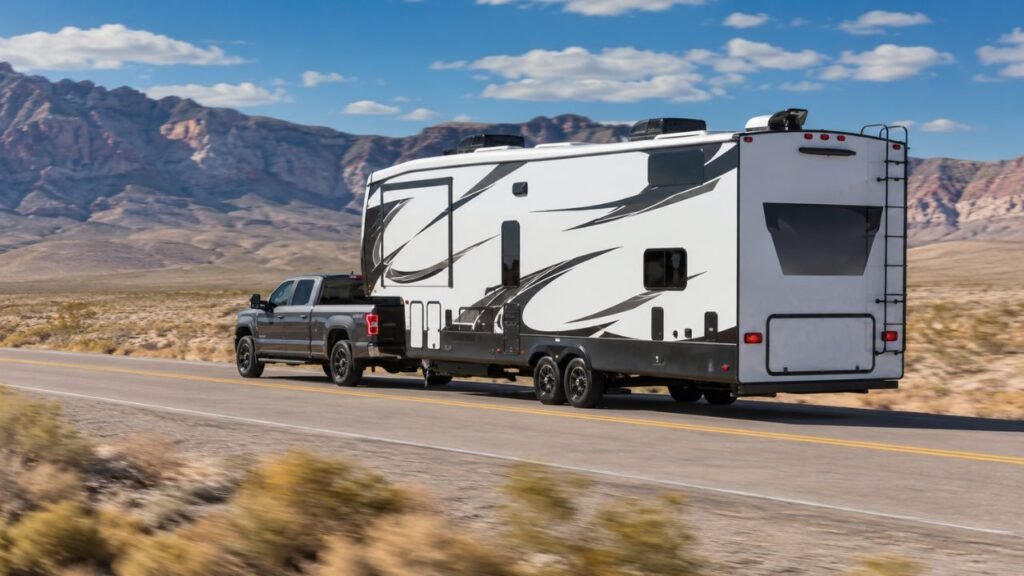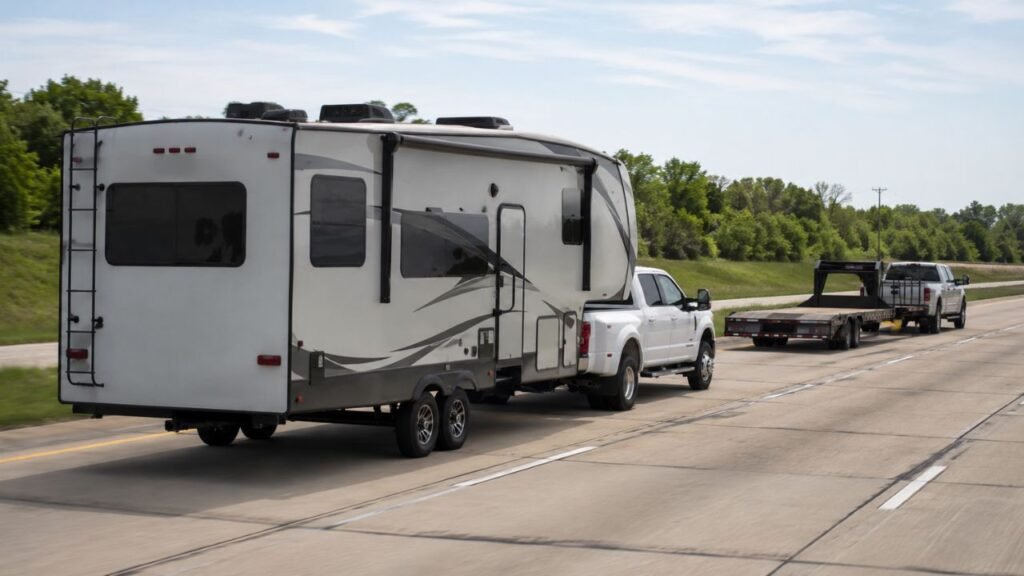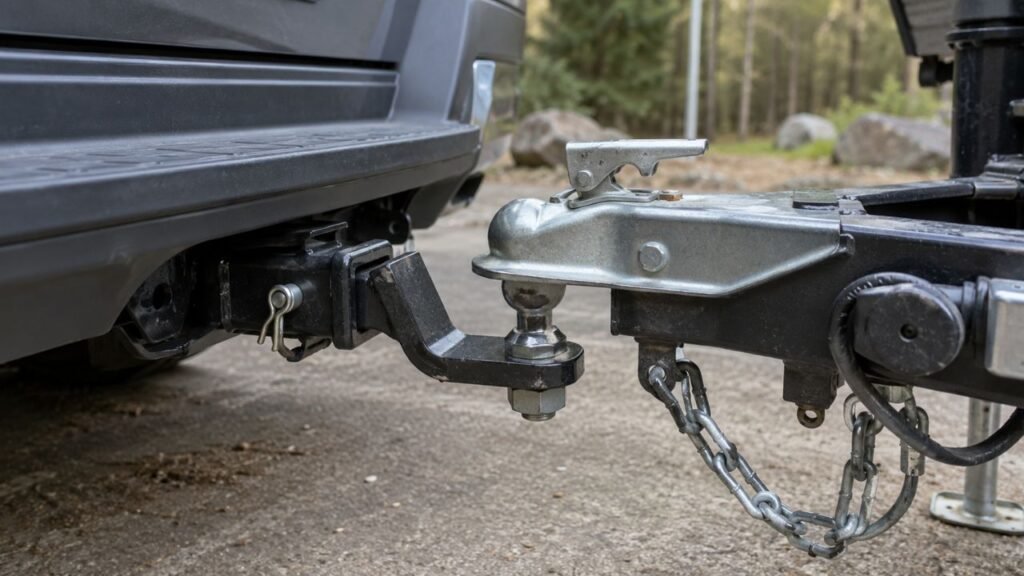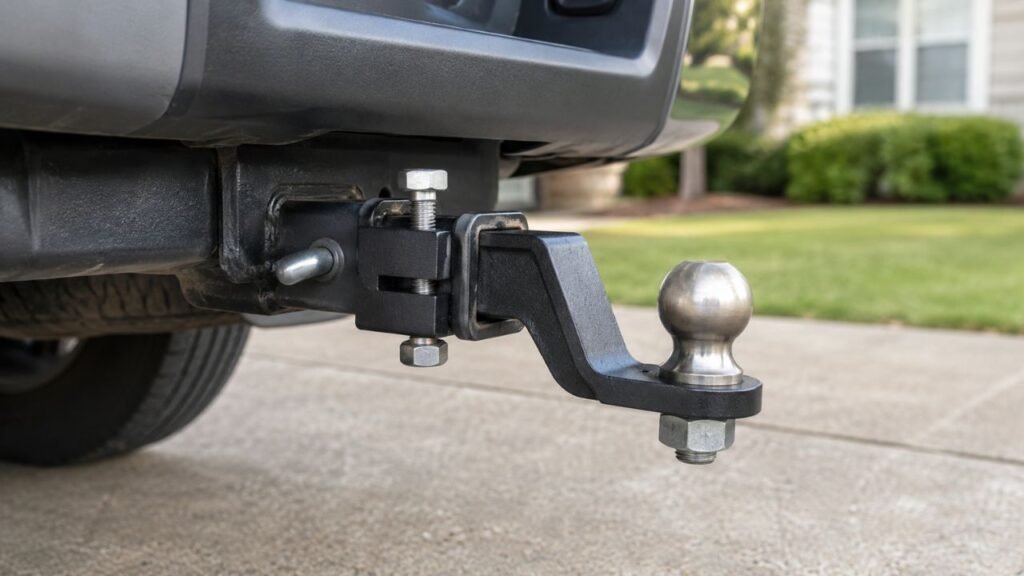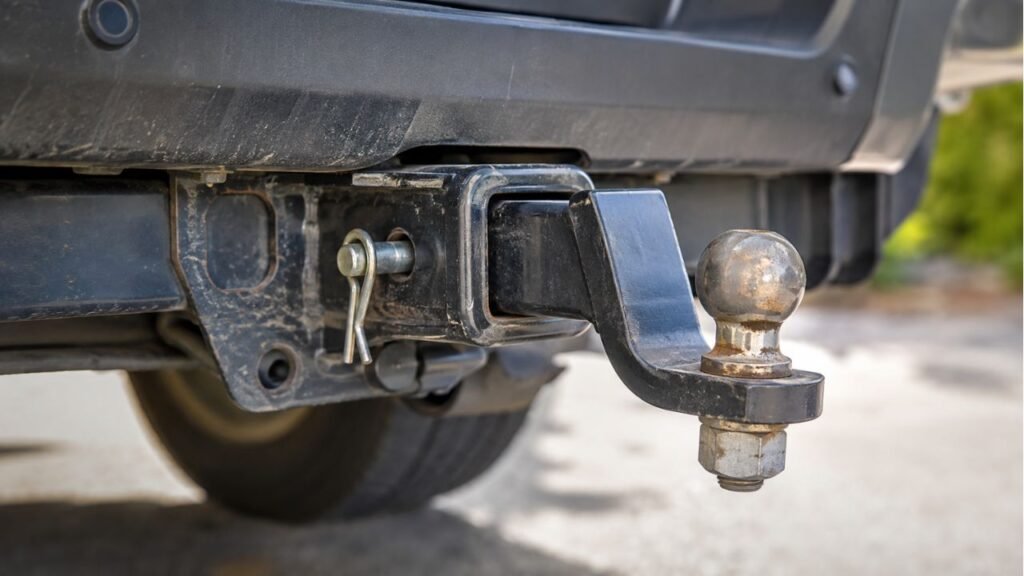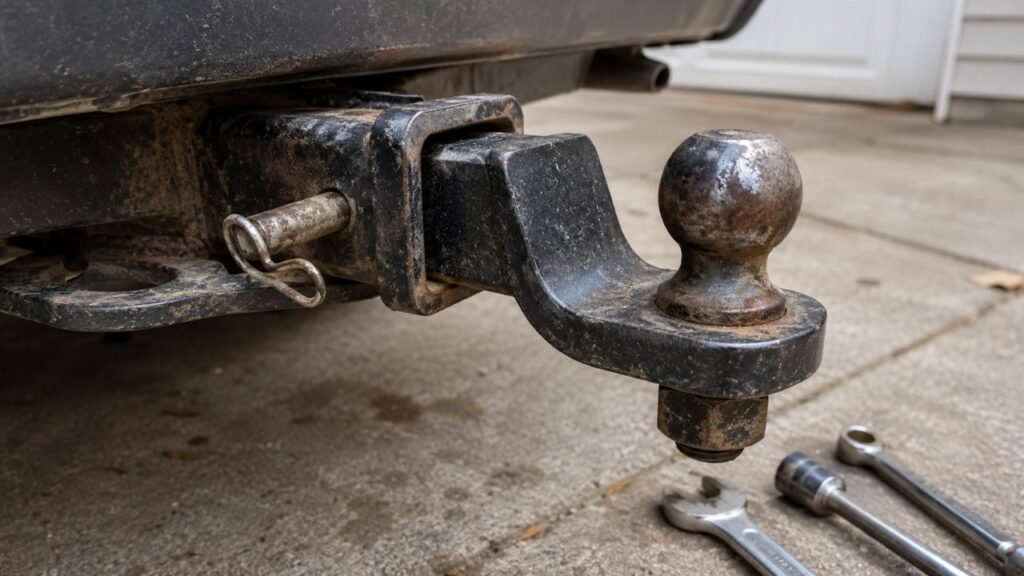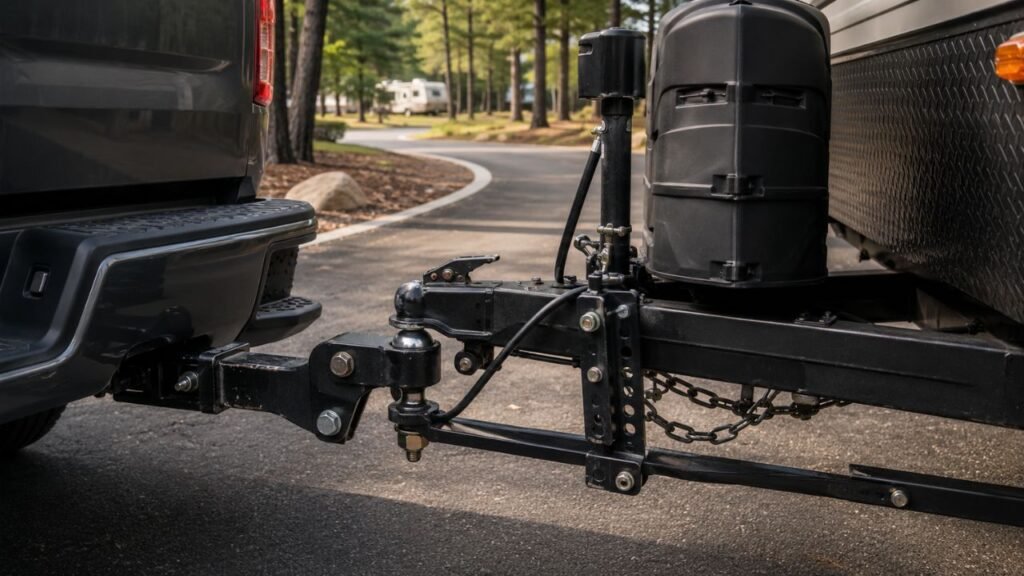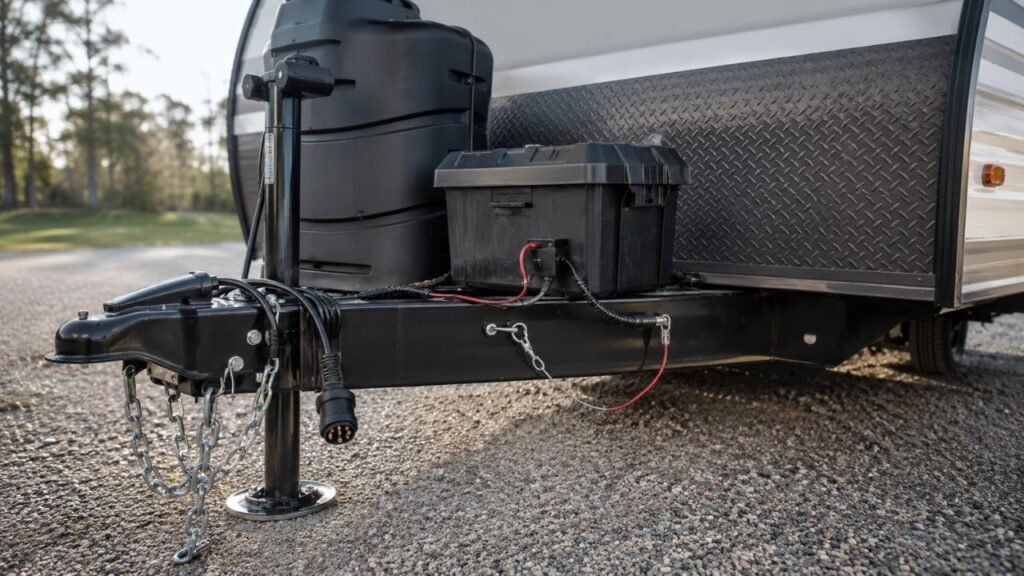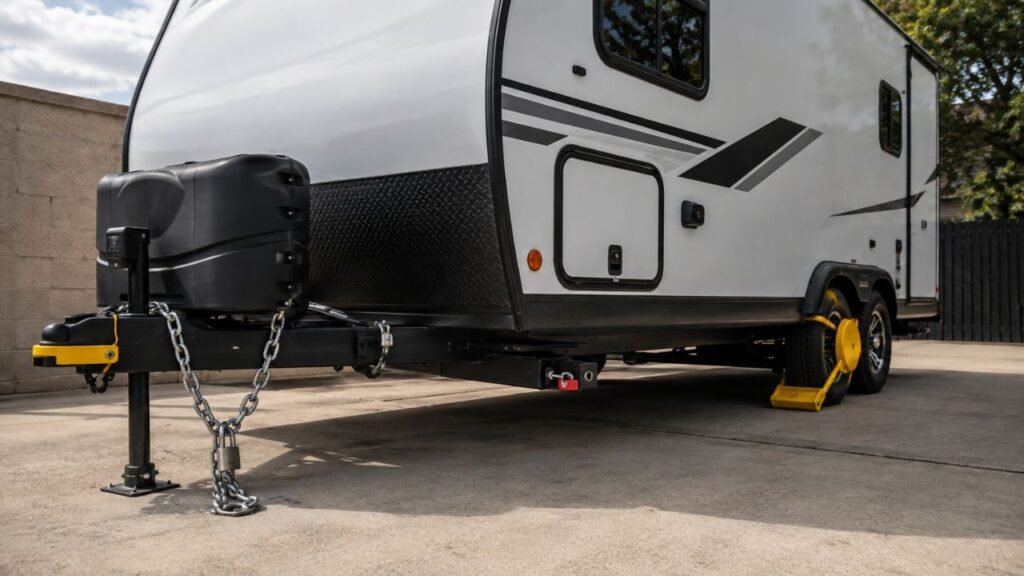
A trailer can still be stolen when its lock protects only the coupler while the wheels, safety chains, receiver, frame, or parking access remain unsecured. Thieves may also move the entire trailer without opening its primary lock.
In this guide, I’ll show you where common security gaps appear, how to build layered protection, and what to do if your trailer disappears despite your precautions.
Key Takeaways
- A single lock normally protects only one trailer component.
- Universal locks may leave gaps around the coupler.
- Loose safety chains can create another towing vulnerability.
- An unlocked receiver pin may expose removable hitch components.
- A wheel lock adds protection that a coupler lock cannot provide.
- Parking position can reduce access to the trailer tongue.
- Alarms and cameras detect activity but cannot stop movement.
- GPS tracking may support recovery after the trailer moves.
- Cargo doors and exterior equipment require separate protection.
- No security setup can guarantee that theft will never happen.
- Several different security layers provide the strongest practical protection.
Why Can a Locked Trailer Still Be Stolen?
The word “locked” can create a false sense of complete protection. In reality, most trailer locks secure one particular connection point.
A coupler lock may prevent someone from attaching a normal hitch ball. However, it does not automatically secure the wheels, frame, chains, cargo doors, receiver hardware, or the surrounding parking area.
That means a thief may avoid confronting your strongest lock. Instead, they may look for another part that requires less effort.
This is why trailer security should not depend on one device. A better approach protects several separate areas at the same time.
The realistic goal is not to make your trailer impossible to steal. Your goal is to make the attempt slower, louder, harder, and more visible.
A thief searching for an easy target may avoid a trailer requiring several different tools, additional time, and greater exposure.
Which Parts of a Trailer Can Remain Vulnerable?
Before buying more locks, take a slow walk around your trailer. Look beyond the main coupler and identify every place where movement or access may still be possible.
The Coupler and Latch
The coupler is usually the first security point owners protect. Unfortunately, not every coupler lock provides the same level of coverage.
A small latch lock may keep the coupler handle closed. However, it may not completely fill or cover the ball socket.
Some universal locks also leave unnecessary space around the coupler. That movement may provide greater access to the lock body or surrounding hardware.
The lock should closely match your coupler’s style and ball size. It should sit firmly without excessive movement or exposed openings.
You should also check that the latch closes completely. A strong lock installed incorrectly may provide much less protection than expected.
The Safety Chains
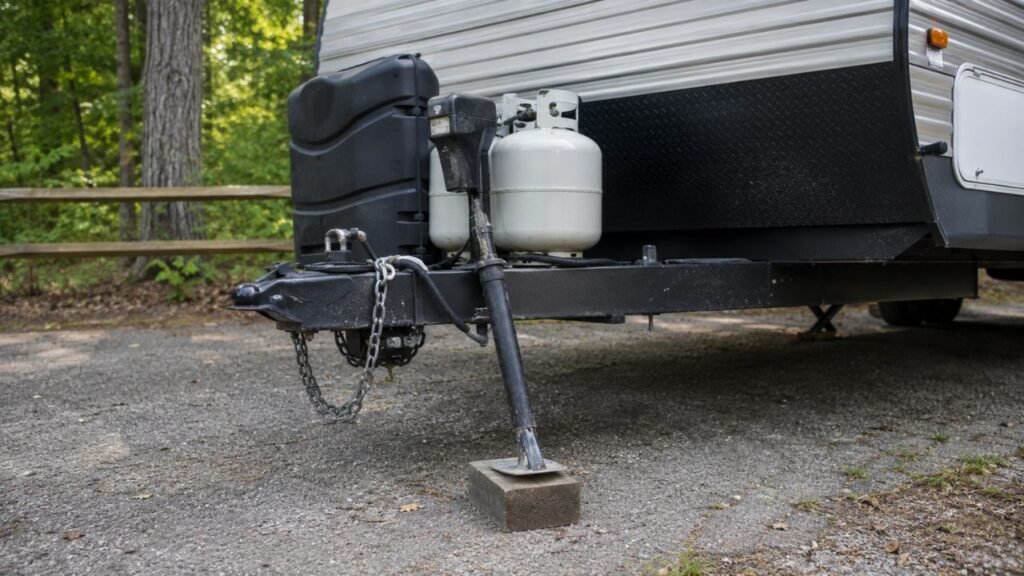
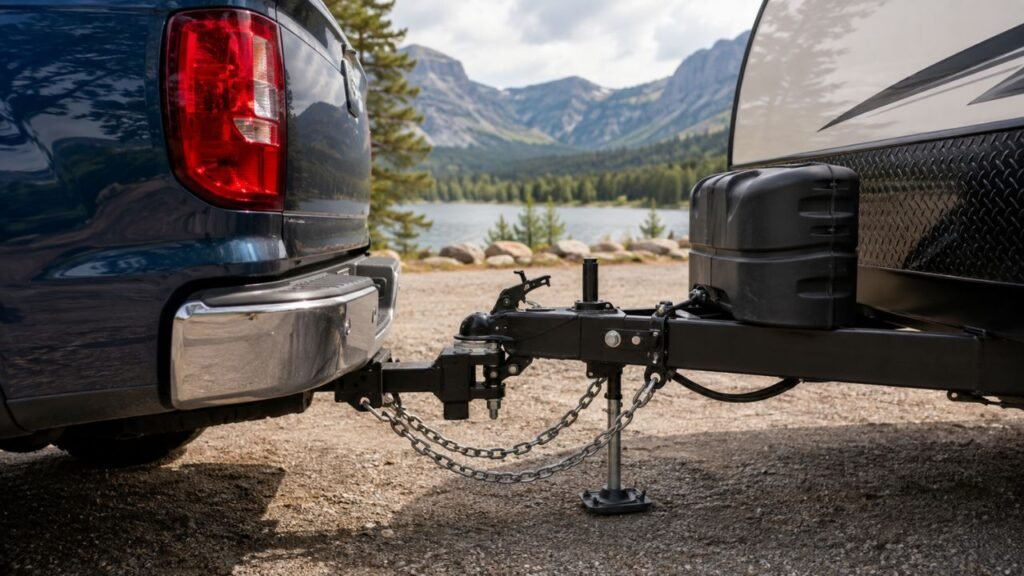
Safety chains are essential towing equipment. However, loose chains can become an overlooked security concern while the trailer is parked.
Chains hanging near the ground may remain accessible even when the coupler is locked. This can create another possible point for moving or dragging the trailer.
Secure the chains so they cannot be casually handled. Keep them raised and controlled near the tongue when practical.
Do not cut, weaken, permanently bind, or improperly modify the chains. They must remain strong and correctly positioned for safe towing.
The Receiver and Ball Mount
When the trailer remains connected to your tow vehicle, the coupler is only one part of the complete connection.
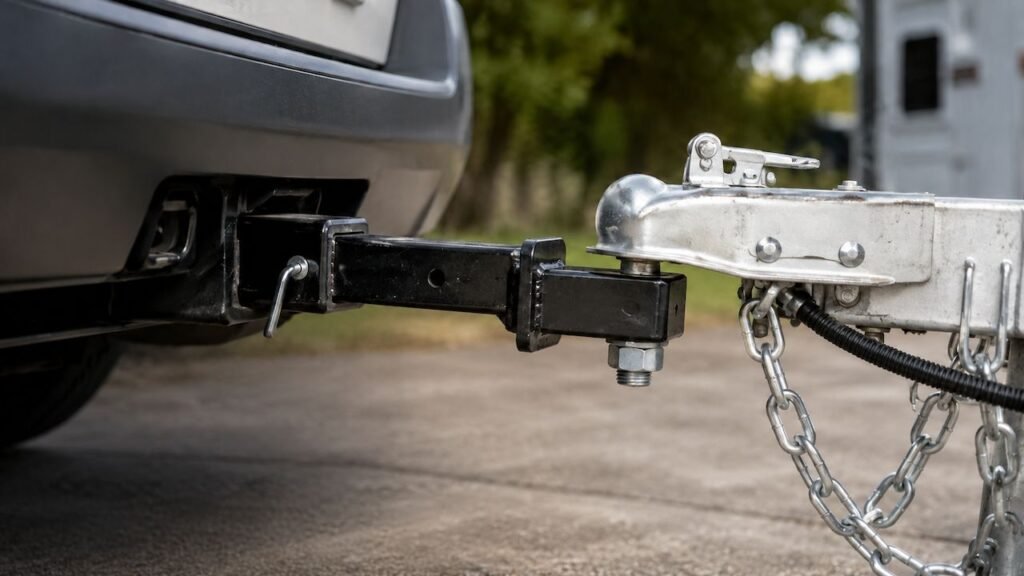
The ball mount usually slides into the vehicle’s receiver. A removable pin holds that assembly in place.
If that pin is not locked, someone may be able to remove the entire ball mount assembly. This can leave your expensive hitch equipment vulnerable.
Use a properly fitted receiver pin lock whenever the ball mount remains installed. Also secure the coupler latch according to the hitch manufacturer’s instructions.
Remember that a receiver lock and coupler lock perform different jobs. One should not be treated as a replacement for the other.
The Wheels
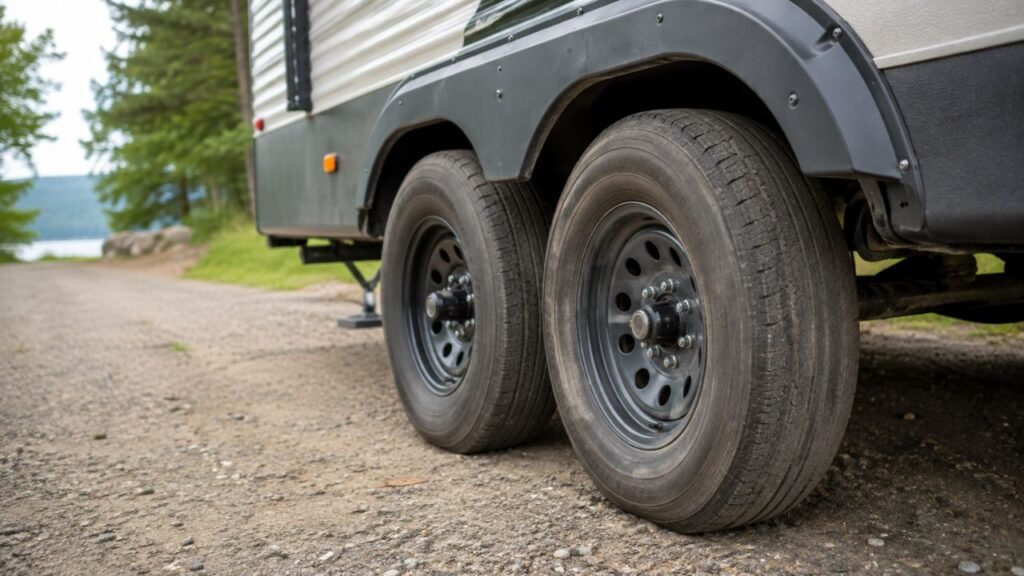
A coupler lock does not prevent the trailer wheels from turning. That means the trailer may still be rolled, repositioned, or loaded.
This becomes especially important with small utility trailers. Their lighter weight can make physical movement easier.
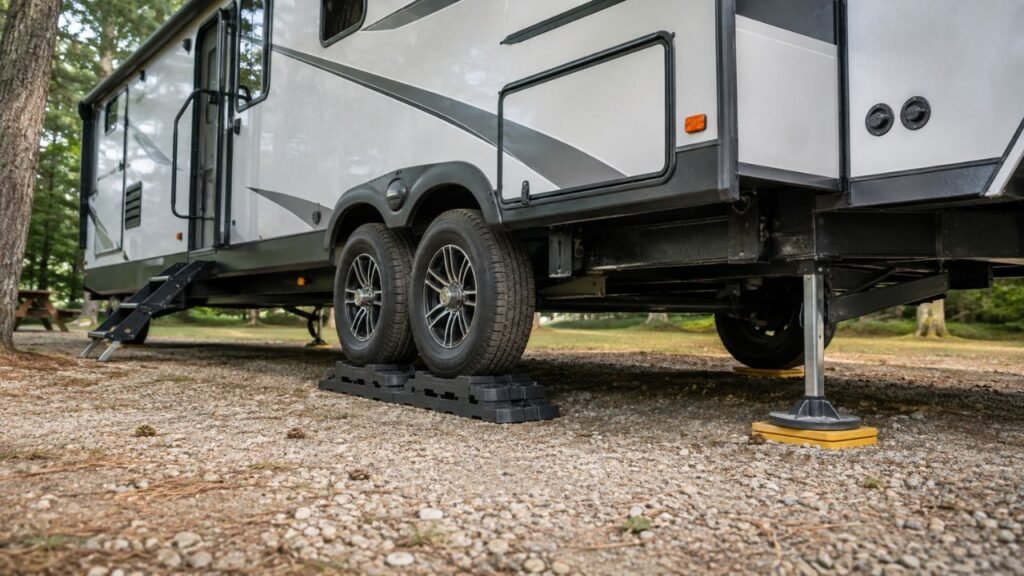
A wheel clamp or wheel boot creates a separate barrier. It prevents normal rolling even when the coupler remains untouched.
Tandem-axle trailers may also use a device positioned between adjacent tires. The correct choice depends on wheel spacing and trailer design.
Ordinary wheel chocks help prevent accidental rolling. However, they should not be mistaken for anti-theft wheel locks.
The Frame and Jack
Your trailer frame provides structural strength. It may also present accessible points around the tongue and underbody.
Inspect the frame for open areas near the front. Consider whether an approved security chain can connect it to a fixed anchor.
The tongue jack also deserves attention. Electric jacks may remain powered during storage unless the battery is disconnected or isolated.
This does not mean every jack is a major theft vulnerability. However, accessible controls can make repositioning easier.
Follow the trailer manufacturer’s guidance before disconnecting batteries or installing switches. Do not disable essential safety equipment or braking systems.
Doors, Toolboxes, Spare Tires, and Cargo
Some thieves may not want the entire trailer. They may simply target equipment that can be removed quickly.
Rear doors, ramp doors, side doors, and toolboxes often use lighter hardware than the main coupler lock.
Spare tires, batteries, propane tanks, fuel containers, generators, and tools may also remain exposed.
Use suitable locks or brackets for exterior accessories. Inside an enclosed trailer, secure valuable equipment to approved anchor points.
A trailer that cannot be moved may still suffer an expensive cargo loss. Protecting the contents should remain part of your overall plan.
Common Ways Locked Trailers Are Taken
A thief does not always need to open the lock you installed. The table below shows why different security layers are necessary.
| General Theft Risk | Why One Lock May Not Stop It | Defensive Layer to Add |
| Unauthorized towing connection | The lock may not cover every connection component | Coupler, latch, and receiver protection |
| Accessible safety chains | Chains may remain available outside the lock | Raise and secure chains safely |
| Trailer rolling | A coupler lock does not control the tires | Wheel clamp, boot, or axle immobilizer |
| Whole-trailer loading | Hitch protection does not anchor the frame | Wheel control, ground anchor, blocked access |
| Removable hitch components | Receiver hardware may remain unlocked | Locking receiver pin and secured ball mount |
| Manual repositioning | Smaller trailers may be moved short distances | Wheel immobilization and fixed anchoring |
| Cargo theft | Doors and compartments may use weaker hardware | Reinforced hasps and protected locks |
| Accessory theft | Batteries, spare tires, and tanks remain exposed | Locking brackets and secure storage |
| Storage-yard theft | Isolation may provide more time and privacy | Lighting, controlled entry, cameras, inspections |
| Organized equipment theft | Determined thieves may bring specialized equipment | Several physical layers, alerts, tracking, insurance |
The main lesson is simple. Protect the trailer against towing, rolling, loading, access, and cargo removal separately.
Why Some Trailer Locks Provide Less Protection Than Expected
A lock’s appearance does not always reveal its actual performance. Fit, construction, installation, maintenance, and surrounding access all affect protection.
Universal Fit Leaves Too Much Movement
A universal lock sounds convenient because it fits several coupler styles. However, a loose fit may create unnecessary space.
That extra movement can expose the lock body or allow the device to sit incorrectly. A lock should not rattle freely around the coupler.
Measure the coupler and identify its exact design before buying. Confirm the required ball size and available clearances.
A tightly fitted lock normally provides fewer open areas around the connection. It can also make tampering easier to notice.
Exposed Locking Components
Locks with exposed shackles, pins, or cylinders may leave more working space around critical parts.
Look for a design that shields its locking mechanism. The keyway should also have reasonable protection from dirt and weather.
A bulky-looking lock is not automatically secure. Study how the complete device sits on your specific coupler.
The strongest area of the lock matters less when another part remains fully exposed.
Weak or Brittle Materials
Very light lock bodies may use materials that provide less resistance to force. Thin parts may also deform more easily.
Look for substantial construction and protected components. However, do not rely only on marketing terms such as heavy-duty or maximum security.
Material quality is only one factor. The lock must also fit properly and cover the intended area.
An expensive lock with poor fit may leave more risk than a correctly fitted device.
A Lock Is Installed Incorrectly
Even a well-designed lock can fail to provide proper protection when installed incorrectly.
The coupler may remain partially open. The locking pin may not pass fully through its intended position.
The device may also be placed backwards or allowed to hang loosely. These mistakes can leave more space than the design intended.
After installation, pull firmly on the lock and coupler. Confirm that every part is fully seated and cannot be removed by hand.
Read the lock instructions before relying on it. Do not assume every product installs in the same way.
Weather and Corrosion Reduce Reliability
Trailer locks spend their lives around rain, dust, road grime, and temperature changes. These conditions can damage moving components.
Corrosion may cause a lock to become difficult to close. Owners sometimes respond by leaving it only partly engaged.
A blocked keyway can also encourage rushed installation. This weakens the value of even a strong device.
Inspect locks regularly and clean them according to their instructions. Replace badly damaged or unreliable equipment.
Do not use a lubricant that attracts excessive dirt unless the manufacturer recommends it.
The Lock Protects the Wrong Component
Different locks have different purposes. Confusing those purposes can leave important areas unprotected.
A latch lock secures the coupler handle. A coupler lock blocks or covers the socket.
A receiver pin lock protects the ball mount inside the tow vehicle’s receiver. A wheel lock controls tire movement.
A cargo-door lock protects stored equipment. A kingpin lock protects a fifth-wheel connection.
Using one type does not automatically provide the functions of another. Your trailer may need several devices working together.
How to Inspect Your Current Trailer Security Setup
A simple inspection can reveal more than another random lock purchase. Walk around the trailer and check every connection, movement point, and storage opening.
- Confirm that the coupler lock matches the coupler design.
- Check that the device sits firmly without excessive movement.
- Make sure the coupler latch closes completely.
- Inspect the receiver pin and removable ball mount.
- Raise and secure safety chains without weakening them.
- Check whether at least one wheel is immobilized.
- Inspect the tongue jack and accessible controls.
- Look for usable frame points around the tongue.
- Check all side, rear, ramp, and storage doors.
- Secure the battery box and propane equipment.
- Lock the spare tire with suitable hardware.
- Remove visible tools and valuable loose equipment.
- Test motion lights, alarms, and camera coverage.
- Confirm that GPS movement alerts are active.
- Photograph the trailer after securing everything.
- Store spare keys somewhere away from the trailer.
- Remove every security device before towing.
During this inspection, ask yourself one question: what can still move, open, disconnect, or be removed?
That question often reveals the weakest part of your current setup.
How to Build a Layered Trailer Security System
Layered security protects several separate weaknesses. Each layer should create a different problem for anyone trying to move your trailer.
Layer 1: Secure the Coupler
Begin with a coupler lock designed for your trailer’s connection type. It should closely match the socket size and coupler shape.
A close-fitting lock normally reduces open space around the connection. It should also prevent ordinary attachment to the coupler.
Some trailers may benefit from a separate latch lock. However, the latch lock should complement the coupler lock, not replace it.
Check the device every time you install it. A strong lock provides little help when it is not completely engaged.
Layer 2: Secure the Receiver and Hitch Hardware
When the trailer stays connected, lock the receiver pin holding the ball mount.
Also secure the coupler latch using hardware suitable for your setup. Adjustable or removable hitch components may need additional protection.
Remove the ball mount when you are not using it whenever practical. This protects the equipment and removes an unnecessary connection component.
Store removed hitch parts inside a locked area. Do not leave them beside the trailer.
Layer 3: Immobilize at Least One Wheel
Add a wheel lock that fits the tire and wheel correctly. A visible device can provide both physical protection and early deterrence.
Wheel clamps grip around the wheel. Wheel boots may cover more of the wheel’s center.
Tandem-wheel locks restrict movement between adjacent tires. They require the correct spacing and installation position.
Choose a device that does not damage brake lines, valve stems, or suspension components. Always remove it before towing.
Layer 4: Control the Safety Chains
Keep safety chains raised rather than hanging near the ground. Secure them so they cannot be casually separated or handled.
Use a method that does not weaken the chain links. Avoid placing stress on hooks, attachment points, or breakaway equipment.
Your storage setup should not interfere with safe towing later. Inspect the chains before every trip.
If you are unsure about a storage method, follow the trailer manufacturer’s instructions.
Layer 5: Anchor the Trailer
A fixed ground anchor can add another physical barrier during long-term storage.
The anchor must be installed in a sound surface. Use security-rated chain or cable suited to the trailer’s size and storage conditions.
Pass the chain through a closed, approved frame area. Avoid brake lines, electrical wiring, plumbing, or lightweight body panels.
Keep the lock away from easy ground support when practical. Also protect the chain from standing water and corrosion.
Anchoring requirements vary by property and trailer design. Get professional guidance when installing permanent anchors.
Layer 6: Block Easy Vehicle Access
Parking position can provide security without adding another lock.
Place the coupler toward a wall, sturdy fence, post, or other solid barrier. Leave enough space for safe inspection and emergency access.
You can also park a locked vehicle between the trailer and its easiest exit path. This creates another obstacle before towing becomes possible.
Avoid parking with the tongue directly facing an open road. A straight approach reduces the time needed to reach the coupler.
Never block fire lanes, public walkways, or emergency access. Security should not create another safety problem.
Layer 7: Add Detection and Tracking
Physical locks delay movement. Electronic devices can warn you when someone starts tampering.
Motion alarms may produce a loud sound near the trailer. Some systems can also send alerts to your phone.
Cameras may record faces, vehicles, arrival times, and directions of travel. Position them where the trailer remains clearly visible.
A GPS tracker may provide movement or geofence alerts. It may also support recovery after theft.
Keep electronic devices charged and connected. A tracker with a dead battery provides no useful information.
Layer 8: Protect the Cargo and Accessories
Lock every exterior door, including side doors and ramp doors. Use hardware suited to each latch and hasp.
Secure expensive equipment inside the trailer. Avoid leaving high-value tools directly beside an entry door.
Lock exterior batteries, spare tires, propane tanks, and toolboxes with suitable brackets.
Remove valuables during long storage whenever practical. The safest item inside a trailer is often the item you took home.
Which Trailer Security Devices Protect Each Area?
No single device covers every vulnerability. Use the table below to match each lock with its actual job.
| Security Device | Main Area Protected | Best Used When | Important Limitation |
| Coupler lock | Ball socket or coupler body | Trailer is parked unhitched | Does not stop the tires rolling |
| Latch lock | Coupler handle | The coupler latch needs separate protection | May not block the ball socket |
| Receiver pin lock | Ball mount and receiver | Hitch hardware remains installed | Does not protect an unhitched coupler |
| Wheel clamp | One wheel | Home, campsite, or storage parking | Must fit the wheel correctly |
| Wheel boot | Wheel and wheel-center access | Higher-risk or longer storage | Larger and slower to install |
| Tandem-wheel lock | Two adjacent trailer tires | Tandem-axle trailers | Depends on correct tire spacing |
| Ground anchor and chain | Trailer frame and parking site | Long-term home or yard storage | Strength depends on every component |
| Motion alarm | Movement or tampering | Someone can respond to an alert | Cannot physically stop the trailer |
| Security camera | Activity around the trailer | The parking area has clear coverage | May miss blocked or distant activity |
| GPS tracker | Movement alerts and location | Recovery support after movement | Does not replace physical locks |
| Reinforced hasp and lock | Cargo and storage doors | Tools or equipment remain inside | Does not prevent towing |
| Accessory lock | Spare tires, tanks, and batteries | Exterior equipment remains installed | Protects only the specific accessory |
The best combination depends on trailer value, parking location, and storage length. However, coupler protection plus wheel immobilization provides a strong starting point.
How Should You Secure Different Types of Trailers?
Trailer designs vary considerably. Your security equipment must match the exact connection, weight, wheel layout, and cargo type.
Utility Trailers
Utility trailers are often light, simple, and easy to access. Their open design can expose both cargo and frame components.
Use a close-fitting coupler lock and at least one wheel immobilizer. Secure ramps, spare tires, mowers, tools, and other equipment separately.
Park with the tongue facing a barrier whenever possible. Consider anchoring the frame during extended storage.
Remove valuable cargo rather than covering it with a tarp. A tarp can sometimes advertise that equipment is underneath.
Enclosed Cargo Trailers
Enclosed trailers protect cargo from weather but can attract attention. People may assume valuable tools or merchandise are stored inside.
Protect the coupler, wheels, rear ramp, and side door. Reinforce weak hasps when appropriate.
Secure valuable cargo to internal anchor points. Do not store ownership papers or spare keys inside.
Add a hidden tracker and visible camera coverage. Consider an alarm that detects door movement or trailer motion.
Boat Trailers
Boat trailers may sit near isolated launch areas, storage yards, or seasonal properties. These locations can provide limited supervision.
Secure the coupler and at least one trailer wheel. Protect the spare tire, winch equipment, battery, and removable accessories.
Use a parking position that blocks a direct towing approach. Check local storage rules before using permanent anchors.
Remember that boat and trailer insurance may be handled separately. Confirm coverage before storing the complete setup.
Travel Trailers and Campers
Travel trailers have more exterior equipment than basic cargo trailers. Batteries, propane tanks, storage doors, and spare tires may remain accessible.
Secure the coupler, receiver components, and wheels. Lock exterior compartments and valuable accessories.
At campsites, do not assume nearby people eliminate theft risk. Use the same routine you would use at home.
Keep a record of the trailer VIN, appliance serial numbers, and unique exterior markings.
Fifth-Wheel Trailers
A fifth-wheel trailer does not use a normal ball coupler. It connects through a kingpin and hitch mounted in the truck bed.
Use a lock specifically designed for the kingpin. A standard bumper-pull coupler lock will not fit this connection.
Also protect landing gear controls, storage compartments, batteries, and exterior equipment.
Wheel immobilization provides another important barrier. Parking position can also reduce access to the front connection.
Gooseneck Trailers
Gooseneck trailers require hardware designed for their specific coupler arrangement.
Use a properly fitted gooseneck lock rather than adapting a lock made for another hitch.
Protect the wheels, chains, cargo, and exposed connection components separately. Heavy equipment trailers may also benefit from tracking and yard monitoring.
Because these trailers often carry valuable loads, secure the cargo even when the trailer remains empty.
Commercial and Equipment Trailers
Commercial trailers need a consistent security routine rather than informal habits.
Assign responsibility for installing and checking each lock. Maintain a list of keys, trackers, and assigned equipment.
Record inspections at the end of each shift. Replace missing or damaged devices immediately.
Use controlled yard access, lighting, cameras, visible identification, telematics, and wheel immobilization where appropriate.
A written checklist prevents security from depending entirely on memory.
Where You Park Matters as Much as What You Lock
Good hardware works better when the parking location increases exposure and restricts movement. Always study the area before leaving your trailer.
Parking at Home
Park behind a locked gate or inside a secure building when possible. Keep the tongue away from the street.
Use your tow vehicle or another locked vehicle to block the exit path. Add motion lighting around the trailer.
Position cameras to capture the trailer and approaching vehicles. Avoid leaving dark areas beside fences or buildings.
Do not advertise extended travel plans publicly. A trailer left unattended for weeks may receive unwanted attention.
Parking in a Storage Yard
Choose a facility with controlled entry, reliable lighting, and usable camera coverage.
Ask how often staff inspect stored trailers. Check whether access records are kept.
Look at the perimeter fencing and gate area. A locked gate provides limited value when another section remains open.
Do not assume the yard’s security replaces your own locks. Continue using coupler, wheel, door, and tracking protection.
Review the storage contract and insurance requirements. Some policies may require specific security measures.
Parking at a Jobsite
Park within the controlled work area rather than beside an isolated road.
Remove tools at the end of the day whenever possible. Secure anything that must remain.
Use a wheel lock and coupler protection. Anchor the trailer only to approved structures.
Check the trailer before leaving every shift. Construction activity can hide unauthorized movement during busy periods.
Keep an updated inventory of tools and equipment. Record serial numbers for high-value items.
Parking at a Hotel or During Travel
Choose a visible parking space near the main entrance. Look for working lights and camera coverage.
Avoid parking at the far edge of an empty lot. Keep the trailer within view when practical.
Position the tow vehicle and trailer so another vehicle cannot easily approach the connection.
Remove valuable cargo overnight. Check every lock before returning to your room.
Walk around the trailer again before departure. Confirm that nothing has been damaged or loosened.
Parking at a Campsite
Lock the trailer even when you remain inside the campground. Campsites still have regular vehicle and pedestrian traffic.
Secure bicycles, outdoor cooking equipment, batteries, propane tanks, and storage compartments.
Use a wheel lock when leaving the campsite for extended periods. Do not rely only on stabilizer jacks.
Store keys inside the tow vehicle or with you. Avoid hiding them in common exterior compartments.
Trailer Security Mistakes That Leave Gaps
Small habits often create the biggest vulnerabilities. Check whether any of these mistakes appear in your current setup.
- Relying only on a padlock through the coupler latch.
- Using a universal lock with excessive movement.
- Leaving safety chains loose near the ground.
- Keeping an unlocked ball mount inside the receiver.
- Treating ordinary wheel chocks as security locks.
- Parking with the coupler facing an open street.
- Leaving tools and cargo visible through windows.
- Hiding spare keys inside exterior compartments.
- Forgetting to lock the side or ramp door.
- Securing the trailer but ignoring the spare tire.
- Installing cameras without checking their viewing angle.
- Using a tracker without activating movement alerts.
- Allowing tracker batteries to remain discharged.
- Leaving damaged or corroded locks in service.
- Storing identification documents inside the trailer.
- Using several similar padlocks instead of different security layers.
- Leaving the trailer in an isolated place for long periods.
- Assuming a locked storage yard provides complete protection.
- Forgetting to inspect security devices after severe weather.
- Failing to photograph the trailer’s current appearance.
Can a Trailer Still Be Stolen After Using Every Security Measure?
Yes, a trailer may still be stolen after you install multiple locks, alarms, cameras, wheel boots, and a tracker.
A determined thief may have more equipment, time, or access than expected. In some cases, the complete trailer can be lifted or loaded without opening the coupler.
Other thieves may damage components, remove wheels, or target the cargo instead. No honest security manufacturer can promise that its device makes theft impossible.
This does not mean security measures are useless. Each layer increases the time, noise, effort, and risk involved.
A coupler lock delays normal towing. A wheel boot restricts rolling. A ground anchor ties the trailer to the site.
Lighting and cameras increase visibility. Alarms provide warnings. GPS tracking may help authorities locate the trailer afterward.
Think of trailer security in four parts:
- Deterrence: Makes the trailer look difficult to target.
- Delay: Increases the time required to move it.
- Detection: Warns you or records suspicious activity.
- Recovery: Helps identify and locate the trailer afterward.
Your goal is not perfect protection. Your goal is to remove easy opportunities and prepare for a fast response.
How GPS Tracking Helps After a Trailer Moves
GPS tracking should support your physical security rather than replace it. It becomes most useful when the trailer moves unexpectedly.
Movement and Geofence Alerts
A movement alert can notify you when the trailer begins traveling. A geofence alert activates when the tracker leaves a selected area.
Set the protected area around your home, yard, campsite, or jobsite. Test the alerts before relying on them.
Keep phone notifications active during storage periods. Check whether the tracking plan requires an ongoing subscription.
An alert cannot physically stop theft. However, it may reduce the time before you notice movement.
Tracker Placement
Place the tracker somewhere discreet and protected from weather. Avoid positions that interfere with brakes, wiring, plumbing, or structural components.
Do not attach the device where normal road debris can easily damage it.
The tracker still needs a dependable signal. A deeply enclosed location may affect connectivity.
Use secure mounting and check the device during routine maintenance. Avoid discussing its exact location publicly.
Power and Battery Considerations
Some trackers use replaceable batteries. Others recharge or connect to the trailer’s electrical system.
Battery-powered models require regular charging or replacement. Hardwired models depend on correct installation and available power.
Check battery status before long storage periods. Enable low-battery alerts when the feature is available.
Do not connect a tracker directly to trailer wiring without understanding the electrical requirements. Poor installation can create battery drain or wiring damage.
What to Do When a Tracker Shows Movement
Do not chase the trailer or confront suspected thieves.
Contact the police immediately. Provide the trailer description, VIN, plate number, and tracking information.
Share the live or last-known location through the method requested by law enforcement.
Preserve screenshots and alert times. Keep watching the location only when doing so does not delay your police report.
Personal safety matters more than recovering equipment. Let trained authorities handle direct contact.
What Information Should You Record Before a Theft?
Documentation may help prove ownership and identify a recovered trailer. Keep the information somewhere outside the trailer.
- Vehicle identification number.
- Registration and license plate details.
- Make, model, year, and color.
- Trailer dimensions and axle configuration.
- Photographs from every exterior angle.
- Pictures of the coupler and hitch type.
- Unique dents, repairs, markings, or decals.
- Serial numbers for installed equipment.
- Photographs of valuable cargo.
- Lock, alarm, and tracker information.
- Purchase receipt and ownership documents.
- Current estimated trailer value.
- Insurance policy information.
- Storage-yard contact details.
- Spare-key inventory.
- Recent parking and storage locations.
Update your photographs after major repairs or appearance changes. Old pictures may not accurately represent the trailer today.
What Should You Do If Your Locked Trailer Is Stolen?
Discovering an empty parking space can feel overwhelming. Follow a calm, organized process and avoid confronting anyone yourself.
- Confirm that an authorized person did not move the trailer.
- Check the immediate area for signs of relocation.
- Contact the police and report the theft immediately.
- Provide the VIN, plate number, make, model, and color.
- Share recent photographs and unique identifying marks.
- Provide tracker information directly to law enforcement.
- Do not follow or confront suspected thieves.
- Preserve camera recordings before they are automatically deleted.
- Save motion alerts, tracker history, and notification times.
- Contact the property owner or storage-yard manager.
- Ask nearby businesses to preserve relevant recordings.
- Notify your insurance provider as soon as practical.
- Report stolen tools and cargo separately when required.
- Keep receipts and serial numbers ready for the claim.
- Update police when reliable new information appears.
- Avoid arranging private meetings with potential sellers.
- Review the security failure after completing the immediate report.
Do not publicly share live tracker locations while police are responding. Public posts can interfere with recovery or alert the person moving the trailer.
How to Choose a Better Trailer Lock
The best lock is not necessarily the largest or most expensive. It must match the trailer and protect the intended component correctly.
- Identify the exact coupler or connection style.
- Measure the coupler before ordering.
- Confirm the trailer’s required ball size.
- Choose a design with minimal unnecessary movement.
- Look for protected locking components.
- Reduce exposed shackle or pin space.
- Consider weather and corrosion resistance.
- Check whether the keyway has a protective cover.
- Confirm compatibility with surrounding hardware.
- Make sure installation remains simple enough for regular use.
- Review how replacement keys are managed.
- Choose different locks for different attack points.
- Inspect the device regularly after purchase.
- Replace locks showing damage or unreliable operation.
- Follow the manufacturer’s installation instructions.
Avoid making your decision from appearance alone. A bright, heavy lock may still fit your coupler poorly.
Trailer Theft Prevention Checklist Before You Leave
Use the same routine every time you park. Consistency prevents one forgotten component from becoming the easiest weakness.
- Coupler or kingpin lock installed correctly.
- Coupler latch secured where appropriate.
- Receiver pin and removable hitch parts locked.
- Safety chains raised and controlled safely.
- At least one wheel physically immobilized.
- Ground anchor connected where practical.
- Tongue positioned away from easy vehicle access.
- Exit path blocked without creating a safety hazard.
- Rear, side, ramp, and storage doors locked.
- Batteries, tanks, and spare tires secured.
- Valuable tools removed or locked internally.
- Motion alarm activated.
- GPS tracker online and charged.
- Geofence and movement alerts enabled.
- Cameras recording the correct area.
- Trailer VIN and photographs stored elsewhere.
- Insurance details remain accessible.
- Spare keys removed from the trailer.
- Final walk-around completed.
- All devices scheduled for removal before towing.
Final Words
A trailer can still be stolen when locked because one lock rarely protects the entire setup. It may secure the coupler while leaving the wheels, receiver, chains, cargo, or parking access exposed.
Start by identifying the weakest point instead of collecting random locks. Protect the towing connection, immobilize a wheel, secure removable equipment, and restrict access to the tongue.
Then add lighting, cameras, movement alerts, and a hidden tracker. Keep ownership records and current photographs somewhere safe.
No trailer can be made completely theft-proof. However, layered protection makes it much harder, slower, and riskier to take.
That added difficulty is often enough to make an opportunistic thief choose another target.
Related FAQs
Do Trailer Locks Actually Prevent Theft?
Trailer locks reduce theft risk by adding time, noise, and difficulty. However, no lock can guarantee complete prevention, especially when other movement points remain unsecured.
Is a Coupler Lock Enough to Secure a Trailer?
A coupler lock protects one important connection point, but it does not immobilize the wheels, secure the receiver, protect cargo, or prevent the complete trailer from being loaded.
Can Someone Move a Trailer Using the Safety Chains?
Loose safety chains can create an additional vulnerability while the trailer is parked. Keep them raised and secured without cutting, weakening, or improperly modifying essential towing equipment.
Should I Use a Wheel Clamp and Coupler Lock Together?
Yes, this combination protects two different areas. The coupler lock blocks normal hitch connection, while the wheel clamp restricts the trailer from rolling normally.
Can a Trailer Be Stolen With a Wheel Lock Installed?
Yes, theft may still be possible through loading, dragging, dismantling, or defeating another weak point. However, a properly fitted wheel lock adds meaningful delay and difficulty.
Is a GPS Tracker Worth Installing on a Trailer?
A GPS tracker can provide movement alerts and may support recovery. However, it should remain a secondary layer behind coupler, wheel, receiver, and parking protection.
Where Is the Safest Place to Park a Trailer?
The safest location is a locked, visible, well-lit area with controlled entry, working cameras, restricted towing access, and enough space for safe inspection.
Should I Remove the Trailer Battery During Storage?
Battery removal or disconnection may reduce access to powered accessories. Follow the trailer manufacturer’s instructions and avoid disabling brakes, alarms, tracking, or other essential systems.
How Often Should Trailer Locks Be Inspected?
Check every lock during installation, before leaving the trailer, during long storage periods, after severe weather, and again before towing.
Does Trailer Insurance Cover Theft?
Coverage depends on the policy, trailer use, storage location, cargo, and security requirements. Confirm the exact theft coverage and exclusions directly with your insurer.
What Is the Best Way to Identify a Recovered Trailer?
Use the VIN, registration, current photographs, unique markings, repair details, accessory serial numbers, and ownership documents to confirm the trailer’s identity.
Can Cameras Stop Trailer Theft?
Cameras may discourage theft and preserve useful evidence. However, they cannot physically stop a trailer from moving, so they should support physical locks and wheel control.
Are Wheel Chocks Enough to Prevent Trailer Theft?
No, ordinary chocks help prevent accidental rolling but are not designed as security locks. Use a proper wheel clamp, boot, or tandem-wheel immobilizer instead.
Should I Lock My Trailer While It Is Attached?
Yes, secure the coupler latch and receiver pin when the trailer remains attached. Also protect removable hitch components and valuable cargo.
Can a Small Utility Trailer Be Stolen More Easily?
A lighter trailer may be easier to reposition than a heavier model. Wheel immobilization, frame anchoring, blocked access, and a close-fitting coupler lock become especially important.
Should I Hide My Trailer GPS Tracker?
A tracker should be discreet and weather-protected while maintaining connectivity. Do not place it where it interferes with wiring, brakes, structure, or maintenance.
Can Stabilizer Jacks Prevent Trailer Theft?
No, stabilizer jacks are designed to reduce movement while parked. They are not security devices and should not replace wheel locks or coupler protection.
Is It Better to Use Several Trailer Locks?
Yes, provided the locks protect different areas. Combining coupler, receiver, wheel, cargo, and frame protection is more useful than installing several similar padlocks.
What Should I Do With Spare Trailer Keys?
Keep spare keys inside your home or another secure location. Never hide them inside the trailer, toolbox, battery compartment, or nearby tow vehicle.
Can a Trailer Be Completely Theft-Proof?
No security system can guarantee complete protection. The practical goal is to increase difficulty, delay movement, create alerts, preserve evidence, and improve recovery chances.

Scott Miller shares real-world RV road trip insights built from years of traveling open highways and backroads. He covers route planning, campground choices, and travel gear with a practical mindset. His content is written for RVers who value reliability over trends.