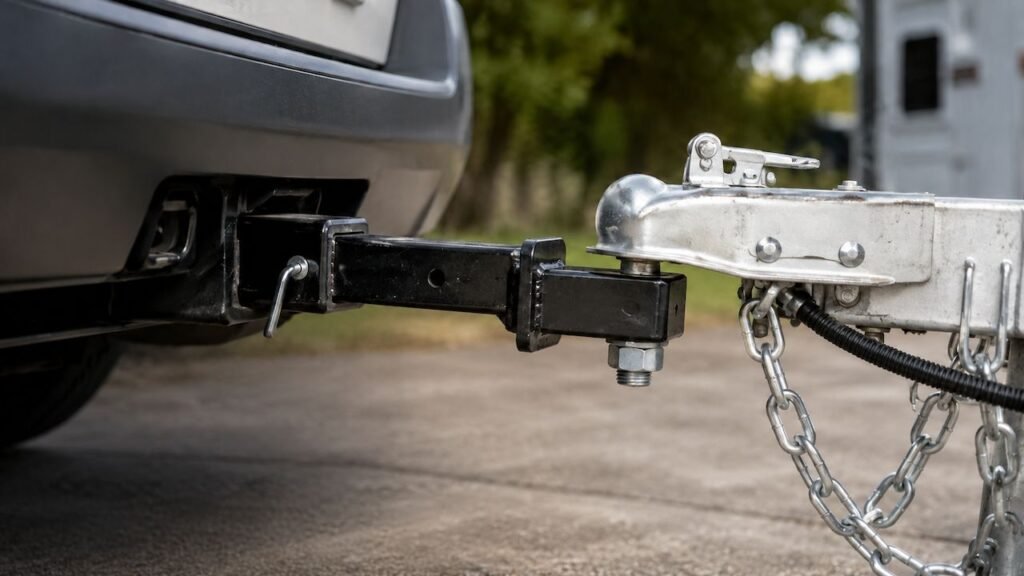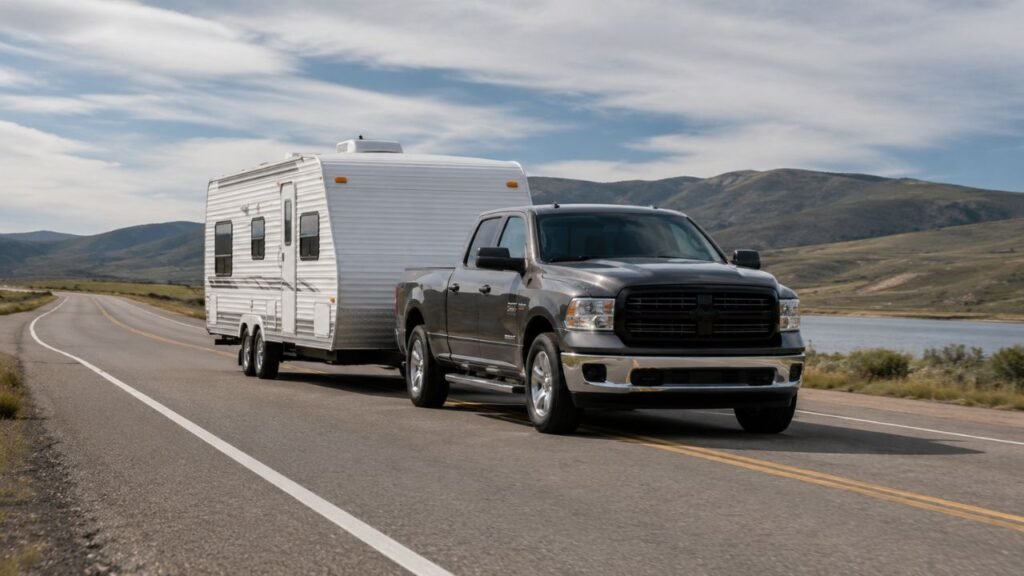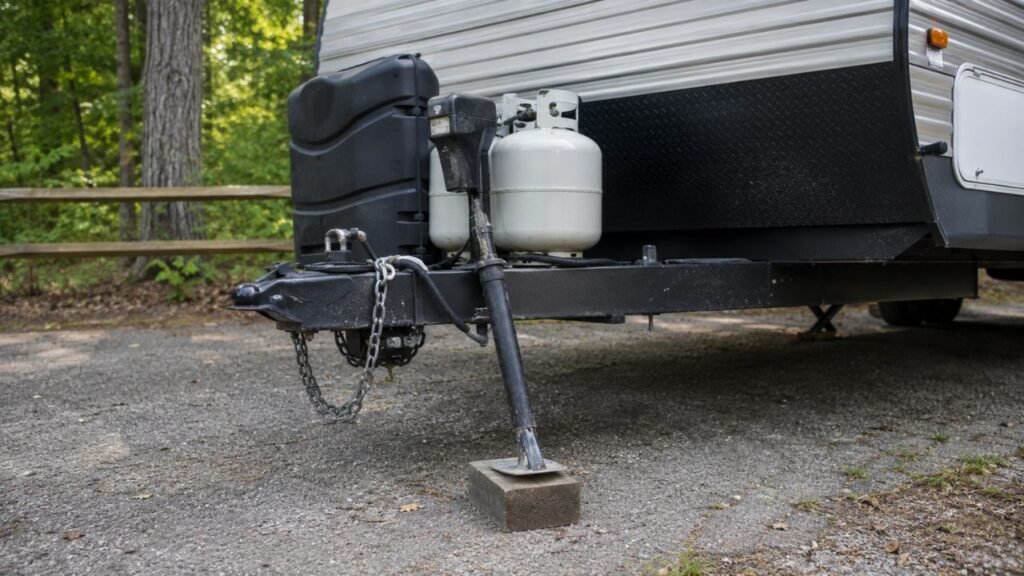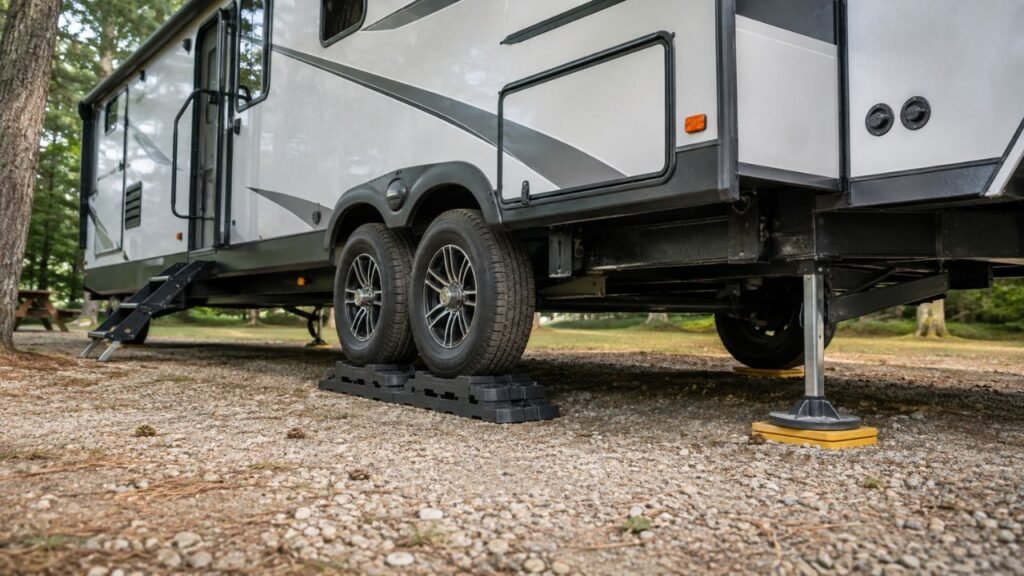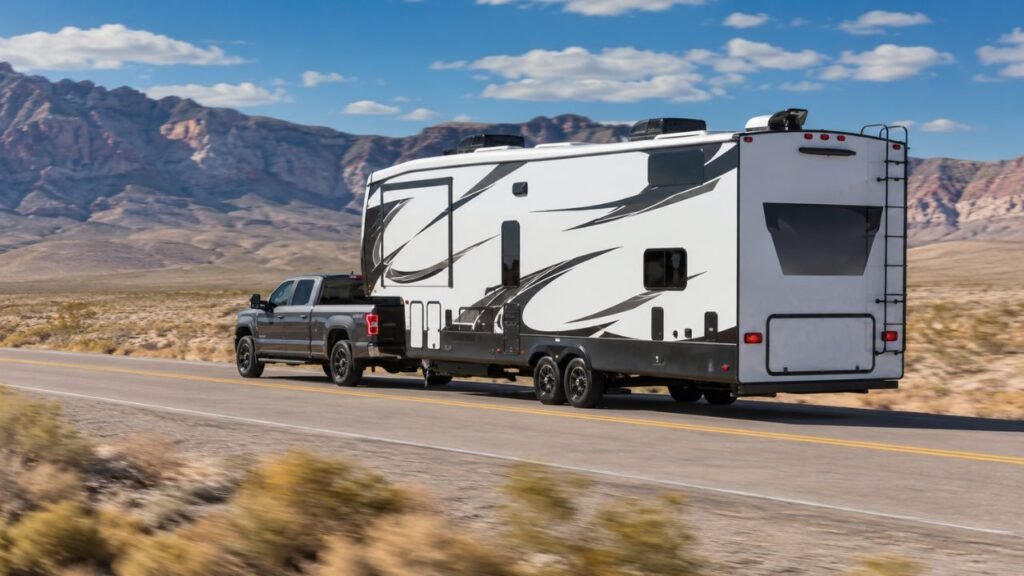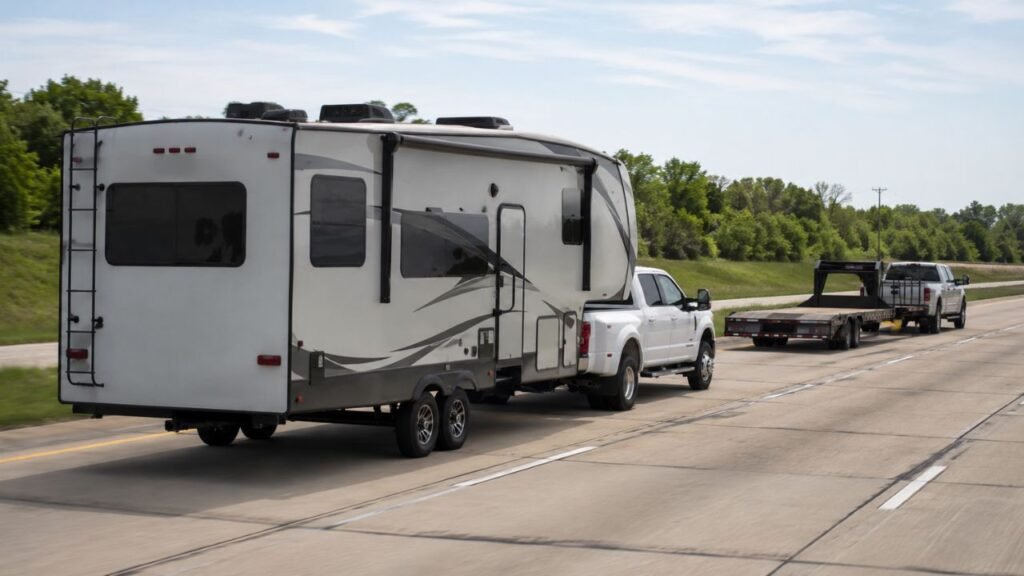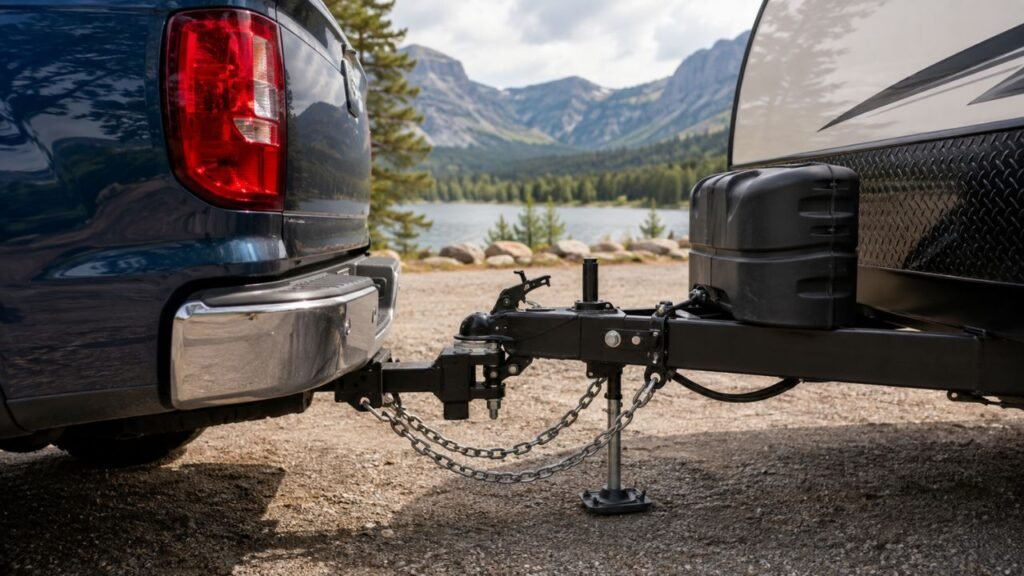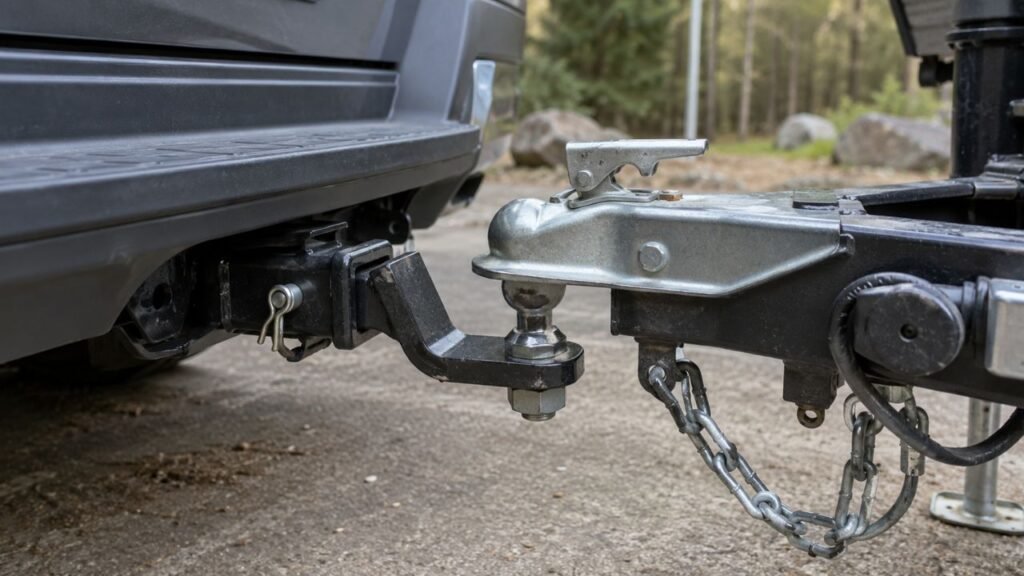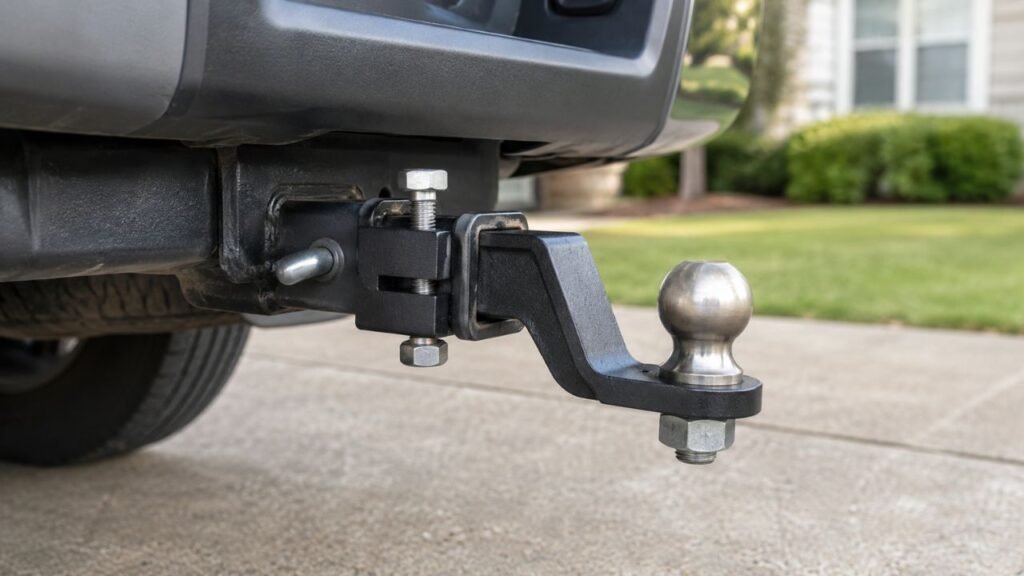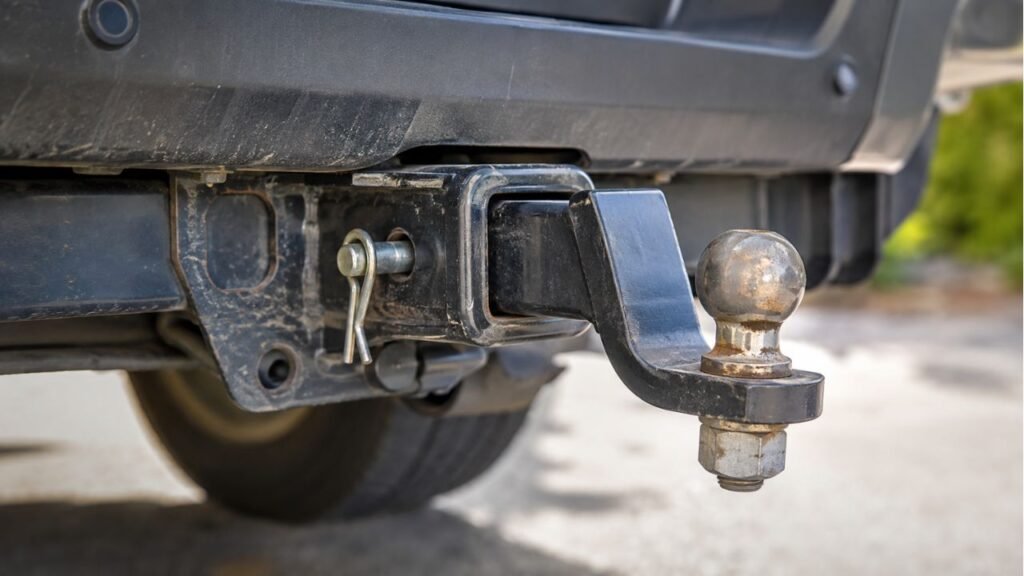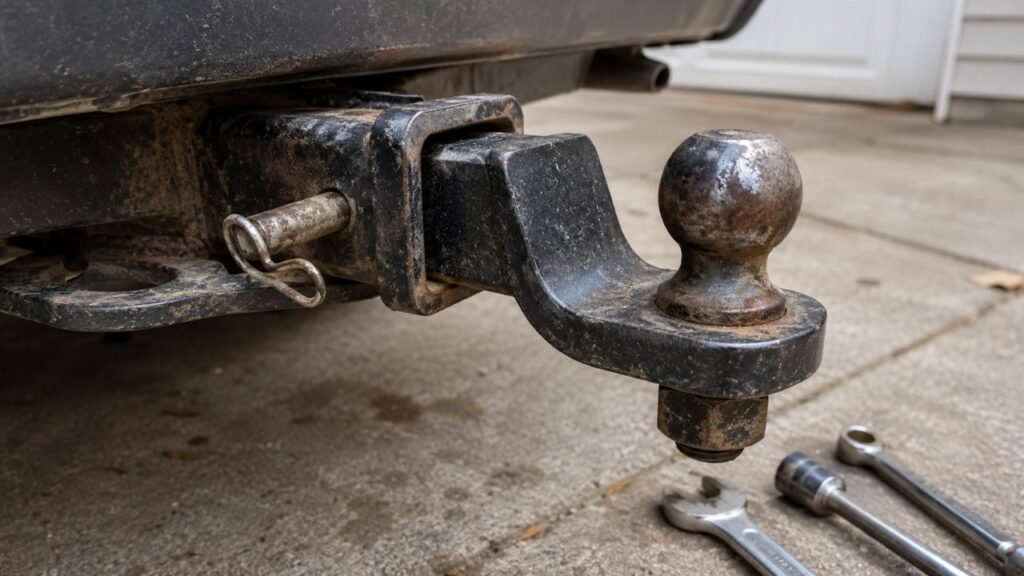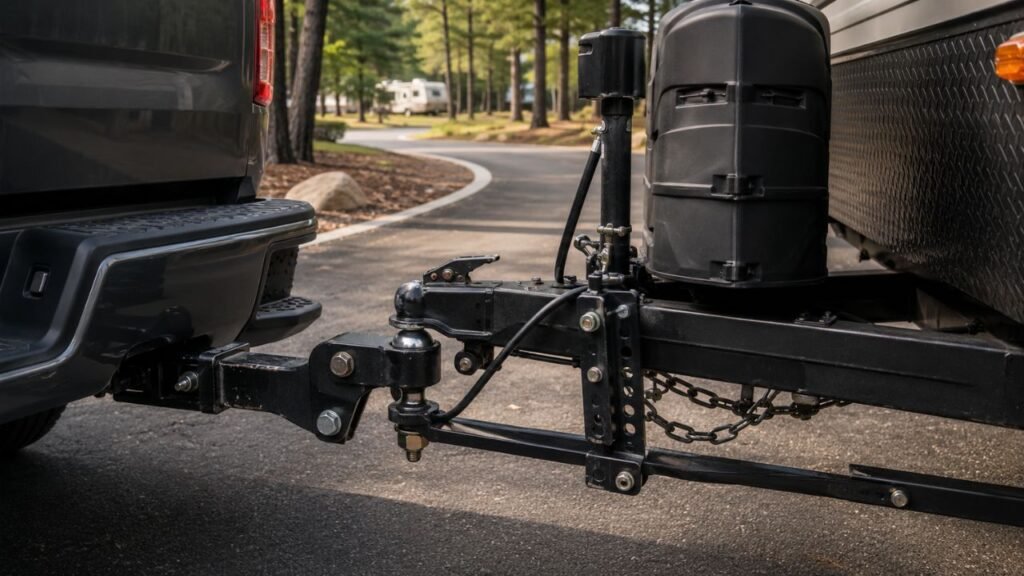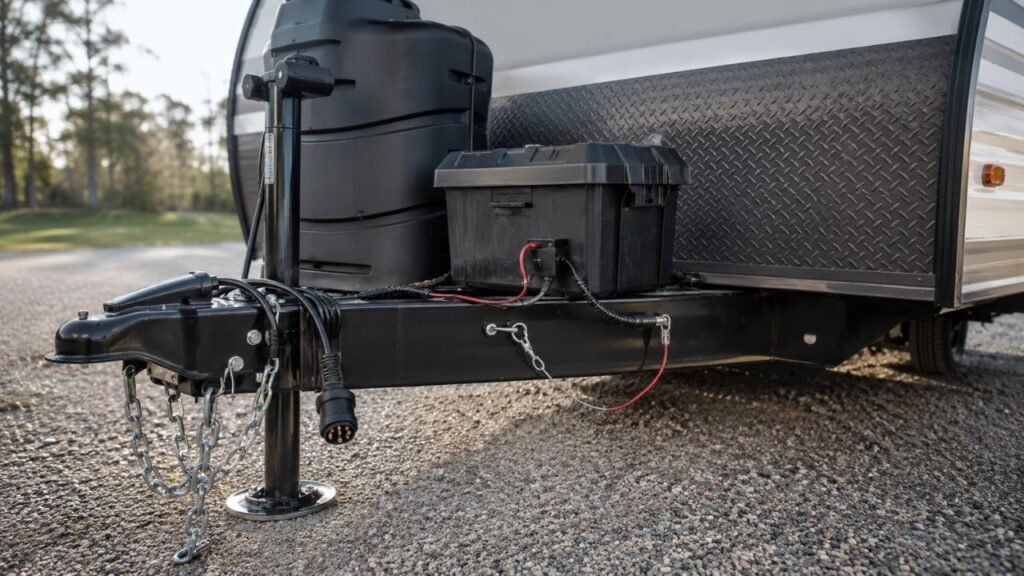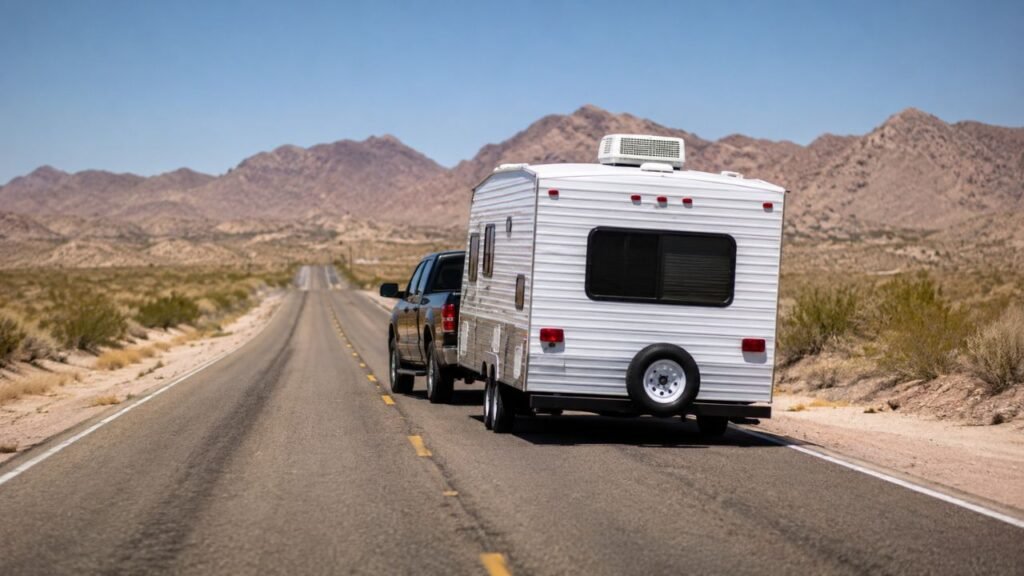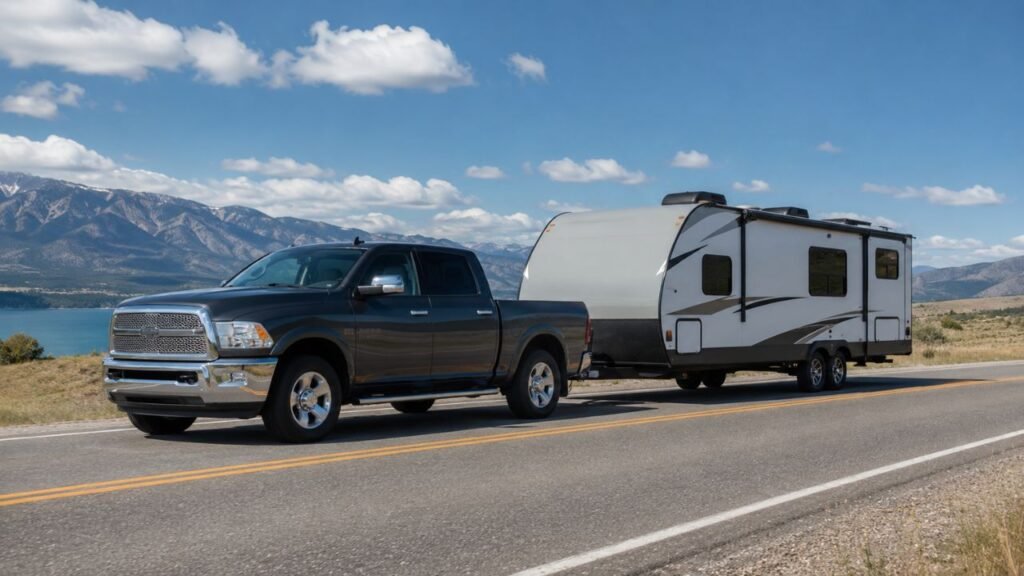
Your trailer is likely towing nose high because the hitch ball sits above the trailer’s loaded coupler height. An incorrect ball mount, rear-heavy cargo, a lifted tow vehicle, or a poorly adjusted weight distribution hitch can also create this angle.
In this guide, I’ll help you identify the real cause, measure your setup correctly, and level the trailer without hiding a weight or suspension problem.
Key Takeaways
- A high hitch ball is the most common cause of nose-high towing.
- Your trailer should usually tow level under its normal travel load.
- Rear-heavy cargo can raise the tongue and reduce towing stability.
- A weight distribution hitch cannot correct the wrong ball height.
- Tandem-axle trailers may carry uneven axle and tire loads.
- Measure the trailer on level ground after loading it for travel.
- Check tongue weight before moving cargo or adjusting spring bars.
- Airbags do not increase payload, axle, hitch, or tire ratings.
- Correct serious sway or overloading before returning to highway speeds.
What Does Towing Nose High Mean?
A trailer tows nose high when its front sits higher than its rear after you connect it to the tow vehicle. Viewed from the side, the trailer frame appears to slope downward toward the back.
You may also notice reduced clearance around the rear bumper, stabilizer jacks, spare-tire carrier, or plumbing. On a tandem-axle trailer, the rear axle and tires may appear more compressed.
Do not judge the angle while parked on a sloped driveway. The tow vehicle and trailer must be on firm, level ground before you compare their heights.
You should also load the trailer normally before measuring. Water, propane, batteries, camping equipment, food, and rear-mounted accessories can noticeably change its stance.
How High Is Too High for a Trailer?
There is no universal inch measurement that works for every trailer. The important goal is keeping the loaded trailer frame close to level while maintaining proper tongue weight and axle loading.
A tiny visual difference may not automatically make the trailer unsafe. However, a clearly raised tongue deserves attention, especially when you also notice sway, bouncing, tire heat, poor braking, or reduced rear clearance.
| Trailer Position | What It May Mean | Possible Effect | Recommended Action |
| Level | Hitch height and loading are reasonably matched | More balanced axle loading | Confirm weights and ratings |
| Slightly nose down | Minor setup difference | May be acceptable within manufacturer guidance | Recheck loaded measurements |
| Slightly nose high | Ball height may be slightly excessive | Uneven axle loading or handling changes | Measure hitch drop and tongue weight |
| Clearly nose high | Incorrect hitch height or rear-heavy loading | More sway, tire stress, and poor clearance | Correct before highway towing |
| Truck rear sits very low | Excessive tongue load or suspension sag | Reduced steering and braking control | Check payload and axle weights |
The trailer body may not be perfectly square with the frame. Decorative trim, windows, and rooflines can make it look unlevel when the structural frame is level.
For a reliable measurement, compare the distance from the ground to the bottom of the trailer frame near the front and rear.
Why Is My Trailer Towing Nose High?
A nose-high position is usually caused by the hitch setup, trailer loading, or vehicle ride height. In some cases, several small problems combine to create one noticeable angle.
The Hitch Ball Is Too High
The hitch ball may sit higher than the trailer coupler when the trailer is level and disconnected. Once you lower the coupler onto the ball, the trailer’s tongue is forced upward.
This commonly happens when a tall pickup or SUV is paired with a lower travel trailer, utility trailer, or cargo trailer.
The solution is usually a ball mount with more drop. However, you should measure both heights before buying another mount.
The Ball Mount Does Not Have Enough Drop
A straight ball mount or shallow-drop mount may work with one trailer but not another. Receiver and coupler heights vary considerably between vehicles and trailers.
Suppose your loaded receiver sits several inches above the level coupler. A ball mount with only a small drop will keep the trailer’s front too high.
An adjustable ball mount can make fine-tuning easier. It must still be rated for the trailer’s loaded weight and expected tongue weight.
The Tow Vehicle Has Been Lifted
Suspension lifts, leveling kits, off-road packages, and larger tires can raise the receiver. Even a modest height increase may change the required ball mount drop.
You should remeasure the hitch setup after changing:
- Tow vehicle tire size
- Rear or front suspension height
- Springs or airbags
- Receiver hardware
- Trailer tire size
- Trailer axle position
Never assume the old ball mount remains correct after modifying the tow vehicle.
Cargo Is Loaded Behind the Trailer Axles
Heavy rear cargo acts like weight on the opposite end of a lever. It pushes the trailer’s rear downward while reducing pressure at the tongue.
Common rear-loading problems include:
- Generators stored near the back wall
- Full water containers behind the axles
- Motorcycles or bicycles on rear carriers
- Heavy toolboxes in rear compartments
- Coolers placed at the trailer’s back
- Added cargo platforms or spare tires
This arrangement may make the trailer look nose high while also reducing tongue weight. That combination can increase sway risk.
Move heavy cargo forward carefully, but do not guess. Check the trailer’s loaded tongue weight and axle limits after repositioning items.
The Weight Distribution Hitch Is Incorrectly Adjusted
A weight distribution hitch uses spring bars to transfer some tongue load across the tow vehicle and trailer axles. It does not simply lift the truck’s rear.
Incorrect spring-bar tension, hitch-head angle, or bracket placement can change the connected stance. Excessive tension may also make the ride harsh and create poor axle loading.
Set the basic ball height first. Then adjust the weight distribution system according to its manufacturer’s instructions.
Trying to force the trailer level only by adding bar tension can hide the actual hitch-height problem.
The Trailer Was Measured While Empty
An empty trailer may sit differently from the same trailer loaded for a trip. Batteries, propane, food, tools, water, and personal belongings all change suspension compression.
Where you place these items matters just as much as their total weight.
Measure the trailer after loading it in its normal travel condition. Include passengers and cargo in the tow vehicle because they can change receiver height.
The Tow Vehicle Is Sagging Under the Load
A sagging tow vehicle does not always cause the trailer itself to point upward. However, it can distort the complete setup and make diagnosing the angle more difficult.
Rear sag may indicate:
- Excessive tongue weight
- An overloaded rear axle
- Insufficient vehicle payload
- Weak or damaged rear springs
- Worn suspension components
- Poorly adjusted weight distribution bars
Suspension helpers can restore some ride height. They cannot make an overloaded vehicle legally or mechanically capable of carrying more weight.
The Trailer Suspension Has a Problem
The hitch may not be responsible when the trailer sits unevenly while disconnected.
Inspect the trailer for:
- Broken or flattened leaf springs
- Worn shackles and bushings
- Damaged equalizers
- Loose spring hangers
- Bent axles
- Loose U-bolts
- Mismatched tires
- Unequal tire pressure
- Frame damage
A suspension problem may lower the trailer’s rear and create the appearance of an overly high tongue.
Previous Modifications Changed the Trailer Height
Used trailers may have modified couplers, replacement axles, suspension lifts, different wheels, or altered spring mounting positions.
These changes can raise or lower the coupler compared with its original height. The ball mount that worked before the modification may no longer keep the trailer level.
Measure the current setup rather than relying on factory dimensions or an old owner’s hitch choice.
How to Confirm That Your Trailer Is Nose High
Looking from the side is a useful first check, but accurate measurements tell you whether the frame is actually unlevel.
- Park the tow vehicle and trailer on level pavement.
- Load both vehicles as they normally travel.
- Inflate every tire to the required cold pressure.
- Disconnect the trailer and level it with the tongue jack.
- Measure the frame height near the trailer’s front.
- Measure the same frame point near the rear.
- Record the level coupler height.
- Connect the trailer to the tow vehicle.
- Repeat the front and rear frame measurements.
- Check tongue weight and axle loads.
- Record the tow vehicle’s wheel-well heights.
- Compare all results before adjusting the hitch.
Use the same reference point on both sides of the trailer frame. Avoid measuring from body panels, fenders, skirting, or decorative trim.
A long carpenter’s level can help with smaller trailers. For longer RVs, front and rear frame measurements are usually more useful.
How to Measure the Correct Ball Mount Drop
Choosing the right ball mount starts with two measurements. You need the loaded receiver height and the level trailer’s coupler height.
Measure the Receiver Height
Park the tow vehicle on level ground. Add the passengers, fuel, tools, and cargo normally carried while towing.
Measure from the ground to the top inside edge of the receiver opening. Record the measurement before connecting the trailer.
Do not measure an unloaded truck if you normally carry heavy cargo in its bed. That cargo can lower the receiver enough to change the required drop.
Measure the Level Coupler Height
Disconnect the trailer and use the tongue jack to make its frame level. Load the trailer as closely as possible to its travel condition.
Measure from the ground to the bottom of the coupler where it sits on the hitch ball. Some hitch manufacturers may specify a different reference point, so follow their instructions when available.
Calculate the Approximate Drop
Subtract the level coupler height from the loaded receiver height:
Receiver height minus coupler height equals the approximate ball mount drop.
For example, a receiver height of 22 inches and coupler height of 18 inches suggests approximately four inches of drop.
That number is a starting point. Ball platform thickness, suspension compression, coupler design, and weight distribution setup can affect the final position.
Recheck the Connected Trailer
Install the properly rated ball mount and connect the trailer. Then measure the front and rear frame heights again.
The loaded trailer should sit close to level. Recheck the tow vehicle’s front and rear stance before adjusting any weight distribution components.
Nose-High Trailer Troubleshooting Table
The symptoms around the trailer can help you narrow down the cause. Use this table before changing several parts at once.
| What You Notice | Likely Cause | Check First | Common Correction |
| Nose rises immediately after coupling | Ball height is too high | Receiver and coupler heights | Use more ball mount drop |
| Trailer changes angle after loading | Cargo sits too far rearward | Tongue weight and cargo placement | Move heavy cargo forward |
| Truck has a lift or larger tires | Receiver height has increased | Loaded receiver height | Fit a properly rated drop hitch |
| Angle changes after tightening spring bars | Weight distribution setup is incorrect | Bar tension and head angle | Reset the hitch correctly |
| Rear trailer tires carry more load | Trailer is not level | Axle and individual tire loads | Correct hitch height |
| Tow vehicle rear sits very low | Excessive tongue weight or overload | Payload and rear axle weight | Reduce load and reset the hitch |
| Trailer sits uneven when disconnected | Suspension or frame problem | Springs, equalizers, and tires | Repair damaged components |
| Trailer sways despite sway control | Low tongue weight or poor loading | Loaded tongue weight | Rebalance before adjusting sway control |
Make one correction at a time. Otherwise, you may not know which change actually improved the setup.
Is It Safe to Tow a Trailer Nose High?
A noticeably nose-high trailer should not be treated as a harmless appearance issue. The angle can affect tongue weight, axle balance, tire loading, braking, and ground clearance.
The actual risk depends on how high the nose sits and why it sits that way. A slightly unlevel trailer with correct scale weights may behave differently from a severely rear-heavy trailer with low tongue weight.
Stop and investigate when you notice:
- Repeated trailer sway
- Steering that feels unusually light
- Rear tires running hotter
- Trailer brake instability
- Frequent bottoming or dragging
- Strong front-to-back bouncing
- Uneven tire compression
- Visible suspension damage
Reduce speed if instability begins while driving. Avoid sharp steering and sudden braking. Pull over safely and inspect the setup before continuing.
What Problems Can Nose-High Towing Cause?
An unlevel trailer affects more than its appearance. It changes how weight and road forces move through the hitch, axles, tires, and suspension.
Reduced Tongue Weight and Increased Sway
When the nose-high position results from rear-heavy cargo, tongue weight can become too low. The trailer may then pivot more easily around the hitch ball.
Crosswinds, passing trucks, lane changes, and downhill travel can make the movement worse.
Many conventional trailers tow best with tongue weight around 10% to 15% of their loaded weight. However, always follow the trailer manufacturer’s specific recommendation.
Sway control may reduce some movement. It cannot safely compensate for poor cargo placement or inadequate tongue weight.
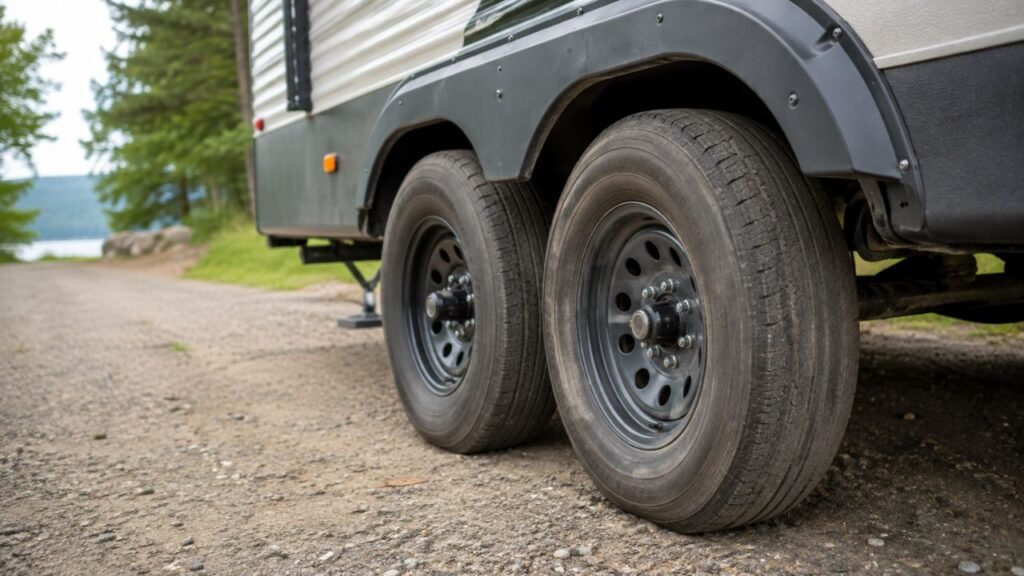
Uneven Tandem-Axle Loading
On a tandem-axle trailer, a nose-high position may shift more weight toward the rear axle. The exact change depends on the suspension and equalizer design.
Both axles may remain under their combined rating while one axle or tire carries too much weight.
That is why total trailer weight alone does not tell the full story. Individual axle and tire loads also matter.
Excessive Tire Heat and Wear
An overloaded tire flexes more as it rolls. This additional flex creates heat, which can weaken the tire over time.
You may notice:
- Faster wear on the rear tires
- Uneven tread patterns
- Increased tire temperature
- Sidewall bulging
- Repeated pressure loss
- Premature bearing wear
Check tire pressure while the tires are cold. Never release air from a hot trailer tire simply because its pressure increased during travel.
Poorer Braking Stability
Uneven axle loading can change how effectively each trailer tire contributes during braking. A heavily loaded rear axle may respond differently from a lightly loaded front axle.
Incorrectly adjusted electric brakes can make this imbalance more noticeable. One axle may lock before the other or provide uneven braking force.
The tow vehicle may also feel less controlled during emergency stops if its own axle loads are incorrect.
Increased Porpoising
Porpoising is a repeated front-to-back bouncing motion between the trailer and tow vehicle. It often becomes noticeable over bridges, expansion joints, and rolling pavement.
Incorrect hitch height is not the only cause. Tongue weight, suspension stiffness, speed, worn components, and poor loading also contribute.
Leveling the trailer helps restore proper geometry, but you should inspect the complete towing setup when bouncing continues.
Reduced Rear Ground Clearance
Raising the tongue lowers the back of the trailer. This reduces clearance beneath:
- Rear stabilizer jacks
- Bumpers
- Plumbing drains
- Spare-tire carriers
- Cargo racks
- Steps
- Skid bars
The rear may scrape when entering fuel stations, crossing dips, or driving onto steep campsites.
Additional Suspension Stress
Uneven loading can place unnecessary stress on springs, shackles, equalizers, bearings, tires, and hangers.
These parts already experience strong forces on rough roads. An unlevel trailer can make those forces less evenly distributed.
Regular inspection is particularly important before long trips or travel over damaged pavement.
How to Fix a Trailer That Tows Nose High
The best repair corrects the cause instead of hiding the angle. Work through these steps in order so you do not compensate for one problem by creating another.
1. Load the Trailer for Travel
Place the normal travel equipment inside the trailer. Fill tanks only to the levels you usually carry while towing.
Include:
- Batteries
- Propane cylinders
- Food
- Clothing
- Camping equipment
- Tools
- Water
- Rear-mounted accessories
Secure everything before taking measurements. Cargo movement during travel can change tongue weight.
2. Park on Level Ground
Use a flat parking area, level driveway, or scale approach. Avoid gravel with deep tire tracks or pavement that slopes toward a drain.
Make sure the trailer tires sit on the same surface height.
3. Measure the Trailer Frame
Disconnect the trailer and level its frame with the tongue jack. Measure its coupler height and record it.
Then connect the trailer and compare the front and rear frame heights. This confirms whether the problem comes from the hitch connection.
4. Install the Correct Ball Mount Drop
Use your receiver and coupler measurements to select the required drop.
Choose a mount rated for:
- The loaded trailer weight
- The expected tongue weight
- The receiver size
- The hitch ball size
- The intended drop position
Some adjustable mounts have different ratings at different drop positions. Verify the rating before towing.
Do not use stacked adapters, unapproved extensions, or improvised welded parts.
5. Reposition Rear-Heavy Cargo
Move heavy equipment forward of the trailer axles when possible. Keep it low, centered from side to side, and securely restrained.
Move cargo gradually. Placing everything at the front could create excessive tongue weight and overload the tow vehicle.
After moving cargo, check tongue weight again.
6. Verify Loaded Tongue Weight
Tongue weight is the downward force the coupler applies to the hitch ball.
For many conventional trailers, the recommended range is approximately 10% to 15% of loaded trailer weight. Your trailer may require different guidance.
You can check tongue weight with:
- A dedicated tongue weight scale
- A vehicle scale using separate weighings
- A properly arranged heavy-duty scale method
- An RV or trailer weighing service
Also confirm that the measured tongue weight fits within the tow vehicle’s payload, receiver, hitch, and rear axle limits.
7. Reset the Weight Distribution Hitch
Once the trailer’s loading and ball height are correct, set up the weight distribution hitch.
Check:
- Spring-bar rating
- Hitch-head angle
- Bracket position
- Chain-link count, when applicable
- Front wheel-well height
- Front axle load restoration
- Trailer frame level
Follow the hitch manufacturer’s instructions. Different systems use different setup methods.
Do not simply add tension until the tow vehicle looks level. Appearance does not confirm correct axle loading.
8. Check Every Weight Rating
Your towing combination must remain within all relevant limits, including:
- Gross vehicle weight rating
- Gross axle weight ratings
- Tow vehicle payload
- Receiver rating
- Ball mount rating
- Hitch ball rating
- Trailer gross weight rating
- Trailer axle ratings
- Tire load capacities
The lowest-rated component limits the setup.
9. Inspect the Suspension and Tires
Check the trailer while safely parked and supported. Look for worn, loose, bent, or cracked components.
Inspect:
- Leaf springs
- Shackles
- Bushings
- Equalizers
- Hangers
- U-bolts
- Axles
- Wheel bearings
- Tire sizes
- Tire pressure
- Tread wear
Have a qualified technician inspect anything that appears damaged or misaligned.
10. Weigh the Complete Combination
A public vehicle scale can show whether the tow vehicle and trailer remain within their ratings.
Useful measurements include:
- Tow vehicle front axle weight
- Tow vehicle rear axle weight
- Trailer axle weight
- Combined vehicle weight
- Tongue weight
- Individual wheel-position weight, when available
Weigh the setup in its real travel condition. An empty-trailer measurement provides limited information.
11. Perform a Controlled Test Tow
After making corrections, begin with a low-speed test in a safe area.
Pay attention to:
- Trailer angle
- Steering response
- Brake performance
- Sway
- Bouncing
- Unusual noises
- Rear ground clearance
Stop and recheck the hitch hardware after the short test. Confirm all fasteners according to their specified torque requirements.
Can a Weight Distribution Hitch Fix a Nose-High Trailer?
A weight distribution hitch can improve axle loading and tow vehicle stability. However, it cannot replace a correctly positioned hitch ball.
Set the trailer’s basic ball height before adjusting spring-bar tension. Otherwise, you may use the bars to fight the wrong geometry.
Excessive tension can create a harsh ride or transfer too much load away from the tow vehicle’s rear axle. It may also place unnecessary stress on the trailer frame and hitch components.
The weight distribution hitch should fine-tune a correctly measured setup, not hide an incorrect ball mount.
Should a Trailer Be Level or Slightly Nose Down?
A level position is usually the preferred target for a conventional trailer. This stance helps the axles and suspension share the load as intended.
A very slight nose-down position may be acceptable for some trailers when it remains within the manufacturer’s instructions and all weights stay within limits.
Do not deliberately create a strong nose-down angle to prevent sway. Excessive nose-down towing can overload the front trailer axle and reduce rear clearance at the tow vehicle.
The best setup combines a level trailer, correct tongue weight, proper axle loading, and suitable hitch adjustment.
Can Airbags Fix a Nose-High Trailer?
Airbags can help restore tow vehicle ride height when the load is within every vehicle rating. They may also improve suspension support and reduce excessive rear sag.
However, airbags do not increase:
- Payload capacity
- Rear axle rating
- Tire capacity
- Receiver rating
- Towing capacity
Airbags also do not lower a hitch ball that is already too high. Raising the truck’s rear could make the trailer’s nose-high angle worse.
Set the correct hitch height after adjusting airbag pressure. Do not use airbags to hide an overloaded tow vehicle.
Does Rear-Heavy Cargo Make a Trailer Nose High?
Yes. Heavy cargo behind the axles can push the rear downward and lift weight away from the coupler.
This may create a nose-high appearance while lowering tongue weight. The trailer can then feel loose, wander in crosswinds, or begin swaying at speed.
Move heavy items forward cautiously and keep them near the trailer’s centerline. Recheck tongue weight after every major loading change.
Adding random weight to the front is not a complete solution. Too much tongue weight can overload the tow vehicle and hitch.
Special Considerations for Tandem-Axle Trailers
A tandem-axle suspension can hide uneven loading because all four tires still touch the road. You should check the complete axle system rather than judging it visually.
- Compare front and rear frame heights.
- Inspect the suspension equalizer.
- Check shackles and spring-eye bushings.
- Look for uneven tire compression.
- Compare tire temperatures during travel stops.
- Confirm matching tire sizes and load ranges.
- Check each axle’s weight when possible.
- Inspect the rear tires for faster wear.
- Correct hitch height before replacing suspension parts.
- Use individual wheel weights when available.
A functioning equalizer helps share loads between the axles, but it cannot fully correct a severely unlevel trailer.
Special Considerations for Lifted Trucks
Lifted trucks and vehicles with large tires often need considerably more ball mount drop than standard vehicles.
- Use a hitch rated for the complete loaded trailer.
- Confirm the drop does not reduce ground clearance dangerously.
- Avoid using several adapters together.
- Recheck receiver height after changing tire size.
- Confirm ratings for every adjustable hitch position.
- Inspect pins, bolts, and locking hardware regularly.
- Route safety chains without letting them drag.
- Keep the breakaway cable separate from the chains.
- Check whether an extension reduces receiver capacity.
- Test sharp driveway transitions before traveling.
A long drop mount creates more leverage on the receiver. Correct ratings and proper hardware become especially important.
Mistakes to Avoid When Correcting Nose-High Towing
- Measuring the trailer while it is empty
- Measuring on sloped or uneven ground
- Choosing hitch drop by appearance alone
- Ignoring the trailer frame angle
- Tightening spring bars to force the trailer level
- Using airbags to hide an overload
- Moving cargo without checking tongue weight
- Assuming sway control fixes poor loading
- Ignoring individual tire capacities
- Using an underrated adjustable hitch
- Stacking several hitch adapters
- Forgetting rear ground clearance
- Mixing tire sizes or load ranges
- Ignoring damaged suspension parts
- Continuing to tow when the trailer feels unstable
Correct measurements may take a little extra time. That effort is much easier than dealing with unstable handling or overloaded components on the road.
When Should You Stop Towing and Get Professional Help?
Some problems go beyond routine hitch adjustment. Stop towing and arrange an inspection when the setup shows signs of structural damage, severe overloading, or unstable handling.
- The trailer sways at normal speeds.
- The coupler does not seat securely.
- The receiver or ball mount appears bent.
- The hitch area has cracks or broken welds.
- A spring, shackle, or hanger is damaged.
- One tire carries excessive weight.
- Trailer tires become unusually hot.
- The brakes lock or pull unevenly.
- The trailer remains unlevel after adjustment.
- The tow vehicle exceeds payload limits.
- The frame appears bent or modified.
- The weight distribution hitch cannot be set correctly.
Do not attempt to straighten damaged hitch or suspension parts at home. These components carry significant forces and require proper repair methods.
Final Verdict
A trailer usually tows nose high because the hitch ball is too high for the loaded coupler. An insufficient drop mount, lifted tow vehicle, rear-heavy cargo, or incorrect weight distribution setup may also contribute.
Start by loading the trailer for travel and parking on level ground. Measure the receiver, coupler, and trailer frame before changing any parts.
Then verify tongue weight, axle loads, component ratings, and suspension condition. Install the correct ball mount and adjust the weight distribution hitch only after the basic height is correct.
The goal is not simply making the trailer look level. You also need stable tongue weight, balanced axle loading, safe tire loads, and predictable braking.
Related FAQs
Can a Nose-High Trailer Cause Sway?
Yes. A nose-high trailer can contribute to sway when the angle results from rear-heavy cargo or insufficient tongue weight. Correct the loading and hitch height before relying on sway control.
Will a Deeper Drop Hitch Level My Trailer?
A deeper drop hitch can level the trailer when the hitch ball is too high. Measure the loaded receiver and level coupler heights before choosing a properly rated replacement.
Can Too Much Tongue Weight Make a Trailer Nose High?
Excessive tongue weight usually lowers the tow vehicle’s rear rather than lifting the trailer tongue. However, it can make the full combination look uneven and create handling problems.
Does Trailer Tire Pressure Affect the Towing Angle?
Incorrect tire pressure can change tire deflection and make the trailer sit slightly uneven. However, pressure alone rarely causes a clearly nose-high position unless a tire is severely underinflated.
Can Larger Tow Vehicle Tires Make the Trailer Nose High?
Yes. Larger tires raise the tow vehicle and receiver, which may place the hitch ball above the trailer coupler. You may need a ball mount with additional drop.
Should I Adjust My Weight Distribution Hitch First?
No. Check trailer loading and basic ball height first. Once those are correct, adjust the weight distribution hitch according to its manufacturer’s instructions.
Can a Nose-High Trailer Overload the Rear Axle?
A nose-high tandem-axle trailer may place more weight on its rear axle and tires. The actual amount depends on the suspension design and severity of the angle.
Do I Need to Weigh My Trailer After Adjusting the Hitch?
Weighing is strongly recommended because appearance cannot confirm proper loading. Scale results help verify tongue weight, axle weights, payload, and tire loads.
Is a Slightly Nose-High Utility Trailer Acceptable?
A barely noticeable angle may not always cause immediate trouble, but you should still verify tongue weight, axle loading, hitch ratings, and trailer stability before towing.
Why Does My Trailer Look Level Empty but Nose High When Loaded?
Cargo placement can reduce tongue weight or compress the trailer’s rear suspension. Tanks, rear accessories, and heavy equipment may also change the angle after loading.

Scott Miller shares real-world RV road trip insights built from years of traveling open highways and backroads. He covers route planning, campground choices, and travel gear with a practical mindset. His content is written for RVers who value reliability over trends.