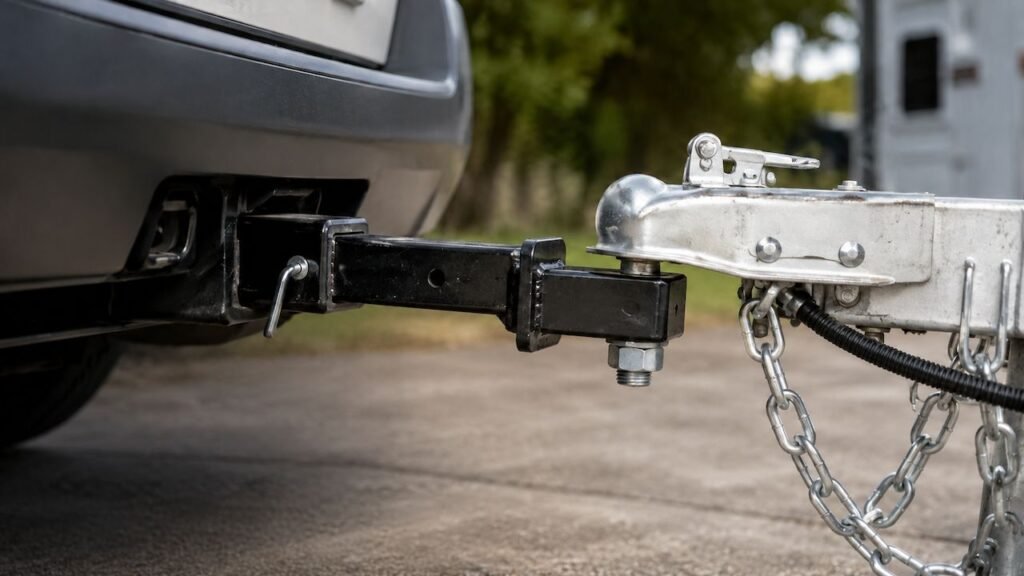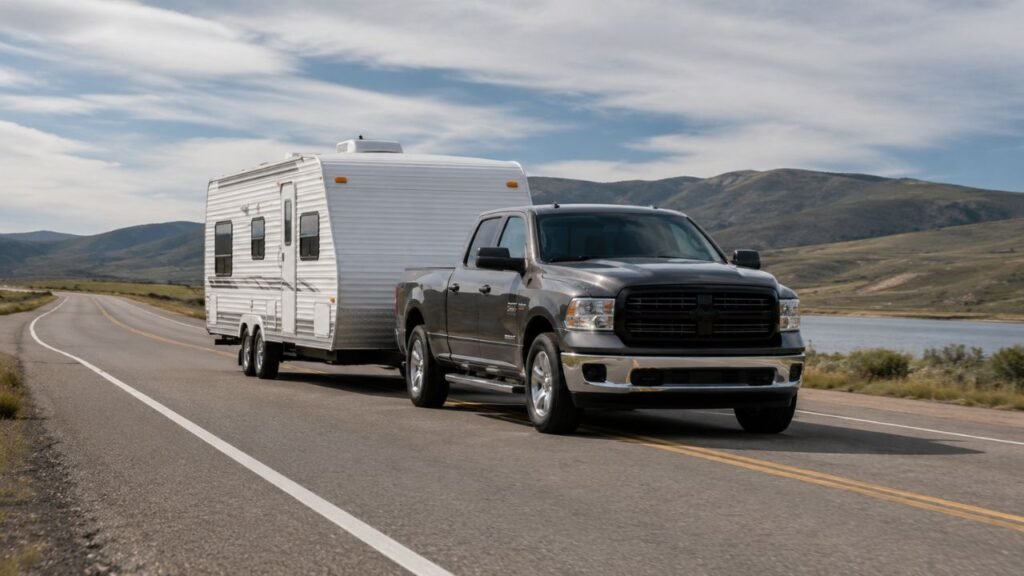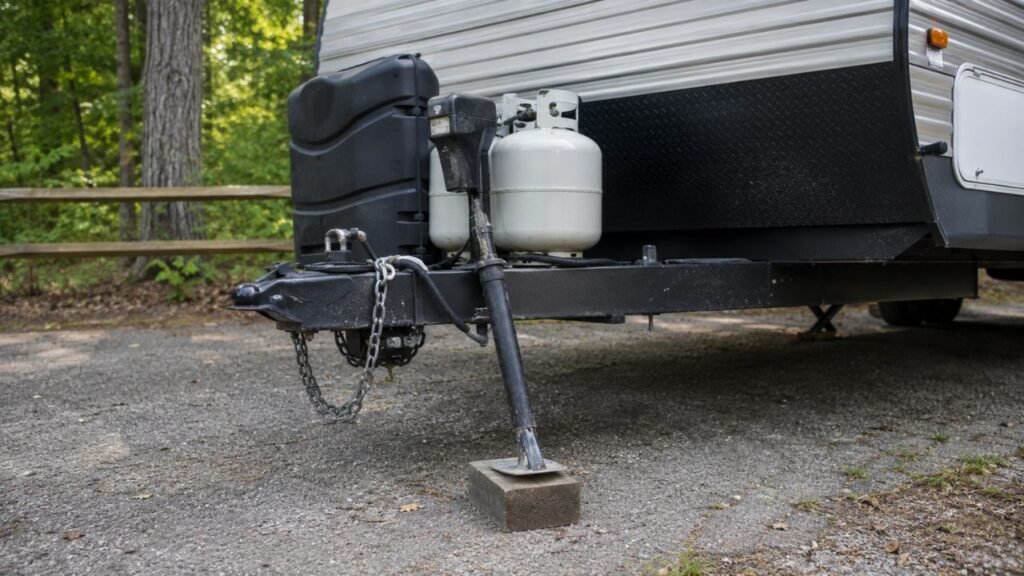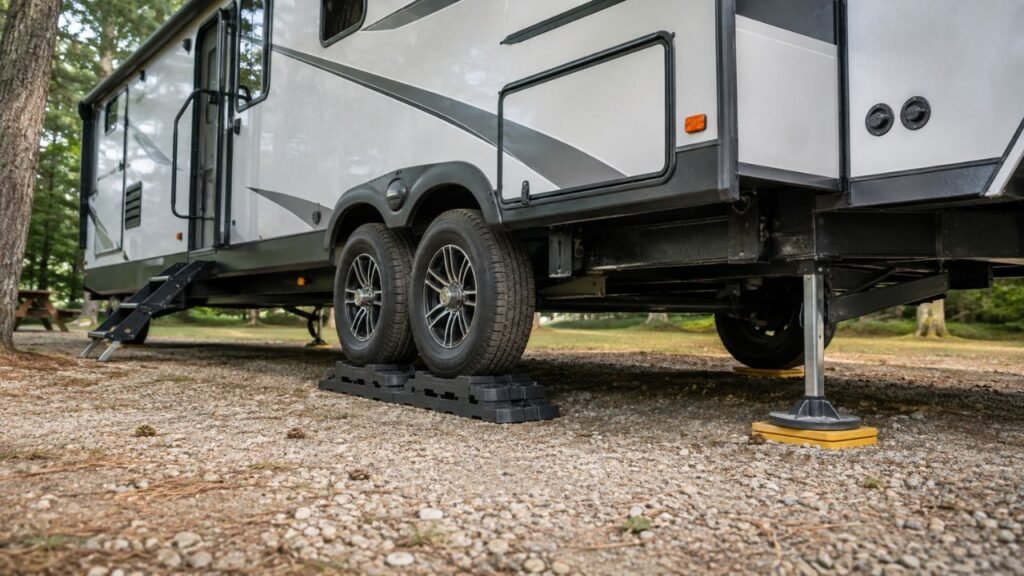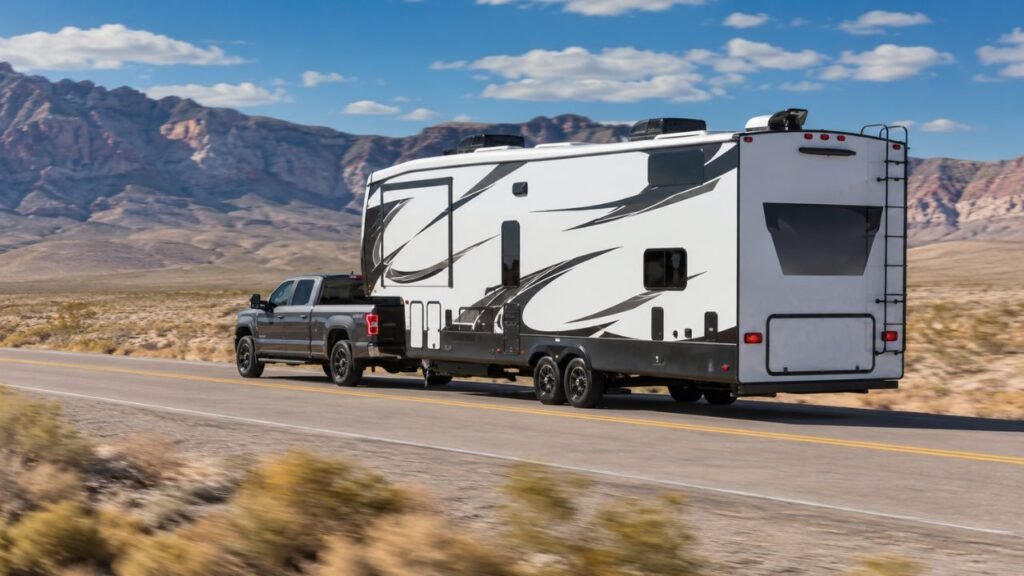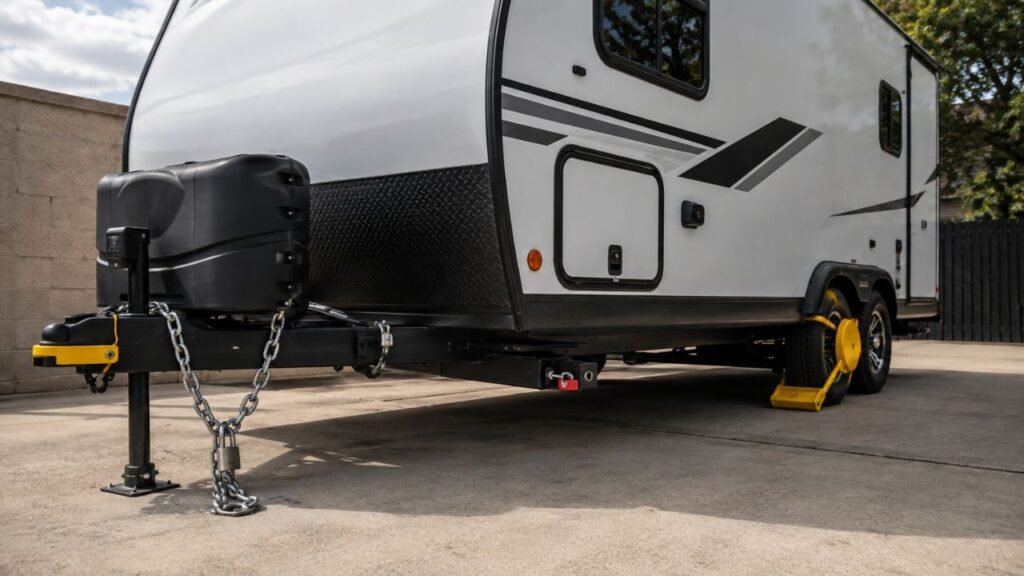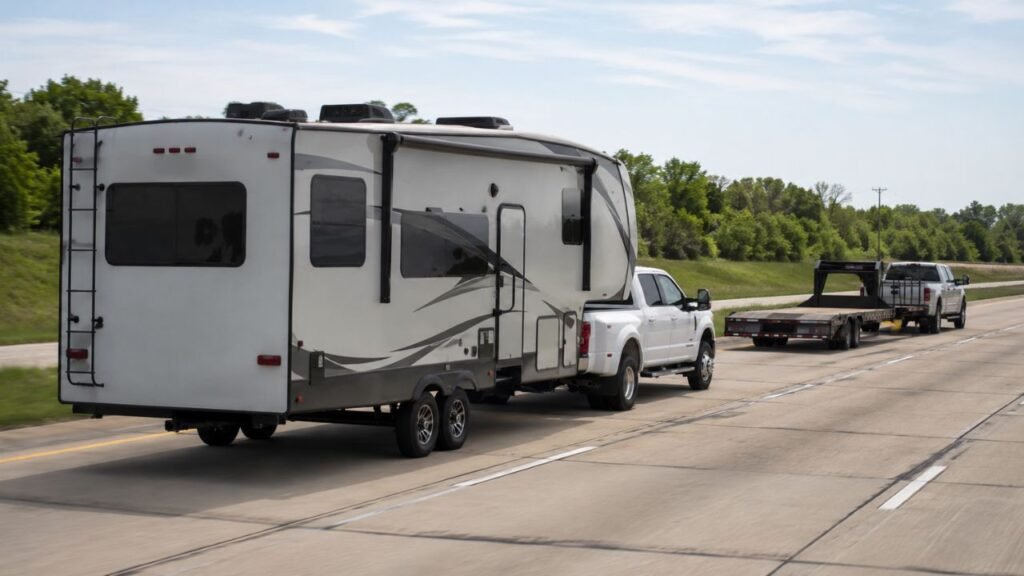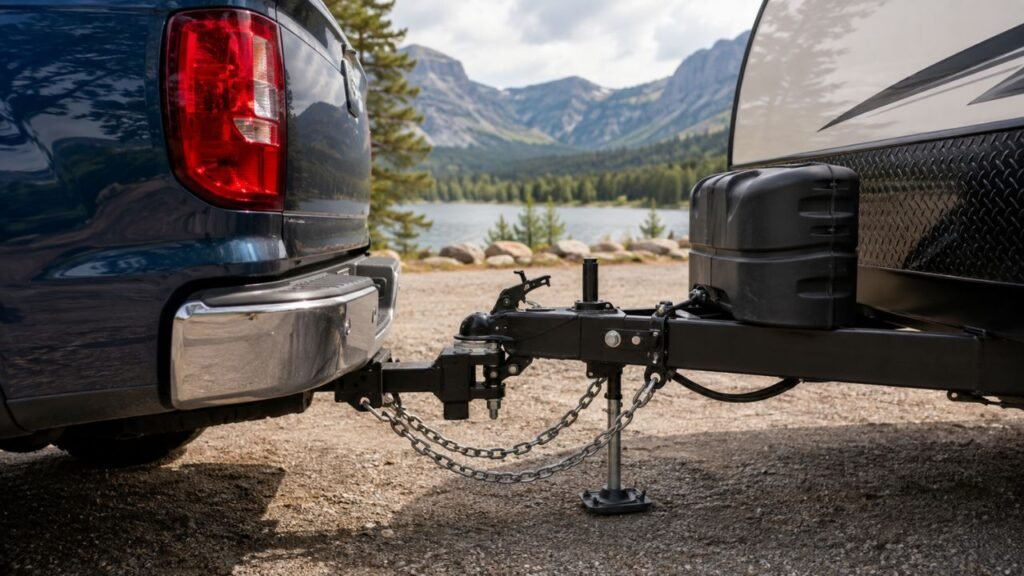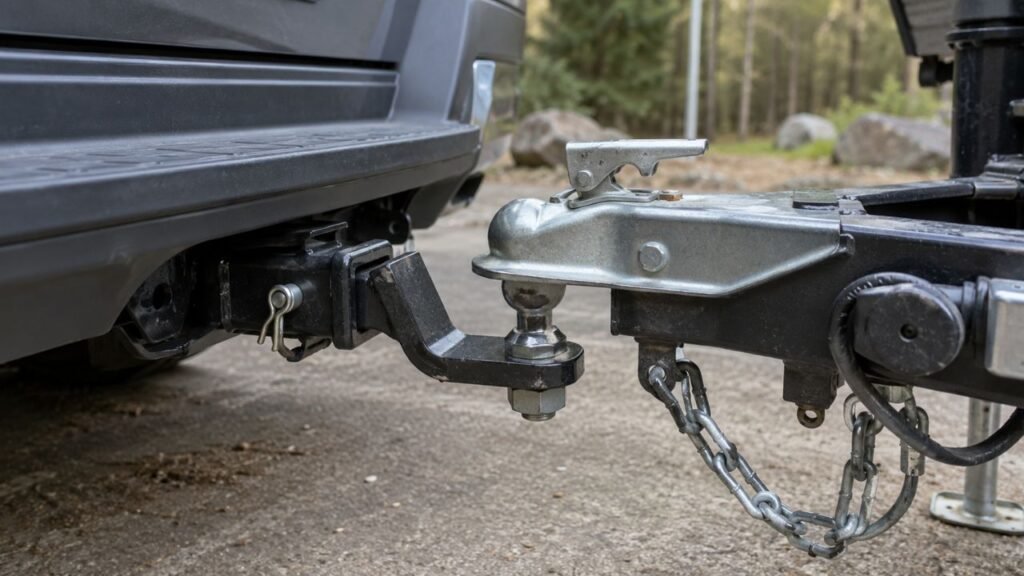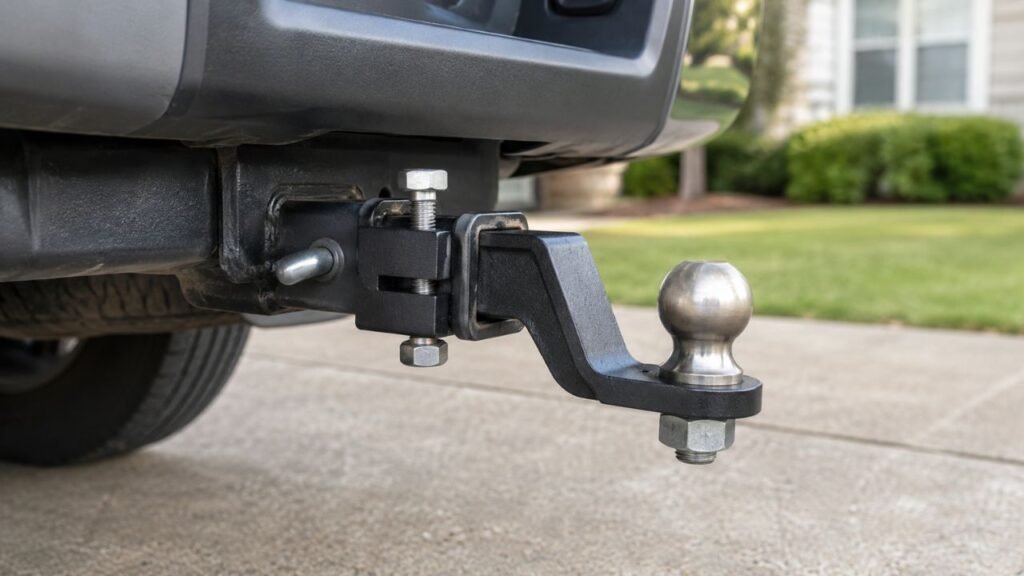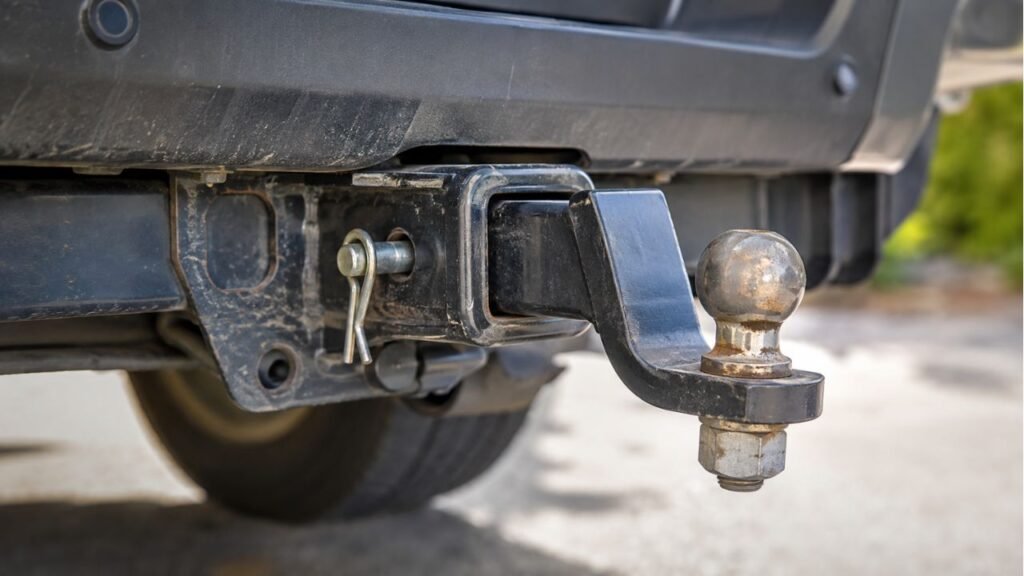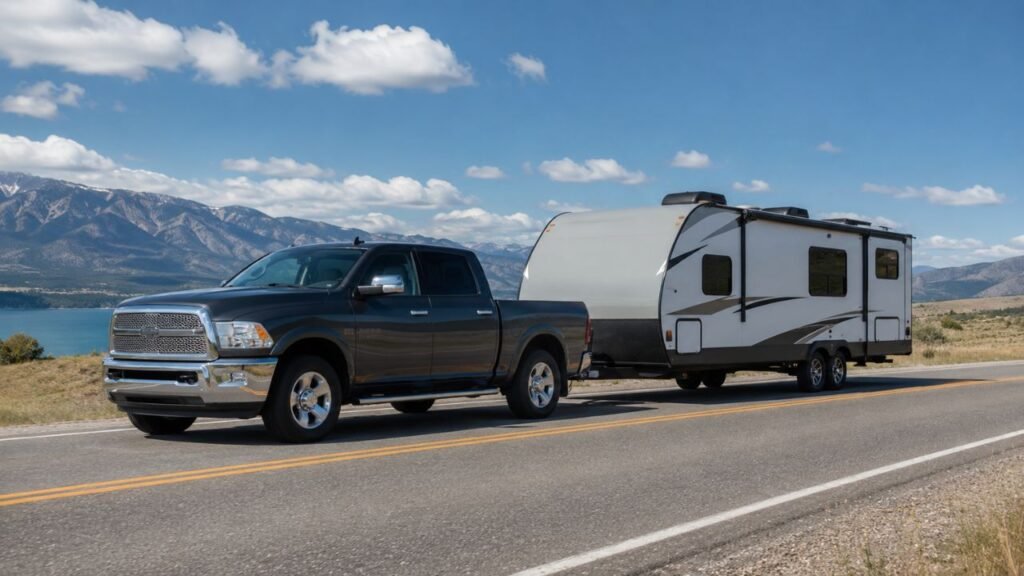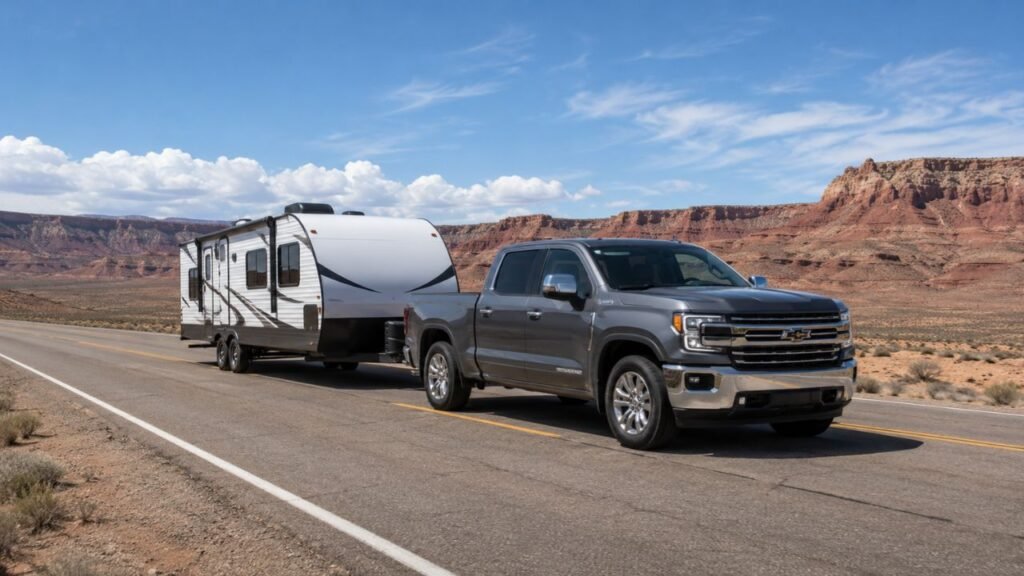
Your trailer is likely towing nose low because the hitch ball sits too low, the tow vehicle squats under tongue weight, cargo is loaded too far forward, or the weight-distribution hitch needs adjustment.
In this guide, I will help you find the exact cause. We will measure the setup, check the load, and safely level the trailer.
Key Takeaways
- A trailer should generally tow level from front to rear.
- A slightly nose-low position may be acceptable when manufacturer-approved.
- Excessive nose-down angle can reduce clearance and affect axle loading.
- The wrong ball-mount drop is a common and simple cause.
- Rear suspension squat can make a correctly matched hitch sit too low.
- Always measure loaded tongue weight before moving cargo backward.
- Air bags cannot correct an overloaded or incorrectly adjusted towing setup.
- Never exceed the lowest rating among your towing components.
Why Is My Trailer Towing Nose Low?
A trailer usually sits nose low because its coupler ends up below the correct towing height. This can happen before or after you connect it.
If the trailer is nose low before the tow vehicle squats, your ball mount may have too much drop. You may need a mount with less drop or additional rise.
However, the ball mount is not always responsible. Your tow vehicle’s rear suspension may compress after the trailer applies tongue weight.
That compression lowers the receiver, hitch ball, and trailer coupler together. The trailer may then point downward even if the unloaded measurements looked correct.
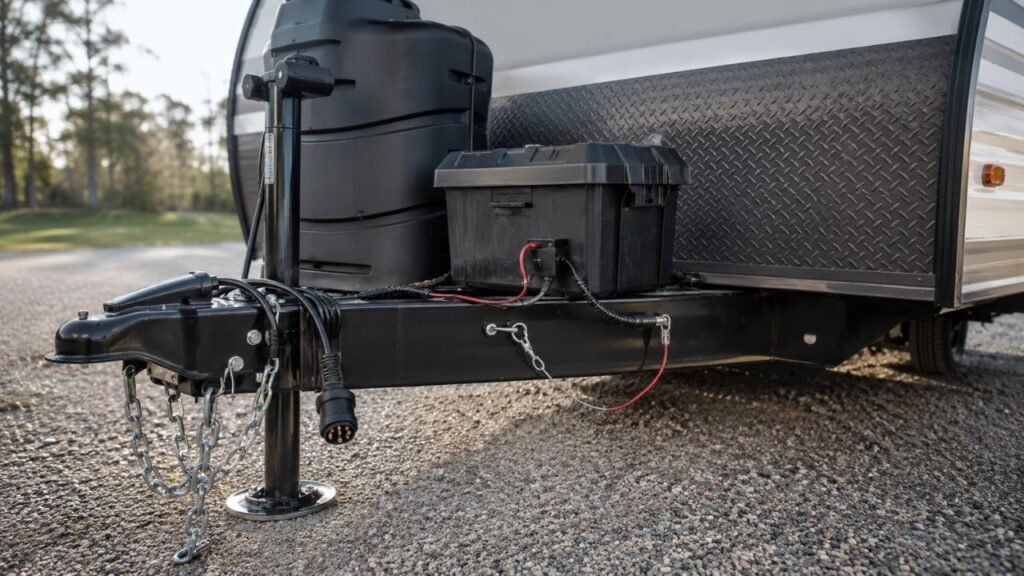
Heavy cargo stored near the front can make the problem worse. Batteries, propane cylinders, generators, water, and tools can quickly increase tongue weight.
A poorly adjusted weight-distribution hitch may also allow excessive rear squat. Its spring bars may be too loose, incorrectly sized, or improperly positioned.
The important point is that the visible angle is only a symptom. You need to identify what changed before choosing a solution.
Is It Safe to Tow a Trailer Nose Low?
A small amount of nose-down attitude may be acceptable on certain trailers. However, a clearly visible slope deserves attention before highway towing.
Slightly Nose Low Versus Excessively Nose Low
A slightly nose-low trailer remains very close to level. You may only notice the difference after taking accurate measurements.
An excessively nose-low trailer has an obvious forward slope. The tongue jack, frame, or front stabilizers may also sit unusually close to the road.
Manufacturers generally design trailers to tow level. Some may permit a slight nose-down position, but you should follow the instructions for your specific trailer.
Do not assume that nose low is automatically safer than nose high. Either condition can create uneven loading when the angle becomes excessive.
Warning Signs the Trailer Is Too Nose Low
Look for these symptoms after connecting the fully loaded trailer:
- The tongue jack has limited road clearance.
- The rear of the tow vehicle sits unusually low.
- The tow vehicle’s front end appears raised.
- Steering feels light, delayed, or less responsive.
- The hitch scrapes on slopes or driveways.
- The trailer’s front tires carry more visible load.
- One set of trailer tires becomes unusually warm.
- The suspension sits close to its bump stops.
- The trailer brakes feel uneven or unpredictable.
- Steps, plumbing, or stabilizers sit close to the pavement.
When You Should Stop Towing
Do not continue towing when the vehicle handles poorly or components appear overloaded.
Stop and inspect the setup if you notice:
- Severe rear suspension squat
- Tire rubbing against the body
- A bent or damaged hitch component
- Steering control becoming noticeably lighter
- Trailer tires overheating
- The coupler or jack scraping the road
- Cracked springs, shackles, or hangers
- Weight exceeding vehicle or hitch ratings
- Unstable braking or trailer movement
A small visual difference can wait for careful measurement. A serious handling change requires immediate attention.
Common Reasons a Trailer Tows Nose Low
Several problems can produce the same nose-down appearance. Let us separate them so you can avoid buying unnecessary parts.
The Ball Mount Has Too Much Drop
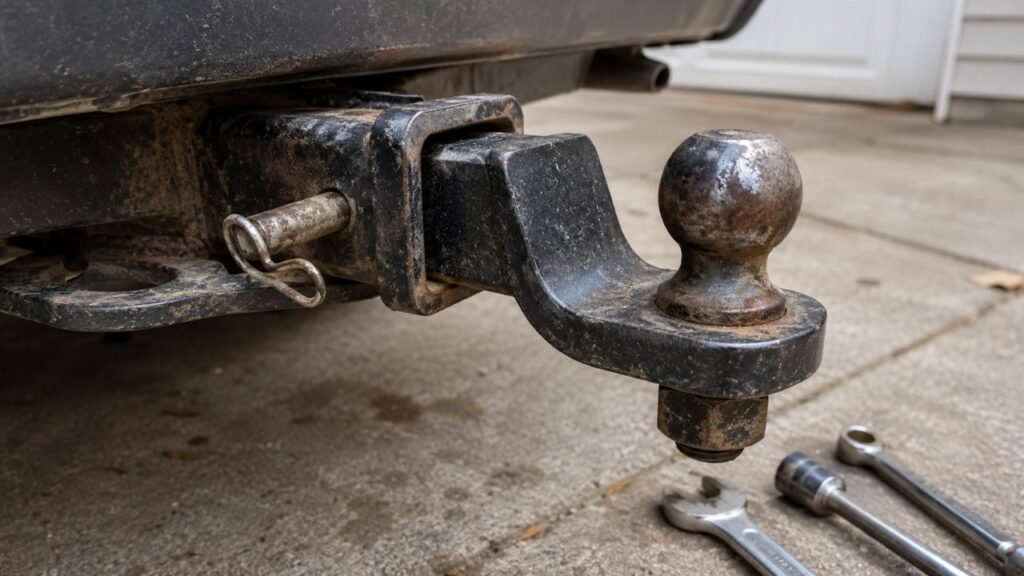
The ball mount controls how high or low the hitch ball sits. A mount with excessive drop positions the trailer coupler below its intended height.
This often happens after changing tow vehicles. A hitch that worked with one truck may sit too low on another.
Adjustable hitches can also be installed in the wrong mounting holes. Raising the ball platform one position may correct the trailer angle.
Measure before making changes. Guessing the correct rise can leave the trailer too high instead.
The Tow Vehicle Squats Under Tongue Weight
Your trailer may look level while parked and uncoupled. After coupling, the rear suspension may settle several inches.
Some suspension movement is normal. Excessive squat is not.
Heavy tongue weight can push the rear axle downward. That lowers the receiver and makes the trailer nose drop.
The tow vehicle’s front end may also rise. This can reduce steering response and change headlight aim.
Before blaming weak suspension, check payload and tongue weight. An overloaded vehicle should not be corrected with suspension accessories alone.
Too Much Cargo Is Loaded Forward
Cargo position directly affects tongue weight. Moving a heavy object toward the coupler adds downward force at the hitch.
Front storage compartments often become overloaded gradually. You may add tools, batteries, cables, leveling blocks, and camping equipment without noticing the combined weight.
Fresh-water tanks can also change the balance. A full tank located ahead of the axles may add substantial tongue weight.
Move heavy cargo closer to the axles when possible. Keep it low, centered, and properly secured.
Do not move everything behind the axles. Excessive rear loading can reduce tongue weight and encourage trailer sway.
The Weight-Distribution Hitch Is Misadjusted
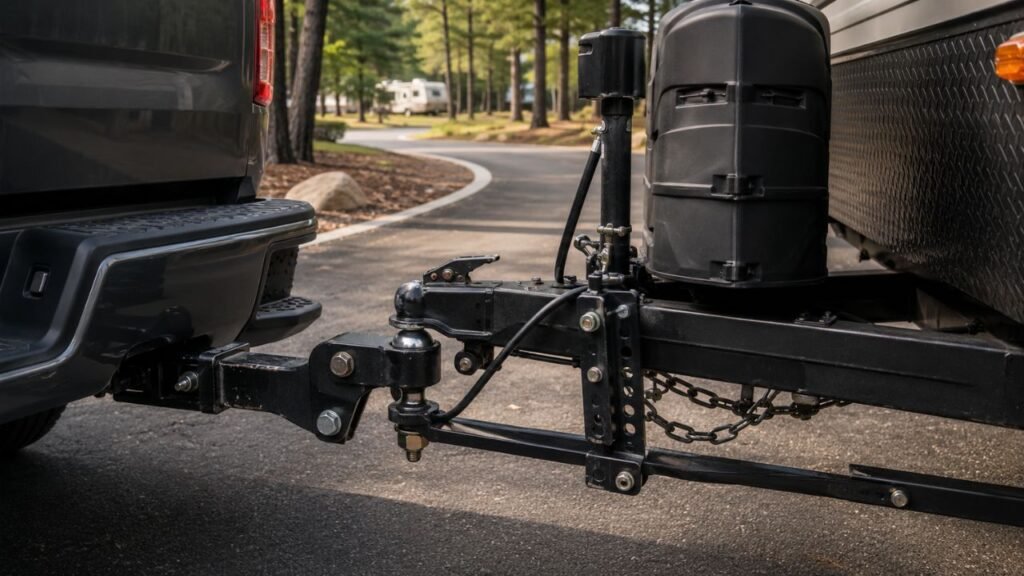
A weight-distribution hitch uses spring bars to manage how hitch load affects the connected vehicle and trailer.
When correctly adjusted, it helps restore weight to the tow vehicle’s front axle. It can also reduce excessive rear suspension drop.
Loose spring bars may not provide enough load transfer. Incorrect head angle or bracket height can create the same result.
The spring bars may also be undersized for the loaded tongue weight. Bars that are too light cannot provide proper adjustment.
Always follow the hitch manufacturer’s setup procedure. Small changes can noticeably affect vehicle stance and handling.
The Tow Vehicle Has Been Modified
Suspension changes can alter receiver height. Common examples include lift kits, leveling kits, larger tires, and replacement springs.
A truck may sit higher after a modification. However, the receiver can still drop significantly when loaded.
You may also reuse a ball mount chosen before the modification. Its rise or drop may no longer match the trailer.
Measure the modified vehicle as a new setup. Do not rely on measurements taken before the changes.
The Trailer Has Been Modified
Trailer modifications can also change coupler height.
Axle flips, different tires, replacement springs, and suspension upgrades may raise the trailer frame. A replacement coupler can sit at a different height as well.
After changing suspension components, level the trailer and measure its coupler again. The old ball mount may no longer be suitable.
The Trailer Is Overloaded
An overloaded trailer can compress its suspension and place too much load on its tires, axles, and hitch.
Overall trailer weight matters, but axle weight also matters. The total may appear acceptable while one axle remains overloaded.
Removing cargo is the correct response to overload. A taller ball mount cannot make an overloaded trailer safe.
Weigh the trailer in its actual travel condition. Include water, batteries, propane, food, tools, and installed accessories.
The Trailer Suspension Is Worn or Damaged
A trailer may sit nose low because its suspension no longer holds the frame at the intended height.
Possible problems include:
- Flattened leaf springs
- Broken spring leaves
- Worn shackles
- Damaged equalizers
- Cracked spring hangers
- Bent axles
- Incorrect replacement springs
- Failed rubber suspension components
A damaged suspension often causes uneven height from side to side. You may also notice unusual tire wear or axle spacing.
Have structural or suspension damage inspected professionally before towing again.
The Measurements Were Taken on Uneven Ground
A sloped driveway can make a level trailer appear nose low. Uneven pavement can also change your receiver and coupler measurements.
Always measure on flat, firm ground. Avoid gravel, soft soil, or pavement with deep drainage slopes.
Check tire pressure before measuring. A low tire can change frame height enough to mislead you.
Nose-Low Trailer Causes and Corrective Actions
The correct solution depends on what caused the trailer’s angle. Use this table to narrow the problem before changing parts.
| Possible Cause | What You May Notice | How to Confirm It | Typical Correction |
| Ball mount has excessive drop | Trailer sits nose low without major vehicle squat | Compare level coupler height with receiver height | Install less drop or additional rise |
| Tow vehicle squats excessively | Vehicle rear drops after coupling | Measure wheel-well heights before and after hitching | Correct tongue weight and adjust weight distribution |
| Cargo is too far forward | Heavy tongue and light steering | Measure loaded tongue weight | Move suitable cargo closer to the axles |
| Weight-distribution hitch is misadjusted | Front height does not recover properly | Compare measurements with hitch instructions | Adjust bars, brackets, or hitch-head angle |
| Trailer is overloaded | Suspension and tires appear compressed | Weigh trailer and individual axles | Remove cargo and remain within ratings |
| Suspension is damaged | One side or axle sits differently | Inspect springs, shackles, hangers, and equalizers | Repair damaged components |
| Vehicle height changed | Old ball mount no longer matches | Repeat receiver and coupler measurements | Choose a properly rated adjustable mount |
| Trailer height changed | Coupler height differs after modifications | Level and remeasure the trailer | Recalculate required rise or drop |
How to Measure Whether Your Trailer Is Nose Low
Accurate measurements will show whether the problem comes from hitch height, suspension squat, or both.
Prepare the Trailer and Tow Vehicle
Measure the setup as it will actually travel. An empty trailer may sit differently after you load equipment and fill tanks.
Before measuring:
- Park on level and solid pavement.
- Inflate every tire to its required pressure.
- Load normal travel cargo.
- Fill tanks to the planned travel level.
- Secure everything in its normal position.
- Keep the trailer uncoupled initially.
- Chock the trailer wheels.
- Confirm the trailer frame is level.
Measure the Trailer at the Front and Rear
Choose two matching points along the trailer frame. Measure one near the front and another near the rear.
Measure from the ground to the bottom of the frame. Do not use decorative trim, wheel openings, or body panels.
When both measurements are equal, the trailer is level. If the front measurement is lower, the trailer is nose low.
You can repeat the measurements after coupling. This shows how the loaded towing setup changes the angle.
Measure the Receiver and Coupler Heights
First, level the uncoupled trailer. Then measure from the ground to the bottom of the coupler.
Next, measure from the ground to the top inside edge of the tow vehicle’s receiver opening.
The difference gives you an approximate ball-mount rise or drop.
For example, imagine these measurements:
- Receiver height: 22 inches
- Level coupler height: 19 inches
- Approximate required drop: 3 inches
If the coupler sits higher than the receiver, you need rise instead of drop.
These are starting measurements. You must verify the final position after connecting the loaded trailer.
Recheck Everything After Coupling
Lower the coupler onto the ball and fully connect the trailer. Then measure the front and rear frame heights again.
Also measure the tow vehicle’s wheel-well heights. Record the front and rear measurements before and after coupling.
A large rear drop indicates excessive squat. A significant front rise may indicate poor weight transfer.
These measurements help separate a hitch-height problem from a weight-distribution problem.
How Much Nose-Down Angle Is Acceptable?
A trailer should normally tow level or very close to level. This keeps its suspension, tires, and axles working as intended.
There is no universal number that fits every trailer. Acceptable variation depends on trailer length, suspension design, axle configuration, and manufacturer guidance.
A one-inch height difference means more on a short trailer. That same difference may create a smaller angle on a long trailer.
Tandem-axle trailers deserve particular attention. An excessive angle can change how the axles share the load.
A very slight nose-down position may be permitted by some manufacturers. However, it should never create poor handling, low clearance, or overloaded components.
When guidance is unavailable, level is the safest target.
How to Choose the Correct Ball-Mount Rise or Drop
The correct ball mount places the hitch ball near the level trailer’s coupler height. It must also carry the trailer’s loaded weight safely.
Calculate the Required Rise or Drop
Subtract the lower measurement from the higher measurement.
When the receiver is higher than the coupler, you need drop.
When the coupler is higher than the receiver, you need rise.
For example:
- Receiver height: 21 inches
- Coupler height: 18 inches
- Required drop: approximately 3 inches
Suppose the measurements are reversed:
- Receiver height: 18 inches
- Coupler height: 21 inches
- Required rise: approximately 3 inches
Choose the closest appropriate setting from a properly rated ball mount. Then confirm the trailer’s final angle after hitching.
Account for Tow-Vehicle Squat
The unloaded receiver measurement does not always represent the final towing height.
Tongue weight compresses the rear suspension and lowers the receiver. A three-inch calculated drop may become excessive after the vehicle settles.
This is why final coupled measurements matter.
A weight-distribution hitch may restore some front-axle load and reduce rear squat. Complete its adjustment before making the final ball-height decision.
Check the Ball Mount and Hitch Ratings
The correct height means nothing if the component cannot carry the load.
Confirm these details:
- Receiver size
- Receiver class
- Ball-mount gross trailer weight rating
- Ball-mount tongue-weight rating
- Hitch-ball diameter
- Hitch-ball shank diameter
- Hitch-ball weight rating
- Coupler size
- Hitch pin compatibility
- Weight-distribution compatibility
- Safety-chain clearance
- Tongue-jack clearance
Every component must be rated for the actual loaded trailer. The lowest rating controls the entire setup.
When an Adjustable Hitch Makes Sense
An adjustable hitch can be useful when towing multiple trailers. It also helps when cargo regularly changes vehicle ride height.
Choose one without excessive movement at the adjustment points. Confirm that its rating applies in the selected rise or drop position.
The highest advertised rating may not apply to every configuration. Read the product specifications carefully.
How to Fix a Trailer That Tows Nose Low
Once you identify the cause, correct one problem at a time. Recheck the measurements after every adjustment.
Replace or Reposition the Ball Mount
Use less drop when the hitch ball physically sits too low. You may need a rise position if the receiver is below the level coupler.
With an adjustable hitch, raise the ball platform by one hole. Then reconnect the trailer and check the frame height.
Do not turn a fixed ball mount upside down unless the manufacturer approves rise use. Some mounts have different ratings depending on orientation.
Tighten all hardware to the specified torque. Recheck it after the first towing trip.
Correct the Cargo Distribution
Repositioning cargo can reduce excessive tongue weight. However, move items carefully and measure the result.
Follow these loading practices:
- Keep heavy items low.
- Place dense cargo near the axles.
- Balance weight from side to side.
- Avoid filling only the front storage compartment.
- Secure cargo against forward and rearward movement.
- Include tank contents in your calculations.
- Recheck tongue weight after each major change.
- Keep adequate weight ahead of the axles.
Never move a large amount of cargo behind the axles simply to raise the tongue. This can create dangerously low tongue weight and increase sway.
Measure and Correct Tongue Weight
Tongue weight is the downward force the trailer places on the hitch ball.
Many conventional trailers operate best with tongue weight around 10% to 15% of loaded trailer weight. Your vehicle and trailer manufacturers’ requirements take priority.
For example, a 6,000-pound loaded trailer may commonly need around 600 to 900 pounds of tongue weight. However, that weight must remain within every listed rating.
Measure tongue weight with:
- A dedicated tongue-weight scale
- A compatible vehicle scale method
- A properly arranged heavy-duty scale setup
- A professional weighing service
Do not estimate tongue weight from appearance. Two trailers can look similar while carrying very different hitch loads.
Readjust the Weight-Distribution Hitch
Start with the hitch manufacturer’s instructions. Weight-distribution systems vary in design and adjustment procedure.
You may need to change:
- Hitch-head height
- Hitch-head tilt
- Spring-bar tension
- Chain-link position
- Frame-bracket height
- L-bracket position
- Spring-bar rating
Measure the tow vehicle’s front and rear heights before coupling. Measure again after coupling without spring-bar tension.
Finally, engage the weight-distribution system and measure again. Compare the results with the manufacturer’s target.
Do not overtighten the spring bars to force the vehicle perfectly level. Excessive tension can create poor handling and component stress.
Reduce Unnecessary Front Storage Weight
Front trailer compartments make storage convenient. They can also create excessive tongue weight quickly.
Review everything stored ahead of the axles:
- Toolboxes
- Portable generators
- Spare batteries
- Propane cylinders
- Firewood
- Water containers
- Recovery equipment
- Hitch accessories
- Outdoor furniture
- Spare parts
Remove items you do not need. Place suitable equipment closer to the trailer’s axle area.
Never relocate propane cylinders, batteries, or permanently mounted equipment without following safety and installation requirements.
Repair Worn Trailer Suspension Components
Suspension repairs should restore the trailer’s designed ride height and axle alignment.
Inspect both sides, even when only one side appears low. Wear often develops unevenly.
Look for cracked metal, elongated bolt holes, missing bushings, and loose fasteners. Check whether the leaf springs have lost their original arch.
Replace damaged components with correctly rated parts. Using taller or heavier springs without proper engineering can change handling and frame stress.
Add Suspension Support Only When Appropriate
Air bags and helper springs can reduce tow-vehicle squat. They may improve ride quality when the vehicle remains within all ratings.
However, they do not increase:
- Payload capacity
- Rear axle rating
- Gross vehicle weight rating
- Receiver rating
- Tire capacity
- Maximum tongue weight
- Maximum towing capacity
Correct the hitch height, cargo balance, and weight-distribution adjustment first. Suspension support should fine-tune an already legal and properly loaded setup.
Can Air Bags Fix a Nose-Low Trailer?
Air bags can raise the rear of a tow vehicle. They cannot fix every reason a trailer sits nose low.
They may help when the vehicle is within its payload rating but has soft rear suspension. The added air pressure can restore normal ride height.
However, air bags cannot correct an overloaded rear axle. They also cannot reduce actual tongue weight.
Air bags will not fix:
- An excessively low ball mount
- Cargo loaded too far forward
- An overloaded trailer
- An incorrectly adjusted weight-distribution hitch
- Damaged trailer suspension
- Underrated hitch components
- An overloaded tow vehicle
They can also hide visible squat without restoring front-axle weight. The vehicle may look level while steering and braking remain affected.
Use wheel-well measurements, scale weights, and manufacturer instructions. Do not rely only on visual appearance.
Can a Weight-Distribution Hitch Level a Nose-Low Trailer?
A weight-distribution hitch can reduce excessive tow-vehicle squat. However, the basic hitch height must still be correct.
What a Weight-Distribution Hitch Actually Does
The spring bars create leverage between the tow vehicle and trailer. This changes how the hitch load affects their axles.
The system can return some load toward the tow vehicle’s front axle. Moreover, it may also transfer part of the effect toward the trailer axles.
It does not remove trailer weight. It does not increase the vehicle’s towing or payload ratings.
The loaded tongue weight still counts against the vehicle’s carrying limits.
Signs the Spring Bars Need Adjustment
Check the system when you notice:
- Excessive rear suspension squat
- Poor front wheel-well height recovery
- Light or vague steering
- Loose spring bars
- Brackets moving from their positions
- Uneven spring-bar tension
- Trailer weight increasing since setup
- A different tow vehicle being used
- Spring bars with an incorrect rating
The hitch may need readjustment after adding batteries, propane, cargo carriers, or water tanks.
Why Hitch Height Still Matters
A weight-distribution hitch cannot fully compensate for a hitch head installed too low.
Set the basic ball height first. Then adjust the spring bars according to the manufacturer’s procedure.
After adjustment, measure the trailer frame. It should remain level or within approved specifications.
How Nose-Low Towing Affects Trailer Axles and Tires
A large nose-down angle can change how a multi-axle trailer carries its weight. It may also reduce clearance and affect handling.
Uneven Axle Loading
Tandem-axle suspensions are designed to share weight between both axles. The equalizer helps manage changes while driving over uneven roads.
A severely unlevel trailer can interfere with proper load sharing. One axle may carry more than intended.
You cannot confirm axle loading by looking at the trailer. Weighing each axle provides a clearer answer.
Uneven Tire Wear and Heat
An overloaded axle places additional stress on its tires and bearings. Heat can build during longer highway trips.
Check tire temperatures during travel stops. One tire that feels much hotter than the others deserves inspection.
Uneven wear may also come from alignment problems, low pressure, bearing issues, or bent suspension parts.
Do not assume the trailer angle is the only cause.
Reduced Ground Clearance
A nose-low trailer reduces clearance around the front frame and hitch area.
Parts that may scrape include:
- Tongue jack
- Jack foot
- Weight-distribution brackets
- Safety chains
- Electrical connector
- Propane tray
- Front stabilizers
- Frame-mounted accessories
Scraping can damage wiring, plumbing, or structural components. Check clearance on driveways and campground entrances.
Changes in Braking and Handling
A nose-low appearance caused by rear vehicle squat can reduce front-tire loading. This may affect steering response and braking control.
The trailer’s brake balance can also feel different when axle loads become uneven.
You may notice delayed steering, front-end wandering, or increased stopping distance. These symptoms require more than a cosmetic height correction.
Measure axle weights and inspect the complete towing setup.
Nose Low Versus Tow-Vehicle Squat
A trailer can sit nose low without severe vehicle squat. It can also become nose low mainly because the receiver drops after coupling.
This comparison can help you identify the difference.
| Check | Incorrect Hitch Height | Excessive Tow-Vehicle Squat |
| Trailer position before coupling | Ball and coupler heights do not match | Trailer may appear level |
| Vehicle position after coupling | Vehicle may remain fairly level | Vehicle rear drops noticeably |
| Front wheel-well height | Changes slightly | May rise noticeably |
| Receiver height change | Usually small | Often significant |
| Main correction | Change rise or drop | Correct loading and weight distribution |
| Can air bags help? | Usually not | Sometimes, after ratings are confirmed |
| Should tongue weight be checked? | Yes | Yes |
| Should axle weights be checked? | Recommended | Strongly recommended |
How to Load a Trailer Without Making It Nose Low
Proper loading keeps tongue weight controlled without making the trailer unstable. The goal is balance, not simply reducing front weight.
Follow these basic practices:
- Place heavy equipment near the axle area.
- Keep dense items as low as possible.
- Balance cargo between the left and right sides.
- Secure everything before measuring.
- Include water and fuel in the loaded weight.
- Avoid carrying unnecessary items in front compartments.
- Do not concentrate cargo at the rear.
- Recheck tongue weight after changing the load.
- Confirm tire and axle ratings.
- Weigh the trailer in travel condition.
Cargo can shift while driving. Even a correctly loaded trailer can become unbalanced when unsecured equipment moves.
Use suitable straps, anchors, cabinets, and cargo restraints.
Mistakes to Avoid When Correcting a Nose-Low Trailer
A quick visual fix can create a different towing problem. Avoid these common mistakes:
- Guessing the required ball-mount rise
- Measuring on sloped pavement
- Checking an empty trailer instead of the travel load
- Moving excessive cargo behind the axles
- Using air bags to hide overload
- Installing an underrated adjustable hitch
- Ignoring hitch-ball and coupler ratings
- Overtightening weight-distribution spring bars
- Mixing incompatible hitch components
- Raising tire pressure beyond specifications
- Assuming a level appearance confirms safe axle weights
- Ignoring damaged springs or shackles
- Towing without rechecking fastener torque
- Forgetting that water changes trailer balance
Take measurements after every meaningful change. Small adjustments are easier to evaluate and reverse.
Final Towing Check Before Driving
Complete one final inspection after leveling the trailer. This helps catch problems created during adjustment.
- Confirm the trailer frame sits level.
- Verify the loaded tongue weight.
- Confirm the tow vehicle remains within payload limits.
- Check the rear axle weight.
- Check every hitch component’s rating.
- Confirm the hitch ball matches the coupler.
- Lock the coupler latch.
- Install the hitch pin and retaining clip.
- Cross the safety chains beneath the coupler.
- Attach the breakaway cable separately.
- Connect and test the trailer lights.
- Test the trailer brakes.
- Check tire pressures and tire condition.
- Confirm the tongue jack is fully raised.
- Inspect clearance around hitch components.
- Verify cargo remains secured.
- Drive slowly before entering the highway.
Pay attention during the first few miles. Stop and recheck the setup if steering, braking, or trailer behavior feels unusual.
Final Words
A nose-low trailer is usually caused by incorrect hitch height, excessive tow-vehicle squat, forward cargo loading, or poor weight-distribution adjustment.
Start by measuring the level coupler and receiver heights. Then connect the fully loaded trailer and measure everything again.
That second measurement often reveals the real problem. It shows whether the ball sits too low or the tow vehicle drops too far.
Do not correct the angle by appearance alone. Check tongue weight, axle weights, suspension condition, and component ratings.
Your safest result is a level trailer with predictable steering, stable braking, and adequate road clearance.
Related FAQs
Should a Trailer Be Level When Towing?
Yes, most trailers should tow level or very close to level. A slight nose-down position may be acceptable when specifically permitted by the trailer manufacturer.
Is It Better for a Trailer to Be Nose Low or Nose High?
Neither position is ideal when the angle is excessive. Level towing generally provides better axle loading, tire wear, ground clearance, and handling.
Can Too Much Tongue Weight Make a Trailer Nose Low?
Yes, excessive tongue weight can compress the tow vehicle’s rear suspension. This lowers the hitch ball and causes the trailer’s front end to drop.
How Do I Know What Hitch Rise or Drop I Need?
Measure the receiver height and level coupler height on flat ground. The difference between those measurements indicates the approximate rise or drop required.
Will Air Bags Level My Trailer?
Air bags can reduce tow-vehicle squat when all weight limits remain satisfied. They cannot correct overload, poor cargo placement, or an incorrect ball mount.
Can a Nose-Low Trailer Cause Uneven Tire Wear?
A severely nose-low tandem-axle trailer may place uneven weight across its axles. This can increase tire heat and contribute to uneven wear.
Does a Weight-Distribution Hitch Change Tongue Weight?
It changes how the hitch load affects the tow vehicle and trailer axles. It does not eliminate the trailer’s actual loaded tongue weight.
Why Is My Trailer Level Unloaded but Nose Low When Hitched?
The tow vehicle’s rear suspension may be compressing under tongue weight. Excessive squat, forward cargo, or poor hitch adjustment could be responsible.
Can a Lifted Truck Make a Trailer Tow Nose Low?
A lifted truck normally raises receiver height, but suspension behavior and hitch selection still matter. Always remeasure after modifying the tow vehicle.
Should I Measure Hitch Height With the Trailer Loaded?
Yes, load the trailer as it will travel before final measurements. Cargo, water, batteries, and propane can all change its height and balance.
Can I Tow With the Trailer Slightly Nose Down?
You may tow slightly nose down when the manufacturer allows it and all ratings remain satisfied. The angle should not affect handling or clearance.
Why Does My Tow Vehicle’s Front End Rise When Hitched?
Heavy tongue weight pushes down on the rear suspension and can unload the front axle. Correct loading and weight-distribution adjustment may be required.
Can Helper Springs Increase My Towing Capacity?
No, helper springs do not increase towing, payload, axle, receiver, or tire ratings. They only support the existing suspension within approved limits.
How Often Should I Check Trailer Tongue Weight?
Check it whenever cargo placement changes significantly. You should also recheck after installing batteries, tanks, carriers, or other heavy accessories.

Scott Miller shares real-world RV road trip insights built from years of traveling open highways and backroads. He covers route planning, campground choices, and travel gear with a practical mindset. His content is written for RVers who value reliability over trends.