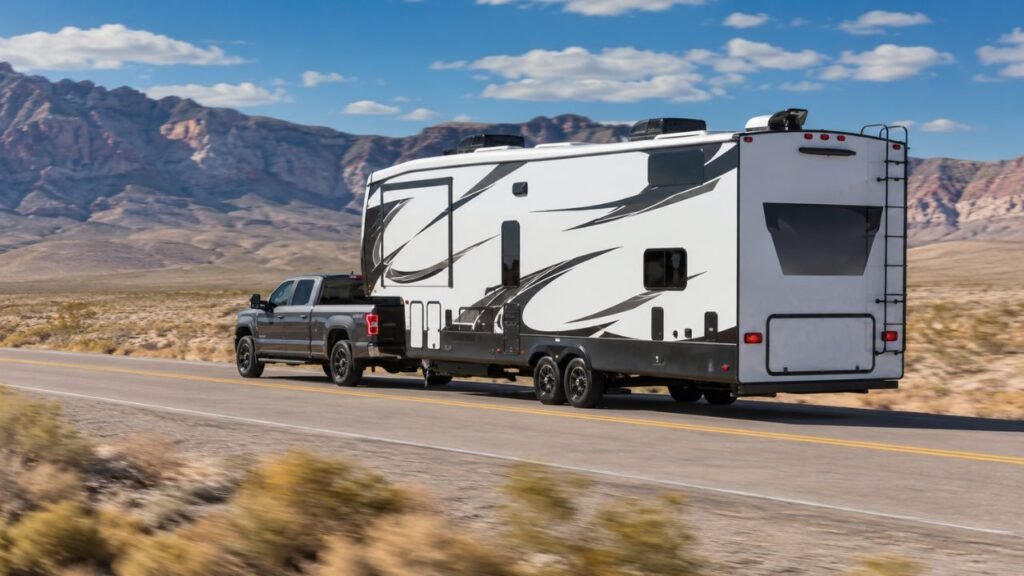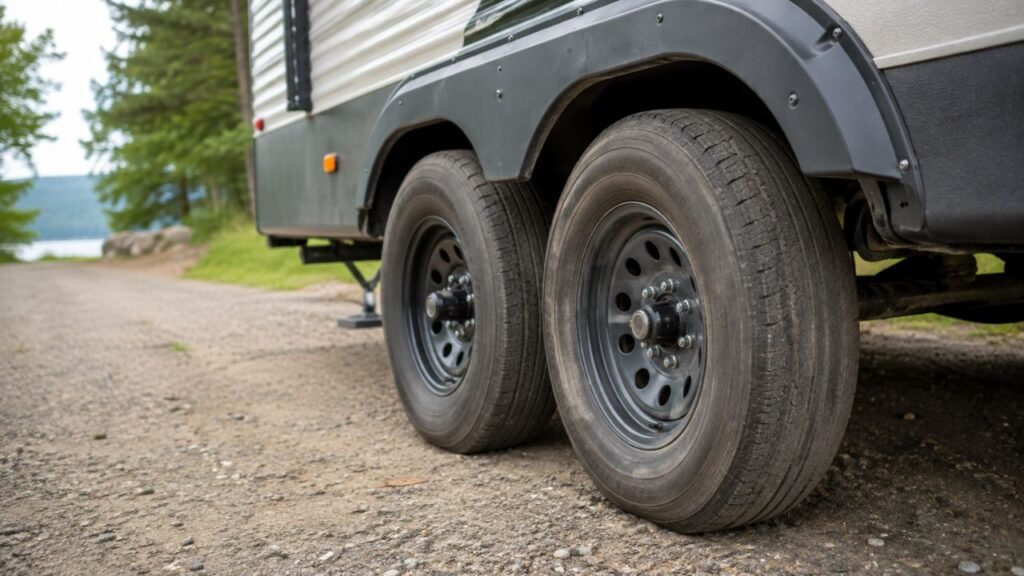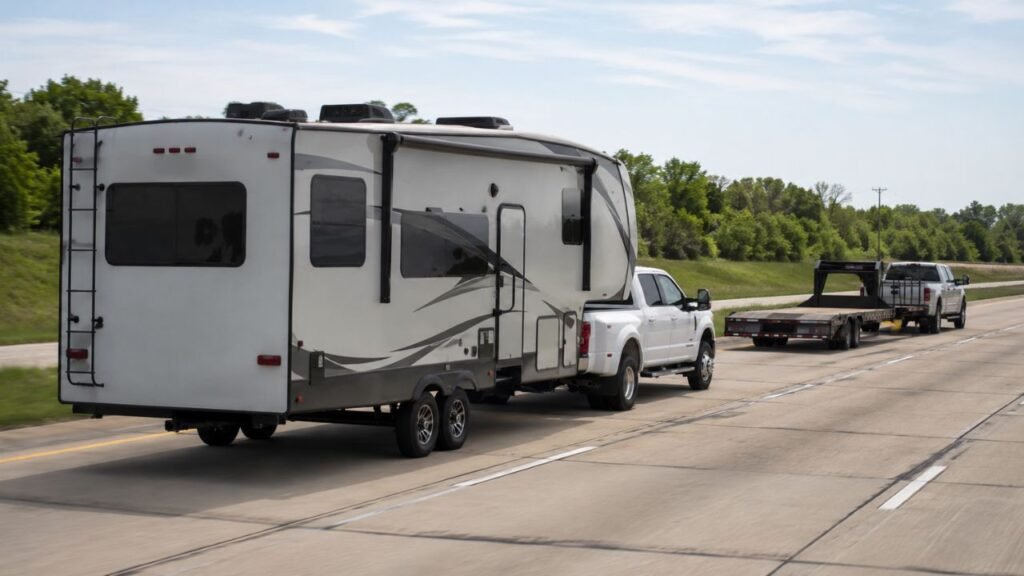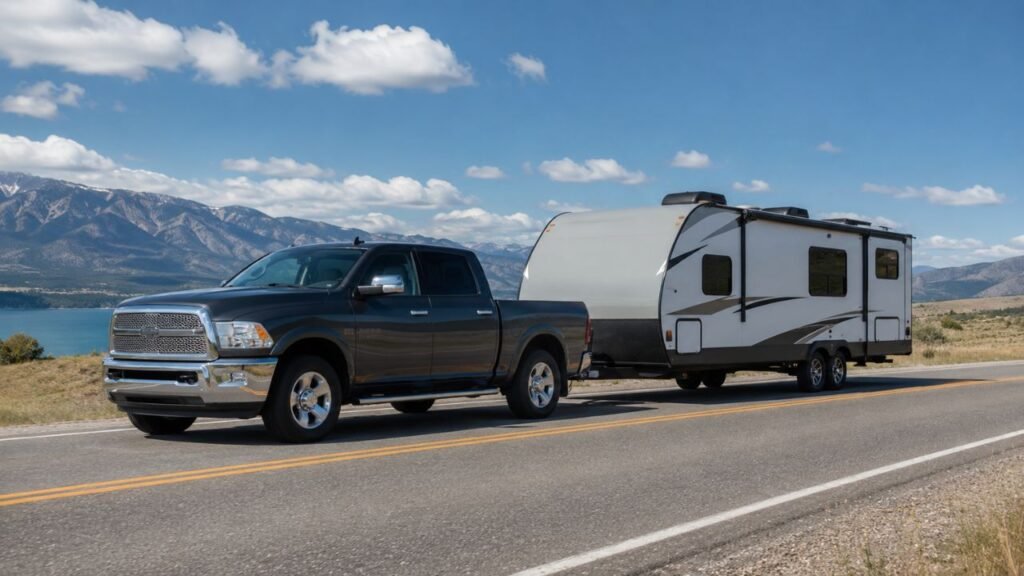
A trailer usually pulls when braking because its left and right brakes are not applying equal braking force. One brake may grab harder, while another may be weak, poorly adjusted, contaminated, disconnected, or sticking. Tire, bearing, suspension, and loading problems can also make the pulling worse.
The good news is that you can usually narrow this problem down logically. I’ll walk you through what the direction of the pull means, what to inspect first, and when you should stop towing.
Key Takeaways
- Uneven braking force is the most common reason trailers pull sideways.
- The trailer usually pulls toward the side braking more aggressively.
- Uneven drum brake adjustment can make one wheel engage sooner.
- Damaged wiring can weaken one electric brake without disabling every brake.
- Grease-contaminated brake shoes can greatly reduce braking on one wheel.
- An unusually hot wheel may have a dragging brake or bearing issue.
- A cool wheel may indicate that its brake barely works.
- Tire pressure, suspension, and cargo balance can worsen brake pulling.
- Manual brake-controller testing can help separate trailer and truck problems.
- Strong or sudden pulling should be repaired before normal towing continues.
Why Does My Trailer Pull to One Side When I Brake?
Your trailer should slow down evenly across its corresponding wheels. When one side develops noticeably more braking force, that balance disappears.
Imagine the left trailer brakes gripping much harder than the right. The left wheels slow rapidly while the right wheels continue rolling more freely. That difference can make the trailer yaw or steer toward the stronger braking side.
You may feel this through the tow vehicle as sideways pushing. Sometimes the steering wheel also requires correction during harder stops.
A slight pull does not necessarily mean the problem is minor. Small brake differences can become much stronger during emergency braking or downhill towing.
You also should not assume every pull comes directly from brakes. Tire problems, suspension movement, axle alignment, wheel bearings, and uneven loading can change how the trailer behaves.
That is why I recommend diagnosing the problem systematically instead of immediately adjusting the brake controller.
Most Common Reasons a Trailer Pulls When Braking
Several faults can create uneven braking, but some appear far more often. Start with the brake system before moving toward suspension and alignment problems.
Trailer Brakes Are Adjusted Unevenly
Uneven adjustment is one of the first things I would check.
Electric drum brakes need the correct clearance between the shoes and drum. If one assembly has excessive clearance, it takes longer to engage.
Meanwhile, a tighter brake on the opposite side engages earlier and harder. You then feel the trailer move toward that stronger side.
The opposite problem can happen with an over-adjusted brake. The shoes may remain too close to the drum and create constant drag.
Self-adjusting brakes can develop differences too. Never assume both sides remain identical simply because the brakes adjust automatically.
If adjustment is the problem, all matching brake assemblies should be checked. Adjusting only the wheel that feels wrong can leave another imbalance unnoticed.
One Electric Brake Is Not Working Properly
A trailer can still have braking power even when one brake stops working.
For example, suppose the left brake receives full electrical power. A damaged connection prevents the right brake magnet from receiving enough current.
The left brake now provides considerably more stopping force. That difference can cause the trailer to pull while braking.
Look carefully for wiring damage near:
- Brake backing plates
- Axle tubes
- Wire splices
- Suspension components
- Junction boxes
- Trailer connectors
Road debris, moisture, corrosion, vibration, and suspension movement can gradually damage these connections.
One Brake Magnet Is Weak or Worn
Electric drum brakes use magnets to begin the braking process.
When current reaches the magnet, it contacts the rotating drum surface. That movement activates the internal brake shoes.
A damaged or badly worn magnet cannot create normal braking force.
You may find:
- Excessive magnet wear
- Grooves in the magnet face
- Damaged magnet wires
- Loose electrical connections
- Uneven wear between brake assemblies
A weak magnet on one side can therefore make the opposite brake dominate.
Do not judge the magnet completely by appearance alone. Electrical condition, drum condition, adjustment, and internal hardware also affect braking performance.
Brake Shoes Are Contaminated With Grease
Grease inside a trailer brake drum deserves immediate attention.
A leaking hub seal can allow bearing grease onto the brake shoes. Once the friction material becomes contaminated, braking performance may change dramatically.
The affected wheel may provide very little braking compared with the opposite side.
Adjusting the contaminated brake will not correct the real problem. You need to address both the leaking seal and contaminated braking components.
You should also inspect the bearing while the hub is apart. A seal failure and bearing problem can sometimes appear together.
One Brake Is Dragging or Sticking
Not every braking imbalance comes from a weak brake. Sometimes one brake is applying too much.
A dragging brake may come from:
- Excessive brake adjustment
- Broken return springs
- Corroded internal hardware
- Binding brake components
- Sticking disc brake calipers
- Hydraulic restrictions
The affected wheel often becomes hotter than the others.
If one wheel is dramatically hotter after normal driving, investigate it before continuing. Excessive heat can damage drums, bearings, seals, tires, and surrounding components.
Brake Shoes or Pads Are Worn Unevenly
Brake linings do not always wear at identical rates.
One brake assembly may have:
- Thin friction material
- Glazed brake shoes
- Cracked linings
- Uneven shoe wear
- Damaged hardware
- Poor shoe-to-drum contact
Disc brake trailers can develop similar differences between pads and calipers.
Replacing only one obviously worn component may not restore balanced braking. Compare matching assemblies before deciding which parts actually need replacement.
The Brake Drum or Rotor Is Damaged
The friction surface matters just as much as the brake shoes.
A trailer drum can develop:
- Deep grooves
- Heat damage
- Excessive wear
- Rust
- Uneven surfaces
- Out-of-round conditions
Disc brake rotors can suffer similar scoring, corrosion, or heat-related damage.
A damaged friction surface changes how smoothly and strongly that wheel brakes.
If one drum behaves very differently from the matching drum, adjustment alone may never produce equal braking.
Poor Trailer Brake Ground Connection
Electrical resistance is another common source of weak trailer brakes.
A corroded, loose, or poorly made connection can reduce the electrical power reaching a brake magnet.
Check grounds and connections for:
- Rust
- Paint beneath terminals
- Loose hardware
- Damaged wire
- Corrosion
- Poor splices
A poor main trailer ground may affect multiple brakes. However, problems in individual brake branches can create more noticeable side-to-side differences.
Connections should be clean, secure, and protected from future corrosion.
Hydraulic or Surge Brakes Are Applying Unevenly
Not every trailer uses electric drum brakes.
Boat trailers and other trailers frequently use hydraulic surge systems. Uneven hydraulic braking can also make the trailer pull.
Possible causes include:
- Sticking calipers
- Restricted hydraulic hoses
- Seized wheel cylinders
- Air inside brake lines
- Uneven drum adjustment
- Corroded hardware
- Hydraulic fluid problems
A deteriorated hose can sometimes restrict fluid movement even when its exterior looks acceptable.
The surge actuator also needs smooth operation. However, actuator problems affecting the whole system usually cause broader braking symptoms rather than one-sided braking alone.
Mechanical Brake Cables Are Unevenly Adjusted
Some trailers use mechanical overrun brakes rather than electric systems.
These brakes depend heavily on proper cable movement and adjustment.
Uneven braking can develop from:
- Stretched cables
- Rusted cables
- Binding linkages
- Different cable tension
- Seized mechanisms
- Poor balance adjustment
One cable may move freely while another resists movement.
That creates different braking force even though the coupling mechanism itself appears to operate normally.
Quick Guide to What the Direction of Pull May Tell You
The direction and timing of the pull can give you useful clues. Treat these as starting points rather than absolute diagnoses.
| What You Notice | Possible Cause | What I Would Check First |
| Trailer pulls left during braking | Left brake stronger or right brake weaker | Compare right and left brake operation |
| Trailer pulls right during braking | Right brake stronger or left brake weaker | Compare adjustment, wiring, and magnets |
| Pull gets stronger with higher controller gain | Existing electric brake imbalance | Brake adjustment, magnets, and wiring |
| Trailer pulls using manual controller only | Problem likely originates within trailer braking | Inspect trailer brakes and wiring |
| Pull happens mainly with truck pedal | Tow vehicle or controller behavior may contribute | Test truck brakes and trailer independently |
| One wheel becomes much hotter | Dragging brake or bearing problem | Stop and inspect that wheel |
| One brake stays unusually cool | Brake may be weak or inactive | Wiring, magnet, adjustment, shoes |
| Pull appears after several miles | Heat-related brake or bearing problem | Compare hub temperatures |
| Trailer suddenly jerks sideways | Severe brake imbalance or wheel problem | Stop towing and inspect |
| Pull exists even without braking | Tires, alignment, suspension, or loading | Inspect chassis and tires |
The most useful pattern is whether the pulling happens specifically when trailer braking force increases.
That tells you where to focus your inspection.
How Do I Know Which Trailer Brake Is Causing the Pull?
You do not need to replace parts randomly. A few comparisons between wheels can often show which side behaves differently.
Start With a Visual Inspection
Before removing anything, walk around the trailer carefully.
Look for:
- Low tire pressure
- Damaged tires
- Loose brake wires
- Broken wiring
- Corroded connectors
- Grease around hubs
- Grease behind brake backing plates
- Damaged suspension components
- Loose hardware
- Unusual wheel position
- Signs of overheating
Sometimes the cause is visible before you ever remove a wheel.
Pay particular attention to anything different between the left and right sides.
Compare Wheel and Hub Temperatures
Temperature can tell you quite a lot about brake operation.
After a normal drive, corresponding trailer hubs should generally behave somewhat similarly. One hub being dramatically hotter deserves investigation.
An unusually hot wheel can indicate:
- A dragging brake
- Over-adjusted shoes
- A sticking caliper
- Bearing problems
- Excessive friction
An unusually cool brake may mean that wheel contributes very little braking.
An infrared thermometer is helpful because you can compare temperatures without touching hot components.
Do not place your hand directly against a drum or hub. A dragging brake can become hot enough to cause burns.
Temperature alone does not prove which component failed. Use it as another clue.
Test the Trailer Brakes With the Manual Controller
If your tow vehicle has an electric brake controller, its manual control can help isolate the trailer.
Perform this only at low speed in a safe, open area.
Apply the trailer brakes manually without initially using the tow vehicle’s service brakes. Notice whether the same directional pull appears.
If the trailer still pulls strongly, the trailer becomes your primary suspect.
If the pulling happens only when the tow vehicle brake pedal is used, inspect the truck’s braking system and controller operation too.
Do not perform aggressive tests on public roads.
Raise and Spin Each Trailer Wheel
With the trailer properly supported, individual wheels can be compared.
Always use appropriate jack stands and manufacturer-approved lifting points. Never work beneath a trailer supported only by a jack.
Rotate each wheel and compare:
- Free movement
- Brake drag
- Roughness
- Bearing noise
- Wheel play
- Brake engagement
The wheels do not need to feel absolutely identical. However, a major difference gives you a useful direction for further inspection.
How to Check Electric Trailer Brakes for Uneven Braking
Electric brakes add wiring and magnets to the troubleshooting process. I recommend checking the simple external connections before opening every brake assembly.
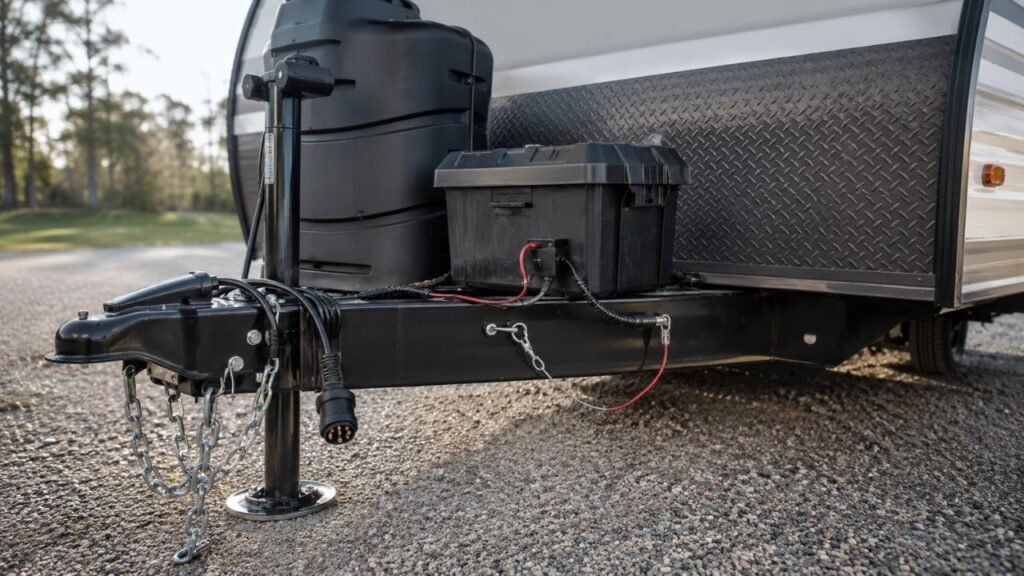
Inspect the 7-Way Trailer Connector
Start where the tow vehicle and trailer connect electrically.
Look for:
- Corroded contacts
- Bent contacts
- Loose terminals
- Moisture
- Dirt
- Damaged wiring
- Poor plug engagement
The connector experiences weather, dirt, road salt, and repeated movement.
A connection that looks acceptable from several feet away may have significant corrosion inside.
Inspect Brake Wiring Along the Trailer
Follow the brake wiring toward the axles.
Pay particular attention around suspension components because wires can rub, stretch, or become pinched there.
Look closely around axle transitions and brake backing plates.
A wire may also be broken internally while its insulation appears mostly intact. If the visual inspection finds nothing, electrical testing becomes more useful.
Check the Main Trailer Ground
Your trailer electrical system needs a dependable ground path.
Inspect the main ground connection for corrosion, looseness, damaged terminals, and poor metal contact.
If the ground terminal sits against heavy paint or rust, resistance can increase.
Clean, solid electrical connections matter greatly with trailer brakes because voltage loss reduces braking performance.
Compare Electrical Output at the Brakes
If you are comfortable using electrical test equipment, compare brake voltage or current under the same controller command.
You are looking for major differences between equivalent brake assemblies.
If one side receives significantly less electrical power, trace its circuit backward.
The fault may be:
- A damaged conductor
- Corroded splice
- Weak ground connection
- Loose terminal
- Magnet wiring damage
Remember that controller output changes with controller type and braking conditions. The important clue is an unexpected difference between comparable brakes under the same test conditions.
Compare Brake Magnet Condition
Once the drums are removed, inspect the magnets.
Their working surfaces should not show extreme or inconsistent damage.
Compare matching brake assemblies for:
- Wear pattern
- Magnet surface condition
- Wiring condition
- Mechanical movement
A magnet that looks dramatically worse than the others deserves further investigation.
Check Brake Shoe Adjustment
Brake adjustment needs to be consistent with the manufacturer’s procedure.
Manual-adjust brakes commonly use a star-wheel mechanism. Adjustment changes the shoe-to-drum clearance.
Too much clearance creates delayed or weak braking.
Too little clearance creates excessive drag.
The goal is not simply making every wheel difficult to turn. You want proper, consistent adjustment according to the brake manufacturer’s instructions.
Can Incorrect Brake Controller Settings Make a Trailer Pull?
A brake controller normally does not intentionally send more braking power to the left side than the right.
It generally controls the trailer braking circuit as a whole.
That means controller gain alone is rarely the root cause of a true left-to-right braking imbalance.
However, high gain can expose an existing problem.
For example, imagine the left trailer brake works perfectly while the right brake is weak. At low controller gain, you may barely notice the difference.
Increase the gain significantly, and the healthy brake becomes much stronger. The pulling becomes more noticeable.
This can make the controller appear responsible even though the real fault exists at one wheel.
You should still check:
- Controller calibration
- Gain setting
- Boost settings
- Electrical connections
- Trailer brake condition
Reducing controller gain may hide the symptom, but it does not repair uneven brakes.
Can Trailer Tires Cause Pulling When Braking?
Brakes are usually the first suspect when pulling happens only during braking. Still, tire problems can change traction enough to exaggerate the problem.
Unequal Tire Pressure
Significantly different tire pressures change how each tire carries load.
One tire may flex considerably more than another. That difference can affect stability during braking.
Check pressures when the tires are cold and follow the appropriate specifications for your trailer setup.
Do not intentionally change left-to-right pressure simply to correct braking pull.
Uneven Tire Wear
Uneven wear can indicate another underlying problem.
Look for:
- Cupping
- Shoulder wear
- Feathering
- Flat spots
- Irregular tread wear
These patterns may point toward suspension, alignment, balance, or braking issues.
A badly worn tire can also respond differently under braking loads.
Mismatched Tires
Ideally, tires serving the same axle should be suitably matched.
Large differences in size, construction, diameter, or wear can alter how the trailer tracks.
Look for mismatches in:
- Tire size
- Load rating
- Construction
- Overall diameter
- Tread depth
Correct obvious tire mismatches before trying to diagnose subtle handling problems.
Tire Damage or Belt Separation
Internal tire damage can cause pulling even when pressure looks normal.
Possible warning signs include:
- Bulges
- Unusual tread shape
- Vibration
- Sidewall distortion
- Sudden tracking changes
If the trailer pulls even when you are not braking, tire damage deserves extra attention.
Can a Bad Wheel Bearing Make a Trailer Pull When Braking?
Yes, a wheel bearing problem can contribute to pulling.
A badly adjusted or damaged bearing may create excessive drag at one wheel. It can also allow enough wheel movement to interfere with stable brake operation.
Bearing problems commonly produce additional clues such as:
- Hub heat
- Rough rotation
- Grinding noises
- Excessive wheel play
- Grease leakage
There is another important connection between bearings and trailer brakes.
A failed hub seal can allow grease into the brake drum. That grease contaminates the brake shoes and dramatically reduces friction.
You may therefore think you have only a brake problem when the original cause actually started around the hub and seal.
Whenever you find grease inside a brake drum, inspect the seal and bearing condition too.
Can Trailer Suspension or Alignment Cause Braking Pull?
Suspension and axle problems usually cause additional tracking symptoms. However, braking can make those weaknesses much easier to feel.
Bent or Misaligned Axle
A misaligned axle changes how the tires track relative to the trailer frame.
You might notice:
- Uneven tire wear
- Trailer dog-tracking
- Persistent pulling
- Unusual tire scrub
Braking transfers additional forces through the suspension, making existing alignment problems more noticeable.
If the trailer tracks poorly even without braking, do not focus exclusively on the brakes.
Worn Suspension Components
Inspect suspension components including:
- Leaf spring bushings
- Shackles
- Equalizers
- Spring hangers
- U-bolts
- Mounting hardware
Excessive movement can allow axle position to change slightly under load.
That movement can contribute to instability while braking.
Loose U-Bolts or Axle Movement
Your trailer’s axle must remain securely positioned against its suspension.
Loose U-bolts can allow unwanted axle movement. This is not something I would ignore or compensate for through brake adjustment.
Look for evidence that components have shifted from their normal position.
If axle hardware appears loose or damaged, have the suspension inspected before normal towing.
Damaged Leaf Springs
A broken or heavily sagging spring changes how one side carries weight.
Look for:
- Cracked leaves
- Broken leaves
- Uneven ride height
- Shifted spring packs
- Damaged hangers
Suspension faults can also change tire loading, making directional problems worse during braking.
Can Uneven Trailer Loading Cause It to Pull When Braking?
Yes, poor loading can contribute to braking instability.
The trailer’s weight should not be concentrated excessively on one side. Uneven cargo changes the load each tire, spring, and brake must manage.
Cargo can also shift suddenly during braking.
Make sure heavy items are secured before troubleshooting the trailer.
Tongue weight matters too. A trailer with insufficient tongue weight can become unstable, particularly during braking and higher-speed driving.
Excessive rear loading deserves attention because it can reduce trailer stability.
Still, loading should not be used to explain away an obvious brake imbalance. If one wheel is much hotter or one brake is clearly inactive, fix that mechanical problem first.
Could the Tow Vehicle Be Causing the Pull Instead?
The trailer is not always responsible. Sometimes towing simply makes an existing tow-vehicle problem much easier to notice.
Tow Vehicle Brake Problem
A truck or SUV can pull under braking because of:
- Sticking calipers
- Uneven brake pads
- Rotor problems
- Hydraulic issues
- Brake contamination
Try to remember how the tow vehicle behaves without the trailer attached.
If it already pulls slightly while braking alone, correct that problem before blaming the trailer.
Tow Vehicle Tire or Alignment Problem
Uneven tire pressure, damaged tires, or poor alignment can make the tow vehicle drift.
The extra weight and braking forces from a trailer may amplify that behavior.
Check the tow vehicle’s tires and front-end condition if the trailer brakes appear normal.
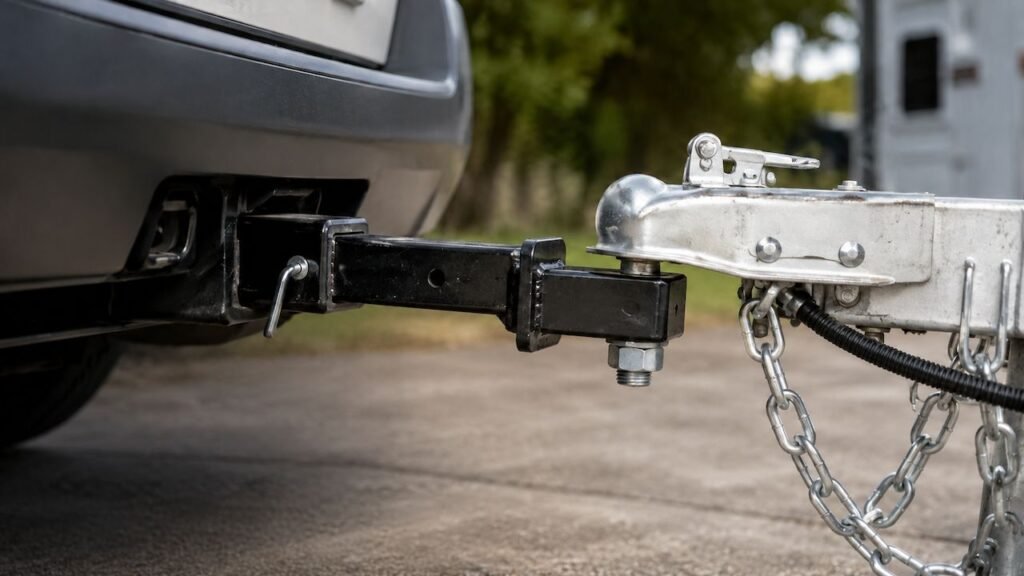
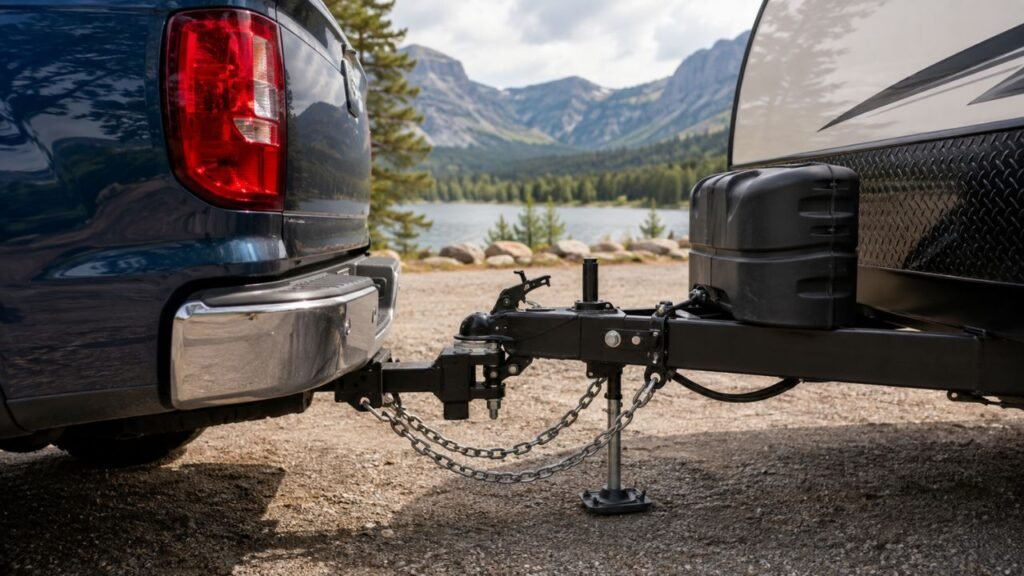
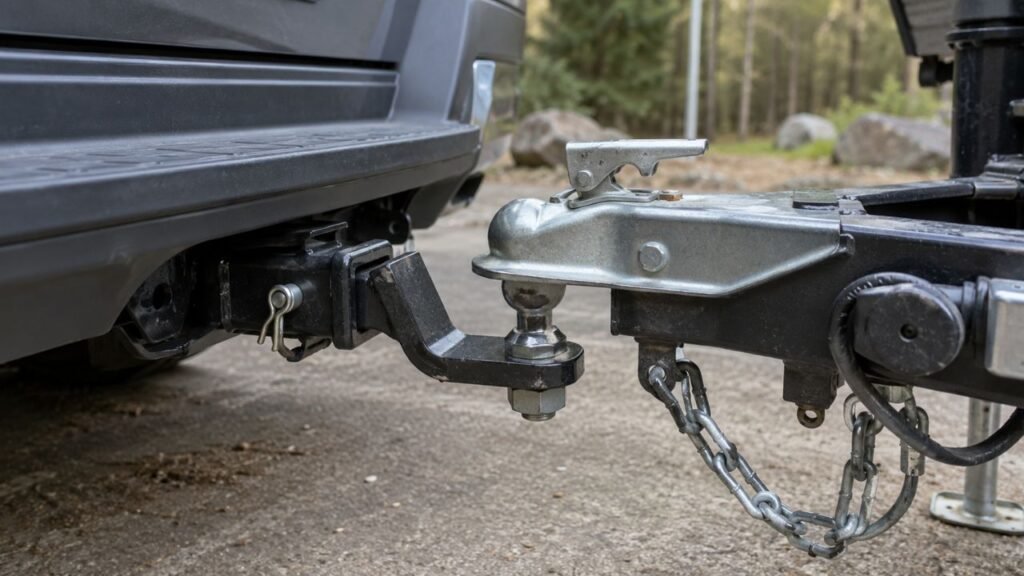
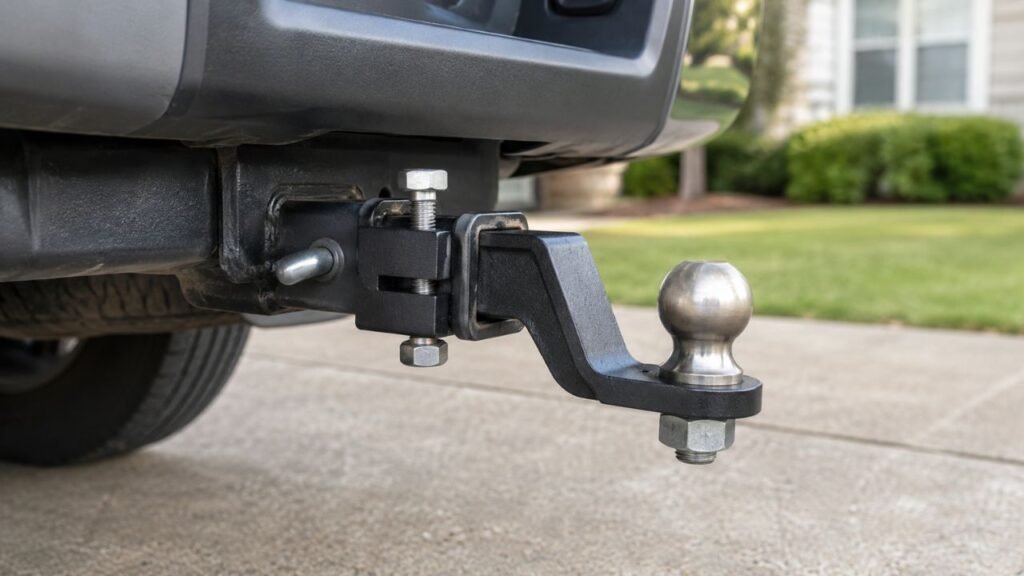
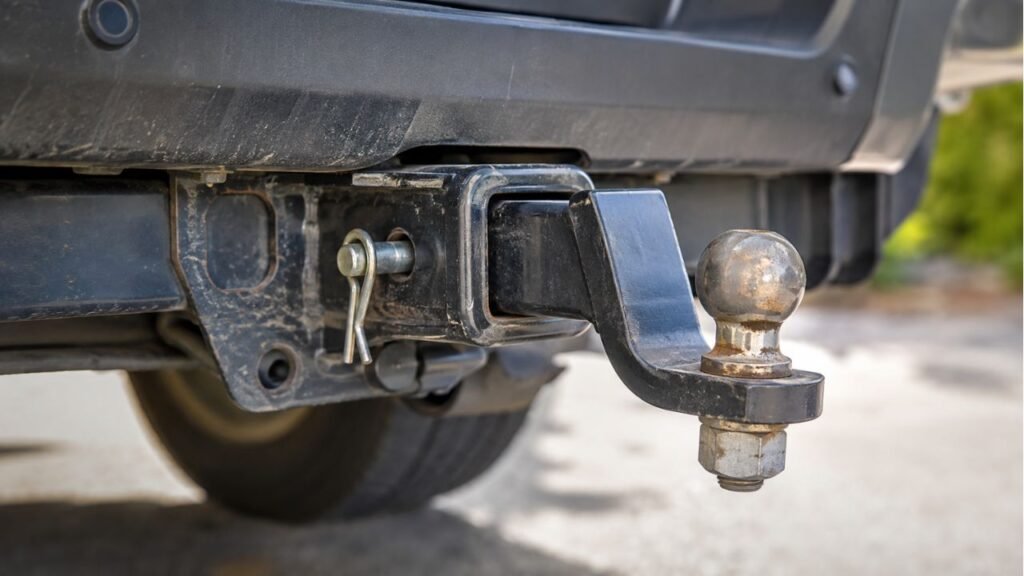
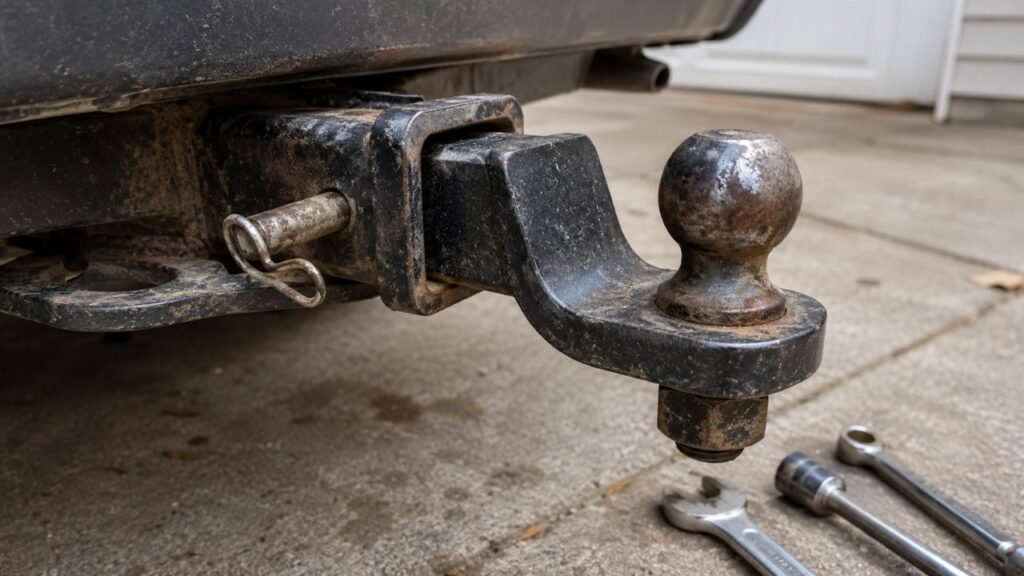
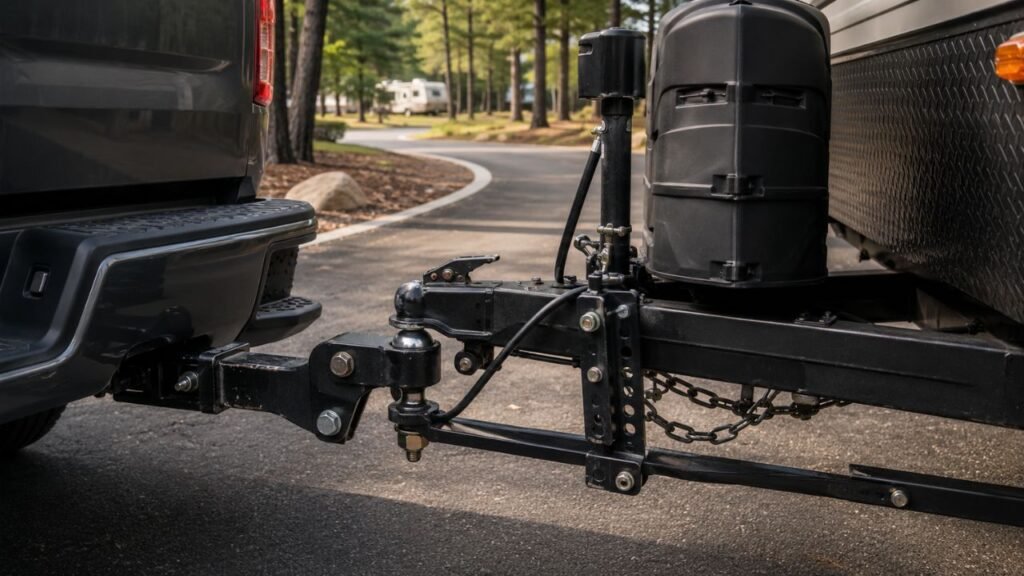
Hitch or Coupler Movement
A little normal clearance inside hitch components usually causes movement or noise rather than true one-sided braking.
Excessive movement deserves inspection, though.
Look for:
- Loose hitch hardware
- Worn coupler components
- Incorrect hitch ball size
- Loose receiver hardware
- Damaged mounting points
A secure connection is essential even when it is not causing the original brake pull.
How to Fix a Trailer That Pulls When Braking
Once you identify the difference between the two sides, the repair becomes much easier. Correct the actual imbalance instead of trying to mask it with controller settings.
Adjust All Trailer Brakes Correctly
If brake adjustment differs significantly, service the complete brake set as required.
Do not tighten one side aggressively simply to make it feel stronger.
Matching brake assemblies should operate consistently.
Follow the procedure specified for your particular brake manufacturer because adjustment methods can vary.
After servicing, perform another controlled low-speed brake test.
Repair Damaged Brake Wiring
Damaged wiring should be repaired properly.
Trailer wiring experiences constant vibration and moisture. Temporary connections that are poorly sealed frequently fail again.
Inspect nearby wiring rather than repairing only the exact visible break.
If one wire failed from rubbing against an axle or suspension part, another section may already be damaged.
Clean and Repair Electrical Connections
Pay attention to:
- 7-way connector contacts
- Trailer junction box
- Ground connections
- Axle wiring
- Brake wiring
- Wire splices
Connections should be mechanically secure and protected against moisture.
Do not depend on heavily corroded terminals simply because they still carry some electrical current.
Replace Worn Brake Components
Depending on what you find, worn components may include:
- Brake shoes
- Brake magnets
- Return springs
- Adjuster hardware
- Drums
- Pads
- Rotors
- Complete brake assemblies
Sometimes replacing a complete backing-plate brake assembly makes more sense than rebuilding several badly worn individual parts.
Whichever approach you choose, compare both sides for similar condition.
Repair Grease Seal or Bearing Problems
If grease reached the brakes, find out why.
Simply wiping visible grease away is not enough.
Inspect:
- Hub seal
- Bearing condition
- Bearing adjustment
- Drum interior
- Brake shoes
- Spindle condition
Contaminated friction components may need replacement.
Correct the source of the leak before installing clean braking components.
Service Hydraulic or Surge Brake Components
Hydraulic systems require a slightly different approach.
Inspect:
- Brake fluid condition
- Hydraulic hoses
- Calipers
- Wheel cylinders
- Brake lines
- Surge actuator
- Drum adjustment
Any leaking hydraulic component needs attention.
Air inside the system may also require proper bleeding.
Because trailer brakes are safety-critical, professional service is a sensible choice when you are uncertain about hydraulic repairs.
Correct Tire, Suspension, or Loading Problems
If the brakes check out correctly, continue the diagnosis.
Correct:
- Tire pressure differences
- Damaged tires
- Suspension wear
- Loose axle hardware
- Poor cargo distribution
- Axle alignment problems
You may discover more than one issue.
For example, slightly uneven brakes combined with poor cargo balance can produce a much stronger pull than either condition alone.
What Should I Check First If My Trailer Suddenly Starts Pulling?
When the problem appears suddenly, I would avoid taking everything apart immediately. Follow a simple order that eliminates the most important possibilities first.
- Reduce speed and stop safely. Do not continue if the pull feels severe.
- Inspect the tires. Check pressure, damage, bulges, and unusual wear.
- Compare wheel temperatures. Look for one unusually hot or cool wheel.
- Inspect visible brake wiring. Look for broken or loose connections.
- Check the trailer connector. Make sure the plug is secure and clean.
- Test trailer-only braking carefully. Use the manual controller at low speed.
- Compare brake adjustment. Look for major differences between wheels.
- Inspect internal brake components. Check magnets, shoes, drums, or calipers.
- Check bearings and hub seals. Look for heat, play, or leaking grease.
- Inspect suspension and axle hardware. Look for looseness or movement.
- Check trailer loading. Make sure cargo has not shifted.
- Inspect the tow vehicle. Do this if trailer systems appear normal.
This sequence prevents you from replacing brake parts while overlooking something obvious like a damaged tire.
Is It Safe to Tow a Trailer That Pulls When Braking?
I would not consider persistent braking pull normal.
Even if the trailer remains controllable during light braking, the imbalance may become much stronger during an emergency stop.
Uneven braking can also increase heat and wear in the stronger brake assembly.
The biggest concern is predictability. You need the trailer to behave consistently when you brake hard, drive downhill, or stop on wet pavement.
A slight repeatable pull should still be diagnosed.
A strong pull needs more urgent attention.
Do not simply turn down the brake controller until the symptom disappears. That may reduce overall trailer braking and increase stopping distance.
Fix the reason the braking force is uneven.
When Should I Stop Driving Immediately?
Some symptoms deserve more caution than ordinary troubleshooting. If you notice these signs, stop towing and inspect the trailer before continuing.
- One wheel repeatedly locks during braking.
- The trailer suddenly jumps sideways.
- A hub becomes dramatically hotter than the others.
- Smoke appears around a wheel.
- You smell burning brake material.
- Braking suddenly becomes much weaker.
- A wheel develops obvious looseness.
- You hear grinding from a hub or brake.
- Grease appears around braking components.
- The trailer becomes difficult to control.
- Suspension or axle hardware appears loose.
- A tire develops a bulge or visible structural damage.
Do not rely on steering corrections to compensate for a severe braking fault.
The trailer needs predictable braking before returning to normal road speeds.
How to Prevent Uneven Trailer Braking
Balanced trailer brakes are easier to maintain than repair after a serious problem develops.
A few regular checks can catch problems early:
- Test trailer brakes before longer trips.
- Check brake-controller operation regularly.
- Keep the 7-way connector clean.
- Inspect brake wiring for rubbing or damage.
- Check tire pressures before towing.
- Inspect tires for unusual wear.
- Service wheel bearings as required.
- Watch for leaking hub seals.
- Adjust manual-adjust brakes when necessary.
- Inspect brake linings periodically.
- Compare wheel temperatures occasionally.
- Check suspension fasteners and bushings.
- Secure cargo properly.
- Maintain appropriate trailer loading.
- Investigate new braking noises quickly.
Pay attention whenever the trailer starts feeling different.
Brake problems often give small warnings before becoming severe.
Final Words
When your trailer pulls while braking, start by comparing the left and right sides. In most cases, something is causing one side to brake harder than the other.
Brake adjustment, damaged wiring, weak magnets, contaminated shoes, dragging brakes, and worn components should be near the top of your checklist. Hub temperature can also provide an excellent clue.
If the braking system appears healthy, move outward. Check tires, bearings, suspension, axle alignment, cargo loading, and the tow vehicle itself.
Most importantly, do not get used to steering against the pull. A trailer should remain predictable when you need the brakes most.
Finding the imbalance now can prevent a much bigger problem during your next emergency stop.
Related FAQs
Here are a few common questions that come up when a trailer starts moving sideways during braking.
Why Does My Trailer Pull Left When Braking?
A trailer pulling left usually means the left brakes are applying harder, or the right brakes are weaker. Check brake adjustment, right-side wiring, magnets, friction surfaces, tire condition, and wheel temperature before assuming the left brake itself is faulty.
Why Does My Trailer Pull Right When Braking?
A right-side pull usually suggests stronger braking on the right or reduced braking on the left. Compare both brake assemblies for adjustment, electrical power, contamination, wear, and operating temperature.
Can Uneven Trailer Brake Adjustment Cause Pulling?
Yes. If one drum brake has less shoe clearance than another, it may engage sooner and produce greater braking force. Correct adjustment across matching brake assemblies helps restore balanced braking.
Can a Bad Brake Magnet Cause a Trailer to Pull?
Yes. A weak, worn, disconnected, or damaged electric brake magnet can reduce braking at one wheel. The properly working brake on the opposite side may then cause noticeable directional pulling.
Can a Bad Wheel Bearing Cause Braking Pull?
Yes. A damaged or poorly adjusted bearing may create wheel drag or excessive movement. A failed hub seal can also contaminate brake shoes with grease and reduce braking force.
Can a Brake Controller Cause Uneven Trailer Braking?
A controller usually affects the entire trailer brake circuit rather than one specific side. However, aggressive gain settings can make an existing brake imbalance much more noticeable during stops.
Why Is One Trailer Brake Hotter Than the Others?
One hot wheel can indicate a dragging brake, over-adjusted shoes, sticking caliper, or bearing problem. Compare it with similar wheels and investigate significant temperature differences before continuing normal towing.
Why Does My Trailer Only Pull When the Brakes Are Applied?
Pulling that appears specifically during braking strongly suggests unequal braking force. Check brake adjustment, wiring, magnets, friction surfaces, hydraulic components, and wheel temperatures before investigating alignment problems.
Should Trailer Brakes Be Adjusted Equally?
Matching trailer brakes should be adjusted according to the manufacturer’s specifications so they provide balanced braking. Large differences in shoe clearance can cause uneven engagement, wheel heating, and directional pulling.
Can Uneven Tire Pressure Make a Trailer Pull While Braking?
Yes. Significant pressure differences can change tire loading and traction, making a trailer less stable during braking. However, persistent brake-only pulling should still prompt a complete brake inspection.

Scott Miller shares real-world RV road trip insights built from years of traveling open highways and backroads. He covers route planning, campground choices, and travel gear with a practical mindset. His content is written for RVers who value reliability over trends.