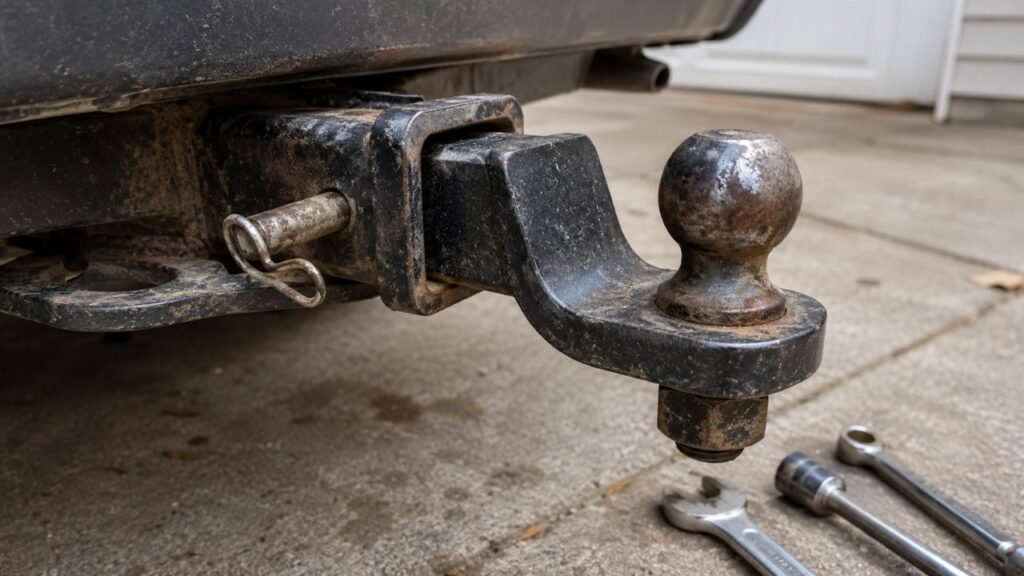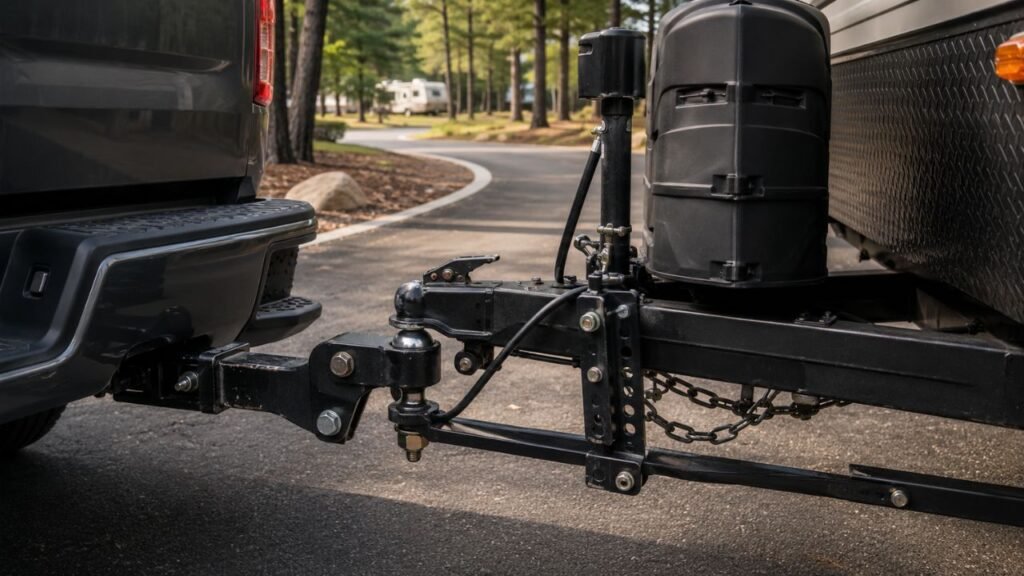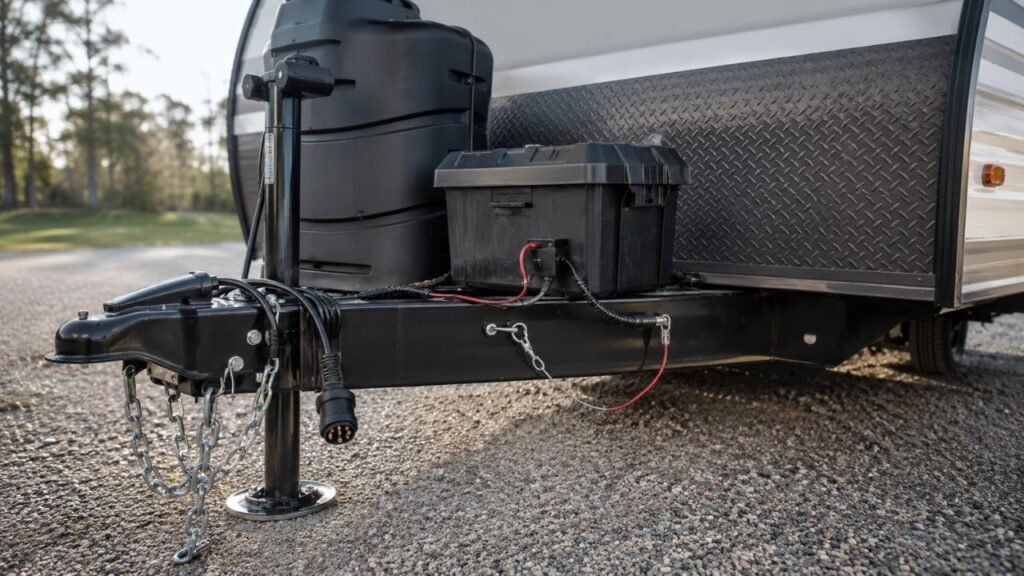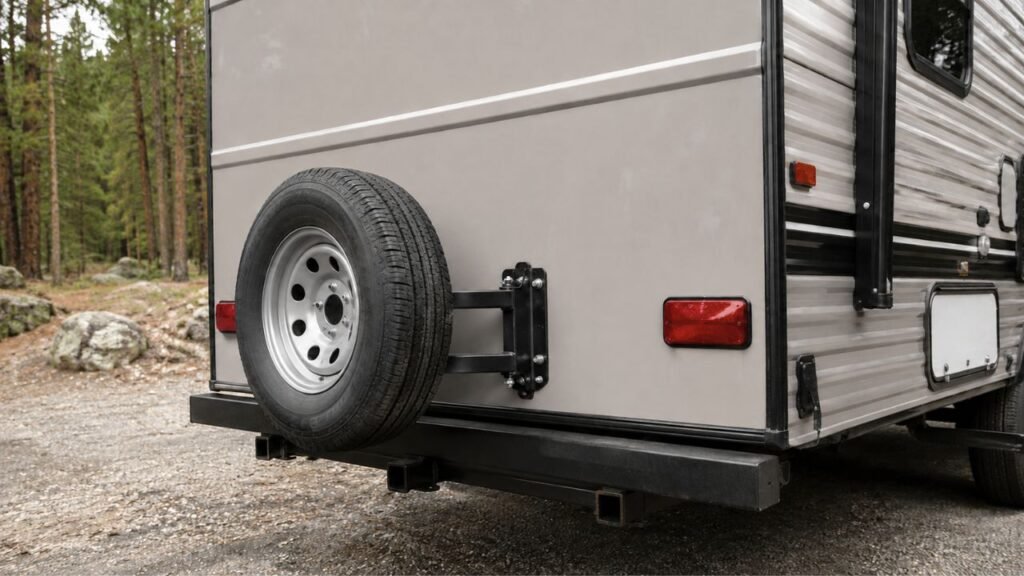
A spare tire carrier usually shakes because of loose mounting hardware, worn hinges or bushings, missing rubber bumpers, poor wheel fitment, or a spare tire that is too heavy for the carrier. The shaking may start small, but repeated movement can eventually damage the carrier, tailgate, mounting points, or latch.
The good news is that you can usually track down the problem without replacing everything. I’ll walk you through the common causes, simple inspection steps, practical fixes, and signs that your carrier needs reinforcement or replacement.
Key Takeaways
- Start by checking whether the tire or entire carrier moves.
- Loose mounting bolts are a very common cause of shaking.
- Worn hinges and bushings create noticeable carrier movement.
- Missing rubber bumpers allow the spare to bounce over bumps.
- Oversized tires can overload factory-mounted spare tire carriers.
- Incorrect wheel offset can prevent the spare from sitting securely.
- Tailgate flex can make a perfectly tight carrier appear loose.
- Cracked welds or bent brackets need proper structural repair.
- Never use rubber padding to hide serious mounting damage.
- A badly shaking carrier should be repaired before regular driving.
Why Does My Spare Tire Carrier Shake?
The tire you see moving is not always the actual problem. Movement can begin at the wheel mount, carrier bracket, hinge, latch, tailgate, or even the vehicle mounting points.
Loose Carrier Mounting Bolts
I would check the mounting bolts before replacing anything.
Road vibration constantly works against fasteners. Rough roads, potholes, gravel, and off-road driving increase that vibration.
Eventually, a slightly loose mounting bolt can allow the carrier to move. Once movement starts, every bump can make the problem worse.
Grab the carrier and move it firmly by hand. Watch where the carrier attaches to the vehicle.
If you see movement around a mounting bolt, inspect that area carefully.
Do not simply tighten every bolt as hard as possible. Use the correct tightening procedure and torque specification for your vehicle or carrier.
Loose Spare Tire Lug Nuts
Sometimes the carrier itself is perfectly secure. The spare wheel is what moves.
Hold the tire firmly and push it toward the vehicle. Then pull it toward yourself.
Watch the mounting plate while doing this.
If the wheel moves but the mounting plate remains stationary, check the wheel retention hardware.
Loose lug nuts can allow the wheel to rock against its mounting studs. That movement creates rattling and increases stress around the wheel mounting points.
Make sure the wheel sits flat against its mounting surface before tightening it.
Worn Bushings or Pivot Points
Swing-away tire carriers depend heavily on their pivot assembly.
Bushings keep the carrier aligned while allowing it to open smoothly. As those bushings wear, extra clearance develops around the pivot.
That clearance becomes side-to-side or vertical movement.
Open the carrier slightly and lift the outer end.
A noticeable clunk or visible movement near the hinge usually points toward a worn pivot, bushing, bearing, or mounting bolt.
Tightening the latch will not solve movement originating from a worn hinge.
Missing or Worn Rubber Bumpers
Rubber bumpers may look unimportant, but they often control spare tire movement.
Many tailgate-mounted carriers use rubber stops or snubbers to keep the tire supported.
When those pieces wear down, shrink, crack, or disappear, a gap develops.
The spare can then move forward and backward every time the vehicle hits a bump.
Check whether the tire contacts its intended rubber support points.
If there is a visible gap where support should exist, replacing or adjusting the bumpers may solve the problem.
Oversized or Heavy Spare Tire
A larger spare does more than add weight.
It can also move that weight farther away from the mounting surface. This increases leverage on the carrier.
Factory carriers are normally designed around a particular wheel and tire range.
Install something substantially larger, and the carrier may flex more than intended.
The extra load affects hinges, bolts, brackets, latches, and tailgate mounting points.
If your shaking started after installing larger tires, the additional weight should be one of your first suspects.
Incorrect Wheel Offset or Backspacing
Aftermarket wheels do not always sit like factory wheels.
Different offset or backspacing can change where the wheel rests on the carrier.
In some cases, the wheel reaches the mounting studs but does not contact the supporting surfaces correctly.
That leaves the entire spare hanging farther outward than intended.
Look from the side and inspect how the wheel sits against the carrier.
A properly mounted spare should sit evenly without unusual gaps or crooked positioning.
Tailgate or Mounting Panel Flex
Here is one problem that often gets mistaken for a loose carrier.
The carrier may be completely tight, while the tailgate itself moves.
A heavy spare puts considerable leverage on a tailgate-mounted system.
When the vehicle hits bumps, the sheet metal supporting the carrier can flex.
Have someone gently move the spare while you watch the tailgate.
If the carrier and tailgate move together, the problem may be structural flex rather than loose carrier hardware.
Loose Swing-Out Latch
Swing-away carriers need a solid latch at the opposite end of the hinge.
A worn or poorly adjusted latch can allow the carrier to move after closing.
The movement might be tiny while parked.
However, road vibration repeatedly pushes the carrier against that clearance.
Check whether you can move the outer end of the carrier while the latch remains closed.
If the hinge stays solid but movement occurs near the latch, adjustment or replacement may be needed.
Worn Hinges or Bearings
Some heavy-duty carriers use bearings rather than simple bushings.
Those components can also develop wear.
Contamination, lack of maintenance, corrosion, or years of repeated loading can create unwanted clearance.
A worn hinge usually allows the entire carrier to sag or move.
You may also notice that the latch becomes harder to align.
That happens because the outer end of the carrier is no longer sitting where it should.
Bent Spare Tire Carrier
Carriers can bend from excessive weight, impacts, collisions, or severe off-road use.
A slightly bent carrier may still hold the spare.
However, the wheel may no longer sit evenly against its support points.
Stand behind the vehicle and look at the carrier carefully.
Check whether the spare sits level and centered.
A carrier that visibly leans, twists, or sags deserves closer inspection.
Cracked Welds or Mounting Points
This is the problem I would take most seriously.
Look closely around welds, mounting tabs, hinge brackets, and bolt holes.
Small cracks often begin around areas experiencing repeated flex.
Rust lines around a weld can sometimes highlight developing movement.
Also inspect the vehicle-side mounting area.
A perfectly good carrier cannot stay secure if the metal supporting it is damaged.
If you find structural cracking, avoid treating it as a simple rattle.
Spare Tire Carrier Shaking Causes at a Glance
You can narrow the problem down quickly by watching which part moves. This table gives you a simple starting point before you begin taking anything apart.
| What You Notice | Likely Cause | What to Check | Typical Solution |
| Tire moves but carrier stays still | Loose wheel mounting | Lug nuts and studs | Reseat and tighten correctly |
| Whole carrier moves | Loose mounting hardware | Carrier bolts | Retorque properly |
| Movement comes from hinge | Worn bushing or bearing | Pivot assembly | Replace worn components |
| Rattle happens over bumps | Missing rubber support | Bump stops or snubbers | Replace or adjust |
| Large spare bounces heavily | Excessive weight | Carrier capacity | Reinforce or upgrade |
| Tailgate moves with tire | Tailgate flex | Mounting structure | Reinforce mounting area |
| Movement occurs near latch | Loose latch | Latch adjustment | Adjust or replace |
| Spare sits crooked | Bent carrier or poor fit | Mounting plate and bracket | Repair or replace |
| Bolts repeatedly loosen | Excess movement or damaged threads | Hardware and mounting holes | Repair underlying problem |
| Cracks appear around mounts | Structural fatigue | Welds and mounting points | Repair before driving |
Is Some Spare Tire Carrier Movement Normal?
A tiny amount of tire movement does not automatically mean something is broken.
Remember that the tire itself is made from flexible rubber. The sidewall can move slightly when you push it.
The vehicle body can also flex a little.
What you should not see is obvious movement between structural components.
A carrier should not repeatedly knock against the vehicle. It should not visibly bounce, sag, or shift around its mounting bolts.
You should also investigate movement that becomes worse over time.
If you are unsure, watch the mounting plate rather than the tire tread.
Tire movement with a stationary mounting plate may simply be sidewall flex.
Movement of the mounting plate, hinge, latch, or carrier frame deserves attention.
How to Find Where the Spare Tire Carrier Is Moving
Before reaching for your tools, identify exactly where the movement begins. A five-minute inspection can prevent you from replacing perfectly good parts.
Start With the Spare Tire
Park on firm, level ground and secure the vehicle.
Stand behind the spare and grab it around the three and nine o’clock positions.
Push and pull firmly but reasonably.
Then repeat the test from the top and bottom.
Watch whether the wheel moves independently from the carrier.
If it does, concentrate on the wheel mounting system first.
Watch the Carrier Mounting Plate
Next, watch the plate supporting the spare wheel.
Ask someone to gently move the tire while you observe the plate.
If the wheel and plate move together, continue tracing that movement inward.
You are essentially following the looseness toward its source.
Check the Carrier-to-Vehicle Mount
Look where the carrier connects to the vehicle.
Depending on the design, this might be the tailgate, rear door, bumper, frame, or body panel.
Watch every mounting point while the carrier moves.
A small gap opening and closing around a bolt is important.
You may also notice rust dust, scratched paint, or polished metal around loose mounting points.
Those marks often appear where two parts have been moving against each other.
Test the Swing-Out Hinge
If you have a swing-away carrier, open it partially.
Support the outer end and gently lift upward.
There should not be excessive vertical play at the hinge.
Now move the carrier forward and backward.
Watch the pivot closely.
Movement directly around the pivot usually means the hinge assembly requires attention.
Inspect the Latch
Close and latch the carrier normally.
Now push and pull the outer end.
If the hinge remains stable but the latch area moves, you have narrowed the problem considerably.
Check latch adjustment, bushings, contact pads, and the latch mounting hardware.
Look at Rubber Contact Points
Inspect every rubber bumper, pad, stopper, and isolator.
These pieces should not be badly cracked, crushed, or missing.
Also check whether they actually touch what they are supposed to support.
A perfectly good bumper cannot control movement if the tire never reaches it.
Inspect Welds and Brackets
Use good lighting and inspect the carrier closely.
Pay particular attention around:
- Hinge brackets
- Mounting flanges
- Welded corners
- Bolt holes
- Latch mounts
- Tire mounting plates
- Reinforcement points
Look for cracks, deformation, unusual rust marks, and elongated holes.
If anything looks structurally damaged, deal with that before trying simple anti-rattle tricks.
How Do I Stop My Spare Tire Carrier From Shaking?
Once you know where the movement starts, the repair becomes much easier. Fix the actual loose component rather than simply trying to silence the noise.
Tighten the Spare Tire Properly
Start with the easiest possibility.
Remove the spare if needed and inspect its mounting surface.
Make sure dirt, rust buildup, or another obstruction is not preventing proper seating.
Place the wheel squarely against the mount.
Tighten the wheel hardware evenly using the specified procedure.
Use the torque value recommended for that vehicle or carrier.
Avoid guessing.
Overtightening is not safer and can damage studs, threads, wheels, or mounting components.
Retorque the Carrier Mounting Bolts
Check every bolt holding the carrier assembly.
Do not focus only on the visibly loose one.
One loose fastener can shift additional load onto the others.
Inspect the bolt, nut, washer, thread condition, and mounting hole before tightening.
If hardware repeatedly becomes loose, there may be another problem creating movement.
Simply tightening the same bolt every few weeks is not a permanent repair.
Replace Worn Bushings
A worn bushing cannot normally be repaired by increasing bolt tightness.
The bushing’s job is to control clearance while allowing movement where required.
Once it wears significantly, replacement is usually the correct solution.
After replacing bushings, check hinge alignment before adjusting the latch.
A misaligned carrier can place unnecessary pressure on the new components.
Replace or Adjust Rubber Bump Stops
If the tire is supposed to rest against rubber supports, make sure those supports contact it properly.
Replace missing or badly worn bumpers.
Some systems allow bumper adjustment.
You want firm supporting contact without forcing the tailgate or carrier into an unnatural position.
Do not jam random objects behind the tire as a permanent repair.
A properly sized rubber component gives you much more predictable support.
Adjust the Swing-Out Carrier Latch
A latch should hold the carrier securely when closed.
If adjustment is available, remove unnecessary play while making sure the mechanism still closes normally.
Check whether the latch has worn contact surfaces.
Also inspect the latch mount itself.
A perfectly adjusted latch will not help if the bracket holding it is loose.
Correct Wheel Fitment Problems
If shaking began after changing wheels, inspect wheel fitment carefully.
Check whether the mounting face sits completely flat.
Also determine whether the wheel sits farther outward than the original spare.
Different offset and backspacing can increase leverage dramatically.
Do not assume that fitting onto the studs means the wheel is suitable for the carrier.
The whole mounting system needs to support the wheel correctly.
Reinforce the Tailgate
Tailgate reinforcement may be worthwhile when the original structure flexes under a heavier spare.
A reinforcement system spreads the load across a stronger area.
However, reinforcement should match the specific vehicle and carrier design.
Do not reinforce one weak area while transferring excessive stress into another.
If you run a substantially larger spare, make sure the complete mounting system is designed for that additional load.
Upgrade to a Heavy-Duty Carrier
Sometimes repairing the original carrier simply does not address the real problem.
A lightweight factory setup may not be suitable for a large aftermarket spare.
In that situation, a stronger carrier may be the better long-term solution.
Heavy-duty systems may use stronger hinges, better load distribution, larger pivots, reinforced mounting points, or bumper-mounted support.
Choose the carrier around the actual wheel-and-tire weight you plan to carry.
Repair Bent or Cracked Components
Do not use bumpers, washers, or tighter bolts to hide structural damage.
A bent bracket changes how load travels through the carrier.
A cracked weld has already lost part of its structural strength.
Depending on the damage, professional repair or component replacement may be necessary.
If you are uncertain whether a damaged part remains safe, have it inspected before continuing to drive.
Can I Use Rubber Spacers to Stop Spare Tire Shaking?
Yes, rubber spacers or bumpers can help when the problem is a small unsupported gap.
They work by keeping the spare or carrier firmly supported while absorbing minor vibration.
This approach is particularly useful when original rubber snubbers have worn down.
However, I would never use rubber as a way to disguise structural looseness.
Do not use spacers as a substitute for repairing loose bolts, damaged hinges, cracked welds, bent brackets, or overloaded mounting points.
Fix the structure first.
Then use rubber isolation to control normal vibration and prevent unwanted contact.
Should I Use Thread Locker on Spare Tire Carrier Bolts?
A removable thread-locking compound can help certain bolts resist vibration.
But thread locker should come after proper inspection and tightening, not instead of them.
First confirm that the threads are undamaged.
Then verify that the correct fastener and tightening procedure are being used.
Check the carrier or vehicle manufacturer’s instructions before applying anything.
Some fasteners use special locking nuts, washers, or factory locking compounds.
Never use thread locker to compensate for stripped threads or enlarged mounting holes.
Those problems require proper repair.
Why Does My Spare Tire Carrier Shake Only Over Bumps?
A carrier can feel perfectly tight while the vehicle is parked and still rattle over bumps.
That usually happens because a small amount of clearance exists somewhere in the assembly.
Normal hand pressure may not create enough force to expose it.
A pothole or sharp bump certainly can.
Common sources include worn bushings, weak bump stops, loose latches, tailgate flex, and slightly loose mounting bolts.
A heavy spare makes the effect more noticeable.
The tire’s weight continues moving after the vehicle body changes direction over a bump.
That forces any existing clearance to open and close.
If the noise occurs only on rough roads, inspect every contact and pivot point carefully.
Look for polished surfaces or chipped paint where components have been hitting each other.
Why Does My Spare Tire Shake at Highway Speeds?
Continuous movement at highway speeds deserves attention because repeated vibration can stress the mounting system. The exact cause usually becomes clearer when you identify whether the tire, carrier, tailgate, or latch is actually moving.
Loose Tire Mounting
A loosely mounted spare can move whenever the vehicle encounters normal road vibration.
At higher speeds, those small road inputs happen continuously.
The result may look like persistent shaking.
Check the wheel retention hardware and mounting surface first.
Carrier Flex
Some carriers flex slightly under a heavy load.
The farther the spare sits from the mounting surface, the greater the leverage becomes.
Highway bumps and body movement can then make that flex easier to see.
Increasing flex over time is more concerning than a tiny amount built into the design.
Heavy Aftermarket Wheel and Tire
A heavy aftermarket wheel-and-tire combination places additional force on every supporting component.
That does not automatically mean the setup is unsafe.
It does mean the carrier must be rated and designed for that load.
If highway shaking appeared immediately after installing larger tires, review the carrier’s capacity and mounting arrangement.
Damaged or Loose Mounting Hardware
A slightly loose carrier may shake noticeably at speed.
Inspect bolts, mounting holes, brackets, and attachment points.
Do not keep driving at highway speeds if the carrier is visibly shifting around its mounts.
Tire or Wheel Imbalance
A mounted spare does not rotate while you drive.
Therefore, wheel imbalance does not normally create carrier vibration like an imbalanced road wheel does.
If the hanging spare shakes at highway speeds, focus primarily on mounting security, structural flex, clearance, and road-induced vibration.
That distinction can save you from chasing the wrong problem.
Can an Oversized Spare Tire Damage the Carrier?
Yes, an oversized spare can damage a carrier that was not designed for it.
The important factor is not just tire diameter.
Weight and how far that weight sits from the mounting structure matter too.
Think about holding a heavy object close to your chest.
Now hold the same object with your arms fully extended.
The weight has not changed, but it becomes much harder to support.
Your spare tire carrier experiences a similar leverage effect.
A larger setup can increase stress on:
- Hinges
- Pivot bushings
- Mounting bolts
- Wheel studs
- Carrier brackets
- Tailgate sheet metal
- Latches
- Welded joints
That is why simply confirming that a large tire physically fits is not enough.
The carrier must also be capable of supporting it during real driving conditions.
How Much Weight Can a Spare Tire Carrier Hold?
There is no single weight limit that applies to every spare tire carrier.
Capacity depends on the vehicle, mounting structure, carrier design, hinge system, and intended tire size.
Check the vehicle manufacturer’s information first.
If you have an aftermarket carrier, check that manufacturer’s specifications too.
Pay attention to both tire size and total wheel-and-tire weight.
Accessories mounted around the spare can add more load as well.
Fuel containers, recovery gear, jacks, storage bags, and other equipment all contribute additional stress if the carrier supports them.
When specifications are unclear, avoid assuming that a larger tire is acceptable simply because other owners use one.
Your exact carrier and mounting condition matter.
Signs Your Spare Tire Carrier Is Overloaded
- The carrier visibly sags when closed.
- The tailgate becomes harder to close.
- The latch regularly falls out of alignment.
- Mounting bolts repeatedly loosen.
- Hinges develop noticeable play.
- Rubber bumpers stop making contact.
- The spare bounces excessively over bumps.
- Mounting holes begin stretching or deforming.
- The carrier sits lower than it once did.
- Cracks appear around brackets or welds.
- Tailgate sheet metal begins flexing excessively.
- Paint starts cracking around mounting points.
- The carrier repeatedly needs readjustment.
Can a Shaking Spare Tire Carrier Damage My Vehicle?
Yes. Persistent carrier movement can gradually damage surrounding parts. The movement may seem harmless at first, but repeated impacts place stress on mounting points every time you drive.
Tailgate Damage
Tailgate-mounted spares transfer their load directly into the tailgate structure.
Excessive movement can cause flex around hinges and carrier mounting points.
Over time, alignment problems may develop.
You might notice the tailgate becoming harder to open or close.
Enlarged Mounting Holes
A loose bolt can move inside its mounting hole.
That repeated movement can gradually enlarge or distort the hole.
Once this happens, simply tightening the original bolt may no longer restore a secure fit.
The mounting area may need proper repair.
Broken Welds
Welded joints handle repeated loading during normal driving.
Extra movement increases that loading.
A crack often begins small but can spread as the carrier continues flexing.
Inspect questionable welds carefully instead of assuming surface rust is the only problem.
Damaged Hinges
A shaking carrier places repeated forces through its hinge system.
Bushings may wear faster.
Pivot bolts can develop play.
Heavy loads can also accelerate bearing wear in larger swing-out systems.
Paint and Body Damage
Moving components may rub against painted surfaces.
At first, you may only see minor scuffing.
Once paint is removed, exposed metal becomes more vulnerable to corrosion.
Look for fresh scratches near the carrier whenever you investigate a new rattle.
Carrier Failure
Severe damage can eventually compromise the carrier’s ability to secure the spare.
That is why visible cracks, missing hardware, major sagging, and badly worn hinges should never be treated as cosmetic problems.
A spare wheel is heavy.
You want it firmly attached every time the vehicle moves.
When Should I Stop Driving and Repair the Carrier?
Do not continue normal driving when the carrier shows obvious signs that the spare may no longer be securely supported.
Pay particular attention when:
- The tire moves significantly by hand.
- A carrier mounting bolt is missing.
- Several bolts repeatedly become loose.
- The carrier visibly sags.
- The tailgate mounting area is cracking.
- A structural weld is cracked.
- The wheel mounting studs are damaged.
- Lug nuts cannot tighten correctly.
- The swing-out latch will not lock securely.
- The hinge has severe vertical movement.
- The carrier mounting plate is badly bent.
- A mounting hole has become elongated.
- The spare appears capable of separating from the carrier.
If you are questioning whether the carrier can safely hold the tire, repair it before relying on it.
How to Prevent Spare Tire Carrier Shaking
Once you solve the problem, a little preventive maintenance can keep it from returning. I especially recommend regular checks if you drive rough roads or carry a larger-than-stock spare.
Check Mounting Hardware Periodically
Include the spare carrier when performing routine vehicle inspections.
You do not need to constantly tighten bolts.
Instead, check for signs that fasteners have moved or developed clearance.
Look for rust marks, paint wear, gaps, and loose washers.
Inspect Bushings and Hinges
Open swing-away carriers and check the pivot periodically.
Movement that gradually increases is often easier and cheaper to address early.
Replace worn components before excessive play damages surrounding parts.
Keep the Spare Properly Secured
Check the spare wheel’s mounting hardware periodically.
This is especially useful after removing and reinstalling the spare.
Make sure the wheel remains properly seated against the carrier.
Maintain Rubber Bump Stops
Rubber components gradually harden and wear.
Inspect them for cracks, missing sections, or excessive compression.
Replace worn bumpers before gaps become large enough to create rattling.
Stay Within the Carrier’s Rated Capacity
Do not judge a carrier only by whether the tire physically fits.
Check the total wheel-and-tire weight.
Also consider any accessories added to the carrier.
A properly sized carrier should support the intended load without excessive flex.
Inspect After Rough-Road Trips
Rough terrain can expose weaknesses quickly.
After a difficult trail, long gravel road, or severe pothole impact, inspect the carrier.
Look for loosened hardware and new movement.
Finding a developing problem early is much easier than repairing structural damage later.
Recheck Newly Installed Carrier Hardware
New installations can settle slightly after initial use.
If you recently installed a carrier, reinforcement system, or larger spare, follow the manufacturer’s recommended inspection schedule.
Check fasteners again after the assembly has experienced normal road use.
Spare Tire Carrier Inspection Checklist
A quick inspection does not need to be complicated. Work through this list whenever you notice new shaking or rattling.
- Make sure the spare wheel sits flat.
- Check the wheel retention hardware.
- Inspect the carrier mounting bolts.
- Look for missing fasteners.
- Check mounting washers and brackets.
- Test the carrier hinge for play.
- Inspect pivot bushings.
- Check swing-out latch adjustment.
- Inspect rubber bumpers.
- Confirm the tire reaches its support points.
- Look for bent mounting plates.
- Inspect welds for cracking.
- Check bolt holes for deformation.
- Watch the tailgate for excessive flex.
- Check for fresh paint damage.
- Look for rust dust around moving joints.
- Confirm the carrier sits level.
- Compare tire size with carrier specifications.
- Consider total wheel-and-tire weight.
- Recheck any area that previously became loose.
Final Words
A shaking spare tire carrier is usually telling you that something has developed unwanted clearance.
Start with the simple things first.
Check how the spare is mounted. Then inspect the carrier bolts, rubber bumpers, latch, hinges, bushings, and vehicle mounting points.
If everything is tight but the assembly still moves, look closely for structural flex.
This becomes especially important when carrying a larger aftermarket spare.
Do not keep tightening the same loose bolt while ignoring the reason it keeps moving.
When the original carrier cannot comfortably support your wheel-and-tire setup, reinforcement or a properly rated heavy-duty carrier is usually the better solution.
Fixing the movement early protects your spare, carrier, tailgate, and surrounding bodywork.
More importantly, you can drive knowing that the heavy wheel hanging behind your vehicle is properly secured.
Related FAQs
Here are a few common questions that come up when diagnosing spare tire carrier movement and rattling.
Why Does My Spare Tire Rattle Over Bumps?
A spare tire usually rattles over bumps because there is clearance somewhere between the wheel, carrier, hinge, latch, or rubber supports. Check the wheel mounting first, then trace any movement inward until you find the loose point.
How Do I Stop My Spare Tire From Moving?
Make sure the wheel sits flat against its mounting surface and tighten its retaining hardware correctly. If the tire and carrier move together, inspect the carrier bolts, hinges, bushings, latch, and rubber bump stops.
Should a Spare Tire Touch the Rubber Bump Stops?
If your carrier was designed with rubber bump stops supporting the spare, they should normally make appropriate contact. A large gap can allow the tire to bounce, while excessive compression may indicate incorrect tire fitment or adjustment.
Can Loose Lug Nuts Make a Spare Tire Shake?
Yes. Loose wheel retention hardware can allow the spare wheel to move independently from the carrier. Reseat the wheel properly and tighten the hardware according to the correct specification.
Can a Heavy Spare Tire Damage a Tailgate?
Yes. A heavier spare increases stress on the carrier, hinges, tailgate, and mounting points. The risk becomes greater when the wheel sits farther away from the tailgate and creates additional leverage.
Do Larger Tires Need a Reinforced Spare Tire Carrier?
Not every larger tire automatically requires reinforcement, but significantly heavier or larger tires often need additional support. Check the carrier’s approved tire size and weight before deciding whether reinforcement is necessary.
Can I Tighten a Spare Tire Carrier Too Much?
Yes. Overtightening can damage threads, deform components, stretch bolts, or create other problems. Use the recommended hardware and tightening specifications rather than assuming tighter is always safer.
Why Does My Swing-Away Tire Carrier Rattle?
Swing-away carriers commonly rattle because of hinge play, worn bushings, an incorrectly adjusted latch, missing isolation pads, or loose mounting hardware. Check the hinge and latch separately to identify which end is moving.
Can Worn Bushings Cause a Spare Tire Carrier to Shake?
Yes. Worn bushings create clearance inside the carrier’s pivot assembly. That clearance allows the carrier to move vertically or sideways whenever the vehicle encounters bumps.
Is It Safe to Drive With a Shaking Spare Tire?
A tiny amount of tire sidewall movement can be normal, but obvious carrier movement should be investigated. Avoid normal driving when hardware is missing, structural parts are cracked, or the spare does not appear securely mounted.
How Often Should I Check Spare Tire Carrier Bolts?
Check them during routine vehicle inspections and after installing or changing the carrier. It is also sensible to inspect the mounting system after rough-road driving, severe impacts, or whenever new rattling develops.
Should I Replace a Bent Spare Tire Carrier?
A significantly bent carrier should usually be repaired professionally or replaced. Bending changes alignment and load distribution, which can create additional stress on hinges, mounting bolts, latches, and the vehicle structure.

Scott Miller shares real-world RV road trip insights built from years of traveling open highways and backroads. He covers route planning, campground choices, and travel gear with a practical mindset. His content is written for RVers who value reliability over trends.