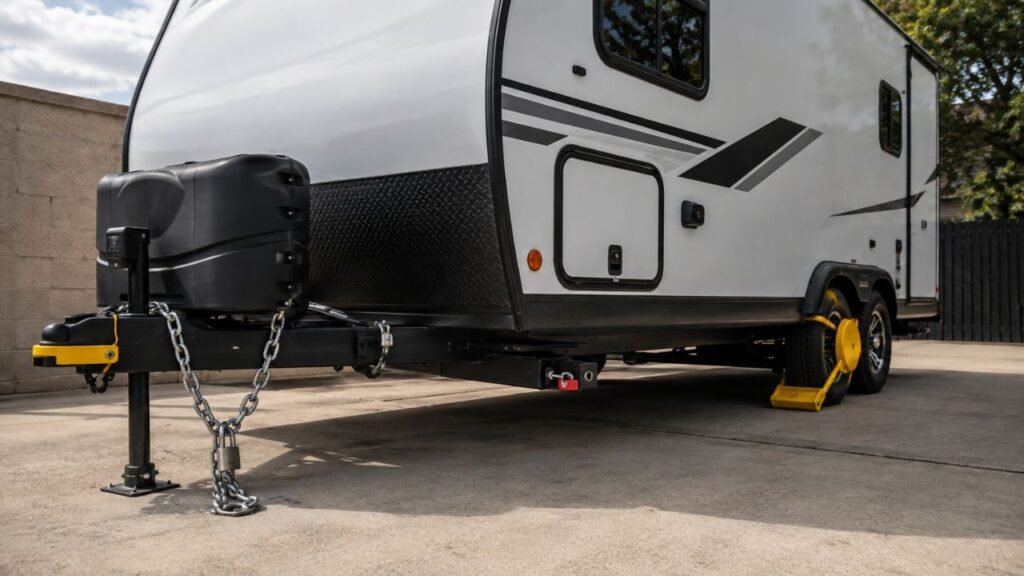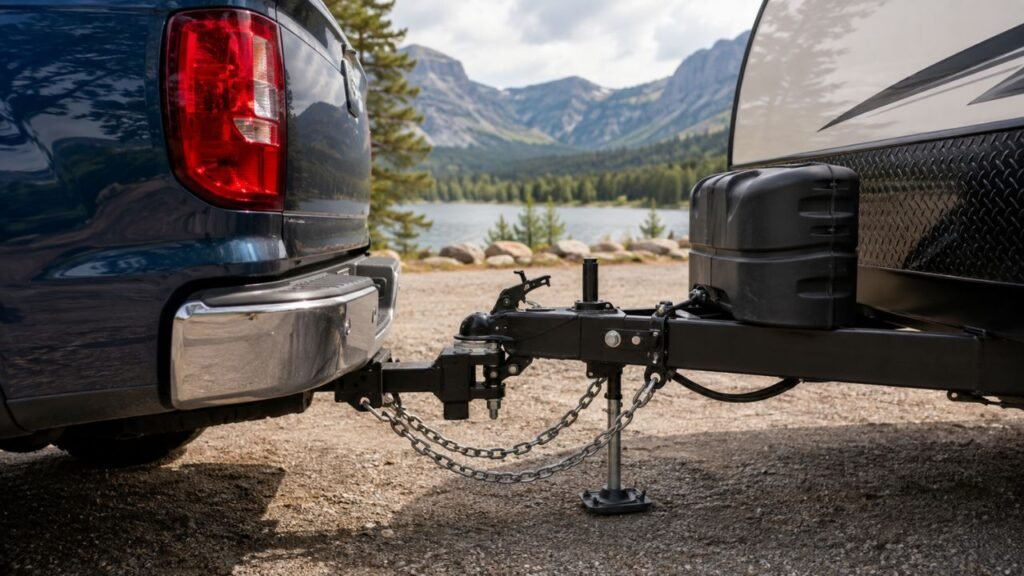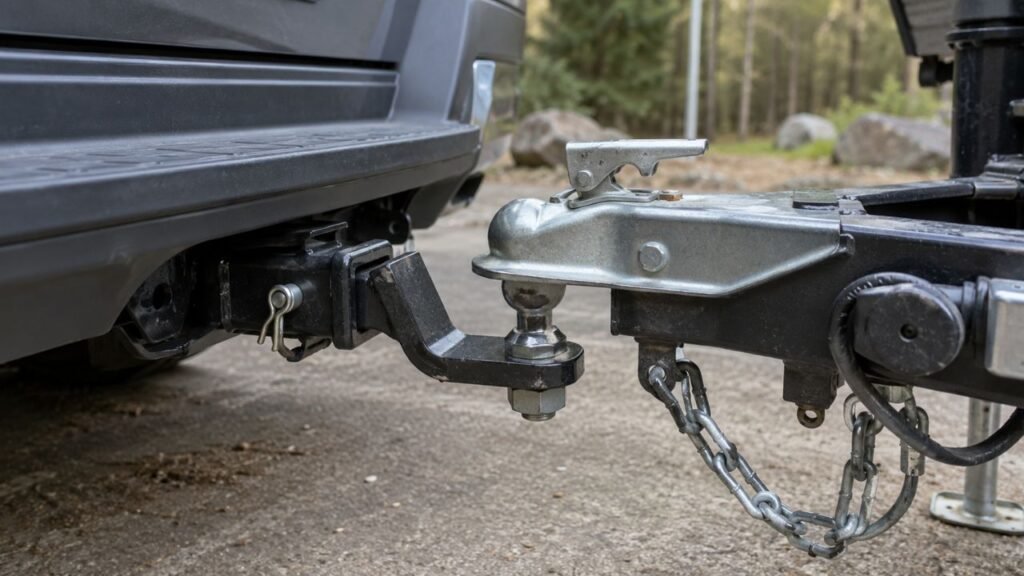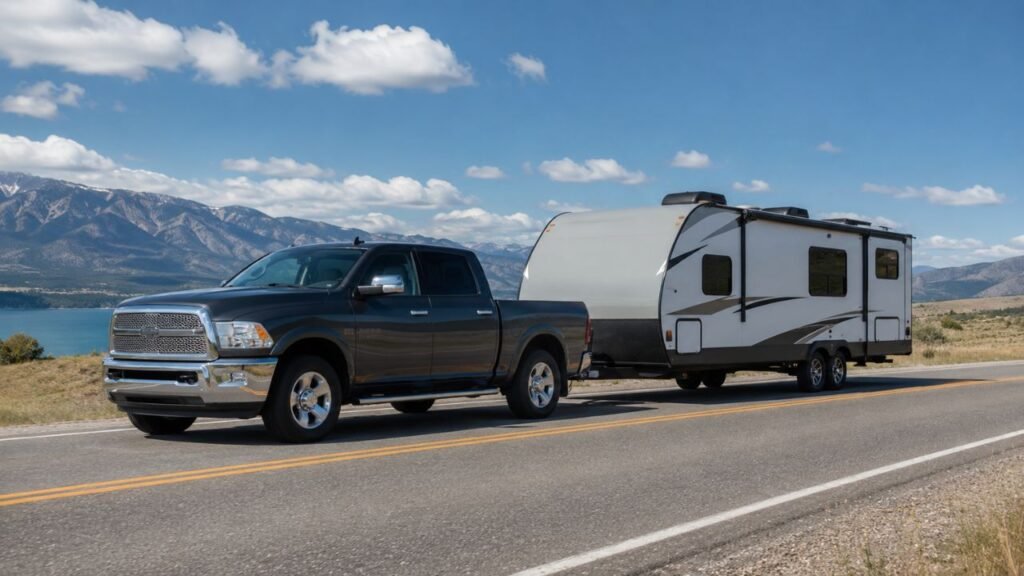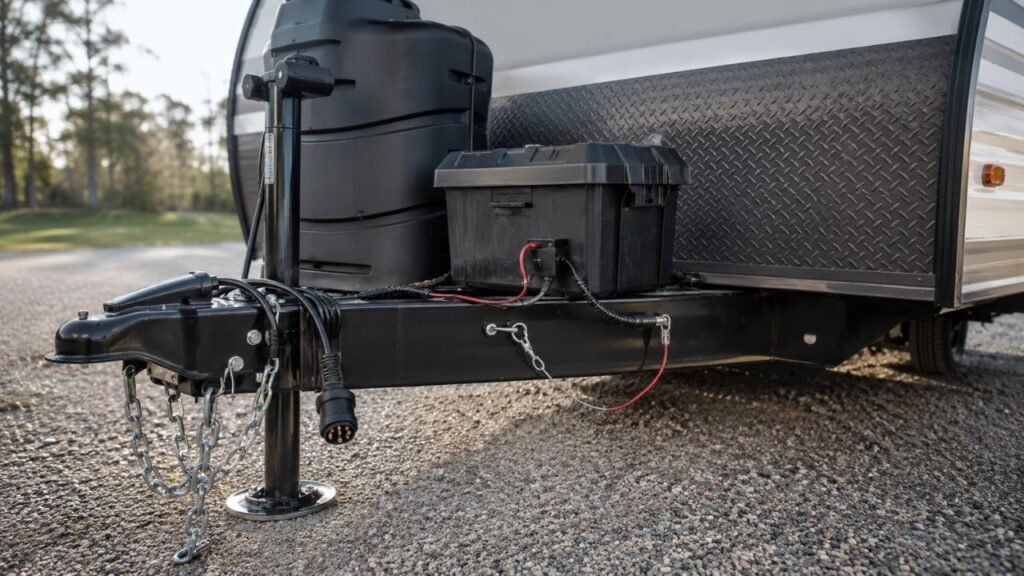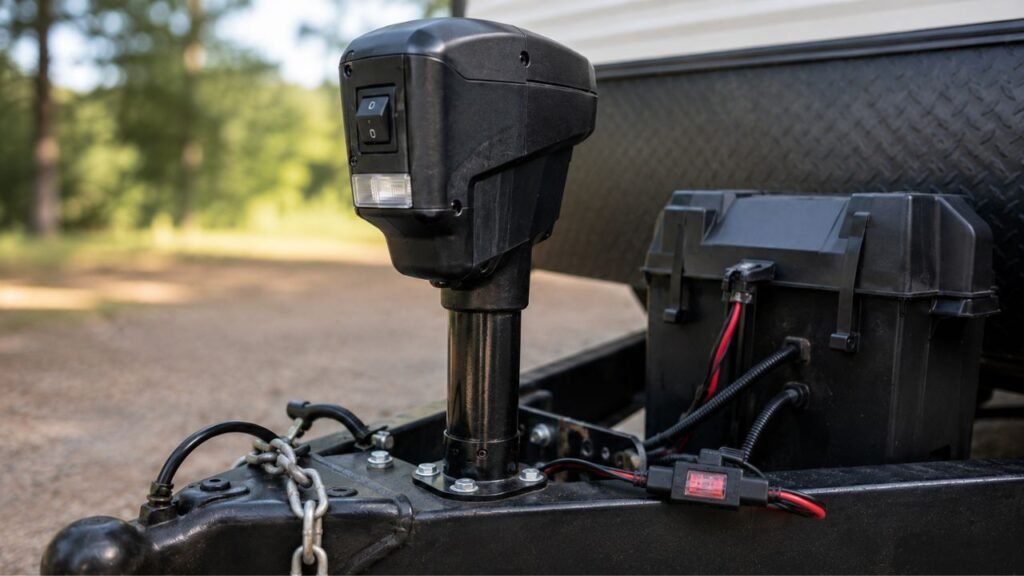
Your trailer jack keeps blowing fuses because the motor is drawing more current than the circuit can safely handle. This usually happens because of a weak battery, poor ground, damaged wiring, mechanical binding, excessive tongue weight, or an internal motor problem.
In this guide, I will help you narrow down the cause based on when the fuse blows. We will check the simple problems first, then move toward wiring, mechanical, and motor-related faults.
Key Takeaways
- A blown fuse protects the jack wiring from excessive current.
- Do not solve the problem by installing a larger fuse.
- Note exactly when the fuse blows before replacing anything.
- A weak battery may cause slow movement and repeated fuse failure.
- Poor grounding can create voltage loss and excessive motor strain.
- Blowing fuses near full travel often indicates mechanical overloading.
- A fuse that blows instantly may indicate a short circuit.
- Stop using the jack if wires or connectors become unusually hot.
What Does a Blown Trailer Jack Fuse Mean?
A blown fuse means your trailer jack circuit has experienced more electrical current than the fuse can safely carry. The fuse opens the circuit before the wiring, switch, or motor becomes dangerously hot.
The fuse is usually not the original problem. It is responding to another issue somewhere in the jack system.
For example, a jammed jack motor needs more power to move. A damaged positive wire may touch the trailer frame and create a short. A weak battery may also cause the motor to struggle under load.
Pay attention to how the fuse fails. A fuse that blows immediately suggests a different problem than one that blows only while lifting the trailer.
Replacing the fuse repeatedly without finding the cause can damage the fuse holder, wiring, switch, or motor.
Safety Checks Before Troubleshooting the Jack
Before testing the jack, make sure the trailer cannot move or fall unexpectedly.
- Park on stable and reasonably level ground.
- Chock the trailer wheels on both sides.
- Keep the trailer coupled when extra stability is needed.
- Never work beneath a trailer supported only by its tongue jack.
- Use properly rated stands if additional support is required.
- Disconnect battery power before opening wiring connections.
- Keep fingers away from the jack tube and moving components.
- Remove metal jewelry before working near battery terminals.
- Stop if the wiring becomes hot or produces a burnt smell.
- Follow the jack manufacturer’s instructions whenever available.
A 12-volt jack system may seem harmless, but it can carry high current. A short circuit can quickly heat a wire or damage a connector.
When Does the Trailer Jack Blow the Fuse?
The timing of the failure provides one of the best diagnostic clues. Before taking anything apart, install the correct fuse and watch what happens during one careful test.
| When the Fuse Blows | Likely Causes | First Thing to Check |
| Immediately after installation | Pinched wire, reversed wiring, internal short | Positive cable and jack wiring |
| As soon as you press the switch | Shorted switch, damaged motor, severe binding | Wiring, switch, and manual operation |
| Only while raising the trailer | Weak battery, excessive load, mechanical resistance | Battery charge and jack capacity |
| Near full extension | Jack reaching its upper limit | Jack position and travel range |
| Near full retraction | Motor stalling at the lower limit | Stop point and operating technique |
| After moving slowly for several seconds | Low voltage, poor ground, corrosion | Battery and electrical connections |
| Only in one direction | Switch fault, travel-limit strain, internal wiring | Extend and retract circuits |
| After rain or washing | Water inside the switch or housing | Covers, seals, and connectors |
| Randomly during operation | Loose wire, chafed insulation, failing switch | Complete wiring inspection |
| When the jack light is also on | Weak battery or excessive voltage drop | Battery condition and terminals |
Try to identify a repeatable pattern. That pattern can prevent you from replacing a good motor or buying a new jack unnecessarily.
Common Reasons a Trailer Jack Keeps Blowing Fuses
Most fuse problems come from either excessive mechanical load or an electrical fault. Start with the easy external checks before assuming the jack motor has failed.
The Jack Has Reached Its Travel Limit
An electric trailer jack should not be held against its fully extended or fully retracted position.
Once the jack reaches the end of its travel, the motor can no longer turn normally. However, it may continue trying to move while you hold the switch.
That stalled motor can draw a large amount of current. The fuse then blows to protect the circuit.
You may hear clicking, clutching, humming, or a sudden change in motor sound. Release the switch immediately when the jack reaches its limit.
Using a solid jack block can reduce how far the jack must extend. It can also make operation faster and more stable.
The Trailer Battery Is Weak
A weak battery is one of the first things I would check.
The jack motor requires strong and stable 12-volt power. A battery may operate lights successfully but still fail when the jack places it under a heavy load.
Common signs include:
- The jack moves unusually slowly.
- The motor sound changes under load.
- The jack stops and starts.
- The fuse blows only while raising the trailer.
- Interior lights dim when the jack runs.
- The jack works better while the battery is charging.
Fully charge the battery before testing again. If the problem returns, have the battery load-tested instead of relying only on its resting voltage.
The Ground Connection Is Poor
Many tongue jacks use their mounting flange and bolts as part of the ground path. Others have a separate ground wire.
Rust, paint, dirt, or powder coating between the jack and frame can weaken that connection. Loose mounting bolts can create the same problem.
A poor ground causes voltage loss. The motor may run slowly, draw excessive current, or stop under load.
Inspect the mounting surface for clean metal-to-metal contact. Clean corrosion carefully and tighten the mounting hardware.
When the jack uses a dedicated ground wire, inspect both ends. The terminal should be tight, clean, and attached to solid frame metal.
The Battery Connections Are Loose or Corroded
The jack can only work properly when current flows through secure connections.
Inspect the positive and negative battery terminals. Look for corrosion, loose nuts, damaged cable ends, and poorly crimped terminals.
Do not overlook corrosion hidden beneath a cable terminal. A connection may look clean from above while remaining damaged underneath.
Also inspect the cable running from the battery to the jack. A loose connection can create resistance and heat.
Clean and tighten one connection at a time. Disconnect the negative battery cable first and reconnect it last.
The Power Wire Is Pinched or Chafed
The jack’s positive wire often runs through an exposed area near the trailer tongue. That makes it vulnerable to vibration, sharp edges, battery boxes, and moving equipment.
Damaged insulation may allow the wire to touch the metal frame. This creates a direct short and usually blows the fuse immediately.
Inspect the full visible length of the cable. Look carefully around:
- Frame openings
- Battery box edges
- Jack mounting plates
- Wire clips
- Cable ties
- Metal brackets
- Areas near the coupler
Replace damaged wiring rather than covering a severe cut with tape. Protect repaired wiring with suitable loom and secure it away from sharp surfaces.
The Jack Screw or Gears Are Binding
Your jack motor drives an internal screw and gear system. If those parts become dry, bent, corroded, or damaged, the motor must work harder.
Mechanical binding may appear as:
- Slow or uneven movement
- Grinding sounds
- Jerky operation
- Movement that stops at certain positions
- A fuse that blows only under load
- Difficult manual operation
Use the manual override according to the jack instructions. If the jack feels unusually difficult to turn manually, the problem is likely mechanical.
Only lubricate the locations approved by the manufacturer. Spraying general lubricant into a sealed motor or gearbox may create more problems.
The Jack Is Lifting Too Much Weight
An electric tongue jack lifts the trailer tongue and may also raise part of the tow vehicle during hitching.
If the actual load exceeds the jack’s lifting capacity, the motor can stall or overheat. The fuse may then blow during the heaviest part of the lift.
Do not compare jack capacity only with the trailer’s total weight. The important factors include actual tongue weight and how much extra lifting occurs during hitching.
Cargo loaded too far forward can increase tongue weight. An undersized jack may also work normally when unloaded but fail with the trailer attached.
Check the jack’s label and compare its rated lifting capacity with your real setup.
The Jack Is Under Side Load
A tongue jack is designed to move vertically. It may bind when the tube is pushed sideways.
Side pressure can happen when:
- The trailer is parked on uneven ground.
- The jack foot is sinking into soft soil.
- The tow vehicle moves while the jack is extended.
- The jack tube is slightly bent.
- The footplate is sitting at an angle.
- The trailer shifts against the wheel chocks.
Place the jack foot on a flat, solid block. Make sure the inner tube remains straight while it moves.
Never use the jack to push the trailer sideways.
The Extend-and-Retract Switch Is Damaged
The rocker switch changes motor direction by reversing the electrical connection.
Its internal contacts can wear, burn, corrode, or become contaminated by moisture. A damaged switch may create high resistance or a direct short.
A switch problem becomes more likely when:
- The fuse blows only in one direction.
- The switch feels loose or sticks.
- The motor runs when the switch is moved sideways.
- The jack works intermittently.
- Water has entered the switch housing.
- The switch or nearby wires become hot.
Disconnect power before opening the switch housing. Replace damaged switches with compatible parts designed for the jack.
Water Has Entered the Electrical Housing
Electric trailer jacks remain exposed to rain, washing, condensation, and road spray.
Water may enter through a cracked cover, damaged switch boot, loose light housing, or missing seal. Moisture can corrode terminals or create an electrical short.
The problem may continue after the exterior dries because water can remain trapped inside.
Remove battery power if you suspect water intrusion. Allow the unit to dry and inspect accessible connections for corrosion.
A cracked or poorly sealed housing should be repaired before the jack returns to service.
The Motor Is Failing Internally
An electric motor can develop damaged windings, worn brushes, corroded internal connections, or heat damage.
An internal short allows the motor to draw excessive current. The fuse may blow even when the jack carries little weight.
Motor failure becomes more likely when:
- The correct fuse blows with no meaningful load.
- The jack remains difficult after wiring repairs.
- The motor smells burnt.
- The housing becomes hot quickly.
- The motor hums but does not turn.
- Manual operation feels normal.
- Current draw remains abnormally high.
Some jack motors can be replaced separately. Others are more economical to replace as a complete jack assembly.
The Wrong Fuse Is Installed
A fuse must match both the required amperage and the correct fuse type.
A lower-rated fuse may fail during normal operation. A slow-blow fuse and a standard blade fuse also behave differently.
Never assume every electric tongue jack uses the same fuse. Many use 30-amp protection, but that is not a universal rule.
Check the jack label, manual, wiring diagram, or manufacturer’s replacement information. Install only the specified type and rating.
How to Troubleshoot a Trailer Jack That Keeps Blowing Fuses
Use a consistent process instead of changing several parts at once. This helps you identify the actual fault and avoid unnecessary repairs.
- Confirm the correct fuse rating: Check the jack label or manual before installing another fuse.
- Chock and stabilize the trailer: Make sure the trailer cannot roll while you work.
- Inspect the blown fuse: A blackened fuse may suggest a strong short, while a cleanly separated element may indicate an overload.
- Fully charge the battery: Do not continue testing with a battery that is partly discharged.
- Clean and tighten the battery terminals: Check both the positive and negative connections.
- Inspect the jack ground: Confirm that the mounting flange or dedicated ground wire has a clean connection.
- Trace the positive power cable: Look for cuts, crushed sections, exposed copper, and melted insulation.
- Inspect the inline fuse holder: Check for loose contacts, corrosion, moisture, or melted plastic.
- Confirm the jack is not at its travel limit: Move it away from the limit manually when necessary.
- Test the jack with minimal load: Observe whether it operates normally before lifting the trailer.
- Use the manual override: Feel for unusual resistance, roughness, or binding.
- Test each direction separately: Note whether the problem appears while extending, retracting, or both.
- Inspect the switch housing: Look for water, loose terminals, or heat damage.
- Stop after another confirmed failure: Do not keep feeding new fuses into a faulty circuit.
If the correct fuse continues blowing after these checks, the motor, switch, or internal mechanism may require professional testing.
How to Check the Trailer Battery and Voltage
A battery can show acceptable voltage while resting but still fail under load. That is why you need to observe what happens while the jack operates.
Check the Battery Before Running the Jack
Turn off unnecessary 12-volt equipment before testing.
Inspect the battery case for swelling, cracks, or leakage. Check the terminals for corrosion and confirm the cables are tight.
A fully charged lead-acid battery normally rests around 12.6 volts. Lithium battery voltage behaves differently, so follow the battery maker’s guidance.
Resting voltage alone does not confirm battery health.
Watch the Voltage While the Jack Operates
Connect a multimeter across the battery terminals. Have another person briefly operate the jack while you watch the reading.
A small voltage drop is normal. A sharp drop, especially with slow jack movement, points toward a weak battery or excessive electrical resistance.
Compare the reading at the battery with the voltage reaching the jack. A large difference suggests loss through the cables, fuse holder, ground, or connections.
Test the Battery Under Load
A load test gives you more useful information than a resting voltage reading.
Many auto-parts stores and battery shops can perform this test. It can reveal a battery that appears charged but cannot deliver the needed current.
Replace the battery when it repeatedly fails a proper load test or cannot hold a charge.
Do Not Let Shore Power Hide the Problem
The jack may work better while the trailer converter charges the battery. That does not automatically mean the problem is fixed.
The converter may be supporting a weak battery temporarily. Test the battery separately before assuming the jack is healthy.
Also remember that some trailer wiring layouts do not power the jack directly from the converter.
How to Inspect the Jack Ground and Power Connections
Electrical resistance often hides at mounting points, cable terminals, and fuse holders. These areas deserve close attention before replacing the jack.
Inspect the Mounting Flange
Disconnect battery power before loosening the jack.
Look where the jack flange contacts the trailer frame. Thick paint, powder coating, rust, and dirt can interrupt the ground path.
Clean only the necessary contact area. Reinstall the jack securely and protect surrounding metal from corrosion.
Star washers may improve contact when they are appropriate for the installation.
Check a Dedicated Ground Wire
Some jacks use a separate negative wire instead of grounding through the mounting bolts.
Follow that wire to its connection point. Confirm the terminal is not loose, cracked, corroded, or attached over heavy paint.
A temporary ground test with a suitable jumper can help identify a bad ground. However, the permanent repair should use correctly sized wiring and secure terminals.
Examine the Positive Cable
Follow the positive cable from the battery to the jack.
Look for damaged insulation, loose crimp connections, heat discoloration, and areas where the cable has rubbed against metal.
Gently move each connection while inspecting it. A terminal that rotates or pulls away needs repair.
Check the Inline Fuse Holder
Fuse holders commonly fail after years of moisture and vibration.
Open the holder and inspect both metal contacts. The fuse should fit firmly without excessive movement.
Replace the holder when the contacts are corroded, loose, burned, or melted. Use an outdoor-rated replacement suitable for the required current.
How to Tell Whether the Trailer Jack Is Mechanically Binding
Mechanical binding makes the electrical motor work harder than intended. Testing manual movement can help separate a mechanical problem from an electrical one.
Use the Manual Override Carefully
Secure the trailer before disengaging or manually operating the jack.
Insert the correct crank or tool and follow the manufacturer’s procedure. Turn the jack through a limited range.
Normal effort varies by jack design. However, sudden tight spots, grinding, or severe resistance indicate a mechanical problem.
Do not force the mechanism through a hard stop.
Inspect the Inner Tube
Look for bends, dents, rust, and heavy dirt buildup.
The inner tube should move straight without rubbing heavily against the outer housing. A bent tube may bind only at certain heights.
Also inspect the footplate. A damaged or angled foot can push the jack sideways.
Listen for Changes in Motor Sound
A healthy jack normally produces a steady motor sound.
Grinding may indicate damaged gears. Repeated clicking may indicate a clutch or drive problem. A low hum without movement may mean the motor is stalled.
Stop the jack when its speed or sound changes suddenly.
Lubricate Only Approved Components
Some jacks have specific lubrication points. Others use sealed gearboxes that should not be opened during normal maintenance.
Follow the jack manual for lubricant type and service intervals.
Applying too much grease or spraying lubricant into electrical components can damage the jack.
Does Tongue Weight Affect the Trailer Jack Fuse?
Yes, tongue weight can affect how hard the jack motor must work.
The jack does not normally lift the entire trailer. It lifts the tongue weight and may raise part of the tow vehicle while connecting weight distribution bars.
Cargo placed near the front of the trailer can increase tongue weight. Full propane cylinders, batteries, water, and front storage items all contribute.
An overloaded or undersized jack may work without weight but blow its fuse when lifting the trailer.
Confirm the jack’s lifting capacity and compare it with the real load. Leave a reasonable capacity margin instead of operating the jack at its maximum rating every time.
Can a Bad Ground Really Blow the Jack Fuse?
Yes, a poor ground can contribute to blown fuses.
A weak ground increases resistance and reduces the voltage available at the motor. The jack may slow down and work harder to move the same load.
However, a bad ground does not explain every fuse failure. A fuse that blows instantly may indicate a direct short, damaged switch, or failed motor.
Treat the ground as part of the complete circuit. Check the positive and negative sides together.
Why Does the Fuse Blow Only in One Direction?
A direction-specific problem gives you a useful clue. The motor, switch, wiring, and jack position behave differently while extending and retracting.
It Blows While Extending
If the fuse blows while extending, the jack may be lifting too much weight.
The inner tube may also be bent or binding. Check whether the jack is approaching full extension.
Reduce the load and move the jack manually away from its upper limit before testing again.
It Blows While Retracting
A fuse that blows during retraction may indicate that the jack has reached its lower travel limit.
It can also suggest a damaged switch contact or mechanical resistance in that direction.
Stop before the foot is pulled tightly against the jack housing.
It Works One Way but Not the Other
The directional switch may have damaged contacts on one side.
Inspect the switch wiring for loose terminals, corrosion, or heat damage. A motor with separate directional connections may also have an internal fault.
Do not assume the entire jack requires replacement until the switch has been tested.
Why Does the Fuse Blow Only When the Trailer Is Loaded?
This usually means the jack can move itself but cannot handle the required lifting force.
Possible causes include:
- A weak battery
- Excessive tongue weight
- An undersized jack
- Poor electrical connections
- Internal mechanical binding
- A worn motor
- A jack operating at an angle
Begin by charging and testing the battery. Then check the jack’s capacity and manual movement.
A jack working without load does not prove that the motor and electrical system are healthy.
Can Rain Make a Trailer Jack Blow Fuses?
Yes, rain or washing can trigger fuse problems when water enters the electrical system.
Moisture may reach the switch, motor cover, light housing, wire connections, or fuse holder. It can cause a direct short or leave corrosion behind.
Look for cracked switch boots, loose covers, damaged seals, and wires entering the housing without protection.
Disconnect power before opening wet electrical components. Dry the jack completely and replace damaged seals or covers.
Do not depend on a plastic bag as a permanent weatherproofing solution. It can trap condensation around the jack.
Should I Replace the Fuse With a Higher-Amp Fuse?
No. Never install a higher-amperage fuse unless the manufacturer specifically requires that change for your exact model.
A larger fuse may allow excessive current to continue flowing. Instead of blowing safely, the wiring, switch, or motor may overheat.
For example, replacing a specified 30-amp fuse with a 40-amp fuse does not give the jack more lifting power. It only reduces the protection provided to the circuit.
Use the correct amperage, physical size, and fuse type. Then find the reason the original fuse failed.
When Should the Fuse Holder Be Replaced?
The fuse holder is part of the high-current circuit. Replace it when it cannot hold the fuse securely or shows signs of electrical damage.
- The fuse feels loose inside the holder.
- The metal contacts appear green or heavily corroded.
- The plastic housing is cracked.
- The holder becomes hot during operation.
- The plastic has melted or changed shape.
- Water repeatedly enters the holder.
- The attached wire is stiff or discolored.
- The fuse blades appear burned around the contacts.
- Moving the holder causes the jack to stop or start.
Use a weather-resistant holder suitable for the manufacturer-specified fuse and wire size.
Should You Repair or Replace the Trailer Jack?
Some fuse problems need only a simple connection repair. Others reveal serious mechanical or motor damage that makes replacement more sensible.
Repair May Be the Better Choice When
- The battery terminal is loose.
- The mounting ground is corroded.
- A short section of external wiring is damaged.
- The fuse holder has failed.
- The directional switch is replaceable.
- The jack needs approved lubrication.
- The problem involves a loose connector.
- Replacement parts remain available.
A small wiring repair can restore normal operation when the motor and jack mechanism remain healthy.
Replacement May Be the Better Choice When
- The motor repeatedly shorts internally.
- The jack tube is bent.
- The gearbox has severe damage.
- Water has heavily corroded internal components.
- The wiring inside the motor has overheated.
- Repair parts are unavailable.
- The jack is undersized for the trailer.
- Repair costs approach the price of a new jack.
- The jack remains unreliable after proper repairs.
Choose a replacement with enough lifting capacity for your real tongue load. Also confirm mounting dimensions and electrical requirements.
When Should You Call an RV Technician?
Basic battery and connection checks are manageable for many trailer owners. Stop and seek professional help when the fault involves unsafe support, overheated wiring, or internal electrical damage.
- The fuse blows immediately every time.
- The positive wire becomes hot.
- The fuse holder has melted.
- The motor produces a burnt smell.
- Smoke appears from the jack or wiring.
- The jack tube is bent or unstable.
- Water has entered the motor.
- The trailer cannot be supported safely.
- The correct fuse continues failing after external checks.
- You are unsure how to test high-current wiring.
- The jack needs internal motor or gearbox repair.
A technician can measure current draw, voltage drop, switch continuity, and motor condition more accurately.
How to Prevent Trailer Jack Fuses From Blowing Again
Good operating habits reduce electrical strain and extend the life of the jack.
- Keep the trailer battery properly charged.
- Test aging batteries before travel season.
- Clean the battery terminals regularly.
- Inspect the jack ground for rust and looseness.
- Protect the positive wire from sharp metal.
- Replace cracked covers and switch boots.
- Stop before reaching full extension.
- Stop before reaching full retraction.
- Use a solid jack block to reduce travel.
- Keep the jack tube straight while lifting.
- Avoid moving the tow vehicle with the jack extended.
- Stay within the jack’s lifting capacity.
- Distribute trailer cargo correctly.
- Follow the approved lubrication schedule.
- Release the switch when the motor sound changes.
- Keep the manual override tool inside the trailer.
A short inspection before each trip can catch loose wires and damaged covers before they leave you stranded.
Final Verdict
A trailer jack keeps blowing fuses because the motor is experiencing excessive electrical current. That current may come from a weak battery, poor ground, damaged wire, mechanical binding, excessive load, or internal motor failure.
Start by identifying exactly when the fuse blows. Then check the battery, terminals, ground, power cable, fuse holder, travel position, and manual movement.
Do not install a larger fuse to keep the jack running. The fuse is warning you that something needs attention. Find the source of the overload before using the jack again.
Related FAQs
What Size Fuse Does an Electric Trailer Jack Use?
Many electric tongue jacks use a 30-amp fuse, but requirements vary by model. Check the jack label or manual before installing a replacement.
Why Does My Trailer Jack Blow a Fuse Under Load?
A fuse that blows only under load usually indicates a weak battery, excessive tongue weight, poor connection, mechanical binding, or an undersized jack.
Can a Weak Trailer Battery Blow the Jack Fuse?
Yes, a weak battery can cause low voltage and poor motor performance. The motor may slow down, draw excessive current, and blow the fuse while lifting.
Why Does My Jack Work Manually but Not Electrically?
If manual movement feels normal, the mechanical system may be healthy. The problem may involve the battery, fuse holder, switch, wiring, ground, or motor.
Why Does the Fuse Blow at Full Extension?
The motor may stall when the jack reaches its travel limit. Release the switch before full extension and use a block to reduce required travel.
Can a Corroded Ground Cause Jack Problems?
Yes, corrosion at the ground connection can create voltage loss and slow operation. Clean the contact point and tighten the connection securely.
Why Does My Trailer Jack Keep Blowing 30-Amp Fuses?
The jack may be overloaded, binding, poorly grounded, shorted, or powered by a weak battery. Confirm that 30 amps is correct before troubleshooting further.
Can a Damaged Switch Blow the Fuse?
Yes, worn or wet switch contacts may create a short or excessive resistance. Direction-specific fuse failures often point toward a switch problem.
How Do I Know Whether the Jack Motor Is Bad?
A bad motor may hum without moving, become hot quickly, smell burnt, or blow fuses with little load. Professional current testing can confirm the failure.
Can Water Inside an Electric Jack Cause a Short?
Yes, water can short switch contacts, motor wiring, connectors, or the light circuit. Disconnect power and dry the jack before further testing.
Should I Use the Jack While Connected to Shore Power?
Shore power may support the battery through the converter, but wiring systems vary. A weak battery should still be tested rather than relying on shore power.
Is It Safe to Replace a 30-Amp Fuse With a 40-Amp Fuse?
No, not unless the jack manufacturer specifically requires it. A larger fuse may allow the wiring, switch, or motor to overheat before protection activates.
How Often Should an Electric Trailer Jack Be Lubricated?
Follow the maintenance schedule for your exact jack. Lubrication points and approved products vary, especially between sealed and serviceable designs.
Can an Undersized Jack Keep Blowing Fuses?
Yes, an undersized jack may overload its motor whenever it lifts the trailer. Choose a jack with enough capacity for the actual tongue load.
Why Does My Trailer Jack Fuse Holder Get Hot?
A hot fuse holder usually indicates loose contacts, corrosion, an incorrect fuse fit, or excessive current. Stop using the jack and inspect the holder immediately.
Why Does My Jack Blow Fuses After Rain?
Rain may enter a cracked switch boot, motor cover, connector, or fuse holder. Moisture can create shorts and corrosion inside the electrical system.

Scott Miller shares real-world RV road trip insights built from years of traveling open highways and backroads. He covers route planning, campground choices, and travel gear with a practical mindset. His content is written for RVers who value reliability over trends.