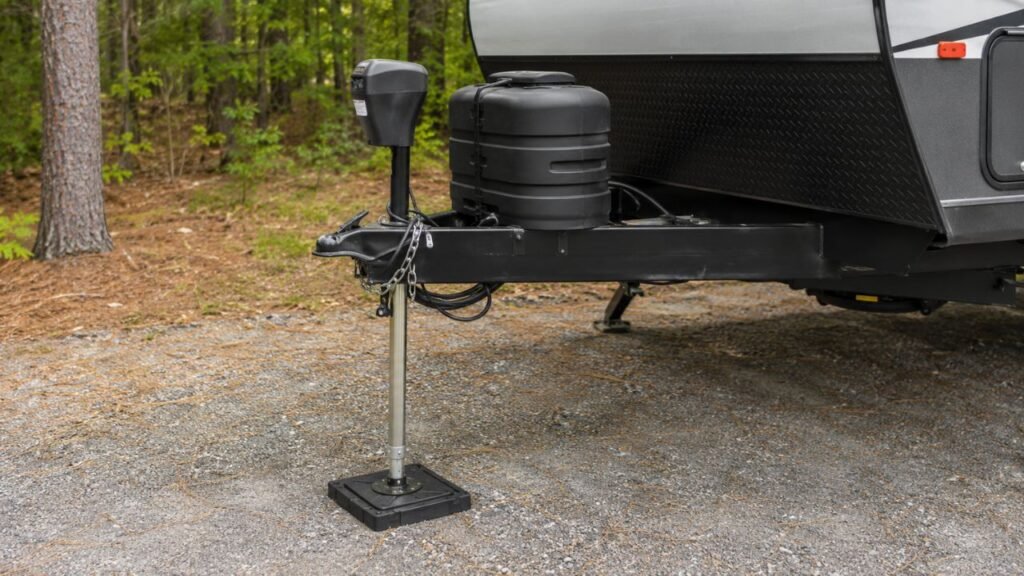
Yes, you can leave an electric trailer jack extended while your trailer is parked and unhitched. The jack is designed to support the trailer’s tongue weight. However, long-term extension can expose the inner tube to moisture, dirt, corrosion, and unnecessary weather damage.
If you plan to leave your trailer parked for weeks or months, a few simple precautions can protect the jack. I’ll show you how far to extend it, what to put underneath it, how to prevent rust, and when you should retract it.
Key Takeaways
- You can normally leave an electric trailer jack extended while parked.
- The jack must have enough capacity for your trailer’s tongue weight.
- Avoid extending the jack farther than necessary.
- Use a solid jack block or pad underneath the foot.
- Long-term exposure can cause rust on the inner jack tube.
- Keep the exposed tube clean and properly lubricated.
- Protect the motor head from prolonged rain and moisture.
- An extended jack alone should not significantly drain the battery.
- Always fully retract the jack before towing your trailer.
Can You Leave an Electric Trailer Jack Extended?
An electric trailer jack can normally remain extended while supporting an unhitched trailer. That is one of the main jobs it was designed to perform.
When you disconnect your trailer from the tow vehicle, the tongue jack supports the front portion of the trailer. It may stay in that position overnight, for several days at a campground, or during storage.
The real concern is not simply that the jack remains extended. Problems usually develop because the exposed components remain outside for long periods.
Rain, moisture, dust, road salt, and dirt can reach the extended inner tube. If you store the trailer outside for months, corrosion becomes more likely.
There is also no benefit to extending the jack farther than necessary. A tall, heavily extended jack exposes more tubing and can make the front of the trailer less stable.
For normal parking, use enough extension to support the trailer comfortably. Then protect the jack if the trailer will remain outside.
When Is It Safe to Leave an Electric Trailer Jack Extended?
Leaving the jack extended is common during normal trailer use. However, the conditions around the trailer make a big difference.
While Camping
Leaving your electric tongue jack extended while camping is completely normal. The jack will usually remain down throughout your stay.
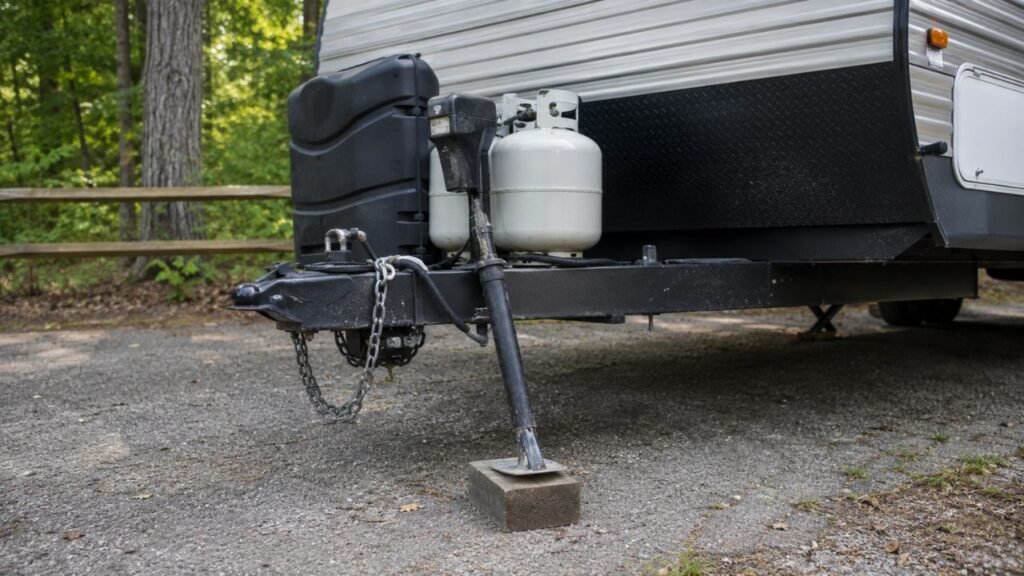
Make sure the foot is sitting on solid ground. I also recommend placing a strong jack pad underneath it.
A jack pad helps distribute the tongue weight across a wider area. It can also reduce how far you need to extend the jack.
While the Trailer Is Parked at Home
You can also leave the jack extended while parked at home. This is especially common when trailers remain unhitched between trips.
Check the surface underneath the jack before leaving it unattended. Concrete and firm gravel usually provide good support.
Soft soil and grass deserve more attention. The foot can gradually sink, especially after heavy rain.
Using a wide jack pad helps prevent that problem.
During Long-Term Storage
You can usually leave the electric trailer jack extended during long-term storage. However, this is where maintenance becomes more important.
The exposed inner tube can stay outside for several months. Moisture and dirt may eventually create surface corrosion.
Cover the upper jack assembly if the trailer stays outside. Keep the inner tube clean and follow the manufacturer’s lubrication recommendations.
You should also inspect the jack periodically. Make sure the foot has not sunk or shifted.
While Connected to the Tow Vehicle
You may occasionally lower the tongue jack while the trailer remains attached. For example, you might briefly use it during hitch adjustment.
However, the jack must never remain extended when you start towing.
Before moving the trailer, retract the jack completely. Also retract any drop leg into its correct travel position.
How Long Can an Electric Trailer Jack Stay Extended?
There is no universal number of days that applies to every trailer jack. Storage conditions matter much more than a specific time limit.
| Situation | Can the Jack Stay Extended? | Main Concern | Best Practice |
| Overnight parking | Yes | Very little | Use stable footing |
| Weekend camping | Yes | Dirt and moisture | Use a jack pad |
| Several weeks | Usually | Weather exposure | Inspect and protect it |
| Several months outside | Usually | Rust and ground settling | Clean, lubricate, and cover |
| Indoor storage | Usually | Minimal exposure | Keep the jack clean |
| During towing | No | Jack damage and safety risk | Fully retract before moving |
A jack sitting outside for three months in a dry climate may experience fewer problems than one sitting outside for several weeks near saltwater.
That is why I focus more on protection than counting days.
Keep the jack supported properly, minimize unnecessary extension, and inspect it occasionally. Those habits matter more than following an arbitrary storage limit.
Is an Electric Trailer Jack Designed to Hold the Trailer’s Weight?
Your electric tongue jack is designed to support the front portion of the trailer. However, it does not carry the trailer’s entire weight.
This distinction is important.
A travel trailer may weigh several thousand pounds. Only part of that weight presses downward through the coupler and tongue jack.
This downward force is called tongue weight.
For many travel trailers, tongue weight represents only part of the trailer’s loaded weight. Your specific trailer setup can vary significantly.
Always compare your actual tongue load with the jack’s rated capacity.
For example, a jack rated for several thousand pounds does not mean your trailer can weigh only that amount. The jack is supporting the tongue, not the entire trailer.
A properly sized jack should comfortably handle the load placed on it.
Never assume capacity based only on the physical size of the jack. Check the rating printed on the unit or manufacturer documentation.
What Can Happen If You Leave a Trailer Jack Extended Too Long?
The jack normally handles static tongue weight without trouble. Long-term problems usually come from exposure, unstable footing, or poor maintenance.
Rust and Corrosion on the Inner Tube
The inner jack tube becomes exposed whenever the jack extends downward.
Rainwater, morning condensation, mud, and road salt can settle on that surface. Over time, small rust spots may begin forming.
Light surface rust may initially look cosmetic. However, severe corrosion can eventually make movement rough.
It can also damage seals or create resistance during retraction.
Keeping the tube clean helps prevent these problems.
Dirt Can Collect on the Extended Tube
Dirt may look harmless, but it can cause trouble later.
Dust, dried mud, sand, and other debris can stick to the exposed tube. When you retract the jack, that contamination may move toward guides and seals.
I like to wipe the tube before retracting it after dirty camping trips.
It only takes a minute and helps keep abrasive debris outside.
Moisture Can Affect the Motor Head
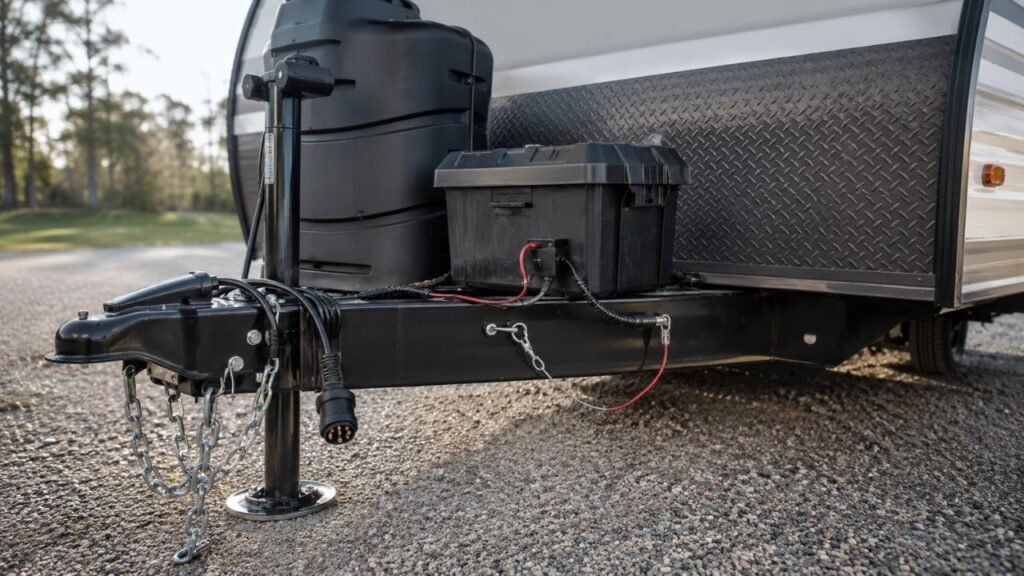
The upper portion of an electric tongue jack contains electrical components.
These commonly include the motor, switches, wiring, lights, and manual override access.
Electric jacks are built for outdoor trailer use. That does not mean you should intentionally leave damaged electrical covers exposed to constant water.
Check switch boots and caps occasionally.
If your trailer stays outside year-round, a properly fitted weather-resistant jack cover can provide additional protection.
UV Exposure Can Age Plastic Components
Sunlight affects more than paint.
Strong UV exposure can slowly age plastic housings, rubber switch covers, seals, and protective caps.
This normally happens gradually.
A cover is especially useful when your trailer spends months parked under direct sunlight.
The Jack Can Sink Into Soft Ground
One problem I see people overlook is the surface underneath the jack.
Even a perfectly functioning jack becomes unstable when its foot sinks.
Wet soil, grass, loose gravel, and soft ground can compress under tongue weight. Hot asphalt can sometimes soften enough for small feet to settle.
A wide jack pad spreads the load across a larger surface.
Check the trailer after heavy rain if it remains parked outside.
Excessive Extension Reduces Stability
You generally want to avoid using maximum extension when you do not need it.
The farther the jack stretches downward, the taller the unsupported section becomes. A shorter setup normally feels more stable.
More extension also means more inner tubing remains exposed.
Using a block underneath the foot can reduce powered extension while maintaining the same trailer height.
Should You Leave an Electric Trailer Jack Fully Extended?
You usually should not leave an electric trailer jack fully extended unless that amount of travel is actually necessary.
There is nothing useful about maximizing extension just because the jack can reach that far.
Instead, use a strong block or pad underneath the foot. Then extend the jack only enough to raise or support the tongue properly.
This approach provides several benefits.
Less of the inner tube remains exposed to weather. The jack also operates farther away from its mechanical travel limit.
A shorter extension may also make the trailer feel more stable.
Your goal should not be minimum extension at all costs. You simply want to avoid unnecessary extension.
How Far Should You Extend an Electric Trailer Jack?
There is no single ideal measurement because tow vehicles and trailer heights differ. The best approach is using only the travel you actually need.
Use Only the Extension You Need
Lower the jack until the foot reaches its supporting surface.
Continue extending until the trailer reaches the required height. Stop once you have enough clearance or proper leveling.
There is no need to continue extending after that point.
Use the Drop Leg First If Your Jack Has One
Many electric tongue jacks include an adjustable drop leg near the bottom.
The drop leg allows you to position the foot closer to the ground before using the motor.
This can save powered travel.
Make sure the retaining pin passes completely through the correct holes before placing weight on the jack.
Never adjust the drop leg while it is carrying the trailer’s weight unless your manufacturer specifically allows that procedure.
Use a Jack Block for Extra Height
A jack block is one of the easiest ways to reduce extension.
Place the block underneath the jack before lowering the trailer.
The jack foot reaches the support sooner, so the powered tube does not need to travel as far.
Use a block designed to handle substantial loads. It also needs enough surface area to remain stable.
Avoid Operating Against the Extension Limit
Do not keep holding the extend switch after the jack reaches its travel limit.
You may hear the motor change pitch or stop moving.
Release the switch immediately.
Repeatedly forcing any jack against its mechanical limit can place unnecessary stress on the motor and drive components.
Should You Put a Block Under an Electric Trailer Jack?
Yes, putting a suitable block under an electric trailer jack is usually helpful. It reduces extension while improving support on many surfaces.
A good jack block can:
- Reduce how far the jack must extend.
- Create a wider supporting footprint.
- Help prevent the jack from sinking.
- Keep the foot above wet soil.
- Reduce unnecessary powered jack travel.
- Make hitching and unhitching faster.
- Improve stability on gravel or softer surfaces.
However, the block itself needs to be stable.
Avoid balancing the jack on narrow pieces of wood or randomly stacked materials. They may shift as the tongue weight increases.
Purpose-built trailer jack blocks are convenient. Thick, solid wood can also work when it is strong and stable.
Whatever you use, make sure it sits flat against the ground.
What Should You Put Under a Trailer Jack?
Different surfaces need slightly different support. The main goal is preventing movement while spreading the load safely.
| Surface | Recommended Support | What to Avoid |
| Concrete | Jack pad or solid footplate | Unstable stacked blocks |
| Gravel | Wide plastic or solid wood pad | Narrow blocks |
| Dirt | Large load-spreading pad | Small foot directly on soil |
| Grass | Wide jack block or pad | Wet ground without support |
| Asphalt | Broad jack pad | Small foot in extreme heat |
| Mud | Relocate if possible | Supporting the trailer directly in mud |
Concrete usually provides the easiest surface.
Gravel can also work well, but loose stones may shift underneath small jack feet.
Grass and soil change more dramatically after rain. Use a wide pad and check the trailer periodically.
If the ground feels unstable before you unhitch, move to a better location whenever possible.
How Do You Protect an Electric Trailer Jack During Long-Term Storage?
Long-term storage requires a little more attention than weekend camping. Small maintenance steps can prevent annoying jack problems later.
Clean the Inner Jack Tube
Before storing your trailer, inspect the visible inner tube.
Remove dried mud, dust, sand, and other contamination.
Use a clean cloth that will not leave abrasive material behind.
Cleaning becomes particularly important after traveling on salted winter roads or muddy campsites.
Lubricate the Jack as Recommended
Electric jack mechanisms need appropriate lubrication.
The exact lubricant and maintenance points can differ between manufacturers. That is why I recommend checking the manual for your model.
Some jacks call for light grease or silicone-type lubrication on exposed components.
Avoid assuming that one lubricant is suitable for every jack.
Clean the surface before applying fresh lubricant. Otherwise, you may trap abrasive dirt underneath it.
Cover the Jack Head
A cover can protect the jack’s upper electrical assembly.
It helps reduce direct exposure to rain, sunlight, dust, bird droppings, and tree debris.
Choose a cover that fits securely without interfering with wiring.
You should still inspect underneath it occasionally. A cover should protect the jack rather than trap persistent moisture.
Protect the Jack Foot From Wet Ground
Do not leave the foot sitting directly in wet soil for months.
Place a jack pad underneath it.
This reduces ground contact while helping prevent sinking.
A pad also makes it easier to notice if the trailer begins settling.
Inspect the Wiring and Connections
Take a quick look at the electrical wiring during storage inspections.
Watch for:
- Cracked insulation
- Loose connections
- Corrosion
- Damaged fuse holders
- Exposed copper
- Loose mounting hardware
Electric tongue jacks depend on reliable 12-volt power and good electrical connections.
Small problems are easier to repair before the jack actually fails.
Check the Jack Periodically
Do not park the trailer outside and forget about it completely.
Check the jack every few weeks during extended storage.
Make sure the foot remains centered on the block. Also confirm that the trailer has not shifted.
A quick inspection can catch sinking ground or developing corrosion early.
Does Leaving an Electric Trailer Jack Extended Drain the Battery?
Simply leaving the jack mechanically extended should not significantly drain the trailer battery. The jack motor primarily uses power while moving.
Once you release the control switch, the motor stops operating.
That means the jack is not continuously using electricity just because it remains extended.
However, other things can still drain the trailer battery.
The jack’s built-in light can consume power if accidentally left on. Other RV systems may also create small parasitic loads.
These can include detectors, control boards, stereos, monitoring systems, and other electronics.
If your battery keeps going dead during storage, do not immediately blame the extended jack.
Check the entire 12-volt system.
Should You Disconnect the Battery When Storing the Trailer?
Disconnecting the battery can be useful during long-term trailer storage. However, this is mainly a battery-maintenance decision rather than an electric jack requirement.
Many RVs contain small electrical loads even when everything appears turned off.
Those small loads can gradually discharge the battery.
If your trailer has a battery disconnect switch, you can use it according to the RV manufacturer’s instructions.
Remember that some circuits may bypass the disconnect.
If the trailer remains connected to shore power, your charging system may manage the battery instead. The correct approach depends on your trailer and battery type.
Also consider how you will operate the electric tongue jack later.
A disconnected or discharged battery cannot power the jack until electrical power is restored.
Can Rain Damage an Electric Trailer Jack?
Electric trailer jacks are intended for outdoor use, so normal rain exposure should not automatically cause a failure. However, prolonged moisture can still create problems.
The jack contains electrical switches, connections, seals, and motor components.
If a protective cap cracks or a switch boot becomes damaged, water may eventually reach places it should not.
Pay close attention to the manual override cap on top.
Make sure it remains seated properly.
You should also inspect the wiring entry points and switch covers.
A jack cover can provide extra protection for trailers stored outside continuously.
Can You Leave an Electric Trailer Jack Extended in Winter?
You can usually leave the jack extended during winter storage, but cold weather creates additional concerns. Moisture, ice, salt, and changing ground conditions deserve attention.
Protect the Exposed Inner Tube
Winter moisture can increase corrosion on exposed steel components.
Road salt makes corrosion even more aggressive.
Clean the jack after towing through salted conditions. Do not leave thick road grime covering the tube all winter.
Lubricate exposed surfaces according to your jack manufacturer’s recommendations.
Keep Snow and Ice Away From the Jack
Heavy snow can pile around the foot and lower jack tube.
Ice can also form around moving components.
Remove heavy accumulation when practical.
Do not repeatedly operate a frozen jack until you know the mechanism can move freely.
Use a Stable Base
Frozen ground may feel extremely solid in January.
That can change quickly when temperatures rise.
As the soil thaws, the jack pad may begin sinking or tilting.
A wide support pad helps spread the load.
Still, inspect the trailer during freeze-and-thaw periods.
Check the Battery
Cold weather can reduce available battery performance.
Your electric jack may operate slower when the battery is weak or extremely cold.
Keep the trailer battery properly charged and maintained during winter storage.
Do not wait until departure day to discover the battery cannot operate the jack.
Can You Leave a Trailer Jack Extended on Uneven or Soft Ground?
You should avoid leaving your trailer supported by a jack on unstable ground.
The jack may have plenty of lifting capacity, but that does not make the ground underneath it strong.
Soft soil can compress gradually.
Mud can allow the foot to move sideways. Loose gravel may shift as the trailer settles.
The same concern applies to sloped surfaces.
If possible, reposition the trailer onto firmer, more level ground.
When that is not practical, use a broad load-spreading pad designed for trailer use.
Always chock the wheels securely.
The tongue jack supports vertical load. It should not be your main method for preventing the trailer from rolling.
Should the Trailer Jack Carry Weight During Long-Term Storage?
Yes, an appropriately rated tongue jack can normally support the trailer tongue during storage.
That is different from expecting one jack to support the entire trailer.
Your trailer’s wheels, tires, suspension, axles, and frame continue supporting most of the overall weight.
The tongue jack supports the front tongue load.
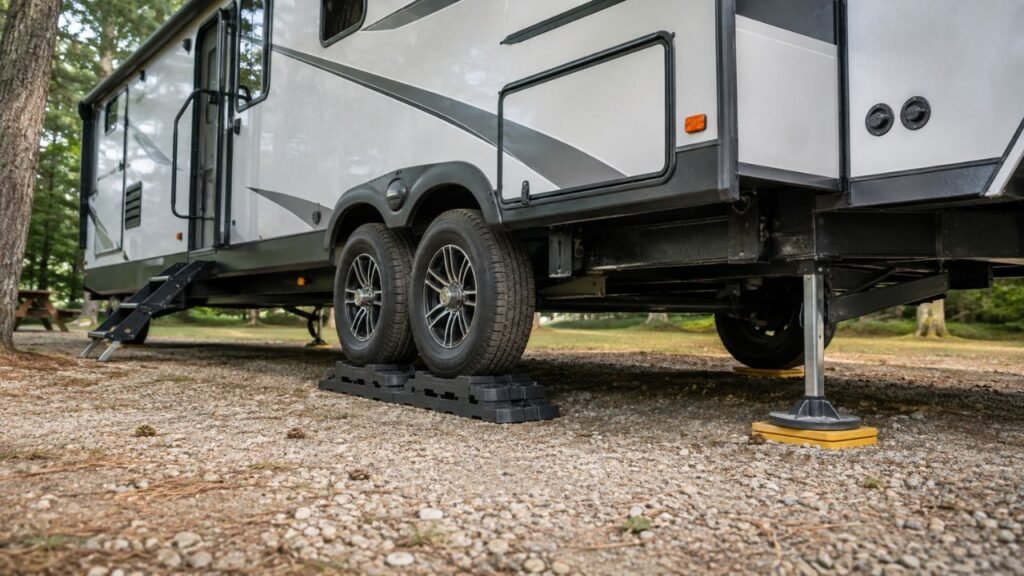
Stabilizer jacks serve another purpose.
Most RV stabilizers are designed to reduce movement while you walk inside the trailer. They should not automatically be treated as heavy lifting jacks.
Do not transfer large amounts of trailer weight onto stabilizers unless your manufacturer specifically says they can handle that load.
If you want to remove weight from the tires during very long storage, follow your RV manufacturer’s approved procedure.
Signs You Should Retract and Inspect the Jack
An electric jack should operate smoothly and remain vertically aligned. Certain warning signs deserve attention before you continue using it.
Watch for:
- Heavy rust on the inner tube
- Grinding while extending or retracting
- Repeated clicking noises
- A noticeably slower motor
- A jack tube leaning sideways
- A bent inner tube
- A sinking footplate
- A cracked motor housing
- Damaged switch boots
- Corroded electrical connections
- Water inside electrical areas
- Loose mounting bolts
- Trailer height changing during storage
Do not keep forcing the jack if it binds or leans significantly. Inspect the cause before applying additional power.
A damaged jack carrying substantial tongue weight can become a serious safety concern.
What If the Electric Trailer Jack Has Been Extended for Months?
Finding your jack extended after several months does not automatically mean something is wrong. Inspect it before operating it again.
Inspect Before Operating It
Walk around the front of the trailer first.
Check the jack tube, footplate, mounting bolts, wiring, switches, and housing.
Make sure the jack still looks vertical.
Also confirm the foot has not shifted away from the center of its block.
Clean the Exposed Tube
Wipe dirt from the extended tube before retracting it.
This is especially useful if mud, dust, or sand has collected during storage.
Avoid dragging heavy contamination into the jack mechanism.
Check for Rust
Look closely at any orange or brown corrosion.
Light surface discoloration may simply need cleaning and maintenance.
Heavy scaling, deep pitting, bending, or structural deterioration deserves professional inspection.
Do not rely on a badly corroded jack to support significant tongue weight.
Test the Jack Carefully
Make sure the battery has adequate power before operating the jack.
Press the retract switch briefly and listen.
A healthy jack should move reasonably smoothly.
If movement becomes extremely slow or the motor sounds heavily strained, stop and investigate.
Stop If the Jack Binds or Tilts
Do not solve binding by repeatedly holding the switch.
More electrical power will not straighten a bent tube.
Check for corrosion, dirt, side loading, mechanical damage, or low battery voltage.
Fix the underlying problem before continuing.
Mistakes to Avoid When Leaving an Electric Trailer Jack Extended
Most storage problems come from small mistakes rather than the jack simply being extended.
Avoid:
- Leaving the jack at maximum extension unnecessarily.
- Setting the foot directly onto soft ground.
- Using loose stacks of unstable blocks.
- Ignoring rust on the exposed tube.
- Allowing dried mud to remain on moving surfaces.
- Leaving damaged electrical covers exposed.
- Assuming every jack has the same lifting capacity.
- Using stabilizer jacks as heavy lifting jacks.
- Parking without properly chocking the wheels.
- Letting the jack lean under side pressure.
- Holding the switch against its travel limit.
- Forgetting to retract the jack before towing.
These are simple habits to avoid, but they make a big difference.
Best Way to Leave an Electric Trailer Jack Extended
If your trailer will remain parked for a while, setting the jack correctly from the beginning makes storage easier.
- Park the trailer on firm and reasonably level ground.
- Securely chock the trailer wheels.
- Position a strong jack pad underneath the tongue jack.
- Lower the drop leg first if your jack uses one.
- Confirm the retaining pin is fully engaged.
- Extend the powered jack only as much as necessary.
- Make sure the foot sits flat on the support.
- Check that the jack remains vertically aligned.
- Clean exposed jack surfaces before long-term storage.
- Lubricate the jack according to manufacturer instructions.
- Protect the upper electrical housing from prolonged weather.
- Inspect the setup periodically during extended storage.
I especially recommend checking the jack after heavy rain.
The trailer may look perfectly level while the soil underneath the foot slowly settles.
When Should You Retract the Electric Trailer Jack?
You do not need to retract the jack every night while the trailer remains parked. However, several situations require retraction or repositioning.
Retract the jack when:
- You are preparing to tow the trailer.
- You need to move the trailer.
- The jack block begins sinking.
- The supporting surface becomes unstable.
- The trailer shifts sideways.
- You need to service the jack.
- The tube begins binding.
- Structural damage appears.
- The jack is no longer needed for support.
Before towing, confirm the electric tongue jack is fully retracted into its proper travel position.
Do not rely on memory.
Make checking the tongue jack part of your normal walk-around before departure.
Final Words
So, can you leave an electric trailer jack extended? Yes, you normally can while your trailer remains parked and unhitched.
The bigger issue is how you leave it.
Keep extension reasonable, use a stable jack block, and protect exposed surfaces. Those simple habits reduce corrosion, sinking, and unnecessary wear.
If your trailer stays outside for months, inspect the jack occasionally. Cleaning and basic maintenance now can prevent a frustrating failure when you are ready to tow again.
Related FAQs
Is It Okay to Leave a Trailer Jack Down?
Yes, you can normally leave a trailer tongue jack down while the trailer is parked and unhitched. Make sure the jack is properly rated, vertically aligned, and resting on a stable supporting surface.
Can an Electric Tongue Jack Hold a Trailer Overnight?
Yes, a properly sized electric tongue jack can normally support the trailer overnight. In fact, leaving the jack extended for several days while camping is part of normal trailer use.
Can an Electric Trailer Jack Stay Extended for Months?
An electric trailer jack can generally remain extended during long-term storage, but protect it from corrosion and unstable ground. Keep the exposed tube clean, use a strong jack pad, and inspect the jack periodically.
Should I Fully Extend My Trailer Jack?
You should generally avoid fully extending the jack unless maximum travel is actually necessary. Using a stable jack block underneath the foot reduces extension while keeping more of the inner tube protected.
Should I Put a Block Under My Trailer Jack?
Yes, a strong jack block can provide better ground support and reduce the amount of jack extension required. Make sure the block is wide, stable, level, and capable of handling the tongue load.
Does an Electric Trailer Jack Use Power While Extended?
The motor should not continuously consume significant power simply because the jack remains extended. Most electrical consumption happens while extending or retracting the jack, although lights and other trailer circuits can still drain the battery.
Should I Cover My Electric Trailer Jack?
A weather-resistant cover is useful when the trailer remains outside for long periods. It helps protect switches, plastic housings, the motor area, and other components from sunlight, moisture, dirt, and debris.
Can Rain Damage an Electric Tongue Jack?
Normal electric tongue jacks are designed for outdoor trailer use, but prolonged moisture can eventually affect damaged seals, switches, wiring, or electrical connections. Keeping protective caps intact and using a cover during long-term storage can help.
How Do I Keep My Trailer Jack From Rusting?
Keep the exposed jack tube clean and remove road salt, mud, and moisture. Apply the lubricant recommended by the jack manufacturer and repair damaged coatings or protective components before corrosion becomes severe.
Can I Leave My Trailer Jack Extended During Winter?
Yes, you can generally leave it extended during winter storage. Use a stable pad, keep road salt and moisture off the tube, watch for ice buildup, and inspect the ground when frozen soil begins thawing.
Should I Disconnect My Trailer Battery During Storage?
Disconnecting the battery can help reduce parasitic electrical drain during extended storage, depending on your trailer’s electrical system. However, remember that your electric tongue jack will need a working 12-volt power source when you want to operate it again.
Can I Tow With the Electric Trailer Jack Partially Extended?
No. Retract the electric tongue jack completely and secure any adjustable drop leg before towing. Driving with the jack extended can damage the jack, strike the road, or create a serious towing hazard.

Scott Miller shares real-world RV road trip insights built from years of traveling open highways and backroads. He covers route planning, campground choices, and travel gear with a practical mindset. His content is written for RVers who value reliability over trends.