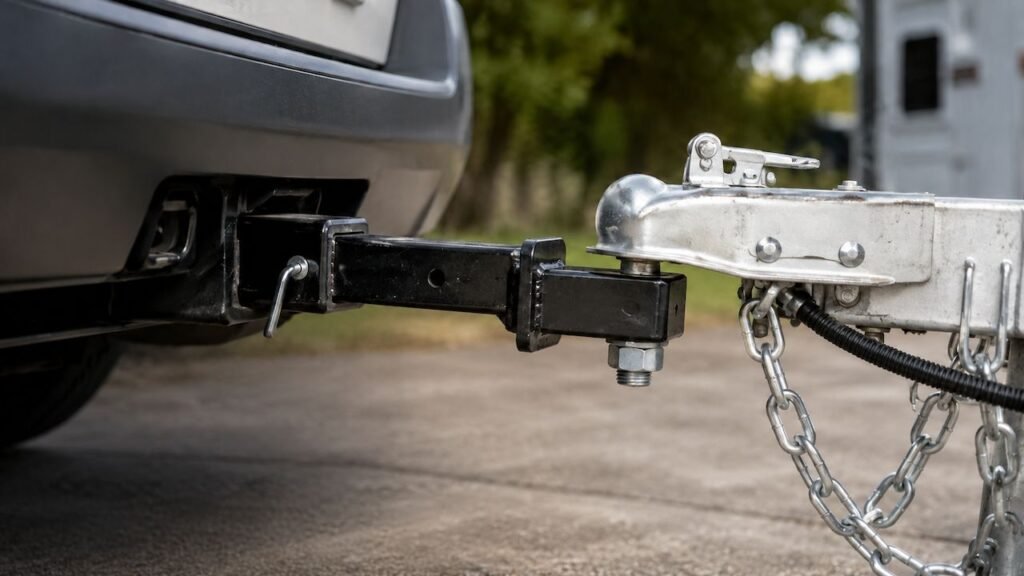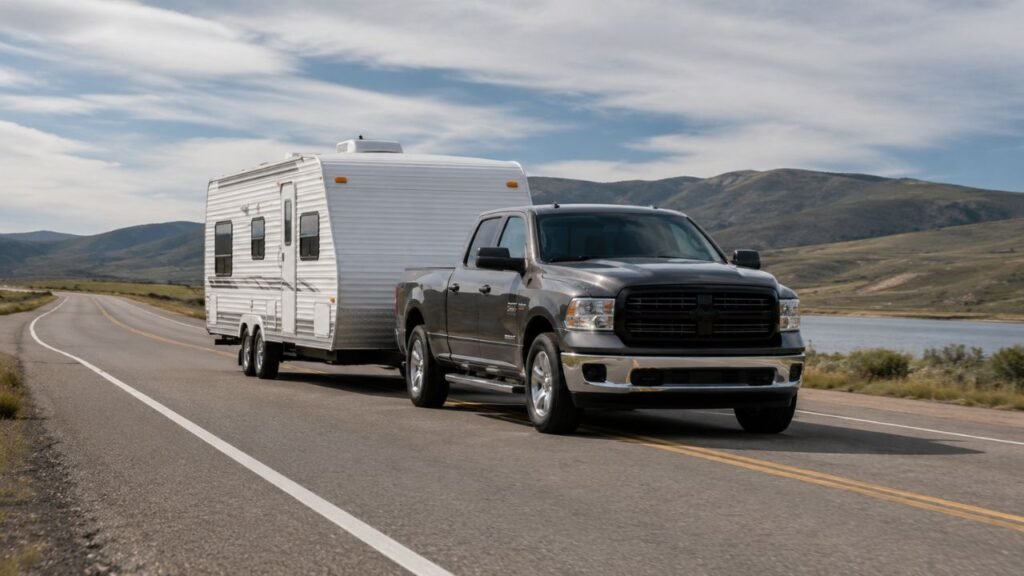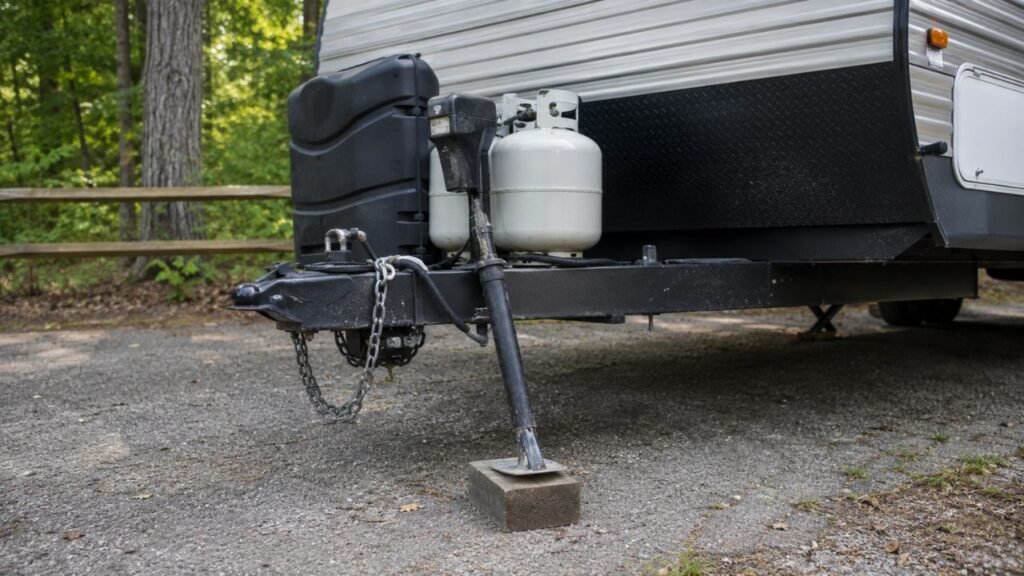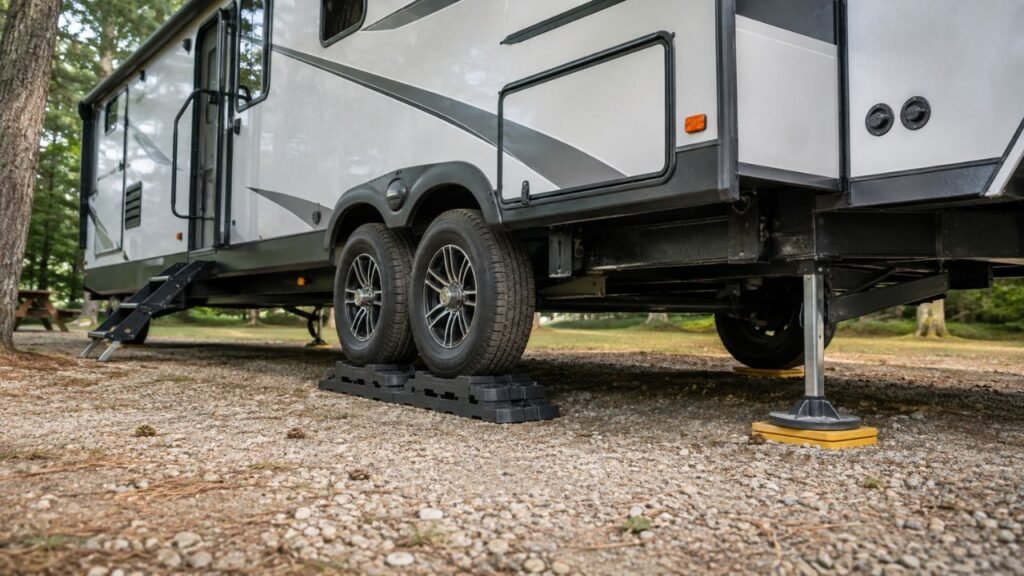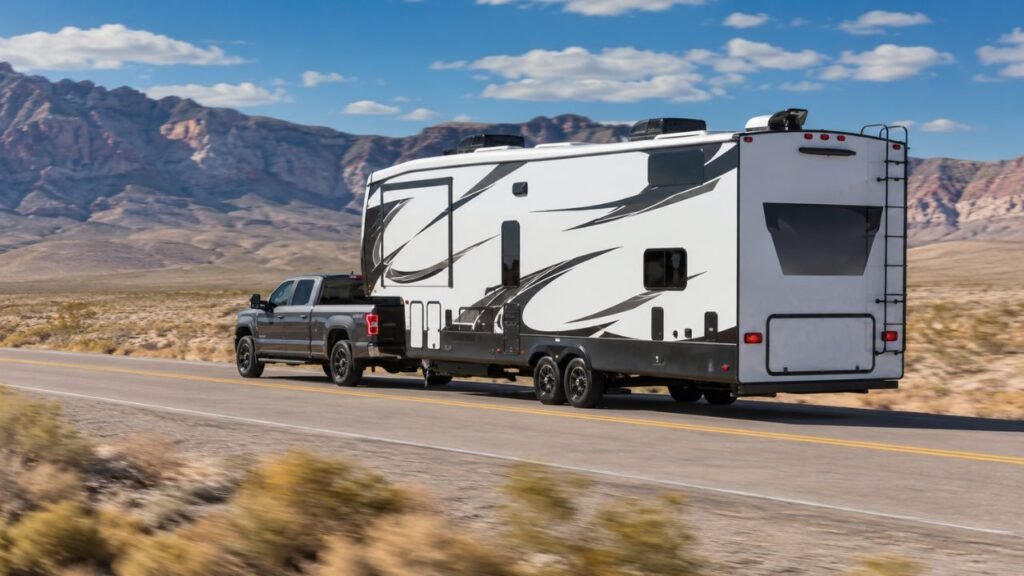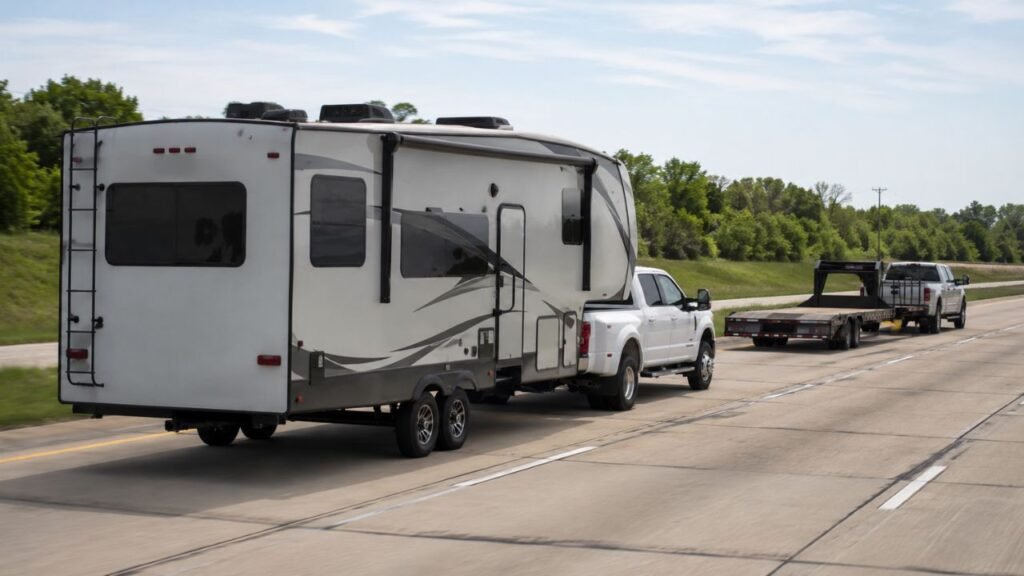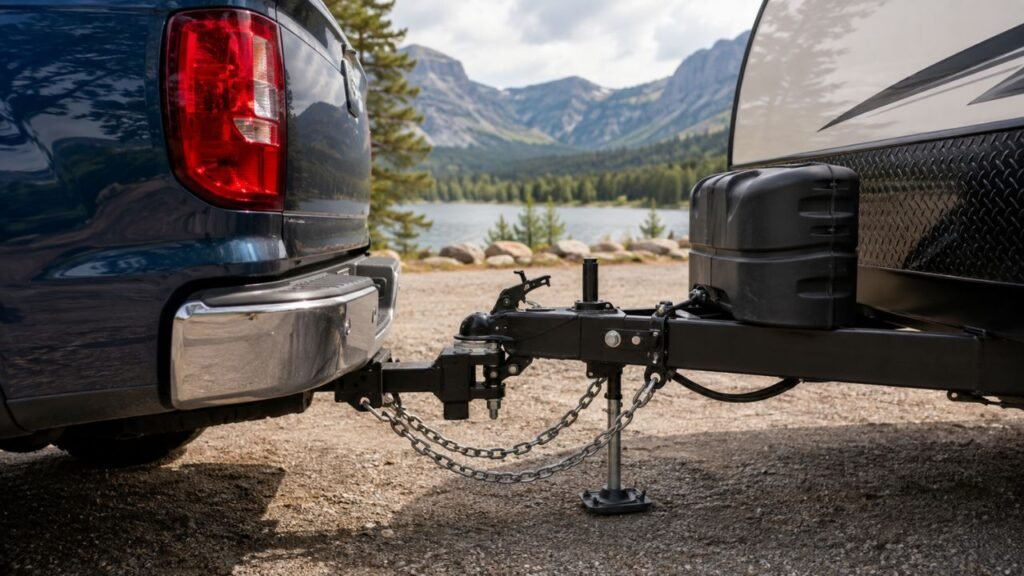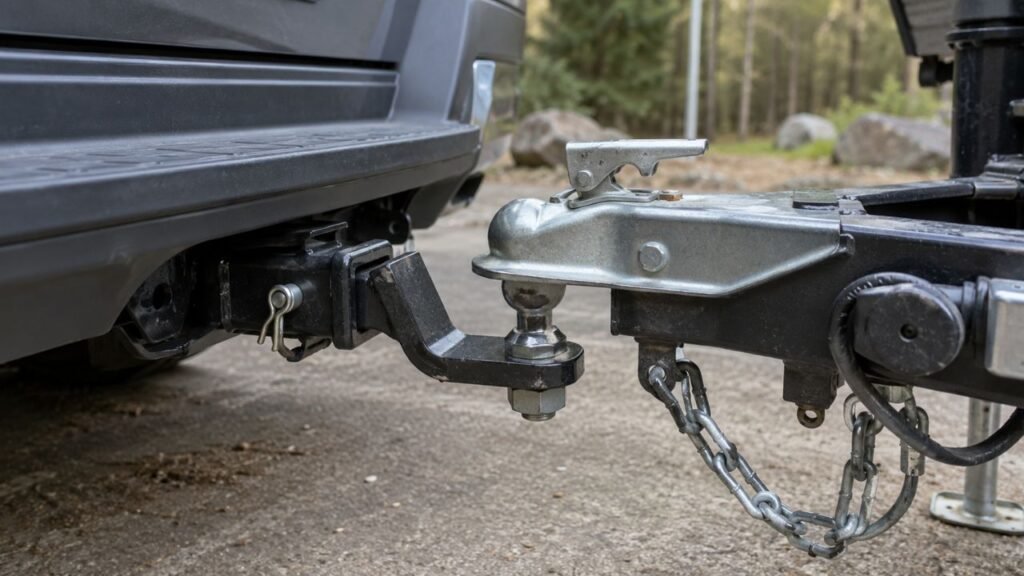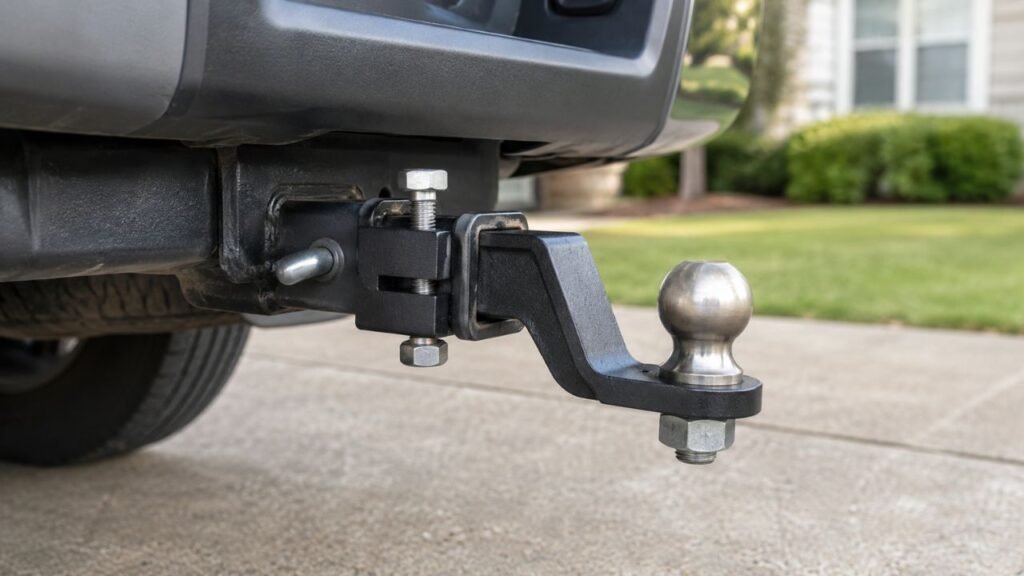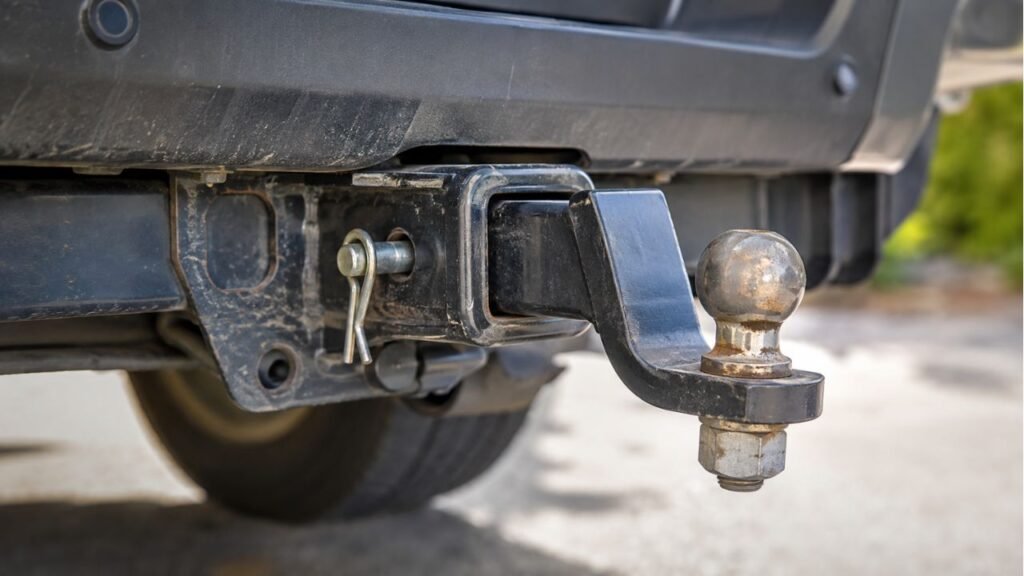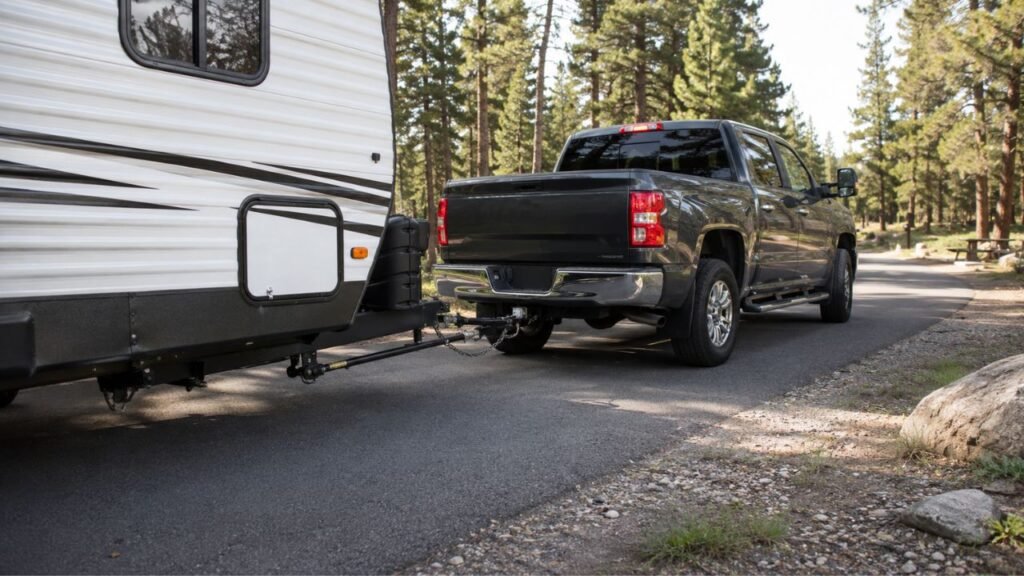
Yes, you can usually back up with weight distribution bars attached. Straight reversing and gentle steering corrections are normally safe. However, sharp turns, steep transitions, and separate friction sway bars require extra caution.
In this guide, I will explain when backing is safe. You will also learn when to disconnect components and prevent hitch damage.
Key Takeaways
- Most weight distribution bars can stay attached during normal backing.
- Straight reversing and gentle turns are usually safe.
- Separate friction sway-control bars often require removal before reversing.
- Sharp trailer angles can make spring bars or brackets bind.
- Steep driveways may place unusual pressure on the hitch system.
- Never force the trailer backward when components resist movement.
- Your hitch manufacturer’s instructions should always come first.
- Stop and inspect the system after any severe binding or impact.
Can You Back Up With Weight Distribution Bars Attached?
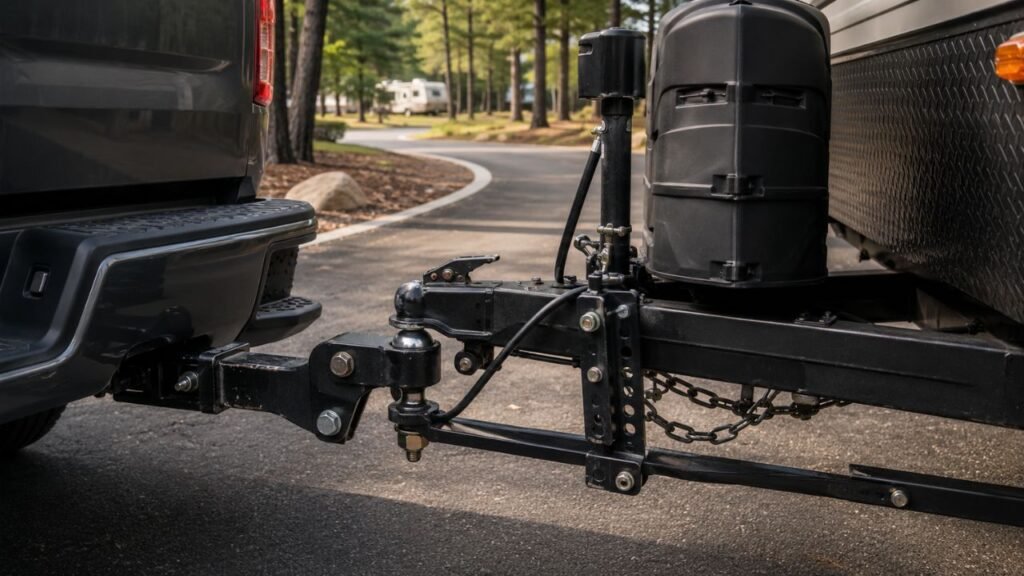
In most situations, you can reverse with the spring bars connected. Weight distribution bars do not lock your trailer in one direction. They continue transferring tongue weight while the rig moves backward.
The bars help distribute trailer tongue weight across multiple axles. They restore some weight to the tow vehicle’s front axle. This improves steering, braking, and overall towing stability.
Reversing does not stop this weight-transfer process. However, turning while reversing changes the angle between both vehicles. That increased angle may affect the bars, brackets, chains, or sway-control parts.
Whether you should keep everything connected depends on several factors:
- Your weight distribution hitch design
- The type of sway control installed
- The sharpness of the backing turn
- The slope or condition of the ground
- Clearance around the trailer A-frame
- Instructions supplied by the manufacturer
Therefore, the answer is generally yes, but not without limits.
When Is It Safe to Back Up With the Bars On?
Most ordinary backing maneuvers stay within the hitch’s normal movement range. These common situations usually allow you to leave the bars attached.
Backing in a Straight Line
Backing straight creates very little sideways pressure on the spring bars. The trailer remains closely aligned with the tow vehicle.
You can normally leave the bars attached when reversing into:
- A wide campsite
- A straight driveway
- A level storage space
- A pull-through site requiring minor corrections
- A parking spot with a wide entrance
Keep the vehicle moving slowly throughout the maneuver. Small steering corrections are easier on the hitch components.
Making Gentle Steering Corrections
A few shallow corrections are generally safe with most modern systems. The trailer and truck remain within a moderate articulation angle.
Turn the steering wheel gradually instead of making sudden movements. Watch the trailer’s path through both side mirrors.
You should also watch the spring bars when possible. A spotter can help identify unwanted contact or shifting.
Using an Integrated Weight Distribution and Sway-Control Hitch
Many newer hitches combine weight distribution and sway resistance. These systems may use spring-bar friction, frame brackets, or special cams.
Most integrated systems allow normal backing without removing the bars. Their components move together during forward and reverse turns.
However, “integrated” does not mean unlimited turning. Every hitch still has mechanical movement and clearance limits.
Check the owner’s manual before your first backing attempt. The manufacturer may provide special instructions for reversing or tight turns.
When Should You Remove or Loosen Hitch Components?
Certain situations create more pressure than normal backing. Removing or adjusting a component may prevent bent hardware or frame damage.
When Using a Separate Friction Sway-Control Bar
A separate friction sway bar is not the same component. It is usually a sliding metal bar mounted beside the hitch.
This device adds resistance between the truck and trailer. It helps control side-to-side movement while driving forward.
Many separate friction sway bars must be loosened or removed before backing. Sharp reverse turns may compress or extend the device beyond its range.
Possible damage may include:
- A bent inner slide bar
- A crushed outer housing
- A damaged sway-control ball
- A twisted mounting bracket
- Restricted trailer movement
- Damaged adjustment hardware
Do not assume that loosening the handle is always enough. Some manufacturers require complete removal before reversing.
When Backing Through a Very Sharp Turn
A tight reverse turn creates a large angle between both vehicles. This angle can move the spring bars beyond their normal positions.
The bars may slide too far across their brackets. Chains can also pull sideways instead of remaining properly aligned.
There is no universal turning angle for every hitch. Hitch geometry, bar length, bracket placement, and trailer design all matter.
Stop before the truck and trailer form an extreme angle. Pull forward and straighten the combination before continuing.
When Approaching a Jackknife Position
A jackknife position creates severe articulation between the truck and trailer. Hitch components may contact areas they never touch normally.
Possible contact points include:
- Spring bars against the trailer frame
- Hitch head against the coupler area
- Brackets against the bars
- Trailer A-frame against the truck bumper
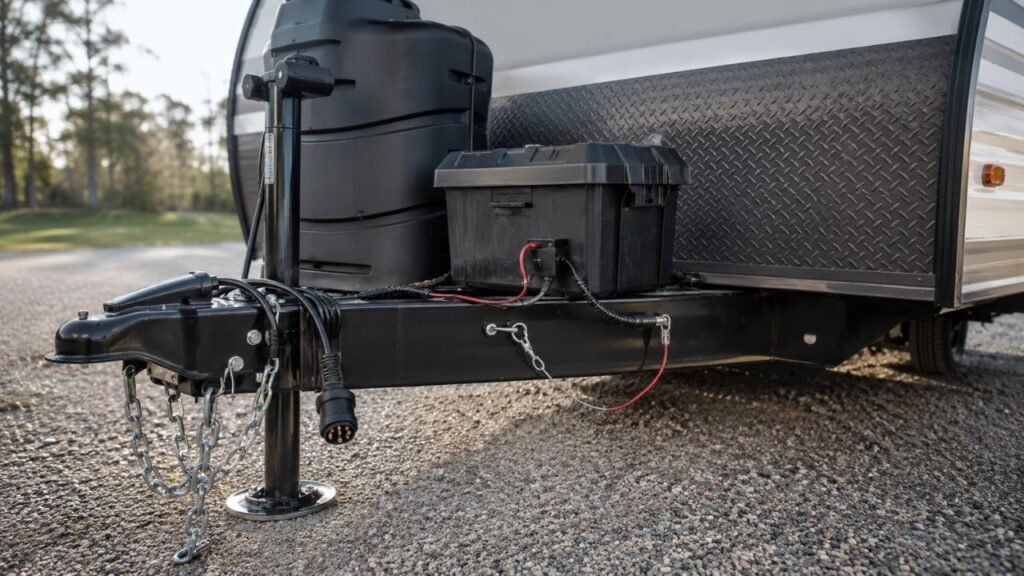
- Propane tank tray against hitch components
- Battery box against sway-control hardware
Do not force the trailer farther backward after contact begins. Pull forward, straighten the rig, and choose a wider approach.
When Crossing a Steep Driveway or Uneven Surface
Weight distribution systems handle both horizontal and vertical movement. However, steep transitions can create unusual bar pressure.
For example, the truck may climb a driveway first. Meanwhile, the trailer may remain on level pavement.
That difference changes the vertical angle at the hitch. Spring-bar tension may increase suddenly during this transition.
Deep dips, raised entrances, and drainage channels create similar problems. One bar may also carry more pressure on uneven ground.
Move slowly and watch for unusual lifting or twisting. Removing the bars may be safer during severe transitions.
When the Manufacturer Prohibits Backing
The manufacturer’s instructions always override general towing advice. Some systems require specific adjustments before reversing.
A hitch may look similar to another model. However, its internal design or bracket geometry can be different.
Locate the exact model number before checking instructions. Do not rely only on advice for a similar-looking hitch.
Weight Distribution Hitch Backing Rules by System Type
Different hitch designs respond differently during reverse turns. Use this table as general guidance, then confirm your exact model.
| Hitch or sway-control type | Can you normally back up? | Recommended action before reversing | Main concern |
| Basic chain-style weight distribution hitch | Usually yes | Check chain and bar clearance | Binding during very sharp turns |
| L-bracket weight distribution hitch | Often yes | Confirm backing is permitted | Bars moving too far across brackets |
| Integrated sway-control hitch | Usually yes | Follow the manufacturer’s turning limits | Excessive hitch articulation |
| Dual-cam sway-control system | Often yes | Check cam and bar alignment | Cam binding during tight turns |
| Separate friction sway-control bar | Often requires removal | Loosen or remove as instructed | Bending or crushing the slide bar |
| Linkage-style premium hitch | Model-specific | Follow its exact backing procedure | Linkage contact or restricted movement |
| Andersen-style chain and cone system | Often yes | Check chain tension and instructions | Excessive angle or uneven loading |
This table offers general guidance rather than universal instructions. Similar systems may still have different backing requirements.
How Sharp Can You Turn While Backing With Weight Distribution Bars?
There is no single safe angle that applies to every setup. Some combinations can turn sharply without binding. Others reach their mechanical limits much earlier.
Your safe turning range depends on:
- Hitch-head shape
- Spring-bar length
- Frame-bracket position
- Trailer A-frame width
- Tow vehicle wheelbase
- Hitch shank length
- Propane tank location
- Battery box position
- Sway-control design
- Terrain under each vehicle
Some people use 45 degrees as a general warning point. However, this should not become a fixed rule.
Your hitch may bind before reaching that angle. Another setup may safely move beyond it.
Instead of watching only the angle, watch the actual components. Stop when anything begins moving outside its usual path.
Warning signs include bars climbing brackets, chains pulling sideways, or parts contacting the frame.
When the turn becomes too tight, pull forward. Straighten the combination and begin the approach again.
Can Weight Distribution Bars Fall Off While Backing?
Properly installed spring bars should not fall off during gentle backing. Their retaining hardware should keep them securely attached.
However, a bar may shift or disengage when something is wrong. This usually indicates an installation, adjustment, or clearance problem.
Common causes include:
- Missing retaining clips
- Worn hitch-head sockets
- Incorrect frame-bracket placement
- Loose bracket hardware
- Excessive reverse turning
- Improper chain tension
- Mismatched spring bars
- Bent hitch components
- Severe driveway articulation
L-bracket systems also allow bars to slide during turning. Some movement is part of their normal operation.
However, a bar should not repeatedly move off its supporting bracket. That condition requires inspection before further towing.
Do not simply reinstall a fallen bar and continue driving. First determine why it became disconnected.
What Happens If the Hitch Binds While Reversing?
Binding occurs when the hitch components cannot move naturally. Continuing to reverse can then place severe stress on the bars and frame.
Common Signs of Hitch Binding
Watch and listen for these warning signs:
- Sudden loud popping
- Sharp snapping sounds
- Spring bars lifting upward
- Chains becoming extremely tight
- Frame brackets rotating or shifting
- Trailer frame visibly flexing
- Strong resistance against vehicle movement
- Metal scraping near the hitch
- A sway bar reaching its travel limit
- Hitch components becoming wedged together
Some weight distribution hitches make normal creaking sounds. Friction-based systems can be especially noisy during slow turns.
However, heavy resistance or sudden movement is different. Stop when the sound occurs with visible binding or shifting.
What to Do Immediately
Follow these steps when the system begins binding:
- Stop the tow vehicle immediately.
- Hold the rig securely with the brakes.
- Avoid forcing the trailer farther backward.
- Pull forward slowly to reduce the angle.
- Park on stable ground when possible.
- Inspect the bars, chains, and brackets.
- Check the sway-control components for contact.
- Remove the required component when necessary.
- Restart the maneuver using a wider approach.
- Stop towing if anything appears bent or loose.
Never place your hands near tensioned bars during movement. Spring bars can release stored force unexpectedly.
Should You Remove Weight Distribution Bars Before Backing Into a Campsite?
You do not always need to remove the bars. A wide, level campsite usually allows normal backing with everything connected.
Leaving the bars installed can also keep the truck level. This may improve steering control during the maneuver.
However, removal may help when the campsite requires:
- A very tight reverse turn
- Repeated forward and backward corrections
- Crossing a deep drainage channel
- Entering over a raised curb
- Backing across severely uneven ground
- Approaching an extreme trailer angle
You should also remove separate friction sway bars when required. These devices are more vulnerable during sharp reverse turns.
If you remove the weight distribution bars, remember that handling will change. The truck’s rear may settle lower under tongue weight.
Steering may also feel lighter because less weight remains forward. Move slowly and limit the distance traveled without the bars.
Reinstall everything before returning to normal road speeds.
Can You Back Up a Steep Driveway With Weight Distribution Bars On?
Steep driveways create vertical movement that level campsites do not. The bars may experience increased tension during the transition.
Backing Uphill
When backing uphill, the trailer begins climbing before the truck. This can change the angle between the receiver and coupler.
The spring bars may push harder against their brackets. Ground clearance under the hitch can also decrease temporarily.
Use very small steering inputs while crossing the transition. Avoid combining a steep slope with a sharp turn.
Backing Downhill
Backing downhill increases the trailer’s tendency to push the tow vehicle. Controlled braking becomes especially important.
Visibility may also become more difficult. The trailer can disappear from one mirror during steering corrections.
Use a spotter whenever the driveway has limited clearance. Stop frequently and inspect the hitch angle.
Crossing a Driveway Dip
A deep dip can place the truck and trailer on different slopes. This creates severe articulation through the hitch connection.
The bars may become unusually tight or shift across their brackets. One side can also carry more force than the other.
A slight diagonal approach may reduce the transition angle. Only use this approach when surrounding space allows it safely.
When the dip is severe, remove the bars before crossing. Reconnect them after reaching flatter ground.
How to Back Up Safely With Weight Distribution Bars On
A careful approach prevents most reverse-maneuver problems. Follow these steps before and during backing.
- Identify your hitch system: Determine whether sway control is integrated or separate so you understand how your setup behaves during reversing and whether any special precautions are needed.
- Read the manufacturer’s backing instructions: Confirm whether any component requires removal so you can avoid damage and follow the exact safety guidelines for your specific hitch model.
- Inspect the spring bars: Check for bending, cracks, or unusual wear so you can ensure the bars are structurally sound and safe to handle reverse movement.
- Check all retaining hardware: Confirm clips, pins, chains, and brackets remain secure so nothing loosens or detaches while you are backing up.
- Remove a separate friction sway bar when required: Store it securely until the maneuver is finished so it does not bind, bend, or get damaged during tight reverse turns.
- Plan your approach before reversing: Choose the widest possible turning path so you reduce stress on the hitch and avoid sharp angles that can cause binding.
- Check the terrain: Look for dips, curbs, slopes, and raised entrances so you can anticipate uneven pressure on the hitch and adjust your path safely.
- Back at walking speed: Slow movement gives you more reaction time so you can correct steering early and prevent sudden stress on the trailer and hitch system.
- Use small steering corrections: Large inputs can increase trailer angle quickly so gentle adjustments help maintain control and prevent over-articulation.
- Watch both mirrors continuously: Alternate between mirrors instead of focusing on one so you maintain full awareness of trailer position and alignment.
- Use a spotter when possible: Agree on hand signals before starting so communication is clear and you can safely navigate tight or blind backing situations.
- Pull forward before the angle becomes extreme: Resetting is safer than forcing the trailer so you avoid binding, jackknifing, or damaging hitch components.
- Stop after any unusual sound: Check the hitch before continuing so you can identify binding, shifting, or damage before it becomes a serious issue.
- Inspect the system after parking: Make sure nothing shifted during the maneuver so you confirm all components remain secure and properly aligned for the next use.
Should You Reduce Spring-Bar Tension Before Backing?
Most weight distribution systems do not require tension adjustment during ordinary backing. You can generally leave the normal towing setup unchanged.
Reducing tension without proper guidance may create other problems. It can change front-axle loading and reduce steering response.
You should adjust tension only when the manufacturer recommends it. Some specialized systems have model-specific reversing procedures.
Do not loosen chains or brackets while components remain heavily loaded. Use the hitch’s approved tension-release method.
The tongue jack can often help unload the spring bars. However, you should follow your specific hitch instructions.
Can You Back Up Without Weight Distribution Bars?
You can usually move a trailer a short distance without the bars. The coupler must remain securely connected to the hitch ball.
The following safety connections must also remain attached:
- Safety chains
- Trailer wiring plug
- Breakaway cable
- Trailer brake connection
- Coupler latch and safety pin
Without the spring bars, the truck may experience more rear suspension sag. The front axle may also carry less weight.
This can cause:
- Lighter steering
- Reduced front-tire grip
- Different braking response
- Increased headlight angle
- More noticeable trailer movement
Therefore, backing without the bars should remain slow and brief. It is suitable for difficult campsite or driveway positioning.
Do not use this setup for normal highway travel. Reinstall the bars before leaving the property or campground.
Common Mistakes to Avoid When Backing With a Weight Distribution Hitch
Avoid these mistakes to protect your hitch and trailer:
- Assuming every sway-control device allows reversing
- Leaving a separate friction sway bar fully connected
- Backing quickly into a tight campsite
- Waiting until the trailer nearly jackknifes
- Ignoring repeated popping or scraping sounds
- Continuing after a bracket begins moving
- Forcing the truck against strong resistance
- Turning sharply while crossing a steep slope
- Using bent or mismatched spring bars
- Forgetting to reinstall removed components
- Standing beside tensioned bars during movement
- Following general advice instead of the owner’s manual
Many hitch problems begin with one forced maneuver. Stopping early usually prevents expensive damage.
What Should You Inspect After a Difficult Backing Maneuver?
A difficult maneuver can shift brackets or damage hardware. Complete a quick inspection before towing at normal speeds.
Spring Bars and Retaining Hardware
Look along each spring bar for visible bending or cracks. Both bars should maintain their original shape.
Check the retaining clips and hitch-head sockets. The bars should sit securely without excessive looseness.
Wear marks can reveal unexpected contact. Fresh metal marks deserve closer inspection.
Frame Brackets and Chains
Confirm both frame brackets remain in their original positions. Their mounting hardware should remain tight and properly aligned.
Look for stretched, twisted, or damaged chain links. Chains should hang evenly when the trailer is straight.
L-brackets should remain square against the trailer frame. Replace any bent or damaged hardware.
Hitch Head and Shank
Check the hitch head for looseness or visible deformation. Inspect the adjustment washers, bolts, and angle-setting hardware.
The shank should remain straight inside the receiver. Look for unusual movement around the receiver pin.
Do not continue towing with loose hitch-head bolts. These fasteners carry substantial towing forces.
Sway-Control Components
Inspect friction bars, cams, sockets, and mounting balls. Look for bending, misalignment, or damaged adjustment parts.
Integrated sway-control brackets should remain secure. Excessive wear may indicate incorrect setup or repeated binding.
Do not lubricate friction surfaces unless the manufacturer allows it. Lubrication can disable some sway-control designs.
Trailer A-Frame
Inspect the frame around every mounting point. Look for cracks, chipped paint, distorted metal, or shifted brackets.
Fresh paint damage may reveal frame flexing. Rust lines near a crack can indicate an older structural problem.
A qualified trailer technician should inspect suspected frame damage.
When Should You Ask a Hitch Technician for Help?
Contact an experienced hitch technician when:
- A spring bar repeatedly slips from its bracket
- A frame bracket moves during normal turning
- The hitch binds during gentle backing
- A bar appears bent or twisted
- The trailer frame shows cracks
- Hitch bolts repeatedly become loose
- One spring bar carries noticeably more pressure
- The truck remains severely nose-high
- Steering feels unusually light after setup
- The hitch produces violent popping sounds
- Installed parts do not match the hitch manual
- You cannot identify the sway-control system
A technician can measure tongue weight and verify the setup. They can also confirm correct bar capacity and bracket placement.
Final Verdict
You can normally back up with weight distribution bars attached. Straight reversing, shallow turns, and ordinary campsite positioning are usually acceptable.
The main exceptions involve separate friction sway bars and severe angles. Tight turns, steep driveways, and uneven ground can create binding.
Move slowly and watch how the hitch components behave. Pull forward whenever the angle begins looking uncomfortable.
Never force a spring bar, bracket, or sway-control device. Stopping early is much cheaper than replacing damaged equipment.
Related FAQs
Can You Turn With Weight Distribution Bars Installed?
Yes, normal forward and reverse turns are usually allowed. However, extremely sharp turns may cause binding, depending on the hitch design and trailer-frame clearance.
Do Weight Distribution Bars Need to Be Removed Before Parking?
You usually do not need to remove them for ordinary parking. Removal may help when the parking area requires tight turns or severe ground transitions.
Can I Back Up With Equalizer-Style Hitch Bars Attached?
Many integrated L-bracket systems allow backing with their bars attached. Check your exact model’s instructions because turning and lubrication requirements may differ.
Can I Reverse With a Friction Sway Bar Installed?
Many separate slide-style friction sway bars should be loosened or removed first. Leaving one attached during sharp backing may bend or crush the device.
Why Do My Weight Distribution Bars Pop When Backing?
Some popping can come from normal friction between bars and brackets. Loud snapping with lifting, shifting, or resistance may indicate binding or incorrect adjustment.
Can Weight Distribution Bars Damage a Trailer Frame?
Correctly sized and installed bars should not damage the frame. Excessive tension, poor bracket placement, or sharp-angle binding can create harmful stress.
Should I Grease Weight Distribution Bars Before Backing?
Lubrication depends on the hitch design. Some pivot points require grease, while friction-based sway surfaces must remain dry for proper operation.
Can I Remove Spring Bars Without Unhitching the Trailer?
Many systems allow bar removal while the trailer remains coupled. You must first unload the tension using the manufacturer’s approved procedure.
Do I Need Weight Distribution Bars Inside a Campground?
You may not need them for a short, slow maneuver. However, reinstall them before returning to regular roads or normal towing speeds.
Can a Weight Distribution Hitch Limit My Turning Radius?
Yes, hitch bars, brackets, sway-control components, and trailer-frame clearance can limit articulation. Always stop before components bind or contact each other.
Should I Disconnect Weight Distribution Bars Before Jackknifing?
You should avoid jackknifing the trailer entirely. If a tight maneuver seems necessary, remove approved components and use several smaller corrections instead.
Can I Back Up With Weight Distribution Bars on Uneven Ground?
You often can, but uneven ground may load one bar more heavily. Move slowly and stop when the bars, chains, or brackets shift abnormally.
What Should I Do After Removing a Friction Sway Bar?
Store the bar safely during the maneuver. Reattach and correctly adjust it before returning to normal road towing.
Does Backing Damage an Integrated Sway-Control Hitch?
Ordinary backing should not damage a compatible integrated system. Damage becomes more likely during extreme turns, binding, incorrect setup, or component contact.

Scott Miller shares real-world RV road trip insights built from years of traveling open highways and backroads. He covers route planning, campground choices, and travel gear with a practical mindset. His content is written for RVers who value reliability over trends.