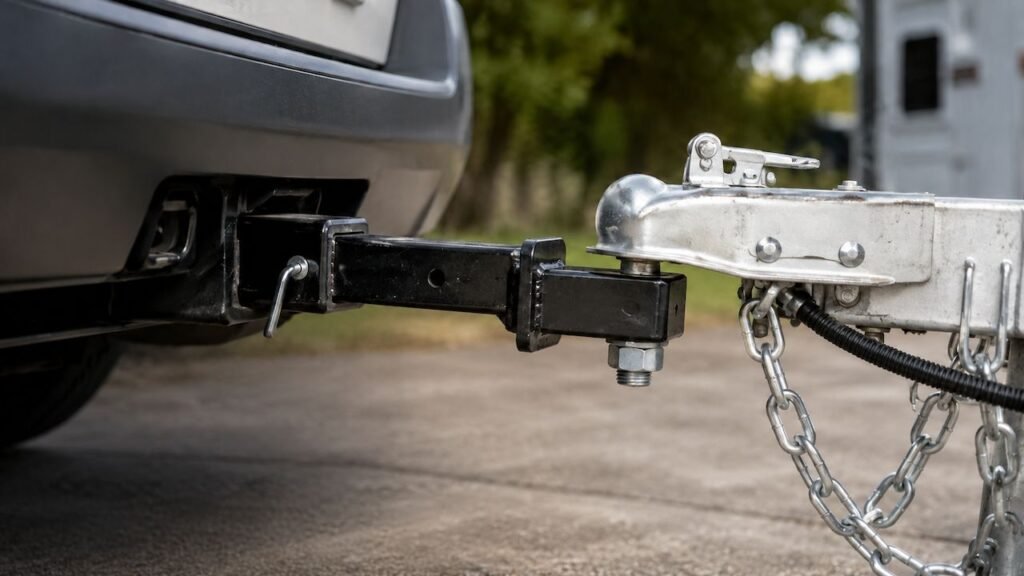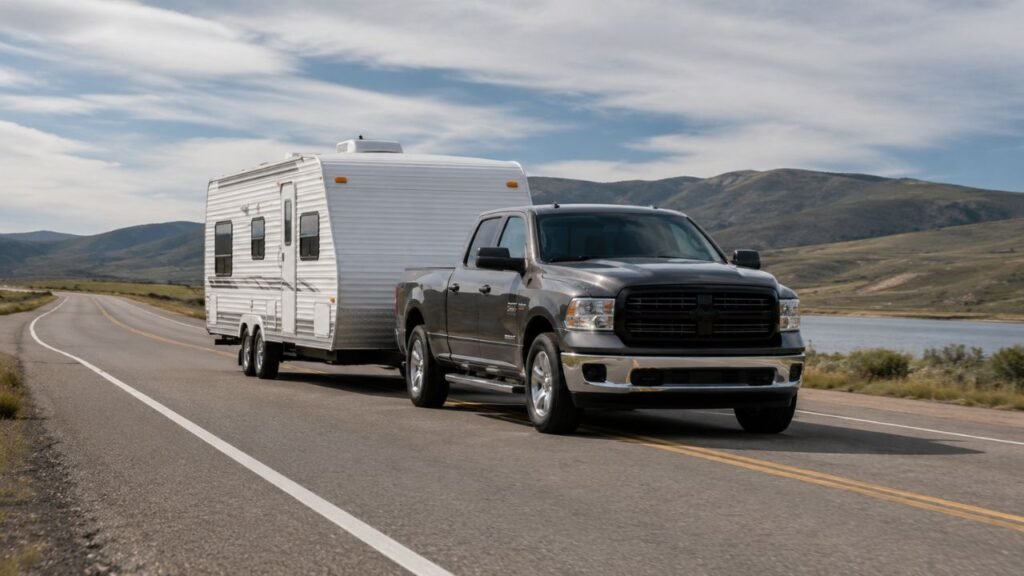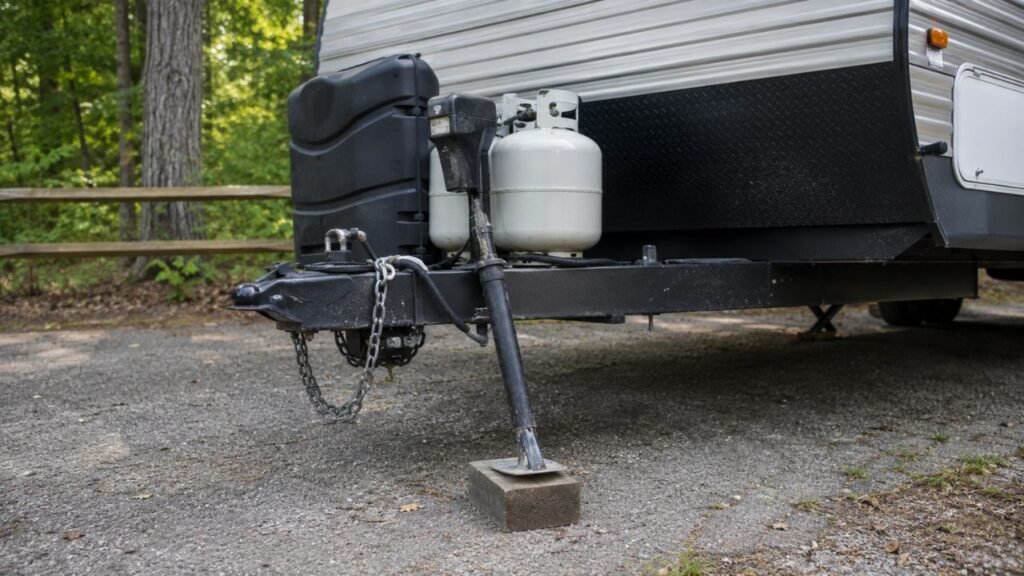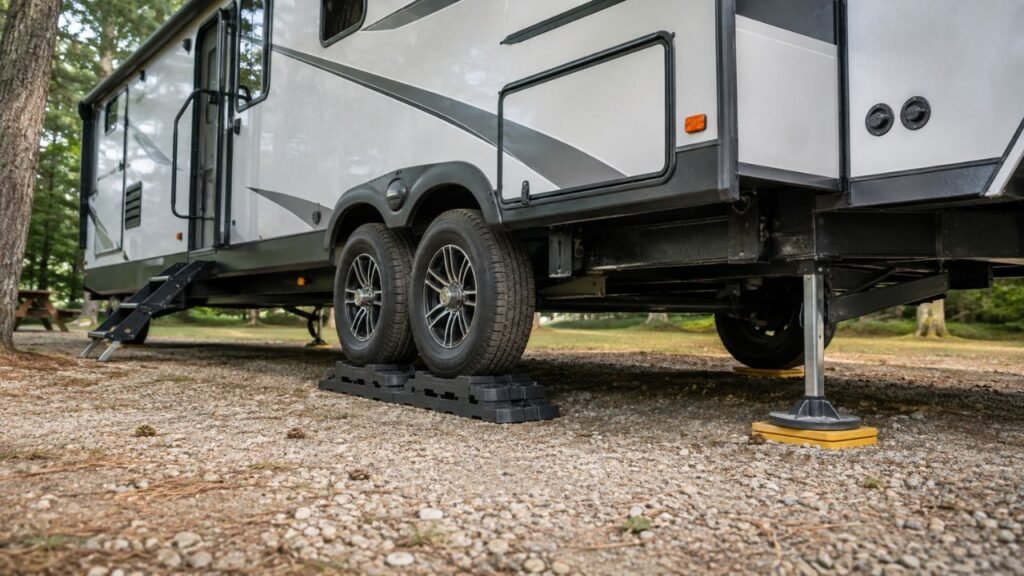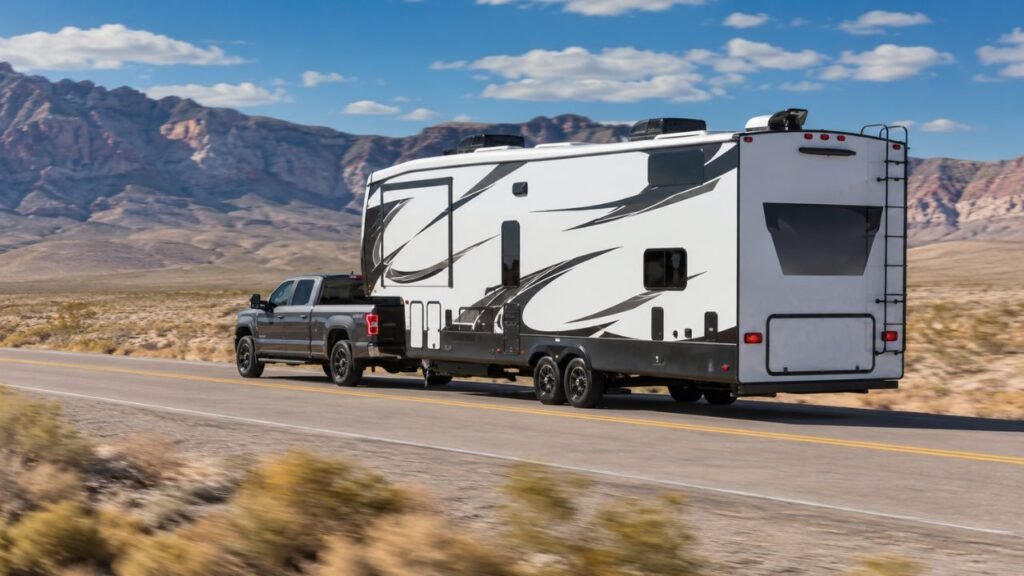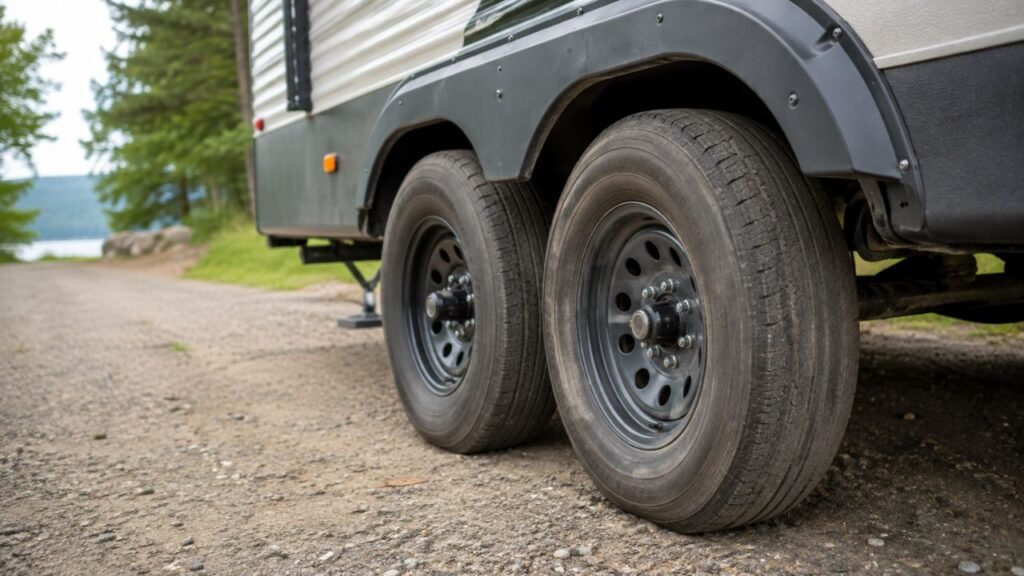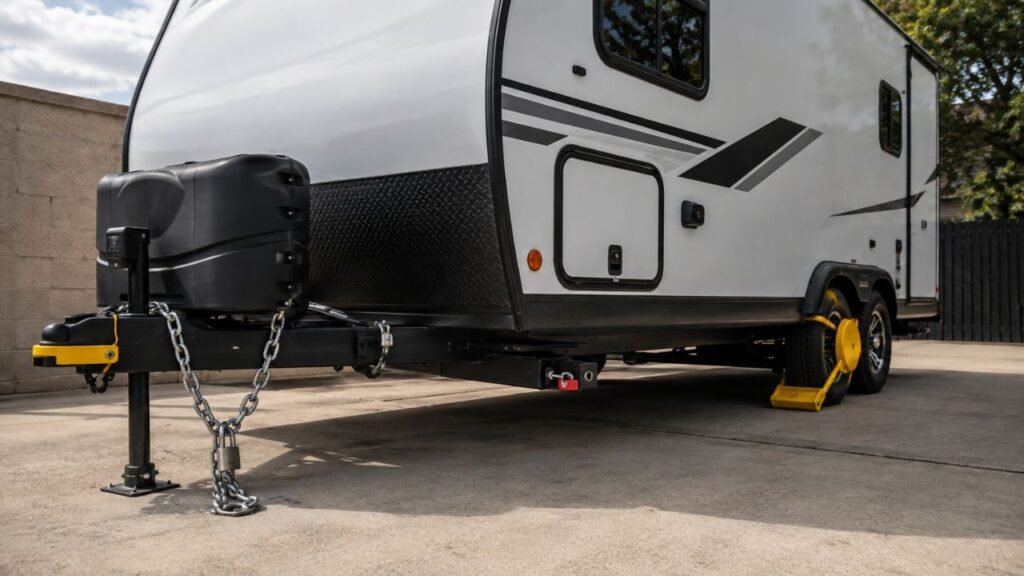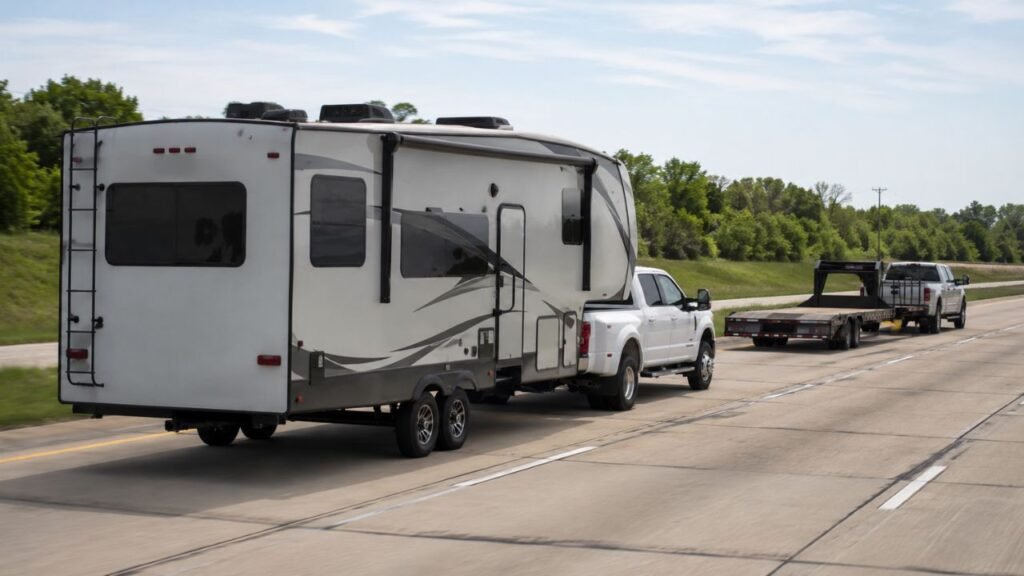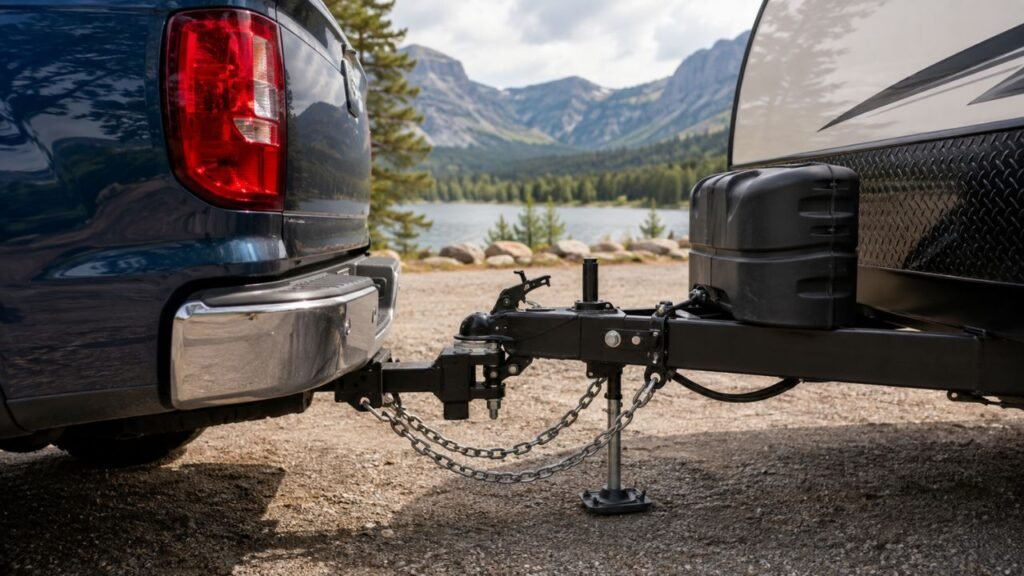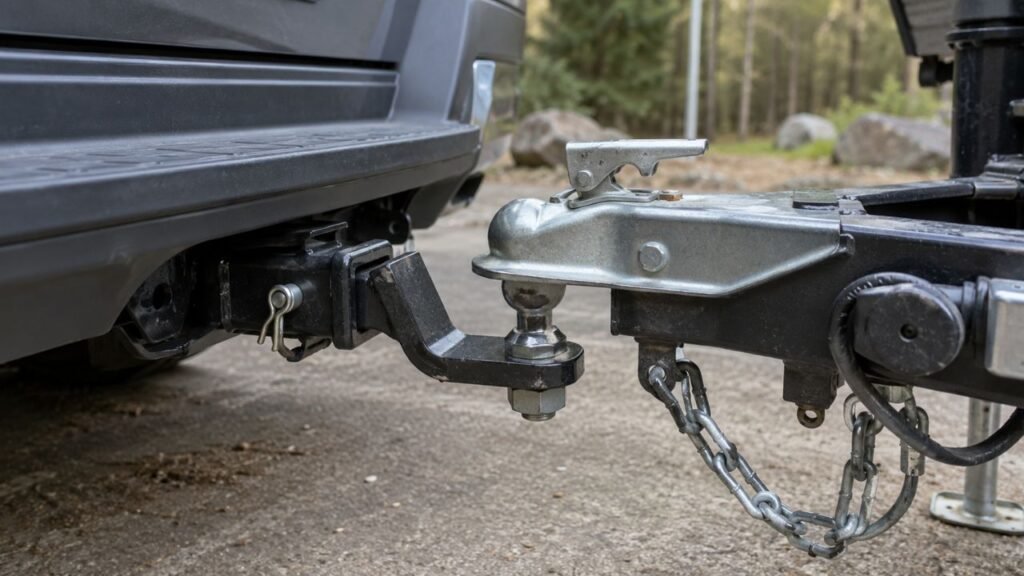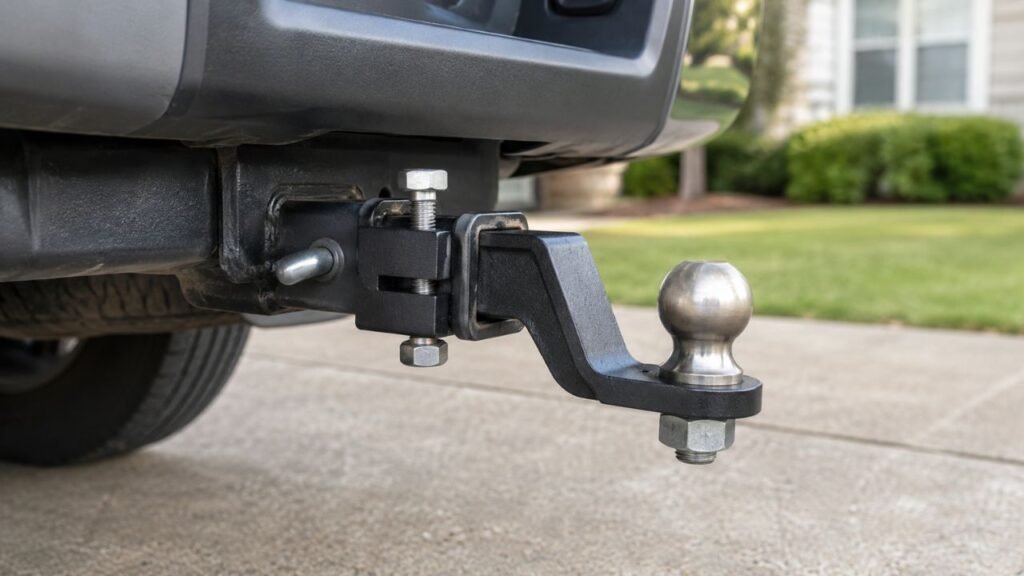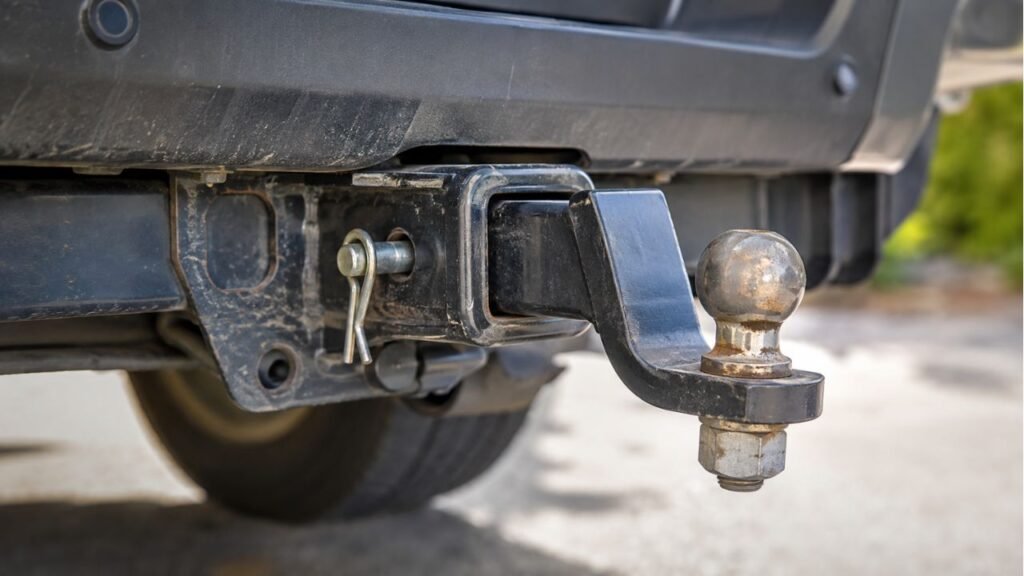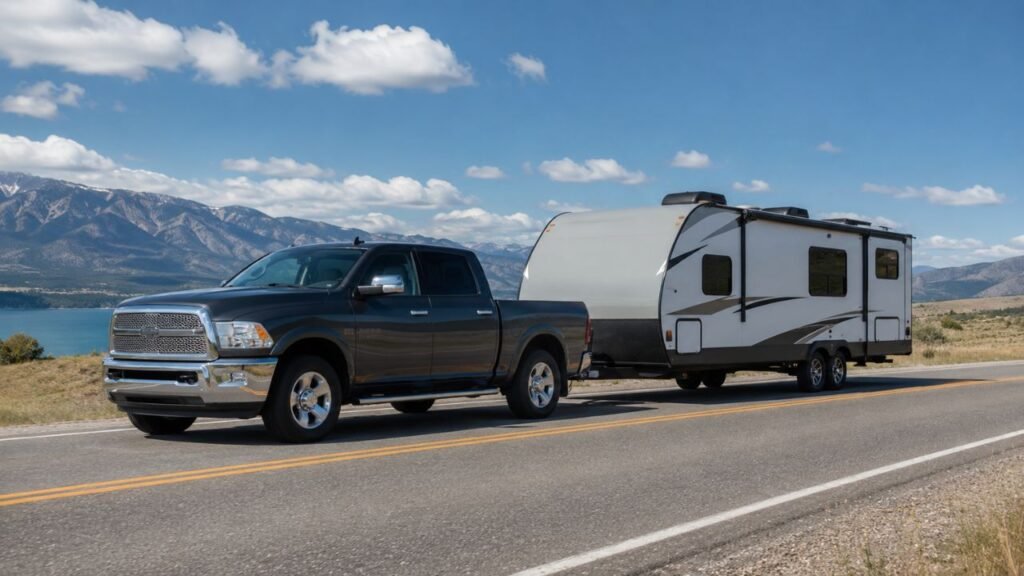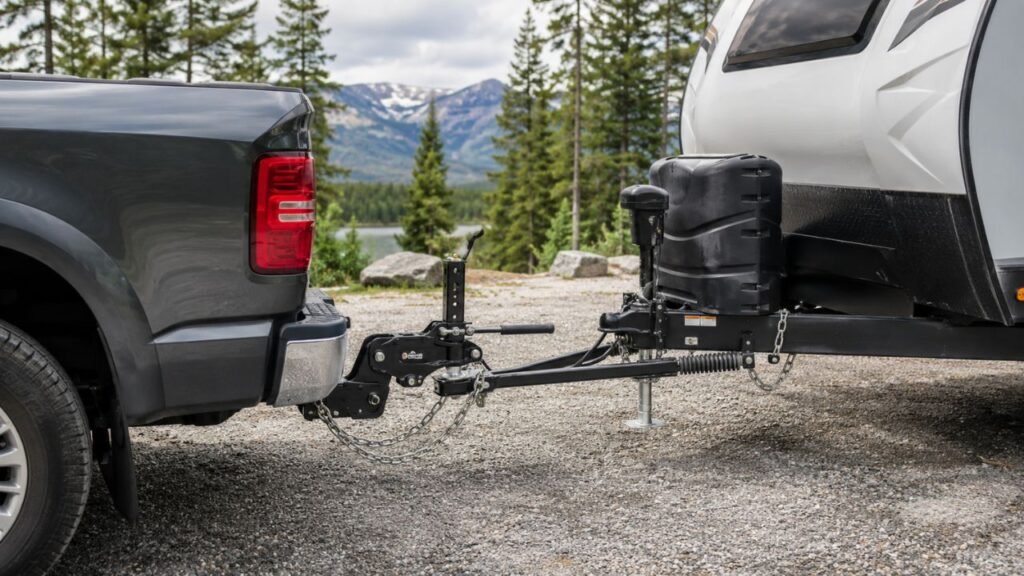
A weight distribution hitch makes noise because its spring bars, brackets, hitch head, ball, and coupler move under heavy pressure. Groaning and creaking during turns are often normal, especially when the hitch uses metal-on-metal friction for sway control. However, grinding, heavy clunking, or sudden new noises may indicate loose, worn, or incorrectly adjusted parts.
In this guide, I’ll help you identify each sound, find its source, reduce unnecessary noise, and recognize when you should stop towing and inspect the hitch.
Key Takeaways
- Groaning and creaking are often normal during low-speed turns.
- Friction-style sway control naturally creates more hitch noise.
- A dry hitch ball commonly causes high-pitched squeaking.
- Rattling usually comes from loose hardware or receiver movement.
- Grinding, banging, or sudden new noises need immediate attention.
- Lubricate only the points approved by the hitch manufacturer.
- Never grease friction surfaces without checking the hitch instructions.
- Correct loading and hitch adjustment can reduce unnecessary noise.
Is It Normal for a Weight Distribution Hitch to Make Noise?
Yes, some weight distribution hitch noise is completely normal. These hitches transfer part of the trailer’s tongue weight toward the front axle of the tow vehicle and the trailer axles. That process places the spring bars and hitch head under substantial pressure.
The hitch does not remain perfectly still while you drive. It must move as your truck and trailer turn, climb hills, cross dips, and travel over uneven roads. Metal parts slide, rotate, flex, and load against one another during those movements.
Friction-based sway-control hitches are usually the loudest. They intentionally use friction between the spring bars, brackets, or hitch head to resist unwanted trailer movement.
That friction may create:
- Groaning
- Creaking
- Squeaking
- Occasional popping
These sounds are usually most noticeable while turning slowly through campgrounds, parking lots, gas stations, and residential streets.
Normal hitch noise should remain reasonably consistent. It should not suddenly become much louder or appear alongside trailer sway, steering changes, braking problems, or visible damage.
What Different Weight Distribution Hitch Noises Mean
The type of sound can help you locate the problem. Pay attention to when it happens, how loud it becomes, and whether it recently changed.
| Hitch Noise | Likely Cause | Usually Normal? | What You Should Do |
| Groaning while turning | Spring-bar friction against sway-control brackets | Often | Inspect the contact surfaces and follow manufacturer instructions |
| High-pitched squeaking | Dry hitch ball, coupler, or approved pivot point | Sometimes | Clean and lubricate approved locations |
| Creaking | Spring bars loading and unloading | Often | Check adjustment, alignment, and wear |
| Occasional popping | Friction surfaces shifting under pressure | Sometimes | Inspect the setup and verify turning clearance |
| Rattling on rough roads | Receiver play, loose chains, pins, or hardware | No | Find and secure the loose component |
| Clunking during braking | Excessive movement in the receiver or coupler | No | Stop safely and inspect the connection |
| Grinding or scraping | Severe wear, dirt, damage, or misalignment | No | Avoid towing until the cause is identified |
| Banging over bumps | Loose brackets, hardware, or incorrect adjustment | No | Check installation, torque, and trailer loading |
A single groan during a tight turn may be harmless. A repeated metal bang during every stop needs much closer attention.
Common Reasons a Weight Distribution Hitch Makes Noise
Most hitch noise comes from friction, dry moving parts, loose connections, incorrect adjustment, or worn components. I’ll walk you through the most common causes below.
Spring Bars Sliding Across the Brackets
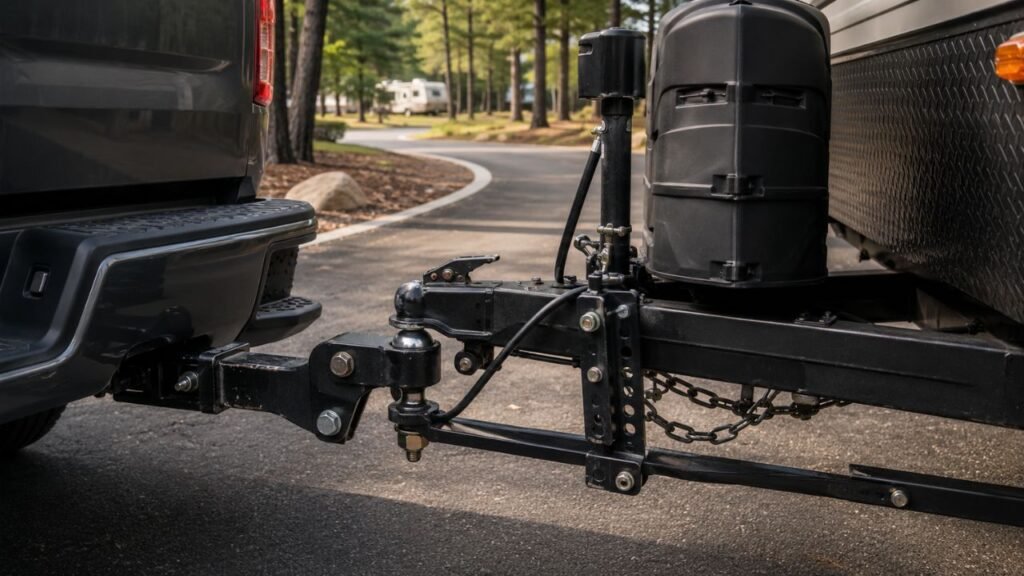
Many integrated sway-control hitches use spring bars resting on metal brackets attached to the trailer frame. As the tow vehicle turns, the bars slide across those brackets.
That sliding movement creates friction. The friction helps resist trailer sway, but it also creates groaning, scraping, or creaking sounds.
This noise may become louder when:
- Making a sharp turn
- Backing into a campsite
- Crossing an angled driveway
- Driving through a dip
- Turning while the trailer is heavily loaded
- The brackets are dirty or rusty
A deep groan from the brackets is usually normal when the system is properly installed. However, inspect the bars if the sound becomes sharp, violent, or accompanied by visible binding.
Friction Inside the Hitch Head
The ends of the spring bars fit into sockets or pivot points within the hitch head. Those connections rotate as the tow vehicle and trailer change direction.
Because the bars carry substantial force, dry pivot points may squeak, creak, or produce a rough grinding sound.
Some manufacturers recommend greasing these pivot points. Others have different maintenance instructions depending on the hitch design.
Clean away old grease, dust, and grit before applying fresh lubricant. Adding grease over dirty surfaces can create an abrasive paste that increases wear.
A Dry Hitch Ball and Trailer Coupler
The trailer coupler rotates around the hitch ball whenever you turn. Without suitable lubrication, this movement creates metal-on-metal friction.
A dry hitch ball often causes a sharp squeak that changes as the trailer turns. You may also notice polished spots, scoring, rust, or flattened areas on the ball.
To inspect the connection:
- Unhitch the trailer safely.
- Clean the hitch ball.
- Inspect it for grooves or uneven wear.
- Check the coupler socket for damage.
- Apply the recommended hitch-ball grease.
- Reconnect and test the hitch slowly.
A light, even coating is usually enough. Excess grease collects dust and can make future inspections difficult.
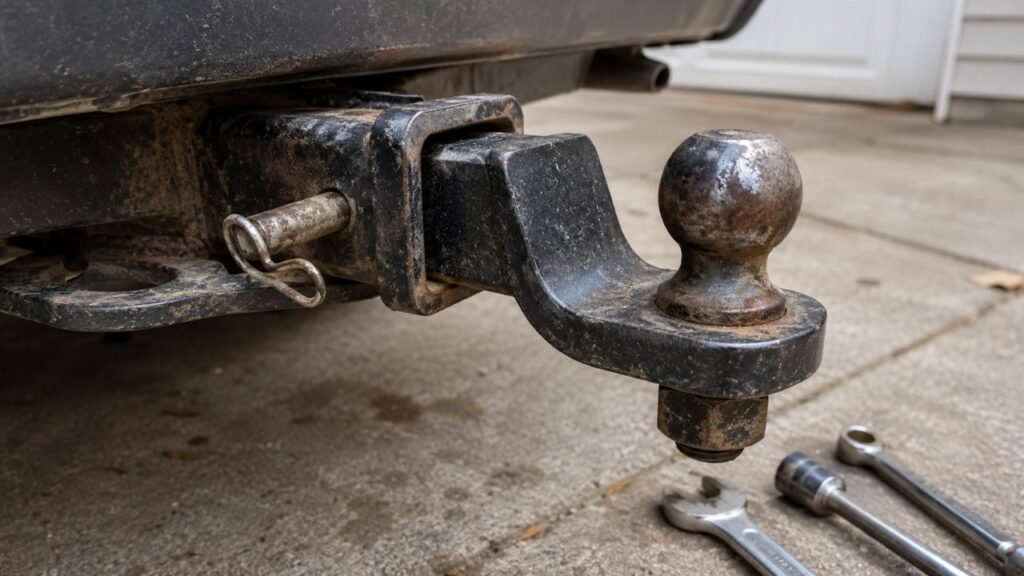
Loose Hitch Hardware
A weight distribution hitch contains several heavily loaded fasteners. If one begins loosening, the entire setup may rattle, shift, or clunk.
Common areas include:
- Hitch-head bolts
- Shank bolts
- Hitch-ball nut
- Frame-bracket bolts
- Snap-up bracket hardware
- Sway-control mounting hardware
- Hitch pin and retaining clip
Loose hardware may produce one sound during acceleration and another during braking. That happens because the hitch shifts in opposite directions as the forces change.
Do not guess the correct tightness. Use the torque specifications provided for your exact hitch.
Movement Between the Shank and Receiver
The hitch shank slides into the receiver tube on the tow vehicle. A small amount of clearance is necessary so the parts can fit together.
However, excessive clearance may cause the shank to move up, down, forward, backward, or sideways. This movement often creates a hollow clunk when starting, stopping, or crossing bumps.
A compatible anti-rattle clamp may reduce this movement. Still, it should not be used to hide a worn, damaged, or oversized receiver connection.
Inspect the receiver for:
- Cracks
- Elongated hitch-pin holes
- Rust damage
- Bent metal
- Worn edges
- Loose mounting bolts
If the receiver itself is damaged, have it inspected before towing again.
Incorrect Spring-Bar Tension
The spring bars must apply enough force to restore appropriate weight to the tow vehicle’s front axle. Too much or too little tension can create noise and poor handling.
Excessive tension may cause:
- Harsh popping
- Binding during turns
- Excessive bracket pressure
- A stiff or unnatural towing feel
Insufficient tension may cause:
- Increased receiver movement
- Trailer bouncing
- Poor steering response
- Reduced weight transfer
- Rattling or clunking
Do not judge spring-bar tension only by how level the truck appears. Follow the hitch adjustment method and vehicle recommendations.
Measuring the front wheel-well height before and after hitching can help. A vehicle scale provides an even clearer picture of axle loading.
Misaligned Frame Brackets
The spring-bar brackets must be placed correctly on the trailer frame. Crooked, uneven, or incorrectly spaced brackets may force the bars to contact at awkward angles.
That can create:
- Uneven groaning
- Sharp popping
- Side-to-side differences
- Binding during turns
- Visible wear on one edge
Compare both sides of the hitch. The brackets should be positioned consistently unless the manufacturer specifies otherwise.
Also check for interference with:
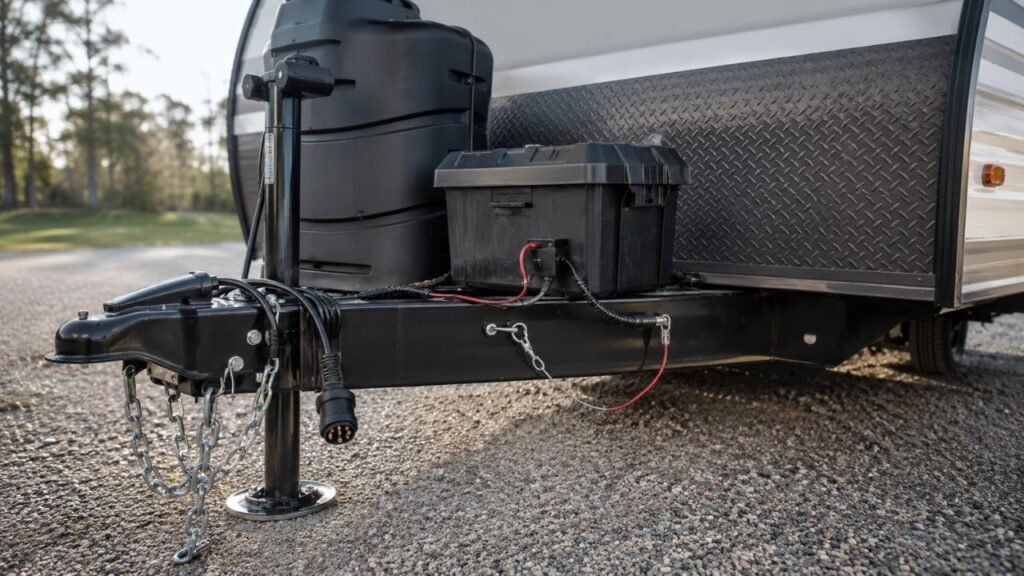
- Propane tank trays
- Battery boxes
- Frame-mounted accessories
- Wiring
- Breakaway cables
- A-frame structures
Nothing should force the bars away from their intended path.
Rust, Dirt, and Road Contamination
Dust, sand, mud, rust, and dried grease can make a previously quiet hitch suddenly become noisy.
Road grit often collects around:
- Spring-bar sockets
- L-brackets
- Hitch balls
- Couplers
- Chains
- Hitch pins
These materials increase friction and may create grinding or scraping sounds. They can also hide cracks and wear.
Clean the hitch regularly with a suitable brush and cloth. Inspect every contact surface before applying lubricant.
Surface rust may be manageable when it is light. Deep pitting, flaking metal, or weakened hardware requires closer inspection.
Worn Spring Bars, Sockets, or Brackets
Weight distribution components wear gradually because they operate under high loads. Eventually, worn surfaces may develop extra movement or unusual contact.
Look for:
- Deep grooves in the bars
- Elongated holes
- Bent spring bars
- Cracked welds
- Deformed brackets
- Loose sockets
- Missing retaining parts
- Metal flakes or shavings
Do not try to silence a worn component with extra grease. Lubrication cannot restore missing metal or structural strength.
Replace damaged parts with components approved for your hitch system.
Incorrect Trailer Loading or Tongue Weight
The load inside your trailer directly affects the forces acting on the hitch. Cargo placed too far forward can overload the tongue. Cargo placed too far rearward may reduce tongue weight and increase sway risk.
Many conventional trailers tow best when the loaded tongue weight is approximately 10% to 15% of the loaded trailer weight. Your trailer and hitch instructions should take priority.
Poor loading may cause:
- Trailer bounce
- Hitch clunking
- Irregular spring-bar pressure
- Increased sway
- Harsh braking movement
- Uneven bracket wear
Keep heavy cargo low and close to the trailer axles. Secure everything so it cannot shift while driving.
Tight Turns and Uneven Ground
Weight distribution hitches often become louder during tight turns or uneven approaches. Your tow vehicle and trailer may lean or twist in different directions.
You may hear more noise when:
- Entering a steep driveway
- Crossing a drainage dip
- Turning on a crowned road
- Backing onto leveling blocks
- Maneuvering on uneven campsites
Temporary groaning in these situations may be normal. However, stop and inspect if the hitch binds, lifts a bracket, bends a component, or prevents normal articulation.
Which Weight Distribution Hitch Noises Are Normal?
Several sounds are common during normal hitch operation. Knowing them can prevent unnecessary worry.
- Low-speed groaning: Friction-style sway control often groans during turns.
- Occasional creaking: Spring bars creak as their load changes.
- Brief popping: Friction surfaces may shift during sharp turns.
- Noise on uneven ground: Twisting between the truck and trailer increases movement.
- Noise after storage: Light surface rust may temporarily increase friction.
- Noise during tight campground turns: The bars move farther across the brackets.
- Slight chain movement: Chain-style systems may rattle briefly over bumps.
Normal noise should not be accompanied by unstable towing, loose hardware, visible cracks, severe binding, or repeated metal impacts.
When the sound changes suddenly, treat that change as useful information. Something in the hitch, trailer load, or towing connection may have changed.
When Hitch Noise Indicates a Serious Problem
Not every sound should be accepted as normal. Severe or unfamiliar noise can warn you about looseness, wear, damage, or incorrect installation.
Loud Clunking During Braking or Acceleration
A noticeable clunk when starting or stopping often means something is moving excessively.
Possible causes include:
- Loose hitch pin
- Excessive receiver clearance
- Worn receiver hole
- Loose coupler
- Incorrectly adjusted coupler latch
- Loose hitch-ball nut
- Loose hitch-head hardware
Park safely and inspect the complete connection. Confirm that the coupler is fully seated on the ball and secured with the correct pin or lock.
Grinding That Continues While Driving
Persistent grinding is not a normal friction sound. It may indicate damaged surfaces, embedded debris, poor alignment, or metal parts rubbing incorrectly.
Stop towing if you notice ongoing grinding. Look for:
- Fresh metal shavings
- Deep scratches
- Bent brackets
- Dry pivot points
- Contact with the trailer frame
- Damaged spring-bar sockets
Continuing to tow may worsen the damage quickly.
Repeated Banging Over Small Bumps
A properly connected hitch should not produce heavy banging over every small road imperfection.
Repeated impacts may come from:
- Loose frame brackets
- Excessive receiver play
- Incorrect spring-bar tension
- Worn trailer suspension parts
- Loose cargo
- A damaged coupler
The sound may not always come from the hitch. Trailer suspension equalizers, shackles, bushings, and leaf springs can create similar noises.
Sudden Noise That Was Not Present Before
A sudden new sound deserves attention, even when the hitch previously worked without trouble.
Possible changes include:
- A fastener loosening
- Cargo shifting
- A spring bar bending
- A bracket moving
- Grease washing away
- A component striking an obstacle
- A coupler reconnecting incorrectly
Inspect the hitch before continuing a long journey. A ten-minute check may prevent a much larger problem.
Noise Accompanied by Trailer Sway
Normal hitch friction may create sound, but it should not make the trailer unstable.
Noise combined with sway may indicate:
- Incorrect tongue weight
- Loose sway-control components
- Insufficient spring-bar tension
- Worn hitch parts
- Improper loading
- Low tire pressure
- Trailer suspension problems
Reduce speed smoothly and avoid abrupt steering. Move to a safe location before inspecting the setup.
Visible Cracks, Bending, or Metal Shavings
Do not continue towing when you find structural damage.
Serious warning signs include:
- Cracked welds
- Bent spring bars
- Deformed brackets
- Cracks around the receiver
- Missing pins or clips
- Elongated bolt holes
- Heavy metal shavings
Replace or professionally inspect damaged components before towing again.
Where Should You Lubricate a Weight Distribution Hitch?
Lubrication can reduce squeaking and wear, but every hitch is different. Check the manual for your specific model before applying grease anywhere.
Hitch Ball
The hitch ball is one of the most common lubrication points. It rotates inside the coupler during every turn.
Clean the ball before applying a thin coating of suitable grease. Inspect both the ball and coupler for wear while they are separated.
A dry hitch ball may squeak loudly and develop scoring. Regular lubrication helps reduce unnecessary friction.
Spring-Bar Pivot Points
Many hitches allow grease where the spring bars enter or rotate within the hitch head.
These points carry high loads and may become noisy when dry. Apply only the recommended amount of lubricant.
Before greasing:
- Remove old lubricant.
- Wipe away grit and rust.
- Inspect the sockets.
- Apply fresh grease.
- Remove excess material.
Some hitch systems use specialized lubricants. Follow the product recommendations carefully.
Coupler Latch Components
The coupler latch contains moving parts that may become stiff or noisy. Light lubrication at approved pivot points can help the mechanism operate smoothly.
Do not allow grease to hide cracks or prevent the latch from closing fully. Always confirm the coupler is locked around the ball before towing.
Areas You Should Not Grease
Certain weight distribution hitches rely on dry friction for sway control. Lubricating these surfaces may reduce their effectiveness.
Avoid greasing the following unless your manufacturer specifically allows it:
- L-bracket contact surfaces
- Friction pads
- Sway-control plates
- Spring-bar surfaces designed for dry friction
- Brake components
- Dirty surfaces covered with sand or grit
- Any area prohibited in the hitch instructions
Important: Do not assume that every metal contact point needs grease. Some contact points create the friction that controls trailer sway.
How to Find the Exact Source of the Noise
Finding the source becomes easier when you connect each sound with a specific movement. Complete the inspection on firm, level ground.
- Park the tow vehicle and trailer safely.
- Apply the parking brake.
- Chock the trailer wheels.
- Let hot hitch components cool.
- Inspect the hitch ball and coupler.
- Check the coupler latch and safety pin.
- Examine the spring bars for bending or grooves.
- Inspect both frame brackets.
- Look for fresh shiny contact marks.
- Search for rust flakes or metal shavings.
- Check every bolt, pin, clip, and chain.
- Inspect the shank inside the receiver.
- Confirm bracket spacing and alignment.
- Check trailer cargo for movement.
- Inspect the trailer suspension.
- Reconnect the hitch correctly.
- Perform a slow test in a safe area.
During the slow test, listen carefully.
- Noise while turning usually involves bars, brackets, pivots, or the coupler.
- Noise during braking often involves receiver or coupler movement.
- Noise over bumps may involve brackets, suspension, or loose cargo.
- Noise during acceleration often involves shifting within the receiver.
Never place your hands near loaded spring bars while someone moves the vehicle. These components store substantial force.
How to Reduce Weight Distribution Hitch Noise Safely
The goal is not always complete silence. Your priority should be removing unnecessary noise without reducing weight distribution or sway-control performance.
Clean the Hitch Components
Begin with a complete cleaning. Dirt can make normal friction much louder and accelerate wear.
Clean:
- The hitch ball
- Coupler socket
- Spring bars
- Pivot sockets
- Frame brackets
- Hitch pin
- Receiver opening
Use a suitable brush and cloth. Avoid leaving abrasive grit on moving surfaces.
Cleaning also makes cracks, grooves, and worn areas easier to see.
Lubricate Approved Contact Points
Apply suitable grease to the hitch ball and any approved pivot points.
Use a thin, even coating rather than packing every surface with grease. Too much lubricant collects dirt and spreads onto surfaces that may need to remain dry.
Never lubricate sway-control friction surfaces without specific approval.
Retorque the Hardware
Loose fasteners can create noise and unsafe movement.
Check:
- Hitch-ball nut
- Hitch-head bolts
- Shank bolts
- Frame-bracket fasteners
- Receiver mounting bolts
- Sway-control hardware
Use a suitable torque wrench and the manufacturer’s specified values. Do not rely on hand tightness or guesswork.
Check new installations more frequently because parts may settle during early use.
Correct the Hitch Adjustment
Incorrect adjustment can make the hitch noisy and affect handling.
Review:
- Hitch-head angle
- Spring-bar tension
- Bracket position
- Spring-bar capacity
- Ball height
- Trailer level
- Front-axle load restoration
Take measurements before hitching, after coupling, and after engaging the spring bars. Compare them with the vehicle and hitch instructions.
A quiet hitch is not automatically adjusted correctly. A noisy hitch is not automatically adjusted incorrectly.
Reduce Receiver Movement
A compatible anti-rattle clamp may reduce movement between the shank and receiver.
Before installing one, confirm:
- The receiver is not damaged.
- The hitch pin fits correctly.
- The shank is the correct size.
- The device is approved for towing.
- The clamp will not interfere with other components.
An anti-rattle device should tighten a healthy connection. It should not conceal structural wear.
Install Manufacturer-Approved Noise-Reduction Pads
Some hitch manufacturers offer composite pads, bracket jackets, or other noise-reduction parts.
These products reduce direct metal contact while maintaining an intended level of sway resistance. Compatibility matters because the pad may slightly change the friction characteristics.
Use only products designed for your exact hitch or approved by its manufacturer.
Correct Trailer Loading
Balanced loading reduces bouncing and sudden hitch-force changes.
Before towing:
- Place heavy cargo near the trailer axles.
- Keep cargo low.
- Balance weight from side to side.
- Maintain appropriate tongue weight.
- Secure all movable items.
- Avoid placing excessive weight behind the axles.
Recheck the loading after adding water, batteries, propane, bicycles, or storage equipment. These changes may affect tongue weight considerably.
Replace Worn Components
Some hitch noise cannot be fixed safely through cleaning or lubrication.
Replace parts showing:
- Deep wear grooves
- Cracks
- Bending
- Elongated holes
- Missing retaining pieces
- Severe corrosion
- Deformation
Use replacement parts that match the hitch model and capacity. Mixing unrelated components may create fit and strength problems.
Can You Make a Weight Distribution Hitch Completely Silent?
Making a weight distribution hitch completely silent is usually unrealistic. The system carries heavy forces while allowing the tow vehicle and trailer to move independently.
Friction-style sway control may remain noisy even after proper cleaning, lubrication, and adjustment. That sound is partly a result of the friction resisting unwanted trailer movement.
You can usually reduce squeaking, rattling, and excessive clunking. However, trying to eliminate every groan may tempt you to lubricate surfaces that must remain dry.
A properly working hitch with predictable operating noise is better than a silent hitch with weakened sway control.
Do Different Weight Distribution Hitches Make Different Noises?
Yes, hitch design has a major influence on sound. The sway-control method, spring-bar style, brackets, sockets, and adjustment system all affect what you hear.
Integrated Friction Sway-Control Hitches
Integrated systems use friction at several points to control trailer movement. They often create more groaning and creaking than simpler systems.
Common sounds include:
- Deep groaning during turns
- Creaking at low speed
- Brief popping during sharp articulation
- Scraping sounds across brackets
These noises can be normal when the hitch is clean, correctly adjusted, and undamaged.
Chain-Style Weight Distribution Hitches
Chain-style systems suspend the spring bars with chains rather than resting them continuously on friction brackets.
They may create less bracket friction but can produce:
- Chain rattling
- Snap-up bracket noise
- Spring-bar movement
- Noise from a separate sway-control unit
Loose chains or damaged brackets should still be inspected.
Round-Bar and Trunnion-Bar Hitches
Round bars usually insert from beneath the hitch head. Trunnion bars normally enter from the side or rear.
Each design has different:
- Pivot points
- Ground clearance
- Wear patterns
- Lubrication requirements
- Contact angles
Neither style is automatically silent. Setup and maintenance usually matter more than bar shape alone.
Hitches With Separate Friction Sway Bars
A separate friction sway bar slides internally as the tow vehicle and trailer turn. That movement may cause squeaking or groaning.
Some separate sway-control devices require special handling during backing or very sharp turns. Follow the instructions for your unit.
Do not apply grease to a friction sway bar unless the manufacturer specifically directs you to do so.
Weight Distribution Hitch Noise During Specific Situations
The moment when the sound appears can reveal its source. Use the following situations to narrow down the problem.
Noise When Turning
Turning noise often comes from spring bars sliding across brackets or rotating within the hitch head.
Other possible sources include:
- Dry hitch ball
- Dry coupler
- Misaligned brackets
- Tight-turn interference
- Separate sway-control bars
Some turning noise is expected. Stop if the hitch binds or parts contact the trailer frame.
Noise When Braking
Braking transfers force forward through the trailer connection. Any looseness may produce a clunk.
Inspect:
- Coupler fit
- Hitch-ball nut
- Receiver movement
- Hitch pin
- Brake controller operation
- Trailer brakes
- Cargo movement
A worn suspension component may also make noise as the trailer weight shifts forward.
Noise When Accelerating
Acceleration pulls the hitch components in the opposite direction. A loose shank may shift backward and create a single clunk.
Check the receiver, hitch pin, coupler, and hitch-head fasteners.
Also inspect the trailer cargo. A heavy object sliding rearward can sound like hitch movement.
Noise Over Bumps
Road bumps cause quick changes in spring-bar loading.
Noise may come from:
- Receiver play
- Loose chains
- Frame brackets
- Trailer suspension
- Safety chains
- Unsecured cargo
- Worn spring-bar sockets
Safety chains should have enough slack for turns, but they should not drag or strike other parts.
Noise While Backing Up
Backing often involves sharper angles than forward driving. Integrated sway-control hitches commonly allow backing with the spring bars engaged.
However, some separate friction sway-control devices may need loosening or removal before reversing sharply.
Follow your hitch instructions. Never assume every system works the same way.
Noise After Rain or Washing
Rain can wash lubricant from the hitch ball and pivot points. Moisture may also cause light surface rust.
After wet conditions:
- Clean the hitch.
- Dry the components.
- Inspect for rust.
- Lubricate approved points.
- Keep friction surfaces dry where required.
Noise that continues after cleaning may indicate wear or damage rather than moisture alone.
Weight Distribution Hitch Noise Inspection Checklist
Use this checklist before towing and whenever the hitch sound changes.
- Hitch ball is clean and lubricated where permitted.
- Coupler is fully seated on the ball.
- Coupler latch is closed and secured.
- Hitch-ball nut is properly torqued.
- Hitch head has no cracks or deformation.
- Spring bars are straight.
- Spring bars have no deep wear grooves.
- Pivot sockets are not excessively worn.
- Frame brackets are correctly positioned.
- Bracket fasteners are secure.
- Friction surfaces are not incorrectly greased.
- Hitch pin is fully installed.
- Retaining clip is secure.
- Receiver has no cracks or severe rust.
- Shank movement is not excessive.
- Safety chains are properly crossed and routed.
- Breakaway cable is connected correctly.
- Electrical cable cannot drag.
- Trailer cargo is secure.
- Tongue weight is within the required range.
- Tires are inflated correctly.
- Trailer suspension has no loose parts.
- Trailer brakes operate correctly.
- No fresh metal shavings are visible.
Do not skip the inspection simply because the trailer towed well on the previous trip. Hardware, cargo, tire pressure, and lubrication conditions can change between journeys.
How Often Should You Maintain a Weight Distribution Hitch?
Inspect the hitch briefly before every towing trip. Complete a deeper inspection at the intervals recommended for your specific system.
Maintenance should become more frequent after rough roads, rain, mud, road salt, or long-term storage.
Useful inspection times include:
- Before every towing trip
- After the first trip with a new hitch
- After changing hitch adjustments
- After changing trailer loading
- After traveling on rough roads
- After driving through mud or sand
- After exposure to heavy rain
- After winter road-salt exposure
- Before long-distance towing
- Before and after storage
- Whenever the hitch sound changes
- At every manufacturer-recommended service interval
Clean and inspect the hitch before adding lubricant. Grease can hide wear and trap abrasive material.
Mistakes That Can Make Hitch Noise Worse
Several common mistakes can increase noise or weaken hitch performance.
- Greasing every metal surface: Some surfaces require dry friction for sway control.
- Ignoring torque specifications: Loose or overtightened hardware may cause damage.
- Using incorrect spring bars: Bars must match the trailer and hitch requirements.
- Applying excessive spring-bar tension: More tension does not always improve towing.
- Ignoring trailer loading: Poor loading changes hitch forces and stability.
- Using noise as the only setup test: A quiet hitch may still be adjusted incorrectly.
- Continuing with grinding sounds: Grinding may indicate active component damage.
- Installing incompatible anti-rattle devices: Some devices may interfere with normal movement.
- Skipping receiver inspection: A clamp cannot repair structural wear.
- Mixing hitch components: Unapproved combinations may not fit or perform correctly.
- Covering dirty parts with grease: Dirt mixed with grease increases abrasion.
- Ignoring trailer suspension noise: Not every sound comes from the hitch itself.
The best approach is to diagnose the source before trying to silence it.
When Should You Ask a Professional to Inspect the Hitch?
Arrange a professional inspection when the hitch produces grinding, repeated banging, violent popping, or severe clunking.
You should also seek help when you find:
- Bent spring bars
- Cracked welds
- Damaged receiver metal
- Loose brackets that will not stay tight
- Severe rust
- Elongated bolt holes
- Uneven trailer braking
- Persistent sway
- Unexpected steering changes
A towing specialist can verify the hitch capacity, spring-bar rating, bracket position, hitch-head angle, torque, tongue weight, and front-axle load restoration.
Professional help is also worthwhile when the hitch was installed without measurements or when you cannot identify the noise confidently.
Final Words
A weight distribution hitch does not need to be silent to work correctly. Groaning, creaking, and occasional popping are often normal when spring bars and friction surfaces move during turns.
However, heavy clunking, repeated banging, grinding, or sudden new sounds should never be ignored. These noises may point to looseness, wear, damage, poor loading, or incorrect adjustment.
Start with a careful inspection. Clean the hitch, lubricate only approved points, verify the hardware torque, and confirm the trailer load. Most unnecessary noise can be reduced without weakening the hitch’s sway-control performance.
Above all, never grease a friction surface just because it makes noise. The sound may be coming from the same friction that helps keep your trailer stable.
Related FAQs
Why Does My Weight Distribution Hitch Groan When Turning?
The spring bars and sway-control brackets move against each other during turns. This friction often creates normal groaning, especially with integrated friction sway-control hitches.
Should I Grease My Weight Distribution Hitch Bars?
Grease only the spring-bar pivot points approved by the manufacturer. Do not grease bracket contact surfaces that depend on friction for sway control.
Why Does My Hitch Pop During Sharp Turns?
Spring bars and friction surfaces can shift under heavy pressure during sharp turns. Occasional popping may be normal, but violent or repeated popping requires inspection.
Why Does My Weight Distribution Hitch Clunk When Braking?
Clunking commonly comes from receiver play, a loose coupler, worn hitch-pin holes, loose hardware, or movement between the hitch shank and receiver.
Can Hitch Noise Cause Trailer Sway?
Normal hitch noise does not cause sway. However, loose, worn, incorrectly adjusted, or improperly loaded components may create both noise and unstable towing.
Do Weight Distribution Hitches Need Lubrication?
Most systems need lubrication at selected points, including the hitch ball or spring-bar pivots. Follow the instructions for your exact hitch model.
Can I Use WD-40 on a Weight Distribution Hitch?
WD-40 is not usually a suitable long-term lubricant for heavily loaded hitch points. Use a grease or lubricant recommended by the hitch manufacturer.
Do Sway Bracket Jackets Reduce Hitch Noise?
Approved bracket jackets can reduce metal-on-metal noise. Make sure they are compatible because they may change friction and sway-control performance.
Why Is My Hitch Louder After Rain?
Rain may wash grease away, introduce grit, or cause light surface rust. Clean and inspect the hitch before lubricating approved points again.
Should I Remove the Spring Bars Before Backing Up?
Many integrated systems allow backing with the spring bars attached. Some separate sway-control devices may require removal or loosening, so check the instructions.
Is a Noisy Weight Distribution Hitch Dangerous?
Predictable groaning or creaking may be normal. Grinding, banging, severe clunking, structural damage, or noise combined with sway may indicate a dangerous problem.
How Can I Tell Whether the Noise Comes From the Trailer Suspension?
Suspension noise usually becomes louder over bumps rather than only during turns. Inspect the leaf springs, shackles, bushings, equalizers, and mounting hardware.
Why Does My Weight Distribution Hitch Squeak at Low Speed?
Low-speed squeaking often comes from a dry hitch ball, coupler, spring-bar pivot, or contaminated contact point. Clean and lubricate approved areas.
Can Too Much Weight Distribution Cause Hitch Noise?
Yes. Excessive spring-bar tension can increase binding, bracket pressure, harsh popping, and steering problems. Adjust the hitch using proper measurements.
Can Low Tongue Weight Make the Hitch Noisy?
Low tongue weight can increase trailer movement, bouncing, sway, and rattling. Verify the loaded tongue weight and reposition cargo when necessary.
Should a New Weight Distribution Hitch Be Noisy?
A new hitch may be noisy while its painted contact surfaces begin wearing in. Still, inspect the installation, torque, lubrication points, and adjustment before towing.
Can an Anti-Rattle Clamp Stop Weight Distribution Hitch Noise?
An anti-rattle clamp may reduce movement between the shank and receiver. It will not fix noise from spring bars, worn parts, loose brackets, or structural damage.
Why Does One Side of My Weight Distribution Hitch Make More Noise?
Uneven noise may indicate a crooked bracket, unequal bar loading, trailer-frame interference, uneven cargo, or wear concentrated on one side.
Can I Tow With a Grinding Weight Distribution Hitch?
You should not continue towing with persistent grinding. Stop safely and inspect for misalignment, debris, dry pivots, worn parts, or metal damage.
How Do I Know When to Replace My Spring Bars?
Replace spring bars that are bent, cracked, deeply grooved, severely corroded, or no longer fitting securely within their sockets or brackets.

Scott Miller shares real-world RV road trip insights built from years of traveling open highways and backroads. He covers route planning, campground choices, and travel gear with a practical mindset. His content is written for RVers who value reliability over trends.