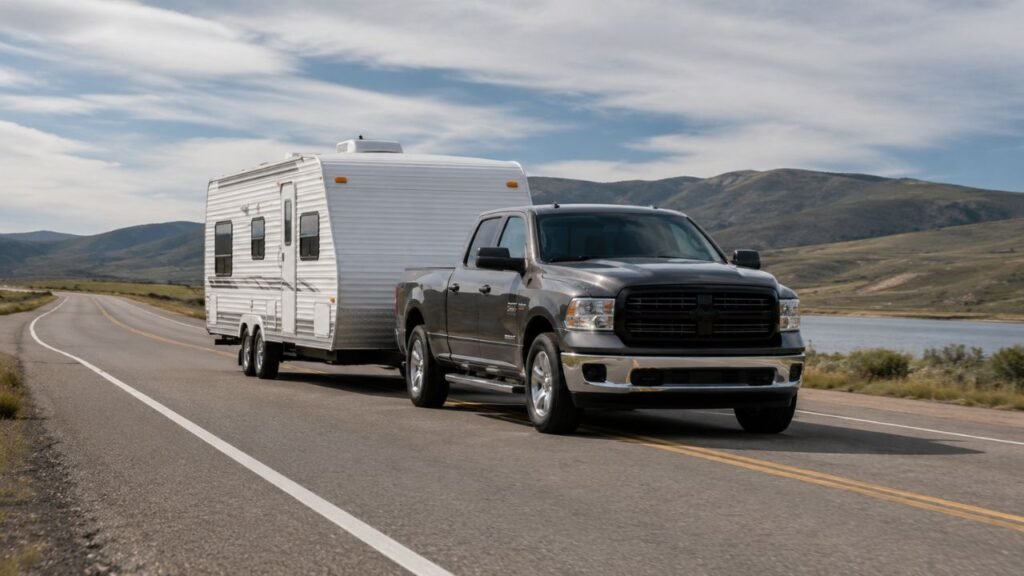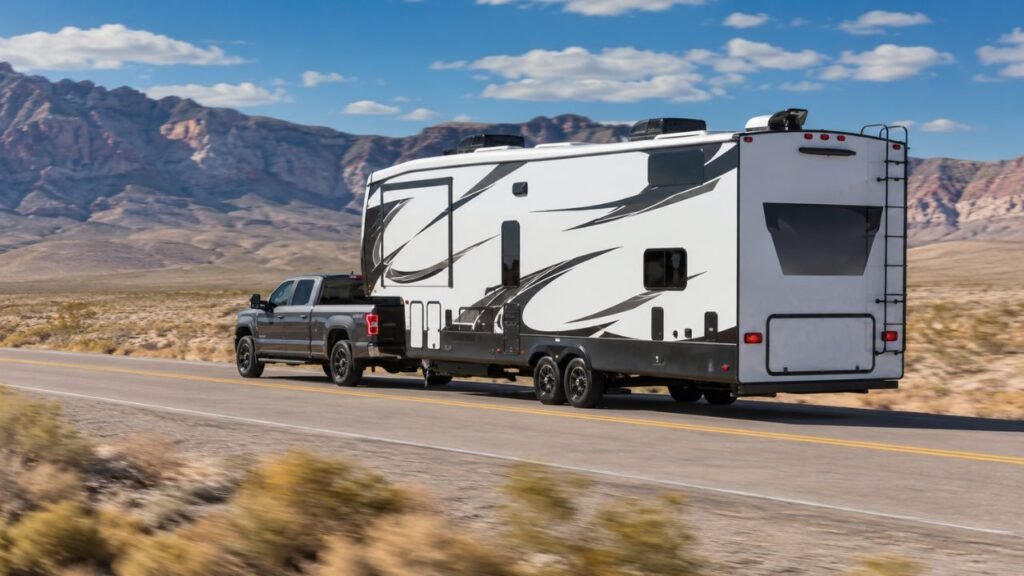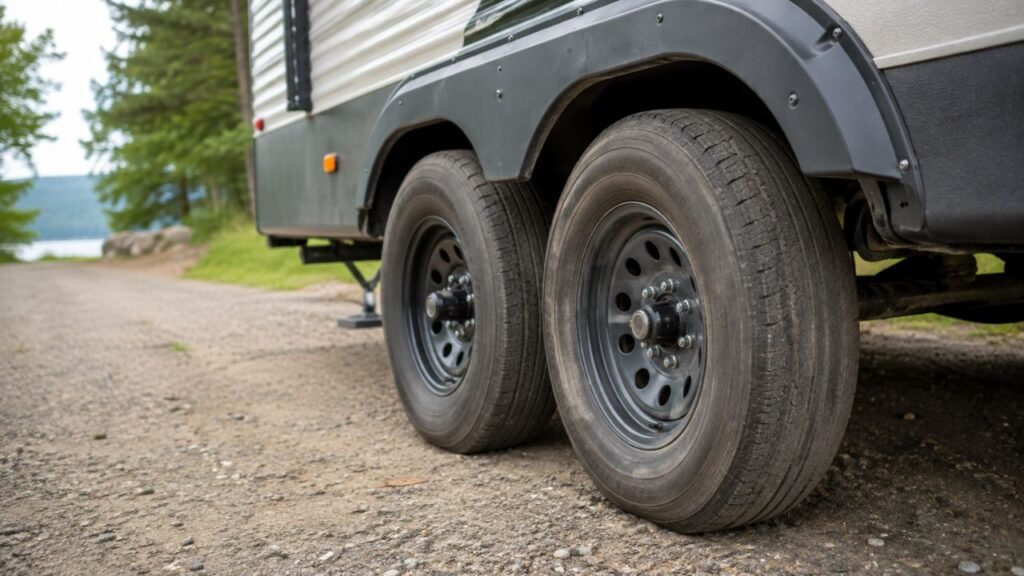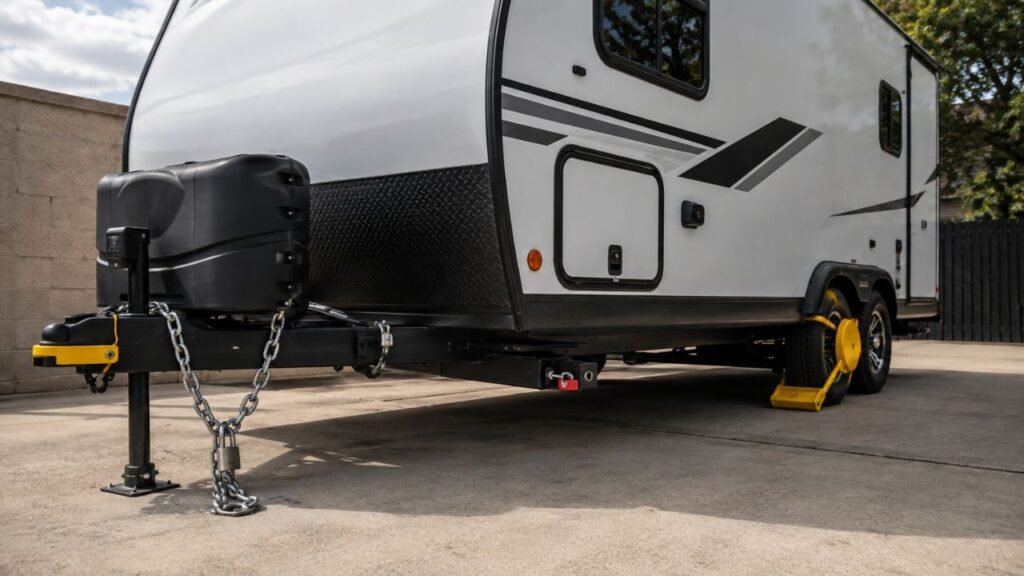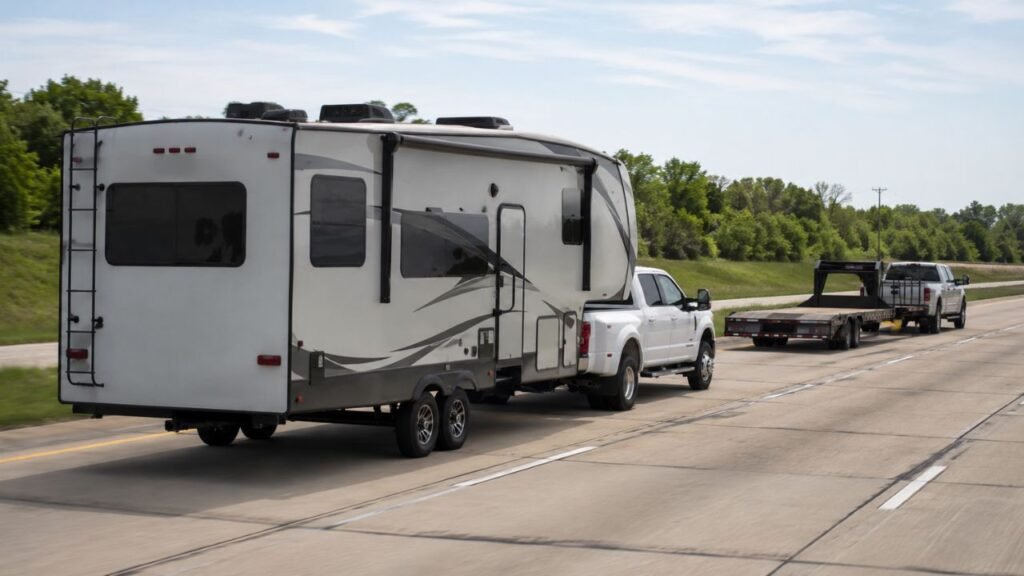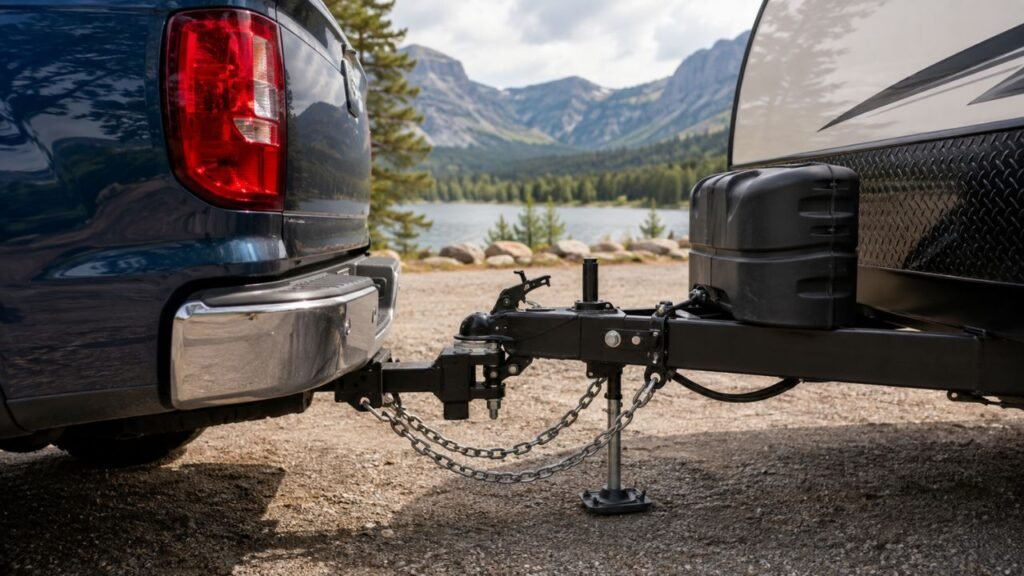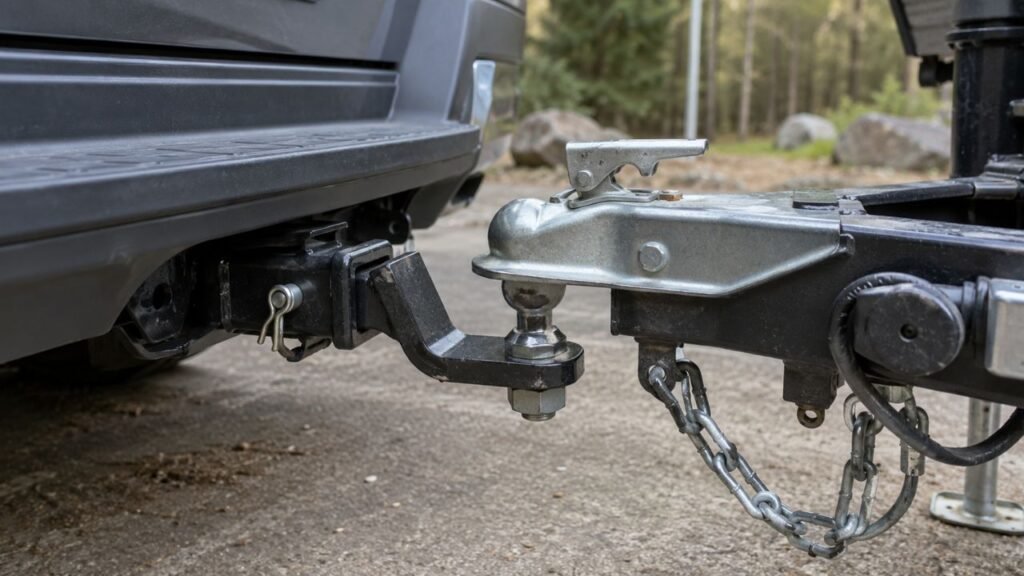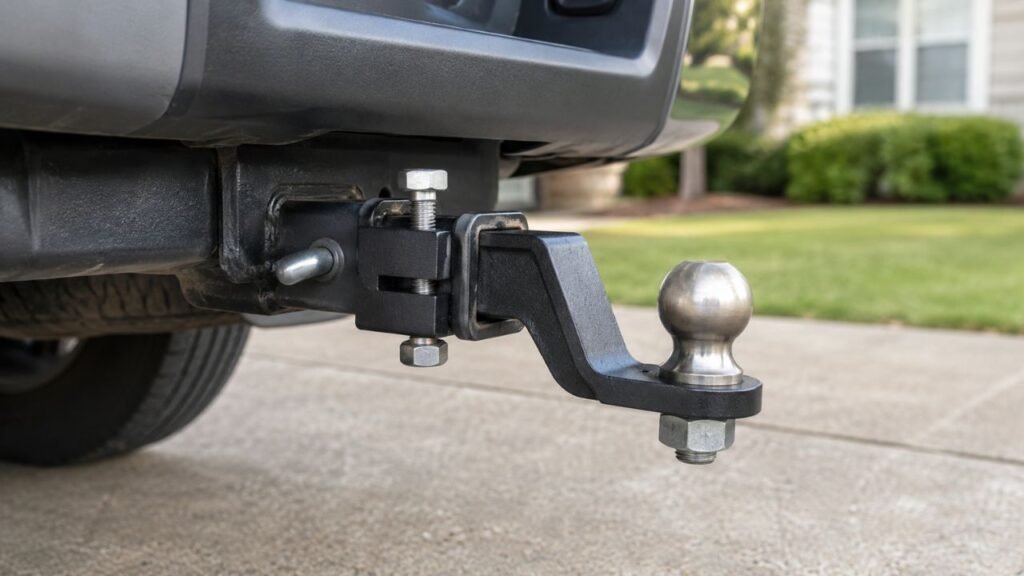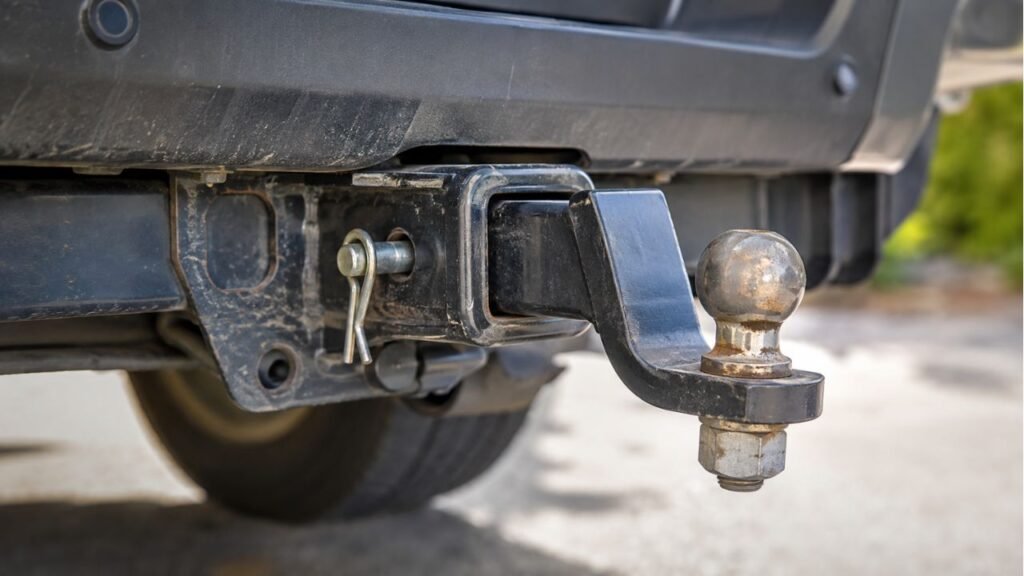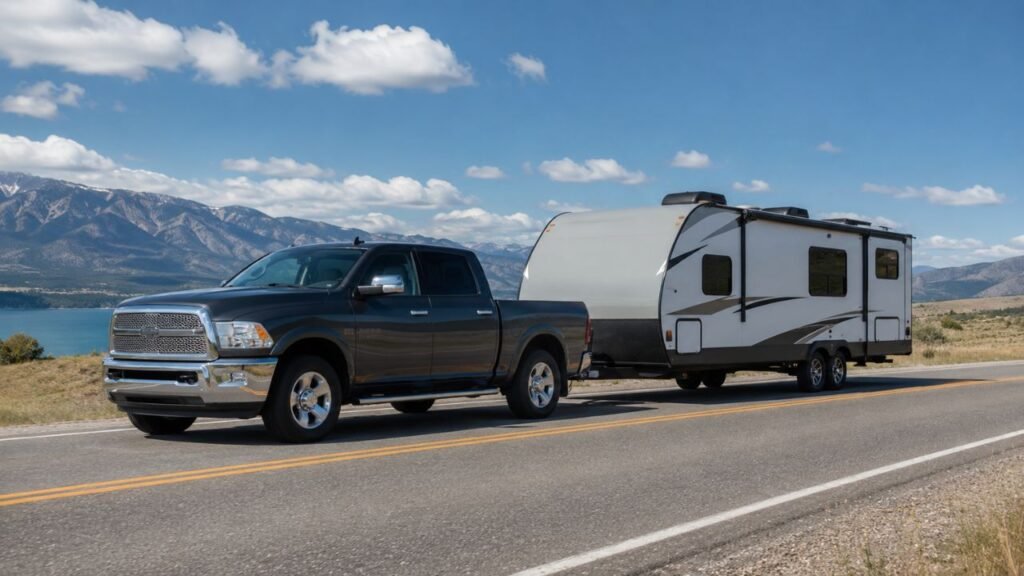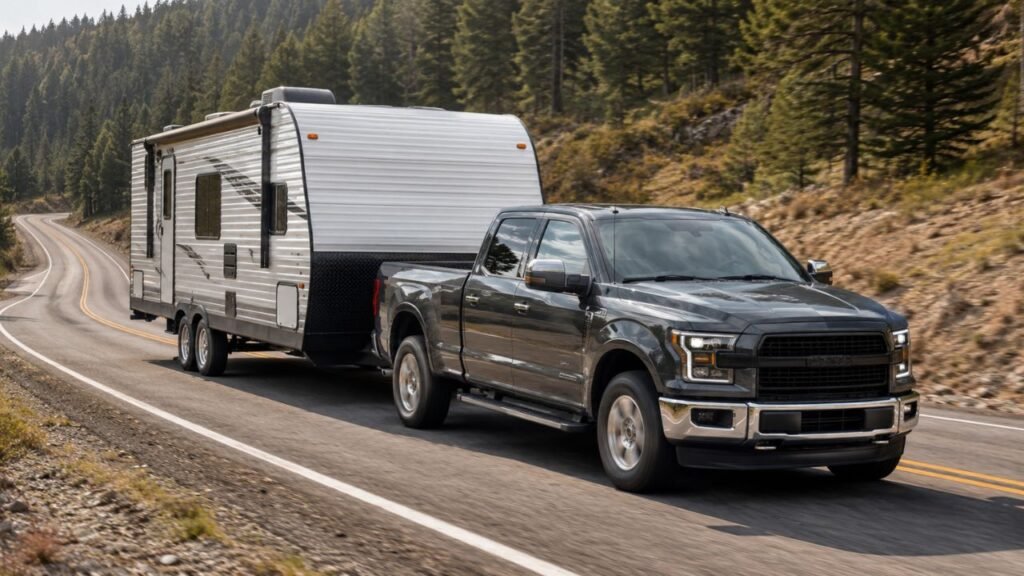
A trailer usually pushes your truck because its brakes are weak, delayed, disconnected, or incorrectly adjusted. Excessive trailer weight, poor cargo placement, hard braking, and steep downhill roads can also make the trailer overpower the tow vehicle.
In this guide, I’ll help you identify the exact cause. We’ll check the brakes, controller, trailer weight, cargo balance, hitch setup, and driving habits.
Key Takeaways
- A trailer should assist with braking instead of shoving the truck.
- Weak trailer brakes are the most common cause of pushing.
- Low brake-controller gain can leave the truck doing most of the stopping.
- Excessive trailer weight increases momentum and stopping distance.
- Incorrect cargo placement may reduce tongue weight and overall stability.
- Downhill pushing often involves excessive speed or overheated brakes.
- A weight-distribution hitch cannot replace working trailer brakes.
- Stop towing if the trailer strongly pushes during ordinary braking.
What Does It Mean When a Trailer Pushes Your Truck?
Trailer push is the forward force you feel during deceleration. Your truck starts slowing, but the trailer continues moving forward with greater force.
You may feel the truck being shoved from behind. The rear suspension may compress, and the combination may feel difficult to stop.
Some forward pressure is normal because a moving trailer has momentum. However, a properly working trailer braking system should control most of the trailer’s own stopping demand.
The trailer should not dramatically increase stopping distance. It also should not push the truck through intersections or downhill curves.
Trailer push is usually most noticeable when:
- Approaching a stop sign
- Braking in slow traffic
- Descending a steep grade
- Stopping with a fully loaded trailer
- Braking on wet or loose roads
- Making a sudden emergency stop
This problem deserves immediate attention. It can quickly become dangerous when road conditions change.
When Does the Trailer Push the Truck?
The moment when pushing occurs provides useful clues. Pay attention to the speed, road, cargo load, and braking pressure involved.
The Trailer Pushes During Normal Braking
Pushing during every ordinary stop usually points toward weak trailer brakes.
The brake controller may have low gain. The trailer plug may also have a damaged brake-wire connection.
Worn brake shoes, damaged magnets, poor grounds, or hydraulic problems can produce similar symptoms.
Start by testing the manual brake-controller lever. The trailer should create noticeable resistance at a low speed.
The Trailer Pushes Only During Hard Braking
Your trailer may behave normally during gentle stops but push during harder braking.
This can happen when the truck brakes respond faster than the trailer brakes. A time-delayed controller may need more gain or boost.
The trailer may also be too heavy for its brakes. Worn components can sometimes provide light braking but fail under greater demand.
Following too closely can make the problem feel worse. You are forced to brake suddenly before the trailer brakes respond fully.
The Trailer Pushes the Truck Downhill
Gravity increases the trailer’s forward force on a descent. The braking system must control both weight and speed.
Trailer brakes can overheat during a long grade. As temperatures rise, their stopping ability may decrease.
The truck may also be in too high a gear. That forces the service brakes to control the entire combination.
Reduce speed before starting the descent. Use a lower gear when recommended by the vehicle manufacturer.
The Trailer Pushes at Low Speeds
Low-speed pushing may feel like a bump, shove, or delayed grab.
A time-delayed controller can cause this feeling. The truck brakes engage first, followed by the trailer brakes.
Surge-brake trailers may also push before the actuator compresses. Excessive coupler movement can make the push more noticeable.
Check the coupler, hitch pin, ball mount, and surge actuator. Loose components can exaggerate normal movement.
The Trailer Pushes on Wet or Loose Roads
Wet roads reduce tire grip for both vehicles. However, the truck may lose traction before the trailer slows properly.
An aggressive controller setting can also lock the trailer tires. Locked tires provide less directional control.
Use smoother inputs and leave more stopping distance. Controller settings may need adjustment for slippery conditions.
The Trailer Pushes While Turning
Pushing during a turn can be especially unsettling. Forward force may shift the rear of the truck outward.
Uneven trailer braking can contribute to this behavior. Cargo may also be moving inside the trailer.
With a surge-brake system, the actuator could be sticking or binding. Inspect the setup before continuing at normal speed.
Quick Trailer-Push Diagnosis Table
Use the table below to match your symptoms with likely causes. Treat any major braking problem as a high-priority concern.
| What You Notice | Most Likely Cause | What to Check First | Priority |
| Pushing during every stop | Weak trailer brakes | Brake controller and trailer brakes | High |
| No response from manual control | Electrical or brake failure | Plug, wiring, grounds, and fuses | High |
| Pushing mainly downhill | Brake fade or excessive speed | Brake condition and gear selection | High |
| Problem started after loading | Poor cargo balance or overload | Scale weights and cargo location | High |
| Delay followed by sudden grabbing | Controller response is incorrect | Gain, boost, and controller mode | Medium |
| Pushing with side movement | Low tongue weight or sway | Tongue weight and cargo security | High |
| Pushing only when fully loaded | Excessive loaded weight | GVWR, payload, GCWR, and axle ratings | High |
| Surge-brake trailer keeps pushing | Hydraulic or actuator problem | Fluid, coupler, lines, and brakes | High |
| Trailer pulls during braking | Uneven brake operation | Individual wheel brakes and wiring | High |
| Hot smell after descending | Overheated brakes | Safely stop and allow inspection | High |
Common Reasons Your Trailer Pushes Your Truck
Several problems can create the same pushing sensation. Begin with the trailer brakes because they are the most safety-critical system.
Trailer Brakes Are Not Working
A trailer with nonfunctional brakes relies mainly on the truck for stopping.
The truck may still stop the combination at low speeds. However, stopping distance can increase considerably.
Common causes include:
- Disconnected trailer plug
- Damaged brake wiring
- Blown tow-package fuse
- Weak electrical grounds
- Failed brake magnets
- Worn brake shoes or pads
- Broken hydraulic lines
- Low hydraulic fluid
- Seized brake components
Do not assume the brakes work because the lights work. Lighting circuits and brake circuits use separate connections.
Brake-Controller Gain Is Too Low
Gain controls how much braking power the controller sends to electric trailer brakes.
A low setting produces weak trailer braking. Your truck then handles too much of the stopping work.
The correct gain depends on the loaded trailer. A suitable empty-trailer setting may be too low after adding cargo and water.
Increase the gain gradually during controlled testing. Stop increasing it if the trailer wheels begin locking.
The Brake Controller Is Set to the Wrong Mode
Many controllers include different trailer, boost, or sensitivity settings.
A proportional controller reacts to the truck’s deceleration. A time-delayed controller increases output according to time and settings.
Selecting the wrong trailer type can reduce braking response. Incorrect boost can also create a noticeable delay.
Review the controller instructions carefully. Confirm that electric or electric-over-hydraulic mode matches your trailer.
The Trailer Brakes Need Adjustment
Many electric drum brakes require periodic mechanical adjustment.
Too much clearance between the brake shoes and drums reduces braking force. The controller may send power, yet the brakes remain weak.
Some brakes are self-adjusting. However, the mechanism can become dirty, damaged, or ineffective.
New brakes may also require proper bedding. Follow the axle or brake manufacturer’s instructions.
The Trailer Brake Wiring Has Excessive Resistance
The trailer brakes need sufficient voltage and current. Corrosion or damaged wiring reduces what reaches them.
The brakes may activate but remain too weak. This often creates confusing, inconsistent symptoms.
Inspect these areas:
- Seven-way connector terminals
- Truck-side trailer socket
- Trailer frame grounds
- Brake wiring near each axle
- Wire connections inside junction boxes
- Wires passing through axle tubes
Axle-tube wiring can wear against rough internal surfaces. This may cause an intermittent connection or short.
One or More Trailer Brakes Are Not Engaging
A multi-axle trailer may have only some brakes working.
The remaining brakes can hide the failure during gentle stops. Under heavy braking, the shortage becomes obvious.
Uneven braking may also pull the trailer sideways. You might feel the truck being pushed toward one lane.
Brake temperatures can provide diagnostic clues. However, never touch a brake drum or hub immediately after towing.
A cold wheel among several warm wheels may indicate inactivity. An extremely hot wheel may indicate dragging brakes or bearing trouble.
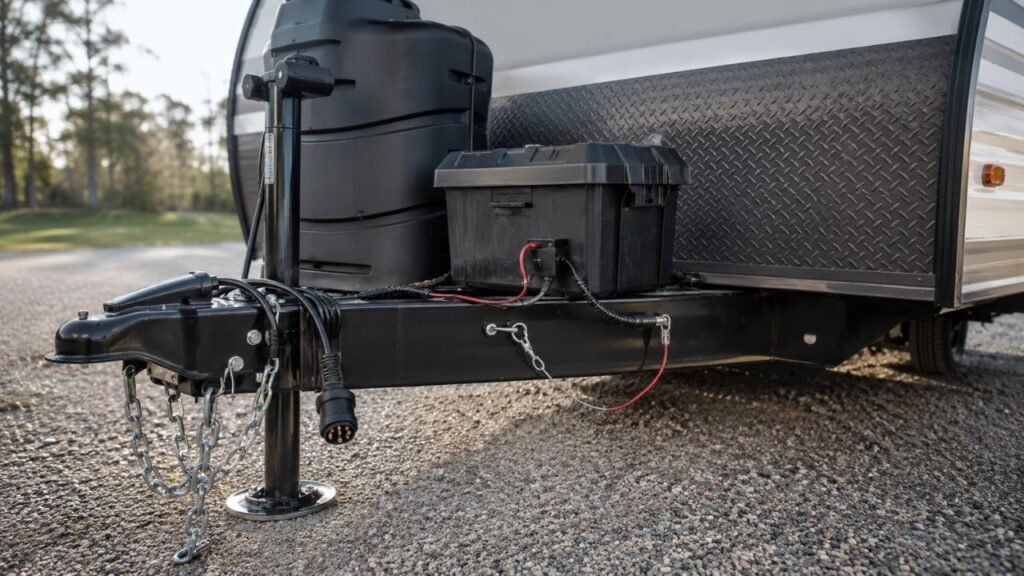
The Breakaway System Is Faulty
The breakaway system applies the trailer brakes after an accidental separation.
It usually includes a switch, cable, battery, and brake wiring. A dead battery or damaged switch prevents emergency operation.
This system should be tested as directed by the manufacturer. It is not intended for routine stopping.
Never pull the breakaway cable to control a moving trailer. That can create wheel lockup and instability.
The Trailer Is Too Heavy for the Truck
A trailer can push even when its brakes technically function. Excessive weight creates more momentum and braking demand.
Do not check only the advertised tow rating. Several separate ratings determine whether your combination is safe.
Important ratings include:
- Truck payload capacity
- Gross vehicle weight rating
- Rear axle weight rating
- Gross combined weight rating
- Trailer gross vehicle weight rating
- Trailer axle ratings
- Hitch and receiver ratings
- Tire load ratings
Passengers, tools, cargo, and tongue weight all consume truck payload. A truck can exceed payload before reaching its maximum tow rating.
Cargo Is Loaded Too Far Behind the Axles
Rear-heavy cargo reduces tongue weight on conventional trailers.
Low tongue weight usually causes instability and sway. It can also make braking feel less predictable.
Heavy equipment mounted on a rear rack has extra leverage. A generator or motorcycle behind the bumper may change tongue weight considerably.
Move heavy cargo lower and closer to the recommended loading area. Secure everything so it cannot shift during braking.
Avoid relying on a universal cargo ratio. Trailer layouts, tanks, axles, and storage compartments differ.
Tongue Weight Is Too Low or Too High
Conventional trailers often need approximately 10% to 15% tongue weight. Follow the trailer manufacturer’s specified range.
Too little tongue weight encourages sway and unstable braking. The trailer may feel like it is steering the truck.
Too much tongue weight creates different problems. It can overload the truck’s receiver, payload, or rear axle.
Excessive rear loading on the truck may unload the front axle. That can reduce steering response and front-tire traction.
Measure tongue weight instead of estimating it visually.
The Truck Is Braking Faster Than the Trailer
Your truck brakes may engage immediately. The trailer brakes may take longer to provide enough force.
During that delay, the trailer continues forward and compresses the connection.
This feeling is common with poorly adjusted time-delayed controllers. It may also occur with weak surge brakes.
Smoother braking can reduce the sensation. However, driving technique should not hide a mechanical problem.
The Trailer Brakes Are Fading
Brakes create heat while converting motion into stopping force.
During a long descent, heat can build faster than the system releases it. Braking power may then decrease.
You may notice:
- Increasing stopping distance
- A hot or burning smell
- Weaker response from the trailer
- Smoke near a wheel
- Changes in brake-pedal feel
- Trailer pushing that worsens downhill
Move to a safe stopping area if braking performance changes. Do not pour water onto hot brakes.
The Surge-Brake System Is Not Working Correctly
Surge brakes activate when the trailer pushes against the tow vehicle.
The coupler or actuator compresses and creates hydraulic pressure. That pressure applies the trailer brakes.
Common surge-brake problems include:
- Low brake fluid
- Air inside hydraulic lines
- Fluid leaks
- Sticking actuator
- Seized wheel cylinders
- Worn pads or shoes
- Damaged master cylinder
- Incorrect reverse-lockout operation
A surge-brake trailer may push briefly before activation. Strong or continuous pushing suggests a problem.
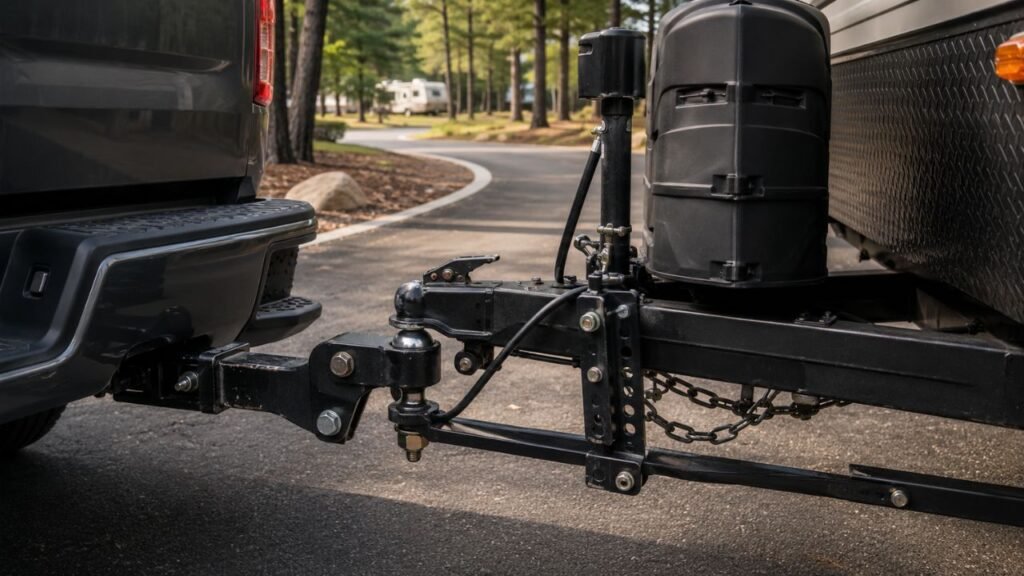
The Weight-Distribution Hitch Is Incorrectly Set
A weight-distribution hitch moves some tongue load toward the truck’s front axle and trailer axles.
Poor adjustment can leave the truck’s front axle too lightly loaded. Steering and braking may then feel less controlled.
Too much tension can also create handling problems. Follow the hitch and vehicle manufacturers’ setup instructions.
Remember that weight distribution cannot create extra braking power. It cannot fix failed trailer brakes.
Tires or Suspension Are Reducing Stability
Tires and suspension do not usually cause trailer push alone. However, they can make the truck harder to control.
Check for:
- Incorrect tire pressure
- Tires with inadequate load capacity
- Worn truck shocks
- Damaged trailer suspension
- Broken leaf springs
- Worn suspension bushings
- Uneven ride height
- Excessive truck rear-end sag
Air springs or helper springs may improve ride height. They do not increase the truck’s official payload rating.
Is Trailer Push the Same as Trailer Sway?
Trailer push and trailer sway are different problems.
Trailer push is mainly a front-to-back force. You feel the trailer shoving the truck while slowing down.
Trailer sway is a side-to-side movement. The trailer begins moving left and right behind the tow vehicle.
Both problems can happen together. Rear-heavy loading, low tongue weight, excessive speed, and uneven brakes can contribute to both.
Do not respond to sway with sudden steering or hard truck braking. Ease off the accelerator and keep the steering steady.
A manual trailer-brake control may help straighten early sway when the braking system works properly. Follow your brake-controller instructions.
How to Test Whether Your Trailer Brakes Are Working
A simple low-speed test can reveal a major braking failure. Perform it on a level, open surface away from traffic and obstacles.
- Connect the trailer completely. Attach the coupler, chains, electrical plug, and breakaway cable correctly.
- Start the truck and check the controller. Confirm that it recognizes the connected trailer.
- Look for controller warnings. Connection errors may indicate wiring or brake-circuit problems.
- Move forward very slowly. Use a large, traffic-free area with a firm surface.
- Use the manual controller lever. Apply trailer braking without pressing the truck brake pedal.
- Feel for clear resistance. The trailer should noticeably slow the combination.
- Listen for unusual sounds. Grinding, scraping, or repeated clunking requires inspection.
- Check for even braking. The trailer should not pull strongly toward one side.
- Repeat after loading the trailer. The required controller setting may change with weight.
A low-speed test cannot prove the system is safe at highway speeds. It only helps identify obvious failures.
Have the brakes inspected when the response feels weak, delayed, uneven, or unpredictable.
How to Adjust the Trailer Brake Controller
Controller adjustment changes how strongly and quickly the trailer brakes respond. Always use the controller manufacturer’s procedure as your main guide.
Start With the Recommended Setting
Select the correct trailer profile, brake type, and axle configuration.
Use the manufacturer’s suggested starting gain. Avoid copying a setting from another truck or trailer.
Two similar-looking trailers can require different settings. Loaded weight and brake condition affect the result.
Test the Loaded Trailer at Low Speed
Load the trailer as you normally travel. Include water, batteries, propane, equipment, and cargo.
Test on a level, dry surface. Build speed only to the controller manufacturer’s recommended testing range.
Apply the manual control. The brakes should provide strong resistance without locking the wheels.
Increase Gain if the Trailer Pushes
Increase the gain in small steps if trailer braking feels weak.
Retest after each adjustment. Look for smooth, controlled braking.
Do not immediately select maximum gain. Too much output may lock the trailer wheels.
Reduce Gain if the Trailer Wheels Lock
Wheel lockup means the braking force exceeds available tire grip.
Reduce the gain slightly and test again. The goal is firm braking without skidding.
Road conditions affect the lockup point. A dry-road setting may be too strong on gravel or wet pavement.
Adjust Boost or Sensitivity Carefully
Boost controls how aggressively some controllers begin applying the brakes.
More boost may help a heavier trailer respond sooner. Too much can create jerky stops.
Too little boost can make the truck begin stopping first. You may then feel a push before the trailer brakes catch up.
Retest When Conditions Change
Check controller response after major changes such as:
- Adding heavy cargo
- Filling water tanks
- Changing trailers
- Servicing the brakes
- Driving on loose roads
- Entering mountainous terrain
- Changing tire sizes
- Replacing the controller
The controller is not a set-it-and-forget-it device. Its performance should be checked regularly.
How to Check Trailer Weight and Cargo Balance
Accurate weights help you separate a braking problem from an overloaded setup. Visual estimates are not reliable enough for safe towing.
Measure the Loaded Trailer Weight
Weigh the trailer in its normal travel condition.
Include:
- Fresh water
- Waste-tank contents
- Propane
- Batteries
- Food
- Camping equipment
- Tools
- Generator
- Bikes
- Personal belongings
A public vehicle scale can provide axle and combined weights. Multiple passes may be needed for a complete picture.
Measure Tongue or Pin Weight
Use a suitable tongue-weight scale or an accepted vehicle-scale method.
Conventional trailer tongue weight often falls around 10% to 15%. The trailer manufacturer’s guidance takes priority.
Fifth-wheel pin weight is normally a higher percentage. Confirm the expected range for your specific model.
Measure after loading. Tank locations and rear accessories can change the result significantly.
Compare Every Relevant Rating
A safe setup must remain below every applicable limit.
- Truck gross vehicle weight rating
- Truck payload capacity
- Front and rear axle ratings
- Gross combined weight rating
- Trailer gross vehicle weight rating
- Trailer axle ratings
- Tire load capacities
- Receiver rating
- Ball mount rating
- Hitch-ball rating
- Coupler rating
- Weight-distribution hitch rating
The lowest-rated part limits the entire towing setup.
Reposition and Secure Heavy Cargo
Keep heavy cargo low and close to the trailer’s intended loading zone.
Avoid placing dense items at the far rear. The farther back they sit, the more leverage they have against tongue weight.
Secure every heavy object. Cargo that moves forward under braking can suddenly change balance and handling.
Pay extra attention to:
- Generators
- Toolboxes
- Motorcycles
- Spare batteries
- Water containers
- Coolers
- Rear cargo carriers
Recheck tongue weight after moving cargo.
Why Downhill Driving Makes Trailer Push Worse
Downhill travel adds gravity to the trailer’s forward momentum. The braking system must control the combination continuously.
Trailer Brakes May Overheat
A long descent creates sustained heat.
Electric drum brakes may fade as temperatures rise. Hydraulic brakes can also lose effectiveness when overheated.
Stop safely if you notice odor, smoke, or reduced braking. Let the system cool naturally before inspection.
The Truck May Be in Too High a Gear
A high gear provides little engine braking.
The service brakes must then control most of the downhill speed. That increases heat in both the truck and trailer.
Select a lower gear before the descent when recommended. Avoid waiting until speed has already increased.
Tow-haul mode may also improve transmission control. Follow the truck manufacturer’s instructions.
Riding the Brakes Builds Heat
Continuous light brake pressure can create steady heat.
Reduce speed before the hill. Use controlled braking and engine braking according to the vehicle manufacturer’s guidance.
Do not descend faster than you could safely climb a similar grade.
Excessive Speed Multiplies Stopping Demands
Speed dramatically increases the energy your brakes must manage.
A small speed increase can create a much larger braking load. Heavy trailers make this effect more noticeable.
Slow down early. You cannot safely correct excessive downhill speed with controller gain alone.
What to Do if the Trailer Starts Pushing While Driving
Your immediate goal is to keep the combination straight and reduce speed smoothly. Avoid any sudden reaction that could reduce stability.
- Stay calm and hold the steering wheel firmly.
- Look well ahead for a safe escape path.
- Increase your following distance.
- Ease off the accelerator gradually.
- Avoid sudden steering movements.
- Apply controlled braking instead of stabbing the pedal.
- Downshift when the manufacturer allows it.
- Use tow-haul mode when appropriate.
- Use the manual trailer control carefully if the brakes respond normally.
- Activate hazard lights when slowing below traffic speed.
- Move completely away from traffic.
- Inspect the controller, plug, cargo, and visible brake components.
- Do not resume normal towing if strong pushing continues.
Never use the breakaway cable as a normal braking method. Do not depend on the parking brake to control a moving combination.
When braking remains weak, arrange professional inspection or safe transport.
How to Fix a Trailer That Pushes the Truck
The correct repair depends on whether the problem comes from braking, loading, weight, or setup. Work through the likely causes instead of making random adjustments.
Correct the Brake-Controller Settings
Confirm that the controller recognizes the trailer.
Check its gain, boost, sensitivity, axle count, and brake-type settings. Recalibrate a proportional controller when required.
Make small adjustments and perform controlled testing. Avoid hiding a mechanical failure with excessive gain.
Repair Wiring and Connector Problems
Clean corrosion from the truck and trailer connectors.
Repair loose terminals, damaged insulation, weak frame grounds, and worn axle wiring. Use wiring sized for the brake system.
A technician can measure voltage and current at each brake. This is more reliable than visual inspection alone.
Service the Trailer Brakes
Brake service may include:
- Adjusting brake shoes
- Replacing worn magnets
- Replacing damaged drums
- Installing new pads or shoes
- Repairing hydraulic leaks
- Bleeding hydraulic lines
- Servicing actuators
- Checking bearings and seals
- Inspecting automatic adjusters
Contaminated shoes or pads may need replacement. Grease from a failed hub seal can seriously reduce braking.
Correct Cargo Placement
Move excessively rear-loaded cargo forward.
Keep the final tongue weight within the manufacturer’s range. Do not move so much forward that the truck becomes overloaded.
Secure all items with properly rated straps or mounting hardware.
Reduce the Trailer’s Loaded Weight
Remove unnecessary equipment if the loaded trailer exceeds a rating.
You may also reduce carried water when safe and practical. Water weighs roughly 8.3 pounds per US gallon.
Never remove essential emergency or safety equipment just to save weight.
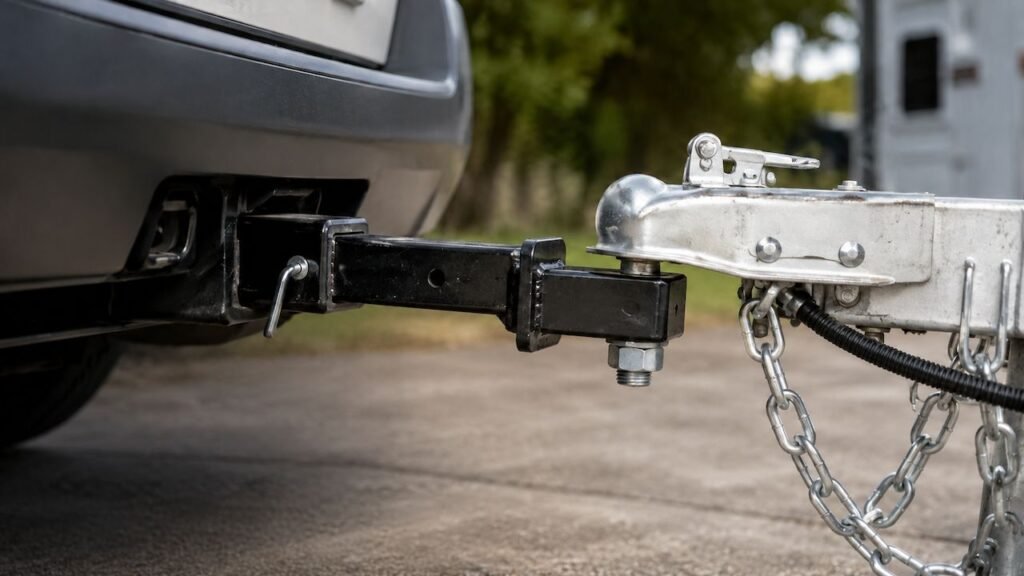
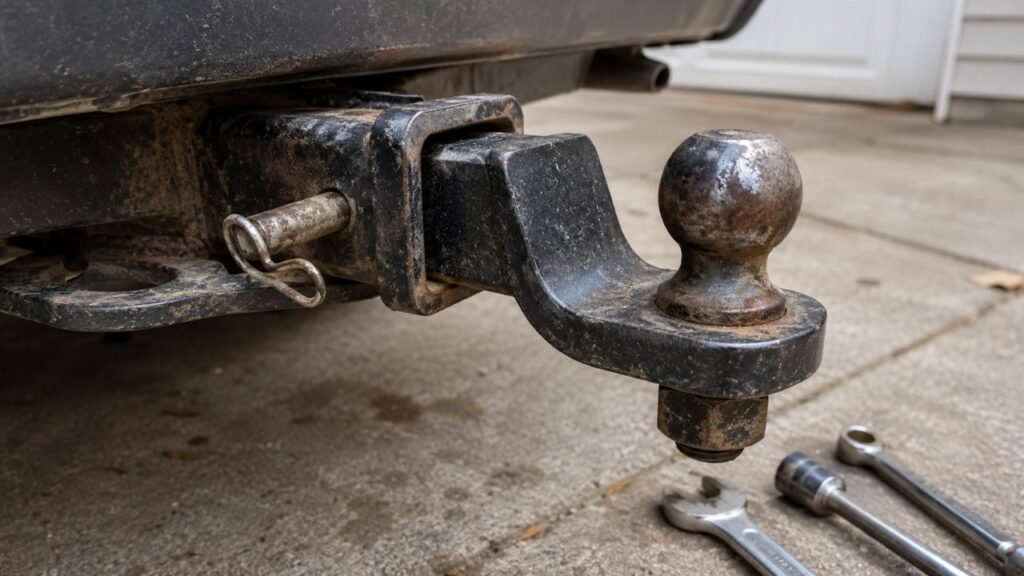
Correct the Hitch Setup
Confirm that the trailer sits close to level when connected.
Check:
- Ball size
- Ball height
- Coupler engagement
- Ball mount rating
- Hitch pin condition
- Receiver rating
- Weight-distribution adjustment
- Safety-chain attachment
An incorrect hitch height can alter axle loading. It may also affect the operation of some surge-brake systems.
Improve Downhill Driving Technique
Reduce speed before the hill begins.
Choose a lower gear, use tow-haul mode, and allow the engine or exhaust brake to help when equipped.
Avoid building speed and then attempting one long stop. Plan safe locations for inspection and cooling during mountain travel.
Can a Weight-Distribution Hitch Stop Trailer Push?
A weight-distribution hitch can improve the balance of a conventional towing setup.
It can restore some load to the truck’s front axle. This may improve steering, braking feel, and headlight aim.
However, it does not create trailer braking force. It cannot repair weak electric brakes, hydraulic leaks, damaged wiring, or an incorrect controller setting.
It also cannot increase official payload, axle, receiver, or towing ratings.
Some weight-distribution systems include sway control. Sway control helps resist side-to-side motion, not forward trailer momentum.
Use weight distribution as part of a correct setup. Do not use it as a substitute for working brakes.
Warning Signs You Should Stop Towing
Some symptoms indicate that continuing could place you and other drivers at risk.
- Manual trailer control produces little resistance.
- The controller repeatedly reports disconnection.
- The trailer strongly pushes during moderate stops.
- Stopping distance has increased noticeably.
- The trailer pulls sharply to one side.
- A wheel smells hot or begins smoking.
- Braking becomes weaker during a descent.
- Hydraulic fluid is leaking.
- Brake wiring is visibly damaged.
- Cargo has shifted.
- The trailer exceeds a weight rating.
- The truck’s rear axle is overloaded.
- Trailer pushing continues after careful controller adjustment.
Move away from traffic and arrange proper service. Do not continue simply because the remaining route is short.
When Should a Professional Inspect the Trailer?
Seek professional inspection when the cause is not clear or the brakes respond unevenly.
A qualified trailer technician can check:
- Brake-controller output
- Voltage and current at each brake
- Ground resistance
- Magnet condition
- Shoe or pad wear
- Drum and rotor condition
- Hydraulic pressure
- Surge-actuator operation
- Wheel bearings
- Hub seals
- Breakaway-battery condition
- Mechanical brake adjustment
You should also request inspection after severe overheating. Heat can damage seals, wiring, bearings, and brake components.
Towing a trailer with failed brakes to a repair shop may be unsafe. A mobile technician or transport service may be the better option.
How to Prevent the Trailer From Pushing Again
A brief check before each trip can prevent most trailer-push problems.
- Test the trailer brakes at low speed.
- Confirm that the controller detects the trailer.
- Inspect the seven-way plug and cable.
- Check the breakaway cable and battery.
- Adjust gain for the actual loaded weight.
- Weigh the towing combination periodically.
- Measure tongue or pin weight after cargo changes.
- Secure all heavy equipment.
- Check cold tire pressures.
- Inspect tires for damage and uneven wear.
- Follow the brake maintenance schedule.
- Reduce speed before hills and curves.
- Leave extra following distance.
- Avoid aggressive lane changes.
- Investigate any new smell, sound, or handling change.
Do not wait for a serious pushing event. Small changes often appear before a complete failure.
Final Verdict
Your trailer is most likely pushing your truck because it is not providing enough braking force. Low controller gain, worn brakes, wiring faults, excessive weight, and downhill heat are common causes.
Start by testing the trailer brakes with the manual controller. Then verify the controller settings, brake condition, loaded weight, tongue weight, and cargo position.
Do not keep towing normally when the trailer strongly pushes during ordinary stops. A careful inspection now is far easier than trying to regain control during an emergency.
Related FAQs
Why Does My Trailer Push My Truck When Braking?
Your trailer may push during braking when its brakes are weak, delayed, disconnected, or set too low. Excessive trailer weight and sudden truck braking can make the pushing more noticeable.
Why Does My Trailer Push My Truck Downhill?
Gravity increases the trailer’s forward force on a descent. Excessive speed, a high transmission gear, overheated trailer brakes, or an overloaded setup can make the trailer push harder.
How Do I Know if My Trailer Brakes Are Working?
Move slowly in a safe, open area and apply the controller’s manual lever. You should feel the trailer create noticeable stopping resistance without pulling sharply or locking its wheels.
Should the Trailer Brakes Stop the Truck?
Trailer brakes should control the trailer’s share of the load and help stop the combination. They are not designed to replace the truck brakes or independently stop the entire setup.
Can Low Tongue Weight Make a Trailer Push the Truck?
Low tongue weight mainly causes instability and sway, but it can also make braking feel less controlled. Measure tongue weight and keep it within the trailer manufacturer’s recommended range.
Can Too Much Tongue Weight Cause Poor Braking?
Excessive tongue weight can overload the truck’s rear axle and reduce weight on its front axle. This may affect steering, tire grip, and braking balance.
Why Does My Brake Controller Work Sometimes?
Intermittent controller operation often comes from loose plugs, corroded terminals, weak grounds, worn axle wiring, or an internal controller problem. Inspect the entire brake circuit.
Can I Tow a Trailer Without Working Trailer Brakes?
Towing without functioning trailer brakes can be unsafe and may violate local braking requirements. Do not continue normal towing until the system is repaired and tested.
Will a Weight-Distribution Hitch Improve Braking?
A correctly adjusted weight-distribution hitch may improve axle loading and control. However, it cannot replace working trailer brakes or increase the truck’s official ratings.
How Much Brake-Controller Gain Should I Use?
There is no universal gain number. The correct setting depends on the controller, trailer weight, brake type, road surface, and manufacturer’s testing procedure.
Why Does My Trailer Jerk Before It Pushes?
A jerk followed by pushing can indicate delayed brake engagement, excessive hitch movement, a poorly adjusted controller, or a sticking surge actuator. Inspect both the braking and hitch systems.
Can Worn Truck Brakes Make Trailer Push Worse?
Yes. Worn or overheated truck brakes reduce the combination’s total stopping ability. However, replacing truck brakes will not correct weak or nonfunctional trailer brakes.
Does Trailer Push Mean My Trailer Is Overloaded?
Not always, but overloading increases momentum and braking demand. Weigh the loaded trailer and compare every truck, trailer, axle, hitch, and tire rating.
Why Does My Trailer Push Only When Fully Loaded?
The extra cargo may exceed the brake system’s current adjustment or controller setting. It may also overload the trailer, reduce tongue weight, or exceed the truck’s ratings.
Can Bad Trailer Tires Cause Pushing?
Tires do not usually cause forward pushing by themselves. Incorrect pressure, poor load capacity, or low traction can reduce control and make an existing braking problem feel worse.

Scott Miller shares real-world RV road trip insights built from years of traveling open highways and backroads. He covers route planning, campground choices, and travel gear with a practical mindset. His content is written for RVers who value reliability over trends.