
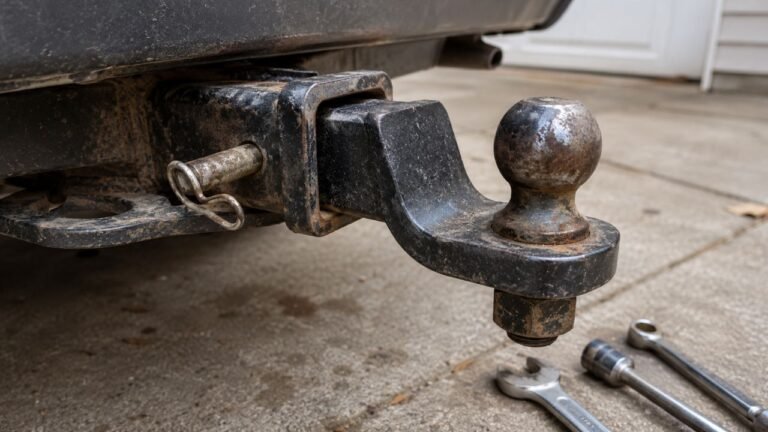
Your hitch pin is probably hard to remove because pressure, rust, dirt, or misaligned receiver holes are trapping it. A locking pin may also stick when moisture or debris jams its internal cylinder...
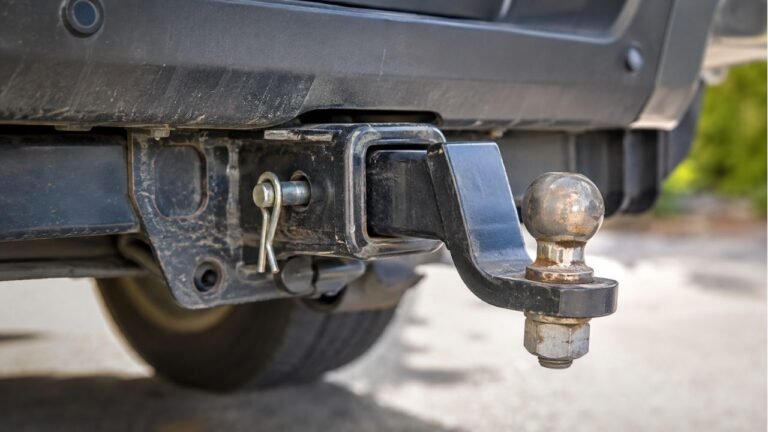
Yes, persistent hitch rattle can gradually damage a receiver. Repeated metal-on-metal movement may wear the receiver tube, hitch shank, pin, and pin holes. However, a small amount of unloaded movement...
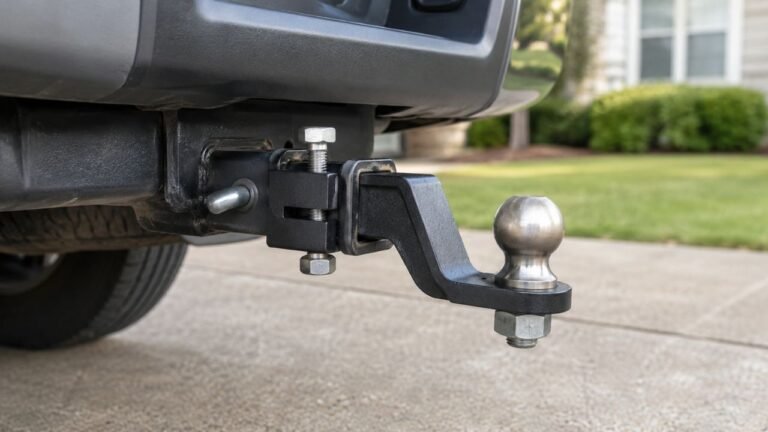
To stop a loose ball mount, install a properly sized hitch tightener or towing-rated anti-rattle pin. If the hitch ball itself moves on the mount, stop towing and tighten its nut to the manufacturer’s...
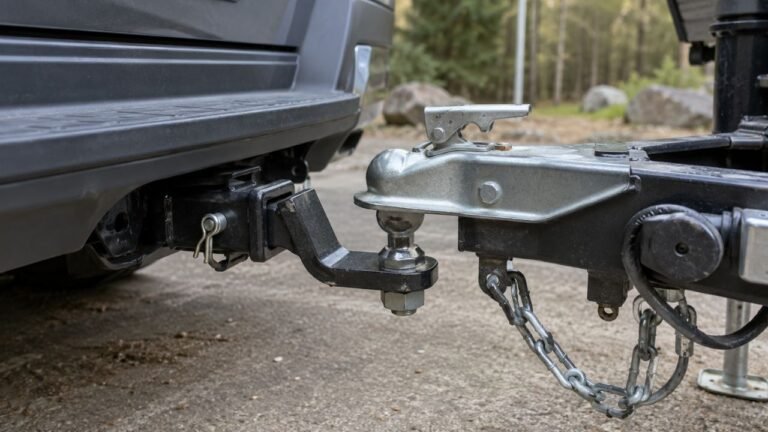
A small amount of hitch play is normal, especially between the ball-mount shank and the receiver tube. Around 1/16 to 1/8 inch of unloaded vertical or sideways movement is commonly seen. However, hard...
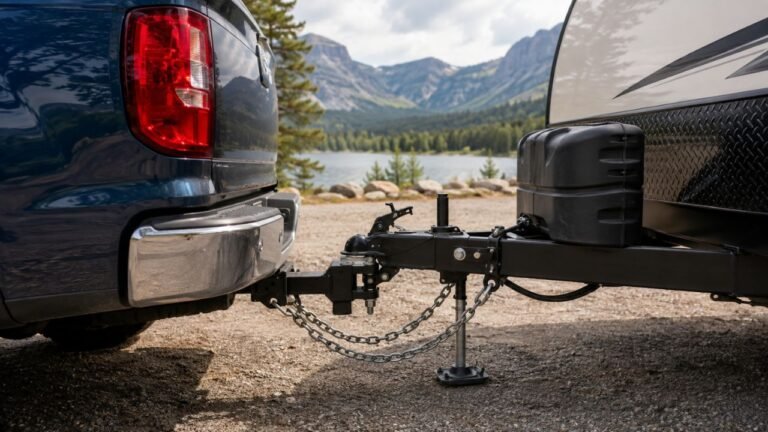
Your hitch usually clunks when stopping because braking pushes the trailer forward, taking up loose space between connected parts. The movement may come from the receiver, ball mount, hitch pin...
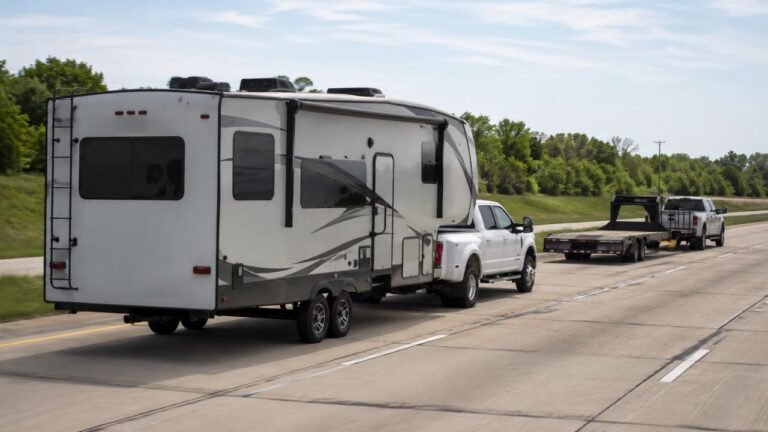
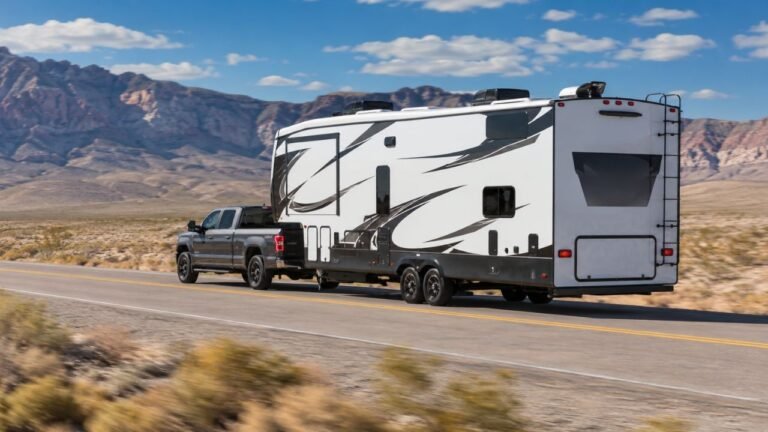
Fifth wheel and gooseneck trailers jerk because towing forces repeatedly move between the truck and trailer. Excessive hitch clearance, uneven roads, incorrect loading, brake imbalance, and worn...
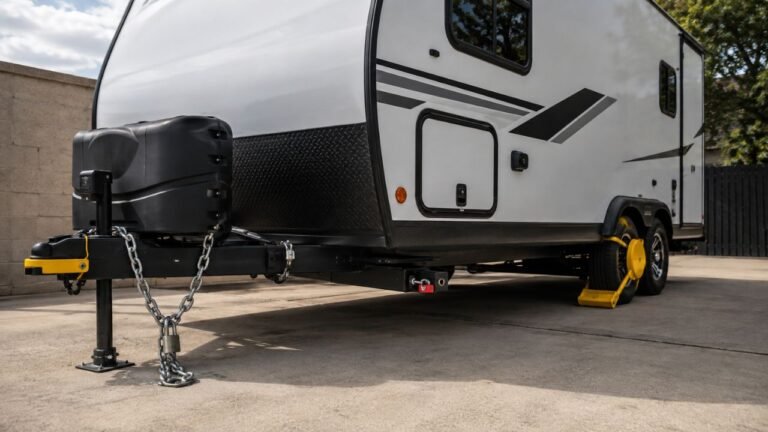
A trailer can still be stolen when its lock protects only the coupler while the wheels, safety chains, receiver, frame, or parking access remain unsecured. Thieves may also move the entire trailer...
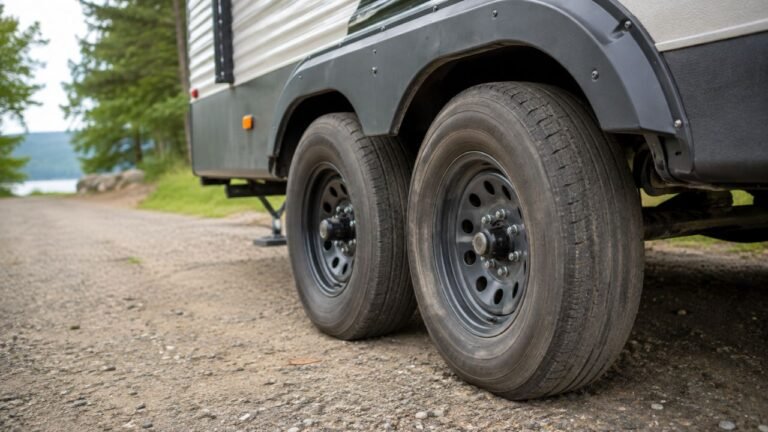
Uneven trailer tire wear usually comes from incorrect pressure, overloading, poor weight distribution, axle misalignment, bent components, worn suspension parts, bearing problems, or dragging brakes...
Trailer brakes may not work right because of poor wiring, a bad ground, incorrect brake-controller settings, worn brake shoes, weak magnets, or improper brake adjustment. Problems can also come from...