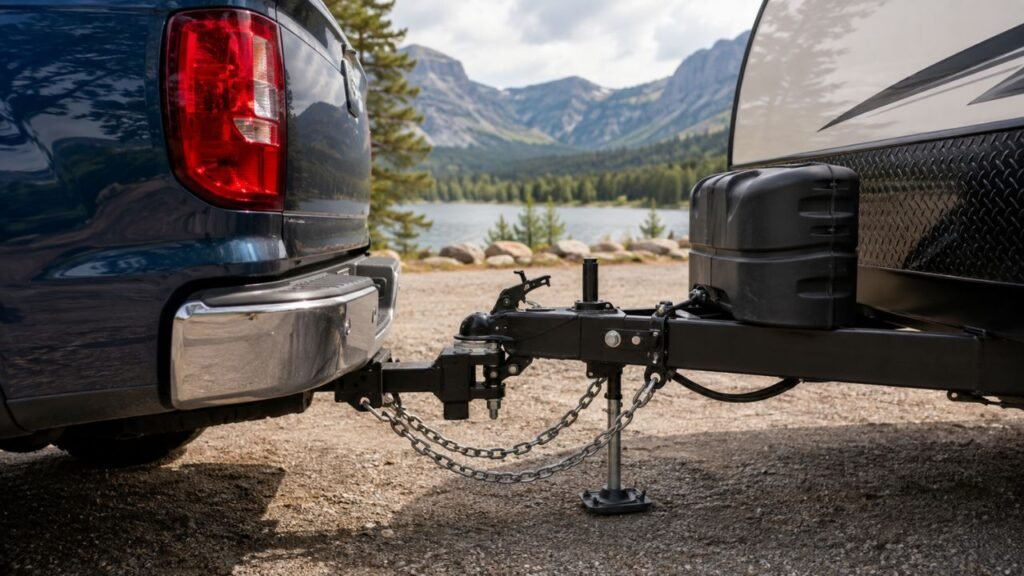
Your breakaway battery may not be charging because it is not receiving 12-volt power from the tow vehicle, a fuse has blown, the trailer connector is corroded, the ground is poor, wiring is damaged, or the battery itself can no longer accept a charge.
I’ll walk you through the charging path step by step. We’ll check the simple problems first, then move into voltage testing, battery condition, storage issues, and replacement.
Key Takeaways
- Start by confirming the breakaway battery receives charging power.
- A working trailer light circuit does not prove charging power exists.
- Check the tow vehicle fuse before replacing the breakaway battery.
- Dirty trailer connectors commonly cause intermittent charging problems.
- Poor grounding can stop or severely reduce battery charging.
- Deeply discharged batteries may require a separate battery charger.
- A battery can show voltage yet still fail under load.
- Never tow with a breakaway system you know is not working.
Why Is My Breakaway Battery Not Charging?
When I troubleshoot this problem, I like to follow the charging path rather than replacing parts randomly. Somewhere between the power source and battery, electricity is either being interrupted or the battery cannot store it.
| Possible Problem | What You May Notice | What to Check | Likely Fix |
| No auxiliary 12V power | Battery voltage never increases | Tow vehicle charging circuit | Restore auxiliary power |
| Blown fuse | Charging stopped suddenly | Vehicle and trailer fuses | Replace fuse after checking cause |
| Corroded connector | Charging works intermittently | 7-way or 12-pin connector | Clean and tighten connections |
| Poor ground | Low or unstable voltage | Trailer ground connections | Clean and reconnect ground |
| Damaged charging wire | No voltage reaches battery | Wiring and junction box | Repair damaged wiring |
| Faulty charging module | Input power exists but battery stays low | Breakaway charger output | Repair or replace charger |
| Deeply discharged battery | Battery remains extremely low | Battery voltage and condition | Recharge externally |
| Failed battery | Charges but quickly dies again | Battery load performance | Replace battery |
That table gives you the basic direction. Now let’s look at how the system actually receives its charging power.
How Does a Trailer Breakaway Battery Charge?
A breakaway battery normally receives a small charging current from another 12-volt source. Exactly where that power comes from depends on the trailer and breakaway system.
Charging From the Tow Vehicle
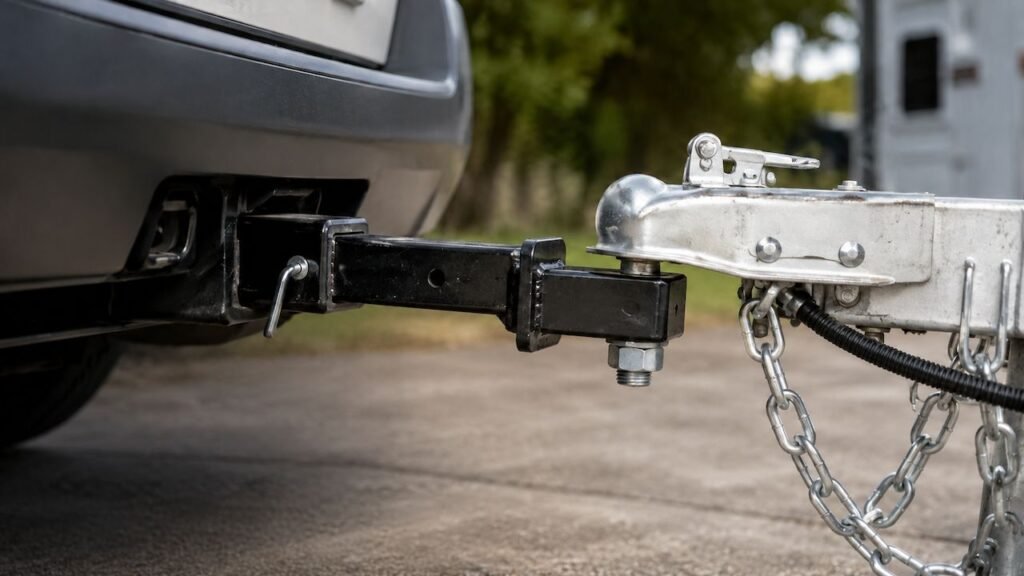
Many trailers receive breakaway charging power through the auxiliary 12-volt circuit in the trailer connector.
When the trailer is plugged into your tow vehicle, that circuit sends power toward the trailer battery system.
However, there is one important catch.
Some tow vehicles energize this circuit only when:
- The ignition is switched on.
- The engine is running.
- A particular fuse is installed.
- A factory relay is present.
- The vehicle detects the trailer connection.
So, seeing zero charging voltage while the vehicle is completely switched off does not always mean something is broken.
Charging From the Trailer or RV Battery
Some breakaway systems can receive charging power through the trailer’s main 12-volt battery system.
In that setup, the breakaway battery may stay topped up whenever the house battery is being maintained.
Other trailers keep the breakaway battery almost completely independent.
That is why I would not assume your particular trailer works one way or another. Trace the wiring or check the instructions for your breakaway system.
Does Shore Power Charge the Breakaway Battery?
Sometimes it does, but sometimes it does not.
Plugging an RV into shore power usually activates its converter or battery charger. That does not automatically mean the small breakaway battery receives charging power.
If your breakaway charger gets power only from the tow vehicle, the RV could remain plugged into shore power for weeks while the breakaway battery slowly goes flat.
This explains why many owners discover a dead breakaway battery after storage.
8 Reasons Your Breakaway Battery Is Not Charging
Most charging failures come down to eight areas. I recommend checking them in this order because the early checks are quicker and cost almost nothing.
1. The Tow Vehicle Is Not Supplying 12-Volt Power
Start at the beginning of the circuit.
Your trailer cannot charge its breakaway battery if the tow vehicle never supplies auxiliary power.
This problem can happen when the vehicle’s trailer charging circuit:
- Was never connected.
- Requires the ignition to be on.
- Has a missing fuse.
- Has a failed relay.
- Has damaged wiring.
- Has been disabled by previous electrical work.
Use a multimeter to check the correct auxiliary terminal at the tow vehicle connector.
Make sure you know the connector’s actual pin configuration before testing. Different connector types and wiring arrangements can use different terminal positions.
If power is missing here, troubleshooting the battery itself will not solve anything.
2. The Trailer Charging Fuse Is Blown
This is one of the first places I would look.
The charging circuit may have protection on both sides of the connection.
You could have:
- A trailer charging fuse in the tow vehicle.
- An inline fuse near the trailer junction box.
- A fuse near the breakaway battery.
- A fuse built into the charging system.
Do not just look at the fuse through the plastic.
Remove it and test it whenever possible.
A fuse can sometimes look fine while being electrically open.
If your new fuse immediately blows again, stop replacing fuses. That usually means the circuit has a short or another electrical problem.
A repeatedly blown fuse needs to be diagnosed before towing.
3. The 7-Way Trailer Connector Is Dirty or Corroded
Trailer plugs live in a pretty rough environment.
They deal with:
- Rain
- Road spray
- Mud
- Dust
- Salt
- Condensation
- Constant vibration
Over time, the terminals can oxidize or lose good contact.
The tricky part is that some trailer functions may still work.
You might have brake lights, turn signals, and running lights while the auxiliary charging terminal has a poor connection.
Inspect both sides of the connector.
Look for:
- Green or white corrosion.
- Dark or burned terminals.
- Bent contacts.
- Loose terminals.
- Water intrusion.
- A plug that fits loosely.
Clean light corrosion using an appropriate electrical contact cleaner and reconnect everything firmly.
Badly damaged connectors are usually better replaced.
4. The Breakaway System Has a Poor Ground
A 12-volt circuit needs both sides of the electrical path.
People often focus entirely on the positive charging wire while overlooking the ground.
A ground connection can become unreliable because of:
- Rust
- Paint
- Road grime
- Corrosion
- Loose bolts
- Broken wire strands
Follow the ground wire from the breakaway system.
If it connects to the trailer frame, the connection should be secure and electrically clean.
A wire bolted over thick paint may look perfectly attached while making poor electrical contact.
If necessary, clean the grounding point back to bare metal and reconnect it securely.
Protect the finished connection against future corrosion afterward.
5. There Is a Broken or Loose Charging Wire
Trailer wiring gets shaken constantly.
That makes loose connections more common than they are in many stationary electrical systems.
Pay special attention around:
- The trailer tongue.
- Junction boxes.
- The 7-way cable.
- The battery box.
- Frame openings.
- Areas near moving suspension parts.
Look for wires that are:
- Crushed
- Stretched
- Chafed
- Pinched
- Corroded
- Partially disconnected
Sometimes the insulation looks normal while the conductor has broken internally.
If voltage exists at the trailer plug but disappears before reaching the breakaway charger, continue checking along the circuit.
That helps you narrow down exactly where power disappears.
6. The Breakaway Battery Is Deeply Discharged
A breakaway charging circuit is usually designed to maintain a reasonably healthy battery.
It may not be a powerful battery charger.
When a small lead-acid battery becomes deeply discharged, the trailer’s maintenance charging circuit may take a very long time to recover it.
In some cases, it may not recover the battery successfully at all.
Remove or isolate the battery according to the system instructions. Then use an appropriate charger for that battery type.
Make sure the charger matches:
- Battery voltage.
- Battery chemistry.
- Battery manufacturer’s charging requirements.
After charging, let the battery rest and test it again.
If the voltage quickly collapses, the battery may already be damaged.
7. The Breakaway Battery Has Failed
Eventually, every rechargeable battery loses capacity.
Small sealed lead-acid batteries can suffer badly after being stored while discharged.
Repeated deep discharging also accelerates deterioration.
A failing battery may behave in confusing ways.
For example, you could connect a charger and see voltage rise normally. Then the battery drops quickly after charging stops.
That means the charging system may be doing its job.
The battery simply cannot store enough energy anymore.
A proper load test gives you more useful information than resting voltage alone.
If the battery cannot reliably power the breakaway system, replace it.
8. The Breakaway Charging Module Is Faulty
Suppose you have confirmed:
- Power reaches the trailer.
- The fuse is good.
- The ground is good.
- Wiring is intact.
Yet the battery still receives no charging voltage.
At that point, look more closely at the breakaway charger or charging electronics.
Some breakaway systems contain a small built-in charging circuit.
That component can eventually fail.
Test the input side first.
If the charger receives proper input voltage but does not provide appropriate output toward the battery, the charging unit may need repair or replacement.
How to Troubleshoot a Breakaway Battery That Won’t Charge
You can save yourself a lot of time by testing the system in a fixed order. Start with simple visual checks and move toward electrical testing.
Step 1: Inspect the Breakaway System
Before reaching for a multimeter, look carefully at everything.
Check:
- Battery terminals.
- Fuse holders.
- Trailer plug.
- Junction box.
- Breakaway switch wiring.
- Ground connections.
- Visible charging wires.
Look for loose connections, damaged insulation, rust, moisture, or overheating.
Sometimes the problem is obvious within a few minutes.
Step 2: Check the Battery Voltage
Disconnect the charging source and let the battery settle briefly.
Set your multimeter to DC voltage.
Place the red probe on the positive battery terminal.
Place the black probe on the negative terminal.
Write down the reading.
A low reading tells you the battery needs charging, but it does not automatically tell you why it became discharged.
That is why the next step matters.
Step 3: Check for Charging Voltage
Reconnect the charging source.
If your system charges from the tow vehicle, connect the trailer and activate whatever conditions are required for auxiliary charging.
That may mean starting the vehicle.
Measure across the breakaway battery terminals again.
You are looking for evidence that voltage changes when charging becomes active.
If the voltage never changes, charging power may not be reaching the battery.
If it does increase, the charging circuit is probably doing something.
You can then focus more heavily on battery condition.
Step 4: Test the Tow Vehicle’s Auxiliary Power Circuit
If you have no charging voltage at the breakaway battery, move upstream.
Check the tow vehicle’s trailer connector.
Identify the correct auxiliary power terminal using the connector diagram for your setup.
Test between that terminal and a known good ground.
If there is no power here, inspect the vehicle-side fuse, relay, or wiring.
If there is power, continue toward the trailer.
Step 5: Check the Fuses and Circuit Protection
Inspect every fuse in the charging path.
Do not forget the tow vehicle fuse panel.
Some vehicles have separate circuits for:
- Trailer lighting.
- Trailer brakes.
- Auxiliary charging power.
That means your brake lights can work even when the charging circuit fuse has failed.
Replace a blown fuse only with the correct rating.
Never install a larger fuse simply to stop it from blowing.
Step 6: Check the Ground
Measure between the charging circuit and a known reliable ground.
Then inspect the trailer ground connection physically.
Clean away rust and corrosion where necessary.
Also check that the wire itself is not broken or barely hanging onto the terminal.
Ground faults frequently cause intermittent problems rather than complete failure.
That can make them especially frustrating.
Step 7: Check Wiring Continuity
If voltage disappears somewhere between the connector and battery, continuity testing can help locate the damaged wire.
Disconnect power before performing continuity tests.
Then test the suspected wire from one end to the other.
No continuity means you may have:
- A broken conductor.
- Disconnected junction.
- Failed terminal.
- Corroded connection.
Repair the affected section properly instead of simply twisting wires together.
Trailer wiring needs secure connections that can tolerate vibration and moisture.
Step 8: Test the Battery Under Load
This final check matters because resting voltage can be misleading.
A weak battery might show a respectable voltage with nothing connected.
Apply a load and that voltage can collapse immediately.
That is especially important with a breakaway system because the battery must deliver meaningful current to the brake magnets.
If the battery cannot support the required load, replacement is the safer choice.
What Voltage Should a Breakaway Battery Read?
Voltage gives you a useful snapshot of battery condition. Just remember that these numbers are general guides rather than universal pass-or-fail limits.
| Battery Reading | General Meaning |
| Around 12.7–13.0V | Fully or nearly fully charged resting battery |
| Around 12.4–12.6V | Partially charged |
| Around 12.0–12.2V | Significantly discharged |
| Below roughly 12V | Very discharged or possibly unhealthy |
| Voltage rises with charger active | Charging power is likely reaching battery |
| Voltage does not change | Charging circuit needs further testing |
These figures are most useful for common 12-volt lead-acid breakaway batteries.
Exact readings vary with battery chemistry, temperature, recent charging, and battery condition.
A battery that was just disconnected from a charger may temporarily show surface charge.
That is another reason I would not diagnose the entire system from one voltage measurement.
How Do I Know If My Breakaway Battery Is Actually Charging?
A charging light is useful, but I prefer to verify charging with more than one sign. That gives you a much clearer picture of the system.
Signs the battery is receiving charge include:
- The charging indicator comes on, if equipped.
- Battery voltage increases after charging begins.
- The battery remains charged after disconnecting power.
- The built-in test indicator reports acceptable battery condition.
- The battery successfully powers the breakaway brakes during testing.
The most useful sign is usually an actual voltage change measured at the battery.
An indicator light tells you what the system believes is happening.
A multimeter tells you what is actually reaching the battery terminals.
Why Does My Breakaway Battery Keep Going Dead?
If you recharge the battery successfully but it keeps becoming flat, something else is happening. Storage habits, battery age, and small electrical drains are common causes.
The Trailer Sits in Storage Too Long
Batteries slowly discharge even when they are not being actively used.
A healthy battery may tolerate storage for a while.
A weak battery can drop much faster.
If your breakaway system does not receive charging power during storage, check its state periodically.
Do not simply assume shore power is maintaining it.
The Battery Is Not Connected to Its Intended Charging Source
Some systems depend heavily on the tow vehicle for charging.
If the trailer remains parked for months, the battery may receive almost no charging current.
This is particularly easy to miss when the RV’s main battery stays fully charged.
The house battery and breakaway battery are not always maintained together.
The Battery Has Been Deeply Discharged Repeatedly
Small lead-acid batteries do not like being repeatedly left completely flat.
Every severe discharge can reduce capacity.
Eventually, the battery may appear to charge normally but hold very little usable energy.
At that point, charging it again only provides temporary improvement.
There Is a Parasitic Drain
A small unexpected electrical load can slowly discharge the battery.
This could come from:
- Faulty wiring.
- A damaged charging module.
- A partially activated circuit.
- An incorrectly wired accessory.
If the battery goes flat unusually quickly, measure current draw with the trailer sitting unused.
A qualified trailer electrician can help if you are not comfortable measuring current safely.
The Battery Can No Longer Hold a Charge
Sometimes the answer really is that simple.
The battery may have reached the end of its useful service life.
Recharge it fully and test how well it retains voltage.
If it rapidly loses charge with no significant external drain, replacement makes sense.
Can I Charge a Breakaway Battery With a Regular Battery Charger?
Yes, many breakaway batteries can be charged with a standalone battery charger, but the charger must match the battery.
Check the battery label before connecting anything.
Most small trailer breakaway batteries are 12-volt units, but chemistry and charging requirements still matter.
An automatic charger designed for the correct battery type is usually the easiest option.
Do not try charging a battery that is swollen, cracked, leaking, or unusually hot.
Physical damage is a reason to replace the battery rather than attempting recovery.
Also pay close attention to polarity.
Connect positive to positive and negative to negative.
How Long Does a Breakaway Battery Take to Charge?
There is no single charging time that applies to every breakaway battery.
Charging time depends on battery capacity, remaining charge, charger output, battery condition, and the charging system itself.
A lightly discharged battery connected to a proper standalone charger may recover relatively quickly.
A deeply discharged battery receiving only a small maintenance current from the tow vehicle could take much longer.
This is why I would not rely on a short drive to restore a completely flat breakaway battery.
If you need the trailer soon, charge the battery properly and verify its condition before towing.
Will Driving the Tow Vehicle Recharge a Dead Breakaway Battery?
Driving can recharge some breakaway batteries, but I would not treat it as the guaranteed fix for a completely dead one.
There is an important difference between maintaining a healthy battery and recovering a deeply discharged battery.
The tow vehicle charging circuit may work perfectly for keeping a charged battery topped up.
It may provide relatively limited current, though.
A severely discharged battery may need an external charger before it can return to a healthy state.
And if the battery has been damaged by remaining flat too long, driving will not repair it.
Test the battery after charging instead of assuming a long drive solved the problem.
Does the Breakaway Battery Charge When the Trailer Is Plugged Into Shore Power?
It depends entirely on the way your trailer is wired.
Some breakaway systems receive charging power through the trailer’s main battery system.
If the converter charges that house battery while connected to shore power, the breakaway battery may also receive charging current.
Other systems receive their charging supply mainly from the tow vehicle.
In that case, plugging the trailer into shore power may do nothing for the breakaway battery.
The easiest way to know is to measure battery voltage.
Check it with shore power disconnected.
Then connect shore power and test again.
If the voltage changes upward, your electrical system may be supplying charging power.
If nothing changes, investigate the actual wiring arrangement.
How to Test Your Trailer Breakaway System Safely
Testing the system periodically helps confirm that both the battery and emergency braking circuit can operate. Do the test carefully because activating the breakaway switch sends power directly to the trailer brakes.
- Park on stable, level ground when possible.
- Secure the trailer so it cannot roll unexpectedly.
- Chock the wheels where appropriate.
- Confirm the breakaway battery has adequate charge.
- Follow your brake controller and breakaway manufacturer’s test instructions.
- Disconnect the trailer electrical connector first if the manufacturer requires it.
- Pull the breakaway switch pin briefly.
- Confirm the trailer brakes engage.
- Reinsert the pin immediately after testing.
- Investigate weak or non-operating brakes before towing.
Do not leave the breakaway pin removed for an extended period.
The trailer brake magnets can draw substantial current while activated.
Extended activation can drain the battery and unnecessarily heat components.
Also remember that some brake controller manufacturers recommend disconnecting the trailer plug before manually activating the breakaway switch.
Follow the instructions for your specific equipment.
Breakaway Battery Charging but Not Holding a Charge
If voltage reaches the battery while charging but disappears quickly afterward, the battery becomes the main suspect.
Common signs include:
- Voltage rises normally while connected to power.
- Voltage falls quickly after charging stops.
- The battery becomes flat repeatedly during storage.
- It fails a proper load test.
- The trailer brakes feel weak during a breakaway test.
- The battery becomes unusually hot while charging.
- The battery case is swollen or damaged.
Do not keep trusting a battery simply because a charger brings its voltage back up.
The important question is whether it can store enough energy and deliver it when needed.
That is exactly what a breakaway battery must do during an emergency.
When Should You Replace a Breakaway Battery?
Battery age can give you a clue, but I prefer condition-based replacement instead of using age alone.
Replace the battery when:
- It cannot hold a charge.
- It fails a proper load test.
- It has remained deeply discharged for an extended period.
- The case is swollen.
- The battery is leaking.
- Terminals are badly damaged.
- Charging voltage is present but battery performance remains poor.
A relatively new battery can fail early if it has been repeatedly discharged.
An older battery might continue working if it has been maintained properly.
Testing tells you far more than the calendar.
Can a Bad Breakaway Battery Affect Trailer Brakes?
A bad breakaway battery mainly affects the emergency breakaway function rather than normal braking from the tow vehicle’s brake controller.
During ordinary towing, the brake controller typically sends braking power through the trailer electrical connection.
The breakaway battery serves a different job.
If the trailer becomes separated from the tow vehicle and pulls the breakaway pin, the independent battery powers the trailer brakes.
That is why a failed breakaway battery is still a serious problem.
Your brakes might appear completely normal during everyday towing while the emergency system is incapable of doing its job.
Breakaway Battery Maintenance Tips
A few quick checks can prevent most unpleasant surprises. I would make these part of normal trailer maintenance rather than waiting for a warning light.
- Test the breakaway system before important trips.
- Check battery voltage periodically.
- Inspect the trailer connector for corrosion.
- Keep battery terminals clean and secure.
- Check ground connections for rust.
- Inspect wiring around the trailer tongue.
- Keep the battery appropriately charged during storage.
- Inspect the breakaway cable for damage.
- Make sure the breakaway pin moves correctly.
- Repair damaged wiring promptly.
- Use the correct charger for the battery chemistry.
- Replace batteries that no longer pass testing.
The biggest mistake is forgetting about this small battery simply because it normally stays hidden.
Its job becomes important only when something has already gone badly wrong.
What Not to Do When Troubleshooting a Breakaway Battery
A charging problem is usually manageable, but a few shortcuts can turn a small fault into a larger electrical or safety problem.
- Do not tow with a known nonworking breakaway system.
- Do not bypass a blown fuse.
- Do not install a larger fuse than specified.
- Do not guess which trailer connector terminal carries power.
- Do not assume working trailer lights prove charging works.
- Do not leave the breakaway switch activated unnecessarily.
- Do not charge a swollen or leaking battery.
- Do not reverse battery polarity.
- Do not replace the battery before checking charging power.
- Do not rely entirely on an indicator light.
If something repeatedly overheats, sparks, or blows fuses, stop testing until you find the cause.
When Should You Get Professional Help?
Most owners can handle basic inspections, fuse checks, and simple voltage measurements. Electrical faults become harder when the problem is hidden inside the wiring harness or charging electronics.
I would get a trailer technician or auto electrician involved when:
- Fuses keep blowing.
- Wiring becomes hot.
- You smell melting insulation.
- A short circuit is suspected.
- Charging voltage disappears inside the trailer wiring.
- The breakaway brakes fail their operational test.
- The trailer wiring has been heavily modified.
- You cannot identify the correct connector terminals.
There is nothing wrong with stopping once troubleshooting moves beyond your comfort level.
The goal is a dependable emergency brake system, not simply getting a charging light to illuminate.
Final Words
If your breakaway battery is not charging, begin with the power source and work toward the battery.
My preferred troubleshooting order is:
Tow vehicle power → trailer connector → fuse → wiring → ground → charging module → battery.
Following that order keeps you from buying a new battery when the real problem is something simple, such as a blown fuse or corroded connector.
And once you repair the charging issue, test the battery itself. A battery that has spent months completely discharged may not recover reliably.
Most importantly, do not ignore this little battery just because your normal trailer brakes still work. The breakaway system is there for the situation you hope never happens, and it needs to be ready before you leave.
Related FAQs
Here are a few quick answers to common questions owners have when diagnosing breakaway battery charging problems.
Why Is There No Power Going to My Breakaway Battery?
The most likely causes are a disabled tow vehicle auxiliary circuit, blown fuse, poor trailer connector contact, damaged charging wire, bad ground, or faulty charging module. Start by testing for 12-volt power at the tow vehicle connector and follow the circuit toward the battery.
Should My Breakaway Battery Charge While Driving?
Many breakaway batteries receive charging power while the trailer is connected to a running tow vehicle. However, this depends on how your tow vehicle and trailer are wired, so confirm auxiliary power is actually available instead of assuming it is.
Does a 7-Pin Trailer Plug Charge the Breakaway Battery?
A 7-way trailer connector can provide charging power through its auxiliary 12-volt circuit when the tow vehicle is properly wired and that circuit is active. The trailer’s breakaway charging system must also be connected to that supply.
Can a Breakaway Battery Be Completely Dead?
Yes. A breakaway battery can become completely discharged after long storage, charging-system failure, or repeated neglect. A deeply discharged battery may require an external charger, and one that no longer holds charge should be replaced.
Can I Replace My Breakaway Battery Myself?
In many systems, battery replacement is straightforward if you use the correct voltage, battery type, capacity, terminal configuration, and polarity. Always disconnect power first and follow the instructions for your particular breakaway system.
How Often Should I Check My Breakaway Battery?
Check the breakaway system before towing and inspect the battery periodically during storage. Regular voltage checks are particularly useful when the trailer sits unused for long periods or the battery does not receive continuous maintenance charging.
Does My Breakaway Battery Need to Be Fully Charged?
The battery needs enough stored energy to operate the emergency trailer brakes reliably. Keeping it fully or nearly fully charged also helps reduce damaging deep discharge and gives the system the best chance of working properly when needed.
Why Does My Breakaway Battery Die During Storage?
A breakaway battery can die during storage because it receives no charging power, slowly self-discharges, experiences a parasitic electrical drain, or has lost capacity with age. Shore power does not automatically charge every breakaway system.
Can a Blown Fuse Stop the Breakaway Battery From Charging?
Yes. A blown fuse in either the tow vehicle’s auxiliary charging circuit or the trailer-side charging circuit can completely interrupt power to the battery while other trailer electrical functions continue working normally.
Can a Bad Ground Stop a Breakaway Battery From Charging?
Yes. Charging requires a complete electrical path between the positive supply and ground. Rust, corrosion, loose fasteners, damaged ground wires, or grounding over painted metal can reduce or completely stop charging.

Scott Miller shares real-world RV road trip insights built from years of traveling open highways and backroads. He covers route planning, campground choices, and travel gear with a practical mindset. His content is written for RVers who value reliability over trends.