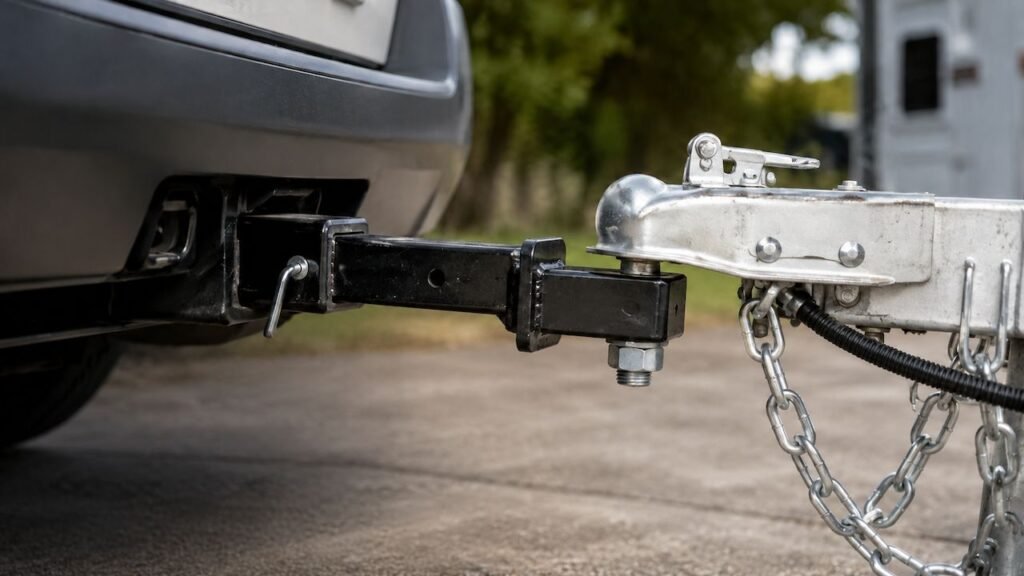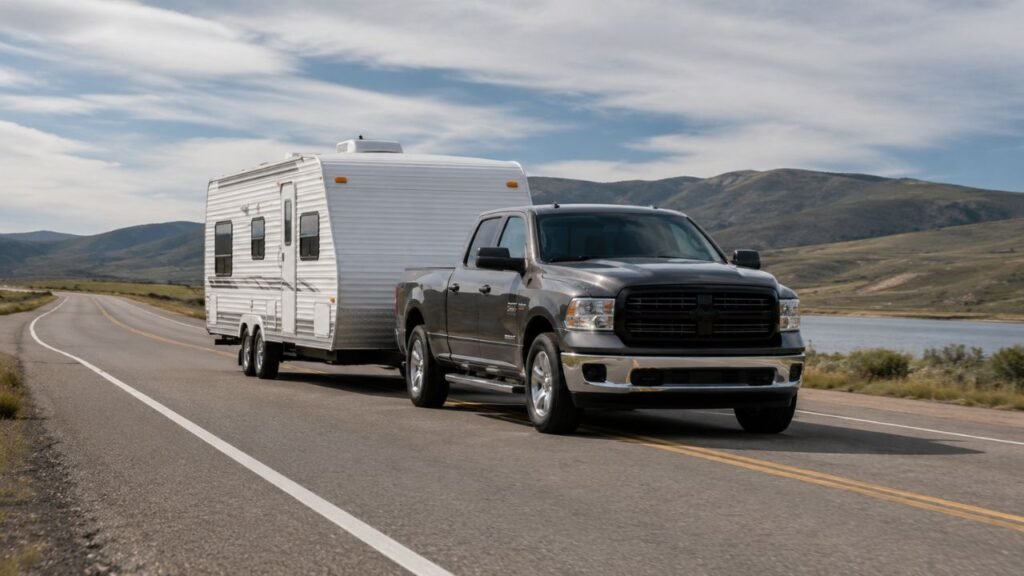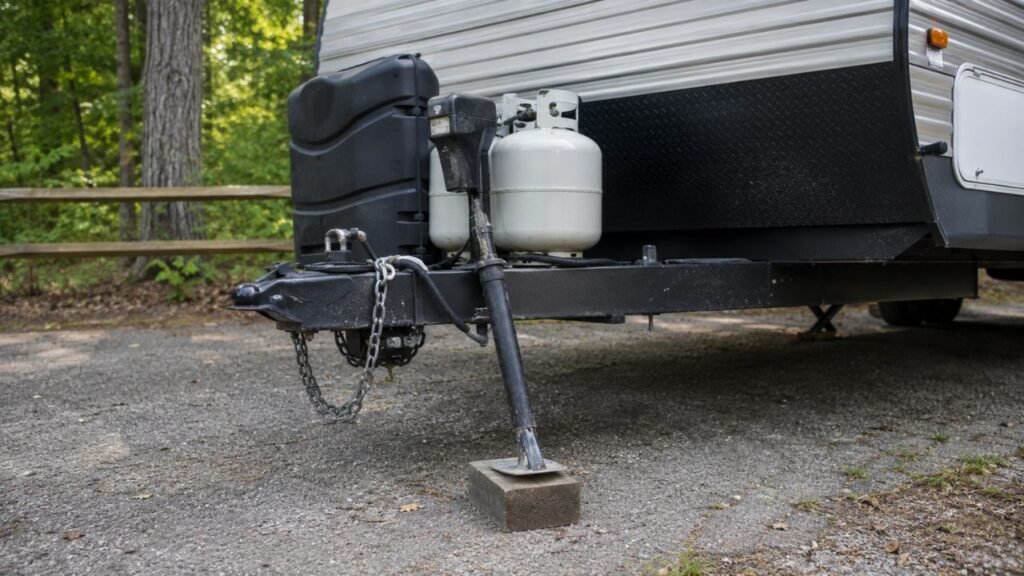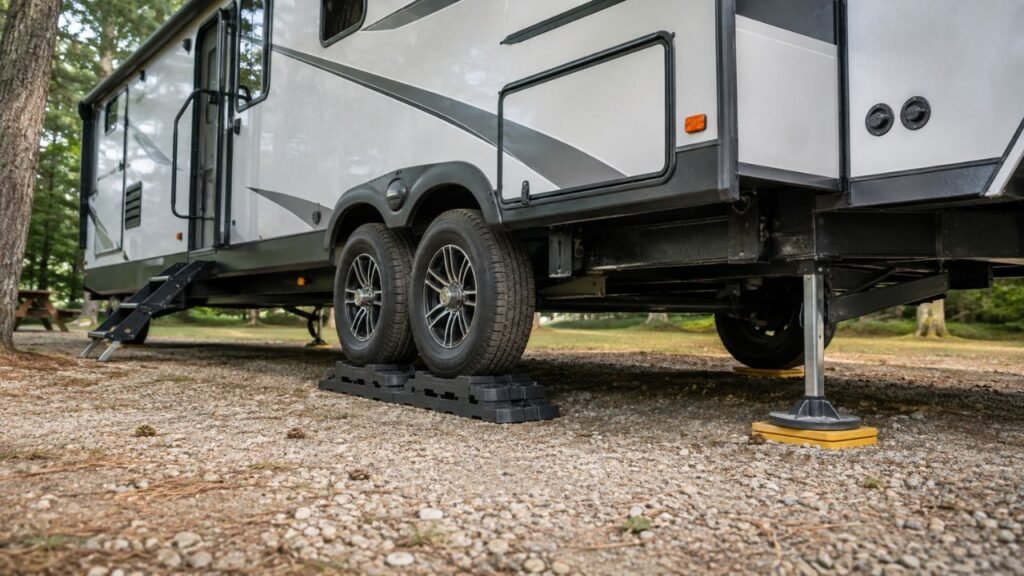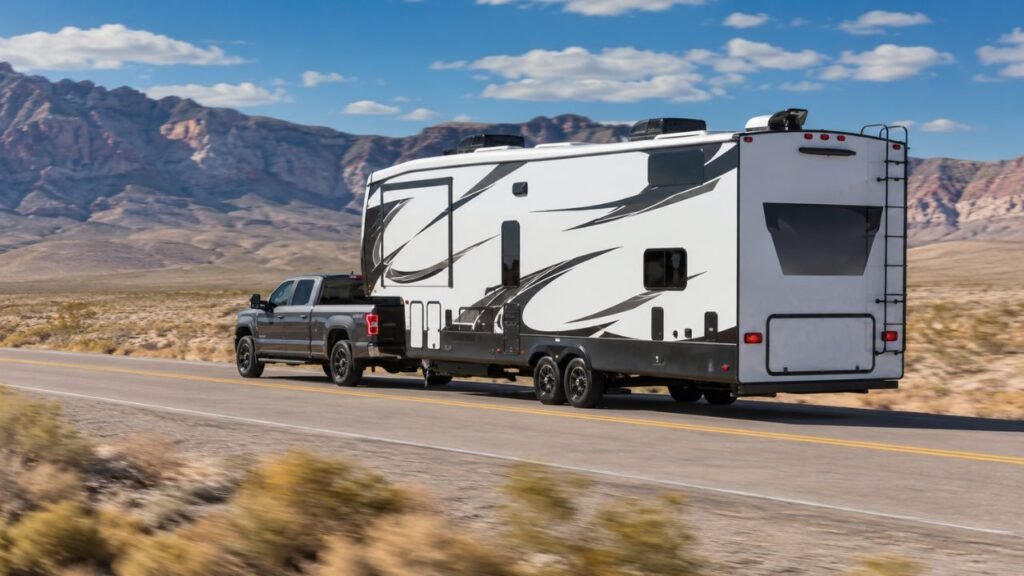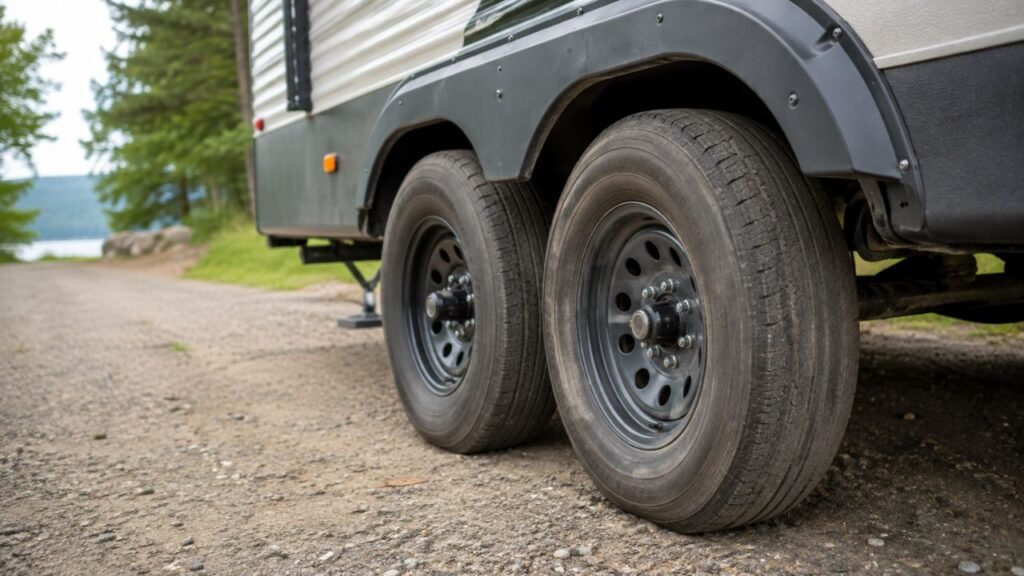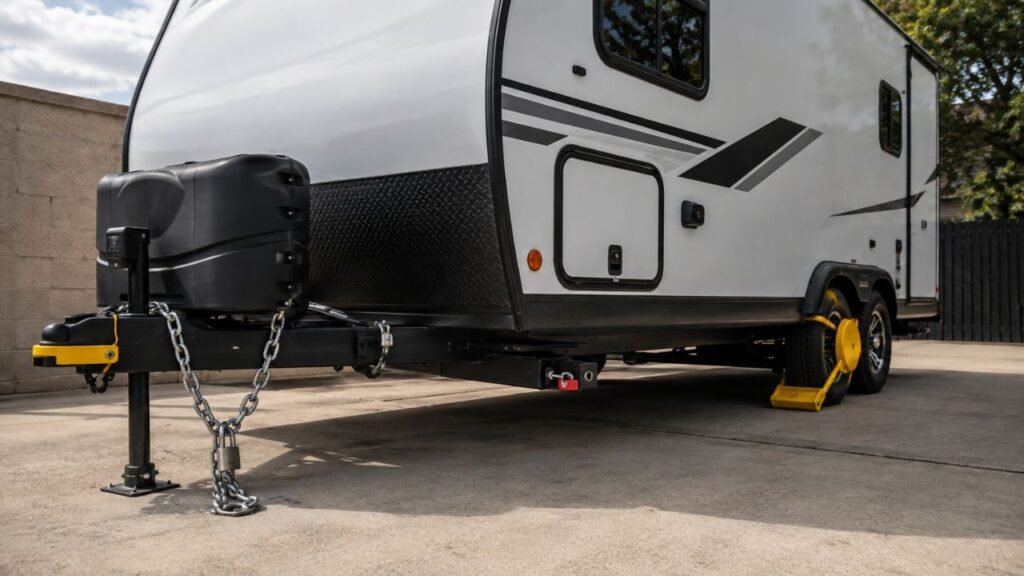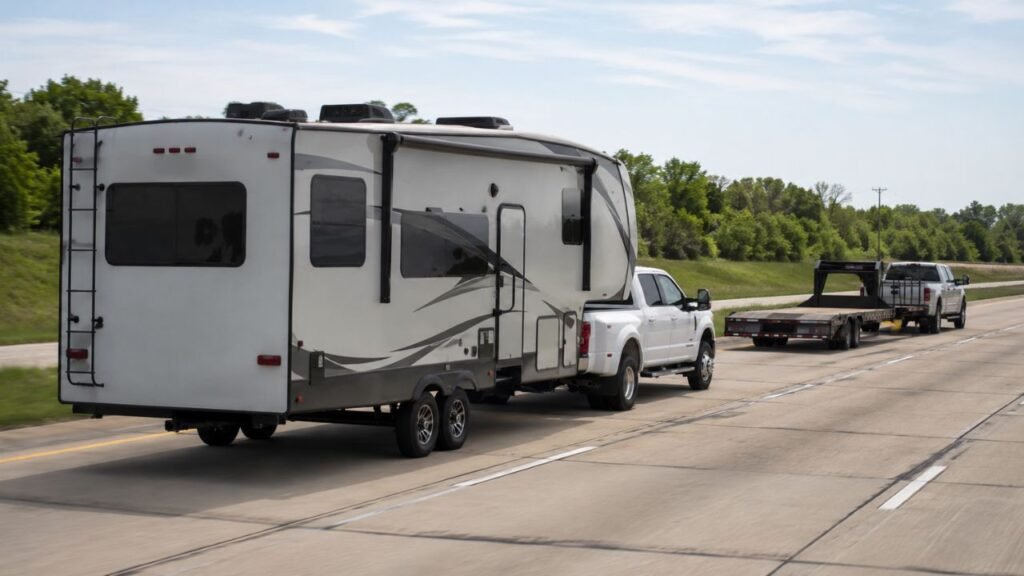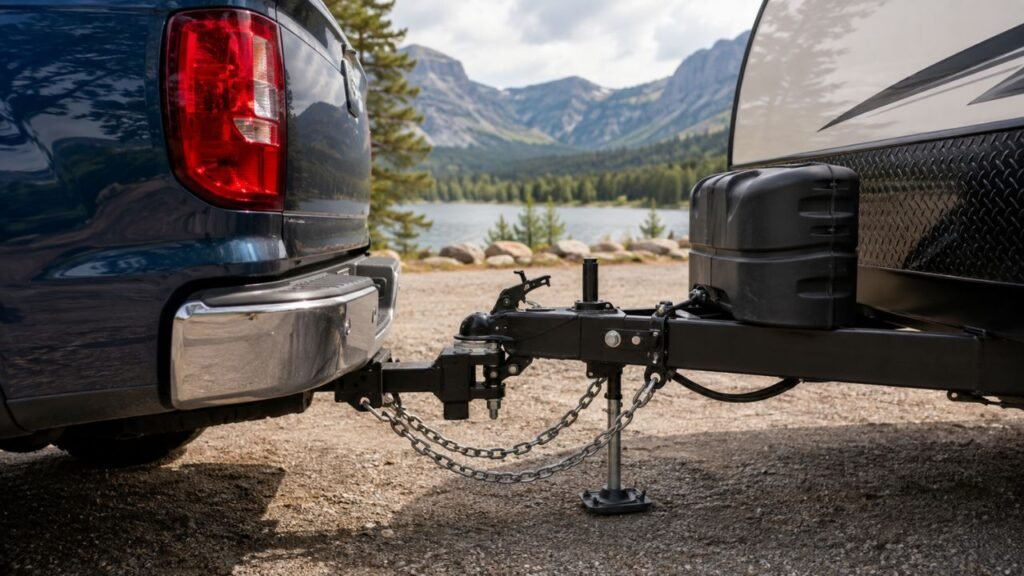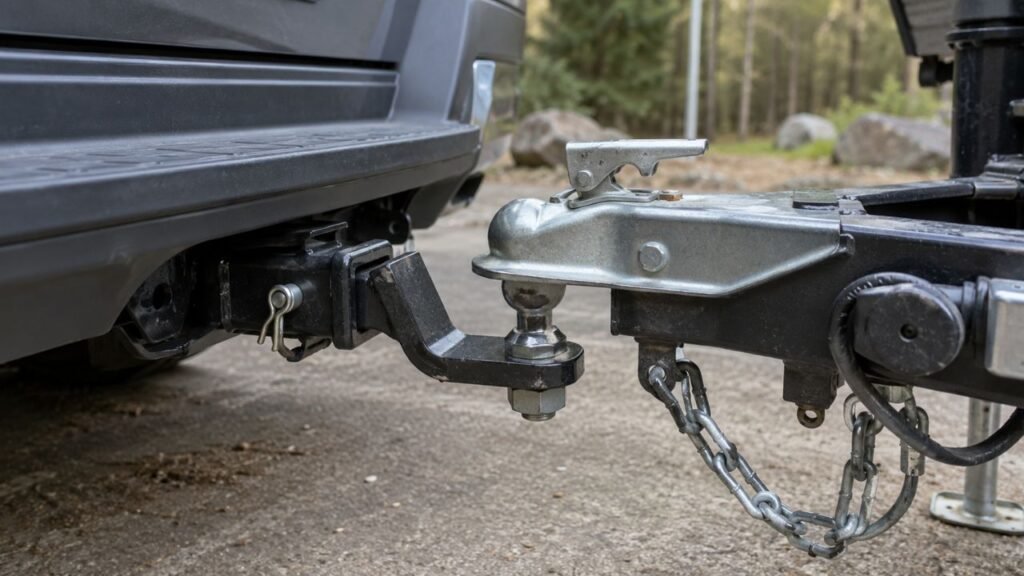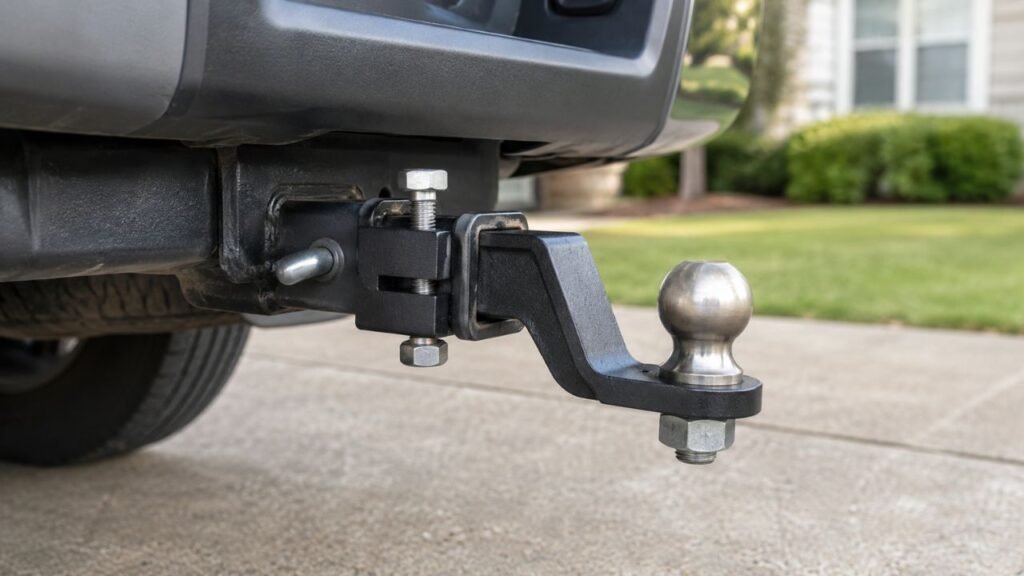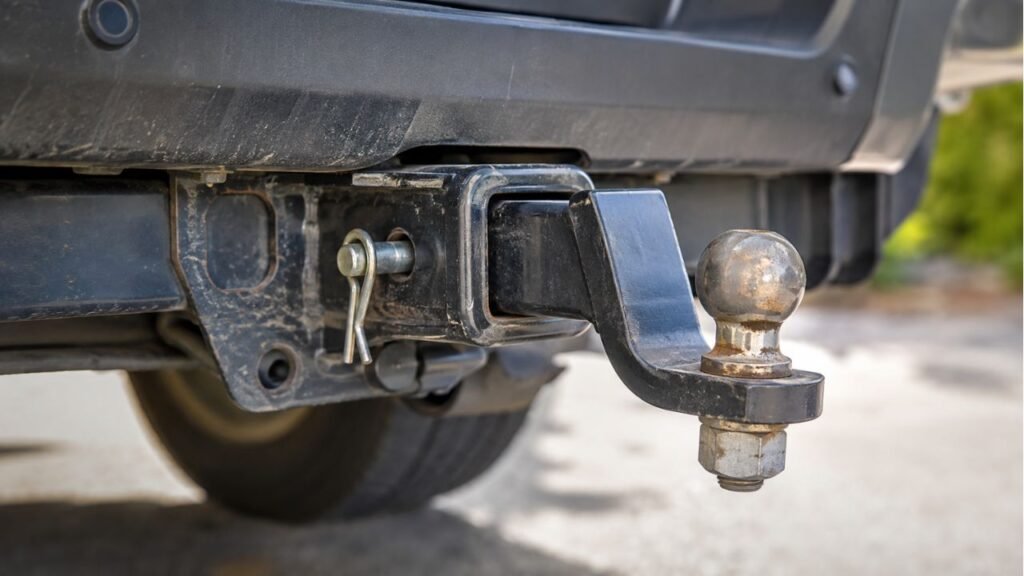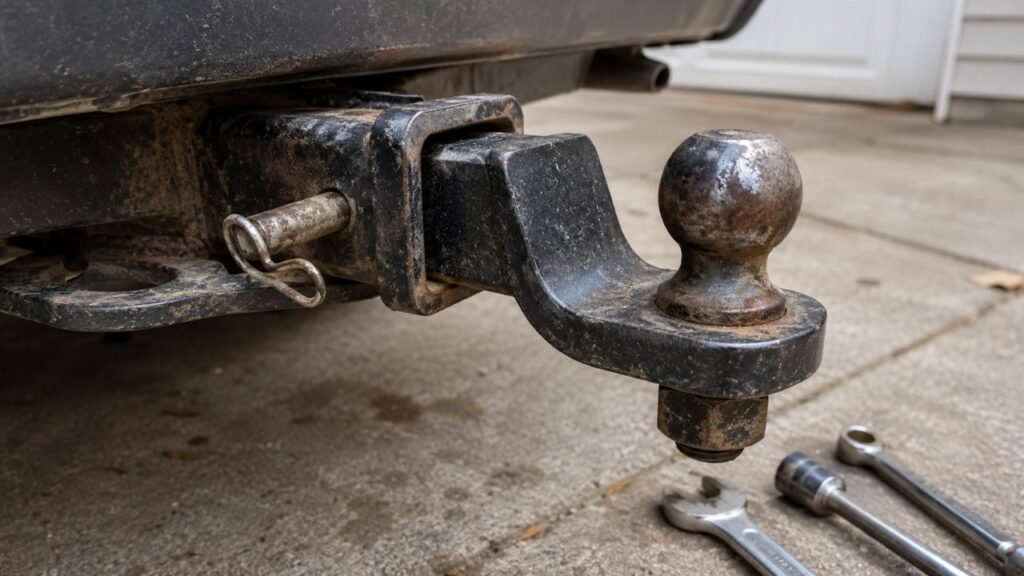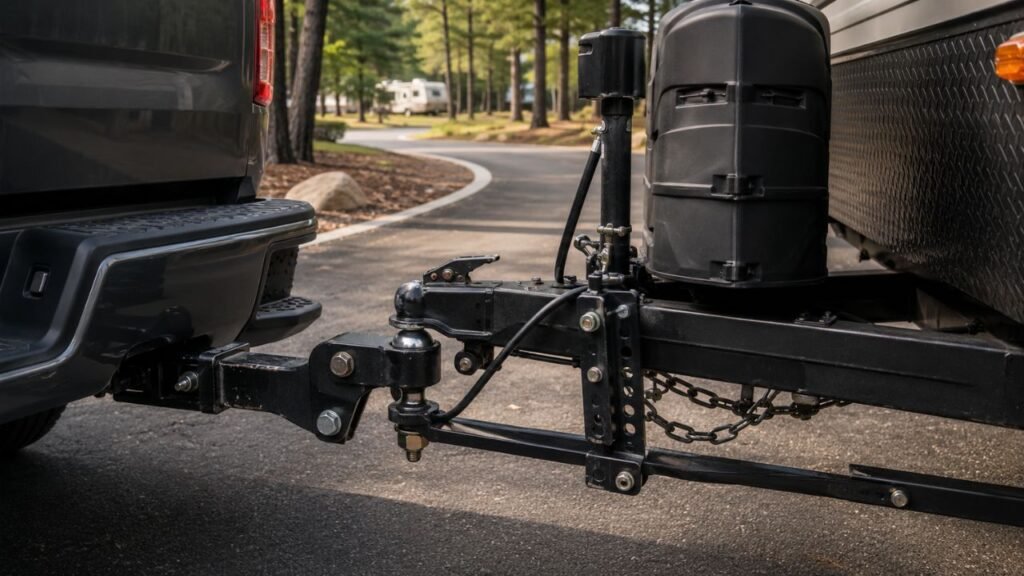
Your hitch usually squeaks when turning because loaded metal surfaces are rubbing together. The most common sources include a dry hitch ball, dirty coupler, weight-distribution spring bars, and friction-based sway-control brackets.
This guide will help you locate the noise and fix it safely. You will also learn which hitch parts need grease and which must remain dry.
Key Takeaways
- A dry hitch ball commonly causes squeaking during slow, tight turns.
- Dirt, rust, and old grease can increase friction inside the coupler.
- Weight-distribution hitches often groan because their sway control uses friction.
- Never grease friction-control surfaces without checking the hitch manual.
- Loose hardware can squeak, shift, or produce louder clunking noises.
- Grinding, cracking, or sudden popping should receive immediate attention.
- Grease can reduce friction, but it cannot repair damaged hitch parts.
Why Does My Hitch Squeak When I Turn?
Your tow vehicle and trailer do not remain perfectly aligned while turning. The coupler rotates around the hitch ball as their angles change.
That movement happens while the trailer’s tongue weight presses downward. The pressure creates considerable friction between the contacting metal surfaces.
When those surfaces become dry, dirty, rusty, or worn, they squeak. You may hear the noise more clearly while:
- Making a sharp turn
- Reversing into a campsite
- Entering a sloped driveway
- Crossing uneven ground
- Turning with weight-distribution bars attached
A light squeak does not always indicate a dangerous problem. However, a new or unusually harsh noise deserves an inspection.
The sound may also travel through the trailer frame. Therefore, the loudest location may not be the actual source.
Is Hitch Squeaking Normal or a Safety Concern?
Some hitch noises are normal, especially with friction-based weight-distribution systems. However, the sound, timing, and related movement can reveal more serious problems.
| Sound or Symptom | Likely Cause | Usually Normal? | Recommended Action |
| Light squeak during slow turns | Dry hitch ball or coupler | Sometimes | Clean and lubricate approved surfaces |
| Groaning from spring-bar brackets | Friction sway control | Often | Confirm normal operation in the manual |
| Squeak from the receiver | Shank movement or surface rust | Sometimes | Inspect fit and secure the connection |
| Grinding during every turn | Severe rust, wear, or binding | No | Stop and inspect the hitch |
| Loud pop with visible movement | Loose or shifting hardware | No | Check the entire hitch assembly |
| Squeak with loose coupler movement | Wrong ball size or worn coupler | No | Correct the connection before towing |
| New noise after striking a bump | Bent or displaced component | No | Inspect for structural damage |
| Cracking or snapping sound | Damaged hardware or mounting point | No | Stop towing and seek professional help |
Normal friction noise should remain reasonably consistent. It should not arrive with instability, looseness, or damaged metal.
Whenever the noise suddenly changes, inspect the connection before continuing your trip.
Most Common Causes of Hitch Squeaking While Turning
Several hitch components move during every turn. Checking each possible friction point will help you avoid treating the wrong area.
Dry Hitch Ball and Trailer Coupler
The hitch ball supports considerable pressure from the trailer’s tongue weight. As you turn, the coupler rotates across the ball’s surface.
Without enough lubricant, these parts rub directly against each other. The result is often a sharp squeak or deep creaking sound.
The problem can become worse when:
- Old grease has dried out
- Rain has washed grease away
- Sand has contaminated the grease
- Surface rust has formed
- The hitch ball has become scratched
- The coupler socket contains road grime
Inspect the ball for shiny patches, grooves, rust, or flaking chrome. These marks usually show where friction is occurring.
You should also inspect inside the coupler. A flashlight can reveal rust, packed dirt, and unusual wear.
Weight-Distribution Spring Bars
Weight-distribution spring bars remain under strong tension while towing. They transfer part of the trailer’s tongue weight toward the vehicle’s front axle and trailer axles.
The bars also move as you turn or cross uneven ground. Depending on their design, they may pivot inside the hitch head or slide across support brackets.
Round-bar systems and trunnion-bar systems have different contact points. Some require regular lubrication around their sockets or pivot areas.
A dry bar socket can produce a repetitive squeak. A worn socket may also creak as the bar changes position.
Do not assume every spring-bar surface needs grease. Follow the maintenance instructions for your exact hitch model.
Friction Sway-Control Brackets
Many weight-distribution hitches use intentional friction to limit trailer sway. Their spring bars press against steel brackets while the trailer moves.
This metal-on-metal contact can create:
- Groaning
- Creaking
- Popping
- Scraping-like friction sounds
The sound often becomes louder during sharp turns or reversing. In many systems, that noise is part of normal operation.
Greasing these contact surfaces may make the hitch quieter. However, it can also reduce the friction needed for sway control.
Never grease an L-bracket, friction pad, or sway-control surface unless the manufacturer specifically allows it.
Some manufacturers offer approved bracket jackets or noise-reduction pads. These products can reduce noise without defeating the hitch’s intended operation.
Dirt, Road Grime, and Rust
Road debris creates rough contact between moving hitch components. Dirt can also mix with grease and form an abrasive paste.
Common contamination points include:
- The hitch ball
- Inside the trailer coupler
- Spring-bar sockets
- L-bracket surfaces
- The ball mount and receiver
- Hitch pins and adjustment holes
A thin layer of surface rust may create considerable squeaking. Road salt can accelerate the problem after winter towing.
Cleaning should come before lubrication. Adding fresh grease over dirt simply traps abrasive particles against the metal.
Loose Hitch Ball or Mounting Hardware
A slightly loose component can shift whenever the trailer changes direction. That movement may sound like squeaking, clicking, or clunking.
Inspect these areas carefully:
- Hitch ball nut
- Hitch-head bolts
- Shank adjustment bolts
- Coupler mounting bolts
- Weight-distribution brackets
- Receiver mounting hardware
- Sway-control attachment points
Do not guess the correct tightness. Use the torque specifications supplied by the hitch or vehicle manufacturer.
Overtightening can stretch fasteners or damage components. Undertightening allows movement that increases wear.
Movement Between the Ball Mount and Receiver
The ball mount needs slight clearance so it can enter the receiver. Because of this clearance, some movement is usually unavoidable.
However, excessive play can create noise when turning. The shank may rub against the receiver’s upper, lower, or side walls.
Possible causes include:
- A worn receiver opening
- An undersized shank
- Rust inside the receiver
- An elongated hitch-pin hole
- A loose or worn hitch pin
- A poorly fitted ball mount
An approved anti-rattle clamp may reduce this movement. A threaded hitch pin or manufacturer-designed wedge may also help.
These devices only address movement at the receiver. They will not fix noise coming from the coupler or spring bars.
Worn Hitch Ball or Coupler
Grease cannot repair deep wear or distorted metal. Severely worn parts may continue squeaking after lubrication.
Inspect the hitch ball for:
- Deep grooves
- Flat spots
- Heavy pitting
- Cracked or flaking plating
- An uneven shape
- A bent mounting shank
Inspect the coupler for:
- Excessive movement after latching
- A damaged latch
- Cracks around the socket
- Bent metal
- Severe internal rust
- An unevenly worn socket
A coupler should rotate around the correct ball without binding. It should not slam loosely forward and backward.
Replace damaged components instead of trying to quiet them with extra grease.
Trailer Suspension or Frame Movement
Sometimes the hitch is not causing the squeak at all. Trailer suspension noise can travel forward through the frame.
Possible sources include:
- Dry leaf-spring bushings
- Worn equalizer components
- Loose suspension bolts
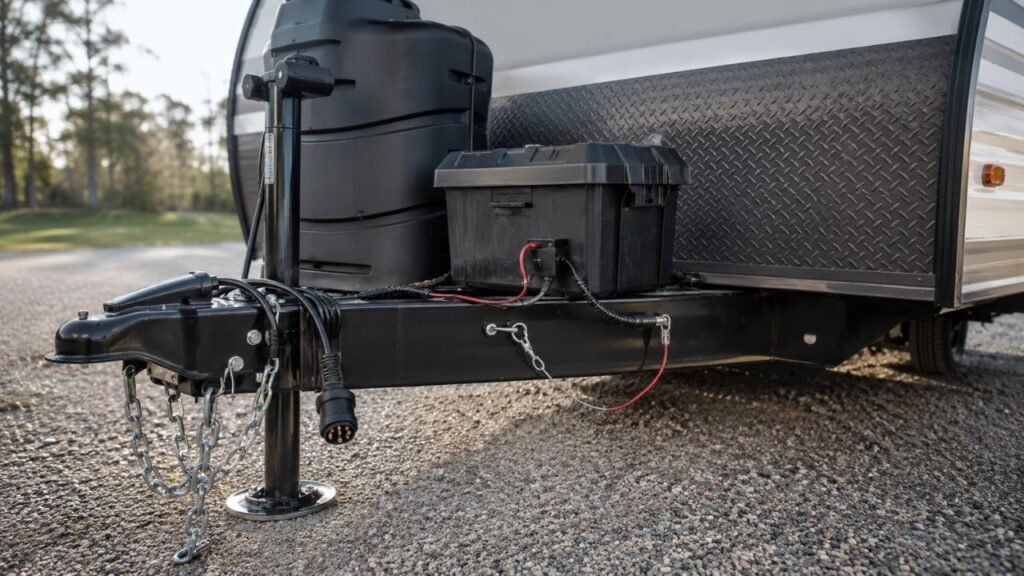
- Safety chains rubbing together
- A loose tongue jack
- Battery boxes shifting
- Breakaway cables rubbing
- Trailer-frame flex
Listen carefully while the trailer crosses uneven ground. Suspension-related squeaks may occur even when travelling straight.
How to Find the Exact Source of the Squeak
Finding the source before applying grease prevents unnecessary work. It also protects friction surfaces that should remain dry.
Notice Exactly When the Noise Happens
Begin by identifying the conditions that produce the sound.
Ask yourself:
- Does it happen only during sharp turns?
- Is it louder when reversing?
- Does it occur when turning both directions?
- Is it worse on slopes?
- Does braking or accelerating trigger it?
- Does it happen without the spring bars attached?
- Does rain make the noise better or worse?
- Is the noise present when the trailer is unloaded?
A squeak limited to tight turns commonly comes from the ball, coupler, or weight-distribution system.
Noise during acceleration and braking may suggest movement inside the receiver. It may also indicate a loose coupler connection.
Inspect the Hitch While Safely Parked
Park the tow vehicle and trailer on firm, level ground. Apply the parking brake and chock the trailer wheels.
Allow recently used hitch parts to cool before touching them. Friction surfaces can become warmer than expected.
Inspect the following areas:
- Check the hitch ball for dryness and wear.
- Inspect the coupler socket with a flashlight.
- Look around the spring-bar sockets.
- Examine the sway-control brackets.
- Inspect the ball mount and receiver opening.
- Check every retaining pin and clip.
- Look for loose, bent, or missing hardware.
- Inspect nearby suspension components.
Never place your hands near loaded spring bars. Release their tension according to the manufacturer’s instructions first.
Do not place yourself between vehicles while someone moves the tow vehicle.
Look for Wear Marks
Moving metal often leaves visible evidence. These marks can lead you directly to the noisy area.
Look for:
- Bright polished metal
- Scraped paint
- Red or brown rust powder
- Black grease streaks
- Metal shavings
- Fresh scratches
- Elongated holes
- Uneven wear patterns
A polished patch on one receiver wall may show where the shank rubs. Similar marks on spring bars may reveal bracket contact.
Test One Correction at a Time
Avoid cleaning, tightening, and lubricating everything simultaneously. You may quiet the noise without learning what caused it.
Instead, correct one suspected area and test again. For example:
- Clean and lubricate the hitch ball.
- Test the trailer at low speed.
- Check whether the noise changed.
- Move to the next suspected component.
Use a safe, open area for testing. Avoid busy roads until you confirm that every connection is secure.
How to Stop a Hitch From Squeaking When Turning
The correct repair depends on the hitch design and noise source. Follow these steps carefully instead of lubricating every moving component.
Clean the Hitch Ball and Coupler
Old grease can collect dirt, sand, and rust particles. That contaminated mixture increases wear and noise.
To clean the connection:
- Disconnect the trailer on stable ground.
- Secure the trailer with wheel chocks.
- Wipe old grease from the hitch ball.
- Remove loose dirt and light surface rust.
- Inspect the ball for grooves or flat areas.
- Inspect inside the coupler with a light.
- Wipe away loose grime from the socket.
- Replace anything showing serious damage.
Use cleaning products that are safe for the component’s finish. Avoid leaving loose debris inside the coupler.
A badly pitted hitch ball should be replaced. Polishing cannot restore metal that has already disappeared.
Lubricate the Hitch Ball
Once the ball is clean and undamaged, apply appropriate hitch-ball grease. A suitable automotive or bearing grease may also work when permitted.
Spread a thin, even layer across the ball’s contact surface. You do not need to leave a large lump of grease.
Too much grease attracts dirt and makes inspection difficult. It can also spread onto clothing, tools, and nearby components.
Reinspect the grease before long trips. Clean and reapply it when it becomes:
- Dry
- Dirty
- Gritty
- Rust-colored
- Washed away
- Contaminated with road debris
Cover the hitch ball while it is not being used. A cover keeps dirt away and prevents accidental contact with greasy surfaces.
Service Weight-Distribution Pivot Points
Weight-distribution hitches have brand-specific lubrication requirements. Begin by identifying the exact manufacturer and model.
Check the manual for:
- Spring-bar socket lubrication
- Hitch-head pivot points
- Recommended grease type
- Maintenance intervals
- Areas that must remain dry
- Approved noise-control accessories
Apply grease only to the specified points. Wipe away excess lubricant before attaching the trailer.
Inspect the spring bars for bends, deep gouges, and uneven wear. Replace damaged bars instead of continuing to use them.
Clean Sway-Control Brackets
Friction-control brackets must stay clean enough to operate consistently. Loose dirt and glazed deposits may increase noise.
Depending on the hitch design, approved maintenance may include:
- Wiping away road grime
- Removing loose rust
- Cleaning the spring bars
- Inspecting bracket alignment
- Replacing worn brackets
- Installing approved bracket jackets
Do not use oil, grease, or silicone spray on friction surfaces unless expressly approved.
A quieter hitch is not worth losing important sway-control performance.
Tighten Loose Hardware Correctly
Check every accessible fastener before towing. Pay particular attention to hardware disturbed during recent adjustments.
Use the specified torque for:
- Hitch ball nuts
- Hitch-head bolts
- Shank bolts
- Coupler hardware
- Spring-bar brackets
- Sway-control mounts
- Receiver mounting bolts
A visual inspection cannot confirm proper torque. A bolt can appear secure while remaining under-tightened.
Replace damaged threads, rounded nuts, and stretched fasteners. Do not reuse hardware that the manufacturer identifies as single-use.
Reduce Movement Inside the Receiver
An anti-rattle device can pull the ball-mount shank against the receiver wall. This reduces movement and noise.
Common options include:
- U-bolt anti-rattle clamps
- Threaded hitch pins
- Internal receiver wedges
- Built-in tightening mechanisms
- Properly sized replacement ball mounts
Choose a device compatible with your receiver and towing load. Some devices are designed mainly for bike racks or cargo carriers.
Confirm that the device is approved for trailer towing. Tighten and inspect it according to its instructions.
Do not use tape, improvised shims, or loose pieces of metal. They can move, wear through, or interfere with the hitch pin.
Replace Worn Components
Replacement becomes necessary when the metal can no longer provide a reliable connection.
Replace or professionally inspect components showing:
- Cracks
- Deep grooves
- Severe rust
- Bent sections
- Elongated holes
- Missing material
- Distorted brackets
- Loose welds
- Excessive coupler movement
- Damaged retaining pins
Noise may be the first noticeable symptom of wear. Addressing it early can prevent more expensive damage.
Where Should You Apply Grease on a Trailer Hitch?
Different hitch components serve different purposes. Some need lubrication, while others depend on dry friction.
| Hitch Component | Usually Lubricated? | Important Caution |
| Hitch ball | Yes | Keep the grease clean and evenly applied |
| Coupler latch mechanism | Sometimes | Follow the coupler manufacturer’s instructions |
| Spring-bar sockets | Often | Requirements vary between hitch designs |
| Hitch-head pivot points | Sometimes | Lubricate only specified locations |
| L-bracket contact surfaces | Usually no | Grease may reduce sway-control friction |
| Friction sway-control bar | Usually no | Lubrication can prevent proper operation |
| Receiver shank exterior | Limited situations | Grease attracts grit and may affect tighteners |
| Hitch pin | Light protection sometimes | Replace worn pins instead of greasing them |
| Fifth-wheel hitch plate | Commonly yes | Use approved grease or a compatible lube plate |
| Pintle hook and lunette ring | Design-dependent | Follow the equipment’s maintenance instructions |
The hitch manual should always override general advice. Two similar-looking hitches may have very different maintenance requirements.
When you cannot identify a lubrication point confidently, leave it alone. Contact the manufacturer or a qualified hitch installer instead.
Why Does My Weight-Distribution Hitch Squeak So Much?
Weight-distribution hitches work under high pressure and constant movement. Their spring bars, sockets, and sway-control surfaces can produce considerable noise.
Normal Friction Noise
Some weight-distribution systems intentionally create steel-on-steel friction. That friction helps resist unwanted trailer movement.
Normal sounds may include:
- Groaning during tight turns
- Creaking while reversing
- Brief popping over uneven ground
- Friction noise when entering driveways
- Louder sounds during low-speed maneuvering
The sound may change with weather and trailer loading. It can also become louder as the turning angle increases.
A consistent groan without looseness or damage may be normal. Confirm this in the manual for your hitch system.
Noise That Suggests a Problem
Even a naturally noisy hitch should behave predictably. A sudden change can signal wear or incorrect adjustment.
Inspect the system when you notice:
- A new grinding sound
- One bar sitting differently
- A bracket moving on the frame
- Missing pins or clips
- Deep gouges in a spring bar
- Metal flakes around a socket
- Uneven contact on the brackets
- Movement in the hitch head
- Increasing trailer sway
- A sudden loud pop
Do not dismiss handling changes as harmless hitch noise. Reduced stability deserves immediate attention.
Can You Make a Weight-Distribution Hitch Quieter?
You may not be able to make it completely silent. However, proper setup and maintenance can reduce unnecessary noise.
Approved methods may include:
- Correcting hitch-head angle
- Adjusting spring-bar loading
- Cleaning contact surfaces
- Lubricating approved sockets
- Tightening frame brackets
- Replacing worn components
- Installing approved bracket jackets
- Confirming correct trailer loading
Do not change hitch adjustments randomly to reduce noise. Incorrect adjustment can affect weight distribution and steering control.
Why Does the Hitch Still Squeak After Greasing?
Greasing the hitch ball only works when that contact point causes the noise. Several other components can produce almost identical sounds.
The hitch may continue squeaking because:
- The noise comes from spring-bar brackets.
- The coupler still contains dirt or rust.
- The grease moved away from the loaded area.
- The hitch ball has deep scoring.
- The coupler is adjusted too tightly.
- The ball and coupler sizes do not match.
- The ball mount rubs inside the receiver.
- Spring-bar sockets need approved lubrication.
- Trailer suspension bushings are dry or worn.
- Loose hardware shifts during turns.
- A friction sway-control system is working normally.
- The safety chains are rubbing together.
Clean the original grease before adding more. Repeatedly adding grease can hide wear and trap additional dirt.
When grease makes no difference, inspect the complete hitch system. Do not assume the hitch ball remains responsible.
Can the Wrong Hitch Ball Size Cause Squeaking?
A hitch ball must match the size stamped on the trailer coupler. Common sizes include 1 7/8 inches, 2 inches, and 2 5/16 inches.
A ball that is too large may not seat properly. It can bind inside the coupler and create unusual turning resistance.
A ball that is too small may create excessive movement. That movement can produce squeaking, clunking, and dangerous separation risk.
Check these details before towing:
- Coupler ball-size marking
- Hitch ball diameter
- Hitch ball weight rating
- Hitch ball shank diameter
- Ball mount capacity
- Trailer’s loaded weight
Never force a coupler onto the wrong ball. Noise caused by a size mismatch is a safety problem.
Does Rain or Cold Weather Make Hitch Squeaking Worse?
Weather can change how your hitch sounds. Rain may wash lubricant away from exposed surfaces.
Moisture also encourages surface rust on the ball, coupler, and receiver. Even a thin rust layer can increase friction.
Cold temperatures can make some grease thicker. Components may therefore move less smoothly until they warm.
Dust and road grit can stick to damp or greasy surfaces. This contamination creates a rougher contact area.
Road salt creates another concern. It accelerates corrosion inside hidden areas and around mounting hardware.
After towing through difficult weather:
- Wash away road salt
- Dry exposed hitch parts
- Inspect for fresh rust
- Clean contaminated grease
- Reapply approved lubricant
- Check pins and clips
- Cover the hitch during storage
Seasonal maintenance keeps small corrosion problems from becoming structural damage.
How to Prevent Hitch Squeaks Before Your Next Trip
A few simple checks can prevent most avoidable hitch squeaks. Include them in your normal pre-towing routine.
- Clean dirt and old grease from the hitch ball.
- Apply fresh grease to approved contact surfaces.
- Inspect the coupler socket for rust and debris.
- Confirm the hitch ball matches the coupler size.
- Check that the coupler closes and locks completely.
- Inspect spring bars for unusual wear or bending.
- Check weight-distribution brackets for movement.
- Verify important fasteners using specified torque.
- Inspect the hitch pin, clip, and receiver opening.
- Clean road salt after winter towing.
- Cover the hitch ball while the trailer is disconnected.
- Secure safety chains so they cannot drag or rub.
- Check nearby suspension parts for loose hardware.
- Repeat the inspection before every long towing trip.
Regular maintenance should not focus only on noise. It also helps you identify looseness, corrosion, and developing wear.
When Should You Stop Towing and Inspect the Hitch?
Most light squeaks can wait until you reach a safe inspection area. However, some symptoms require immediate attention.
Stop towing safely when you notice:
- Grinding instead of light squeaking
- Cracking or snapping noises
- A sudden loud pop
- Visible cracks in hitch components
- Bent or distorted metal
- A loose hitch ball
- Excessive coupler movement
- Missing pins or retaining clips
- A shifting weight-distribution bracket
- Deep rust or flaking metal
- Metal shavings around contact points
- An elongated hitch-pin hole
- New or increasing trailer sway
- Unusual steering or braking behavior
- A trailer that no longer sits correctly
Pull over somewhere level and away from traffic. Do not crawl beneath an unsupported trailer or tow vehicle.
Noise combined with instability should never be considered normal. Have the setup inspected before returning to the road.
Final Verdict
A hitch usually squeaks when turning because two loaded surfaces are rubbing together. The hitch ball and coupler are the first places I would check.
Clean the connection, inspect for wear, and apply grease only where approved. Remember that many weight-distribution systems intentionally use noisy friction.
When the noise arrives with looseness, grinding, or poor handling, stop towing. Grease may hide the symptom, but it cannot repair damaged equipment.
Related FAQs
These brief answers cover several common questions about squeaking trailer hitches.
Is It Normal for a Trailer Hitch to Squeak?
Light squeaking can be normal when the coupler rotates around the ball. Friction-based weight-distribution systems may also groan during turns. Grinding, looseness, or sudden noise changes require inspection.
What Is the Best Lubricant for a Hitch Ball?
Use grease specifically made for hitch balls or heavy automotive applications. The grease should maintain a protective layer under pressure. Always follow the hitch manufacturer’s lubrication recommendations.
Can I Use WD-40 on a Hitch Ball?
A light penetrating spray does not provide the lasting protection of proper grease. It may help loosen rust during cleaning, but it should not replace hitch-ball lubricant.
Should I Grease Weight-Distribution Bars?
Some spring-bar sockets and pivot points require regular grease. However, friction surfaces may need to remain completely dry. Check the instructions for your exact hitch before lubricating anything.
Why Does My Hitch Groan When Backing Up?
Backing often creates a sharper angle between the trailer and tow vehicle. That angle increases movement across the coupler, spring-bar sockets, and sway-control brackets, making friction noise louder.
Will an Anti-Rattle Clamp Stop Hitch Squeaking?
An anti-rattle clamp can reduce movement between the ball mount and receiver. It will not stop noise coming from the hitch ball, coupler, spring bars, or sway-control brackets.
How Often Should I Grease My Trailer Hitch Ball?
There is no universal mileage interval for every hitch. Inspect the ball before trips and reapply grease whenever it looks dry, dirty, rusty, or washed clean.
Can Too Much Grease Damage a Hitch?
Excess hitch-ball grease usually attracts dirt and creates a mess. The greater danger comes from applying grease to friction surfaces that depend on dry contact for sway control.
Why Does My Hitch Squeak Only During Sharp Turns?
Sharp turns create greater rotation and pressure between hitch components. The coupler moves farther around the ball, while spring bars and sway-control brackets experience greater sliding movement.
Can a Rusty Hitch Ball Cause Squeaking?
Yes, rust creates a rough surface that increases friction and wear. Light surface rust may be removable, but deep pitting, grooves, or flaking metal usually require replacement.
Why Does My Hitch Squeak More With a Heavy Trailer?
Additional tongue weight increases pressure between the coupler and hitch ball. It can also increase force on spring bars, brackets, and other weight-distribution components.
Can a Trailer Coupler Be Too Tight?
Yes, an incorrectly adjusted coupler can bind around the hitch ball. It may squeak during turns and become difficult to connect or disconnect. Follow the coupler manufacturer’s adjustment procedure.
Should a Friction Sway-Control Bar Be Greased?
Friction sway-control surfaces generally should not be greased because they need resistance to operate. Lubrication may reduce their effectiveness. Follow the manufacturer’s instructions for maintenance and adjustment.
Can Safety Chains Cause a Squeaking Sound?
Safety chains can squeak or scrape when their links rub together. They may also contact the trailer tongue or hitch during turns. Adjust their routing without making them too tight.
Can I Tow With a Squeaky Hitch?
You can usually continue after confirming the noise comes from normal friction. Do not continue when the squeak comes with grinding, loose hardware, visible damage, trailer sway, or unusual handling.

Scott Miller shares real-world RV road trip insights built from years of traveling open highways and backroads. He covers route planning, campground choices, and travel gear with a practical mindset. His content is written for RVers who value reliability over trends.