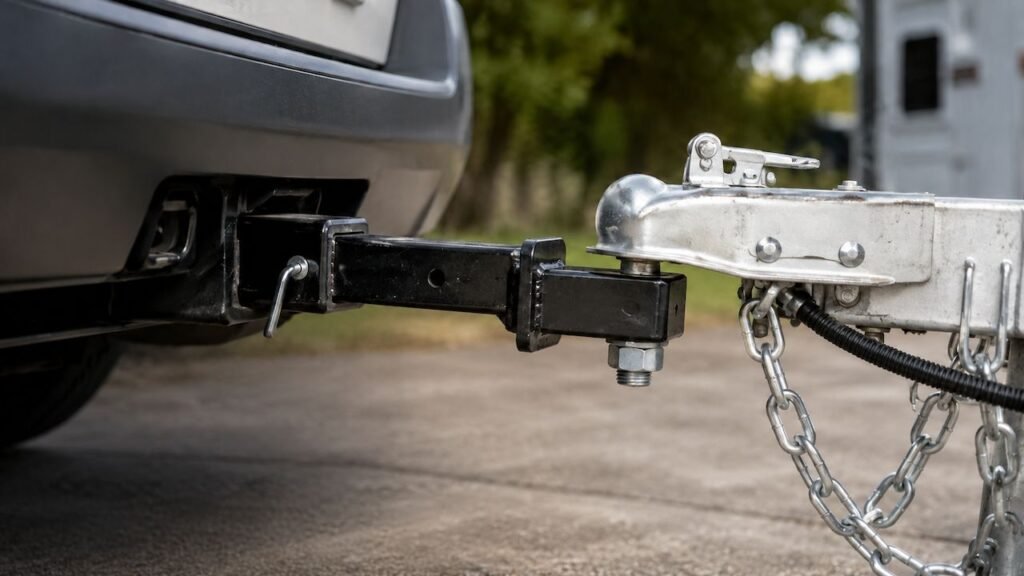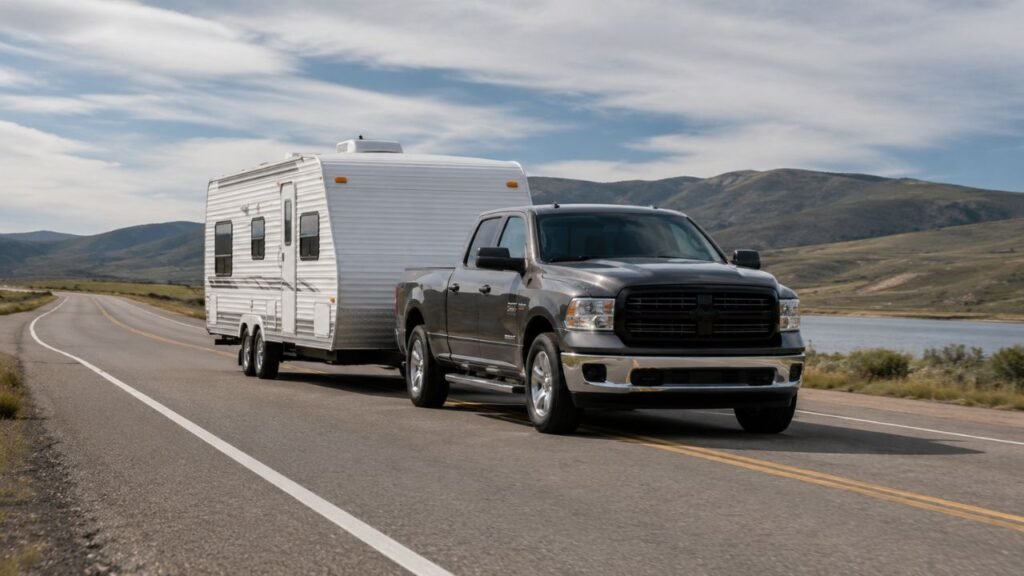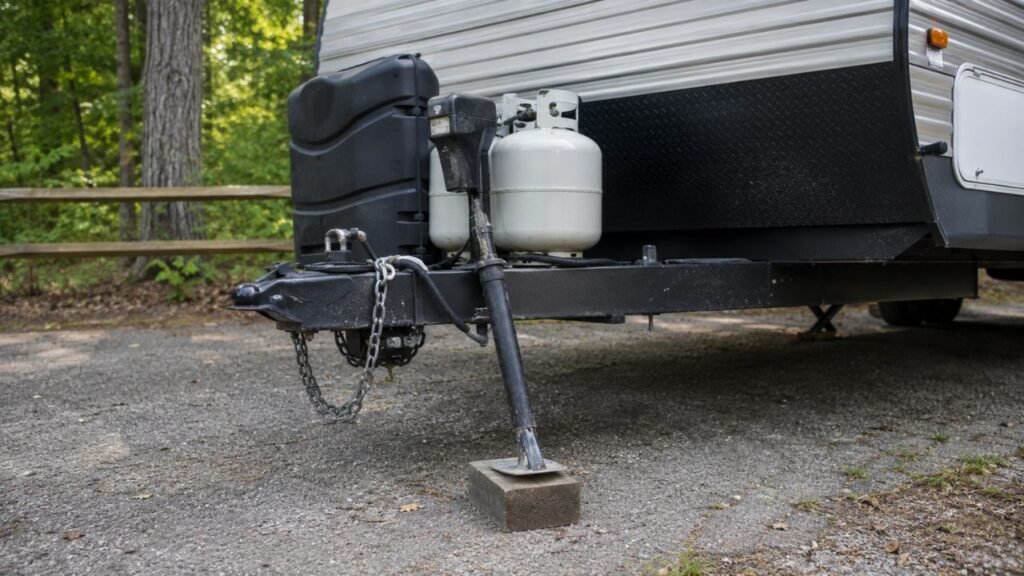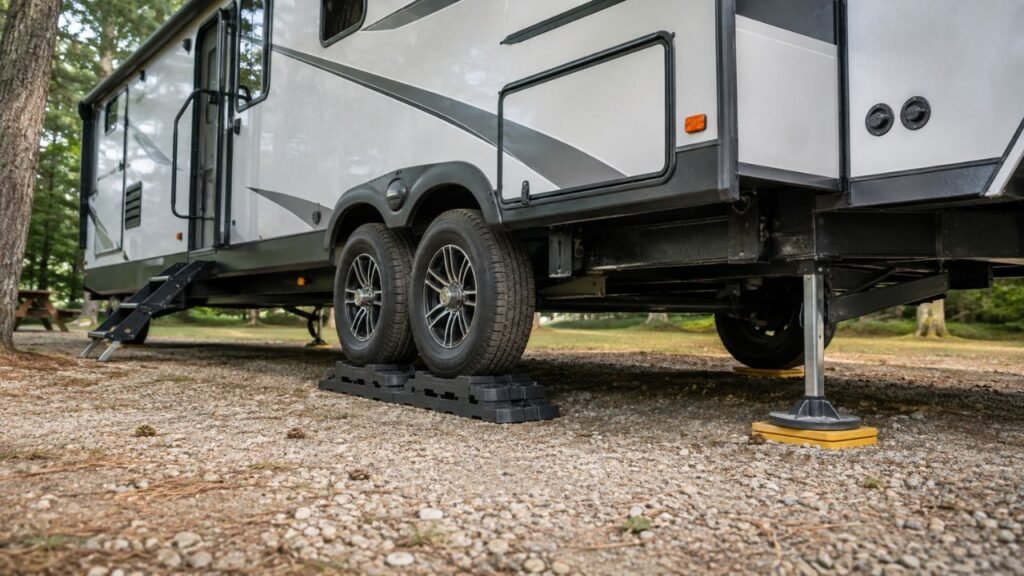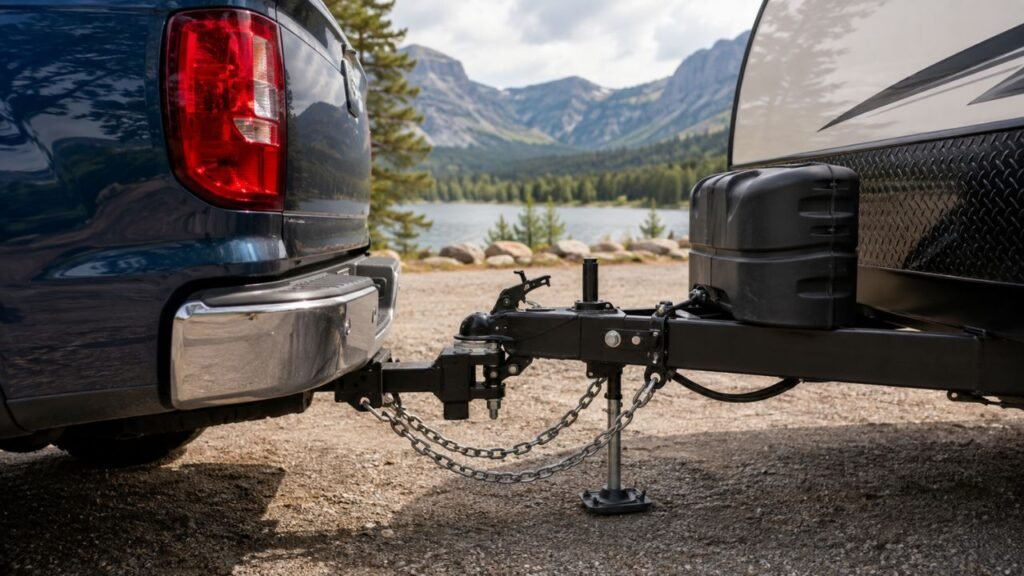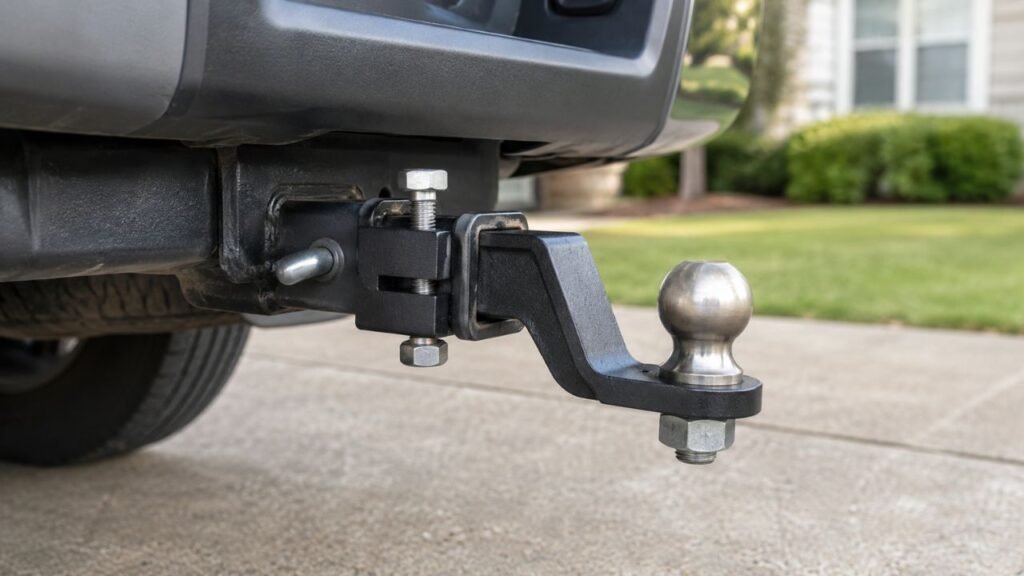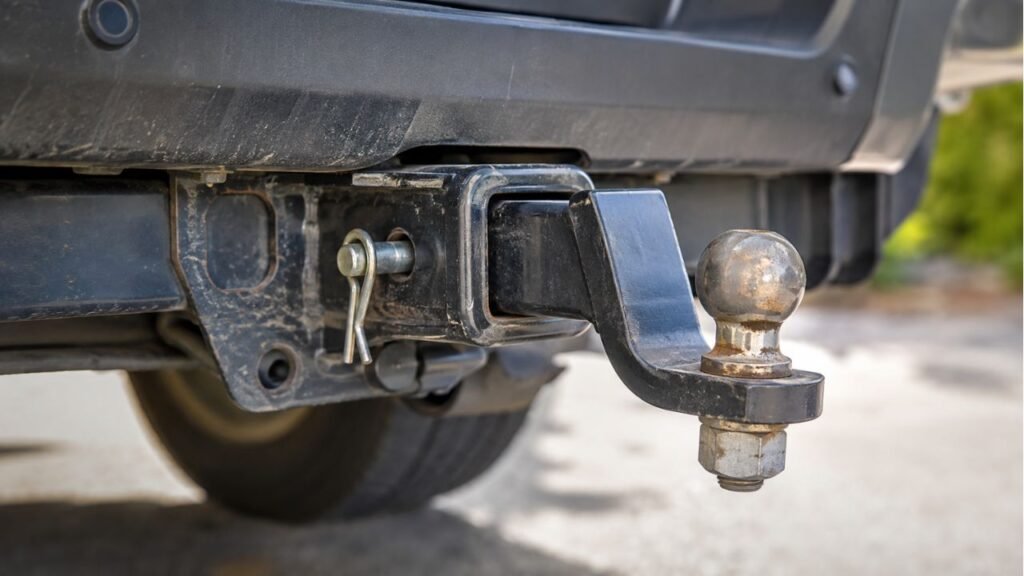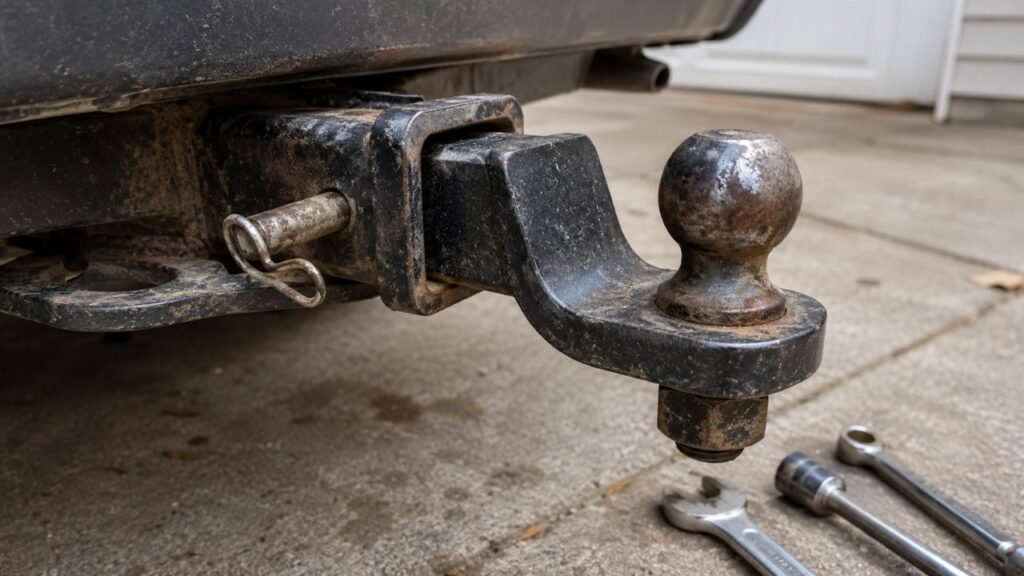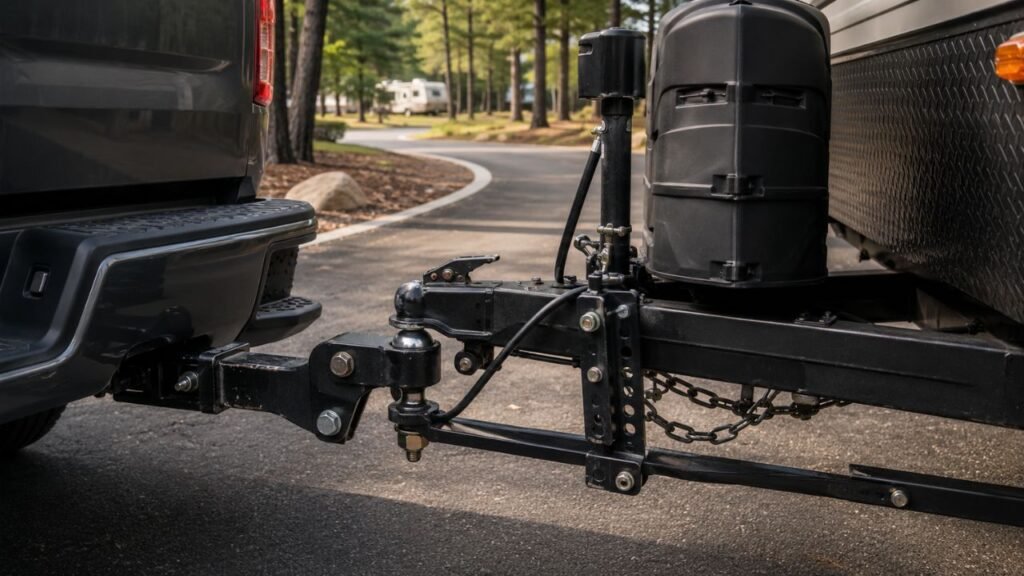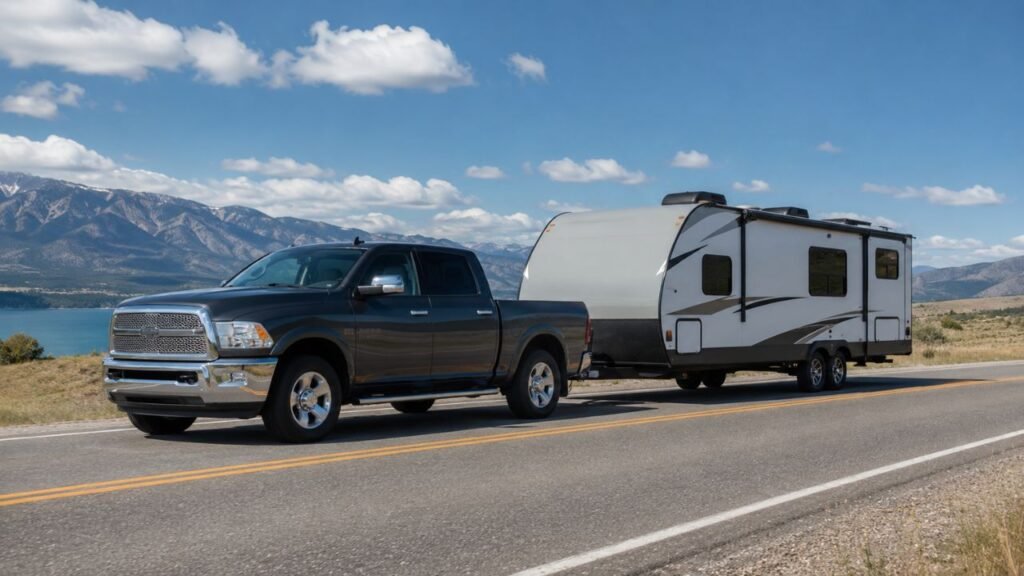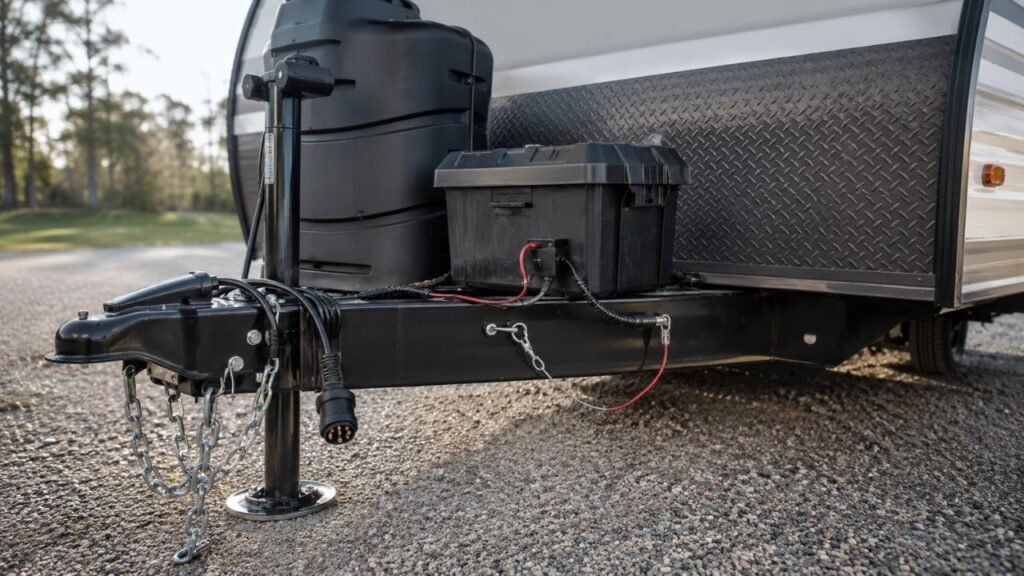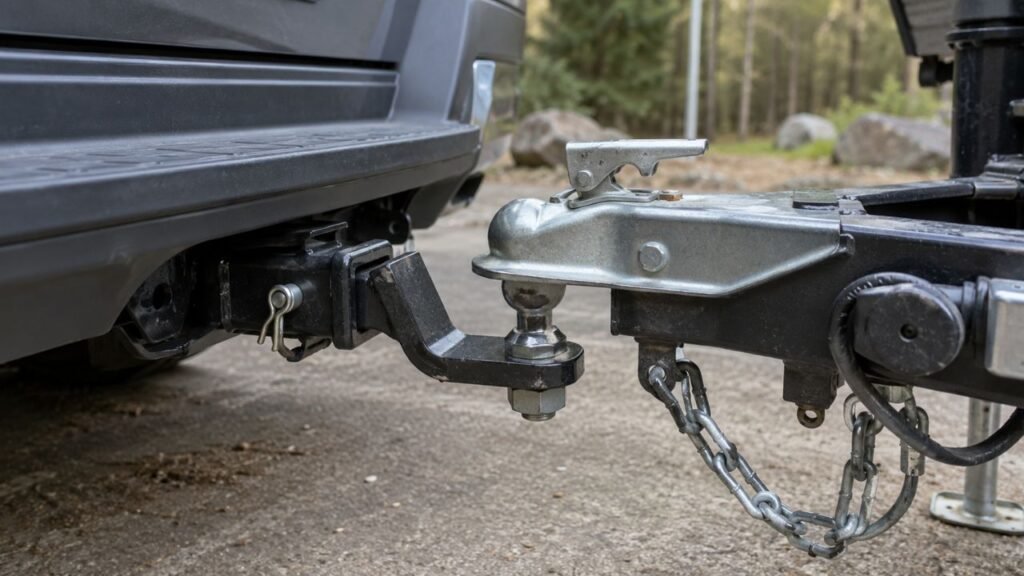
A small amount of hitch play is normal, especially between the ball-mount shank and the receiver tube. Around 1/16 to 1/8 inch of unloaded vertical or sideways movement is commonly seen. However, hard forward-and-back clunking, loose coupler movement, elongated pin holes, or shifting receiver hardware needs inspection.
In this guide, I’ll help you locate the movement, decide whether it is harmless clearance, and choose the right way to fix excessive hitch play.
Key Takeaways
- Slight receiver movement is usually normal when the trailer is disconnected.
- Tongue weight often reduces vertical and sideways receiver movement.
- Hard clunking during braking or acceleration deserves closer inspection.
- The hitch ball should never move independently on the ball mount.
- A locked coupler should not lift or slam around the hitch ball.
- Anti-rattle devices reduce normal clearance but cannot repair damaged parts.
- Cracks, bent components, or elongated holes require immediate attention.
- Your hitch manufacturer’s limits should override general measurements.
How Much Hitch Play Is Considered Normal?
Not every moving hitch connection has the same acceptable clearance. You must first determine whether the movement comes from the receiver, pin, ball, coupler, or mounting hardware.
Normal Receiver-to-Ball-Mount Movement
A small amount of movement between the ball mount and receiver tube is usually normal. The two components cannot be manufactured to exactly the same dimensions.
The ball-mount shank needs enough clearance to slide into the receiver. Without that gap, dirt, paint, surface rust, or minor manufacturing variations could make installation extremely difficult.
Many towing setups have approximately 1/16 to 1/8 inch of vertical or sideways clearance. However, this is only a general reference. It is not a universal safety limit for every receiver.
A ball mount may feel loose when you shake it by hand. That does not automatically mean the hitch is worn or unsafe.
Normal Movement After Connecting the Trailer
Once you connect the trailer, tongue weight normally pushes the ball mount against one surface inside the receiver. This load can remove much of the unloaded movement.
You may still hear an occasional rattle while crossing bumps or uneven pavement. That sound can come from the shank shifting slightly inside the receiver.
The important question is whether the movement remains controlled. A light rattle is different from a forceful bang that you feel through the vehicle.
Movement That Is Not Normal
Hitch movement becomes concerning when separate components begin slamming together. Repeated impacts can enlarge holes, damage surfaces, and create even more clearance.
Watch closely for:
- Hard forward-and-back clunking
- A coupler lifting from the ball
- A hitch ball moving on its mounting plate
- A receiver shifting against the vehicle frame
- Bent or damaged hitch pins
- Cracked welds or mounting points
- Pin holes becoming oval or elongated
- Movement that continues getting worse
These symptoms should not be dismissed as ordinary receiver rattle.
Normal Hitch Play vs. Excessive Hitch Play
The location and direction of movement often tell you more than the measurement alone. Use the following comparison to judge what you are seeing.
| Type of Movement | Usually Normal? | Possible Warning Sign | Recommended Action |
| Slight sideways receiver movement | Often, especially while unloaded | Movement is large or worsening | Inspect the shank and receiver |
| Slight vertical receiver movement | Often | Strong lifting or banging while towing | Check wear, fit, and tongue weight |
| Forward-and-back movement | Very minor clearance may exist | Repeated clunking during starts and stops | Inspect the pin, receiver, ball, and coupler |
| Coupler movement around the ball | Very little should remain | Coupler lifts, rocks, or slams | Confirm ball size and coupler adjustment |
| Hitch ball movement | No | Ball rotates or shifts on the mount | Stop towing and secure or replace it |
| Receiver movement at the vehicle frame | No | Bolts, brackets, or welds shift | Stop towing and inspect immediately |
| Elongated hitch-pin holes | No | Holes appear oval or cracked | Replace or professionally assess the component |
| Reducer sleeve movement | Some rattling is common | Several joints slam under load | Use compatible anti-rattle hardware or a direct-fit mount |
A loose sound does not always mean the trailer is unsafe. However, visible structural movement should always receive attention.
Where Is the Hitch Play Coming From?
Before buying an anti-rattle clamp, locate the exact connection that is moving. Several hitch components can produce almost identical noises.
Ball Mount Inside the Receiver
This is the most common source of harmless hitch movement. The square shank sits inside a slightly larger square receiver tube.
You may notice movement in four directions:
- Up
- Down
- Left
- Right
You might also feel slight forward-and-back clearance around the hitch pin. A small amount can be normal, but repeated impact loading should be investigated.
Clean the receiver before inspecting it. Packed dirt or uneven rust can make movement appear inconsistent.
Hitch Pin Inside the Pin Holes
The hitch pin passes through the receiver and ball-mount shank. It keeps the ball mount from sliding out.
A worn, bent, or incorrectly sized pin can create noticeable movement. The pin should match the receiver and ball mount specifications.
Inspect both ends of the pin for:
- Bending
- Grooves
- Flattened areas
- Heavy corrosion
- Missing retaining hardware
Also inspect the holes. A round hole becoming oval suggests repeated forward-and-back impact.
Replacing the pin may help when the pin itself is worn. However, a new pin cannot restore a badly elongated receiver hole.
Hitch Ball on the Ball Mount
The hitch ball should remain completely secure on the ball mount. It should not rotate, rock, or shift when you move it by hand.
A loose hitch ball is different from normal receiver play. It creates a serious connection problem and may damage the mounting hole.
Do not continue towing when the ball is loose. Tighten it according to the ball manufacturer’s torque instructions, using the correct washer and nut.
Replace the ball if its threads, mounting shank, or seating surface are damaged.
Trailer Coupler Around the Hitch Ball
The coupler is designed to lock around a specific hitch-ball size. Once latched correctly, it should articulate smoothly without lifting from the ball.
A coupler may feel loose because of:
- The wrong ball size
- A worn latch mechanism
- Incorrect latch adjustment
- Dirt inside the coupler
- Corrosion around the locking parts
- A damaged ball or coupler socket
- A latch that is not fully closed
Never assume that a closed handle means the coupler is securely locked. Lower the coupler onto the ball, close the latch, install the safety pin, and verify the connection.
You can raise the tongue jack slightly to confirm that the coupler remains attached. Keep the trailer wheels chocked and avoid lifting the rear of the tow vehicle excessively.
Receiver Hitch Mounted to the Tow Vehicle
Movement between the receiver assembly and tow vehicle is not normal. The receiver should remain firmly attached to its approved mounting points.
Possible causes include:
- Loose mounting bolts
- Damaged mounting brackets
- Cracked welds
- Corrosion around the frame
- Previous collision damage
- Frame deformation
- Improper installation
Have this movement inspected before towing again. An anti-rattle clamp cannot correct a loose receiver assembly.
Weight-Distribution Hitch Components
Weight-distribution hitches contain more moving and adjustable parts than basic ball mounts. Some creaking, popping, or friction noise can be normal.
Possible movement may come from:
- Spring-bar sockets
- Frame brackets
- Hitch-head adjustment washers
- Head mounting bolts
- Spring-bar retaining clips
- Adjustable shank holes
- Sway-control components
Noise alone does not prove that something is loose. However, bolts, brackets, and adjustment hardware should not visibly shift.
Follow the hitch manufacturer’s inspection and torque schedule. Weight-distribution hardware experiences substantial twisting and leverage during towing.
Fifth-Wheel and Gooseneck Connections
Fifth-wheel and gooseneck movement should be evaluated differently from receiver-hitch play.
On a fifth-wheel setup, movement may originate from:
- Hitch jaws
- Kingpin
- Hitch head
- Pivot points
- Mounting rails
- Pin-box bolts
- Trailer frame
- Cushioned pin-box components
On a gooseneck setup, movement may come from:
- Ball and coupler clearance
- Adjustable coupler components
- Bed-mounted ball system
- Safety-pin mechanism
- Hitch mounting structure
Some operating clearance is necessary. Hard chucking, visible lifting, loose mounting hardware, or unexplained frame movement is not something to ignore.
Why Do Hitch Manufacturers Leave Clearance?
A removable ball mount needs enough space to slide into and out of the receiver. This clearance allows the parts to work despite dirt, paint thickness, moisture, and light surface corrosion.
Manufacturing also involves tolerances. One receiver may be slightly wider than another, while one ball-mount shank may be slightly narrower.
The resulting combination can create more movement even when both parts meet their specifications.
That does not mean every loose fit is acceptable. Normal clearance should not cause cracked metal, bent hardware, or uncontrolled trailer movement.
The difference is simple: intentional clearance allows installation, while excessive wear allows repeated impact.
Does Hitch Play Change When the Trailer Is Loaded?
An unloaded shake test does not perfectly represent towing conditions. Trailer weight changes the direction and amount of force acting on every connection.
How Tongue Weight Affects Receiver Movement
Tongue weight pushes downward on the hitch ball and ball mount. This usually holds the shank against the lower inside surface of the receiver.
As a result, vertical rattling may almost disappear once the trailer is connected.
However, tongue weight does not eliminate every gap. The shank can still move when road forces temporarily unload or reverse pressure on the connection.
A pothole, dip, or raised expansion joint may momentarily lift the trailer tongue. That movement can produce a clunk even with adequate tongue weight.
Why Braking Can Reveal Hidden Play
When you brake, the trailer’s momentum pushes forward through the coupler, ball, ball mount, pin, and receiver.
Small gaps in several connections can combine. You may hear one loud clunk even though no single connection appears extremely loose.
Possible sources include:
- Receiver-to-shank clearance
- Hitch-pin clearance
- Coupler-to-ball clearance
- Surge-brake actuator movement
- Loose cargo shifting inside the trailer
- Improper trailer-brake adjustment
A mild clunk does not always indicate structural damage. However, a sharp impact that occurs during every stop deserves inspection.
Why Acceleration Can Produce Another Clunk
When you accelerate again, the tow vehicle pulls the trailer backward through the hitch connection. Any forward clearance taken up during braking now shifts in the opposite direction.
This can produce a second clunk.
A brake-related clunk followed by another clunk during acceleration often indicates accumulated clearance somewhere in the towing connection.
Check each joint instead of assuming the receiver alone causes the noise.
Why Weight-Distribution Bars Change the Feel
Weight-distribution spring bars apply leverage to the hitch head and receiver. This tension may hold certain components more firmly.
It can also make friction, creaking, or popping sounds more noticeable.
Normal operating noise should not include:
- Loose hitch-head bolts
- Shifting frame brackets
- Bent spring bars
- Missing retaining clips
- Cracked sockets
- Visible movement at the receiver mounting points
Inspect the system without tension before making adjustments. Never place your hands near loaded spring bars or potential pinch points.
How to Check Hitch Play at Home
You can perform a useful inspection without complicated tools. Work slowly and keep your hands away from moving joints.
- Park on solid, level ground.
- Apply the tow vehicle’s parking brake.
- Place the transmission in Park or in gear.
- Chock the trailer wheels before checking a connected trailer.
- Remove the ball mount and clean loose dirt from the receiver.
- Inspect the receiver opening for cracks, deformation, and heavy rust.
- Reinstall the ball mount and secure it with the correct hitch pin.
- Move the ball mount vertically and sideways by hand.
- Push and pull it to check forward-and-back movement.
- Watch whether the hitch pin shifts inside the holes.
- Confirm that the receiver assembly remains still against the vehicle.
- Inspect the ball-mount shank for deep grooves and impact marks.
- Check that the hitch ball remains completely secure.
- Connect the trailer and fully close the coupler latch.
- Install the coupler’s safety pin or lock.
- Raise the tongue jack slightly to verify coupler engagement.
- Lower the trailer back onto the hitch before further inspection.
- Check the connection again with normal tongue weight applied.
- Have a helper observe the hitch during gentle loading.
- Compare your findings with the manufacturer’s instructions.
Do not crawl beneath a raised trailer supported only by its tongue jack. Use proper supports whenever underbody access is required.
How to Measure Hitch Play More Accurately
You do not need an extremely precise measurement for every inspection. Still, documenting movement can help you notice gradual wear.
Using a Ruler or Feeler Gauge
A ruler can help you estimate visible clearance around the ball-mount shank. A feeler gauge may provide a more consistent measurement at accessible edges.
Measure only while the setup is stationary and unloaded. Never place a gauge or finger inside the receiver while another person moves the ball mount.
Check more than one side. The shank may rest against one surface, leaving most clearance on the opposite side.
Measuring Vertical Movement
Place a ruler beside the ball mount and choose a fixed reference point. Lift the ball mount gently and note how far that reference point moves.
You can also place a removable mark on the shank near the receiver opening. Compare its resting and lifted positions.
Measure movement at the shank, not at the top of a tall hitch ball. The ball can exaggerate the apparent motion because it sits farther from the pivot point.
Checking Forward-and-Back Movement
Fore-and-aft movement may be difficult to measure with a ruler. It is often easier to identify through impact, sound, and visible pin movement.
Watch both ends of the hitch pin while gently pushing and pulling the ball mount. The pin should not bend or jump sharply.
Check whether the movement comes from:
- Clearance around the pin
- Elongated pin holes
- The ball mount shifting inside the receiver
- The receiver moving on the vehicle
- The hitch ball moving on its mount
Do not use vehicle acceleration or sudden braking to perform this test.
Recording Wear Over Time
Take clear photographs during routine inspections. Capture the same surfaces from similar angles.
Useful areas to photograph include:
- Receiver opening
- Hitch-pin holes
- Ball-mount shank
- Hitch pin
- Hitch ball
- Coupler socket
- Coupler latch
- Receiver mounting hardware
- Weight-distribution brackets
Progressive changes matter more than one isolated measurement. Movement that slowly increases may indicate developing wear.
Signs Your Hitch Has Too Much Play
A hitch usually gives several warnings before movement becomes severe. Look beyond the noise and inspect the metal itself.
- A hard clunk occurs during every stop.
- Another clunk occurs when accelerating.
- The ball mount visibly lifts inside the receiver.
- The hitch pin bends or moves sharply.
- Pin holes appear stretched or oval.
- Rust-colored metal dust forms around contact areas.
- The shank develops deep grooves or battered edges.
- The coupler rocks noticeably around the ball.
- The coupler can lift while remaining latched.
- The hitch ball rotates on the mount.
- Receiver mounting bolts appear loose.
- Cracks appear around welds or mounting holes.
- The receiver shifts against the vehicle frame.
- Hitch movement continues increasing.
- The trailer pushes or pulls the vehicle unpredictably.
- The towing setup feels different than before.
A single mild rattle may only indicate normal clearance. Several symptoms appearing together suggest a larger problem.
Can Too Much Hitch Play Be Dangerous?
Excessive hitch play is more than an annoying sound. Repeated movement can create impact forces that accelerate wear and affect towing behavior.
Increased Impact on Hitch Components
When components have excessive clearance, they can build momentum before contacting each other.
Instead of maintaining steady pressure, the parts repeatedly separate and collide. This impact can damage surfaces faster than a firmly loaded connection.
The effect becomes more noticeable with:
- Heavy trailers
- Frequent braking
- Rough roads
- Excessive speed
- Incorrect tongue weight
- Poorly adjusted trailer brakes
- Worn coupler parts
Reducing the noise without addressing the cause may allow damage to continue unnoticed.
Faster Pin-Hole and Shank Wear
Repeated forward-and-back impact can batter the hitch pin against the sides of its holes.
Over time, round holes may become oval. The shank may develop grooves, flattened edges, or raised metal around impact points.
This additional wear creates even more movement. The process can gradually become worse.
A tightener may reduce movement temporarily, but it cannot restore missing metal.
Poorer Braking Feel
Excessive play may make the trailer feel as though it pushes the tow vehicle when braking. The connection can then clunk again as the tow vehicle begins pulling.
This sensation can also come from:
- Trailer brakes set too low
- Trailer brakes set too aggressively
- Worn surge-brake components
- Loose cargo
- Suspension problems
- Incorrect tongue weight
Inspect the complete towing system instead of assuming every push-pull feeling comes from the receiver.
Greater Risk of Coupler Separation
Ordinary receiver rattle does not normally cause the coupler to separate from the ball.
Separation risk becomes more serious when you have:
- The wrong ball size
- An unlocked coupler
- A missing latch pin
- A worn coupler mechanism
- A loose hitch ball
- A cracked ball mount
- Damaged receiver hardware
The ball and coupler sizes must match exactly. Never use a slightly smaller ball because it appears to fit.
Reduced Driver Confidence and Control
Unexpected clunks can distract you and make the towing setup feel unstable. They can also hide new problems because every sound begins to seem normal.
A quiet hitch is not automatically safe. However, identifying and controlling excessive movement makes it easier to notice future changes.
What Causes Hitch Play to Become Excessive?
Some clearance exists from the beginning. Excessive movement usually develops through wear, mismatched components, improper installation, or overloading.
Normal Manufacturing Clearance
Two correctly sized parts can still fit differently because of manufacturing tolerances.
One ball mount may fit tightly in your receiver. Another correctly rated mount may produce more movement.
This does not always mean either component is defective. Still, the total movement should remain manageable and should not damage the hardware.
Worn Receiver or Ball-Mount Surfaces
Repeated towing can wear the receiver and ball-mount contact surfaces. Corrosion can also remove material.
Common signs include:
- Polished impact areas
- Deep grooves
- Rounded shank edges
- Flaking rust
- Raised metal around the receiver opening
- Increasing movement over time
Light surface marks are common. Deep deformation or missing metal deserves professional evaluation.
Elongated Hitch-Pin Holes
The hitch pin controls forward-and-back movement. Repeated impacts can gradually stretch the holes.
An elongated hole may allow the ball mount to slam farther before the pin stops it. This increases impact force and accelerates additional wear.
Replacing only the hitch pin may not solve the problem. The damaged receiver or ball mount may also need replacement.
Incorrect Hitch Pin
A hitch pin that does not match the receiver can leave unnecessary clearance.
Problems may include:
- Incorrect diameter
- Insufficient usable length
- Bent pin body
- Worn contact surfaces
- Improper retaining clip
- Incompatible threaded design
Use a pin specifically approved for the receiver size and application. Do not substitute bolts unless the hitch manufacturer allows them.
Wrong Hitch Ball Size
The coupler and hitch ball must display matching sizes.
Common ball sizes include:
- 1-7/8 inches
- 2 inches
- 2-5/16 inches
A 2-5/16-inch coupler must not be used on a 2-inch ball. The smaller ball may appear to latch, but it can leave dangerous clearance.
Always read the size stamped on both parts. Do not rely on appearance alone.
Worn or Misadjusted Coupler
Many couplers contain an adjustable locking mechanism. Wear or incorrect adjustment may allow the coupler to move excessively.
Some couplers can be adjusted. Others require component or full coupler replacement.
The coupler should latch without excessive force and remain securely captured around the ball. It should still pivot as the vehicle and trailer change angles.
Do not tighten an adjustable coupler until it binds. Follow its specific adjustment procedure.
Loose Hitch Ball or Mounting Hardware
A hitch ball can loosen when it was installed incorrectly, reused with damaged threads, or operated below the required torque.
Receiver and hitch-head bolts may also loosen when installation procedures are not followed.
Use the correct:
- Fastener grade
- Washer
- Nut
- Torque value
- Tightening sequence
- Inspection schedule
Avoid guessing torque by feel. Hitch hardware often requires much more tightening force than ordinary hand tools provide.
Excessive Trailer or Tongue Weight
Overloading can bend components and accelerate wear.
Confirm the ratings for:
- Tow vehicle
- Receiver hitch
- Ball mount
- Hitch ball
- Coupler
- Hitch pin
- Weight-distribution system
- Trailer
- Tires and axles
Your safe limit is determined by the lowest-rated part.
Also verify tongue weight. Too little can contribute to sway, while too much can overload the vehicle and hitch.
How to Reduce Normal Receiver Rattle
Once you confirm that every component is correctly sized and undamaged, you can reduce ordinary receiver movement.
Install an Anti-Rattle Clamp
An anti-rattle clamp holds the ball-mount shank against one or more receiver surfaces.
Most clamps use a plate, U-bolt, or threaded mechanism. Tightening the hardware reduces movement and noise.
Choose a clamp that matches:
- Receiver size
- Ball-mount shape
- Available clearance
- Towing application
- Manufacturer requirements
Inspect it regularly. Clamps can loosen after repeated road vibration.
Remember that a clamp manages normal clearance. It does not repair cracks, bent parts, or elongated holes.
Use a Threaded Anti-Rattle Hitch Pin
Some ball mounts and hitch accessories use a threaded pin. Tightening the pin pulls the shank against one side of the receiver.
This can reduce sideways and vertical movement effectively.
A threaded pin only works with compatible internal threads or hardware. Do not force one through a standard ball mount.
Also confirm that the threaded design is approved for towing. Some anti-rattle pins are intended only for cargo racks.
Choose a Tighter-Tolerance Ball Mount
Ball mounts from different manufacturers may fit the same receiver differently.
A properly rated mount with tighter dimensions may reduce movement without additional clamps.
Do not select a mount based on fit alone. It must also provide the required:
- Receiver size
- Drop or rise
- Gross trailer weight rating
- Tongue-weight rating
- Ball-hole diameter
- Hitch-ball compatibility
A tight fit has no value when the mount is incorrectly rated.
Replace Worn Pins or Hardware
Replace bent, grooved, heavily corroded, or incorrectly sized hitch pins.
Also replace damaged clips, locks, and retainers. A pin should remain fully inserted during towing.
When replacing hardware, inspect the holes first. A new pin cannot correct severe hole deformation.
Maintain Clean Contact Surfaces
Dirt, rust flakes, and road debris can create uneven contact inside the receiver.
Remove the ball mount periodically and clean both components. Address heavy corrosion before it causes significant metal loss.
Follow the manufacturer’s lubrication recommendations. Lubricating some hitch surfaces can reduce wear, while applying grease in the wrong location may attract abrasive dirt.
What Not to Use as a Hitch-Play Fix
A makeshift spacer may silence the hitch temporarily without creating a reliable towing connection.
Avoid using:
- Wooden wedges
- Folded metal scraps
- Loose washers around the shank
- Tape as a structural spacer
- Plastic packaging material
- Unrated homemade hitch pins
- Random hardware-store bolts
- Welding the removable ball mount into place
- Drilling extra pin holes without approval
- Enlarging existing holes
- Overtightening hardware
- Using a clamp over cracked metal
Towing loads constantly change while accelerating, braking, cornering, and crossing bumps. A material that feels secure in the driveway may move or fail on the road.
Use equipment designed and rated for towing.
When an Anti-Rattle Device Will Not Solve the Problem
An anti-rattle device works best when the only problem is ordinary clearance between an undamaged shank and receiver.
It will not correct:
- A mismatched hitch ball and coupler
- A worn coupler latch
- A loose hitch ball
- A cracked receiver
- A bent ball mount
- An elongated pin hole
- Loose receiver mounting bolts
- Incorrect trailer-brake settings
- A worn surge-brake actuator
- Excessive fifth-wheel jaw clearance
- Loose weight-distribution hardware
- Incorrect tongue weight
- An overloaded towing system
Find the actual moving connection before installing a tightener. Otherwise, you may silence the warning without fixing the problem.
Receiver Play vs. Coupler Play
Receiver movement and coupler movement happen at different locations. Coupler security should receive greater attention because it directly captures the hitch ball.
| Feature | Receiver Play | Coupler Play |
| Location | Between the ball-mount shank and receiver tube | Between the trailer coupler and hitch ball |
| Common symptom | Rattling over bumps | Rocking, lifting, or clunking around the ball |
| Is slight movement acceptable? | Often | Very little after correct latching |
| Common cause | Manufacturing clearance or wear | Wrong ball size, poor adjustment, or worn parts |
| Typical solution | Anti-rattle device or component replacement | Correct the ball size, adjust, or replace the coupler |
| Main concern | Impact wear and noise | Failure to hold the ball securely |
A loose receiver can be annoying without being immediately dangerous. A coupler that cannot securely capture the ball should not be used.
Does Hitch Class Affect Normal Play?
Hitch class affects receiver size, weight ratings, and intended use. It does not provide one universal measurement for acceptable movement.
Smaller Receiver Hitches
Class I and Class II receivers commonly use smaller receiver openings. They are generally intended for lighter towing applications.
Even a small amount of clearance may feel noticeable because the components are lighter and easier to move by hand.
Do not assume a smaller hitch can tolerate damage because the trailer is light. The receiver, ball mount, pin, and ball must still be correctly rated.
Two-Inch Receiver Hitches
Two-inch receivers are widely used on trucks, SUVs, vans, and larger crossovers.
Because many ball mounts fit this size, dimensional differences between brands can create different amounts of movement.
A ball mount that rattles in one receiver may fit more closely in another. Always judge the complete condition rather than the sound alone.
Two-and-a-Half-Inch and Three-Inch Receivers
Larger receivers are commonly used for heavy-duty towing.
The larger components may produce a louder sound when they shift because they have more mass. That does not necessarily mean their measured clearance is greater.
Heavy-duty towing also places more force on each connection. Inspect wear marks and pin holes regularly.
Receiver Reducer Sleeves
A reducer sleeve lets you use a smaller ball mount inside a larger receiver.
This creates two clearance points:
- Between the receiver and reducer sleeve
- Between the reducer sleeve and ball mount
The combined clearance can produce more rattling or clunking.
Use compatible anti-rattle equipment when allowed. For frequent heavy towing, a direct-fit ball mount may provide a more stable connection.
Is Hitch Play Normal With a Weight-Distribution Hitch?
Some movement and operating noise can occur with a weight-distribution hitch. However, tension should not be used to hide loose or damaged hardware.
Movement Before the Spring Bars Are Engaged
Before engaging the spring bars, the hitch head and shank may move like a standard ball mount.
The system can feel loose because there is little downward or rotational pressure holding the components together.
Inspect the unloaded system before applying tension. This makes loose bolts and excessive receiver clearance easier to identify.
Movement After Tension Is Applied
Once the spring bars are engaged, they apply rotational force through the hitch head and receiver.
This pressure may reduce certain types of movement. It can also cause normal creaking as metal surfaces slide under load.
Do not assume the system is secure simply because tension stops the rattle. The underlying components still need inspection.
Normal Noise vs. Loose Hardware
Creaking from friction surfaces can be normal. A sudden metal impact may indicate shifting hardware.
Inspect:
- Hitch-head bolts
- Shank bolts
- Adjustment washers
- Spring-bar sockets
- Retaining clips
- Frame brackets
- Sway-control hardware
Any component designed to remain fixed should not visibly move.
When to Inspect the Hitch Head
Inspect the hitch head before long trips and after difficult towing conditions.
Pay extra attention after:
- Driving on rough roads
- Emergency braking
- Striking a deep pothole
- Changing hitch height
- Adjusting head angle
- Replacing spring bars
- Carrying a heavier load
- Hearing a new clunk
Use the manufacturer’s torque values. Weight-distribution hitch bolts are highly loaded and require accurate tightening.
Is Hitch Play Normal With a Fifth-Wheel or Gooseneck Hitch?
Fifth-wheel and gooseneck systems need operational clearance to turn and articulate. However, hard chucking or visible structural movement should be investigated.
Fifth-Wheel Jaw Clearance
Fifth-wheel jaws must close securely around the kingpin. A small amount of operational clearance may remain, depending on the hitch design.
Excessive clearance may produce forward-and-back chucking during braking and acceleration.
Possible causes include:
- Worn jaws
- Incorrect jaw adjustment
- Incomplete jaw closure
- Kingpin wear
- Loose hitch mounting
- Pin-box movement
- Improper trailer-brake adjustment
Perform a pull test after hitching, following the hitch manufacturer’s procedure.
Gooseneck Ball and Coupler Movement
A gooseneck coupler should lock securely around the correct ball.
Some couplers include an adjustment mechanism. Incorrect adjustment may create movement or prevent smooth turning.
Inspect the:
- Ball
- Coupler socket
- Locking mechanism
- Safety pin
- Adjustable tube
- Coupler bolts
- Bed-mounted ball system
Do not tow when the coupler can lift from the ball while locked.
Pin-Box Flex
A small amount of designed flex may occur in some pin boxes and trailer frames. Cushioned pin boxes may also move as part of their normal operation.
However, watch for:
- Cracked paint around welds
- Loose pin-box bolts
- Enlarged bolt holes
- Frame separation
- Broken welds
- Unusual wall movement
- Sudden changes in clearance
Structural flex is difficult to judge without experience. Have unexplained movement professionally inspected.
When Professional Inspection Is Needed
Arrange an inspection when you cannot isolate the movement or when it appears connected to the trailer frame.
You should also seek professional help for:
- Worn fifth-wheel jaws
- Damaged kingpins
- Loose mounting rails
- Cracked bed structures
- Pin-box frame movement
- Gooseneck ball-system movement
- Severe chucking that remains after brake adjustment
These systems carry high loads and should not be repaired through guesswork.
When Should You Replace the Ball Mount, Coupler, or Receiver?
Not every rattle requires replacement. Structural damage, severe wear, and unknown ratings are different matters.
Replace the affected component or arrange a professional assessment when you find:
- Cracks in the receiver or ball mount
- Cracked welds
- Elongated pin holes
- A bent ball mount
- A bent hitch pin
- Severe rust or metal loss
- Damaged hitch-ball threads
- A coupler that cannot be adjusted securely
- Loose receiver mounting points
- Missing or unreadable weight ratings
- Components involved in a collision
- Previous unauthorized welding or drilling
- Movement that continues worsening
- Hardware that cannot maintain proper torque
Do not continue towing with critical damage. Replacing a worn part costs far less than losing control of a trailer.
A Practical Hitch-Play Inspection Checklist
Regular inspection helps you recognize changes before they develop into serious problems.
Before Every Tow
- Confirm the hitch ball and coupler sizes match.
- Check that the ball is securely mounted.
- Lower the coupler fully onto the ball.
- Close the coupler latch completely.
- Install the coupler safety pin.
- Insert the hitch pin fully.
- Secure the pin clip or lock.
- Look for obvious cracks or bent components.
- Confirm that safety chains are correctly attached.
- Route the breakaway cable independently.
- Connect the electrical plug securely.
- Test the trailer lights.
- Test the trailer brakes.
- Confirm the tongue jack is fully raised.
- Inspect weight-distribution hardware when installed.
During Routine Maintenance
- Remove and inspect the ball mount.
- Clean the receiver opening.
- Check for heavy rust or metal loss.
- Examine the hitch-pin holes.
- Inspect the hitch pin for bending.
- Look for impact marks on the shank.
- Check the coupler’s internal surfaces.
- Inspect the latch mechanism.
- Verify mounting-bolt torque.
- Inspect receiver welds and brackets.
- Examine spring bars and frame brackets.
- Compare current movement with earlier inspections.
- Replace questionable hardware before towing.
When Should You Stop Towing and Get Help?
A noisy hitch does not always require you to stop immediately. Structural damage or an unreliable locking connection does.
Stop towing when:
- The coupler can lift from the ball.
- The coupler does not lock completely.
- The hitch ball moves on the ball mount.
- The receiver shifts against the vehicle.
- A mounting bolt is loose or missing.
- A weld or metal section is cracked.
- A hitch-pin hole is severely elongated.
- The hitch pin is bent.
- The ball mount is visibly deformed.
- Weight ratings are unknown.
- The trailer becomes unstable.
- Braking produces severe impact.
- Hitch movement suddenly becomes worse.
- The connection looks different after an accident.
When uncertain, have the system inspected before continuing. You are not overreacting by checking a connection that carries the trailer’s full towing force.
Final Thoughts
A little movement between the ball mount and receiver is usually normal. The parts need clearance so you can install and remove the ball mount without fighting dirt, paint, or light rust.
The more important concern is where that movement occurs. Slight unloaded receiver wiggle is very different from a loose hitch ball, lifting coupler, cracked receiver, or shifting mounting hardware.
Start by checking each connection separately. Confirm the ball size, coupler engagement, hitch pin, receiver mounting, and weight ratings. Then use an anti-rattle device only when the remaining movement is ordinary receiver clearance.
You do not need to make every hitch completely silent. You need a connection that is correctly sized, securely locked, structurally sound, and predictable under load.
Related FAQs
Should a Hitch Move Up and Down?
Slight up-and-down movement between an unloaded ball mount and receiver is often normal. Strong lifting, repeated banging, or movement that increases over time should be inspected.
Should a Hitch Move Side to Side?
Minor side-to-side receiver movement is common because the shank needs installation clearance. It becomes concerning when the receiver, mounting hardware, or trailer becomes visibly unstable.
Is Forward-and-Back Hitch Movement Normal?
A tiny amount of clearance may exist around the hitch pin. Repeated push-pull clunking during braking and acceleration may indicate accumulated clearance, worn holes, or coupler movement.
Will Tongue Weight Remove Hitch Play?
Tongue weight often holds the ball mount against the receiver’s lower surface, reducing movement. It does not repair worn pins, elongated holes, or damaged components.
Does an Anti-Rattle Clamp Make Towing Safer?
An anti-rattle clamp can stabilize a properly sized and undamaged ball mount. It cannot make cracked, bent, loose, or incorrectly matched towing equipment safe.
Can a Loose Hitch Cause Trailer Sway?
Severe wear or loose mounting hardware may worsen handling. However, trailer sway is more commonly connected to loading, tongue weight, speed, tires, suspension, and wind.
How Tight Should a Trailer Coupler Be on the Ball?
The coupler should latch securely and pivot smoothly without lifting or slamming around the ball. Follow the coupler manufacturer’s adjustment procedure rather than tightening it until it binds.
Why Does My Hitch Clunk When I Stop?
Braking pushes the trailer forward, taking up clearance in the receiver, hitch pin, ball connection, coupler, or surge-brake actuator. Inspect each joint to locate the impact.
Do Receiver Reducer Sleeves Create More Play?
Yes, reducer sleeves can create additional movement because clearance exists around both the sleeve and ball mount. A direct-fit mount usually removes one source of play.
Can I Tow With an Elongated Hitch-Pin Hole?
An elongated hole indicates wear or deformation. Have the receiver or ball mount assessed before towing because the damage may continue growing under repeated impact.
Is 1/8 Inch of Hitch Play Too Much?
Around 1/8 inch of unloaded receiver movement may be normal for some combinations. The movement’s location, direction, condition, and manufacturer specifications matter more than one general measurement.
Should the Hitch Ball Move Inside the Coupler?
The ball must rotate inside the coupler as the trailer turns, but it should not lift, slam, or feel loosely captured. Excessive movement may indicate the wrong ball size or coupler wear.
Why Is My New Ball Mount Loose in the Receiver?
Manufacturing tolerances can make one new ball mount fit more loosely than another. Confirm its dimensions and ratings, then use compatible anti-rattle hardware when the clearance is only an annoyance.
Can Hitch Play Damage the Receiver?
Excessive movement can repeatedly slam the hitch pin and shank against the receiver. Over time, this may enlarge holes, deform edges, and create progressively greater clearance.
How Often Should I Check Hitch Play?
Perform a visual and connection check before every tow. Conduct a closer inspection periodically, after rough-road travel, after emergency braking, or whenever the movement or sound changes.

Scott Miller shares real-world RV road trip insights built from years of traveling open highways and backroads. He covers route planning, campground choices, and travel gear with a practical mindset. His content is written for RVers who value reliability over trends.