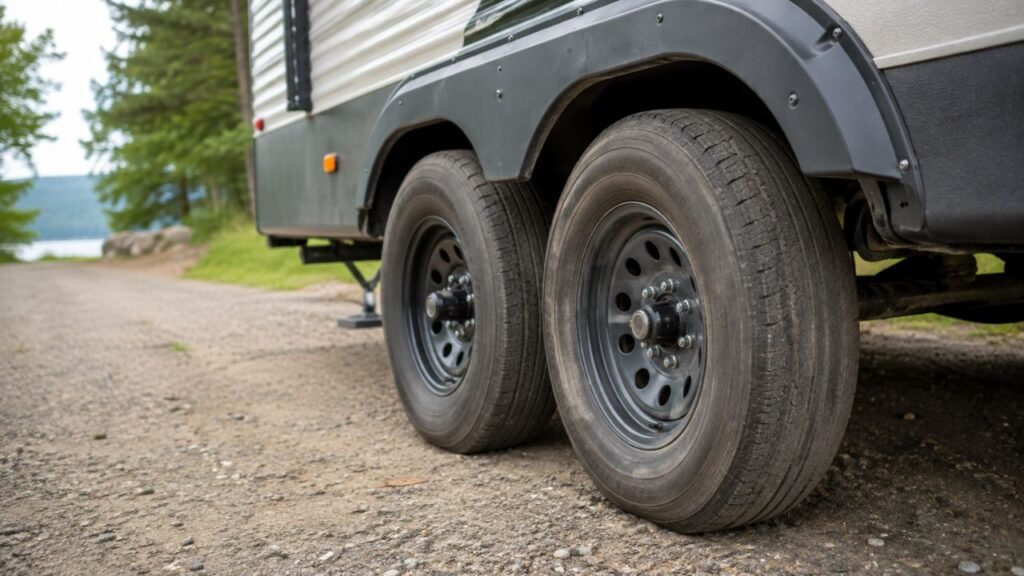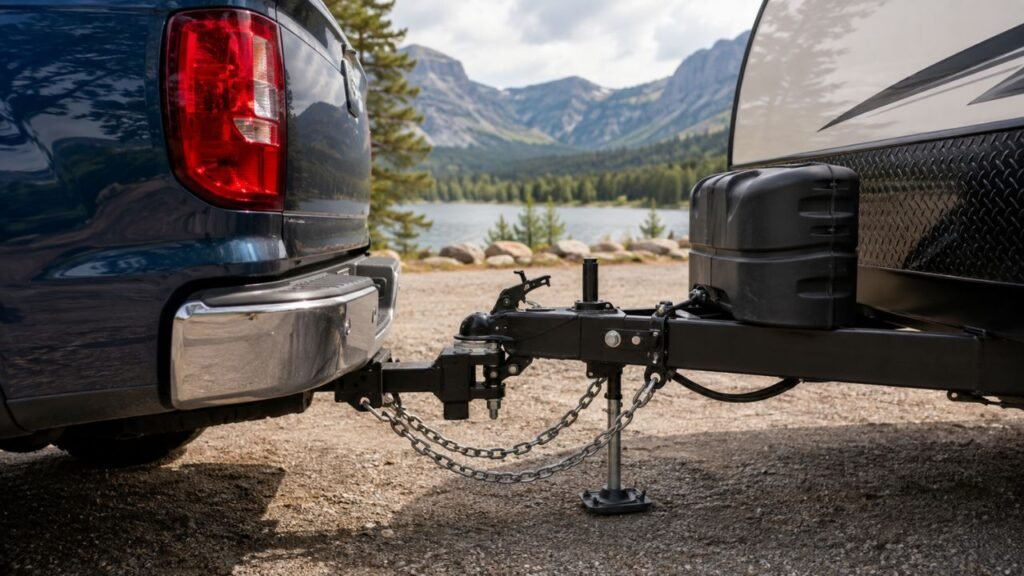
Trailer brakes may not work right because of poor wiring, a bad ground, incorrect brake-controller settings, worn brake shoes, weak magnets, or improper brake adjustment. Problems can also come from corroded connectors, blown fuses, damaged drums, or grease-contaminated brake components.
The good news is that you can narrow the problem down logically. I’ll walk you through the symptoms, electrical checks, controller tests, brake inspection, and repairs that usually solve the problem.
Key Takeaways
- Start by checking the 7-way connector and trailer ground.
- Make sure your brake controller recognizes the connected trailer.
- Weak brakes often come from low gain or poor adjustment.
- Intermittent braking commonly points toward wiring or ground problems.
- One-sided braking usually involves one wheel or wiring branch.
- Worn or grease-covered brake shoes can greatly reduce braking.
- Damaged brake magnets may cause weak or inconsistent braking.
- Overheating brakes can indicate dragging shoes or mechanical problems.
- Never continue normal towing when trailer braking feels unreliable.
What Does “Trailer Brakes Not Working Right” Actually Mean?
Trailer brake problems do not always mean complete brake failure. The way your brakes behave gives you valuable clues about where the problem may be.
| Brake Symptom | Common Causes | First Thing to Check |
| No trailer brakes | Controller, fuse, wiring, ground | Controller and 7-way connector |
| Weak braking | Low gain, poor adjustment, worn shoes | Controller gain and brake adjustment |
| Brakes work sometimes | Loose wiring, corrosion, bad ground | Plug, wiring, and grounds |
| Brakes lock up | Excessive gain, short, tight adjustment | Brake controller and wiring |
| Trailer pulls while braking | Uneven brake operation | Individual wheel brakes |
| Brakes drag | Tight adjustment, sticking hardware | Brake assembly |
| Braking feels jerky | Wiring interruption, controller issue | Connector and controller |
| Brakes fade downhill | Heat, wear, poor adjustment | Brake temperature and components |
Do not jump straight into replacing brake parts. Start with the symptom and work through the system logically.
Why Are My Trailer Brakes Not Working Properly?
Most electric trailer brake problems fall into three categories: electrical problems, brake-controller problems, or mechanical problems inside the wheel assemblies.
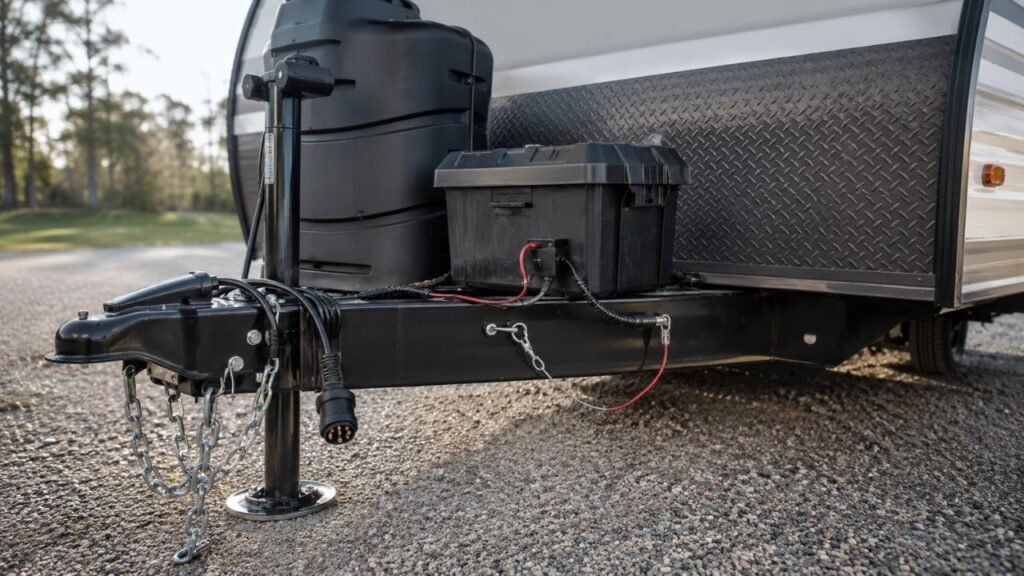
Dirty or Corroded 7-Way Trailer Connector
Your trailer’s 7-way connector lives in a harsh environment. Rain, dust, road grime, salt, and moisture eventually reach those terminals.
Even light corrosion can increase electrical resistance. That resistance reduces the power reaching your electric brake magnets.
Unplug the trailer and inspect both connector halves closely. Look for green corrosion, dark terminals, bent contacts, dirt, or moisture.
The trailer plug should also fit firmly. A loose connection can make your brakes work one moment and disappear the next.
Loose or Bad Trailer Ground
A poor ground is one of the first things I check.
Your brake magnets need a complete electrical circuit to work properly. A rusty, loose, broken, or undersized ground connection can weaken that circuit.
Check where the trailer’s main ground wire connects to the frame. The terminal should be secure against clean metal.
Rust, paint, dirt, and corrosion between those surfaces can create resistance.
Also inspect individual brake wiring grounds if your trailer uses them.
Damaged Trailer Brake Wiring
Trailer wiring takes plenty of abuse underneath the frame.
Road debris can strike it. Suspension movement can stretch it. Sharp metal edges can slowly cut through insulation.
Pay particular attention to wiring around:
- Axle tubes
- Brake backing plates
- Frame crossmembers
- Wire junctions
- Suspension components
- Holes through metal
- Previous wiring repairs
Sometimes the wire looks fine from outside. However, the conductor can be damaged inside the insulation.
That is why electrical testing becomes useful when visual inspection finds nothing.
Blown Fuse or Tow-Vehicle Electrical Problem
Your tow vehicle supplies power to the brake controller and trailer brake circuit.
A blown fuse, loose connection, damaged socket, or controller wiring problem can prevent that power from reaching your trailer.
Fuse locations vary considerably between vehicles. Check your tow vehicle owner’s manual before replacing anything.
If the brake controller does not power on, start there.
Brake Controller Gain Is Too Low
Sometimes nothing is actually broken.
Your brake-controller gain may simply be set too low.
Gain controls how strongly the trailer brakes respond. If the setting is too low, your tow vehicle performs most of the stopping.
You may notice the trailer pushing against your truck during braking.
Increase gain gradually according to your controller manufacturer’s setup procedure. Test the setting in a safe area at low speed.
You want firm trailer braking without unnecessary wheel lockup.
Brake Controller Is Misconfigured or Faulty
Brake controllers can create several confusing symptoms.
A controller may power on yet provide incorrect brake output. It can also lose trailer detection intermittently.
Possible issues include:
- Incorrect gain
- Incorrect boost setting
- Wrong trailer profile
- Loose controller wiring
- Poor vehicle ground
- Faulty brake signal input
- Internal controller failure
Some proportional controllers also require proper mounting or calibration.
Always follow the instructions for your specific controller.
Trailer Brakes Are Out of Adjustment
Electric drum brakes need the correct clearance between the brake shoes and drum.
Too much clearance means the shoes must travel farther before touching the drum. This reduces braking performance.
You may compensate by increasing controller gain. However, that only hides the real problem.
Some trailer brakes are manually adjusted. Others use self-adjusting mechanisms.
Either type can develop adjustment problems.
Follow your brake or axle manufacturer’s procedure rather than assuming every assembly adjusts identically.
Brake Shoes Are Worn or Glazed
Brake shoes create the friction that actually slows the wheel.
As that material wears away, braking performance decreases.
Excessive heat can also glaze the shoe surface. Glazed shoes often look smooth or shiny instead of having a normal friction surface.
You may notice poor braking even though electrical power reaches the wheel.
At that point, you need to inspect the mechanical components.
Grease Has Contaminated the Brake Shoes
This problem is easy to overlook.
A leaking hub seal can allow bearing grease to reach the brake drum and shoes.
Once friction material becomes heavily contaminated, braking power can drop dramatically.
Cleaning everything may not reliably restore contaminated shoes. Replacement is often the safer repair.
You should also repair the leaking seal before installing new parts.
Otherwise, the new shoes may quickly become contaminated again.
Brake Magnets Are Worn or Damaged
Electric trailer brakes use electromagnets inside each brake assembly.
When energized, the magnet contacts the rotating drum surface. That movement helps operate the brake shoes.
A worn magnet cannot do its job correctly.
Look for:
- Deep grooves
- Uneven magnet surfaces
- Damaged wiring
- Burned areas
- Open circuits
- Internal electrical shorts
Do not diagnose a magnet by appearance alone. Electrical testing provides much better information.
Brake Drums or Mechanical Hardware Are Damaged
The brake drum and internal hardware also need inspection.
Common problems include:
- Deeply scored drums
- Broken return springs
- Seized adjusters
- Loose hardware
- Damaged shoes
- Bent components
- Excessive rust
Mechanical failures can cause weak braking, dragging, grabbing, or overheating.
The Breakaway System Has a Problem
Your breakaway system is an emergency safety system.
It is not normally responsible for routine braking when you press the tow vehicle’s brake pedal.
The breakaway system usually includes a switch, pull pin, battery, and brake wiring.
Possible problems include:
- Dead breakaway battery
- Damaged switch
- Loose pull pin
- Corroded wiring
- Broken connections
A breakaway-system problem still needs attention because that system must work during an emergency separation.
Follow your trailer manufacturer’s procedure when testing it.
Start With the Symptom Before Troubleshooting
Your trailer’s behavior can point you toward the correct area. Before grabbing tools, identify exactly what feels wrong.
Trailer Brakes Do Not Work at All
If you have absolutely no noticeable trailer braking, common possibilities include:
- Brake controller has no power
- Blown vehicle fuse
- Trailer is not detected
- Brake-output wire is disconnected
- Main trailer ground has failed
- 7-way connector is badly corroded
- Axle wiring is broken
- Multiple brake circuits have failed
Start at the tow vehicle and move backward.
Confirm controller operation first. Then check output at the vehicle connector before opening any brake drums.
Trailer Brakes Feel Weak
Weak brakes are very common and often easier to diagnose.
Possible causes include:
- Controller gain is too low
- Brake shoes need adjustment
- Voltage is being lost through poor connections
- Brake shoes are worn
- Shoes are contaminated
- Brake magnets are weak
- Drums are badly worn
If every wheel feels weak, suspect a system-wide problem first.
If only one wheel feels weak, concentrate on that individual brake assembly.
Trailer Brakes Work Intermittently
Intermittent problems strongly suggest an electrical connection issue.
Check for:
- Loose 7-way connector
- Corroded terminals
- Loose frame ground
- Damaged brake wire
- Poor wire splice
- Controller connection issue
- Wire damaged internally
Try gently moving the trailer plug while stationary and watching your controller’s trailer-detection display.
If detection appears and disappears, inspect the connector carefully.
Trailer Brakes Lock Up
Brakes that lock unexpectedly need immediate attention.
Possible causes include:
- Controller gain is too high
- Aggressive boost setting
- Brake shoes adjusted too tightly
- Electrical short
- Mechanical binding
- Damaged brake magnet
- Breakaway wiring fault
If every brake locks simultaneously, inspect the controller and main brake circuit.
If one wheel locks, inspect that wheel’s brake assembly.
Trailer Pulls to One Side When Braking
A trailer that changes direction during braking often has uneven brake force.
One side may be braking normally while another side contributes little.
Possible causes include different brake adjustments, damaged wiring, grease contamination, worn shoes, or a failed magnet.
Check every wheel rather than assuming the pulling side contains the failed brake.
Sometimes the trailer moves toward the side producing more braking force.
Trailer Brakes Grab or Feel Jerky
Jerky braking can be uncomfortable and difficult to control.
The brakes may engage smoothly once, then suddenly grab during another stop.
Check controller settings first.
If settings look reasonable, inspect the connector, ground connections, wiring, brake adjustment, and drum surfaces.
Intermittent electrical voltage can produce inconsistent brake operation.
Trailer Brakes Drag or Stay Applied
Dragging brakes remain partially applied after you release them.
Possible causes include:
- Brake shoes adjusted too tightly
- Sticking brake hardware
- Damaged return springs
- Mechanical binding
- Unwanted voltage on the brake wire
- Breakaway-switch problems
Dragging brakes create serious heat.
Do not ignore a wheel that repeatedly becomes hotter than the others.
How to Troubleshoot Trailer Brakes Step by Step
You do not need to replace random parts to diagnose trailer brakes. Work from the tow vehicle toward the wheels and eliminate possibilities systematically.
1. Park the Trailer Safely
Choose a level, solid working area.
Secure the tow vehicle and set its parking brake. Chock wheels that remain on the ground.
If you lift the trailer, support it using properly rated equipment.
Never crawl beneath a trailer supported only by a jack.
2. Check the Brake Controller Display
Turn on your tow vehicle and look at the controller.
Confirm that it powers up normally.
Depending on the controller, you may see trailer connection status, gain settings, output information, or error messages.
A disconnected-trailer warning gives you an important clue.
It often points toward the connector, wiring, ground, or magnet circuit.
3. Test the Manual Brake Controller Override
Most electric brake controllers provide a manual brake control.
With the trailer connected, carefully operate the manual control while stationary or during an appropriate low-speed test.
The controller should show brake output.
The trailer brakes should also provide noticeable resistance during a safe low-speed test.
Never perform aggressive braking tests in traffic.
4. Inspect the 7-Way Plug and Socket
Disconnect the trailer plug and inspect both sides.
Look closely for:
- Corrosion
- Bent terminals
- Burn marks
- Dirt
- Moisture
- Loose contacts
- Damaged wires
- Poor plug fit
Clean dirty connections using an appropriate electrical-contact method.
Replace badly damaged connector components rather than repeatedly cleaning them.
5. Inspect and Clean the Trailer Ground
Find the trailer’s main ground connection.
Remove corrosion and make sure the terminal contacts clean metal.
Tighten the connection securely.
Do not overlook grounds on the tow vehicle side either.
A poor truck-side socket ground can also cause confusing trailer problems.
6. Check Brake Wiring Along the Trailer
Follow the brake-output wiring from the trailer tongue toward the axles.
Look for crushed, stretched, scraped, melted, or poorly repaired wires.
Pay special attention where wiring crosses between brake assemblies.
Axle wiring can sometimes become damaged where you cannot immediately see it.
7. Test Brake Output at the Trailer Connector
A multimeter or suitable electrical tester can help verify brake-controller output.
Activate the brake controller and check the brake-output circuit at the tow vehicle’s trailer connector.
Do not expect one universal voltage reading in every situation.
Proportional controllers may change output according to controller settings and operating conditions.
Using the manual controller can make diagnosis easier on many systems.
Follow the controller manufacturer’s testing instructions whenever possible.
8. Check Voltage Near Each Brake Assembly
If output exists at the vehicle socket, move your testing point toward the trailer brakes.
Check the circuit farther downstream.
If voltage exists at the connector but disappears near an axle, you have narrowed the fault location.
A damaged wire or poor connection probably lies between those points.
9. Check Each Wheel for Brake Operation
Safely raise one trailer wheel using the proper procedure.
Support the trailer securely.
Spin the wheel while someone carefully activates the manual brake control.
The wheel should develop noticeable braking resistance.
Repeat the process for each brake-equipped wheel.
This simple comparison can quickly identify one brake that is not contributing.
10. Inspect Brake Adjustment
If electrical power reaches the wheel, inspect brake adjustment next.
Excessive shoe clearance reduces braking force.
On manually adjusted electric drum brakes, adjustment is typically made through the brake adjuster mechanism.
However, procedures vary.
Always follow instructions for your specific brake assembly.
11. Remove the Drum and Inspect Internal Components
If adjustment is reasonable but braking remains weak, inspect inside the brake assembly.
Look for:
- Worn brake shoes
- Glazed friction material
- Grease contamination
- Broken springs
- Damaged adjusters
- Worn magnets
- Loose wiring
- Scored drums
- Heat damage
Take your time here.
One failed grease seal can explain a brake that receives power but produces very little braking.
12. Test the Brake Magnets
A multimeter can help determine whether a magnet has an electrical fault.
Resistance and current specifications vary between brake sizes and manufacturers.
Do not assume one resistance number applies to every trailer.
Compare your results with specifications for your exact brake assembly.
If the magnet has an open circuit, short circuit, damaged wiring, or incorrect resistance, replacement may be necessary.
How Do I Know Whether the Problem Is the Truck or the Trailer?
A simple isolation process helps you avoid replacing good trailer parts. Start with the tow vehicle and move toward each wheel.
| Test Result | Likely Problem Area |
| Brake controller has no output | Tow vehicle or controller |
| Controller works but 7-way has no output | Vehicle wiring or socket |
| Vehicle socket works but trailer circuit does not | Trailer connector or wiring |
| Power reaches axle but one brake fails | Individual brake assembly |
| All brakes receive power but remain weak | Adjustment or mechanical parts |
| Manual controller works but pedal input does not | Controller or vehicle brake signal |
This approach saves time because every successful test eliminates part of the system.
For example, proper brake output at the vehicle connector tells you the controller is probably doing its job.
You can then concentrate your attention on the trailer.
How to Test Trailer Brakes With a Multimeter
Electrical testing can reveal faults that you cannot see visually. You can check controller output, voltage loss, and individual brake magnet circuits.
Test Brake Controller Output
Set your meter according to the measurement you need.
Connect the trailer properly and activate the brake controller.
Check whether the brake-output circuit responds as expected.
If your controller has specific diagnostic instructions, follow those instructions first.
Check Voltage at the 7-Way Connector
You can check whether the vehicle’s brake-output terminal receives voltage when the controller is activated.
The exact output depends on controller settings and design.
A missing output suggests a controller, fuse, wiring, or vehicle-side connector problem.
Check Voltage at the Brake Magnets
Next, test farther down the circuit.
Compare the output near the trailer connector with the output reaching the brake assemblies.
A significant difference may indicate excessive electrical resistance.
Common causes include:
- Corroded connections
- Damaged wiring
- Weak grounds
- Poor splices
- Undersized wiring
Voltage testing becomes especially useful when every brake feels weak.
Check Brake Magnet Resistance
Disconnect the brake magnet from the circuit before measuring resistance.
Measure across the magnet wires.
Then compare your reading with the manufacturer’s specification for that brake size.
An open circuit usually produces no normal resistance path.
A shorted magnet may show unusually low resistance.
Either condition can prevent normal brake operation.
Check Brake Magnet Current Draw
Current testing can also identify electrical problems.
Brake magnets are designed to draw a particular range of current.
The proper amount depends on brake size, number of brakes, voltage, and manufacturer specifications.
Too little current can indicate excessive resistance or an open circuit.
Excessive current can suggest a short.
Use the specifications for your exact brake assemblies rather than relying on one generic value.
Brake Controller Problems That Can Make Good Trailer Brakes Feel Bad
Sometimes the wheel brakes are perfectly serviceable. The controller simply is not telling them to work correctly.
Brake Gain Set Too Low
Low gain sends insufficient braking command to the trailer.
You may feel the trailer pushing your tow vehicle during stops.
Increase gain gradually and retest.
The correct setting should provide noticeable assistance without unnecessary lockup.
Brake Gain Set Too High
Too much gain makes trailer braking overly aggressive.
The wheels may grab or lock during moderate stops.
Reduce the gain slightly and repeat your test.
Changing trailer weight may also require a different gain setting.
Controller Does Not Detect the Trailer
If your controller reports that no trailer is connected, start with the electrical circuit.
Check the 7-way plug, ground, brake-output wiring, and magnet circuits.
A disconnected warning does not automatically mean the controller itself has failed.
Manual Override Works but Brake Pedal Does Not
This symptom can narrow the diagnosis considerably.
If the manual control operates the trailer brakes normally, the trailer brake circuit is probably intact.
The problem may involve the controller’s brake-pedal input, settings, vehicle wiring, or controller itself.
Check the controller manufacturer’s troubleshooting procedure.
Controller Shows Trailer Disconnected While Driving
An intermittent connection warning usually deserves immediate investigation.
Vibration can expose loose electrical connections that seem fine while parked.
Check:
- Plug fit
- Connector terminals
- Ground wires
- Frame wiring
- Controller wiring
Do not ignore frequent connection warnings.
Proportional Controller Is Not Calibrated Correctly
Proportional controllers try to match trailer braking with vehicle deceleration.
Some models require specific mounting positions or calibration procedures.
Incorrect setup can make braking feel delayed, weak, or overly aggressive.
Follow your controller’s installation and calibration instructions.
What Should Properly Working Trailer Brakes Feel Like?
Proper trailer brakes should make the entire tow combination feel controlled.
You should notice the trailer helping during braking rather than simply pushing the tow vehicle forward.
Braking should also feel smooth and predictable.
A properly operating system should generally:
- Assist the tow vehicle during stops
- Engage smoothly
- Avoid violent grabbing
- Avoid unnecessary wheel lockup
- Brake evenly from side to side
- Avoid pulling the trailer sideways
Do not expect one controller setting to work perfectly forever.
Trailer loading, road conditions, tire grip, and controller type can change the ideal setting.
Why Do My Trailer Brakes Work When Empty but Not When Loaded?
This usually means your braking system cannot provide enough braking force under greater demand.
An empty trailer needs relatively little force to slow down.
Add several thousand pounds, and small problems become much more noticeable.
Possible causes include:
- Controller gain too low
- Poor brake adjustment
- Weak brake magnets
- Voltage loss
- Worn friction material
- Contaminated shoes
- Incorrect brake equipment
Start by confirming that your trailer is loaded within its rated limits.
Then check controller settings and mechanical brake condition.
Do not increase controller gain indefinitely to compensate for badly worn brakes.
Can Low Battery Voltage Cause Trailer Brake Problems?
It depends on which part of the braking system you mean.
Normal electric trailer brakes usually receive their braking power through the tow vehicle and brake-controller circuit.
The trailer’s breakaway battery mainly powers the brakes during an emergency separation.
Therefore, a weak breakaway battery does not normally explain weak routine braking through your controller.
However, the breakaway battery should still be maintained properly.
It must provide emergency braking when required.
Electric-over-hydraulic systems may have different electrical requirements, so follow that system’s manufacturer instructions.
Can a Bad Ground Cause Weak Trailer Brakes?
Yes. A poor ground can absolutely cause weak trailer brakes.
Electric brake magnets require both power and a good return path.
Corrosion or looseness in that return path adds electrical resistance.
The magnets may receive enough current to operate slightly but not enough for strong braking.
A bad ground can cause:
- Weak braking
- Intermittent braking
- Trailer-disconnection warnings
- Uneven brake operation
- Complete brake failure
That is why I recommend checking grounds early.
It takes little time and can prevent unnecessary parts replacement.
Can One Bad Brake Magnet Affect All Trailer Brakes?
It can, depending on the failure and wiring arrangement.
An open circuit at one magnet may only stop that particular brake.
The other brakes may continue operating.
A shorted wire or damaged circuit can create broader electrical problems.
It might affect controller detection or reduce power to multiple brakes.
When one brake fails, inspect both that wheel and its wiring branch.
Do not automatically replace every magnet.
Why Are My Trailer Brakes Getting Hot?
Brake heat is normal during stopping, but excessive heat is not. A wheel that becomes much hotter than the others deserves inspection.
Brake Shoes Are Adjusted Too Tight
Brake shoes need enough clearance to release after braking.
If adjusted too tightly, they can remain in contact with the drum.
That constant friction creates heat.
Brake Hardware Is Sticking
Broken springs, rust, damaged adjusters, or mechanical binding can prevent normal brake release.
The wheel may feel difficult to rotate even without brake input.
Inspect the assembly before towing again.
Controller Gain Is Excessive
Very high controller gain can make the trailer brakes work harder than necessary.
Repeated aggressive braking generates substantial heat.
Correct the gain and make sure the mechanical brakes are functioning normally.
One Brake Is Doing Too Much Work
Sometimes the hot brake is not actually the original problem.
Imagine a tandem-axle trailer where three brakes barely work.
The remaining functioning brake may work much harder than the others.
That wheel can become unusually hot.
Compare brake operation across every wheel.
Wheel Bearing Problems Are Creating Heat
Not every hot hub is caused by the brakes.
A damaged, improperly adjusted, or poorly lubricated wheel bearing can also generate heat.
Check both the brake system and bearing condition before deciding what failed.
Electric vs. Surge vs. Electric-Over-Hydraulic Brake Problems
Not every trailer uses the same braking system. Knowing which type you have changes the troubleshooting process.
| Brake System | How It Works | Common Problems |
| Electric drum brakes | Magnets activate brake shoes | Wiring, controller, magnets, adjustment |
| Hydraulic surge brakes | Hitch compression creates hydraulic pressure | Leaks, actuator problems, air |
| Electric-over-hydraulic | Electric controller operates hydraulic system | Pump, wiring, controller compatibility |
Most troubleshooting in this guide applies primarily to electric drum brakes.
If you have hydraulic surge brakes, inspecting magnets or controller output obviously will not solve the problem.
Surge systems require checking hydraulic fluid, brake lines, the actuator, and wheel brake components.
Electric-over-hydraulic systems require both electrical and hydraulic diagnosis.
Common Trailer Brake Troubleshooting Mistakes
Trailer brake diagnosis becomes much harder when you replace parts before finding the actual fault. These mistakes are especially common.
- Replacing brake assemblies before checking the ground. A rusty ground can make perfectly good brakes appear defective.
- Turning controller gain higher instead of adjusting brakes. Extra gain can temporarily hide excessive shoe clearance.
- Testing only at the 7-way plug. Power at the connector does not guarantee power reaches each wheel.
- Ignoring axle wiring. Wiring running across or through axle areas can become damaged.
- Cleaning heavily grease-contaminated shoes and reinstalling them. Contaminated friction material may not provide dependable braking.
- Assuming every hot hub has dragging brakes. Wheel bearing problems can create similar heat.
- Using universal magnet specifications. Current and resistance requirements vary between brake assemblies.
- Treating the breakaway switch as the normal controller. The breakaway system serves a different emergency purpose.
- Continuing to tow with unreliable brakes. A minor electrical problem can become a serious safety issue.
When you troubleshoot methodically, you avoid most of these mistakes.
When Should Trailer Brake Parts Be Replaced?
Some trailer brake problems can be corrected with cleaning, wiring repair, or adjustment. Other problems require replacement parts.
Replace Brake Shoes When They Are Worn or Contaminated
Brake shoes should have adequate friction material and an undamaged surface.
Replace them when they reach the manufacturer’s service limit.
Also replace shoes that are badly glazed, cracked, or contaminated with grease.
Do not forget to repair whatever caused the contamination.
Replace Damaged Brake Magnets
Replace a magnet when electrical testing confirms failure or physical damage is excessive.
Deep wear grooves, damaged wiring, or an incorrect resistance reading can indicate replacement is necessary.
Use parts that match your exact brake assembly.
Replace Damaged Drums
Brake drums can last a long time when properly maintained.
However, deep scoring, cracking, severe heat damage, or excessive wear may make replacement necessary.
Drum dimensions must remain within manufacturer service limits.
Replace Damaged Wiring
Do not trust badly damaged brake wiring.
Replace wiring that is:
- Chafed through
- Brittle
- Melted
- Pinched
- Severely corroded
- Repeatedly patched
Protect repaired wiring from future road damage.
Replace the Complete Brake Assembly When It Makes More Sense
Sometimes repairing every individual component costs more time than replacing the complete backing-plate brake assembly.
This becomes especially practical when several components are heavily worn.
Make sure the replacement assembly matches your axle, drum size, capacity, and mounting pattern.
When Should I Stop Towing and Get the Brakes Repaired?
Trailer brakes are safety equipment, so some symptoms should end your trip until you address the problem.
Stop normal towing if:
- Trailer brakes completely stop working
- Braking suddenly becomes much weaker
- One wheel repeatedly locks
- The trailer pulls strongly during braking
- You smell overheated brake material
- A brake or hub becomes extremely hot
- Brake wiring appears melted or shorted
- The controller repeatedly loses the trailer
- You hear grinding or metal-on-metal noises
Towing laws differ by location and trailer weight.
More importantly, your tow vehicle should not be forced to compensate for known trailer brake failure.
Fix the problem before returning to normal road use.
How to Prevent Trailer Brake Problems
A few simple checks can catch most brake issues early. Preventive maintenance also makes future troubleshooting much easier.
- Test trailer brake operation before longer trips.
- Check the brake-controller connection before leaving.
- Inspect the 7-way connector for corrosion.
- Keep electrical terminals clean and protected.
- Inspect wiring along the frame and axles.
- Keep trailer ground connections clean and tight.
- Adjust drum brakes according to manufacturer instructions.
- Inspect brake shoes and magnets periodically.
- Watch for grease leaking past hub seals.
- Maintain wheel bearings correctly.
- Recheck brake gain after changing trailer load.
- Maintain the breakaway switch and battery.
- Follow your axle manufacturer’s service schedule.
Do not wait until the brakes completely disappear.
Small changes in braking feel often appear before complete failure.
A Quick Trailer Brake Troubleshooting Checklist
Use this order when your electric trailer brakes do not feel right:
- Confirm the brake controller powers on.
- Check the controller gain setting.
- Check whether the controller detects the trailer.
- Test the controller’s manual brake function.
- Inspect the 7-way plug and socket.
- Inspect the main trailer ground.
- Check brake-output voltage.
- Inspect wiring toward the axles.
- Check each wheel independently.
- Inspect brake adjustment.
- Inspect shoes, springs, and drums.
- Inspect and test brake magnets.
- Repair the identified problem.
- Retest the braking system before towing.
Following this sequence helps you find the failure without guessing.
Final Verdict
When trailer brakes are not working right, start with the simple electrical checks. Inspect the controller, 7-way connector, ground, and wiring before opening the brake drums.
If proper power reaches every wheel but braking remains weak, move to the mechanical components. Check adjustment, brake shoes, grease contamination, magnets, drums, and internal hardware.
Most importantly, do not treat inconsistent trailer brakes as a minor inconvenience. Your trailer brakes are a major part of your overall stopping ability, especially when carrying a heavy load.
Related FAQs
Why Are My Trailer Brakes Suddenly Not Working?
Sudden brake loss commonly comes from a disconnected 7-way plug, blown fuse, broken wire, bad ground, failed controller, or electrical connection that has worked loose.
Why Are My Trailer Brakes So Weak?
Weak trailer brakes commonly result from low controller gain, excessive shoe clearance, voltage loss, worn brake shoes, grease contamination, weak magnets, or damaged drums.
Why Does My Trailer Push My Truck When Braking?
A trailer pushing the tow vehicle usually means the trailer brakes are providing insufficient stopping force. Check controller gain, brake adjustment, electrical output, and brake condition.
Why Do My Trailer Brakes Work Intermittently?
Intermittent trailer brakes usually point toward loose electrical connections, corrosion, weak grounds, damaged wiring, poor splices, or an unstable connection at the 7-way plug.
How Do I Know If My Trailer Brake Magnets Are Bad?
Inspect the magnets for deep grooves, uneven wear, damaged wires, or heat damage. Then test resistance and current against the specifications for your exact brake assembly.
How Do I Know If My Trailer Brakes Need Adjusting?
Your brakes may need adjustment when stopping power becomes weak, the controller requires unusually high gain, or excessive clearance exists between the brake shoes and drum.
Can a Bad Ground Stop Trailer Brakes From Working?
Yes. A bad ground can reduce or completely interrupt current through the brake magnets, causing weak, intermittent, uneven, or completely non-working trailer brakes.
Why Does Only One Trailer Brake Work?
A single working brake often means the other wheel circuits have damaged wiring, failed magnets, poor adjustment, contaminated shoes, or mechanical problems inside their brake assemblies.
Should Trailer Brakes Lock When Using the Manual Controller?
Trailer brakes can produce strong braking with the manual control, but normal adjustment should provide firm, controlled stopping without unnecessary wheel lockup during routine braking.
Can I Tow a Trailer If the Electric Brakes Are Not Working?
You should not continue normal towing with known electric brake failure. Besides being unsafe, operating requirements may depend on trailer weight and local towing laws.

Scott Miller shares real-world RV road trip insights built from years of traveling open highways and backroads. He covers route planning, campground choices, and travel gear with a practical mindset. His content is written for RVers who value reliability over trends.