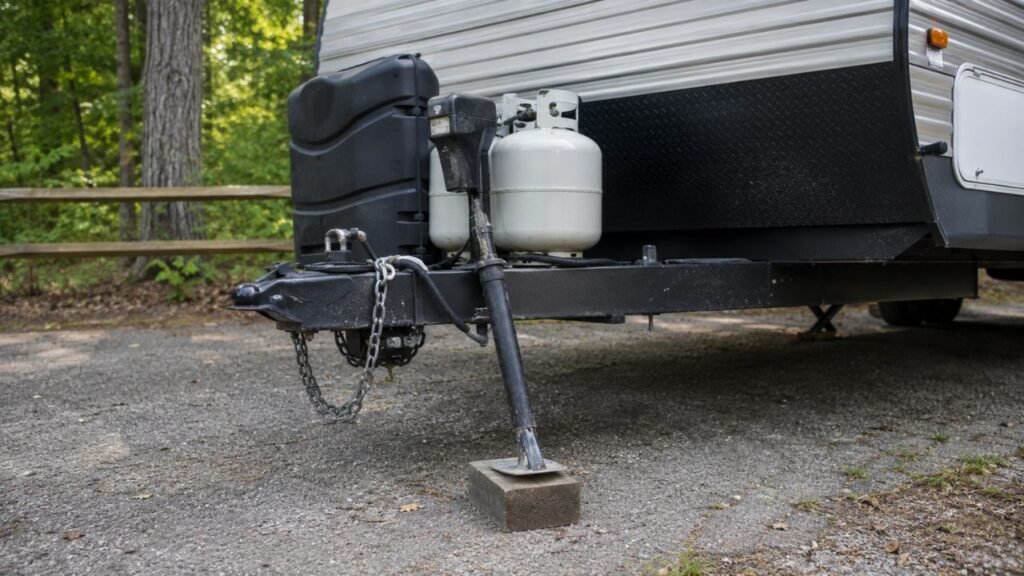
A trailer jack usually fails under load because it is overloaded, mechanically binding, poorly lubricated, internally worn, or receiving insufficient electrical power. The jack may move normally without weight, then stall once the trailer’s tongue weight creates real resistance.
In this guide, I’ll help you identify the likely cause, test the jack safely, fix common problems, and decide when replacement is the better option.
Key Takeaways
- A jack that works unloaded but stalls under weight often has a capacity, friction, or power problem.
- Compare jack capacity with actual loaded tongue weight, not total trailer weight.
- Weak batteries and corroded connections can starve an electric jack.
- Clicking, grinding, leaning, or slipping usually indicates mechanical trouble.
- Dry screws and worn bearings create much more resistance under load.
- Bent tubes and crooked mounting plates can make the jack bind.
- Never work under a trailer supported only by its tongue jack.
- Replace the jack when structural damage makes operation unpredictable.
Why a Trailer Jack Works Unloaded but Fails Under Weight
A no-load test does not require much force from the jack. The motor, gears, screw, and bearings only need to move the jack’s own internal parts.
Once you place tongue weight on the jack, everything changes. The motor draws more current, the gears experience more pressure, and the screw must overcome greater friction.
This is why a partially worn jack can appear normal at first. It may extend and retract smoothly while disconnected from the trailer.
Under real weight, however, worn or weak parts become obvious. The motor may slow down, the gears may skip, or the tube may bind.
Think of the loaded test as the jack’s real performance test. A jack that only works without weight is not working correctly.
Stop Using the Jack If You Notice These Warning Signs
Some trailer jack problems are inconvenient, while others create an immediate safety risk. Stop operating the jack when its structure or control becomes unpredictable.
- The jack tube bends, twists, or leans noticeably.
- The mounting bracket moves against the trailer frame.
- The motor becomes extremely hot within a short period.
- You smell burning insulation or overheated wiring.
- The jack makes loud grinding, cracking, or popping noises.
- The trailer drops or lowers without warning.
- The manual crank slips suddenly under pressure.
- Hydraulic fluid appears around the ram or pump.
- Cracks appear around welds, bolts, or mounting plates.
- The jack foot moves sideways while lifting.
- The fuse blows repeatedly during normal operation.
Before inspecting the jack, park on firm ground and chock the wheels. Use properly rated stands or supports where appropriate.
Never place your hands, feet, or body beneath an unsupported trailer. A damaged jack can fail suddenly without giving additional warning.
Quick Trailer Jack Failure Diagnosis
The jack’s behavior can often point you toward the right problem. Use this table to narrow down the likely cause before removing parts.
| What the Jack Does | Most Likely Cause | First Thing to Check | Likely Solution |
| Works unloaded but stalls under weight | Overload, binding, or voltage drop | Jack capacity and battery voltage | Reduce load, repair power supply, or replace jack |
| Motor clicks but does not move | Weak battery, poor ground, or seized gears | Battery and cable connections | Charge battery and clean connections |
| Motor runs but tube stays still | Stripped gears or broken drive component | Internal gear assembly | Replace damaged gears or complete jack |
| Moves very slowly under load | Low voltage, dry screw, or worn bearing | Voltage during operation | Repair wiring and lubricate approved points |
| Stops after repeated cycles | Motor overheating | Motor temperature and duty cycle | Allow cooling and reduce repeated operation |
| Manual crank skips | Worn gears or rounded crank connection | Crank and gearbox | Replace damaged components |
| Binds at the same position | Bent tube or damaged screw | Tube alignment and travel | Repair or replace the jack |
| Trailer slowly lowers | Internal wear or hydraulic leakage | Holding mechanism and seals | Stop using and repair immediately |
| Fuse keeps blowing | Overload, short circuit, or seized mechanism | Wiring and mechanical resistance | Correct the fault before replacing the fuse |
| Hydraulic jack will not hold | Low fluid, air, or worn seals | Fluid level and leakage | Bleed, refill, rebuild, or replace |
The Jack Is Carrying More Weight Than It Can Handle
Overloading is one of the most common reasons a trailer jack fails. The jack may hold the weight briefly but struggle to begin lifting.
Jack Capacity Is Based on Vertical Load
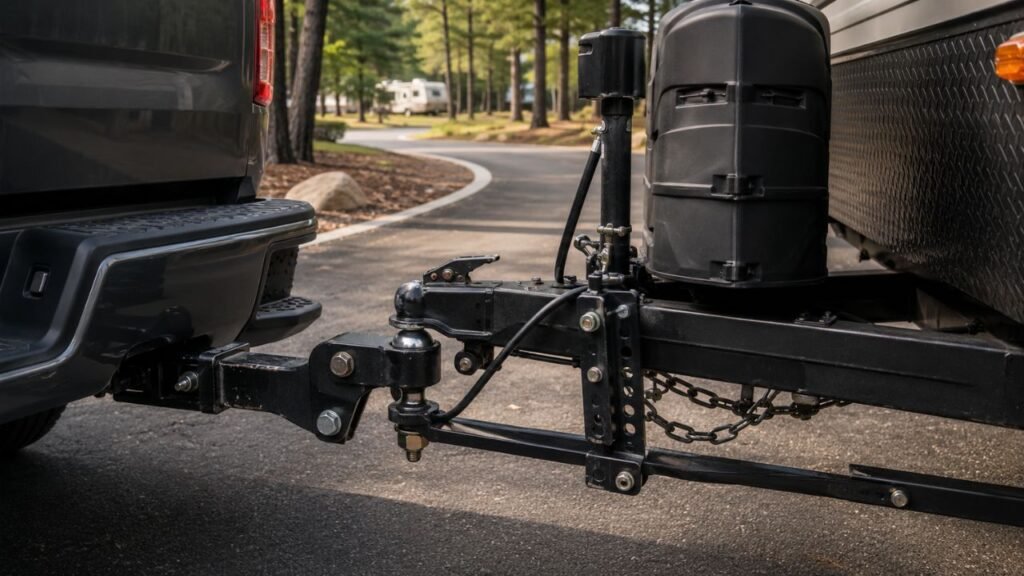
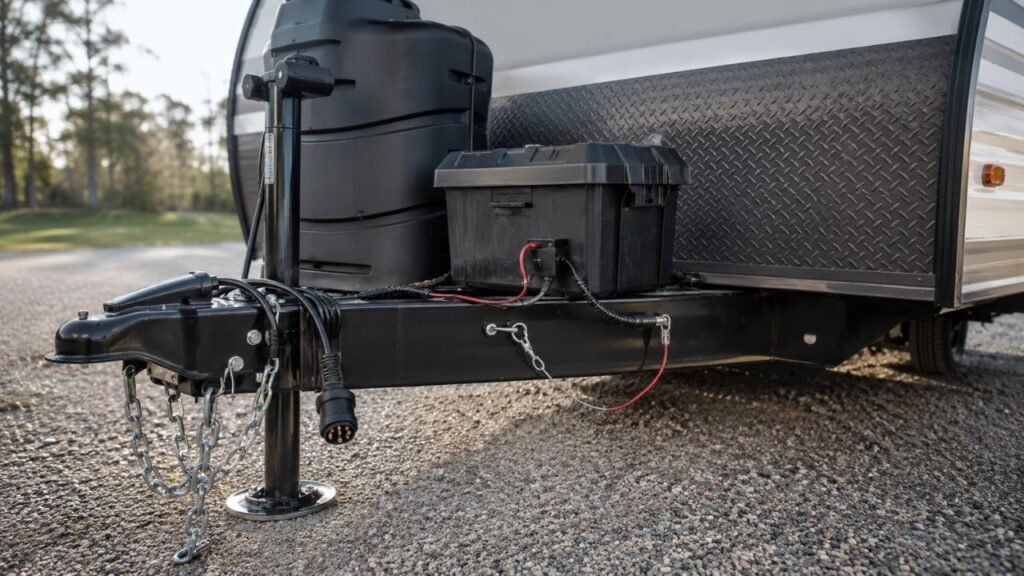
A tongue jack does not normally lift the trailer’s entire weight. It mainly supports the vertical tongue weight at the coupler.
For a fifth wheel, the landing gear supports the front portion. That front load can be much heavier than travel-trailer tongue weight.
You should compare the jack’s capacity with the actual weight being supported. Do not compare capacity only with the trailer’s advertised dry weight.
Actual Tongue Weight May Be Higher Than Expected
Tongue weight can increase significantly after loading the trailer. Front storage compartments often hold heavy gear close to the hitch.
Common items that increase tongue weight include:
- Propane cylinders
- Lead-acid or lithium batteries
- Portable generators
- Tools and recovery equipment
- Fresh water
- Camping furniture
- Food and supplies
- Spare parts
- Weight-distribution hitch components
A trailer with acceptable empty tongue weight may become much heavier when prepared for travel.
Starting Load Can Be Harder Than Holding Load
A jack may hold a stationary load without slipping. Starting that load requires more force.
The motor must overcome static friction before movement begins. The gears and screw also experience their highest stress during startup.
This explains why a jack may hold the trailer overnight. It may still refuse to raise the tongue the next morning.
Uneven Ground Can Increase Jack Stress
A jack is designed to handle mostly straight vertical pressure. Uneven ground can push the jack sideways.
A tilted footplate may force the inner tube against the outer tube. This creates binding and increases motor strain.
Soft soil can also let the foot sink unevenly. The jack may begin leaning as the tongue rises.
How to Choose Adequate Jack Capacity
Choose capacity using real operating conditions rather than optimistic estimates.
- Measure or accurately estimate loaded tongue weight.
- Include cargo stored near the front of the trailer.
- Include batteries, propane, water, and permanently mounted equipment.
- Choose reasonable capacity above the expected working load.
- Follow the trailer and jack manufacturers’ requirements.
- Avoid operating continuously near the advertised maximum.
- Use correctly matched landing gear on heavier fifth wheels.
More capacity does not automatically solve every issue. The trailer frame and mounting location must also support the jack safely.
Low Battery Voltage Causes an Electric Jack to Stall
Electric trailer jacks require substantial current when lifting weight. A weak battery may operate lights but fail when the jack starts.
Resting Voltage Does Not Tell the Whole Story
A battery can show reasonable voltage while resting. That reading may fall sharply once the jack motor draws current.
This condition is called voltage sag. It commonly appears in old, discharged, damaged, or undersized batteries.
A resting voltage reading alone cannot confirm battery health. You need to observe voltage while the jack is working.
Test Voltage While the Jack Is Under Load
Use a digital multimeter and follow safe testing procedures. Measure voltage at the battery while briefly operating the jack.
Then measure voltage near the jack’s electrical input. A large difference suggests resistance in the cables or connections.
Watch what happens as the motor begins lifting. A major voltage drop can cause clicking, slowing, stalling, or overheating.
Do not keep holding the switch when the motor stalls. Continued current can damage wiring and motor windings.
A Weak Battery May Still Run Lights
Trailer lights require much less current than a loaded jack. Working lights do not prove the battery can support the motor.
You may also hear the relay or solenoid click. That sound only confirms part of the control circuit is operating.
The battery may still lack enough power to turn the loaded mechanism.
Cold Weather Can Reduce Available Battery Power
Cold temperatures can reduce battery output. At the same time, grease and mechanical components may become harder to move.
This combination can make a marginal jack fail during winter. The same jack may appear stronger during warm weather.
Charge the battery fully before testing in cold conditions. Also inspect the jack for hardened grease, rust, and binding.
Corroded Wiring or a Poor Ground Is Restricting Current
An electric jack needs a clean, low-resistance electrical path. Corrosion can restrict current even when the connection looks attached.
Check the Battery Terminals
Begin at the battery terminals. Look for loose hardware, white corrosion, damaged lugs, and cracked cable insulation.
Disconnect power before cleaning connections. Follow the battery manufacturer’s safety instructions during service.
After cleaning, tighten the hardware securely. Do not overtighten soft lead terminals or damage threaded connections.
Inspect the Jack’s Ground Connection
Some trailer jacks use a dedicated ground wire. Others may ground through the mounting plate and trailer frame.
Rust, paint, dirt, and loose bolts can weaken a frame ground. The motor may work without weight but stall under pressure.
Inspect the ground path carefully. Clean the contact area and restore the connection according to the manufacturer’s instructions.
Adding random ground wires without understanding the circuit can create problems. Use the correct wire size and approved connection points.
Look for Voltage Drop Across the Circuit
A cable can look fine outside while corrosion develops inside. Crimped terminals can also loosen beneath their insulation.
Voltage-drop testing helps reveal hidden resistance. Test the positive and ground sides while the jack operates under load.
A significant drop indicates current is being lost before reaching the motor. Repair the affected cable, terminal, connector, or ground point.
Inspect Fuses, Breakers, Switches, and Connectors
Current must pass through several components before reaching the motor. Each connection can create resistance when damaged.
Inspect these common trouble spots:
- Inline fuse holders
- Resettable circuit breakers
- Toggle or rocker switches
- Relays and solenoids
- Waterproof connectors
- Battery disconnect switches
- Junction boxes
- Crimped cable lugs
Heat discoloration is an important warning sign. Melted plastic or darkened terminals usually indicate excessive resistance.
Do Not Install a Larger Fuse as a Shortcut
A fuse protects the wiring and motor circuit. It should not be enlarged to prevent repeated blowing.
A larger fuse may allow damaged wiring to overheat. It can also increase the risk of motor or switch failure.
Find the actual cause before replacing the fuse. Confirm the correct fuse rating in the jack’s manual or label.
Worn or Stripped Gears Cannot Transfer the Load
Trailer jacks use gears to transfer motor or crank movement. Worn teeth may work lightly but slip under tongue weight.
Clicking Without Movement
Clicking can have both electrical and mechanical causes. Start by checking battery voltage and connections.
If power is strong, repeated clicking may indicate skipping gear teeth. A damaged drive pin can create similar symptoms.
Do not keep cycling the switch repeatedly. Additional attempts can turn minor gear damage into complete failure.
Grinding During Operation
Grinding usually indicates metal parts are no longer engaging correctly. Common causes include worn gears, damaged bearings, and broken teeth.
You may also hear grinding when the jack is badly misaligned. The screw or tube can scrape under sideways pressure.
Stop using the jack until the source is identified. Metal debris can spread through the gearbox and damage more components.
The Motor Runs but the Jack Does Not Extend
A spinning motor with no tube movement often indicates lost mechanical connection. The motor may no longer drive the main screw.
Possible causes include:
- Stripped internal gears
- Broken shear pin
- Damaged keyway
- Loose coupler
- Failed drive shaft
- Separated gearbox component
Some jacks have replaceable gear kits. Others are sealed or not economical to rebuild.
Manual Crank Slips Under Pressure
Manual jacks can develop rounded gears or worn crank connections. The handle may turn while the screw barely moves.
A loose pin, damaged socket, or bent shaft can create the same problem. Inspect the visible crank components first.
If the handle kicks back or slips suddenly, stop using it. Sudden movement can injure your hand or let the trailer drop.
A Dry Lead Screw or Worn Bearing Is Creating Too Much Friction
The screw and thrust bearing carry tremendous pressure during lifting. Poor lubrication increases friction and motor demand.
Why Lubrication Matters More Under Load
Without weight, a dry screw may still rotate normally. Under load, the thread surfaces press tightly against each other.
Friction then rises sharply. The motor slows, the handle becomes difficult, and heat begins building.
Lubrication creates a protective layer between moving surfaces. It also reduces wear and helps prevent corrosion.
Signs of a Dry or Binding Screw
A poorly lubricated jack may show several recognizable symptoms.
- Squeaking or groaning during movement
- Slow extension and retraction
- Uneven or jerky travel
- Increasing manual cranking effort
- Motor overheating
- High current draw
- Rusty residue around moving parts
- Metal dust near service openings
These symptoms can also indicate damaged bearings or bent components. Lubrication should not be treated as a guaranteed repair.
Lubricate Only Approved Service Points
Jack designs vary considerably. Some have grease fittings, while others use sealed gearboxes or protected internal screws.
Follow the manufacturer’s maintenance procedure. Use only the recommended grease, oil, or dry lubricant.
Do not drill access holes into the housing. Do not force grease into electrical motors or sealed switch compartments.
Applying the wrong product can attract dirt or damage seals. Excess grease may also contaminate electrical components.
When Lubrication Will Not Fix the Problem
Lubrication cannot restore damaged threads or crushed bearings. It also cannot straighten a bent screw shaft.
Replacement may be necessary when you find:
- Flattened or missing screw threads
- Deep corrosion
- Excessive shaft movement
- Damaged thrust bearings
- Metal shavings
- Cracked gear housings
- Binding at one consistent position
A jack that remains difficult after correct lubrication needs further inspection.
A Bent Jack Tube Is Binding Under Tongue Weight
The jack’s inner and outer tubes must remain properly aligned. Even a small bend can create serious binding under load.
Common Causes of Bent Tubes
Jack tubes are often damaged by sideways pressure rather than vertical weight.
- Driving away before retracting the jack
- Moving the trailer while the jack remains extended
- Jacking on sloped or unstable ground
- Allowing the footplate to sink unevenly
- Side impacts from vehicles or equipment
- Using the jack to push the trailer sideways
- Extending the jack beyond its safe range
- Raising the trailer without proper wheel chocks
A tube may look nearly straight while unloaded. Weight can force the damaged surfaces together during lifting.
How to Check for Tube Binding
Clean the exposed tube and inspect it in good lighting. Look for scrapes, polished lines, dents, rust, and uneven gaps.
Extend and retract the jack only when safely supported. Notice whether resistance appears at the same point each time.
A consistent tight spot often indicates a bent tube or screw. Sideways movement can also suggest worn bushings or a loose mount.
Why Straightening a Damaged Tube May Be Unsafe
A visibly bent tube has experienced significant stress. Straightening it does not always restore the metal’s original strength.
Heat, hammering, or improper pressing can weaken the tube further. Internal parts may remain misaligned afterward.
Replacing a structurally bent jack is usually safer. This is especially important when the jack supports heavy tongue or pin weight.
Side Loading and Poor Alignment Are Overworking the Jack
A trailer jack should lift in a straight vertical line. Side pressure increases friction and can bend structural parts.
The Footplate Is Not Sitting Flat
The footplate should rest evenly on a firm surface. An angled foot pushes the jack tube sideways.
Use a stable jack block when additional height is needed. The block should be wide, flat, and rated for the load.
Avoid unstable stacks of wood or loose materials. They can shift as the trailer rises.
The Trailer Moves While Being Lifted
Wheel movement changes the angle between the trailer and jack. This can place strong sideways pressure on the tube.
Chock the wheels firmly before operating the jack. On slopes, use appropriate procedures for the trailer and towing setup.
Hitch tension can also cause movement. The trailer may roll slightly after separating from the tow vehicle.
The Jack Mount Is Crooked or Flexing
A bent mounting plate can force the jack to operate at an angle. Loose mounting bolts may create similar movement.
Watch the mount while a helper briefly operates the jack. Stay clear of pinch points and unsupported areas.
The mount should remain stable as weight increases. Flexing, popping, or widening gaps need immediate attention.
The Jack Is Extended Too Far
A heavily extended jack becomes less stable. More inner tube is exposed, increasing leverage against the mounting point.
Use a suitable jack block to reduce unnecessary extension. Never exceed the manufacturer’s maximum travel.
A shorter extension often improves stability and reduces operating time.
The Jack Motor Is Overheating or Reaching Its Duty-Cycle Limit
Electric trailer jacks are generally designed for short operating cycles. They are not intended to run continuously.
Repeated raising and lowering builds heat inside the motor. Heat also develops in switches, wiring, relays, and connectors.
Some jacks use thermal protection that temporarily interrupts operation. The jack may work again after cooling.
Do not assume overheating is always normal. Frequent overheating can indicate overload, low voltage, dry components, or internal damage.
Allow the motor to cool before continuing. Avoid holding the switch after the jack reaches full extension or retraction.
Repeatedly operating against the travel limit can damage gears. It may also trip breakers or overheat the motor.
Rust, Dirt, and Water Have Entered the Jack
Trailer jacks remain exposed to rain, road spray, dust, and humidity. Contamination can gradually increase friction and electrical resistance.
Surface Rust Around the Tube
Rust on the sliding tube can damage seals and bushings. Rough surfaces also create drag during retraction.
Keep the exposed tube clean and dry. Treat light corrosion only with products approved for that jack.
Heavy pitting can weaken the tube. A badly corroded structural section should be replaced.
Water Inside the Gear Housing
Water can enter through cracked covers, loose plugs, and damaged seals. It may mix with grease and corrode gears.
A milky or rusty lubricant suggests moisture contamination. Grinding or stiffness may develop after storage outdoors.
Replace damaged covers and seals promptly. Internal corrosion may require disassembly or complete jack replacement.
Contaminated Grease
Grease can collect dirt, metal particles, and water. The mixture becomes abrasive instead of protective.
Contaminated grease accelerates wear on gears, screws, and bearings. Simply adding more grease may not solve the problem.
The housing may need proper cleaning and fresh lubricant. Follow the manufacturer’s service instructions.
Corrosion Inside Electrical Components
Moisture can damage switches, connectors, motors, and relays. Corrosion creates resistance and reduces available current.
Inspect weather covers and cable entry points. Replace cracked boots, damaged seals, and corroded terminals.
Do not spray water directly into the switch housing. Protect the jack during washing and storage.
The Jack Mount or Trailer Frame Is Flexing
Sometimes the jack is not the main problem. The surrounding trailer structure may be moving under load.
Inspect the mounting plate, bolts, welds, A-frame, and nearby frame members. Look for cracks, distortion, or separated metal.
Cracked paint around a weld can indicate movement beneath it. Rust lines and widening gaps may reveal the same issue.
You may hear popping as the tongue rises. The jack may also lean even though its tube appears straight.
Tightening loose hardware may solve a minor mounting problem. Use the correct torque and approved replacement hardware.
Cracked welds or distorted frame sections need professional evaluation. Continuing to lift can enlarge the damage quickly.
Hydraulic Trailer Jack Problems Under Load
Some trailers use hydraulic landing gear or leveling systems. These systems have different failure points from screw-driven jacks.
Low Hydraulic Fluid
Insufficient fluid can prevent full extension or lifting force. The pump may run while the cylinder barely moves.
Check the fluid according to the system manufacturer’s procedure. The correct level may depend on whether cylinders are extended.
Use only the recommended hydraulic fluid. Mixing incompatible fluids can damage seals and affect performance.
Air Trapped in the Hydraulic System
Air can make hydraulic movement jerky, slow, or inconsistent. The system may also sound unusually noisy.
Air sometimes enters after fluid loss, hose replacement, or improper servicing. Bleeding procedures vary by system.
Follow the manufacturer’s instructions carefully. Incorrect bleeding can introduce more air or create fluid overflow.
Worn Seals or Internal Leakage
A worn seal may allow fluid to bypass internally. The jack may lift, then slowly settle under weight.
You may not always see an external leak. Internal leakage can occur inside the cylinder or control valve.
A trailer that lowers unexpectedly should not remain supported by that system. Arrange proper repair before further use.
Contaminated or Incorrect Fluid
Dirty fluid can damage pumps, valves, and cylinder surfaces. Water contamination may create a cloudy or milky appearance.
Cold weather can also thicken unsuitable fluid. The pump may run slowly or struggle under load.
Drain and refill only according to approved procedures. Hydraulic systems can remain pressurized even when switched off.
Weak Pump, Valve, or Hydraulic Cylinder
A worn pump may no longer create enough pressure. A sticking valve can prevent fluid from reaching the correct cylinder.
Cylinder damage can cause external leaks or internal bypassing. Professional pressure testing may be required.
Do not adjust pressure-relief valves without proper specifications. Incorrect adjustments can overload hoses, cylinders, and frame components.
How to Troubleshoot a Trailer Jack That Fails Under Load
A safe troubleshooting order helps prevent unnecessary parts replacement. Start with simple external checks before opening the jack.
- Park the trailer on firm, level ground.
- Chock the trailer wheels securely.
- Keep people away from the tongue and pinch points.
- Confirm the jack’s rated lifting capacity.
- Estimate or measure actual loaded tongue weight.
- Inspect the jack mount, bolts, welds, and frame.
- Check the inner and outer tubes for bending.
- Inspect the footplate and ground contact.
- Briefly test the jack without load where practical.
- Listen for clicking, grinding, squeaking, or slipping.
- Check the battery’s state of charge.
- Measure battery voltage while the jack operates.
- Measure voltage at the jack during operation.
- Inspect positive cables, grounds, fuses, and switches.
- Check for hot terminals or melted connectors.
- Follow approved lubrication procedures.
- Test the manual override when safe and appropriate.
- Stop immediately if the jack leans or drops.
Work through these checks patiently. Repeatedly forcing the jack rarely fixes the underlying problem.
Can You Use the Manual Override When the Electric Jack Stalls?
The manual override can help during a battery or electrical failure. It lets you move the jack without using the motor.
However, it should not be used to force a seized mechanism. Excessive resistance may indicate bent tubes, damaged gears, or an overloaded jack.
Use the correct crank tool and follow the manual. Keep your body clear of the handle’s possible kickback path.
Stop cranking if you feel sudden binding or skipping. Continuing can strip gears or break the drive connection.
The manual override is a backup operating method. It is not a repair for internal mechanical damage.
Repair or Replace the Trailer Jack?
Some problems can be repaired affordably. Structural damage and unreliable load holding usually make replacement the safer choice.
| Jack Condition | Repair May Be Reasonable | Replacement Is Usually Better |
| Loose or corroded wiring | Yes | Only if motor damage occurred |
| Weak battery or poor ground | Yes | No |
| Dry approved lubrication point | Yes | If internal wear is already severe |
| Worn switch or fuse holder | Yes | If the housing or wiring is burnt |
| Replaceable gear damage | Sometimes | If parts are unavailable |
| Bent inner or outer tube | Rarely | Usually |
| Cracked mount or jack housing | No | Yes |
| Hydraulic seal leakage | Sometimes | If the cylinder is scored |
| Jack lowers unexpectedly | Only after verified repair | Often |
| Repeated overload failure | Usually not | Yes, with proper capacity |
| Heavy internal corrosion | Rarely | Usually |
| Damaged manual override | Sometimes | When gearbox damage is extensive |
Consider the jack’s age, parts availability, and repair cost. A rebuilt jack must still support the trailer reliably.
Replacement is usually appropriate when the structure has bent or cracked. It is also wise when the jack repeatedly fails under normal weight.
Choose the replacement using actual load requirements. Confirm mounting style, travel length, wiring needs, and foot clearance.
How to Prevent a Trailer Jack From Failing Under Load
Good maintenance reduces strain before it becomes expensive damage. Most preventive steps only require occasional inspection.
- Know the trailer’s actual loaded tongue or pin weight.
- Use a jack with appropriate working capacity.
- Keep the trailer battery charged and healthy.
- Clean and tighten battery connections regularly.
- Maintain a clean, reliable ground connection.
- Inspect fuse holders, switches, and breakers.
- Protect electrical parts from rain and road spray.
- Lubricate only approved service points.
- Keep the exposed jack tube clean.
- Use a stable footplate or rated jack block.
- Chock the wheels before raising the tongue.
- Avoid shifting the trailer with the jack extended.
- Retract the jack fully before towing.
- Avoid unnecessary full-extension operation.
- Allow electric motors to cool between repeated cycles.
- Inspect mounting bolts and welds periodically.
- Replace cracked covers and damaged seals quickly.
- Investigate new noises before they become louder.
A brief inspection before each trip can prevent a roadside problem. Pay attention when the jack starts sounding slower or rougher.
Final Verdict
A trailer jack that fails under load usually has one of five problems: too much weight, weak electrical power, excessive friction, poor alignment, or internal wear.
Start by checking actual tongue weight and jack capacity. Then inspect battery voltage, wiring, grounds, mounting hardware, and tube alignment.
Listen closely to the jack while it operates. Clicking suggests power or gear trouble, while grinding usually indicates mechanical damage.
Do not continue forcing a jack that bends, overheats, or slips. Structural damage and unpredictable lowering make replacement the safer decision.
A properly rated and maintained jack should lift smoothly without sounding strained. When it cannot, the problem deserves attention before your next trip.
Related FAQs
Why Does My Electric Trailer Jack Click but Not Lift?
An electric jack usually clicks without lifting because the battery is weak, the ground is poor, the wiring has high resistance, or the internal mechanism is seized. Test voltage while operating the jack before assuming the motor has failed.
Why Does My Trailer Jack Work Without Weight but Not With Weight?
A jack may work without weight because very little torque is required. Under tongue weight, low voltage, worn gears, dry screws, bent tubes, and excessive load can make the jack stall.
Can a Weak Battery Cause a Trailer Jack to Stop?
Yes, a weak battery can power small lights while failing to run the loaded jack. The battery’s voltage may drop sharply when the motor begins drawing heavy current.
How Do I Know If My Trailer Jack Is Overloaded?
An overloaded jack may move slowly, stall, overheat, blow fuses, or make strained noises. Compare the jack rating with actual loaded tongue or pin weight.
Should Jack Capacity Match the Trailer’s Full Weight?
No, a tongue jack normally supports the trailer’s vertical tongue weight rather than its complete weight. However, the jack still needs adequate capacity above the expected loaded tongue weight.
Can I Use My Tow Vehicle’s Battery to Power the Trailer Jack?
Some setups can power the jack through the tow vehicle or connected charging circuit, but available current varies. Follow the trailer and jack manufacturers’ instructions and avoid improvised wiring.
Why Does My Trailer Jack Keep Blowing Fuses?
Repeated fuse failure can indicate overload, damaged wiring, a short circuit, a seized mechanism, or an overheating motor. Never install a larger fuse without correcting the cause.
Why Does My Trailer Jack Get Hot?
The motor may heat up from repeated cycling, low voltage, heavy loading, poor lubrication, or internal binding. Stop operation and allow cooling before investigating further.
Can I Lubricate an Electric Trailer Jack?
Many electric jacks have approved lubrication points, but the method differs by model. Follow the manufacturer’s instructions and keep grease away from switches and motor components.
Why Does My Manual Trailer Jack Slip Under Load?
A manual jack may slip because its gears, drive pin, crank connection, or screw threads are worn. Stop using it if the handle skips or kicks back.
Is It Safe to Use a Bent Trailer Jack?
A visibly bent jack is not safe to trust under significant weight. The tube may bind, weaken, or fail unexpectedly, so replacement is usually recommended.
Can I Lift the Entire Trailer With the Tongue Jack?
A tongue jack is designed to raise and support the trailer’s front end, not lift the entire trailer. Use approved lifting points and properly rated equipment for wheel or axle work.
How Long Should an Electric Trailer Jack Last?
Service life depends on load, weather exposure, maintenance, and usage frequency. A correctly rated jack can last many years when wiring, lubrication, and alignment remain in good condition.
When Should I Replace My Trailer Jack?
Replace the jack when its tube bends, housing cracks, gears repeatedly fail, motor wiring burns, or the jack cannot hold weight safely. Replacement is also sensible when repair parts are unavailable.

Scott Miller shares real-world RV road trip insights built from years of traveling open highways and backroads. He covers route planning, campground choices, and travel gear with a practical mindset. His content is written for RVers who value reliability over trends.