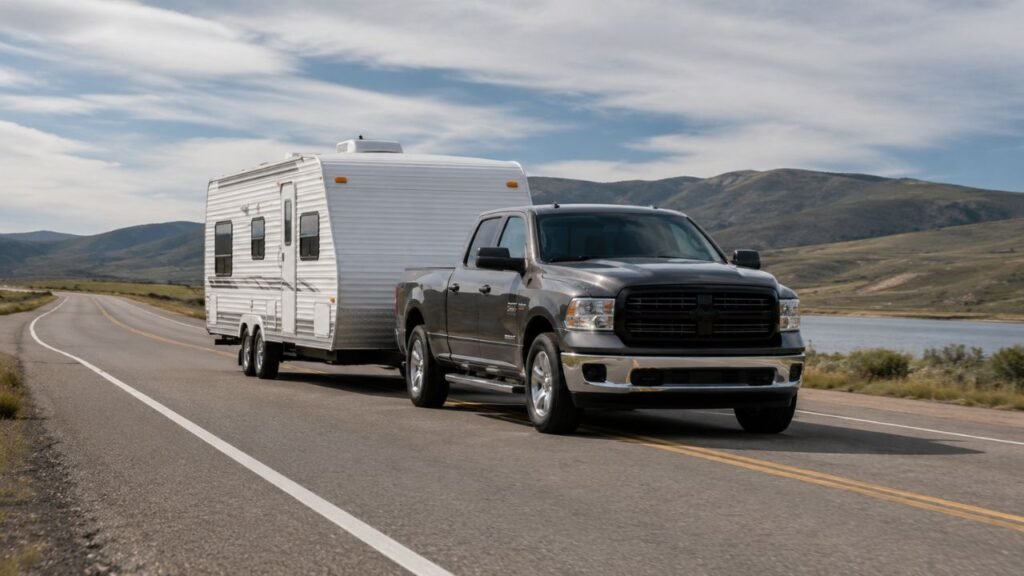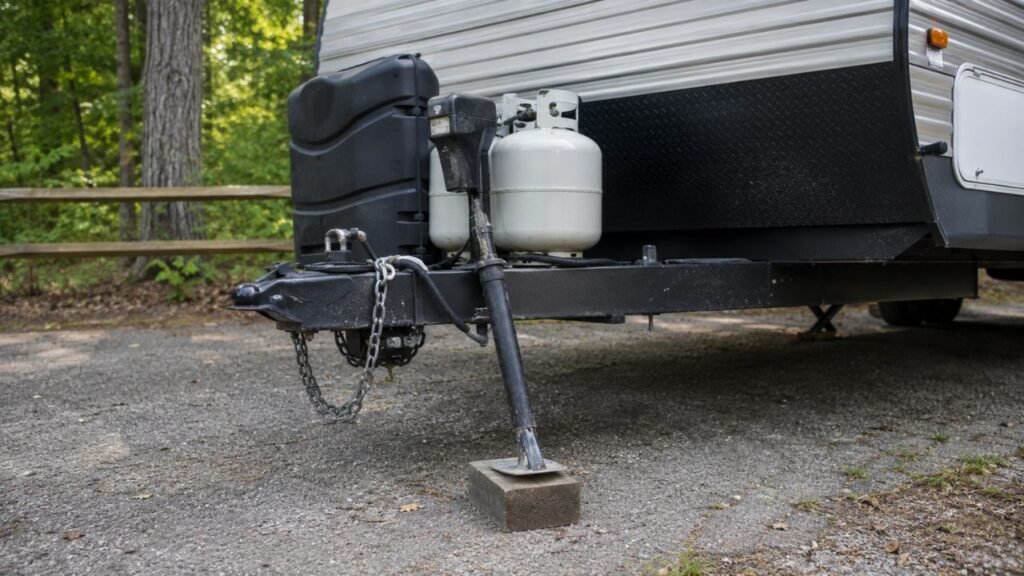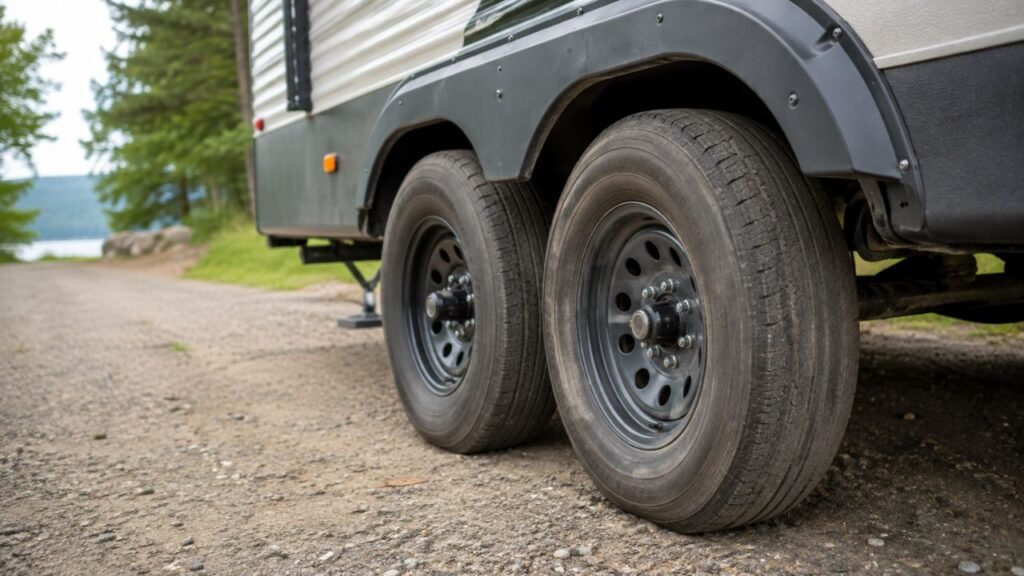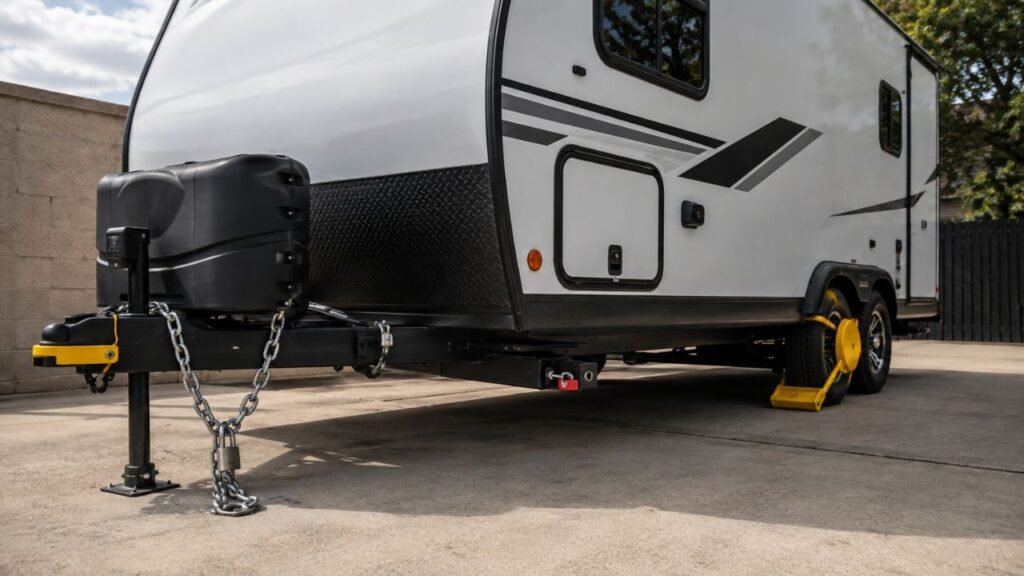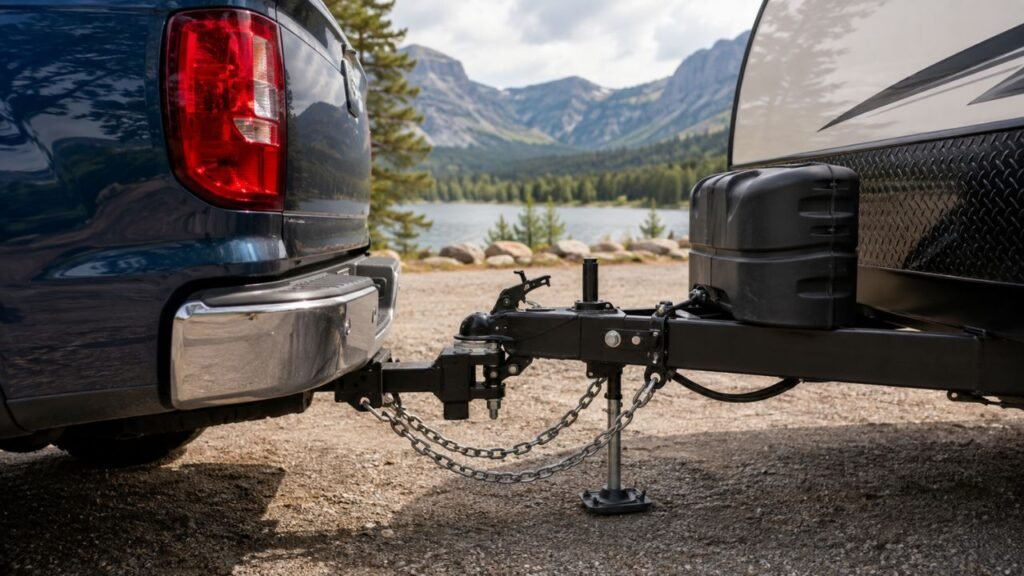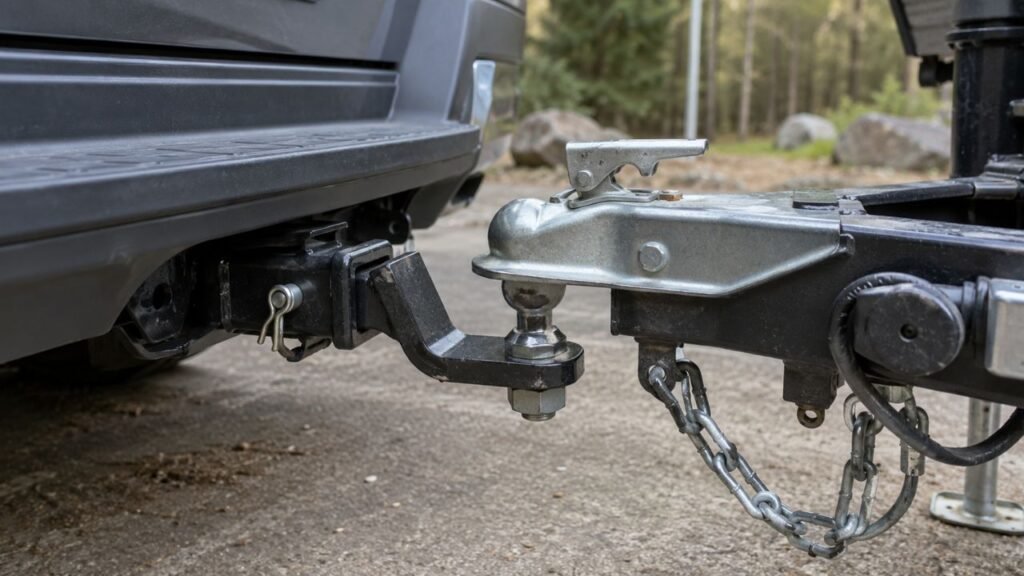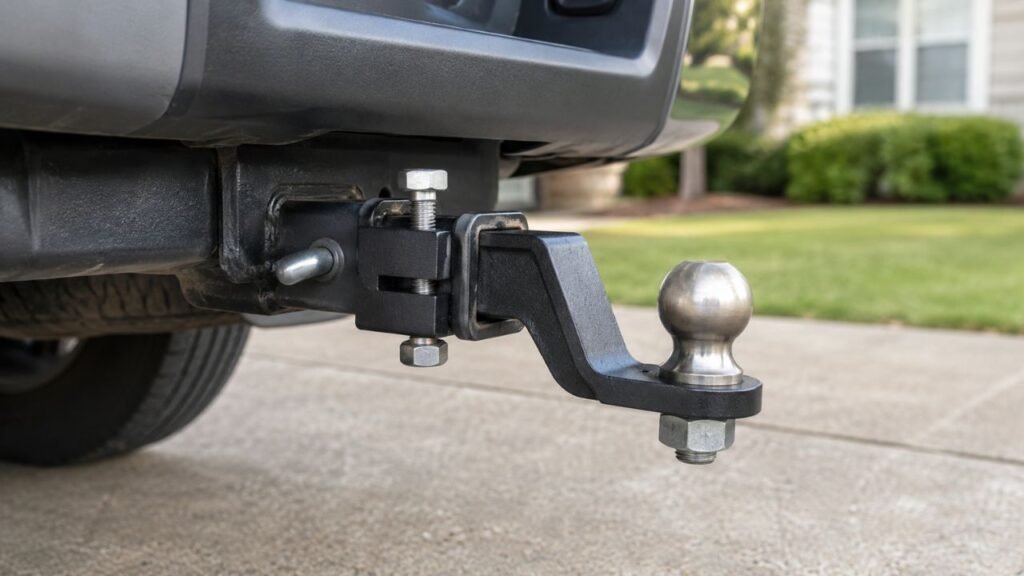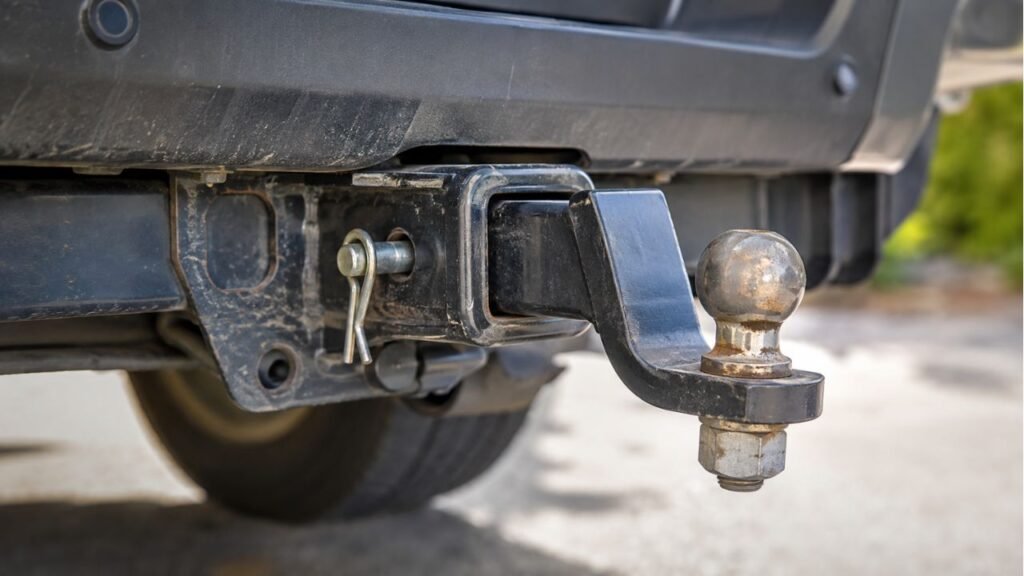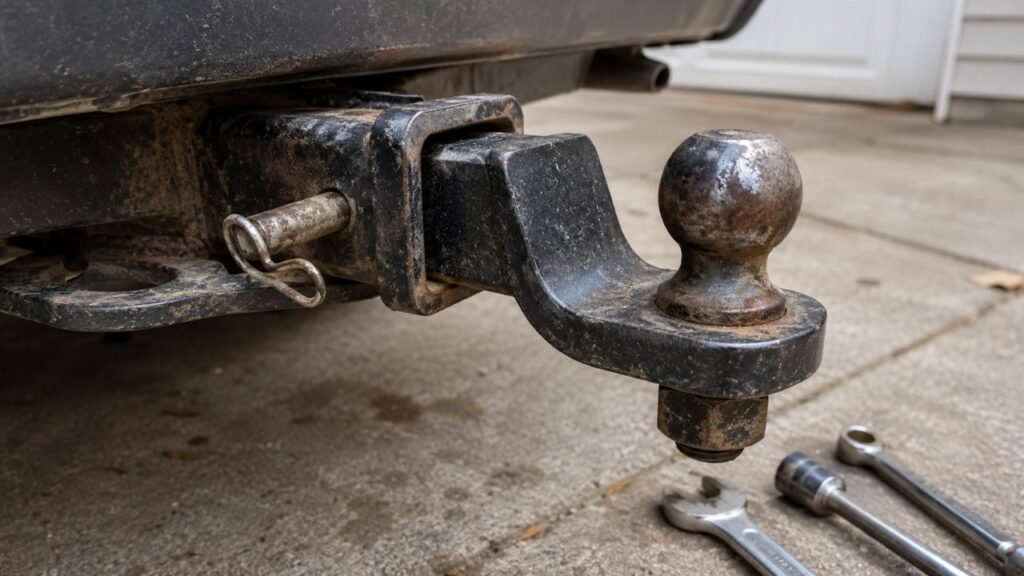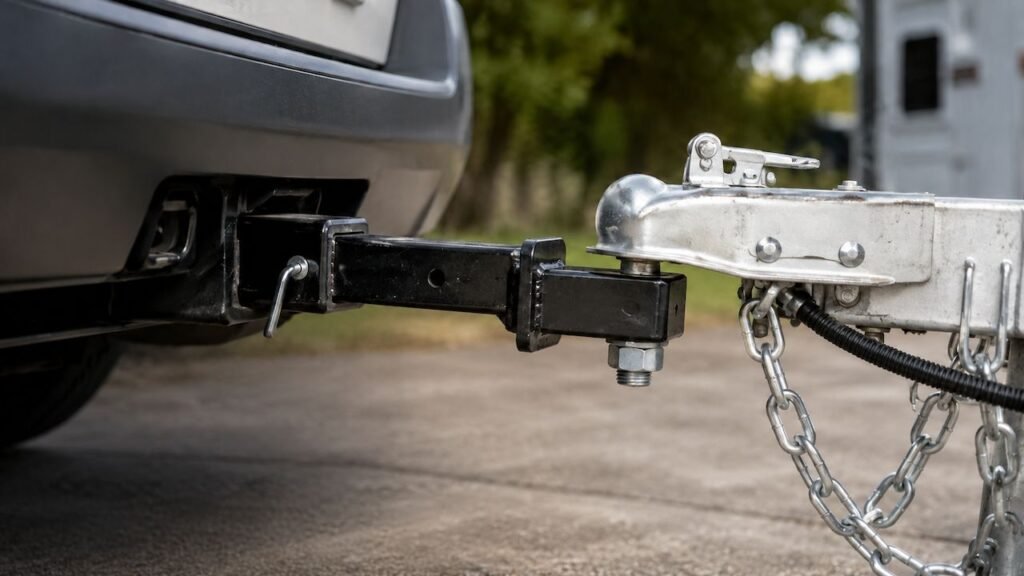
A trailer hitch usually moves and makes noise because small gaps let the connected metal parts shift under load. Rattling often comes from receiver play, squeaking from a dry hitch ball, and sharp clunking from loose, worn, or incorrectly adjusted components.
In this guide, I will help you identify the sound, find the movement, and choose the right fix. You will also learn which noises are normal and which ones require immediate attention.
Key Takeaways
- Slight ball mount movement inside a receiver is usually normal.
- Heavy clunking during braking may indicate excessive front-to-back play.
- Squeaking commonly comes from a dry hitch ball or coupler.
- A hitch tightener can reduce receiver movement and rattling.
- Anti-rattle devices cannot repair damaged or worn hitch components.
- Some weight-distribution hitches naturally groan or pop during turns.
- Grinding, bending, cracking, or coupler lifting requires immediate inspection.
- Always follow the hitch manufacturer’s torque and lubrication instructions.
Why Does a Trailer Hitch Move and Make Noise?
Your hitch connection handles force from several directions while you tow. The trailer pulls backward during acceleration, pushes forward during braking, and shifts sideways during turns.
The ball mount must also have enough clearance to slide into the receiver. That clearance creates a small gap between the two pieces.
When road vibration or changing loads move the ball mount, it can contact the receiver walls. You may hear rattling, knocking, or a sharp clunk.
The hitch ball and coupler move differently. These parts rotate against each other during turns. Without enough lubrication, that movement can produce squeaking or groaning.
Noise can also come from weight-distribution bars, sway-control parts, chains, suspension components, or unsecured cargo. That is why locating the sound matters before attempting a repair.
What Type of Hitch Noise Are You Hearing?
Different hitch noises often point toward different problems. Listen carefully to when the noise happens and how it feels inside the tow vehicle.
| Hitch noise | When it usually happens | Likely cause | Urgency |
| Light rattling | Rough roads or small bumps | Ball mount clearance inside the receiver | Usually low |
| Sharp clunk | Braking or accelerating | Front-to-back receiver or coupler play | Inspect soon |
| Squeaking | Turning or driving slowly | Dry hitch ball or rusty coupler | Maintenance needed |
| Groaning | Tight turns | Spring-bar or coupler friction | Sometimes normal |
| Popping | Turning or entering driveways | Weight-distribution or sway-control movement | Check adjustment |
| Grinding | Constantly or during turns | Severe wear, damage, or poor alignment | High urgency |
| Heavy banging | Braking, bumps, or load changes | Loose hardware, coupler wear, or shifting cargo | High urgency |
| Chirping or humming | Changes with road speed | Wheel bearing, brake, or tire issue | Stop and diagnose |
The sound alone cannot confirm the exact problem. However, it can help you narrow down where to inspect first.
Where Is the Hitch Movement Coming From?
Before installing an anti-rattle device, find the exact connection that moves. Several hitch components can create similar sounds.
Ball Mount Movement Inside the Receiver
A ball mount is slightly smaller than the receiver opening. This difference allows you to insert and remove it without excessive force.
That small amount of clearance can create side-to-side and vertical movement. You may hear light rattling when driving over uneven roads.
Front-to-back movement often feels more noticeable. During braking, the trailer pushes the shank forward against the hitch pin. During acceleration, the shank moves backward again.
A small shift may be normal. A strong clunk felt through the tow vehicle deserves closer inspection.
Movement Between the Hitch Ball and Coupler
The trailer coupler should hold the hitch ball securely while allowing smooth rotation. It should not lift excessively or rock loosely on the ball.
Movement here may come from:
- An incorrect hitch ball size
- A worn coupler latch
- Improper coupler adjustment
- A damaged hitch ball
- Rust or debris inside the coupler
- A coupler that is not fully seated
A coupler that does not grip the correct ball safely needs immediate attention.
Movement Around the Hitch Pin
The hitch pin carries significant force as the trailer changes direction. Over time, the pin may develop wear grooves or bending.
The receiver and ball mount holes can also become stretched or oval. This damage increases front-to-back movement and makes clunking louder.
The retaining clip must also remain properly installed. A missing or damaged clip can allow the pin to work loose.
Movement in an Adjustable Ball Mount
Adjustable ball mounts contain more pins, bolts, and connection points than fixed mounts. Each connection can develop movement if the hardware loosens or wears.
Check the height-adjustment pins, channel, ball platform, locking clips, and mounting bolts. Do not assume the main receiver connection is the only source.
Movement in a Weight-Distribution Hitch
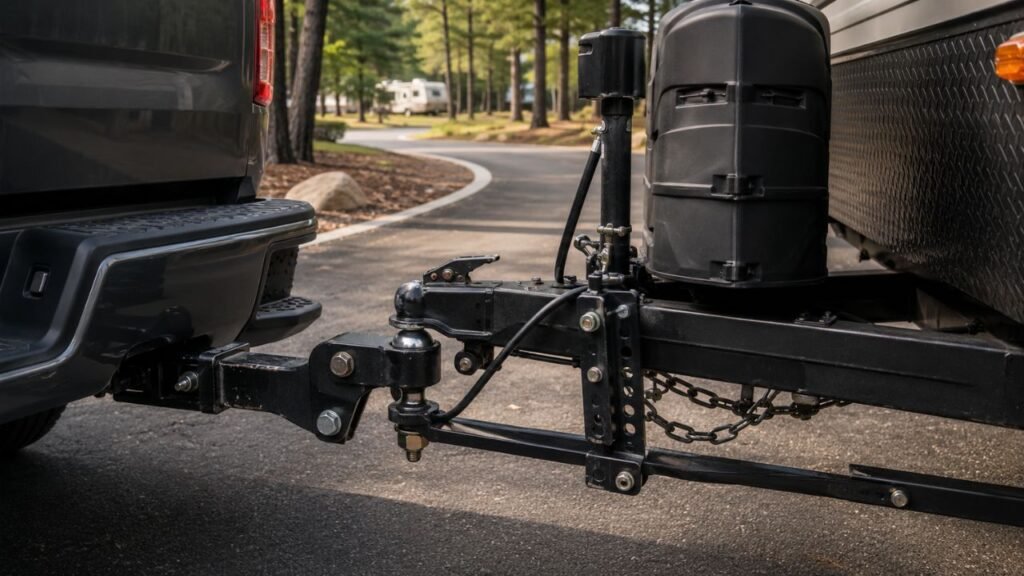
Weight-distribution systems use spring pressure to transfer part of the tongue weight. Their bars, sockets, chains, brackets, and head assemblies naturally move during towing.
Some sound is expected, especially during tight turns or uneven driveway entrances. However, missing clips, loose brackets, or bent components can create abnormal movement.
Movement in the Receiver or Vehicle Mounting Points
The entire receiver should not move against the tow vehicle. Movement here may indicate loose mounting bolts, cracked welds, damaged frame sections, or severe corrosion.
Stop towing if the receiver itself shifts, bends, or separates from its mounting points. This is not a problem that an anti-rattle clamp can fix.
Common Causes of Trailer Hitch Movement and Noise
A noisy hitch often has more than one contributing cause. Work through each possibility instead of replacing parts randomly.
Normal Clearance Between the Receiver and Ball Mount
Most receivers need slight clearance around the ball mount shank. Without it, paint, dirt, rust, or small manufacturing differences could prevent installation.
This clearance often causes light rattling on rough roads. It can be more noticeable when using a cargo carrier or bike rack because these accessories have no trailer tongue weight holding them down.
Normal clearance should not create severe banging or affect trailer control.
Excessive Receiver Play
Receiver play becomes excessive when wear increases the original clearance. The shank may slam between the receiver walls or strike the hitch pin during every stop.
Common wear points include:
- Receiver tube walls
- Ball mount shank
- Hitch pin
- Receiver pin holes
- Ball mount pin holes
A hitch tightener may control minor clearance. It should not be used to hide severe wear, deformation, or stretched holes.
A Dry Hitch Ball or Coupler
The coupler rotates on the hitch ball whenever the tow vehicle turns. This movement creates pressure and friction between two metal surfaces.
Without proper lubrication, the connection may squeak, groan, or bind. Dry contact also increases wear on the ball and coupler.
Clean the old grease and dirt before applying fresh lubricant. Use a product approved for high-pressure metal contact.
Do not apply grease to friction sway-control surfaces unless the manufacturer specifically permits it.
A Loose or Worn Trailer Coupler
A coupler latch can loosen or wear after repeated use. Rust, impact damage, and incorrect adjustment may also prevent a secure fit.
The coupler should close completely around the correct hitch ball. It should remain secure while still rotating smoothly during turns.
Do not overtighten an adjustable coupler to eliminate every sign of movement. Excessive tightening may cause binding and prevent safe articulation.
The Wrong Hitch Ball Size
Using the wrong ball size can create dangerous movement, even when the coupler appears latched.
A ball that is too small may allow the coupler to rock, clunk, or separate. A ball that is too large may prevent the coupler from seating correctly.
Check the ball size stamped on the coupler. Also confirm the ball’s weight rating and shank size.
Loose Hitch Hardware
Several hitch fasteners experience constant vibration and changing loads. These include the hitch ball nut, adjustable mount bolts, receiver mounting bolts, and weight-distribution head hardware.
Loose hardware may create clicking, clunking, or visible movement. Tighten each fastener according to its manufacturer’s torque specification.
Do not guess the required torque. Different ball shanks, bolts, and mounting systems require different values.
Worn Hitch Pin or Elongated Pin Holes
A worn hitch pin can move more freely inside the receiver holes. Repeated impact may also enlarge the holes over time.
Inspect the pin for:
- Deep grooves
- Flattened sections
- Bending
- Heavy corrosion
- Incorrect diameter
- Damaged threads
Elongated receiver holes often require professional evaluation. Simply installing a larger pin may not be safe or approved.
Rust, Dirt, and Corrosion
Rust and debris can create several different sounds. Surface rust may cause squeaking, while heavy corrosion can make components bind and release suddenly.
Corrosion can also reduce the thickness and strength of the hitch metal. Inspect more closely if rust appears around welds, bolt holes, or load-bearing edges.
Clean removable components regularly and store them in a dry location when possible.
Incorrect Tongue Weight
Tongue weight helps keep the trailer stable and properly connected to the tow vehicle. Too little tongue weight can increase bouncing, sway, and hitch movement.
Many conventional trailers work best when tongue weight is approximately 10% to 15% of the loaded trailer weight. However, you should always follow the trailer manufacturer’s guidance.
Too much tongue weight can overload the receiver, rear suspension, tires, or axle. It may also increase stress and noise at the hitch.
Poor Trailer Load Distribution
Cargo placed too far behind the trailer axles can reduce tongue weight. It may also make the trailer bounce or sway.
Uneven side-to-side loading can create additional movement during turns. Unsecured cargo may slide forward during braking and backward during acceleration.
Secure every heavy item before towing. Place weight according to the trailer manufacturer’s loading instructions.
Weight-Distribution or Sway-Control Noise
Weight-distribution hitches often produce more sound than simple ball mounts. Their spring bars operate under high tension and move through brackets or sockets.
Some friction-based sway-control systems intentionally create resistance. This resistance may produce groaning, creaking, or popping.
New, severe, or suddenly different noises should still be investigated. Check all pins, clips, brackets, bars, and mounting hardware.
Worn Suspension, Brakes, or Wheel Bearings
The sound you hear inside the tow vehicle may not come from the hitch. Trailer frames carry vibration forward, making distant noises seem closer.
Worn suspension bushings can clunk over bumps. Dry leaf springs may squeak. Brake parts can scrape or bang during braking.
Wheel bearings may hum, chirp, or grind as road speed increases. These problems require separate inspection and should not be treated with a hitch tightener.
How Much Trailer Hitch Movement Is Normal?
There is no universal movement measurement for every receiver and ball mount. Hitch design, part condition, loading, and accessories all affect what you feel.
Movement That Is Usually Normal
- Minor ball mount movement when shaken by hand
- Occasional light rattling on rough roads
- Brief chain noise over bumps
- Mild squeaking from a dry hitch ball
- Groaning from certain weight-distribution systems
- Small receiver movement without visible wear
Movement That Is Usually Not Normal
- The entire receiver shifting against the vehicle
- The coupler lifting noticeably from the ball
- A hitch pin moving inside oval holes
- A strong clunk during every stop
- Grinding or repeated heavy banging
- Visible cracking, bending, or missing hardware
- Movement that affects braking or steering
- Movement accompanied by trailer sway
- A coupler that will not latch securely
When you are unsure, have the hitch inspected before towing again. A professional inspection costs far less than a connection failure.
Is Trailer Hitch Noise Dangerous?
Hitch noise is not always dangerous. Light rattling may only come from normal clearance between the ball mount and receiver.
The concern increases when the noise becomes louder, more frequent, or accompanied by movement. A sharp clunk during every stop may indicate wear, loose hardware, or poor coupler fit.
Grinding suggests that metal surfaces may be damaged or incorrectly aligned. Heavy banging can indicate a loose component or shifting load.
Stop towing and inspect the setup when you notice:
- Cracks or bent metal
- Missing pins or clips
- Receiver movement
- Coupler separation
- Severe corrosion
- Uncontrolled trailer movement
- Changes in braking or steering
- Persistent grinding
Safety chains provide backup protection. They do not make a damaged hitch connection safe for continued towing.
How to Inspect a Moving or Noisy Trailer Hitch
Park on firm, level ground before beginning the inspection. Secure the tow vehicle and keep your hands away from pinch points.
Step 1: Confirm the Trailer Is Coupled Correctly
Start with the basic connection. A partially seated coupler can appear secure while creating dangerous movement.
Check that:
- The ball size matches the coupler.
- The coupler sits completely over the ball.
- The latch closes fully.
- The safety pin or coupler lock is installed.
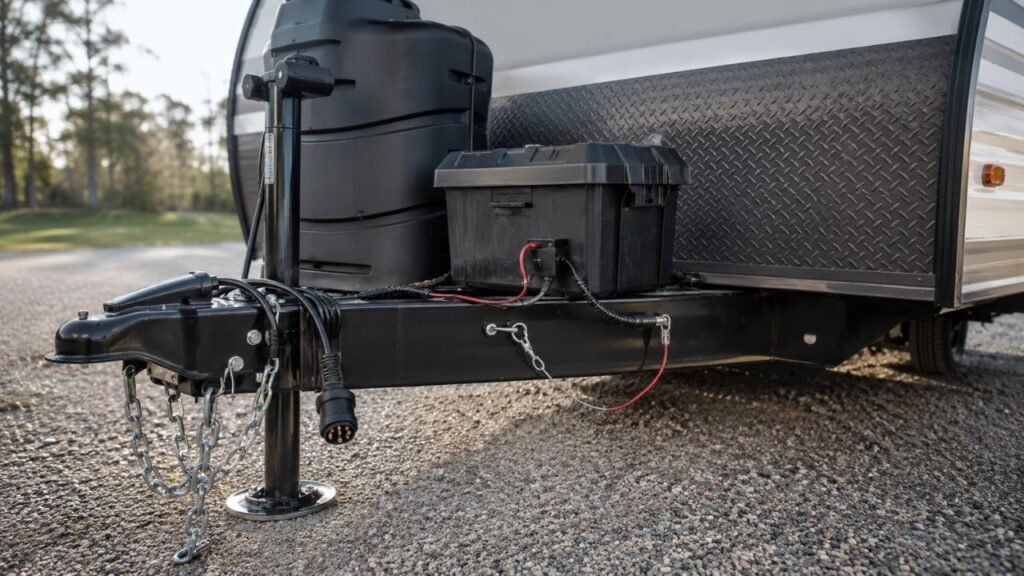
- The tongue jack is fully raised.
- The safety chains are connected.
- The breakaway cable is attached separately.
- The trailer plug is fully connected.
Raise the tongue slightly with the jack after latching. The rear of the tow vehicle should begin lifting with the trailer if the connection is secure.
Do not place any part of your body beneath the tongue during this test.
Step 2: Watch Each Connection for Movement
Ask a helper to apply gentle forward and backward pressure. Watch the receiver, shank, pin, ball, coupler, and mounting points.
You may also have the helper apply the tow vehicle brake and shift carefully between drive and reverse. Perform this only in a clear, controlled area.
Never place your fingers between moving hitch components.
Step 3: Inspect the Receiver and Ball Mount
Remove the ball mount and examine both pieces.
Look for:
- Shiny impact marks
- Deep grooves
- Bent metal
- Cracks
- Heavy rust
- Deformed receiver walls
- Stretched pin holes
- Excessive shank wear
Light surface marks are common. Deep wear or structural damage requires professional evaluation.
Step 4: Inspect the Hitch Pin and Clip
Confirm the pin fits the receiver correctly. Replace it if you find bending, corrosion, deep grooves, or damaged threads.
Make sure the retaining clip locks securely. A loose clip may fall out because of road vibration.
Step 5: Check the Hitch Ball and Mounting Nut
Inspect the ball for flat spots, deep scratches, cracks, or severe rust. Check the mounting platform for bending or damage.
Verify the ball nut is tightened to the ball manufacturer’s specification. Many hitch balls require substantial torque, so use the correct tools.
Step 6: Inspect the Trailer Coupler
Clean the inside of the coupler and examine the latch mechanism.
Look for:
- Bent latch parts
- Cracks
- Heavy rust
- Missing springs
- Excessive vertical movement
- A latch that will not close
- Damage around the coupler mounting area
Replace the coupler if it cannot securely hold the correct ball.
Step 7: Check Weight-Distribution Components
Inspect the spring bars, sockets, chains, brackets, pins, clips, and hitch head.
Look for bent bars, cracked brackets, loose bolts, missing retaining clips, and unusual wear patterns.
Verify the setup matches the manufacturer’s instructions. Incorrect bracket placement or head angle can increase noise and stress.
Step 8: Check the Trailer Load
Consider whether the noise began after loading new cargo. A rear-heavy trailer may bounce or feel unstable.
Secure loose items and confirm the trailer has appropriate tongue weight. Use a scale or suitable measuring method instead of guessing.
Step 9: Rule Out Suspension and Brake Problems
Inspect the leaf springs, shackles, equalizers, bushings, brakes, wheel bearings, tires, safety chains, and tongue jack.
A noise that changes with wheel speed may come from bearings, brakes, or tires rather than the hitch.
How to Stop Trailer Hitch Rattling and Clunking
The best fix depends on which connection is moving. Identify the source before purchasing additional hardware.
Install an Anti-Rattle Hitch Tightener
An anti-rattle tightener uses a clamp, U-bolt, plate, or collar to press the ball mount against the receiver.
It can reduce:
- Up-and-down movement
- Side-to-side movement
- Light receiver rattling
- Cargo carrier movement
- Bike rack wobble
Choose a device designed for your receiver size and intended use. Confirm that it is approved for towing when used with a trailer.
Some anti-rattle clamps are intended only for hitch-mounted accessories. Do not assume every clamp is suitable for towing loads.
Use a Threaded Anti-Rattle Hitch Pin
A threaded anti-rattle pin pulls the ball mount toward one side of the receiver. This pressure can reduce movement and noise.
These pins usually require a compatible threaded insert or matching ball mount. A threaded pin cannot be used correctly with every hollow or solid shank.
Some versions include locks for theft resistance. Check the load rating and compatibility before installation.
Use a Wedge-Style Anti-Rattle System
Some ball mounts contain an internal wedge or expanding mechanism. Tightening the mechanism locks the shank against the receiver walls.
Built-in systems may control movement more evenly than external clamps. However, they still require proper installation and routine inspection.
Replace a Worn Hitch Pin
A deeply grooved or bent pin may allow unnecessary movement. Replace it with the correct diameter, length, class, and load rating.
Do not use an ordinary bolt unless the hitch manufacturer specifically approves it. Standard hardware may not have the correct strength or fit.
Tighten Adjustable Ball Mount Hardware
Loose adjustable mount pins or bolts can create multiple clunking points. Remove dirt and inspect each connection before tightening.
Follow the mount manufacturer’s torque instructions. Replace worn pins, damaged clips, or stretched holes.
Repair or Replace a Worn Coupler
Some couplers include an adjustment mechanism beneath the latch. Small adjustments may improve the fit when completed correctly.
The coupler must still rotate smoothly around the ball. It should not bind during turns or articulation.
Replace the coupler when the latch is damaged, cracked, badly worn, or unable to hold the ball securely.
Replace an Incorrect or Damaged Hitch Ball
Match the hitch ball diameter to the coupler marking. Also check the ball’s shank diameter, shank length, and weight rating.
Replace balls with cracks, deep wear, flattening, damaged threads, or severe corrosion.
Correct the Trailer’s Tongue Weight
An anti-rattle clamp cannot correct poor loading. A trailer with insufficient tongue weight may continue bouncing and moving unpredictably.
Redistribute the load and secure all cargo. Confirm that the loaded trailer remains within every towing and axle rating.
Replace Worn Receiver Components
A cracked, bent, severely rusted, or deformed receiver requires professional inspection. Replacement is often safer than attempting a homemade repair.
Do not weld, drill, grind, or enlarge a rated receiver without written manufacturer approval.
How to Stop a Trailer Hitch From Squeaking
Squeaking usually comes from friction rather than loose receiver clearance. Start with the hitch ball and coupler.
Clean the Hitch Ball and Coupler
Old grease can collect dirt, sand, and metal particles. This contaminated grease may create abrasive wear.
Wipe the ball clean and remove loose debris from the coupler. Inspect both surfaces before applying new lubricant.
Do not use a damaged ball simply because fresh grease makes it quieter.
Apply the Correct Hitch Ball Grease
Apply a thin, complete layer of suitable hitch ball or high-pressure bearing grease. The ball does not need a huge pile of lubricant.
Fresh grease can reduce:
- Squeaking
- Heat
- Metal wear
- Binding
- Surface corrosion
Reapply grease after cleaning or extended exposure to rain, dust, and road grime.
Lubricate the Coupler Latch When Permitted
Some coupler latch mechanisms benefit from a small amount of lubricant. Follow the manufacturer’s instructions and avoid attracting excessive dirt.
Lubricating the latch does not correct a worn or damaged locking mechanism.
Do Not Lubricate Friction Sway-Control Surfaces
Friction sway-control systems rely on resistance to limit trailer movement. Grease can reduce that resistance and affect performance.
Weight-distribution hitches may have specific approved lubrication points. Lubricate only the points listed by the manufacturer.
Inspect for Rust or Binding
Light rust may cause noise, but severe pitting can damage the connection. Replace components that are deeply corroded, cracked, or distorted.
Lubricant can quiet friction. It cannot restore missing or weakened metal.
Should You Grease a Trailer Hitch Ball?
Most conventional trailer hitch balls should receive proper lubrication. The coupler places significant pressure on the ball while turning and traveling over uneven ground.
Grease reduces friction, squeaking, heat, and surface wear. It can also provide limited protection from moisture and corrosion.
Clean the ball before applying new grease. Cover it when the trailer is disconnected to protect clothing and reduce dirt buildup.
Specialized hitches may have different instructions. Always verify the guidance for your coupler, weight-distribution hitch, and sway-control system.
Never grease a surface that depends on dry friction unless the manufacturer specifically allows it.
Why Does My Hitch Clunk When I Brake or Accelerate?
Braking and acceleration reverse the direction of force at the hitch. This makes front-to-back movement easier to hear and feel.
Front-to-Back Ball Mount Play
During braking, the trailer pushes the ball mount forward. During acceleration, it pulls the mount backward.
If the receiver has excessive clearance, the shank may strike the pin or receiver walls. This creates a distinct clunk.
A compatible towing-rated anti-rattle system may reduce minor movement. Worn holes or damaged components need replacement or professional repair.
Loose Coupler-to-Ball Fit
A worn or incorrectly adjusted coupler may move before contacting the opposite side of the ball.
Check that the ball size is correct and the latch closes securely. Replace worn components instead of overtightening the coupler.
Delayed or Weak Trailer Braking
A trailer with weak brakes may push harder against the tow vehicle during stopping. This can make existing hitch play feel much stronger.
Check the brake controller settings, trailer plug, breakaway system, and trailer brakes. Braking problems should be diagnosed before your next trip.
Loose Weight-Distribution Components
Spring bars and brackets handle changing forces during braking. Loose head bolts, chains, pins, or frame brackets may create clunking.
Inspect every connection and confirm the system is correctly adjusted.
Cargo Shifting Inside the Trailer
Heavy cargo can slide forward during braking and backward during acceleration. The resulting bang may feel like it came from the hitch.
Secure batteries, propane cylinders, tools, ramps, camping equipment, and interior cargo before towing.
Why Does My Weight-Distribution Hitch Make Noise?
Weight-distribution hitches carry high spring pressure. Their moving parts can produce more noise than a basic ball mount.
Normal Weight-Distribution Hitch Sounds
Depending on the design, normal sounds may include:
- Groaning during turns
- Light popping on uneven ground
- Creaking from spring-bar sockets
- Chain movement over bumps
- Friction sounds from sway-control components
The noise should remain consistent with the hitch’s normal operation. It should not be accompanied by missing parts or unstable towing.
Abnormal Weight-Distribution Hitch Sounds
Inspect the hitch when you hear:
- Sudden heavy banging
- Grinding
- Repeated metallic impacts
- New noises after adjustment
- Loud noise with steering resistance
- Noise accompanied by trailer sway
Look for loose head hardware, bent spring bars, cracked brackets, damaged sockets, and missing clips.
How to Reduce Weight-Distribution Hitch Noise Safely
Verify the head angle, bracket position, spring-bar rating, and chain setup. Incorrect adjustment can increase stress and noise.
Lubricate only manufacturer-approved points. Some systems offer noise-reduction pads or alternative brackets.
Never grease friction surfaces simply to make the hitch quieter. Doing so may reduce sway-control performance.
Anti-Rattle Clamp vs Anti-Rattle Hitch Pin
Both options reduce receiver movement, but they work differently. Compatibility matters more than choosing the strongest-looking product.
| Feature | Anti-rattle clamp | Anti-rattle hitch pin |
| How it works | Clamps the shank against the receiver | Pulls or wedges the shank sideways |
| Installation | Mounts outside the receiver | Replaces the standard hitch pin |
| Best use | Ball mounts and receiver accessories | Compatible mounts and accessories |
| Movement controlled | Often vertical and sideways | Usually sideways or diagonal |
| Removal | May require loosening several nuts | Usually faster to remove |
| Locking option | Usually separate | Often available |
| Main limitation | May have clearance restrictions | Requires a compatible shank |
| Towing compatibility | Depends on the product | Depends on the product |
Neither device can repair a cracked receiver, worn coupler, bent ball mount, or severely enlarged pin holes.
Can Hitch Movement Cause Trailer Sway?
Minor ball mount clearance usually does not create trailer sway by itself. However, loose or damaged hitch components can make an unstable setup feel worse.
Common causes of sway include:
- Insufficient tongue weight
- Rear-heavy loading
- Excessive speed
- Strong crosswinds
- Improper tire pressure
- Worn suspension parts
- Incorrect weight-distribution adjustment
- Overloading
- Sudden steering inputs
An anti-rattle clamp is not a sway-control device. It may reduce receiver noise without changing the trailer’s stability.
If the trailer sways, address its loading, tires, speed, suspension, and hitch setup. Do not focus only on eliminating sound.
When Should You Replace the Hitch Instead of Tightening It?
Noise-reduction devices are suitable only when the underlying hitch remains structurally sound. Replace or professionally inspect parts when you find:
- Cracks in the receiver, ball mount, coupler, or welds
- Bent or twisted steel
- Severely elongated pin holes
- A receiver moving against the vehicle frame
- A coupler that cannot grip the correct ball
- Severe corrosion and metal loss
- A deeply worn or cracked hitch ball
- Missing or damaged mounting hardware
- Components without adequate weight ratings
- Movement that remains after correct adjustment
- Evidence of overloading or impact damage
Do not continue towing because the damaged part still appears connected. Structural problems can worsen quickly under repeated loading.
Hitch Noise That May Not Be Coming From the Hitch
Trailer sounds travel through the frame and tow vehicle. Several components can sound like they are directly behind the bumper.
Leaf Springs and Suspension Bushings
Leaf springs may squeak as their surfaces move. Worn bushings, shackles, bolts, or equalizers can create clunking over bumps.
Inspect the suspension if the noise occurs mainly on uneven roads.
Wheel Bearings
A damaged bearing may chirp, hum, squeal, or grind. The sound often changes with road speed rather than braking or acceleration.
Stop towing if you notice bearing noise, wheel heat, looseness, or vibration.
Trailer Brakes
Worn shoes, magnets, drums, or mounting parts can create scraping and banging. Brake noise often appears when the controller applies trailer braking.
Have the braking system inspected if stopping performance changes.
Safety Chains
Chains may strike the trailer tongue or drag on the road. Adjust their length without making them too tight for turning.
Crossing the chains may help support the tongue if the coupler disconnects, where applicable.
Tongue Jack and Stabilizers
A partially raised jack may move, scrape, or strike the trailer frame. Loose jack handles and footplates can also rattle.
Confirm every jack and stabilizer is fully retracted before travel.
Loose Cargo
Propane cylinders, batteries, tools, ramps, and camping equipment can create loud impacts. Secure exterior and interior cargo before every trip.
Trailer Hitch Inspection Checklist Before Towing
Complete a basic hitch inspection before each trip. Recheck the connection after traveling over rough roads.
- Confirm the receiver rating supports the loaded trailer.
- Match the hitch ball size to the coupler.
- Lower the coupler completely onto the ball.
- Close and secure the coupler latch.
- Install the hitch pin and retaining clip.
- Inspect the receiver for cracks or bending.
- Check the ball mount for unusual wear.
- Verify the hitch ball hardware is secure.
- Inspect adjustable mount pins and bolts.
- Check weight-distribution bars and brackets.
- Connect the safety chains correctly.
- Attach the breakaway cable independently.
- Connect the trailer electrical plug.
- Test the lights and trailer brakes.
- Raise the tongue jack completely.
- Secure all cargo.
- Confirm suitable tongue weight.
- Inspect the tires and wheel condition.
- Recheck the hitch after the first few miles.
Common Mistakes That Make Hitch Noise Worse
Some quick fixes can create larger problems. Avoid changing the hitch without understanding how each part works.
Using the Wrong Ball Size
A smaller ball may allow dangerous coupler movement. A larger ball may stop the coupler from seating properly.
Read the size marked on the coupler and match it exactly.
Overtightening the Coupler
Tightening the latch until the connection cannot move may cause binding. The coupler needs to rotate and articulate during normal towing.
Adjust the coupler only according to its manufacturer’s instructions.
Greasing Friction Sway-Control Parts
Grease reduces friction, which may reduce the effectiveness of friction sway-control components.
Only lubricate clearly identified and manufacturer-approved points.
Using an Anti-Rattle Device to Hide Damage
A clamp may temporarily reduce noise from worn components. That does not restore their strength or original dimensions.
Repair or replace damaged parts before returning to the road.
Ignoring Torque Specifications
Under-tightened fasteners can loosen. Over-tightened fasteners may stretch, distort, or damage the connected parts.
Use the correct torque specification and suitable tools.
Welding or Modifying the Receiver
Drilling new holes, welding plates, or grinding the receiver can change how loads travel through the hitch.
Unauthorized modifications may reduce strength or affect the warranty. Seek written manufacturer approval and qualified professional guidance.
Assuming Every Noise Comes From the Hitch
Do not overlook the brakes, wheel bearings, suspension, chains, jack, tires, or cargo.
Diagnosing the wrong component wastes time and may leave a dangerous problem unresolved.
How to Keep Your Trailer Hitch Quiet and Secure
Regular care helps prevent small clearances from becoming severe wear.
- Clean the hitch ball and coupler regularly.
- Apply fresh grease to approved contact points.
- Inspect the receiver before every trip.
- Replace worn pins and clips promptly.
- Check bolts after driving on rough roads.
- Keep the receiver covered when unused.
- Remove light surface rust early.
- Store removable components indoors.
- Maintain proper trailer tongue weight.
- Secure cargo before every trip.
- Service trailer bearings and brakes regularly.
- Inspect suspension bushings and shackles.
- Keep weight-distribution parts correctly adjusted.
- Record maintenance and replacement dates.
Final Words
A little trailer hitch movement does not always mean something is wrong. Most ball mounts need slight clearance inside the receiver, and some towing systems naturally make noise.
The key is knowing the difference between normal movement and dangerous wear. Light rattling may need only a compatible hitch tightener. Squeaking may disappear after cleaning and lubricating the ball.
Heavy clunking, grinding, coupler lifting, or receiver movement needs more attention. Find the exact source before adding clamps, grease, or replacement hardware.
When a component is cracked, bent, badly worn, or severely corroded, replace it. A quieter hitch is helpful, but a secure hitch is far more important.
Related FAQs
Is It Normal for a Trailer Hitch to Move Inside the Receiver?
Slight movement is usually normal because the ball mount needs clearance inside the receiver. Strong clunking, visible wear, or stretched pin holes should be inspected.
How Do I Stop My Trailer Hitch From Rattling?
A compatible anti-rattle clamp, threaded pin, or built-in wedge can reduce receiver movement. Replace any worn, bent, or damaged components before installing one.
Why Does My Trailer Hitch Clunk When I Stop?
Clunking during stopping often comes from front-to-back ball mount play, a loose coupler, shifting cargo, or delayed trailer brake response.
Should I Grease My Trailer Hitch Ball?
Most conventional hitch balls benefit from proper grease. Lubrication reduces squeaking, heat, and wear, but follow the manufacturer’s instructions for specialized hitches.
Why Does My Trailer Hitch Squeak When Turning?
A dry ball, dirty coupler, surface rust, or spring-bar friction commonly causes squeaking. Some friction sway-control systems also make normal turning noises.
Can an Anti-Rattle Device Be Used While Towing?
Many anti-rattle devices are approved for towing, while others are designed only for bike racks or cargo carriers. Confirm the product’s rating and compatibility.
Can a Loose Ball Mount Damage the Receiver?
Repeated impact can wear the hitch pin, ball mount shank, receiver walls, and pin holes. Address excessive play before the damage becomes more severe.
Why Does My Weight-Distribution Hitch Pop and Groan?
Spring pressure and friction can create normal popping or groaning during turns. Sudden banging, grinding, or new noises require a complete inspection.
Can Too Little Tongue Weight Cause Hitch Noise?
Low tongue weight can increase bouncing, sway, and movement at the hitch. Redistribute the load and confirm the correct tongue weight before towing.
How Tight Should a Trailer Coupler Be on the Ball?
The coupler should hold the correct ball securely without excessive lifting. It must still rotate freely enough for turning and normal trailer articulation.
Does Hitch Rattle Mean My Trailer Is Unsafe?
Light rattling may come from normal receiver clearance. Heavy movement, structural damage, loose hardware, or unstable towing may indicate an unsafe condition.
Why Does My Hitch Make More Noise on Rough Roads?
Bumps increase vertical and sideways movement throughout the receiver, coupler, suspension, chains, and cargo. Rough roads often make existing looseness more noticeable.

Scott Miller shares real-world RV road trip insights built from years of traveling open highways and backroads. He covers route planning, campground choices, and travel gear with a practical mindset. His content is written for RVers who value reliability over trends.